Celebrate 20 years of the TLR-1

Archive for the ‘Army’ Category

US Army Next Generation Robotic Technologies

Wednesday, October 26th, 2022

Ground Robotics are coming to the Army, with experimentation ongoing. Unmanned Air systems have been in use for decades now and advancements in robotics technology is taking things beyond the paradigm of the EOD robot. The move is understandable. You can put a robot many places that you can’t put a human and if something happens, the robot doesn’t bleed.

However, far from unleashing an Army Hunter-Killer systems from the Terminator franchise, the Army envisions forming heterogeneous teams with Soldiers in the loop:

• Large/Small, Air/Ground/Sea, Manned and Unmanned

• Humans in multiple roles (Commanders, Teammates, bystanders)

• Systems with varying levels of autonomy, sensors, processing, and operational payloads

• Collaborative systems with adaptable roles operating in distributed, decentralized, and layered operations

• Increased team-based cognitive and tactical behaviors, dynamic tasking, and real-time distributed perception and decision making

• Operations in complex and contested environments–peer adversarial capabilities

• RAS will operate as part of joint inter-service and multinational teams

During the recent NDIA Future Force Capabilities Conference, Dr. Brett Piekarski and Mr. Elias Rigas of DEVCOM ARL offered a presentation that discussed Next Generation Robotic Technologies.

You can access it here:

Soldier Center’s Small Unit Performance Analytics Event Advances Soldier Performance Research

Wednesday, October 26th, 2022

NATICK, Mass. – The U.S. Army Combat Capabilities Development Command Soldier Center, or DEVCOM SC, completed its fifth Small Unit Performance Analytics, or SUPRA, event at Fort Devens on September 12 – 23. The data collection, supported by infantry squads from the 10th Mountain Division, was part of DEVCOM SC’s ongoing Measuring and Advancing Soldier Tactical Readiness and Effectiveness, or MASTR-E, program. MASTR-E’s Small Unit Performance Analytics (SUPRA) research team planned and executed the event.

Led by DEVCOM Soldier Center, the MASTR-E program is a large-scale effort focused on measuring, predicting, and enhancing close combat performance with predictive performance algorithms, sensors, data-driven decision aids, and targeted interventions to maximize Soldier performance. DEVCOM Soldier Center is executing a collaborative development strategy with numerous military, academic, and industry partners on the effort. The goal of the MASTR-E program is to characterize and predict Soldier cognitive and physical performance under operationally relevant conditions, ultimately increasing warfighter capability.

SUPRA events play an important role in the overall MASTR-E program.

“SUPRA concentrates on true measures of collective performance,” said George Matook, program lead for MASTR-E. “The Army fights as units, not as individuals; while it’s important to understand individual performance as a part of that whole, quantifying unit performance is critical. SUPRA does that for MASTR-E.”

Data collected from participating squads in SUPRA events include communication data, physiological status monitoring, and marksmanship data — to name just a few areas of data collection. SUPRA events aim to increase understanding of how individual and squad performance influences overall Soldier effectiveness and lethality.

“The SUPRA research team collects over 100 GB of data and close to 500 different dependent measures for each squad that completes the testing,” said Meghan O’Donovan, a biomechanics research engineer in DEVCOM SC’s Soldier Effective Directorate who works on the MASTR-E effort. “Given the numbers of squads and Soldiers tested, this makes it one of the largest dismounted infantry, force-on-force data sets in existence.”

By adding data to the MASTR-E Soldier performance effort, this SUPRA event will broaden Soldier representation and enhance the science behind the effort.

“This SUPRA event adds more Soldier data into the analytical pool, strengthening the statistical relevance of the relationships and metrics we’re discovering,” said Matook. “We want to ensure the information is representative of the Army, not just a couple of squads we happened to sample.”

DEVCOM SC’s longtime expertise in multiple domains in Soldier technology research and development, as well as its innovative partnerships with academia and industry are also playing an important role in the SUPRA efforts specifically and in the MASTR-E effort overall.

“DEVCOM Soldier Center’s longtime expertise in multiple domains is necessary to properly execute MASTR-E,” said Matook. “By design, our studies are multi-disciplinary, encompassing work in physical, cognitive, socio-emotional, and health domains. While Soldier Center has experts in some of these areas, it was important to leverage the help of other Army and DoD assets to bring a best of breed team to the problem set. To bring together the right skillsets for SUPRA in particular, we assembled a team from Soldier Center, Aberdeen Test Center, Army Research Institute, Naval Health Research Center, and multiple industry partners.”

SUPRA events are an important part of the MASTR-E program’s effort to better understand and to increase Soldier readiness and performance.

“MASTR-E as a whole will benefit warfighters in many ways, from garrison, to training, and operations,” said Matook. “MASTR-E’s work measuring, predicting, and enhancing close combat performance will help the Army and its Soldiers see themselves better, to understand our true capability and readiness with the metrics that matter. Coupling this knowledge with Optimizing the Human Weapon System will give leaders an unprecedented situational understanding of their formations, enabling higher levels of readiness and increased probability of mission success.”

By Jane Benson, DEVCOM Soldier Center Public Affairs

82nd Airborne Soldiers Engage in Future Warfighting Experimentation

Tuesday, October 25th, 2022

CAMP PENDLETON, Calif. — A thin layer of silver-gray cloud cover rests above an expanse of sloping, taupe-colored hills. The landscape — part of a U.S. military training facility near the southern California coastline — is occupied mostly by shrubs, their amber and green flecks dotting an otherwise neutral terrain.

On the crest of a hill overlooking this stretch of mostly undeveloped land is an abandoned village, or rather, the semblance of an abandoned village. Constructed by the military to provide realistic training opportunities to service members, the collection of structures and nods to everyday life — a carton of eggs for sale, a bicycle discarded along the side of the road — could be representative of any number of locations.

This month, however, the scene is meant to convey an unknown location, somewhere conflict might emerge in the future. It is the setting for a series of mission-based scenarios being conducted through Project Convergence 22, shortened as PC22, an experiment designed to evaluate how the U.S. military can most effectively incorporate new technologies and coordinate with multinational partners to deliver overmatch on future battlefields.

Service members from the U.S., U.K. and Australia are taking part in PC22 experimentation, bringing a wealth of knowledge and resources to simulated and tangible warfighting activities. Included among the thousands of participants are members of the U.S. Army’s 82nd Airborne Division, an elite and rapidly deployable group of airborne infantry Soldiers based out of Fort Bragg, North Carolina.

Known for their ability to parachute into conflict zones, 82nd Airborne Division Soldiers are integral to the U.S. Army and U.S. Air Force’s Immediate Response Force, maintaining the ability to deploy as needed with just 18 hours’ notice. At PC22, they are supporting air assault experiments, dropping from helicopters to traverse unfamiliar landscape with the help of cutting-edge navigational and situational awareness tools.

“We are currently testing out new equipment for the Army,” said Pfc. Nicholas Quintero of the 82nd Airborne Division, who has been participating in PC22 for approximately two weeks.

“We’re going out, we’re doing a lot of training with it and giving feedback,” he explained, highlighting that the goal is to work out kinks and suggest improvements so that the Army can “provide the best piece of equipment for all types of scenarios and situations.”

“It’s a very cool experience,” Quintero said, pointing out that many Soldiers had never handled or even seen the equipment being assessed prior to their participation in the experiment.

In addition to providing materiel developers with candid observations on new equipment, Quintero and other PC22 participants have been able to enhance their understanding of what a future mission might look like, and how new technology is enabling more agile warfighting.

“Right now, intelligence and technology is huge,” said Capt. Dakota Wright. “Being at Project Convergence keeps us at the forefront of military technology.”

“Obviously, it’s going to take time, because technology takes a while, but the concept of this IVAS and the concept of the technology of the future would definitely improve and make the Army a lot more lethal,” Quintero said, referencing Soldier assessments of the Army’s Integrated Visual Augmentation System, or IVAS, prototype.

The event also serves as a training opportunity for Soldiers who may have little to no prior experience on the battlefield.

“We have a real young group of guys out here, so this is a good opportunity for people to get to know each other, learn how to work with each other,” said Sgt. Milton Jean-Baptiste, also of the 82nd, who noted his team is part of the division’s dismounted reconnaissance unit.

Jean-Baptiste stressed the importance of having the Soldiers most likely to use the Army’s new equipment guiding iterative improvements to it.

“At the end of the day, we’re going to be the ones using it. It can be perfect inside of a warehouse or at a table, but we’ll be the ones who have to figure it out,” he said.

Jean-Baptiste also underscored the urgency of U.S. military leaders embracing new technologies, along with the processes necessary to hone them to specific Soldier needs.

“We don’t want to get left behind,” he said. “Seeing that there are programs and leaders who advocate for us to get the latest technology and make sure that it works is important, just so that we’re always a step ahead.”

By Maureena Thompson, Army Futures Command

SGT Daniel Ramos, 22nd Mobile Public Affairs Detachment, contributed to this article

All Soldiers Are Out Of Impacted Smoke Bomb Hill Barracks

Monday, October 24th, 2022

Today, we can officially announce that all 1,189 Soldiers who previously resided in the impacted Smoke Bomb Hill barracks buildings have been relocated to barracks facilities on post or moved off the installation into community residential housing.

U.S. Army and installation leaders made a determination that the 50-year-old barracks passed the point of economic diminishing return after years to extensive work to maintain them to our standard.

To make as much space as possible for Soldiers relocating from Smoke Bomb Hill, nearly 600 soldiers were provided financial support to fund their rent for off-posting privatized housing.

Barracks to barracks moves across Fort Bragg were detailed consisting of multiple inspections by each unit’s chains of command and personnel from the Directorate of Public Works to ensure all rooms were clean and maintained before Soldiers moved into them.

This would not have been possible without the efforts of Fort Bragg leaders, as well as the patience of each of the service members involved. Every unit across Fort Bragg met together frequently to find the rooms and space to accommodate our service members.

“Fort Bragg came together as a community to help our Soldiers during this challenging time, and this is just the beginning as we continue to invest in future quality of life improvements for our Soldiers,” said Command Sgt. Maj. T.J. Holland, XVIII Airborne Corps and Fort Bragg’s senior enlisted advisor. “We also want to thank our world class community leaders who worked with our garrison leadership during this complex process to ensure our Soldiers are cared for. This is and will continue to be our #1 priority!”

Demolition of the impacted barracks and new construction will be announced at a later time.

“Our enduring obligation as Army leaders is to take care of our people, our Soldiers, and their Families,” said Mennes.

Explosive Ordnance Disposal Soldiers Sharpen Special Forces Support Skills in Danger Zone

Monday, October 24th, 2022

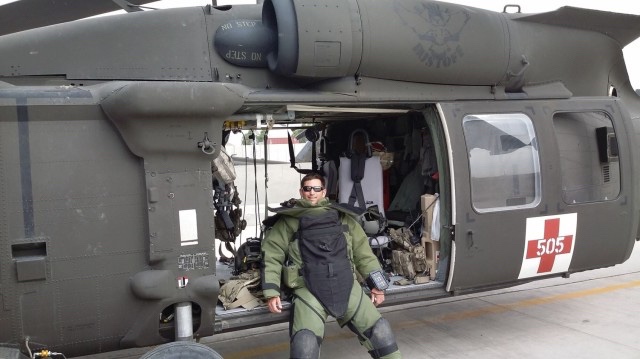
FORT CAMPBELL, Ky. – U.S. Army Explosive Ordnance Disposal technicians are sharpening their ability to operate with some of the nation’s most elite warriors in a bunker on Fort Campbell, Kentucky, called the Danger Zone Training Complex.

EOD Soldiers from the 52nd Ordnance Group (EOD) are leveraging the expertise of the training cadre at the specialized facility to prepare for deployments in support of U.S. Army Special Forces units and conventional ground forces.

The Fort Campbell, Kentucky-based 52nd EOD Group commands all Active-Duty U.S. Army EOD units east of the Mississippi River, including two EOD battalions and 14 EOD companies on Army installations in Kentucky, North Carolina, Georgia, Virginia and New York.

The 52nd EOD Group is part of the 20th Chemical, Biological, Radiological, Nuclear, Explosives (CBRNE) Command, the U.S. military’s premier all hazards command. The 20th CBRNE Command is home to 75 percent of the Active-Duty U.S. Army’s EOD technicians and Chemical, Biological, Radiological, Nuclear (CBRN) specialists, as well as the 1st Area Medical Laboratory, CBRNE Analytical and Remediation Activity, five Weapons of Mass Destruction Coordination Teams and three Nuclear Disablement Teams.

American Soldiers and U.S. Army civilians from 20th CBRNE Command deploy from 19 bases in 16 states to confront and defeat the world’s most dangerous hazards in support of joint, interagency and allied operations.

Master Sgt. Brandon K. Barenie from the 52nd EOD Group Training Cell said the Danger Zone training cadre includes two senior Army EOD noncommissioned officers and civilian contractors who provide subject matter expertise.

“We operate within and take tasking from the 52nd EOD Group S3 Operations Section yet may work directly with battalions and companies when appropriate,” said Barenie.

According to Barenie, the support team provides training in EOD, chemical, nuclear, maneuver unit integration, Special Forces support operations, exercise design, counter-Unmanned Aerial Systems and sensitive site exploitation, as well as threat guidance research, scheduling and coordinating training evolutions and constructing and fabricating training aids.

As the U.S. Army’s explosive experts, EOD technicians are trained to take on everything from a hand grenade to a nuclear weapon while conducting explosive mitigation missions in support of military operations around the world and domestic authorities across the nation.

U.S. Army EOD units from 20th CBRNE Command deploy to the U.S. Central Command and U.S. Africa Command areas of operations while supporting U.S. Indo-Pacific Command exercises and Defense Support to Civil Authorities missions for U.S. Northern Command.

Army EOD Soldiers respond when military munitions are discovered, both on and off post. In 2021 alone, Army EOD technicians from 20th CBRNE Command EOD units participated in 1,415 explosive mitigation missions on military installations and 276 missions off base.

Today, Army EOD technicians are training and preparing to support ground forces during large-scale combat operations against a near-peer adversary.

U.S. Army EOD Soldiers also routinely support the U.S. Secret Service and Department of State during Very Important Person Protection Support Activity missions by helping to protect the president, first lady, vice president and foreign heads of states.

Previously a critical communications and security facility called The Voice, the Danger Zone provides a unique venue for the EOD techs to hone their lifesaving and mission-enabling skills. The facility also provides advanced marksmanship and combat skills training to keep EOD Soldiers on target.

“These training opportunities enhance our group’s ability to employ technically and tactically proficient Soldiers in support of any combatant commander,” said Barenie.

By Walter T. Ham IV

Arizona National Guard, Oman Form Partnership

Sunday, October 23rd, 2022

PHOENIX – The Arizona National Guard announced a new partnership with the Sultanate of Oman Oct. 13 through the Department of Defense National Guard Bureau State Partnership Program.

“Arizona has extensive land, air and emergency management experience that closely aligns with the capabilities, challenges and goals of Oman,” said Maj. Gen. Kerry L. Muehlenbeck, director of Arizona’s Department of Emergency and Military Affairs. “We are excited to welcome this partnership and look forward to the collaboration and establishment of enduring relationships for years to come.”

Next year marks the 30th anniversary of the program, which now includes more than 90 nations paired with states to build mutually beneficial, durable partnerships that support each nation’s strategic goals.

Arizona was one of the first states to join the cooperative program and has partnered with the Republic of Kazakhstan since 1993. That relationship will also continue.

“Our state partnership with Oman will offer a new perspective in working, deploying, training and learning together,” said Col. Pete Caffrey, State Partnership Program coordinator. “Our investments into relationships like that with Oman and Kazakhstan will sustain future advantages and strengthen our network of security.”

The National Guard conducts military-to-military engagements to build partner capacity, improve interoperability, and enhance U.S. access and influence while increasing the readiness of U.S and partner forces. The program has become a key security cooperation tool by facilitating cooperation across international civil-military affairs, as well as people-to-people ties.

“It allows our Soldiers and Airmen to really visit a lot of other countries,” Lt. Gen. Daniel R. Hokanson, chief of the National Guard Bureau, said of the State Partnership Program. “To look at the environment that they operate in, and to really see, in many cases, the same problems — just approached from a different angle. We learn a lot in those countries and in those interactions that we bring back to make our organizations better, and I like to think vice versa.”

The Sultanate of Oman, an Arabian country off the southeastern coast of the Arabian Peninsula, is home to almost 4 million people. It borders Saudi Arabia, the United Arab Emirates and Yemen while sharing maritime borders with Iran and Pakistan. Oman’s military, known as the Sultan of Oman’s Armed Forces, consists of Army, Navy, Air Force, Royal Guard and other defense forces.

Officials with the Arizona National Guard and the Sultanate of Oman are coordinating an official signing ceremony to celebrate their partnership.

By Arizona National Guard Public Affairs

DEVCOM Soldier Center’s Industry Day Fosters Collaborative Partnerships

Thursday, October 20th, 2022

NATICK, Mass. – The U.S. Army Combat Capabilities Development Command Soldier Center, or DEVCOM SC, hosted the DEVCOM Soldier Center Industry Day on September 29, 2022. The event — which took place at the Residence Inn in Natick, Massachusetts — aimed to engage industry and academic partners and foster relationships that will support the Soldier Center’s mission.

“Industry Day provided the Soldier Center with an excellent opportunity to connect with potential partners and to educate them about our mission and opportunities for collaboration,” said Douglas Tamilio, director of DEVCOM SC.

DEVCOM SC is committed to discovering, developing, and advancing science and technology solutions that ensure America’s warfighters are optimized, protected, and lethal. Industry Day provided information and enabled discussions between DEVCOM SC and industry/academia through a senior leader panel, general briefings, and one-on-one exchanges on a wide variety of topics. The event also provided attendees with concrete information on how to work with the Soldier Center.

“Sustaining and fostering relationships with our industry partners and academia is extremely important for the Soldier Center, and we are very excited with the turnout for the Industry Day event we hosted,” said Richard Hornstein, deputy chief of staff for G-3/5 Operations and Plans at DEVCOM SC.

Hornstein noted that Brig. Gen. Larry Q. Burris, Jr. — the Infantry School Commandant and the Director of the Soldier Lethality Cross-Functional Team at the U.S. Army Maneuver Center of Excellence — served as the keynote speaker, addressing an audience of 107 members of industry, helping to align industry efforts with Army goals. Hornstein explained that DEVCOM SC also conducted 85 one-on-one meetings with its partners. Through 21 poster presentations, government representatives further engaged with industry representatives throughout the afternoon.

“These engagements help to inform our industry partners of our development goals and challenges as well as provide them with a venue to share ideas and capabilities they may have available to meet our needs,” said Hornstein. “They also expand and sustain relationships and provide business opportunities for both industry and academia that help us transform basic and applied research requirements into new ideas, capabilities and technologies that underpin the modernization goals of the Army, which is ultimately the mission of the DEVCOM Soldier Center.”

DEVCOM SC topics of discussion included increased Soldier protection, encompassing Arctic Soldier equipment and environmental capabilities; helmets with increased threat level protection; and eyewear with increased fragmentation protection and active anti-fog capability. Some other topics included advanced materials for ballistic protection; reduction of Soldier load; understanding and modeling of Soldier load; and Soldier/squad equipment integration. Other topics included camouflage, concealment, and deception.

Subject matter experts also provided briefings on enhanced Soldier technologies, including power generation, training and simulation technologies, small unit battle training, combat simulation, human performance technologies (wearables, biosensors, exoskeletons, human performance data management systems, assessment technologies, and measurement technologies), and Soldier/robotic interface. Soldier sustainment topics included small unit water generation, nutrient-dense rations/longer shelf-life rations, and novel solutions for re-supply to remote locations.

Michael Codega, DEVCOM SC’s chief technology officer, provided a briefing on DEVCOM SC’s Science and Technology Strategy, including Warfighter Integrated Capability & Knowledge Development, or WICKED, programs.

WICKED programs are large S&T programs focused on creating solutions to problems facing Soldiers and small units in future operating environments. Given the complexity of problems facing warfighters, potential solutions need to combine advanced technology development, applied research. and basic research.

“With such a broad mission and competition for resources, the WICKED problem/program framework is essential for Soldier Center, our partners and the Army enterprise to ensure we are focusing on those operational challenges and opportunities that will allow Soldiers to dominate in the future operating environment,” said Codega.

Burris praised the event.

“We value the various forums the Army facilitates to communicate and collaborate with the enterprise, but what sets this event apart from the rest is the focus on that which is vital to the future of the Close Combat Force,” said Burris. “Here we have interested partners in industry and academia, who are meeting with stakeholders in the Soldier enterprise face-to-face and sometimes one-on-one, to speak clearly and candidly to fully understand the requirements of the Close Combat Force. Industry and academia can take what they learn today and iterate on the problem or the potential from every angle, and we end up with the non-traditional solutions to help the Army maintain decisive and sustainable overmatch.”

By DEVCOM Soldier Center Public Affairs

New Vessel Class Enters Army Watercraft Fleet with Prototype Launch

Tuesday, October 18th, 2022

VANCOUVER, Wash. — The Army’s Maneuver Support Vessel (Light), or MSV(L), prototype was launched Oct. 10 at the Vigor, LLC marine fabrication facility in Vancouver. The launch is significant, as the MSV(L) represents the first of a new class of Army Watercraft.

The MSV(L) will replace the Landing Craft Mechanized-8, (LCM-8,) a Vietnam-era watercraft that is unable to transport some of today’s equipment due to the weight of modern combat vehicles. MSV(L) is a modernized landing craft that will improve the speed and effectiveness of the Army’s dynamic force repositioning.

The MSV(L) features increased payload capability; providing access within the Maritime Domain; increased speed and maneuverability to move the Army faster; and improved draft for greater geographical access.

“Launching the MSV(L) prototype, a brand-new, first-in-class vessel is a major achievement for us to celebrate,” said Col. Beth Behn, the Army’s chief of transportation. “Not only does this prototype represent the first of its kind for the Army as a digital vessel, but also, the overall team has surmounted several hurdles having to do with COVID-19-related workforce and supply-chain issues. I couldn’t be more proud of this partnership to become one step closer to providing Army Mariners the world over a truly modernized capability.”

“The MSV(L) represents the first new major watercraft system acquisition in more than 20 years representing the U.S. Army’s commitment to Army Watercraft modernization,” said Brig. Gen. Samuel L. (Luke) Peterson, the Army’s program executive officer for Combat Support and Combat Support (PEO CS&CSS.) “Our Product Manager, Army Watercraft Systems, has worked very closely with our Army enterprise partners and Vigor to ensure a successful launch. The team has done an outstanding job working through some fairly significant schedule challenges in order to get to where we are today. This launch is the direct result of the collaborative work between many dedicated professionals from both the Army and Vigor.”

The Army awarded Vigor in late 2017 a 10-year contract for the development and production of up to 36 of the new watercraft. In September 2019, Vigor and the Army laid the keel in a ceremony also held in Vancouver. The current Army Acquisition Objective is to build 13 vessels, according to Wolfgang Petermann, project manager, Transportation Systems, PEO CS&CSS. The Army’s strategy for the MSV(L) has centered on integrating mature commercial off-the-shelf subsystems into a new hull form, which takes advantage of the marine industry design innovation and competition, he added.

Army watercraft enables commanders to transport and sustain combat-configured equipment with personnel, vehicles and sustainment cargo, through fixed, degraded and austere ports, inland waterways, remote and unimproved beaches and coastlines for missions across the spectrum of military operations. The improved maneuverability and increased speed capability that the MSV(L) brings to bear will provide a better watercraft for operating in inter-coastal areas, rivers and inland waterways, and in anti-access/area-denial environments.

The length of MSV(L) is 117 feet. It will have a speed of 21 knots fully laden and 30 knots unladen. Its range will be 360 nautical miles when fully laden. Eight Army Mariners will crew the MSV(L).

Each vessel’s payload will be 82 short tons, which means it can haul one combat configured M1 Abrams tank, or two Stryker combat vehicles, or four Joint Light Tactical Vehicles, as well as multiple other payload configurations.

MSV(L) now enters builder’s trials, which are designed to finalize Vigor’s fabrication and commissioning activities. Builder’s trials are slated for completion in November. They will be followed by extended acceptance trials, led by the Army’s Product Manager, Army Watercraft Systems and the Army Test and Evaluation Command, to verify that the watercraft meets its intended requirements.

A low-rate initial production decision on the Maneuver Support Vessel (Light) is targeted for early 2023. The prototype is slated for delivery to the Army Mariner community headquartered at Joint Base Langley-Eustis in early 2024.

PEO CS&CSS is one of 12 Army Program Executive Offices reporting to the Assistant Secretary of the Army (Acquisition, Logistics & Technology.) Its military and Army civilian acquisition professionals are charged with the lifecycle management for the majority of the Army’s Engineer, Ordnance, Quartermaster, and Transportation systems, which account for roughly 20 percent of all the equipment the Army’s Active, Reserve and National Guard components use.

By Rae Higgins, U.S. Army Program Executive Office Combat Support & Combat Service Support