Salomon Forces Genesis MID GTX

Archive for the ‘Army’ Category

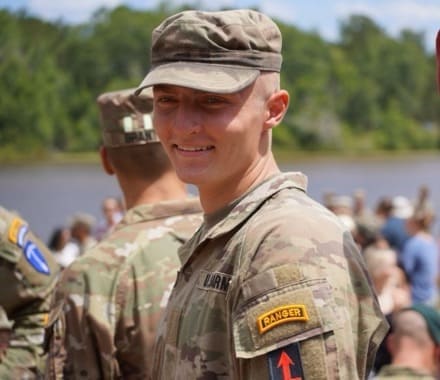
Retired Army Ranger Receives the Silver Star Medal

Friday, April 5th, 2024

JOINT BASE LANGLEY-EUSTIS, Va. — Almost 31 years after conducting various missions and operations during the Battle of Mogadishu, retired Army Maj. Larry Moores received the third highest military decoration for valor in combat — the Silver Star Medal.

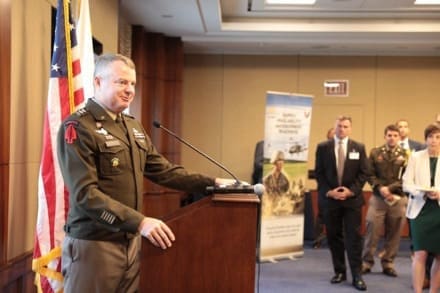
Gen. Gary Brito, commanding general, U.S. Army Training and Doctrine Command, presented Moores with the Silver Star during a ceremony in front of family and friends March 25.

“Mr. Moores, I personally salute you for your tenacity, your toughness in a crucible combat, and your commitment to our Army, and your fellow Soldiers,” Brito said. “Your actions in Somalia were for them, your brothers in arms, and are a living tribute to the Ranger Creed, which I know that you hold dearly. Thank you so much for your selfless service. I am honored to present to you today the Silver Star.”

Moores enlisted in the U.S. Army on his 18th birthday. After basic training, he was assigned to the 1st Ranger Battalion, 75th Ranger for his first assignment. Within a few months, he was ready to accept the Ranger School test and headed straight to the school at Fort Benning, Ga., now called Fort Moore.

“Ranger School was very difficult and definitely a great challenge, but I think coming from the battalion to become a ranger student was more of a validation process,” he said. “I was in the first class after the invasion of Grenada, so I was a young Soldier who had already been in a combat experience in the early 1980s.”

In the summer of 1993, then-President Bill Clinton deployed Task Force Ranger comprised of Rangers, Special Operators and TF-160 Special Operations Aviators to Mogadishu, Somalia, to capture Somali warlord Mohammed Farah-Adid. The majority of that task force was composed of American Rangers from the 3rd Battalion, 75th Ranger Regiment.

“When I was in Somalia as part of Task Force Ranger, it was my third tour with the unit, so I understood their capabilities and how prepared we were to execute the mission,” Moores said. “We conducted a series of missions before that, so we knew the environment and the threat. Knowing how well trained your people were and the mission made it easier to lead.”

On Oct. 3, 1993, Task Force Ranger became embroiled with Somalia militiamen in an overnight gun battle, the intensity of which was likened, at the time, to the most intense firefights in Vietnam. That afternoon, Task Force Ranger boarded Army helicopters for what was expected to be a textbook raid to capture two of Adid’s lieutenants.

Using rocket-propelled grenades, Somalia militiamen shot down two U.S. Blackhawk helicopters, turning a planned raid into an unexpected rescue mission.

Although this particular battle was very challenging for Moores, and the 75th Ranger Regiment unit, due to the number of Soldiers who were killed or were wounded, Moores said it was astonishing to be able to demonstrate their capability during that operation.

“We lost 18 [Soldiers] in battle and had more than 70 Rangers wounded. That was a tough experience because we were overwhelmed — with the odds against us. But it was amazing to watch the young Rangers still execute under very difficult circumstances,” he said.

Moores hard work and leadership during that operation resulted in him being inducted as a Distinguished Member of the 75th Ranger Regiment in 2005 and into the U.S. Army Ranger Hall of Fame in 2017.

“I was honored to serve with the Rangers, so whenever I went to those ceremonies as a young Soldier, I was always in awe of the people who were being inducted,” he said. “Then to be inducted myself was an amazing honor. But for me it was a team effort. It wasn’t Larry who was inducted, it was the whole unit.”

Retired Army Col. Larry Perino, a fellow Ranger platoon leader who served with Moores during the Battle of Mogadishu, attended the Silver Star ceremony, and emphasized how important it was for him to be there to witness it.

“I would not have missed this event for the world. This is long overdue and well deserved,” Perino said. “Larry is deserving because he chose to go back to that street to try and break us out. Despite going out there and getting riddled with bullets time and time again and losing Rangers, he had the intestinal fortitude to lead his men to help us.”

Moores credits the entire regiment for him being able to receive the honor of the Silver Star Medal.

“This Silver Star Medal is about those types of units and all of the months and months of hard work,” he said. “It was an amazing opportunity to be a part of those special operations. I feel so blessed to have worked with the people that I did over all of these years. I never would have thought that I would have been able to do all of the things that I did, and meet and work with so many amazing people along the way.”

Moores currently works as a contractor within the TRADOC G2 (Intelligence).

By Katisha Draughn-Fraguada, TRADOC Communication Directorate

Airborne Troops Drop Test New Family of Medium Tactical Vehicles

Thursday, April 4th, 2024

FORT LIBERTY, North Carolina – Airborne logistics Soldiers here just completed airdrop testing of the Army’s newest Family of Medium Tactical Vehicles.

Troops of the 151st Quartermaster Company, 189th Combat Sustainment Support Battalion, 82nd Airborne Division Sustainment Brigade, put the vehicles through a series of Low Velocity Airdrop configurations.

The M1093A2 FMTV is a fleet of vehicles set to modernize the Army’s capabilities with its advanced design, compared to its aging predecessor, the Light Medium Tactical Vehicle.

Assistant Program Manager Mr. Tom McDaniels, U.S. Army Program Executive Office, Combat Support & Combat Service Support, emphasized the strategic importance of the M1093A2 FMTV.

“This Army program delivers an airdrop-capable vehicle that excels in multiple mission roles, offering protected, sustained, and networked mobility for personnel and payloads in a wide range of military operations,” he said.

The series of tests at Fort Liberty kicked off with comprehensive Operator’s Training (OT) and New Equipment Training (NET) delivered by expert trainers from Oshkosh, the vehicle manufacturer.

The training ensured the paratroopers were fully equipped with the knowledge and skills to operate and maintain the vehicle throughout the airborne testing phase.

Staff Sgt. Shahbaz Shakil Ahmed, a motor transport operator from the 151st Quartermaster Company, explained the rigorous testing process as the Soldiers demonstrated exceptional skill and precision by successfully rigging, airdropping, and recovering the FMTV, followed by thorough rigorous road tests to validate its operational readiness and full mission capability.

He said he was eager to transition to the new FMTVs, highlighting the significant improvements in survivability, payload capability, and his pride in contributing to the vehicle’s airdrop rigging development.

The testing agenda included low-velocity airdrops and subsequent road tests to assess the vehicle’s maximum load capacity, all critical steps towards achieving final airdrop certification from the Natick Soldier Research, Development, and Engineering Command.

Sgt. 1st Class. Dao Le, a project NCO with ABNSOTD’s Aerial Delivery Rigging Branch, said the testing process is meticulous.

“Every piece of equipment Soldiers use has been independently tested and evaluated to meet current and future Army needs and requirements,” he said.

Mr. Aaron Clark, a military test plans analyst with ABNSOTD involved in Low Velocity Airdrop FMTV testing, captured the essence of the effort.

“Operational testing is about Soldiers,” he said. “It’s about ensuring the systems we develop are effective in a Soldier’s hands and suitable for the environments in which Soldiers train and fight.”

The airdrop missions were executed using U.S. Air Force C-17 and C-130 aircraft, which reflect a significant advancement in military logistics and capability, setting a new standard for operational excellence and readiness, according to Clark.

“Operational testing is OTC’s opportunity to contribute to readiness; anything less compromises the Army’s ability to provide the forces that fight and win the nation’s wars,” Clark added.

Mr. Bill Slaven, branch chief of ABNSOTD’s Test Division, shed light on integration of systems under examination into actual missions and training agendas of test units.

“Unit commanders get an early opportunity to evaluate new systems, potentially influencing modifications in operational tactics and military doctrine,” he said.

“The unique aspect of these tests is that they are led by the units themselves, ensuring a seamless melding of control within authentic operational environment scenarios.”

According to Maj. Joshua Cook, chief of the ABNSOTD’s Test Division, every piece of equipment Soldiers use has been independently tested and evaluated to meet current and future Army needs and requirements.

“We test and assess Army, Joint, and Multi-service airborne and airdrop-related warfighting systems in realistic operational environments by using Soldiers to determine whether the systems are effective, suitable, and survivable,” he said.

“The commitment to testing and assessing equipment aims to ascertain their effectiveness, suitability, and survivability.”

By Mr. James Cochran and Mr. Aaron Clark, Military Test Plans Analysts, Airborne and Special Operations Test Directorate, U.S. Army Operational Test Command Public Affairs

TITAN Pre-Prototype Illuminates the Way Forward for the US Army’s ‘King of Battle’

Tuesday, April 2nd, 2024

ABERDEEN PROVING GROUND, Md. — Field artillery has long been the U.S. military’s long reach battlefield weapon. Because of the big booms and big distance, field artillery has long been dubbed the king of battle. This king is getting a new jewel in its crown that will by way of technology that will bolster its distance capability.

The Tactical Intelligence Targeting Access Node, or TITAN, pre-prototype and the TITAN program of record introduces deep sensing to field artillery. While deep sensing sounds like a drilling term, its real purpose is all about long range sighting. “Deep sensing to me is being able to see over the horizon, no longer limited line of sight. Being able to see on the other side of the mountain or seeing deep into enemy territory would be the deep sensing aspect of that,” said Richard Thompson, Army Tactical Exploitation of National Capabilities, or TENCAP, Ground Station lead.

Thompson is a former U.S. Army chief warrant officer 4 who worked in the field for over 20 years and has seen all sorts of development in the FA world, but nothing like this. “I was in the Army for over 20 years and some of the first systems I used were TENCAP systems. So, the team and I are very passionate about TITAN and we see the importance of the deep sensing and targeting aspect of it.”

TITAN is a big deal to people like Thompson who have worked in the field artillery space for a long time. The value added has everyone excited, because TITAN delivers a next-generation, expeditionary, scalable and maneuverable platform at echelon that is purpose built to address the Army’s number one gap in large-scale combat operations: deep sensing.

By accessing sensor data from multiple sensors simultaneously across the space, high altitude, aerial and terrestrial layers, TITAN provides situational awareness and situational understanding across operations. Fusing that data and using advanced analytics to deliver targetable intelligence to lethal and non-lethal networks reduces the sensor-to-shooter gap and enables long range precision fires, aviation and mission command.

In short, the TITAN pre-prototype is focused on space-based intelligence surveillance and is a reconnaissance asset. As such, the program serves as a critical capability for both the intelligence and fires community.

According to Thompson, their effort with the pre-prototype is meant to deliver space-based functionality to the TITAN program of record that will later be integrated into a single system. This is a major capability increase. “The key is, our peers and near peers are developing weapon systems that can range further. We must be able to find those threat systems and be able to help the fires community and the mission command community engage those systems at range,” said Thompson. “We have to be able to shoot further, but to shoot further you have to find those targets.”

For those who are in field artillery, these are exciting times as the king of battle is poised to be more formidable than ever.

“It comes down to timeliness and accurateness. This TITAN pre-prototype increases the trust of ground force commanders who are relying on extremely accurate data from their Intel personnel and by what we provide,” said CW3 Christopher Trader, Mutli-Domain Task Force TITAN pre-prototype officer in charge.

“That trust elevates tenfold where fires elements can simply receive the data that we provide and then employ the appropriate weapon system to execute. That is, in my interpretation, what big Army is striving for,” Trader added.

Trader is a current user of TITAN pre-prototype and responsible for putting it through its paces to find ways to improve upon its requirements. Deep sensing is a critical asset. Deep visual penetration of the battlefield allows for not only better target acquisition, but better safety and security for all those operating in that battle space. The more personnel you can keep engaged in the fight speaks to the success you can have.

But what about the tried-and-true personnel operating as forward observers? Forward observers have long been the down range eyes of the field artillery. Is there a concern the TITAN program makes them obsolete?

“Absolutely not!” said Trader.  “I will stand by that 100 percent, being a previous 96R, which is a ground surveillance system operator in the MI Corps. I know very intimately what and how much of a value [field observers] are, as I was with those guys in the foxholes. The difference is, and I’ll be very blunt, we see past them. We see in distances that they cannot see — so that’s what makes the big difference. We can see beyond the close fight. That is the intent of the TITAN prototype: to get past the close fight and focus on the deep fight,” Trader said.

There are more products on the horizon, some currently in use. The technology surge represents an ever evolving and ever-expanding future. “This is just the beginning. Technology itself is improving every day, whether it’s getting smaller and more robust, or the capability is becoming more user friendly. This is just the beginning,” said Trader.

The Program Executive Office – Intelligence, Electronic Warfare and Sensors is at the forefront of technology and innovation when it comes to enhancing the lethality of Soldiers. While it is true technology is here to stay, the goal now is to find innovative ways to get smart technology into the hands of our warfighters in the most expeditious way possible. The TITAN program of record and pre-prototype are great examples of the U.S. Army leaning in — not just current technology initiatives — but the bright minds, talent and experience to improve upon, field and equip the best Army in the world.

By Ron Lee

Next Generation Squad Weapon Tested at Army’s Cold Regions Test Center

Friday, March 29th, 2024

FORT GREELY, Alaska — It is vital that military equipment work wherever in the world American Soldiers need it, and extreme cold is a weather condition troops have had to contend with frequently in American history.

From Korea to Afghanistan, the lives of American Soldiers have frequently depended on properly functioning equipment in inhospitably frigid environments.

This fact led to a multiweek test of the Army’s Next Generation Squad Weapon at the U.S. Army Cold Regions Test Center at Fort Greely, Alaska early this year.

The XM7 and XM250 are successors to the M4 rifle and M249 light machine gun that American forces have used for decades. The new weapons boast improved accuracy and range, weigh less and fire with less recoil even though their 6.8-millimeter round is larger than the two legacy weapons’ 5.56 mm cartridge.

“The big idea behind this weapon is for close-combat forces,” said Steven Prewitt, test officer. “It’s a capability gap-filler for infantry and special forces, not necessarily an M4 replacement. It gives them a different tool.”

Even when outfitted with a flash suppressor, the XM7 weighs less than 10 pounds. The new weapon has a standard rifle scope with an etched reticle, but also much more.

“It has adjustable modes of operation where it can act like a red dot or close combat optic,” said Prewitt. “It also has a corrected aimpoint: it has a ballistic calculator and range finder built in, so if you range a target it takes into consideration your environmental conditions, the distance to target, and the attitude of the weapon to ensure first shot accuracy.”

Soldiers from the Army’s 11th Airborne stationed at Alaska’s Joint Base Elmendorf-Richardson supported the testing.

“We had an organic troop, which was nice,” said Isaac Howell, senior test officer. “We had the entire leadership from the company commander on down.”

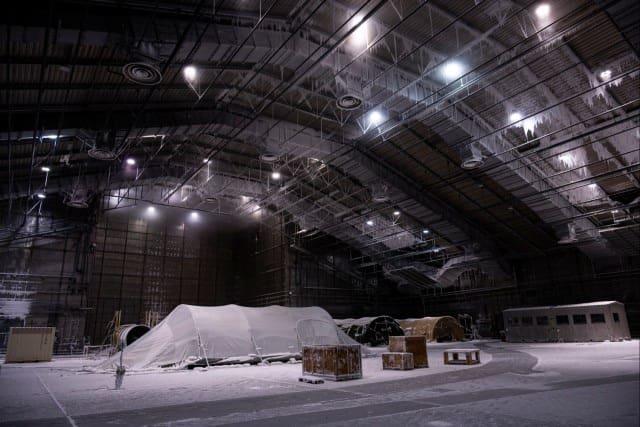
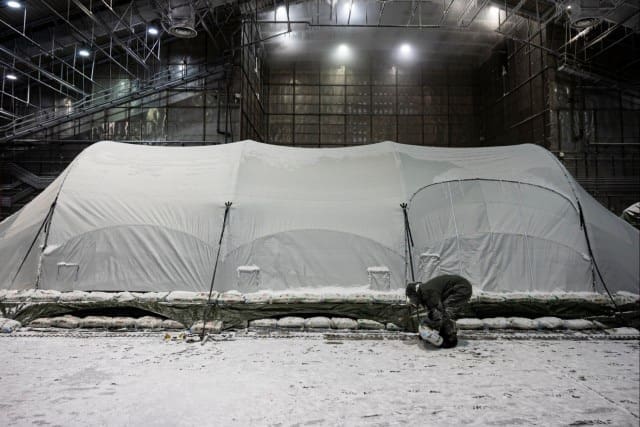
The Soldiers and testers utilized the weapons in rigorous scenarios, from static and kinetic ranges at Fort Greely and Fort Wainwright to maneuver live fires and ultimately a 72-hour simulated mission across CRTC’s vast ranges. All the while, a team of 16 data collectors recorded information in the weapons’ battery life, hit-miss data on targets the Soldiers engaged, and a variety of human factors data involving utilizing the weapons in extreme cold.

“We knew it was going to be extremely fast-paced and that usually means there will be changes,” said Monica Gaschler, senior data collector. “We settled on 16 data collectors, which meant one data collector per three Soldiers. 14 went out in the field, and two stayed in house to do quality assurance on the data and write test incident reports.”

Extreme cold was a coveted commodity for this test, and the weather forecast delivered beyond the highest hopes of the testers.

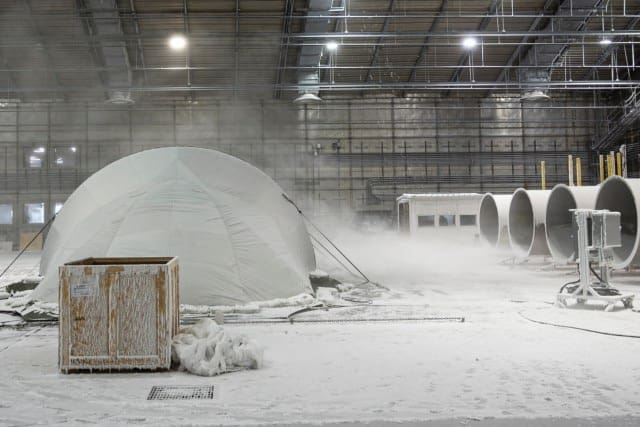
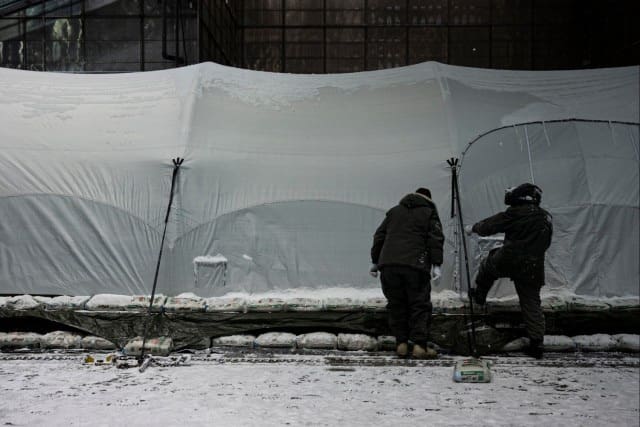
“We were fortunate to have some pretty substantial cold weather for the duration of the test,” said Prewitt. “The last urban rifle marksmanship course we did was -54 degrees Fahrenheit when we started, so it was incredibly cold.”

“The Soldiers really got to experience what a long, cold day was,” added Howell. “Every day they went out one week it didn’t get above minus 20. The next week it was hovering in the minus 30 to minus 40 range all day, every day.”

The majority of data collectors who supported the test traveled from Yuma Test Center in Arizona, which like CRTC is under the command of U.S. Army Yuma Proving Ground.

“It was an endurance challenge for data collectors from the desert,” said Gaschler. “It’s rare for data collectors to be out in the field in temperatures below minus 50 degrees, but they did it without complaints. They got every bit of data, and I am so proud of every one of them.”

“We’ve got a lot of data that is informing decisions,” added Howell. “It’s very fortunate that we had a good block of cold to test this equipment, especially something as prominent as the NGSW is going to be. It has definitely been a successful test.”

By Mark Schauer

Army Delivers Next Generation Squad Weapon to First Unit

Thursday, March 28th, 2024

FORT CAMPBELL, Ky. – A brigade from the 101st Airborne Division at Fort Campbell was the first unit equipped with the Army’s new Next Generation Squad Weapon (NGSW) system today.

Soldiers from the 1st Battalion, 506th Infantry Regiment, accepted Next Generation Rifles and Automatic Rifles in preparation for New Equipment Training (NET) in April. NET is an in-depth, train-the-trainer course that prepares designated non-commissioned officers to facilitate follow-on training across the company.

“The process of developing and fielding new equipment is never without challenges and setbacks and speed bumps, so we’re celebrating the fact that we’re delivering on schedule, as promised,” said Lt. Col. Mark Vidotto, the NGSW lead for the Soldier Lethality Cross-Functional Team (SL CFT) at Fort Moore, Georgia. “It was a team effort from start to finish.”

The “start” was 2018, and the “team” included the SL CFT and their Program Executive Office Soldier partners, Joint Program Executive Office Armaments and Ammunition, Sig Sauer, Vortex and a number of other stakeholders who teamed to hasten development and production of the new system after the requirement was identified in a 2017 study that recognized the need for weapons that will perform better at range.

More than 25,000 hours have been invested by Soldiers during the development and testing of the NGSW system, which includes the XM7 Rifle, the XM250 Automatic Rifle, the XM157 Fire Control and the 6.8 mm family of ammunitions.


LTC Mark Vidotto, Next Generation Squad Weapons (NGSW) requirements manager for Army Futures Command, LTC Eric Evans, Battalion Commander, 1st Battalion, 506th Infantry Regiment, CSM Ryan Jeffers, senior enlisted leader of the 1st Battalion, 506th Infantry Regiment, and MAJ Eric Forsgren, assistant product manager for the NGSW for PEO Soldier, pose for a group photo at an NGSW first unit equipped and unboxing event at Fort Campbell, Ky., March 28.

“The NGSW fielding is a culmination of a comprehensive and rigorous process of design, testing and feedback, all of which were led by Soldiers,” said Col. Jason Bohannon, project manager, Soldier Lethality, PEO Soldier. “As a result, the Army is delivering on its promise to deliver to Soldiers the highest quality, most capable small-caliber weapons and ammunition.” 

Based on modernization schedules, the Army will field NGSW systems to a National Guard armored brigade in May.

Note from SSD: This came from Army Futures Command. It did not include a photo but few people read articles without photos. I included the image at the top from PEO Soldier’s PM Soldier Lethality. It was not taken during this First Unit Equipped event and only illustrates the XM250 Automatic Rifle. The optic shown is not currently part of the program of record. The previous test event with the 101st was considered first unit issued. Later in the day, PEO Soldier released the two additional images.

TacJobs – US Army 17A Cyber Warfare Officer

Thursday, March 28th, 2024

US Army Cyber Warfare Officers are responsible for carrying out cyber security operations in conjunction with an organized plan by targeting adversary activities and capabilities.

Specialized Skills Learned:

-Cyber Operations

-Intelligence & Surveillance

-Systems & Networks

Earn up to 46 Nationally Recognized Certifications

Requirements:

-U.S. Citizen or Permanent Resident

-18 to 34 Years Old

-Accepted to College, In College, or Graduate of a Four-Year Degree Program

-Basic Officer Leadership Course (or Additional Special Courses/Qualifications)

-Eligible for a Secret Security Clearance

-Medically and Physically Fit

-In Good Moral Standing

For more information on how YOU can become a 17A, head to www.goarmy.com/careers-and-jobs/career-match/signal-intelligence/locations-stats-frequencies/17a-cyber-warfare-officer

Transforming DOD: PC-C4 Prepares for the Future Battlefield

Thursday, March 28th, 2024

FORT IRWIN, Calif. — On the beaches, oceans, air and deserts of the U.S. West Coast, more than 4,000 members of the joint force, civilians, contractors, and militaries from the United Kingdom, Australia, Canada, New Zealand, France and Japan experimented with more than 200 technologies in the Army’s largest experiment in the dirt, Project Convergence Capstone 4.

Two phases, primarily conducted in California at Camp Pendleton and the National Training Center, allowed experimenters to work in arduous conditions and experiment with cutting-edge technology in as close to a real-world environment as possible. Distant locations also supported the experiment up and down the West Coast and the Pacific region to experiment through time, distance and complexity.

Technology getting to PC-C4 itself takes time and goes through a review process designed to save PC-C4 time and money by ensuring only the most promising technologies make their way to the capstone experiment. All technology at PC-C4 could fill a potential gap or provide a capability designated as necessary by senior leaders. Nascent technologies go through the Science Technology and Review Board before spending time at a myriad of other experiments and lab-based risk reduction activities, all before they ever make their way to NTC or Camp Pendleton.

“There are plenty of technologies we find out aren’t mature enough or don’t fill a gap or capability the way we thought, so they get withdrawn way before Capstone 4 takes place,” said Mindy Gabbert, experiment division chief at the U.S. Army Combat Capabilities Development Command.

Not only does this scrutiny save money and time once the experiment begins at PC-C4, but it also ensures that all players involved in putting on PC-C4 already have working relationships.

“It’s not just a yes or no process. It’s going through those prior risk reduction activities that allows the broader community to see those technologies and just to be familiar with them before they get here so that they can properly fit them into the exercise, so that they can make sure that we are aligning them with the right use cases and the other right opportunities out here,” Gabbert said. “So, in addition to the technical aspects of those technologies, it’s just building that knowledge base within the community of what’s out there and bridges that community by building the whole body of knowledge we’re all working on.”

Since 2020, Project Convergence (PC) has grown exponentially in scale and scope. PC-C4 was the largest PC experiment yet, with participation from the United States Army, Navy, Marine Corps, Air Force and multinational partners.

“The first PC was conducted in 2020. It was Army only and focused on a specific time between the identification of a target and an effector shooting on that target,” said Lt. Gen. Ross Coffman, United States Army Futures Command deputy commanding general. “And from there, we decided the Army will never fight alone, so let’s get the entire joint force focused on this problem set.”

“This year, we have increased the threat envelope to 10 times what we did last year. With the entire joint force and our U.K. and Australian teammates and allies, we were able to effectively move data for the first time in an Indo-Pacific scenario at a magnitude we’ve never seen before,” Coffman said.

PC-C4 informed combined, joint all-domain situational awareness, command and control, integrated offensive and defensive fires, defeat large target array, human machine integration and how to sustain the force over large-scale combat operations, dubbed contested logistics.

One of the significant successes of PC-C4 was the integration of sensors and fires to ensure that the force is best able to stop incoming missiles without depleting munitions unnecessarily. Coffman explained that they used offensive and defensive fires to tackle the problem and ensure that sensors have interoperability between the branches to ensure the right sensors pick up the threat and the right shooter takes it out, so the military does not waste munitions.

“It’s not our job to go fill up the magazines to the level we’d like them to be, but it is our job to ensure that we can connect my sensors to his fires and his sensors to my fires because I might have the most available weapon where he’s got the most survivable sensor and vice versa,” said Vice Adm. Michael Boyle, Third Fleet commander. “And that’s really what this is about; it’s enabling us to pick from whatever magazine we need.”


Another major win for PC-C4 was the increased ability to push data through a fully networked command, control and communications system. This allowed for more significant amounts of data to be pushed to the Joint and Allied forces.

“When you put stress on untested equipment, you’re going to learn things,” Coffman said. “One of the interesting things is that as we increase the pipe on this cross, it worked magnificently. It could pass a large amount of data that we had not seen before we tested it last year, and we could see it was nascent. We were able to pass data successfully.”

Great strides in contested logistics experiments also took place across both phases. Experiments involving beach landings, drones and printing technology were showcased, and for the first time, a repair part for an Army system was printed out at sea on a Navy vessel.


“Envision the printer was on the vessel,” said Col. Shane Upton, director of the Contested Logistics Cross-Functional Team. “They printed the part, we put it on an unmarried unmanned aerial system, a drone, and flew it onto the beach to the point of need. In a contested environment where you don’t have a permissive flow of sustainment, you’ve got to use some of these exquisite technologies. That’s why we’re experimenting with them.”

Now that PC-C4 has wrapped up after several weeks of experimentation, the data collected will be analyzed to inform future acquisition and force structure decisions and aggressively advance and integrate Army contributions to the Joint and Combined fight.


“It’s worth every penny,” Coffman said of the experiment. “The readiness of the joint force and the partnership with our allies is invaluable. When called upon, the women and men of this nation and the women and men of other nations will fight side by side to preserve liberty, and that cost is worth every penny.”

By Matthew Murch, Futures and Concepts Center

Army Futures Command Stands Up All-Domain Sensing CFT

Wednesday, March 27th, 2024

HUNTSVILLE, Ala. – This week, Gen. James E. Rainey, commanding general of Army Futures Command, announced the stand-up of an All-Domain Sensing (ADS) Cross-Functional Team (CFT). The new CFT arrives on the heels of the successful completion of the Assured Positioning, Navigation and Timing/Space (APNT/Space) CFT’s original mission.

All-domain sensing enables synchronized kinetic and nonkinetic capabilities and has been a consistent priority for Army senior leaders. It supports synchronization and optimization of intelligence collection, processing/dissemination activities and sensor-to-shooter activities. The Army must be able to see as far as it can shoot, see after it shoots, access machine-speed analytics to make informed decisions and understand the impacts of multiple effects on the battlefield.

“CFT’s are one of the indisputable successes of AFC,” Rainey said. “We identify a problem and pull a team together to solve it. The APNT/Space CFT did what we asked them to do, and the changes we are making are intended to capitalize on our success.”

The ADS CFT, located at Adelphi, Maryland, and Huntsville, Alabama, will champion four lines of effort for the Army:

• Multi-Sensor Dominance: Prioritizing, integrating and shaping Army sensor technologies, to include counter-intelligence, surveillance, reconnaissance and targeting; synchronizing sensor integration and experimentation with Joint, Allied, partner and commercial entities; and developing Army sensor requirements in coordination with Army and Joint communities. 

• Sensing Architecture: Developing integrated sensing architecture that facilitates transport and access at optimal pace and scale to enable Army force projection, fires and maneuver; and supporting Joint and Allied fires and maneuver. 

• Advanced Processing and Dissemination: Identifying, shaping and exploiting advanced technologies for data processing and dissemination at the pace and scale required to execute Army Large-Scale Combat Operations and Multi-Domain Operations and enable Joint and Allied operations.

• Operational Enablers: In coordination with Capability Development and Integration Directorates and Army Capability Managers, shaping doctrine, organization, training, materiel, leadership and education, personnel and facilities (DOTMLPF-P) for sensors, electronic warfare, and positioning, navigation and timing to support and sustain Army fires and maneuver in denied and degraded environments.

“With the evolution of hard Army problems, comes the evolution of talented teams to solve them,” said Mike Monteleone, director of the ADS CFT. “Our team swiftly delivered on our last mission, proving the CFT concept is effective in accelerating capability delivery. We look forward to helping the Army and Joint enterprise converge understanding and deliver all-domain sensing solutions.”

The ADS CFT will partner closely with teams across the Army and Joint Force; requirements and architecture communities; materiel developers; test, training and experimentation facilitators; and more. The CFT is expected to reach Full Operational Capability (FOC) by the second quarter of fiscal year 2025.

Courtesy of All-Domain Sensing Cross-Functional Team.