Aquaterro

Archive for the ‘Clothing’ Category

Kitanica Redesigns the Mark IV

Monday, December 12th, 2016

The Mark IV is Kitanica’s most iconic jacket. In fact, after a couple of appearances on ‘Mythbusters’ several years ago, the Mark IV is what brought the brand back from hibernation.

While the Mark IV continues to be made from 1000D Cordura and still incorprates the distinctive spine pad, it now accepts elbow pads as well.  Otherwise, there are small design changes here and there.

Like all Kitanica clothing, these are proudly Made in the USA. Offered in Ranger Green, sizes Medium-XXLarge.

www.kitanica.net/MARK-IV-p/001

USMC Mandates Woodland MCCUU For Year-Round Wear

Monday, December 12th, 2016

Last week, Gen Neller, Marine Commandant, issued ALMARS 038/16 which mandates year-round wear of the Woodland MARPAT version of the Marine Corps Combat Utility Uniform. While there are exceptions for commanders to continue to specify wear of the Desert variant based on the local environment, Marines will now swap between sleeves up or down on the same day the rest of the country switches back and forth from Daylight Savings Time.

This move makes me wonder if the Marines aren’t going to remove the Deserts from the Sea Bag and make them UIF gear.


USMC Photo by LCpl Caleb Maher – BAENGNYEONGDO, South Korea – U.S. Marines With Lima Company 3rd Battalion, 3rd Marines, 3rd Marine Regiment, train with Republic of Korea Marines During Korean Marine Exchange Program 16-15, Baengnyeongdo, South Korea, Oct. 3rd, 2016. KMEP offered realistic scenario training ensuring ROK-U.S. combined forces are trained and ready for urban warfare tactics. 

R 082123Z DEC 16
ALMAR 038/16
MSGID/GENADMIN/CMC WASHINGTON DC//
SUBJ//USMC SEASONAL UNIFORM GUIDANCE//
REF/A/MSGID: BNO 1020.3G//
REF/B/MSGID: MCO P1020.34G CH 1-5//
NARR/REF A IS H&S BN, HQMC, HENDERSON HALL UNIFORM REGULATIONS. REF B IS THE MARINE CORPS UNIFORM REGULATIONS.//
POC/LTCOL CISCO J. M./DMCS OPSO/TEL: COMM(703)614-2828//
GENTEXT/REMARKS/1. This ALMAR prescribes the seasonal uniform change and applies to all Marines and Navy personnel serving with Marine Corps units.
2. Effective immediately, the seasonal uniform changes are as prescribed below:
3. The seasonal uniform transitions will occur semi-annually on the weekend in the Fall and Spring concurrent with change to and from Daylight Saving Time (DST).
4. CONUS/OCONUS:
4.a. For all USMC Commands. During the winter season, the woodland MCCUU will be worn with sleeves down and the designated seasonal service uniform will be Service “B”. Upon transition to the summer season, effective with the move to DST, the woodland MCCUU will still be worn; however, sleeves will be rolled up and the designated season service uniform will be Service “C”.
4.b. OCONUS Commands/Bases/Units will differ to the policy/guidance as established by the their respective Marine Forces(MARFOR) Commander for their seasonal dress/uniform.
4.b.1. MARFOR Commanders, due to the breadth of their area of responsibility, are authorized to set policy/guidance that may vary throughout their region, to include the adjustment of dates of transition and the respective MCCUU for wear.
5. Exceptions:
5.a. MARFOR/MEF/Installation commanders may adjust the uniform for wear, from the dates established in this ALMAR within reason, to take into account seasonal weather patterns.
5.b. Commanders overseeing personnel in training (i.e. basic, MOS school, advanced MOS training) may set the MCCUU for wear as established by applicable order.
5.c. Commanders overseeing units/personnel in training for deployment may set the MCCUU for wear based on the mission requirements, and as deemed necessary to ensure effective pre-deployment training.
5.d. Units/personnel deployed will adhere to the policy/guidance as established by combatant commanders and the regional MARFOR commander.
6. Personnel serving in or visiting the National Capital Region will review reference (a), http:(slash slash)www.hqmc.marines.mil/dmcs, in its entirety to ensure compliance and uniformity of wear.
7. All other aspects of reference (b) apply.
8. Semper Fidelis, Robert B. Neller, General, U.S. Marine Corps, Commandant of the Marine Corps.//

Stuff I Like – Platypus Polo Blazer from Platatac

Friday, December 9th, 2016

If you’ve seen me around trade shows, I often wear a softshell sport coat I bought from Nau many years ago. As it’s getting a little long in the tooth, and Nau no longer makes it, I’ve been on the lookout for a replacement for some time. Earlier this year, I was speaking with my friend and Platatac founder, Ben Cox, during SOFIC, when he presented me with a Platypus Polo Tie. We talked about the Platypus Polo line and he mentioned that he was working on a Blazer. I told him I was in as I had been searching for a good travel Blazer to replace my old one for quite awhile. A few weeks ago, I received a parcel from Australia and in it was one of the first Platypus Polo Blazers off the line.


There are two things I like about it. First, is the generous cut, which leaves ample room for concealed carry, or layering. The second thing I like about the Platypus Polo Blazer is the material selection. It’s made from a DWR treated, 4-way stretch offering a high level of wind and water resistance while maintaining high breathability. That little bit of mechanical stretch is great when you’re doing more than just standing around and it doesn’t hold wrinkles when taken out of luggage, but rather looks great right after you put it on.


Platatac has released the Blazer and is offering two FREE Platypus ties, like the ones I have, for the first 20 Blazers sold.

Features
-(DWR) Treated for water resistance
-Wind resistant
-Generous cut to allow for concealed carriage of firearms
-Notch style lapel
-Single vented
-Half lined interior
-Two interior pockets (1 zippered for passports and other important items, 1 with button closure)
-Shock cord loop for headphone routing
-Welted hand pockets with flap covering
-Single welt breast pocket
-Three non-kissing functional cuff buttons
-Softshell 4-way stretch DWR treated Nylon/Spandex blend

Offered in Navy Blue, sizes Small – XLarge in a generous cut.

Get yours at www.platatac.com/platatac-platypus-polo-club-blazer.

For The Ladies – Velocity Systems Introduces Women’s BOSS Rugby

Monday, December 5th, 2016

Velocity Systems’ BOSS Rugby has been super popular, both as Range attire as well as a uniform item. They’ve just released a Women’s version of this shirt.

The Velocity Systems Women’s BOSS Rugby is lightweight and can be utilized as a hot weather range shirt, or a moisture managing base layer under armor. The rugby style collar keeps a weapon sling off the base of neck. The active cut is athletic and mobile; the material is comfortable and quick to dry. The two envelope pockets on the sleeve accept hook backed patches. 83% Nylon 17% Spandex. All materials and workmanship are 100% made in the USA. The new Women’s BOSS Rugby comes in Black, Ranger Green and Wolf Grey in sizes, S through XL.

Available now at www.velsyst.com.

The Baldwin Articles – Cargo Pockets

Monday, December 5th, 2016

There is one functional element that is found on the field uniform of practically all the militaries in the world today. It is some version of the simple but effective thigh mounted cargo pocket. Surprisingly, the genesis of that now ubiquitous feature dates only back to WWII. And it is very much an American innovation. Most militaries, including the US Armed Forces saw no need for anything other than small patch pockets on field uniforms prior to 1940. And most of those were located on issued jackets or shirts and not trousers. If you have a set of Dress Blues or Greens in your closet you can see what most truly old school combat uniforms looked like. But with global war imminent in the late 1930s new and previously untried clothing ideas found some traction and urgency.

During WWII the US Army fielded three types of field trousers each with different cargo pockets. The first and most widely issued was the Herringbone Twill (HBT) uniform (not shown). The HBT trousers had a relatively small unpleated pocket mounted high on the thigh that was secured by one button and a flap. This is the trouser worn by the Ranger characters in Saving Private Ryan (also seen in The Dirty Dozen and more recently The Great Raid). This uniform remained in service until the late 1950s generally only for summer wear. The second type of field trousers saw much more limited use. Those are the Trousers, Mountain, which were issued only to the 10th Mountain Division and the First Special Service Force (FSSF). These pants had a good sized cargo pocket with flap and two buttons for closure. Side note: even though they were also parachute qualified the plank holders of the FSSF preferred the mountain trousers to those developed exclusively for paratroopers.

But it was the development and eventual combat employment of mission specific paratrooper uniforms that rightly validated the utility of cargo pockets. By necessity the Army Airborne Command was a hotbed of invention. The leadership quickly recognized the critical need for a paratrooper to carry considerably more gear on his person than the typical soldier. Early on they produced two limited issue experimental uniforms that never saw combat: the paratrooper coveralls and the M1941 uniform. The coveralls had fair sized thigh pockets with a metal zipper across the top and no flap. The M1941 uniform had single snap closed pockets that were deemed too small but was hurriedly reengineered and fielded as the iconic M1942 Parachutist Uniform.

But by the time the American Airborne had a couple of combat jumps worth of experience it was obvious that the cotton twill of the M1942 uniform – especially the pockets – needed to be reinforced. To be fair, the troopers routinely overloaded the pockets with hard edged objects that would wear holes in almost any clothing material available at the time. Fortunately the Airborne units had a secret weapon not available to “leg” outfits. That is the Parachute Rigger. The Rigger was not only charged with packing parachutes but also with repairing them. So all were trained to use industrial grade sewing machines and had a steady supply of web material and high strength thread. Riggers were the first custom gear industry. They produced countless enlarged ammo pouches, specialized rigs for engineers and medics and anything else needed by Airborne units that was not in the normal Army supply channels.

So when time and mission permitted paratroopers turned in their uniforms to have canvas or cotton webbing reinforcements applied by the Riggers. This included leg ties, rectangular canvas patches for the elbows and knees (see photo) and webbing around all of the pockets. The leg ties were needed to stabilize and cinch the load to the troopers’ thighs during and after a drop. By the Normandy Invasion jump most of the troopers in the 82nd and 101st were wearing uniforms with these improvements. Again as widely seen on the Airborne characters of Saving Private Ryan and the first couple of episodes of Band of Brothers. I mention the movies in part because I don’t have a M1942 uniform to display. What I do have at the top of the visual aid is a set of “Rigger Pockets” that are of the same dimensions – and nearly identical design. With the aforementioned canvas leg ties and knee patches. These are well made replicas that come from a place called WWII Impressions that caters to Reenactors.


1st Row: Replica K Rations, Canvas Rigger Pockets (back and Front), M1945 and M1950 Suspenders. 2nd Row: M1965 Field Trousers (OD and Woodland). 3rd Row: OG 107 Jungle Fatigues, ERDL Green Dominant, ERDL Brown Dominant. 4th Row: BDU Woodland, DCU 6-Color, DCU 3-Color. 5th Row: ACU UCP, ACU OCP.

The M1942 uniform really was the archetype from which all subsequent US Military cargo pockets evolved. When then Captain Yarborough designed the parachutist uniform he sized each pocket based on purpose. The thigh cargo pockets specifically were intended to hold 3 K-Ration meal components (see photo). The pockets for every paratrooper were the same size to hold the same load. Not sized to look esthetically pleasing on the individual as is common today. During the upgrades mentioned above, two other design shortcomings were deemed less critical and were not immediately addressed. The pocket had bellows along all three sides. This provided for maximum usable volume. But also allowed the pockets to bulge out significantly and become a snagging hazard especially in wooded terrain. The pocket also had an “inverted box (2 sided) pleat” in the center to allow expansion (yes, I looked it up). Inverted simply means that the fold that forms the pleat is on the inside of the pocket rather than the outside (see photo). That pleat also tended to get easily caught by underbrush. But it was still the best uniform with the best pockets available into the late summer of 44.

Stateside, the Army had already been working on a replacement common combat uniform for the entire force. Experimentation was conducted on the proposed M1943 uniform beginning in 42. Early combat lessons learned by Airborne units were incorporated into the test up front. For the Trouser component six different cargo pocket configurations were tested. On some of the test pants there was actually a different pocket on either side of the sample. However, when the official type classified “M1943 Uniform” was fielded it had no cargo pockets. There were a couple of reasons for this. One, the Armor community and Air Corps did not want cargo pockets. They saw them as nothing more than an annoyance in a tank or plane. There was also some institutional resistance to cargo pockets because they made soldiers look “sloppy and unprofessional”. And, after all, the Great War had been won without cargo pockets. But I think the final decision came down to nothing more than simplifying the design so that the trousers could be easier to produce in mass quantities rapidly.

However, the Airborne still wanted cargo pockets. So even before the M1943 uniform was shipped into the European Theater the Riggers were hard at work fabricating those Rigger Pockets. Using the M1942 pockets as the best available template. They chose canvas because it was the toughest fabric they had on hand. Then as the M1943 trousers arrived the Riggers sewed those pockets to the pants just in time for Operation Market Garden and all subsequent jumps. On the plus side, the unmodified M1943 Jacket, Field was well received by the paratroopers. The new ensemble was made of sturdy cotton sateen and was more durable than the M1942. It is important to note that the M1943 Uniform was envisioned to be a 3-season temperate zone uniform. It was supposed to supplant all the specialized uniforms including HBTs. But soldiers quickly found that while the M1943 was a great improvement it was simply too hot for summer wear even in Central Europe. So by default the HBT uniform soldiered on despite the Army’s original intentions.

Rigger Pockets themselves actually have a much longer history too. Post WWII the Army continued to issue the slick M1943 trousers. But Airborne units still wanted pockets. So it became something of a rite of passage for graduates of Jump School to receive a set of canvas Rigger Pockets and leg ties. Which the cherry jumper would then have sewn on at a local tailor shop. When the Rangers and the 187th RCT made the two large scale combat jumps in Korea almost all were wearing M1943 uniforms with canvas Rigger Pockets. The M1951 Uniform was eventually fielded with built in cargo pockets but did not get to Korea in any quantity till after 53 and the Armistice. But even after the M1951 uniform was available the Rigger Pockets remained the mark of a seasoned paratrooper and continued to be worn in the back woods of places like Fort Bragg and Germany. In one book I have there are a couple of pictures of an ODA doing mountaineering training in 1961. And it appears the older NCOs still have them on their trousers.

But as already mentioned some changes were definitely warranted in the cargo pocket design despite the mystique and longevity of the originals. So when the Army developed the M1951 Uniform they created an improved version that utilized the now familiar tri-panel “knife (1 sided) pleat” configuration. Additionally the leading and bottom seams were sewn down. The new pocket therefore only expanded in the rear. Both revisions served to greatly reduce snagging issues. Moreover, the bottom front corner of the flap was bartacked down for the same reason. This now classic design, with some occasional minor tweaks, remains the standard even today some 65 years later.

I don’t have any M1951 trousers anymore but I do have three of the follow on M1965 Field Trousers* on display. The only real difference between the 51s and 65s is in the buttons. The 51s had flat plastic buttons and the 65s have the oval plastic buttons we are still using today. The 51s also had buttons on the outside of the waist so that they would be reverse compatible with the M1945 Suspenders (see photo). I have also laid out the long serving M1950 Suspenders that many of you will recognize. The M1950s are apparently still in the system and being produced today in foliage green. Paratroopers learned in WWII that if you put heavy things in your cargo pockets suspenders were practically mandatory.

I was issued M1951s and those very M1945 suspenders in Germany in 1975. In those days you used serviceable gear until you literally wore it out. I put an asterisk next to “Field Trousers” above because there is one difference between the two OD examples I have. The earlier manufactured one is labeled “Trousers, Field”. The one produced later is labeled “Trousers, Cold Weather” as is the woodland set. As I recall we almost always just called them “field pants”. Like their predecessors, the M1951 and M1965 cargo pockets have the very useful leg tie downs hidden inside. I still remember enlightening soldiers and even NCOs in the early 80s who didn’t know the ties were there or didn’t understand what they were for. I used my tie downs just about every time I wore field pants. They definitely help keep the pocket’s contents from bouncing around.

The OG107 Jungle Fatigues and the first set of ERDLs are cut in the same pattern. They have the tri-panel knife pleat but a slightly larger flap that is obviously reminiscent of the Rigger Pocket or M1942 flap. Both of these uniforms were extremely functional and popular and have been discussed many times here on SSD. The last generation ERDLs (late 70s/early 80s) had a very different pocket arrangement. The jacket pockets were square and level rather than rounded and canted. And all had the inverted box pleat including, inexplicably, the thigh cargo pocket. I was issued this pair in 83 at Fort Bragg. On my first field problem the pleat caught on brush and was ripped. When I got back to garrison I had the pleat sewn shut. Problem solved. I can only assume that somebody had not bothered to capture why that feature had been abandoned in the first place and recycled it out of ignorance. Uniforms in this straight pocket configuration were also produced and issued in OG107 Jungles and in experimental 6-Color Desert.

The early BDUs circa 1982-83 had a myriad of problems. They had a goofy big collar, turned blue after one or two washings and shrank like crazy. But there was nothing wrong with the cargo pockets. The Army wisely reverted back to the knife pleats and a relatively narrow flap with a two button closure. Another side note. Some of you may remember that the original BDUs in NYCO Twill were intended as an all-purpose 3-season temperate zone uniform. Sound familiar? They were too hot and soon “Light Weight” Ripstop BDUs were produced to fix that problem. OG107 Jungle Fatigues were also authorized Army wide as an interim fix until the lighter uniforms could be fielded. Many soldiers, unaware of the history, often erroneously refer to the heavier originals as “winter weight” BDUs. As far as I know, USGI Desert Storm era 6-Color DCUs were only issued in Twill and later 3-Color DCUs only in Ripstop.

Today the USMC MARPAT uniforms and the Air Force ABU still use the same well refined and combat tested BDU pocket design described above. But the Army decided it needed to make some changes when it fielded the ACU in 2005. They kept the tri-panel pocket body. But they traded buttons for Velcro and shock cord. I’m not anti-Velcro. I believe in some applications it is a suitable closure device. Chest pockets under body armor for instance. But it is the wrong option for cargo pockets for a number of reasons which have been discussed here many times. The flap was also canted and was no longer bartacked down. These changes were all intended to make it easier to access the pocket when seated. Maybe so. I just personally don’t recall that accessing the older cargo pockets was a problem prior to 2005.

In any case, the Army has transitioned back to a button closure on the last generation of UCP ACUs and the newer Multicam and OCP ACUs. But for some reason someone decided that there was a need for a third “expansion” button. If that works for you then by all means drive on. But after some unscientific experimentation here on the homestead, I saw no use for it and removed the superfluous third button. When I was wearing the UCP ACUs in the 2005-07 timeframe I also had the bottom front corner of the flaps bartacked down. I experienced no adverse issues with pocket access. And I felt more secure in that the flap could no longer come completely undone and dump the contents (say in a vehicle roll over).

There are a number of newer and IMHO tactically questionable cargo pockets designs out there today. The Navy just adopted the NWU Type III that according to pictures I’ve seen has cargo pockets segmented by two inverted box pleats. I’m sure that will work fine aboard ship. But this style will never travel well through a jungle. Other popular commercial examples have internal elastic to accommodate rifle magazines. I can tell you that unless there is some provision to cinch that pocket to the thigh (or you like wearing really tight pants) those loaded magazines will beat your leg to death when you run. And one last thing. The flap on the OCP ACUs is noticeably larger than previous cargo pocket flaps. I thought of early BDU/DCU Elvis Collars when I saw it. It just seems bigger than reasonably necessary for the task. For those wearing them in the field today I would be curious to hear if the pocket flap is the snag monster I suspect it can be. TLB

LTC Terry Baldwin, US Army (RET) served on active duty from 1975-2011 in various Infantry and Special Forces assignments.

Next: Load Carriage – The Road to ALICE

Prometheus Design Werx – Wilderness Utility Top Available For Pre-Order

Saturday, December 3rd, 2016

Heritage Materials, Modern Performance Design, Made in the USA

Prometheus Design Werx is opening their new Wilderness Utility Top for Pre-Order. This signature design for is in a class by itself. If the spirits of Jeremiah Johnson, John Muir, and Hugh Glass inhabit your own. This design is crafted for those who are most at home in the forests, mountains, and wilderness. A fine blend between a tried and trued heritage wool Melton and a modern, function first utility design, the Wilderness Utility Top is a style that will be lived in and relied on year after year. Cut in a shirt-jac silhouette, it is a relaxed fit and designed to be worn like a light jacket over a light mid-layer. Or size down if to worn mostly with a base-layer like your favorite waffle thermal. Designed and made in California, USA.

The Wilderness Utility Top is a part of their Made in USA CORE-Line of products by Prometheus Design Werx, and will be available in OD Green and Charcoal Gray Heather.

The Design and R&D Team at PDW states:

“We see this as the modern mountain man shirt. While a very modern and functional design, it is made with a classic wool Melton. Wool has been the goto outdoor material for generations. It is naturally insulating even when wet, quiet, and no melt no drip. The overall cut and single side arm panels allows a great range and freedom of movement uncommon in wool style outdoor shirts. Ample, well placed pockets for storing any number of outdoor accessories, personal effects, and survival to camp items. 4 of the pockets have zippers for extra security, 2 additional chest pockets act as hand warmers, and are placed as to clear pack waist straps, utility to first-line belts. Double reinforced elbows, generous collar stands up to block wind, and the no-loss slotted parasmock style PDW buttons round out the Wilderness Utility Top. This is a PDW shirt that you can likely pass down to your grandkids. We’re going to wear the hell out of this top.”

The PDW Wilderness Utility Top is available for Pre-Order via their website, prometheusdesignwerx.com.

PenCott-GreenZone All-Weather Uniform Set From BE-X Combat Gear

Friday, December 2nd, 2016

PenCott recently announced a new uniform set from BE-X Combat Gear, in PenCott’s GreenZone camouflage pattern. Below is the opening section of the blog post detailing the uniform set

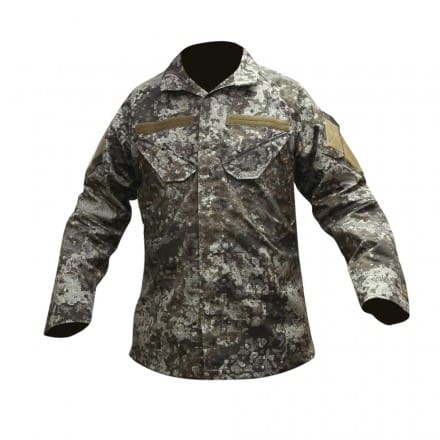
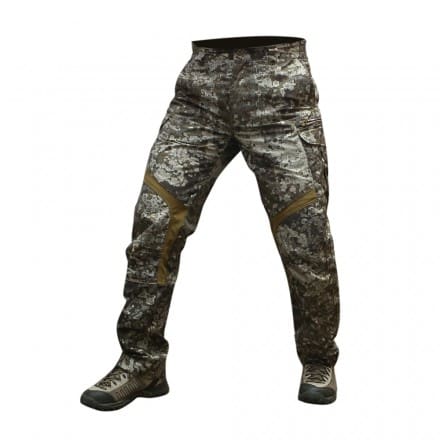
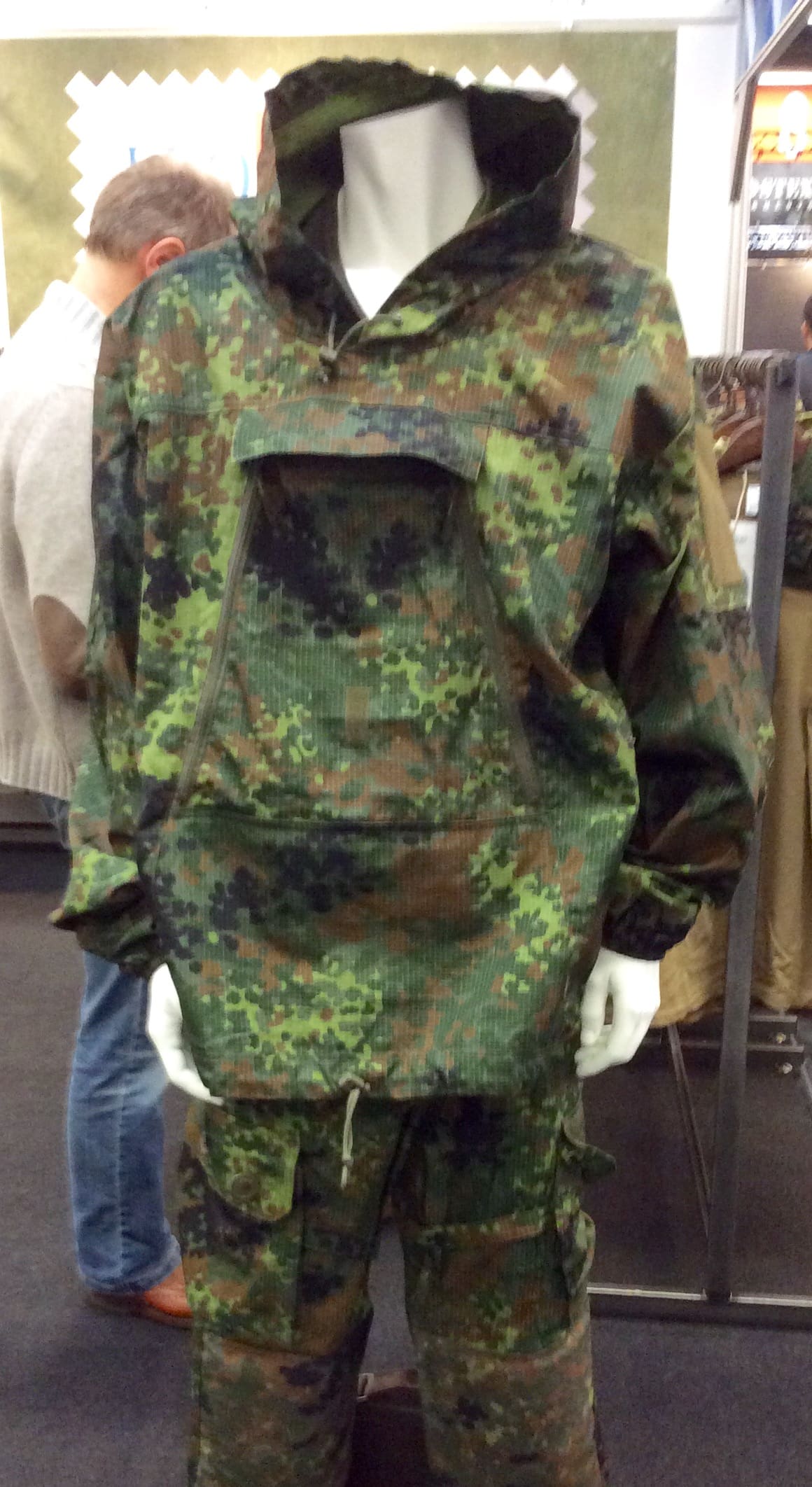
Under their professional milspec brand ‘FronTier One’, BE-X Combat Gear has released their new ultralight, windproof, water resistant, uniform set in PenCott® GreenZone® camouflage.

pencott_promo_int

All items in this set are made from genuine US MilSpec 50D polyester fabric with a durable water resistant finish – this is the exact same fabric used by the US Marine Corps for its snow camouflage over suit and by the US Air Force for its physical training shell suit. The fabric is rugged, lightweight, windproof, water repellent and unbelieveable fast drying!

2

Click the following link to read the rest of the story – www.pencottcamo.com/2016/12/pencott-greenzone-all-weather-uniform-set-from-be-x-combat-gear

Sneak Peek – UF PRO’s Delta OL 3.0 Suit

Thursday, December 1st, 2016


Wearing comfortable clothing is essential when you want to stay focused, especially when operating outdoors in winter conditions with a full load-out, and the Delta OL 3.0 Jacket and Pant have been designed specifically with this in mind.

During activities in cold weather, the Delta OL 3.0 jacket will keep you protected against all kinds of cold weather hazards, offer you the necessary durability and most importantly, give you the comfort you need to focus on your tasking.

The Delta OL 3.0 jacket is due to its face material windproof and water-repellent. This means that the 2-layer ripstop laminate will stop wind-chill and also keep you dry during heavy snowfall and light drizzle.

A combination of G-Loft and WINDSTOPPER® means the Delta OL 3.0 uses the perfect technologies to protect you. The exceptional G-Loft thermal insulation created out of different hollow polyester fibres a 3D structure which can retain the maximum amount of dry air. This creates a warming thermal insulating layer between you and the cold environment. And the fibres keep their structure also when wet. Due to the so called “memory effect“, they always return to the original form, even after multiple washes and hard usage.


To keep your core warm and to give you extra movability in the arms area the jacket has two grades of thermal insulation. In the torso area it is lined with a 145 g/m² and in the sleeves with a 110 g/m² G-Loft insulation. Areas which are more prone to abrasion, like the elbows and the lower back area, are additionally reinforced with a 500 Denier Cordura® fabric.

The jacket offers in total 8 pockets, which allow you to stash most of the stuff you need within hands reach. Smaller gear can be stowed away in one of the 4 sleeve pockets. For bulkier gear you can use either one of the big front pockets or the two inner pockets. Due to the Delta OL 3.0 jacket’s anatomic cut, the jacket allows you freedom of movement, but at the same time it is tight enough so you can wear additional gear, like plate carriers or chest rigs over it.


The complementary Delta OL 3.0 pants are one of the very few thermal insulation pants on the market which offer a non-baggy cut, allowing you amazing movability and without compromise on thermal protection. Due to the special Flex/Zone construction and an integrated bi-elastic stretch part in the upper front and back, UF PRO can create anatomic fitted pants which follow all your moves and don’t compromise on thermal insulation protection.

The Delta OL 3.0 pants are thanks to their face fabric windproof and water-repellent. This means that the 2-layer ripstop laminate will stop wind-chill and also keep you dry during heavy snowfall and light drizzle. Just like the jacket they make use of G- Loft insulation and WINDSTOPPER® fabric to give optimal performance.

The pants are feature an adjustable waist, long YKK® water repellent side zips, belt loops and detachable suspenders; they also benefit from two fleece lined front pockets with YKK® water repellent zips, adjustable lower legs with boot hook, and Cordura® reinforcements in the knee and instep area.

If you need to be operating at the highest level in the worst winter conditions then the Delta OL 3.0 Jacket and Pant are the very tools for the job.

Find out more at ufpro.si/delta_ol_3_0.