Phantom Lights

Archive for the ‘Comms’ Category

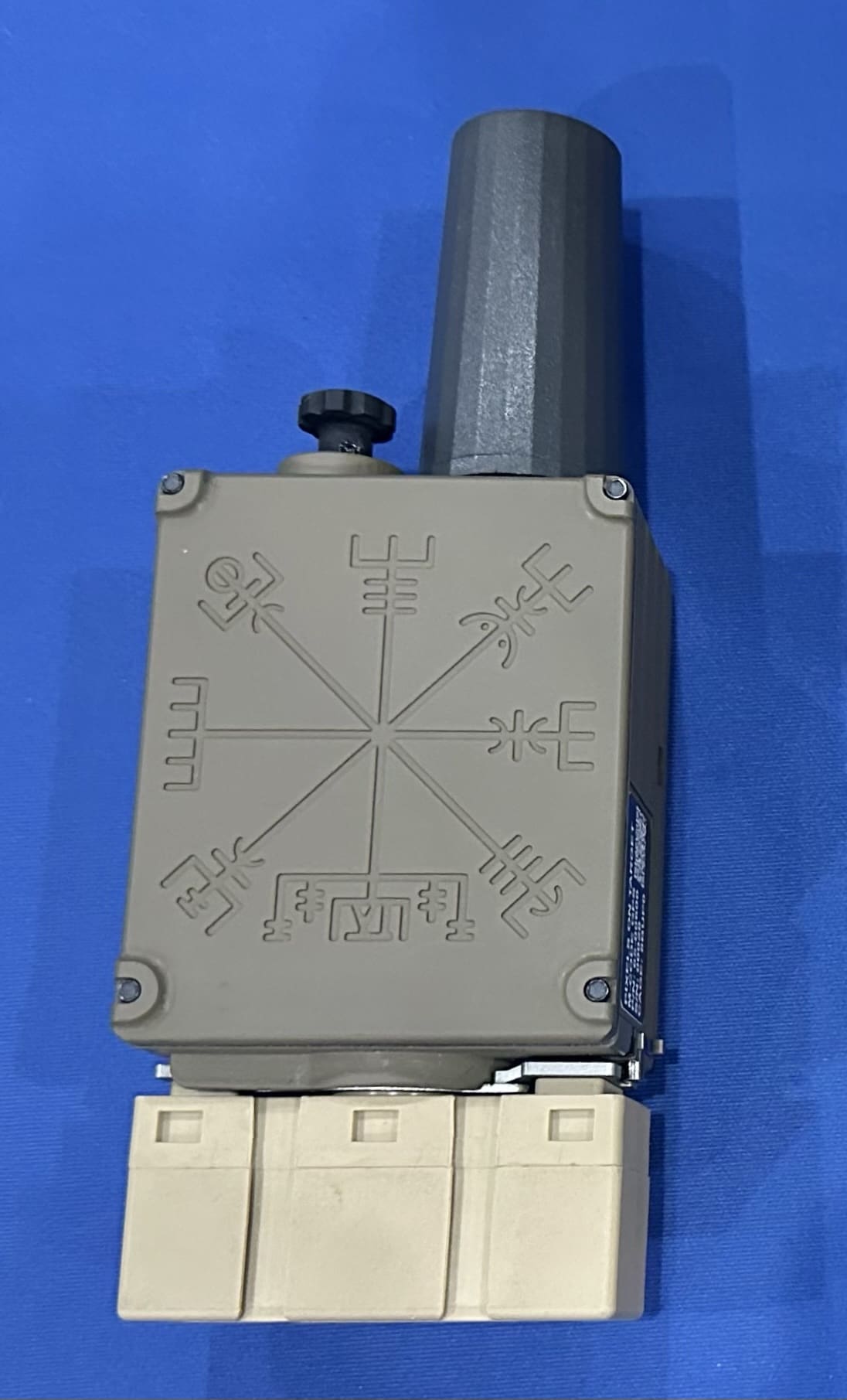
Silvus StreamCaster 4400 Enhanced MANET Radio Receives Department of Defense (DoD) Certification for Secure U.S. Military Drone Operations

Tuesday, December 9th, 2025

DoD’s innovation unit and AUVSI, a leading autonomous innovation industry group, validate expanded portfolio of Silvus NDAA-compliant radios for secure use in unmanned missions

CHICAGO – December 9, 2025 – Silvus Technologies (Silvus), a Motorola Solutions (NYSE: MSI) company and a global leader in advanced wireless networking solutions, today announced that the U.S. Department of Defense (DoD) Defense Innovation Unit (DIU) has added the StreamCaster 4400 Enhanced (SC4400E) mobile ad-hoc network (MANET) radio to its Blue UAS Framework, a rigorous testing and certification program that approves technologies for use in U.S. military unmanned aircraft system (UAS) operations. The Association of Uncrewed Vehicle Systems International (AUVSI) has also added the SC4400E to its Green UAS Cleared Components list, certifying it meets rigorous cybersecurity and supply chain standards for commercial drones and components.

“The Blue UAS Framework and AUVSI Green UAS certification validate that the SC4400E MANET radio meets the rigorous standards for secure, mission-critical connectivity demanded by today’s leading-edge unmanned systems operating in the world’s most challenging and contested environments,” said Neema Daneshvar, vice president of Product, Silvus Technologies. “Its addition to both programs strengthens Silvus’ position as a benchmark for robust, secure and resilient command and control (C2) and mesh networking solutions for UAS and unmanned operations.”

Powered by Silvus’ proprietary Mobile Networked MIMO waveform, SC4400E radios create a scalable connected mesh network that can link hundreds of nodes, from drones to ground radios, to stream high-bandwidth video, voice and sensor data back to command with extreme range. The radio is designed to easily integrate into fixed infrastructure or vehicular, maritime, airborne or unmanned systems, to support missions across air, land and sea. 

The SC4400E provides access to Spectrum Dominance 2.0, an ever-expanding suite of electronic warfare (EW) defense capabilities, including Low Probability of Intercept/Low Probability of Detection (LPI/LPD), Anti-Jamming and Advanced Threat Protection. These capabilities help deliver secure and protected communications in congested and contested spectrum environments without sacrificing performance, even under electromagnetic attack.

The National Defense Authorization Act-compliant SC4400E joins the StreamCaster SC4200EP, StreamCaster LITE SL4200 and SL5200 MANET radios on the Blue UAS Framework and Green UAS Cleared Components list. 

New Course Upgrades AFSOC Tactical Communications Training

Friday, November 21st, 2025

HURLBURT FIELD, Fla. – Air Force Special Operations Command recently completed the second iteration of the AFSOC Tactical Communications Course at Hurlburt Field, Florida.

The tactical communications course is several weeks of a specialized training program designed to teach Air Commandos the skills and knowledge needed specifically to work communications for special operations missions.

“We needed a course to train AFSOC communicators on SOF-unique equipment and SOF employment for USSOCOM missions, and it needed to be a repeatable and sustainable solution,” said Chief Master Sgt. Robert Harris, AFSOC communications directorate senior enlisted leader. “AFSOC takes great pride in producing Air ‘COMMandos’ who are extremely competent, innovative problem solvers, and deliberate risk takers. This course provides that foundation for our warfighter communicators.”

The tactical communications course, which incorporated Airmen from all over AFSOC’s active duty, guard, and reserve wings, covers everything from USSOCOM network fundamentals and satellite communications to tactical radios and mission planning.

Communications in AFSOC and USSOCOM are uniquely characterized as being highly adaptable, redundant, and secure in austere, rapidly changing environments. Communicators must establish and maintain connectivity with limited infrastructure and be able to operate in a denied or contested electromagnetic spectrum.

“Due to AFSOC’s agile force packaging, members can be out in the field as the only communications technician,” said a course training manager. “We teach them multiple career fields and how to work on equipment they may have never touched before. That makes them a subject matter expert so they can get everything required done.”

The training also allows Airmen to more rapidly complete requirements on their career education and training plan.

“It can take more than a year for Airmen to complete all training requirements within their work centers, but this schoolhouse will cover 40% of those key competencies over a period of a few weeks,” said a course training manager.

The course serves as a force multiplier, advancing training so Air Commandos can fulfill duties at their home units and seamlessly transition to deployed environments, where they become even more mission critical to sustaining operations and generating airpower as part of the agile combat employment concept.

“Airmen return proficient with their core equipment and can quickly master their upgrade training- saving hundreds of man-hours in preparation for deployments and dramatically improving unit readiness.” said Harris. “Future expansion of the course should focus on integrating emerging technologies and capabilities for more realistic scenarios.”

AFSOC prioritizes deliberate development of Air Commandos so they can be adaptable experts within their operational environment.

Story by Capt Brandon DeBlanc 

Air Force Special Operations Command

Luminae Starlink Scrim Cover

Monday, November 10th, 2025

Made from IRR compliant Multicam fabric, Luminae’s scrim cover breaks up the unit’s outline and helps it blend naturally into surrounding vegetation or terrain. Whether viewed from the ground or through the low-resolution feed of a FPV or reconnaissance drone, the Starlink becomes far less visible than if it were uncovered.

Lightweight and compact, the cover can be packed into a Utility or Small GP Pouch and deployed in seconds when needed.

Despite its low-profile concealment, the cover allows the Starlink to function as normal, maintaining full connectivity while reducing the risk of visual detection.

Compatible with all Starlink models, including:

  • Starlink Standard
  • Starlink High Performance
  • Starlink Maritime / Mobility
  • Starlink Roam
  • Starlink v2 Mini

www.luminae.co.uk/Shop/Luminae-Starlink-Scrim-Cover

INVISIO Secures SEK 190 Million Order for Intercom and Dismounted Soldier Systems

Friday, November 7th, 2025

INVISIO has received a significant order from an existing European customer for its Intercom and Dismounted Soldier systems. Deliveries are set to commence immediately and are expected to be completed by Q1 2026.


The order, valued at SEK 190 million, includes systems designed to provide seamless communication capabilities for both mounted and dismounted users. The order reflects the growing demand for INVISIO’s advanced communication solutions, developed to enhance operational efficiency and increase safety in demanding environments.

Lars Højgård Hansen, INVISIO CEO, said:

“We are pleased to have received another significant order for our Intercom system and personal system. This once again re-affirms that our solutions meet the very high expectations of users operating under the most critical and challenging conditions.

We also take pride in being able to deliver such a large order within a short period of time, which is a unique capability in our industry. This shows that a well-balanced inventory, combined with close collaboration with customers, is a clear competitive advantage.”

A4ESSOR and OCCAR Sign New Procurement Contract to Advance Development of Interoperable Tactical Communications

Tuesday, November 4th, 2025

Procurement contract to carry out the capability deployment of the ESSOR High Data Rate Waveform – EHDRWF.

Munich/Bonn, November 3, 2025 — a4ESSOR S.A.S (Alliance for ESSOR – European Secure Software Defined Radio), a multinational joint venture that develops secure software defined radio (SDR) technology, has signed a procurement contract with the intergovernmental Organisation for Joint Armament Cooperation (OCCAR) to carry out the capability deployment of the ESSOR High Data Rate Waveform – EHDRWF. The waveform can be ported to national software-defined radios; through this unique approach, any nation can use its own radio and be interoperable with other nations in their tactical communications. The contract for the so called ESSOR Development Stage #4 (ES4) is valued in excess of 47 million EUR.

The six nations involved and their respective industry leaders (Finland – Bittium, France – Thales, Germany –Rohde & Schwarz, Italy – Leonardo, Poland – Radmor, Spain – Indra) have then been working to add new features, such as electronic protection measures and support of modern cryptographic standards, leading to several successful interoperability demonstrations and qualification tests and to the adoption of ESSOR High Data Rate Waveform as NATO STANAG 5651 in 2023.

Under the new contract, a4ESSOR will design a common mission framework aimed at shared planning capability of network parameters of the EHDRWF. Once implemented in the command-and-control system of each nation, the mission framework will ensure high interoperability at operational level, allowing quick and accurate deployment of multinational EHDRWF networks.

a4ESSOR will conduct field tests of the EHDRWF on the various radio systems to assess the maturity, performance and reliability of the waveform in various scenarios, providing valuable feedback for future waveform enhancements. The field test will also include trials in different operational environments (urban, rural and hilly terrains), line-of-sight/non-line-of-sight and mobility scenarios, as well as analysis of waveform performances under potential interference conditions. Furthermore, the contract will define an ESSOR in-service support framework and will set up an ESSOR laboratory as the reference for interoperability validation.

Lino Laganà, President and General Manager of a4ESSOR, said “a4ESSOR has been active for over 16 years playing a crucial role to develop and test ESSOR capabilities and technologies to address multinational defence requirements as a valuable solution in addition to the existing legacy waveforms. The ESSOR HDRWF standard is capable to facilitate seamless communications across diverse radio platforms and nations, affirming its potential to enhance collaborative defence operations across Europe and NATO countries.”

“The mission framework will allow a quantum leap forward in terms of interoperability among armed forces from various countries, as it will define what’s needed to achieve interoperability in mission planning and management. We will work at defining the required solutions towards their integration onto command & control systems of the various countries. It’s an evolution enabler, from technical to operational interoperability.”


Lino Laganà continued “The project aligns with the European Union’s strategic objectives of strengthening defence cooperation, enhancing autonomy, and improving the efficiency of combined military missions. By equipping EU member states with secure, interoperable, and scalable communication solutions, the initiative strengthens Europe’s collective ability to respond to threats and ensures seamless coordination in operations.”

Solid State plc Through Steatite has Secured an Initial $10.8 Million UK MoD Order for Project CAIN

Friday, October 31st, 2025

Solid State plc (AIM: SOLI), the specialist value-added component supplier and design-in-manufacturer of computing, power, and communications products, is pleased to announce that its subsidiary Steatite Ltd has secured an initial order valued at US $10.8 million under Project CAIN, a major defence programme, for a UK Government end user.

The order represents a significant milestone in Steatite’s ongoing strategy to deliver cutting-edge, mission-critical technologies to the UK’s armed forces and security community. Under Project CAIN, Steatite will supply a range of secure, ruggedised systems including the MPU5 and Wave Relay Radio Technology from Persistent Systems, supporting advanced operational capabilities in challenging environments.

Delivery of these initial systems is scheduled for the first half of 2026. The project further strengthens Steatite’s position as a trusted supplier to the UK Ministry of Defence and reinforces its reputation for innovation and reliability in the delivery of secure technology solutions.

Commenting on the award, Matthew Richards, Systems Divisional Managing Director of Solid State plc, said:

“This contract win is the result of extensive collaboration with our customer, the OEM Persistent Systems and other commercial providers, which highlights the strength of Steatite’s capability and commitment to operational excellence.

“Project CAIN will play a key role in enhancing the UK’s defence resilience, aligning with the targets set by Chief of the General Staff General, Sir Roly Walker, to double lethality in 3 years and triple it in 10. We’re proud to be part of its delivery and thank Tim Sage and his colleagues within our communications team for getting us to this stage. We now look forward to supporting the MoD in the months and years to come on such a prestigious and vitally important programme.”

This announcement contains inside information for the purposes of Article 7 of the UK version of Regulation (EU) No 596/2014 which is part of UK law by virtue of the European Union (Withdrawal) Act 2018, as amended (“MAR”). Upon the publication of this announcement via a Regulatory Information Service, this inside information is now considered to be in the public domain.

Royal Marines Fully Field Persistent MPU5 Radios Empowering the UK Commando Force Modernization Initiative

Thursday, October 30th, 2025

  • Royal Marines field 2,000+ MPU5 radios, entering a new phase of large-scale operational deployment and collaboration with allied forces
  • Wave Relay® MANET technology creates a global communications fabric, enabling the Royal Marines to dominate in contested environments

Persistent Systems, LLC (“Persistent”), a leader in mobile ad hoc network (MANET) technology, announced that the UK Royal Marines have now fully fielded over 2,000 MPU5 radio systems in support of their UK Commando Force (UKCF) transformation. This marks a significant step in the Royal Marines’ move toward a more agile, technology-enabled expeditionary force.

MPU5 radios, running the Wave Relay® MANET, now form a highly scalable communications fabric uniting warfighters, unmanned systems, sensors, vehicles, and command posts. This deployment enables the Royal Marines to operate with greater autonomy, speed, and lethality in contested electronic warfare (EW) environments.

The Royal Marines are divesting from legacy government-only systems and embracing commercial, non-ITAR defense technology. This makes their force more interoperable with allies and places the UK at the forefront of multinational collaboration.

“True interoperability is about more than just working with allies. It’s about uniting every Marine, every vehicle, and every sensor into a single resilient network,” said Eve Shapiro, Senior Director of Sales and Business Development at Persistent. “With the Wave Relay MANET, the Royal Marines can execute complex, distributed operations while maintaining constant connectivity and situational awareness.”

The UKCF represents the most significant modernization of the Royal Marines since WWII, aimed at creating a globally deployable, autonomous littoral force. It emphasizes small, lethal teams, unmanned and AI-enabled systems, and networked C4ISR capabilities.

The MPU5 rollout, awarded to Persistent’s UK partner & distributor, Steatite Ltd., which includes handheld units and vehicle kits, supports UKCF’s operational demands across land, sea, and unmanned domains. Integration with platforms like all-terrain vehicles and unmanned systems enables uninterrupted connectivity regardless of terrain or mission set.

SD Government, a Gogo Company, Receives Federal Contract to Supply Airborne Communications for US Agency

Tuesday, October 28th, 2025

Mil/Gov win to optimize Gogo multi-orbit 5G ATG, LEO, and GEO connectivity networks

Broomfield, CO./ 27 October 2025 – SD Government (SDG), the division of Gogo (NASDAQ: GOGO) providing satellite communications to global governments, has received a five-yearfederal contract to deliver multi-band, multi-orbit airborne global satellite communications to a US government agency. The new agreement, initially valued at USD$3 million, is a follow-on from Small Business Innovation Research (SBIR) Phase III activityoriginally undertaken by SDG, prior to the merger with Gogo.

Awarded as a sole-source contract, the agreement will see the agency consolidate all aero communications across its fleet to this single contract over the next five years. With the consolidation of multiple contracts into a single contract, procurement time and complexity are dramatically reduced. In addition, the agreement allows users to focus resources on the mission rather than managing diverse contracts and vendors.

This is the first SDG government contract to optimize the company’s integrated multi-orbit, multi-band, multi-network capabilities. The deal also includes provision for the government to add new technology and services as they become available over the life of the contract.

The agency’s missions demand consistent, reliable high-bandwidth satellite connections in every theatre of operations globally, as well as the highest encryption levels for secure communication and data transfer. SDG’s deep experience in the government and defense markets, combined with its ability to deliver 24/7/365 expert customer support, will ensure the customer retains consistent critical mission connectivity.

As the contract’s full scope is realized, it will employ Gogo’s air-to-ground networks, low-Earth orbit (LEO), medium-Earth orbit (MEO), high-Earth orbit (HEO) and geostationary orbit (GEO)constellations for Ku- and Ka-band connectivity as required.

“We are proud that the US government has chosen SDG to deliver this mission-critical connectivity. The customer agency will benefit from our extensive expertise, support, and cybersecurity expertise, along with our agnostic ability to provide the best-performing connections and terminals across multiple orbits on its diverse fleet of aircraft,” says Hayden Olson, Head of SDG. “We are providing a simple, seamless solution for the agency to procure resilient airborne communications. The streamlined access to all types of connectivity will enable seamless procurement and support, which is extremely valuable to a busy government agency.”