TYR Tactical

Archive for the ‘Congress’ Category

What’s Congress Doing To Help The Industry?

Friday, March 8th, 2013

Lets face it, the tactical bubble has burst. As the war winds down, things have slowed up quite a bit, but sequestration has put an end to not only training but the purchase of commercial soldier systems commodities.
20130308-082850.jpg

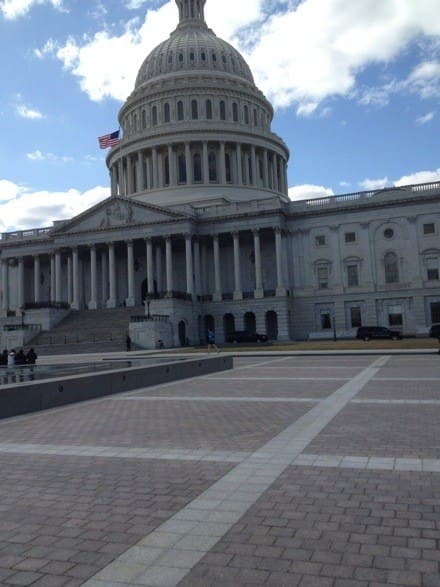
Tactical Tailor’s Casey Ingels is in Washington this week to meet with members of Congress. One remedy that has been mentioned is to introduce legislation that would require the Department of Homeland Security to fall under the Berry Amendment. Here’s the problem with that approach. It’s been done. In 2009 the Kissel Amendment (Berry Amendment Extension Act) required DHS to adopt Berry Amendment buying policies which require all textile based commodities to be manufactured in the US from US raw goods. Berry dates back to WWII and was intended to protect both the industrial base as well as the military. Unfortunately, the Kissel Amendment turned out to be a failure. In 2009, DHS decided that it didn’t really apply to them becuase of this statement in the law, “applied in a manner consistent with United States obligations under international agreements.” It gave them an out that they needed in order to continue to purchase foreign goods. Can you imagine anything more ridiculous? Border Patrol agents are issued foreign manufactured uniforms. It’s almost insulting.
20130308-083108.jpg

Recently, the federal government agreed on new terms for TSA agents that would raise their annual clothing allowance to over $500. Currently, the contract for these uniforms is with fashion house VF. Agents have an account and order their uniform items online through VF’s website. Unfortunately, those uniforms are no made here in the US.
20130308-083127.jpg

Two immediate things could happen that would breathe some life into the US tactical industry that has made possible the amazing modernization of the US service member’s clothing and individual equipment over the past 10 years.

First, the Army needs to stop messing around and announce their new camouflage pattern. Second, Congress needs enact tough legislation that places not only DHS but the entire federal government under Berry, requiring them to purchase their clothing and individual equipment from US sources. There are enough loopholes that foreign produced specialty items can be procured and if the demand is there, US based manufacturing will be established. Additionally, Congress needs to pressure the Obama administration to issue an executive order requiring DHS to comply with the spirit of the already existing Kissel amendment.
How a Bill Becomes a Law

Sunday, January 6th, 2013

Ever since they took Schoolhouse Rock off of Saturday morning cartoons it seems that no one has an even basic understanding of the legislative process or how an idea becomes a law. It’s not an easy thing to pass a law and this short cartoon will give you an idea of the multiple roadblocks to passing a new law. Think of it as activism 101.

Welcome The New Congress

Thursday, January 3rd, 2013

Be sure to contact your Senators and Representative and introduce yourself. While you’re at it, be sure to let them know how you feel about any upcoming legislation regarding the defense budget and gun rights.

Find your Senators here: http://1.usa.gov/W7hwg9
Find your Representatives here: http://1.usa.gov/Uqqt6r

Impact of Sequestration on DoD

Monday, August 27th, 2012

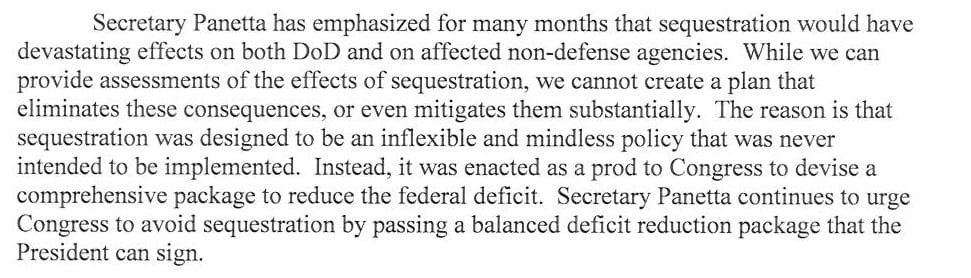
“…sequestration was designed to be an inflexible and mindless policy that was never intended to be implemented.”
– Robert F. Hale, DoD Comptroller
In a letter to Senators John McCain and Carl Levin

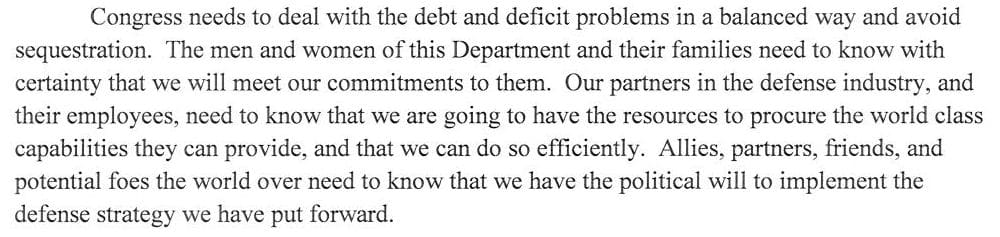
Actually, Mr Hale is quoting DepSecDef Ashton B Carter in his testimony before the House Armed Services Committee on 1 August, 2012. The Honorable Mr Carter goes into great detail on how impending sequestration will affect modernization. He uses the word ‘devastating’ when describing its effects. He also makes the point that it will also be trying for all departments. No matter which side of the political fence you find yourself on, you have to agree, we are charting new waters here. If Congress doesn’t act, the consequences will be major, for all. Please take the time to read Mr Carter’s testimony. I feel that his summary makes the biggest impact. Congress needs to act, in a balanced way.

DOD Sequester Impact Aug 15 Report

Proposed High Capacity Magazine Bans and the Military

Tuesday, July 31st, 2012

From 1994 until 2004 the American firearms industry suffered under a form of prohibition. The “Assault Weapons Ban” not only covered weapon features but also magazines over 10 rounds. This legislation did nothing to alter crime and, once lifted did not result in any increased gun violence. Overall, it was useless legislation.

These very magazines and weapon features that were banned under the “Violent Crime Control and Law Enforcement Act of 1994” have been crucial to the US Department of Defense’s and our Allies small modernization as part of operations in Iraq as well as globally against piracy, terror and general mayhem. During the 10-year period of the AWB, US businesses curtailed small arms innovation. The point of a business is to make money. When there is little market for a product (as was the case during the AWB), the business case is not there to service it. This was most definitely the situation with magazines for the M9 Beretta Handgun. Many who served early in the war will remember poorly produced high capacity magazines for that weapon. This is because there was no competition in the marketplace due to a lack of market. Rather, government contractors for that magazine were able to produce products that performed poorly on the battlefield. There was no competition. There was no innovation.

Since the ban was lifted, an entire industry has grown and flourished, producing innovative solutions for both law abiding citizens and our military alike. American troops are the best equipped in the world and other countries look to us for technical innovation in small arms.

On the heels of the tragedy in Aurora, Colorado, opportunistic members of Congress have attached an amendment to (S.A. 2575) to the “Cybersecurity Act” (S. 3414) that would once again restrict these magazines that are critical to our military.

Contact your Congressional representation (switchboard 202-225-3121) and let them know how you feel about this proposed legislation and the hijacking of the Cybersecurity Act by opportunists. A strong American firearms industry contributes directly to our National Defense.

WPRC Applauds Senate Commitment to Innovative Contracting and Warfighter Equipment

Monday, June 11th, 2012

Last week, the Senate Armed Services Committee published its version of the FY 2013 National Defense Authorization Act. In the Report accompanying that legislation, Members of the Committee included language advocated for by the Warrior Protection & Readiness Coalition, that calls for a long-term DOD commitment to the successes of the Rapid Fielding Initiative and the Rapid Equipping Force. The language also calls on DOD to support unit-level commanders by providing them with budget discretion to purchase the clothing and equipment they feel is necessary to maintain a ready force.

“The WPRC is extremely pleased that the Committee included this language in the report” said WPRC Policy Director Matt Sparkes. “It acknowledges the success of these critical programs, and makes a strong statement about the importance of unit-level flexibility in the procurement of key items of clothing and equipment.”

The Senate is expected to consider its version of the National Defense Authorization Act in the coming weeks. The House and Senate will then begin the conference process to reconcile differences and create a final product for the President’s signature.

This is the Congressional language.

Rapid equipping and fielding initiatives

The committee recognizes that combat operations in Iraq and Afghanistan have resulted in substantial improvements and compression in the processes used to develop and field urgent needs for combatant commanders, including organizational clothing and individual equipment. Following the drawdown of Afghanistan, then committee encourages the Department of Defense to consider maintaining key elements of the Army Rapid Fielding Initiative, the Rapid Equipping Force, and combatant commander level purchasing authority to enable agile responses to future threats.

For additional information please contact Liesl Grebenstein, WPRC Communications and External Affairs Director via email or by phone at 617.236.5830

Sequestration – Some Things You Probably Didn’t Know

Friday, June 8th, 2012

Like a runaway train, we are on a collision course with Sequestration, the process that will automatically cut the defense budget in January. Author Loren B. Thompson, Ph.D. discusses the issue on the Lexington Institute’s Early Warning Blog.

Check out the article here – www.lexingtoninstitute.org

Silynx Hosts Congressman Roscoe Bartlett

Wednesday, April 4th, 2012

Last week was a big week for those in the Soldier Systems industry. Not only was there a panel of Congressmen who spoke on the subject organized by the WPRC, but there were also meetings between industry and members of Congress to discuss the importance of individual protection initiatives in light of the current federal budget.

Silynx Communications, Inc also had the privilege of welcoming Congressman Roscoe Bartlett, Chairman of the House Armed Services Subcommittee on Tactical Air and Land Forces, for a tour of its research and development facilities. The meeting included a discussion on ways to ensure the men and women in uniform are equipped with the best tactical communications systems available.


“Congressman Bartlett has a long history as an advocate for the men and women in uniform, and the small businesses that support them,” said Gil Limonchik, CEO, Silynx Communications. “We were honored to host the Congressman for a tour of our R&D facilities, and a discussion on what industry and policymakers can do to best equip and protect American Soldiers, Sailors, Airmen and Marines. It is Silynx’s mission to do so to the best of our ability, and we are grateful for the Congressman’s support in our efforts.”

Congressman Bartlett said, “Silynx has developed a critical combat capability to provide our Special Operations Forces with a state of the art modification of their radios so that they will maintain audio operational awareness as well as protection for their hearing from potential damage. I am hopeful that this protection can be rapidly extended to all of our military during deployment as well as training. This would be important even if hearing loss was not among the most common injury our troops have been experiencing. Standard issue ear protection is not sufficient.”

Silynx’s combat-proven C4OPS and Micro C4OPS have been widely used in the past 3 years and adopted by US Special Operations Forces (US SOF), NATO Special Forces, FBI SWAT, and the US Army Rapid Fielding Initiative.

www.silynxcom.com