Phantom Lights

Archive for the ‘Guest Post’ Category

Interagency Senior Leaders Discuss Tactics on Advancing Counter UAS Efforts

Wednesday, December 31st, 2025

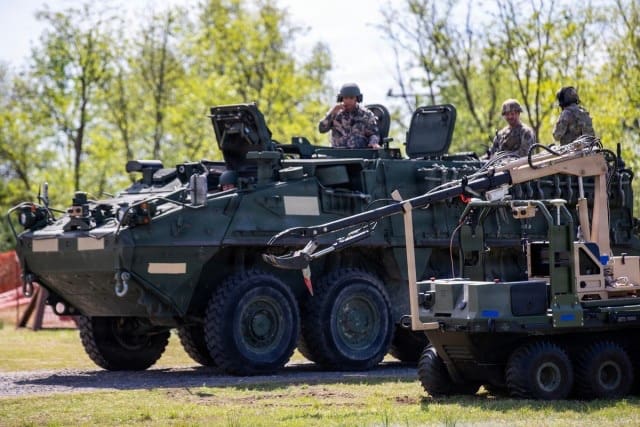
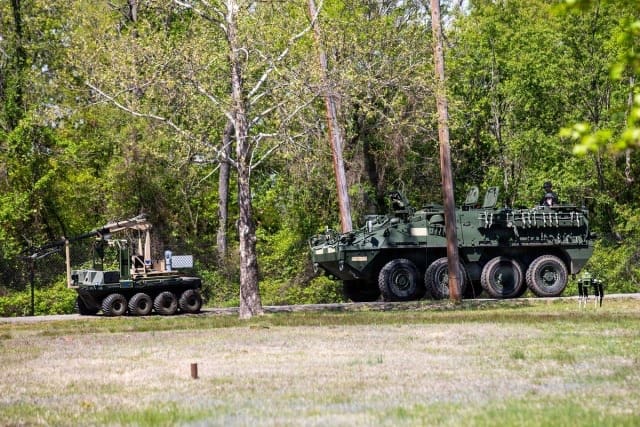
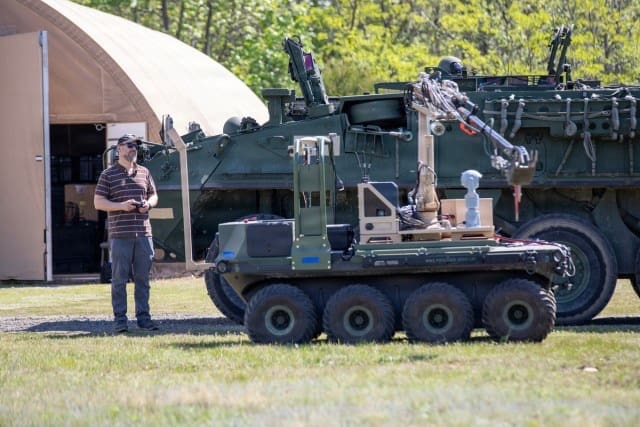
Joint interagency and law enforcement senior leaders met to establish a shared understanding of counter-small unmanned aerial system threat detection and mitigation best practices during a law enforcement symposium hosted by the Joint Task Force National Capital Region at Joint Base Myer-Henderson Hall, Virginia, Dec. 11.

The joint task force, in partnership with Joint Interagency Task Force 401, used lessons learned from a recent counter-small UAS exercise held at Fort McNair, Washington, to bridge knowledge gaps and strengthen partnerships.&

The symposium brought together leaders from the War Department, civilian law enforcement and World Cup host cities to discuss counter-small UAS capabilities and limitations, as well as optimizing resource sharing and procurement.

“The goal of the day is to be able to share the lessons learned from our recent threat simulation exercise and work together to strengthen the law enforcement correlation, as required for high-profile events that are on the horizon,” said Army Brig. Gen. Antoinette Gant, joint task force commanding general.

The joint task force remains committed to leading these efforts in the National Capital Region to ensure collaboration that is necessary to evolving and increased security challenges, Gant said.

“We must leverage the insights we gained today to enhance our small UAS capabilities and our operational readiness as we continue to break down barriers internally and externally to the military and interagency, state and local law enforcement partners,” the general said.

The increased use of small UAS, or drones, presents a rapidly evolving threat landscape that requires a coordinated approach and cooperation across all government agencies to effectively address everything from detection and tracking to mitigation and neutralization.

“The problem with a drone is it is completely indifferent to land boundaries, it’s completely indifferent to where federal property becomes state property, becomes a local monitor area, and the violence that can be inflicted is nearly limitless because of the low price,” said Army Secretary Daniel Driscoll. “From the Army perspective, now is the time we have to [take on this challenge], we have to do it together.”

Effective counter-small UAS threat mitigation requires real-time information sharing between federal, state and local entities, and establishing clear command and control structures during incidents. This was expertly demonstrated in the recent exercise at Fort McNair, where the joint task force worked with local law enforcement to detect and mitigate simulated small UAS threats.

“It’s not a matter of if, but when we’ll have to exercise our counter drone defenses,” said Army Brig. Gen. Matt Ross, Joint Interagency Task Force 401 director. “We all share the same sense of urgency to keep pace with this growing threat, and I believe that collectively in this room, we’ve got the resources, and the expertise to keep the public safe. Nothing is more important than the homeland, our people, our first responders, and supporting warfighters both at home and abroad.”

By Army SGT Tien-Dat Ngo, Defense Media Activity

It’s All in the Packaging: The Engineering Behind MRE Freshness

Wednesday, December 31st, 2025

WASHINGTON — Hungry individuals don’t put much thought into the packaging of their food. When people grab a snack, they generally rip into it and toss it aside to get to the good stuff.

But at the Army Combat Capabilities Development Command Soldier Center’s Combat Feeding Division in Natick, Massachusetts, about a half-dozen engineers spend their days focused on nothing but packaging. With military rations, including meals, ready-to-eat and supplemental bars, packaging is a crucial part of preserving the food’s freshness and extending shelf-life stability, so troops stay fueled up during important missions.

While the rations themselves go through a lot of trial and error, so, too, does the packaging.

Cutting Waste, But Keeping Quality

For the unfamiliar, MREs come in one large plastic bundle with several smaller packages inside consisting of an entree and supplemental snacks and drinks. These rations are packaged in three or four layers of materials, depending on the product, to protect food from the elements and preserve freshness until opened.

But Natick’s experts are always looking to improve.

“There are 10, 15, maybe even 20 components in an MRE, and each one of those has their own specific package,” said Danielle Froio-Blumsack, a longtime materials engineer on the division’s Food Protection and Individual Packaging Team. “That’s a large amount of packaging waste to dispose of, and it’s an issue for the Army. It’s also an environmental and health hazard.”

The lab’s specialists run most of the entrees through what’s known as the retort process, which hermetically seals them into sterilized packaging via a pressurized chamber. Synonymous with pasteurization and canning, retort extends a product’s shelf life without the need for preservatives.

Current retort pouches have three layers of blended polymers and a foil layer that keeps water vapor, oxygen and light out.

“You need to have low permeation … because that allows you to extend the shelf life and improve the overall quality for the warfighter,” Froio-Blumsack said.

Unfortunately, the foil isn’t recyclable, so FPIPT personnel created a new polymer blend with similar properties that weighs significantly less and meets shelf-life requirements. It doesn’t meet water vapor transmission rates, however, so experts are determining if they need to rework their requirements.

“Are our requirements too stringent and are they maybe limiting the materials that we could use?” she said. “That could open up the door to either cheaper or more sustainable materials.”

Some of the new, nonfoil pouches spent five years in storage and recently passed food safety and quality testing in the division’s microanalytical and sensory evaluation labs, where trained microbiologists and sensory panelists test the rations.”

“It was a pretty big success,” Froio-Blumsack said.

However, it takes a long time for new materials to make it to the warfighter.

“Already it’s been seven years for this project, and it’s still just on the cusp of being able to go out into the field,” she said.

Exploring Energy Harvesting

The lab works with academia and industry to create new materials and find commercially available technologies that can be formulated to meet military needs. One project that’s in the early stages collaborates with Purdue University on energy harvesting, which converts ambient energy into usable power. The lab is looking at doing so by putting what are called tribal voltaic nanogenerators on patches that would go on pallets of boxed rations.

“Within each one of these little patches are … two layers of material that, when they vibrate or shake or move in any way, their vibrational energy can be harnessed and stored as energy,” Froio-Blumsack said.

The hope is that during the logistics cycle — when pallets of rations are moved and bounced around through air, ship or truck — they could harvest enough energy to potentially heat a ration instead of needing the flameless ration heater currently used by troops. In Arctic conditions, the process could prevent rations from freezing, she said.

“Anytime the pallet would shake or bounce or move, those materials would rub against each other and generate energy,” she said, adding that where they would store that energy has yet to be worked out.

The FPIPT has also worked closely with NASA to extend the shelf life of astronaut food in preparation for future missions to Mars.

Testing, Testing … and More Testing

Meanwhile, at the division’s packaging lab, all materials, layers and structures are tested multiple times.

“The idea behind this is to really put things through their paces. If we get a new product, where did it fail? What was the material?” explained Wes Long, the CFD’s packaging lab manager. “We pass this data along … and then we can come up with a solution.”

The lab is filled with various vacuum, heat and impulse sealers that suck the air out of the packaging. Analysis equipment inspects the pouches to make sure they’re strong enough. For example, tensile testers measure a material’s ability to tear, and burst testers check a package seal’s ability to withstand internal pressure before it ruptures. The lab also uses a water tank to blow ration packages up like a balloon to test for leaks — even those as small as a pinhole are marked as a failure.

“It immediately bubbles whenever there’s a failure,” Long said.

After each material is tested, the lab’s experts create parameters and send them to their industrial partners for standardization.

When vendors incorporate new automated technology, the division buys the same equipment to ensure it can replicate potential issues. For example, several of the division’s biggest vendors who previously hand-filled MRE pouches now use a faster automated process. However, the machines can sometimes thin out the material at the corners of the pouches and along the seals. Items can also get stuck in the machinery, which is one reason why the ever-popular mini bottles of Tabasco sauce were removed from MREs and replaced with polymer-based packets instead.

“While respecting the needs of the soldiers for morale, we have to give them good quality,” Long said of the unpopular change. “That [hot sauce bottle] was no longer working.”

Much like the food itself, the warfighter also gets to test and approve the packaging.

“If we invent something we think is great, we need them to have that final approval, because that’s what matters,” Long said.

He added that it’s important for the sealed packages to be flexible without fail since they’re piled together and shipped all over the world.

“These rations inside that have food — those pouches rub against the [bigger] pouch. That pouch is in a box. That box is in a pallet, and they’ll be stacking pallets about four high, so that bottom box with that bottom ration has to absorb all that weight,” Long said.

Those ration cases are made of thick, solid fiberboard that’s been engineered for structural strength and compression.

“Nothing like what your [online order] comes in,” Long said. “It’s strong and weather resistant.”

Before being put into pallets, the boxes are dropped and shaken — what they call rough handling tests — to simulate real-world conditions to make sure the products get to the warfighter in one piece.

By Katie Lange, Pentagon News

10th Mountain Division Activates Cutting Edge UAS and Launched Effects Company

Tuesday, December 30th, 2025

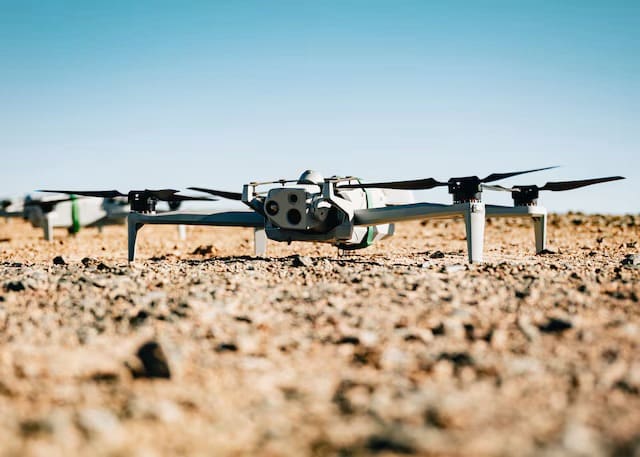
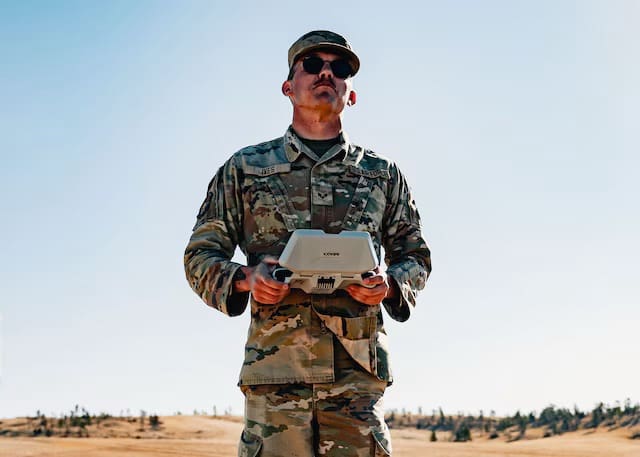
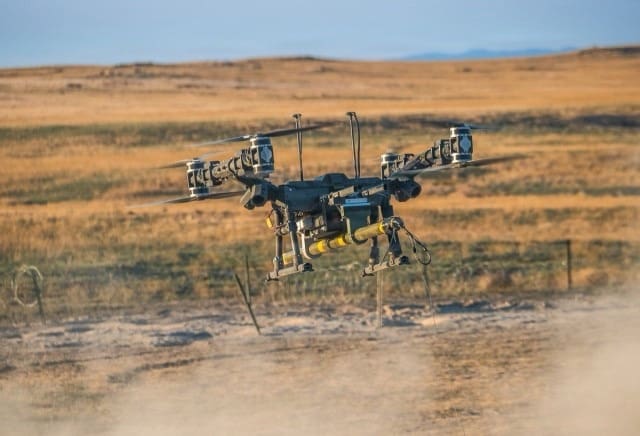
FORT DRUM, N.Y. — Fox Company, 1-10 Attack Battalion, a new company dedicated to achieving “drone dominance” on the modern battlefield, was formally established Dec. 16, 2025 under the 10th Combat Aviation Brigade, 10th Mountain Division (LI). The activation of the unit, a first-of-its-kind tactical unmanned aircraft systems and launched effects company, marks a significant milestone in the brigade’s ongoing efforts to provide the 10th Mountain Division with the most advanced aviation capabilities.

“Today’s activation of Fox Company marks a historic chapter for the Dragon Battalion and for the exceptional Soldiers standing before you,” said Lt. Col. Chris Stoinoff, the commander of 1st Battalion, 10th Aviation Regiment. “Current conflicts have proven that the modern battlefield is more lethal than ever before, primarily due to the potent combination of Unmanned Aerial Vehicles and long-range fires.”

Stoinoff elaborated on the Army’s dual approach to this new era of warfare. “The U.S. Army is currently investing in counter-UAS systems to protect our forces from this threat. But at the same time, we are developing a robust offensive launched effects and UAS capability to take the fight to our enemies,” said Stoinoff. “These robots can be equipped for a multitude of missions: to conduct reconnaissance, to act as decoys, to jam enemy communications or to deliver lethal strikes. That’s what Fox Company provides to the Falcon Brigade, a group of highly trained professionals who will hunt and kill our enemies in the division’s deep area. By integrating Fox Company’s recon forces with the overwhelming firepower of three Apache companies, 1st Battalion, 10th Aviation Regiment will decisively win battles for the 10th Mountain Division.”

To pioneer these new capabilities, the Soldiers of Fox Company, 1st Battalion, 10th Aviation Regiment are working hand-in-hand with the 10th Mountain Division’s innovation cell to develop, produce and disseminate UAS components in house. This partnership allows faster creation, adaptation, and integration of new technology directly into the unit placing the company at the forefront of the Army’s efforts to integrate unmanned systems, ensuring the division is equipped with the advanced tools needed to out-see, out-reach, and out-maneuver any adversary on the battlefields of today and tomorrow.

The establishment of Fox Company, 1st Battalion, 10th Aviation Regiment aligns with the Army’s broader strategy to equip every division with launched effects capabilities by 2026, creating a more dynamic and lethal force capable of penetrating and disintegrating enemy anti-access/area denial systems. The lessons learned by this new company at Fort Drum will pave the way for future UAS formations across the force.

By CPT Daniel Andrews

Guardians Wear New Space Force Dress Uniforms for First-Time at Basic Training Graduation Ceremony

Monday, December 29th, 2025

PHILADELPHIA  –  

The U.S. Space Force’s newest Guardians were the first trainees to wear the new service dress uniform for a basic military training graduation ceremony at Joint Base San Antonio-Lackland, Texas, Dec. 18, thanks to the Defense Logistics Agency Troop Support Clothing and Textiles supply chain.

“I feel an incredible sense of pride in our DLA team and in the new Guardians beginning their service today,” said Christopher Gaudio, C&T’s recruit training center and clothing sales stores division chief.

Gaudio represented DLA at the graduation with Angela Maragni, a C&T product specialist.

“To witness the first-ever graduating class wearing these uniforms, which are a direct result of the dedicated partnership between the Space Force, DLA, and our industry partners, is incredibly rewarding,” Gaudio said. “It’s a powerful, visible reminder of our core mission: ensuring our nation’s defenders are equipped for success and respected for their service.”

The C&T team collaborated with its internal contracting, technical and customer teams, the Space Force, the Air Force Uniform Office and domestic fabric and clothing vendors from initial concept and design to production and delivery.

C&T is supporting the Space Force’s fielding of the new dress uniform to approximately 11,000 Guardians and new recruits annually, with nearly 600,000 items in more than 400 sizes, Gaudio said.

The Space Force dress uniform ensemble includes men’s and women’s dark blue dress coats, caps, lightweight jackets, belts, enlisted rank and color insignia, as well as men’s trousers, shirts and ties, and women’s slacks, skirts, cravats and overblouses.

Uraina Gray-Scully, C&T’s product services and technical support chief, described the uniform as modern with unique features, including a semi-fitted coat with an asymmetrical six-button front closure, and a military standup collar with cording.

Considering the Space Force is a smaller and newer military service, C&T was intentional in working with vendors to establish the right support structure for smaller fabric and end-item quantities compared to other services, said Arlett R. Hartie, integrated supply team chief for C&T’s accessories team. Hartie and team lead acquisitions for the Space Force dress uniform accessories and was instrumental in fielding the Space Force’s first physical training uniform’s last year.

“We had a lot of collaboration even prior to award so that we could be ready to hit the ground running with the acquisition,” Hartie said.

Gray-Scully and the dress clothing team ensured vendors met uniform specifications from pre-production to testing and provided on-site support at cloth and garment manufacturers, including shade evaluation for Space Form dress uniform items.

“It really is a collaborative effort when we are at the production facilities,” Gray-Scully said. “The specifications allow for minor adjustments, since all garment manufacturing facilities operate differently.”

For example, while C&T personnel visited a coat manufacturer with customer representatives, slight adjustments were made to the coat’s button placement and collar.

Lisa Vivino, C&T’s contracting division chief for dress clothing, described this as a common challenge with new items being produced for the first time.

“Once the contracts were in place, as with anytime with a brand new item, you think everything is good, the specification, the shade [evaluation], all that stuff, and then as the vendors begin to produce as the experts in the field, they begin to notice things that are challenges and make recommendations of things we might want to consider,” Vivino said.

Vivino led contracting oversight for the high-visibility roll-out, as her team executed acquisitions to meet the Space Force’s roll-out deadlines.

“It was complex, a lot of communications, a lot of collaborations across C&T, industry, and the Space Force,” Vivino said. “We’re proud of [our work] and glad it was successful.”

With about 16 contracts in place since late 2024 and earlier this year, C&T provided initial quantities to Guardians for the service’s Oct. 1 and Dec. 1 initial implementation deadlines, Vivino said.

“All of the items have been in production, and all of the deliveries have been underway for several months now,” Vivino said.

The Space Force started pre-orders for some Guardians including recruiters, training instructors, December ROTC graduates, and senior leaders in November, according to its website. Pre-ordered uniforms are scheduled for delivery by June 2026.

“Going forward, we’ll continue to use the forecast to continue the sustainment support for the Space Force,” David Cortes, C&T’s dress clothing planning chief, said.

By Mikia Muhammad, DLA Troop Support Public Affairs

Space Flag 26-1 Expands, Advances Electromagnetic Warfare Tactics

Sunday, December 28th, 2025

COLORADO SPRINGS, Colo. — Space Training and Readiness Command concluded its largest iteration of Space Flag, Dec. 19, 2025, challenging Guardians as well as joint partners in a contested environment designed to mirror real-world conflict.

The 22nd iteration began Dec. 1 and saw over 400 “Blue” players and nearly 300 Exercise Control Group members across several distributed locations.

Hosted by the 392nd Combat Training Squadron, this iteration introduced the use of live range emitters employed for real-time signal geolocation. This gave players the opportunity to use their equipment and test their skills just like they would in real-world operations.

“As exercise developers, we want to create a realistic and challenging environment for our players to engage in,” said Lt. Col. Bryce Carlson, 392nd CTS commander. “Using our wide range of modeling and simulation capabilities or through live environments, exercises like Space Flag allow us to stress our players in a combat like environment and test them to make sure that they can accomplish their mission objectives under a range of conditions.”

Space Flag 26-1 also integrated with Combat Forces Command’s Combat Leaders Development Course for the first time, placing combat squadron commanders and enlisted leaders in scenarios designed to assess how they lead their formations under wartime conditions.

Their assessment and feedback provide students and exercise players with ways to improve tactics and procedures, while informing how Space Flag continues to evolve to support combat-ready leadership and operational execution.

An initial team from Space Forces Indo-Pacific Command also participated to assess operational concepts of two different non-kinetic fires elements, a new development which integrates CFC’s Mission Delta 3 and the U.S. Army’s 1st Space Brigade to improve operational planning related to electromagnetic warfare.

“Our ultimate goal is to prepare Guardians and joint operators to win in a contested space environment,” said Carlson. “We continually utilize feedback we receive from our planners and exercise players to evolve and advance our exercises to mirror real-world threats so that Guardians are combat credible and ready to fight as part of the Joint force.”

This iteration’s objectives reflected real-world joint plans and CFC priorities and aimed to facilitate Space Force Generation (SPAFORGEN) readiness and training objectives. Space Flag 26-1 reinforced combat squadron leaders’ and mission planning cells’ ability to integrate plans across CFC and execute operational direction at the tactical level.

“Our teams are constantly innovating to find ways to provide threat-informed combat training environments to our Guardians and joint operators,” said Col. Agustin “Rico” Carrero, Delta 11 commander. “It’s extremely rewarding to be able to demonstrate and improve our Guardians’ warfighting readiness through Space Flag’s increasingly robust virtual environment, ensuring their lethality and decisive action against any adversary.”

Story by 2nd Lt Margaret Blice 

Space Training and Readiness Command

The Army’s C2 Transformation Effort Surges Across the Pacific

Saturday, December 27th, 2025

SCHOFIELD BARRACKS, Hawaii — A new theater, a new set of industry partners and a new approach are on deck for the next series of operational exercises helping the Army to prototype its transformational Next Generation Command and Control, or NGC2.

The 25th Infantry “Lightning” Division, recently coming off its Joint Pacific Multinational Readiness Center rotation, is the next formation preparing to evaluate and shape NGC2 to scale it for the broader Army.

NGC2 replaces legacy systems and technologies siloed by warfighting function and instead leverages rapid progress in commercial technology to introduce an integrated “full stack” capability ecosystem. At the top of the stack, applications ingest and share C2 data across all the warfighting functions for the commander’s decision overmatch — while the bottom layers provide transport and infrastructure capabilities to move data around the battlefield.

This fundamentally new approach is rapidly progressing through iterative, Soldier-driven experimentation supported by the 4th Infantry Division, and now the 25ID will also contribute its expertise to the effort, ahead of Army decisions on fielding NGC2 capabilities across the force.

The unit’s upcoming string of exercises, called “Lightning Surge,” begins in January 2026, and will be conducted in tandem with the 4 ID “Ivy” Division’s Ivy Sting exercise series for NGC2 prototype experimentation, which kicked off in September 2025 at Fort Carson, Colorado.

“Instrumental to sustaining peace through strength is our Next Generation Command and Control, complementing the 25th Infantry Division’s continuous transformation,” said Maj. Gen. Jay Bartholomees, commanding general, 25th ID. “We’re learning from 4th Infantry Division’s Ivy Sting series and look forward to quickly implementing their best practices and applications into our Lightning Surge events.”

At the heart of the NGC2 prototyping effort are multifaceted teams-of-teams that include numerous industry partners, working with the government through non-traditional acquisition pathways. This construct — designed to reduce the time between requirements, validation and capability delivery as part of the Army’s acquisition reform — puts Army transformation organizations and industry partners onsite with 4ID and 25ID Soldiers to rapidly prioritize capabilities and iteratively address challenges. This prototyping stage is informing the Army not only on NGC2 technology and operational use, but also on the construct for government-industry partnerships to maintain a competitive ecosystem that can continuously evolve capabilities.

Unlike the 4ID, which is prototyping NGC2’s full stack of capabilities, the 25ID will predominantly focus experimentation on the recently fielded apps and data layer software.

“The 25th Infantry Division recently received the Army’s more modern C2 Fix infrastructure and network transport capabilities, so we can focus our integration and Soldier feedback on NGC2 data and apps capabilities, contributed by a different industry team,” said Brig. Gen. Jack “Shane” Taylor, capability program executive for Command, Control, Communications, and Network. “Since no two divisions fight alike, it’s critical for the Army to diversify its NGC2 prototype efforts.”

To ensure best-of-breed capabilities, the Army intends to continue to competitively onboard vendors and teams for current and future NGC2 divisions, Taylor said.

The 25ID Lightning Surge exercises will first address data layer integration, followed by exercises focused on warfighting apps. Each exercise will address different pillars of capability, prioritized by the division’s commanding general, which are critical to its unique geography and area of operations.

“We’re setting conditions for Lightning Surge so we can start doing those data connections we know we’re going to need,” said Lt. Col. Adam Brinkman, who serves as both the 25ID’s Division’s G6 and Commander for its newly reactivated Signal Battalion. “This will be a great framework to organize, think around and apply to the vast area we have to fight in.”

Lightning Surge experimentation will enable the division to utilize its common operating picture connections and introduce NGC2 capabilities to improve data integration, said Maj. Rebecca Borrebach, 25ID G6 data officer, who is working closely with the industry team prototyping NGC2 for 25ID.

“We believe NGC2 will improve on our current data visualization to correlate data from multiple sources,” Borrebach said. “It’s critical to get the data right first.”

The division — a High Mobility Artillery Rocket System unit — will also focus on integrating data to enhance the fires digital kill chain. The fires commander’s access to data and artificial intelligence capabilities are critical to establishing an effective kill chain, which will increase lethality from initial sensor detection to final sensor observation, and include data on battle damage and effectiveness, Brinkman said. Future Lighting Surge events will also include AI-enabled airspace deconfliction capabilities, utilizing NGC2 to reduce the cognitive burden on operators.

“As we bring on small Unmanned Aerial Systems and understand swarms and drones, we need to understand how to create an accurate air picture for the division,” Brinkman said.

The Lightning Surge series will expand beyond data to software apps integration, with focus on logistics, AI and culminating in joint/multinational interoperability.

“If you look at the grand scheme, we’ve been fielded a lot of [capabilities],” Brinkman said, noting the Army’s increased speed to field is both necessary and desired. “As we increase our survivability, that’s really what it comes down to at the end of the day, to fight and win our nation’s wars.”

By Kathryn Bailey, CPE C3N Public Affairs Directorate

FirstSpear Friday Focus: Hooded Field Shirt V2 – ACM Base 150

Friday, December 26th, 2025

The FirstSpear HOODED FIELD SHIRT V2 – ACM™ BASE 150 is built for professionals who demand uncompromising performance. Made in the USA from American-sourced wool, this shirt delivers mission-ready reliability with no unnecessary frills. 

The 4.3oz ACM Base 150 fabric blends 55% Lenzing FR, 33% wool, and 12% nylon to provide a durable, lightweight layer that performs under pressure. American wool offers proven moisture-wicking and temperature-regulating properties suited for sustained operations.

This shirt excels across all climates, providing sun protection in hot environments and effective layering capability in cold or wet conditions. The fabric’s antimicrobial properties help manage odor during extended wear and long movements. A generous cut allows full range of motion whether worn as a base layer or as a standalone top. 

The oversized hood provides added coverage without interfering with helmets or gear. Low-profile cuffs minimize bulk and snag hazards. Integrated thumb holes keep sleeves locked in place during movement and weapons manipulation. Built to endure hard use, the ACM Base 150 fabric delivers increased durability over standard wool garments.

Every feature serves a purpose, supporting the operator in dynamic environments. The Hooded Field Shirt v2 is a no-nonsense layer designed for those who operate forward and expect their gear to perform without fail.

To request an estimate click image above or visit First-Spear.com/Request-For-Estimate. FirstSpear is the premier source for cutting-edge tactical gear for military, law enforcement and those who train.

For more information visit First-Spear.com.

Marines Visualize Electronic Signature with Electromagnetic Spectrum Signature (EMSS) called the All-domain Electromagnetic Radio Operator Trainer (AERO-T)

Friday, December 26th, 2025

MCTSSA, MCSWF, NPS Join Forces for AERO-T

CAMP PENDLETON, Calif. – The Marine Corps Software Factory (MCSWF) is creating a training tool to provide Marines the ability to visualize their Electromagnetic Spectrum Signature (EMSS) called the All-domain Electromagnetic Radio Operator Trainer (AERO-T) and are collaborating with Marine Corps Tactical Systems Support Activity (MCTSSA) to bring the solution to the Fleet Marine Force (FMF).

AERO-T began as the subject of Naval Postgraduate School (NPS) thesis work by Marine Corps Maj Will Oblak and Capt Niles Moffat. This research identified a need across the service for improved EMSS training at the tactical level. In addition, it identified a technological solution which detects the radio frequencies produced by Marines training in the field and uses simulated enemy electronic warfare assets to show Marines their EMSS use. It trains Marines how to operate and manage their EMSS within a live, virtual, constructive training environment (LVC-TE).

“Once we understood the nature of the EMSS environment, we could place synthetic enemy receivers across the landscape and show Marines how far their EMSS will travel in a given environment,” said GySgt Patrick Sherlund, MCSWF’s AERO-T product manager and lead software engineer. “All of this is done through a simple web interface that is easy for any Marine to understand. It’s a level of training that we have never been able to produce before this.”

Oblak started his NPS Thesis in the spring of 2024. His goal was to enhance EMSS training at the tactical level in the Marine Corps.

“The current method of training our Marines on their EMSS use involves specialized equipment, deploying at a tremendously expensive cost, that trains the leadership, but not always the front-line operator,” said Oblak. “We needed something that can teach Marines to treat their communication equipment with the same respect they treat their rifle.”

Over the last nine months MCSWF took the idea generated by this research and developed the system into an actual capability. They did this in-house with their uniformed developers, led by Sherlund.

MCTSSA has been an integral partner and stakeholder alongside MCSWF in the implementation of Oblak’s thesis. Over the past six years, MCTSSA’s Electromagnetic Spectrum Operations (EMSO) team has been providing EMSO support to the FMF as a service using exquisite commercial equipment. “MCTSSA’s unique experience has ideally positioned them to provide the subject matter expertise and direct connection to the fleet,” said Oblak. “These relationships highlight what is capable when academia, software development, and fleet expertise are fused together.”

MCTSSA’s EMSO team noted the challenges associated with this type of training and applied their expertise to help generate a combined solution with MCSWF.

“There isn’t an organic solution for Marine Corps units to view their EMSS that exists today,” said Mark Bawroski, MCTSSA Warfighter Support Officer. “AERO-T allows us to seek out EMS emissions in real time, with the software created by MCSWF, and show those emissions to units in training in a small and affordable form factor.”

To best integrate this information into tools that Marine units are currently utilizing, MCSWF developed AERO-T Android Tactical Assault Kit (ATAK)plugin and AERO-T Command Terminal that will allow units to view the data collected by the AERO-T systems.

“AERO-T gives our communications Marines something we’ve never had before,” said CWO2 Kevin Porter, strategic electromagnetic spectrum officer, assigned to 1st Marine Expeditionary Force (I MEF). “An equity that delivers blue force sensing and spectrum monitoring in a small, adaptable package. What makes this different is that it wasn’t handed to us by contractors. It was built at the MCSWF, by Marines who understand the fight, for Marines who will use it. That’s the real achievement.”


In addition to support from the MCSWF, MCTSSA has added another level of support to AERO-T.

“MCTSSA has been nothing but supportive of the vision since day one,” said Capt Matt Robinson, deputy director, MCSWF. “Their subject matter expertise has been instrumental in completing this project.”

AERO-T utilizes Commercial Off-The-Shelf (COTS) technology to scan the EMSS in real time and provide that information to training audience in easy-to-understand visual format.

“We developed software that utilizes inexpensive, adaptable COTS hardware in order to track the EMSS,” said Robinson. “The COTS hardware we pair with our AERO-T simulation software mimic the capabilities of our near-peer adversaries. We’re able to adapt, both our hardware and software, to see in a smaller scale, what our adversaries would see with their exquisite and exorbitantly expensive EW equipment.”

According to Robinson, we’re seeing front line troops in current conflicts located, targeted, and killed due to their EMS use.

“The size, scope, and abilities of our near-peer competitors is constantly changing,” said Oblak. “It’s important to recognize that future combat operations will occur in contested EMS environments and our units need to understand how to blend their EMS signatures into their environment.”

Story by Joseph Vincent 

Marine Corps Tactical Systems Support Activity