XC3 Weaponlight

Archive for the ‘Human Performance’ Category

US Army Expands Program that Transforms How Soldiers Prepare for Combat

Saturday, December 13th, 2025

Warfighting is at the forefront of everything we do in the Army, and over the past five years, the culture of human performance has evolved to ensure that Soldiers are prepared to fight and win our nation’s wars.

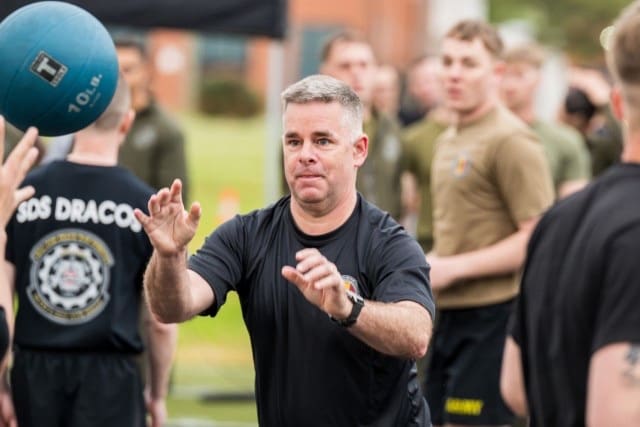
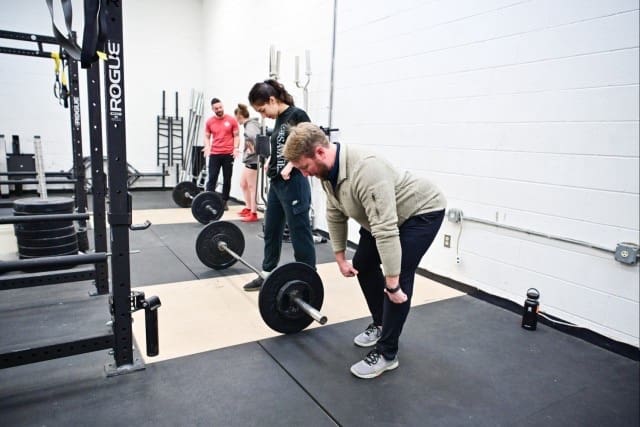
Holistic Health and Fitness (H2F) has transformed the way soldiers train for future battles. It has shifted away from a one-size-fits-all model for human performance to a more individualized approach, tailored to preparing Soldiers to win on the modern battlefield and return home healthy. This revolutionary shift is supported by teams of subject matter experts, embedded within the Brigade footprint, that work directly for the Brigade Commander to meet the specific units’ Mission Essential Task List (METL).
“In a fiscally restrained time, leaders within the Department of War recognize the direct, proven, and significant impact our H2F teams have on our Soldiers’ warfighting ability and as a result have excluded the H2F civilian professionals from the civilian hiring freeze, supported rapidly expansion of the program, and the procurement of the first human performance optimization platform across the Department”, said Lt. Gen. David Francis, Commander, U.S. Army Center for Initial Military Training, the Army’s proponent for H2F. “The H2F System has the full support and backing of both the Secretary of War and the Secretary of the Army as we have worked directly to inform them on the positive return on investment data that our H2F teams are having on our warfighting abilities”.

Initially planned and resourced for 111 Active Duty Brigades, Army Senior Leaders announced after reviewing the initial Return on Investment (ROI) data that H2F Performance Teams (HPTs) would be resourced to every unit across the Army.

ROI data indicates that, although it comes with an initial heavy price tag, H2F is paying for itself year over year by getting our warfighters back into the fight, both fitter and faster. Data currently being peer-reviewed indicates that for every dollar spent on H2F, $8.15 in cost avoidance and readiness gains are realized. The United States Army Research Institute of Environmental Medicine (USARIEM) also conducted independent research, consisting of over 30 million Soldier observations from Fiscal Year 2019-2024, and found that if H2F HPTs were rolled out Army-wide, it would have added 1,080 deployable Soldiers to the fighting force. These 1,080 Soldiers equate to adding over ten company sized elements of combat power back into the fight.

“The Army is rapidly transforming to ensure our Soldiers are prepared to fight and win our nation’s wars”, said Col. John “Jay” Morgan, H2F Director. “Through the H2F HPTs, across our Army, we are equipping our warfighters with human performance subject matter experts who ensure, when called, our Soldiers are prepared to fight, win, and dominate on the modern battlefield”.

By Fiscal Year 2029, the Army will have fielded 129 Active-Duty Brigades, four states throughout the Army National Guard, and two Army Reserve Commands will be equipped with HPTs. A key distinction between how the Active Duty and Reserve Component HPTs will operate, due to their distinct differences, is the level of support they will provide. Reserve Component HPTs will work directly for their Adjutant General or major Army Reserve Command, rather than a Brigade Commander, to meet their units’ METL and resolve unique challenges these Soldiers face, balancing their civilian and military careers that Active-Duty units do not face. To support geo-dispersed and smaller Brigade sized elements 59 H2F Area Support Teams (H2FAST) will be fielded and directly work for their Installation Senior Mission Commander.

“H2F is a Commanders program, Commanders need to know these HPTs work for them”, said Gen. James Mingus, Vice Chief of Staff of the Army. “These HPTs are filled with subject matter experts who treat our warfighters like professional athletes. Having this level of expertise within these teams, like what Division 1 schools have, helps the Command team best prepare Soldiers for combat”.
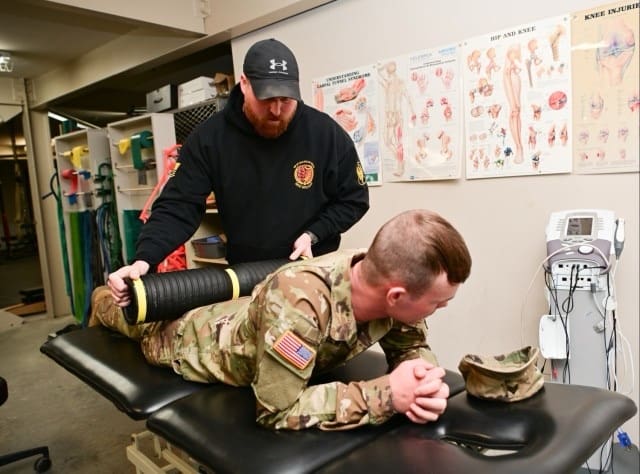
Throughout the rapid expansion process, the Army has navigated a challenging hiring environment. The Secretary of War, Honorable Pete Hegseth, exempted all H2F positions from the civilian hiring freeze to ensure only the best and brightest physical and occupational therapists and registered dietitians were on board our HPTs. Further, in September of this year, based on strong positive feedback from commanders, the Vice Chief of Staff of the Army approved a change to the composition of the H2F Performance Teams (HPT) and H2F Area Support Teams (H2FAST) to include 4 Athletic Trainers (AT) per team through FY29.

To streamline the expansion of H2F expertise across the force, the Army has collaborated directly with the Department of War to develop the requirements for fielding the first human performance optimization platform across the Department. This software solution, designed for the Army, is called the H2F Management System (H2FMS) and serves as the software backbone of the H2F System, providing Soldiers, leaders, and HPT staff with data-driven insights that are typically only found within Special Operations or professional athletics.

“H2FMS will empower HPTs across the Total Army to effectively measure, analyze, and improve Soldier performance and overall combat readiness”, said Lt. Col. Chance Smith, Operations Research and Systems Analyst, U.S. Army Center for Initial Military Training. “Our partners at Program Executive Office- Soldier have provided valuable insights into building out requirements, streamlining the procurement process, and ensuring that H2FMS is designed to impact the warfighter positively”.

Soldier Performance Readiness Centers, or SPRCs, are the home to H2F human performance teams that deliver comprehensive, immersive, and integrative training experiences for soldiers. In partnership with the U.S. Army Corps of Engineers, Installation Management Command (IMCOM), and the Assistant Secretary of the Army for Installations, Energy and Environment (IE&E) Army Senior Leaders approved plans to improve 67 facilities this fiscal year and to complete four designs for SPRC Experiment (SPRC-X), which utilize unconventional construction where new construction is needed.

Paramount to the Army’s investments across the H2F System in people, facilties, data management, and equipment is the buy-in from operational non-commissioned officers (NCOs) who have an enduring and foundational role in unit training. The Army recently concluded the first pilot of the new Skills Qualification Identifier (SQI) for the H2F Advisor. This SQI, only eligible for NCOs, is the Army’s latest investment in empowering the NCO Corps to serve as the “Master Gunner” for human performance on a Brigade or Battalion staff.
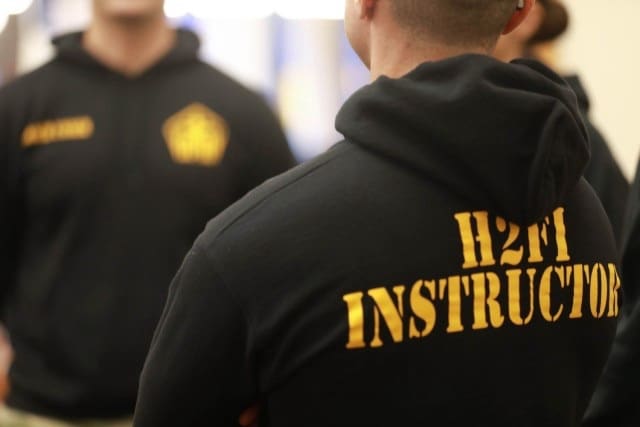
“The H2F Advisor SQI empowers the NCO Corps to directly advise Commanders on the ways best to incorporate human performance-oriented, battle-focused training into their units’ long-term training calendar”, said Sgt. Maj. Jeremiah Richards, H2F Senior Enlisted Advisor. “H2F Advisors serve as the bridge between the HPTs and the H2F Integrators below the Brigade level to synchronize H2F implementation throughout”.

As the Army expands H2F across the force, it has also expanded its scope of responsibilities to include functional proponency for the Pregnancy and Postpartum Performance Training (P3T) program. Formerly known as Pregnancy and Postpartum Physical Training, the P3T team is rapidly reviewing and revising educational content and training P3T leaders to implement effective physical training and education to support perinatal Soldiers return to the operational force fitter. By incorporating the most current evidence across the five domains of readiness, the revised P3T program is seeing similar ROI as the H2F System.
In a recent U.S. Army Center for Initial Military Training questionnaire, 75% of respondents indicated that participating in a unit-run P3T course improved their Army Fitness Test (AFT) score. Preliminary data demonstrates that soldiers who participated in P3T saw an average increase of 50 points in AFT scores before returning to their units.

“Roughly 10,000 Soldiers across the total Army give birth to a child every year”, said Maj. Stephanie Meno, H2F Nutrition and P3T lead. “The most profound shift in the P3T program is the inclusion of all give domains of H2F, pelvic-health education, and the most current evidence for maintaining optimal health and fitness in a perinatal population. Soldiers who participate in P3T throughout pregnancy and postpartum are returning to their formations fitter, faster, and stronger than before becoming pregnant”.

H2F will be hosting their annual Symposium, from 13-14 May, where the Directorate announces ROI metrics for the currently fielded H2F teams, have Army Senior Leaders speak on the program, and highlight the best HPTs across the Total Army.

Register for the Symposium at: www.militaryexpos.com/h2f

By Hunter Rhoades, U.S. Army Center for Initial Military Training

O2X VI Performance Provides Expanded Human Performance Solutions for Military and Law Enforcement Communities

Friday, July 11th, 2025

Covington, LA –Valletta Industries and O2X Human Performance, both veteran-owned companies led by former Navy SEALs, have announced the strategic formulation of O2X VI Performance, a Service-Disabled Veteran-Owned Small Business (SDVOSB) certified joint venture that will deliver comprehensive readiness and performance programs to military and federal agencies. 

Built on a shared legacy of service and a deep commitment to mission readiness, O2X VI Performance will deliver science-backed human performance programs to clients within the Department of Defense, Department of Justice, and additional government entities.

“By combining O2X’s proven expertise in human performance with Valletta’s tactical training capabilities, this joint venture creates a uniquely capable partner for government agencies and commercial clients,” said Sam Blair, CEO of Valletta Industries. “O2X VI Performance offers a mission-ready, SDVOSB-certified solution to meet the evolving human performance needs of federal agencies.”

The Mentor-Protégé Joint Venture integrates expertise in strength and conditioning, injury prevention, mental performance, nutrition, and resilience with tactical instruction, field training, and mission-specific skill development. Leveraging both companies’ embedded personnel models and data-driven methodologies, the joint venture will deliver integrated, end-to-end readiness programs tailored to the unique demands of military and federal law enforcement clients.

“O2X VI Performance enhances our delivery while preserving the depth and integrity of our programs,” said Paul McCullough, President & Co-Founder of O2X. “Together with Valletta, we’re offering the most comprehensive readiness solution on the market — for organizations from federal law enforcement to the Department of Defense.”

Soldier’s Injury Spurs Malpractice Claims Policy Changes

Saturday, June 8th, 2024

An Army family’s five-year struggle and advocacy efforts led to major changes in how the Department of Defense considers non-economic payments in medical malpractice claims filed by active-duty service members.

The changes, published May 10 in the Federal Register, say that potential financial damages in medical malpractice claims will no longer be offset or reduced by the compensation otherwise provided by the Department of Defense or the Department of Veterans Affairs. This change will ensure that families receive full compensation for pain and suffering.

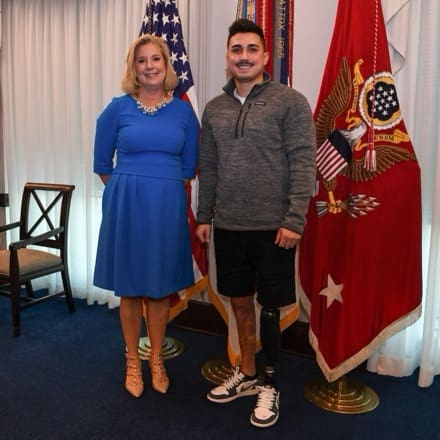
“It wasn’t until the family brought this issue to the forefront that we were able to advocate on behalf of the entire military to remove the offset,” said Secretary of the Army Christine Wormuth. “Pfc. Del Barba and his family deserve the credit for bringing attention to this issue.”

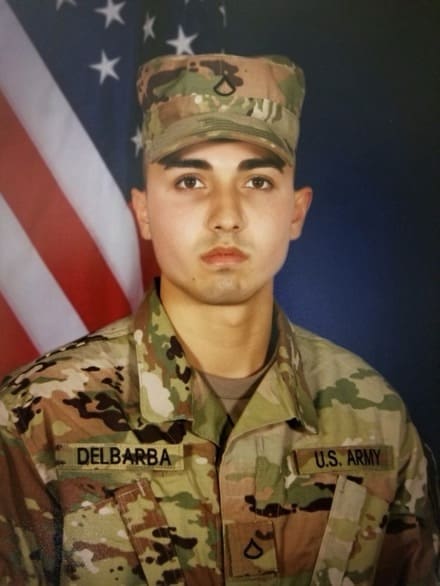
The case began when Pfc. Dez Del Barba, of California, reported to what is now Fort Moore, Georgia, for basic training in January 2019 in preparation for attending Army Officer Candidate School. That February, he became ill and over the course of a week his symptoms worsened.


After numerous visits to sick call, Del Barba was transported to a Columbus, Georgia hospital, where he was diagnosed with necrotizing fasciitis, a form of a flesh-eating infection linked to a Strep A infection.


The Army had earlier received a positive test result for Del Barba’s Strep A infection but had not acted on it.

Placed in a medically induced coma, Del Barba was given a 10% chance of survival. As the infection ravaged his legs and torso, he underwent repeated surgeries in Columbus and at the burn unit at the University of Alabama at Birmingham Hospital to remove skin or tissue.

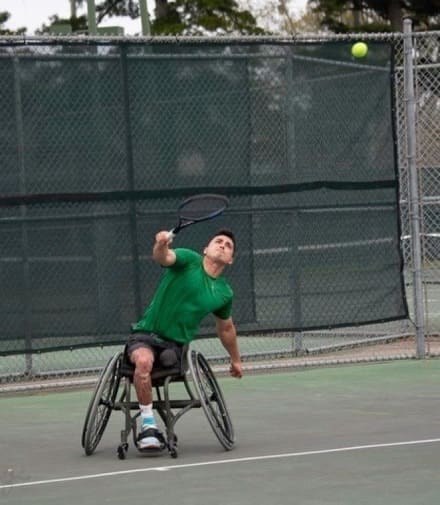
His left leg was amputated as the infection spread.

“What happened to me did not have to happen. This was preventable,” Del Barba told a Congressional subcommittee.

The Army is currently reviewing Del Barba’s medical malpractice claim.

“My life has changed forever. That once active and healthy 21-year-old man now must deal with a lifetime of challenges and obstacles because of the neglect I suffered,” he said.

“The last five years our family has worked tirelessly not just for our son … but for countless servicemen and women who have been grossly mistreated by the department due to military medical malpractice. This long-overdue change will finally bring some accountability to those responsible for their inexcusable actions. Our nation’s Servicemen and Women, our heroes, deserve better medical care,” the Del Barba family said in an emailed statement.

The DoD policy change also clarifies that future lost earnings may be awarded until the time DoD determines that the claimant is, or is expected to be, medically rehabilitated and able to resume employment.

“In addition to Pfc. Del Barba’s resilience and focus on his own recovery, the most remarkable aspect of his story is how he championed this change for all service members,” explained Secretary Wormuth.

Del Barba’s mother says he earned his bachelor’s degree in business management but cannot and likely will never be able to work.

“There are moments when we may think wecannot, until we change our mindset to say we can. I feel grief for all I have lost, but I am grateful for all that I have. We must stand firm, honor the sacrifices of our heroes, and fight for justice,” Del Barba said in an emailed statement.

The family wants more attention paid to the risk of necrotizing fasciitis, and May 31 is Necrotizing Fasciitis Awareness Day, with a focus on the impact of the disease.

The Del Barba family has also formed a nonprofit, called Operation Dez Strong, to assist children ages 4 through 18 who face or have had an amputation and need assistance in acquiring and adapting to prosthetic devices.

By Jonathan Austin, Army News Service

10th SFG(A) Invites Warriors Heart to Discuss Matters Held Close to an Operator’s Chest

Wednesday, February 23rd, 2022

COLORADO SPRINGS, Colo. – 10th Special Forces Group (Airborne) invited speakers from Warriors Heart to speak candidly about the effects of post-traumatic stress disorder and traumatic brain injury (TBI) at the Norris Penrose Event Center Dec. 9, 2021.

Warriors Heart is a treatment center in Bandera, Texas, which provides inpatient care to active-duty service members, veterans and first responders for chemical dependency, alcohol abuse and psychological disorders related to PTSD or mild TBI.

The event was put on by Trojan Legacy—a 10th SFG(A) program that promotes resiliency, recovery and respect within the unit—to help shed light on what undiagnosed PTSD and TBI can look like and lead afflicted Soldiers to medical treatment.

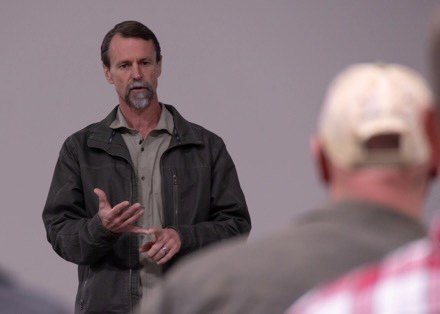
“I almost killed myself,” said Tom Spooner, Warriors Heart co-founder and retired Delta Force Operator. “‘How do I get this noise to stop?’ I was getting lost all the time; I wouldn’t know where I was when I was driving down the road. I just kept going…I had damage to the decision-making part of my brain that I didn’t know of.”

In 2006, Spooner experienced his third mass-casualty event and suffered a traumatic brain injury from an exploded mortar round while deployed which ultimately resulted in an incident where he used the military decision making process (MDMP) to plan his suicide.

“What’s going to stop this noise?,” he continued. “I started going through MDMP on utilizing my Glock and putting a bullet in my brain to stop the noise as a valid course of action. I was doing constraints, limitations, other courses of action, second and third order effects.”

Throughout Spooner’s 21 years of service, he volunteered for Airborne duty, Special Forces and Delta Force.

“Volunteers can’t complain,” he said. “The [Special Forces] selection process guarantees a lot of things. Up front, selection guarantees I will never quit…and I have never asked for help. The selection process guarantees I will not ask for help, and I only do it when I’m off the road.”

Nevertheless, Spooner had a buddy whom he confided in about what was going on in his mind as he veered off course.

“He was my everything guy,” Spooner said. “I would always tell him the truth. He stayed on me, stayed on me and stayed on me. He told me to get help. I had undiagnosed TBI, unprocessed trauma, PTSD and grief going on.”

Spooner finally sought treatment and received cognitive, psychological and vestibular therapy in conjunction with medication. Through medical testing, Spooner found that he was operating at a processing speed of 50 percent and had verbal memory of 50 percent.

“How could I honor the guys who sacrificed their lives,” he said. “Me wrecking my family and my military career is dishonoring them.”
Along with a keen sense of honor, Spooner has a keen sense of regret which, in fact, prompted him to volunteer for Delta Force assessment and selection after serving with 7th Special Forces Group (Airborne) for six years.

“There are things in life worse than death, and that’s regret,” he said. “Not having those hard conversations with people I care about. I could’ve said something but I didn’t because I thought it’d jam up my relationship. I don’t know if it would’ve changed the circumstances…but it’s one of my greatest regrets in life.”

Spooner’s own experiences acted as a looking glass as to how TBI and PTSD can manifest.

“If you have a buddy and you’re seeing these same things going on, you can talk to them and refer them to treatment,” said Sgt. Maj. Doug Lane, 10th SFG(A) Trojan Legacy senior enlisted adviser. “We want to create that peer-to-peer network and have candid conversations with our friends to ensure that if there are these issues, we steer them to the right resources.”

Story by SSGAnthony Bryant, 10th Special Forces Group (Airborne)

CardoMax Veteran Giveback

Friday, November 12th, 2021

To help celebrate Veterans Day this year, CardoMax is on a mission to raise $10k to be donated to Black Rifle Coffee Fund to support Veteran Small Businesses. 

From 8-12 November, CardoMax will donate $5 from EVERY order to BRCC Fund. CardoMax offers 4 different types of liquid supplements; Energy, Hydration, Immune Booster & Recovery. All are liquid concentrations that are sugar and dye-free, which are designed to be mixed with 20oz of water. These convenient little packets are perfect for travel, people on the go and those just looking for a high-quality supplement.

“Since January 2021, we have shipped nearly 25k orders and this is our chance to giveback to our fellow veteran small businesses.” Said Sean Matson, Co-Founder & CEO of CardoMax

To support their goal, shop here: www.cardomax.com