FirstSpear TV

Archive for the ‘Medical’ Category

Canipe Correspondence – Foot Care: Paying Up Front

Saturday, December 1st, 2012

20121201-103802.jpg

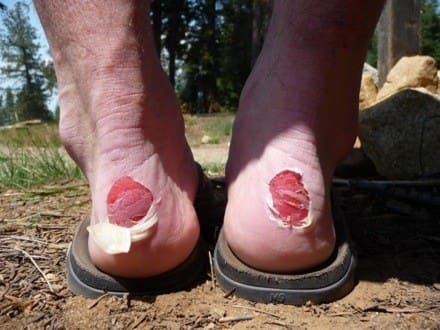
Anyone who spends a lot of time on their feet can tell you how important footwear selection is. Ask a Police Officer walking the streets in a big city, a professional hunting guide, climbing guides, or servicemen who conduct long dismounted movements about the consequences of cheap or ill-fitting footwear. Likewise, every attendee of SHOT show can tell you how they loiter longer in booths with double floor padding after a few miles in the convention center. I have a few things I don’t skimp on to keep my feet in good shape, and have had great results spending a few extra bucks to keep them healthy. A lot of guys dreams have been crushed by their foot conditioning. I saw a lot of mangled feet out at Camp Mackall as an instructor, and it was universally preventable. Was not passing SFAS or Ranger School worth the $50 you saved by using cotton socks or jungle mesh insoles? The answer is probably a universal “NO.”

With that in mind: wear good socks. I have a pair of Smartwool Mid Hikers I got in 2001, and wore on the invasion of Iraq. They didn’t get washed for about 9 weeks, only rotated amongst 4 other pair. They could stand up on their own, were pretty ripe, but as soon as we got laundry service established they returned to good-as-new condition. They do an excellent job at regulating temperature and removing moisture, and as mentioned before are extremely durable. For almost 12 years now I have not worn a pair of boot socks other than Smartwool. Their classic line is still available almost anywhere selling outdoor products, the the newer PhD line updates their design to a more technical sock with the same material and construction quality. They have hundreds if not thousands of heights, weights, sizes, and colors to suit every circumstance from tropical to arctic. No matter what you spend in cash or effort on boots, insoles, and foot prep, there’s no recovering from wearing an unsuitable layer next to your skin. Some people have had luck with a liner sock to move inside of their main sock to keep blisters from forming but I have found that quality socks inside of properly fitting and broken-in boots makes this a non-issue for me.

I switch out most of my boots with new insoles as well. I have some custom orthotics, Superfeet, and Sole brands, and all do well for me. The custom orthotics from a podiatrist can be costly if your insurance does not cover them, and I would recommend trying the others first to see if they work for you at a much lower cost. I have come to prefer the Sole brand, as I can use my oven to mold them to my feet and they have a ton of options for thickness and volume to fit a wide variety of shoes. I like the Superfeet products as well, and they also make an insole for every shoe and activity. They’re around $50 give or take a little for the Superfeet or Sole products, give or take a little. Well worth the money for the foot support you get, and they can be especially helpful to people with lower extremity or back pain.

Last but certainly not least in regards to your foot’s wardrobe is boots/shoes. There are dozens of companies that make great shoes. The most important thing is fit. You need to try them with the socks and insoles you intend to wear with them, and take the time to properly break them in prior to any hard use. Pay close attention to web reviews, especially those that note the reviewers foot structure and volume. For me, I like Salomon XA Pros, Salomon Quest 4D and La Sportiva Ganda Guides so I stick to those for almost everything. My favorites were actually an Italian boot made in Romania by Aku, but they have been mostly absent in the US for the last few years until now (you can get them through Morrison Industries). Check them out if you need an assault boot or approach shoes. It’s a verified scientific fact that every time a terrorist gets kicked with these a supermodel has your baby somewhere in the world. However, based on your activities, foot size and shape, and climate these might all be terrible choices for you. Do your research and buy your footwear from a professional retailer that has the equipment and staff that can help you make a good decision. Most high end outdoor retailers or speciality climbing/backpacking shops will have a staff well versed in fit and selection of boots. When in doubt, located your local sales rep for your brand of choice and ask them.

Training, foot care and preparation also plays a huge role, and could fill a book in itself. In fact it did, and it’s put together a lot better than I could ever explain it. I have found Fixing Your Feet by John Vonhof to be a constant help and resource. It’s available cheap on Amazon and tells you how to prevent or treat any and all issues your feet will encounter through use. As with all things, the combination of the right knowledge, the right preparation and the right equipment will make you a better performer. Special thanks to “bleeding in my boots as a Private” for making this article possible.

* Special thanks to Oregonoutside.net for the gnarly blister pic

SORD Tourniquet Cover

Friday, November 30th, 2012

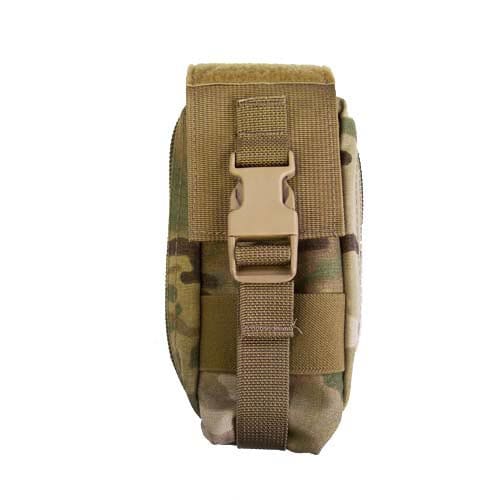
The SORD Tourniquet Cover fits both the SOFFT and CAT tourniquets and is a simple affair that holds the tourniquet fast via a pull-down hook and loop flap and attaches to your gear via MOLLE. It’s marked with a large “T” so you’ll know exactly what’s inside in case the shape wasn’t clue enough.

Available in SORD Base Color, A-TACS AU, Black and MultiCam.

www.SORDUSA.com

RuckPack

Monday, November 26th, 2012

A friend emailed me the other day and said that he saw this cool energy supplement called RuckPack on last week’s “Shark Tank.” I went back and checked out the episode online. Turns out that the frontman for RuckPack is USMC Major Robert Dyer, an Aviator and current professor of Accounting at his alma mater the US Naval Academy.

You might notice two sets of wings on Maj Dyer. Not only is he an Aviator but also a parachutist and has served with 1st Force Reconnaissance as well as MARSOC. In fact, that’s where the idea for RuckPack came from. You see, RuckPack isn’t like your average energy supplement. It contains no caffeine, a prime ingredient in most others. The idea was that Marines were taking energy supplements along on missions to go along with their MREs. Unfortunately, traditionally, energy supplements raise you up and the send you crashing. It’s not as big a deal at home as it is on a battlefield.

So Maj Dyer set to work formulating a drink made from natural ingredients consisting of vitamins and a few other ingredients. So far they’ve sold out their initial run of shots and have an additional 80,000 inbound (including some with caffeine for those who want it).

By the way, Maj Dyer raised $150,000 in operating capital during his visit to the “Shark Tank.”

www.ruckpack.com

Thanks SM!

Fixing Your Feet

Monday, October 29th, 2012

20121027-100256.jpg

Folks in uniform, warrior athletes, outdoorsmen and adventurers all spend loads of time on their feet. Check out this site for some good info on taking care of them.

www.fixingyourfeet.com

thanks Rich M!

ETA Trauma Kit (INERT) from ITS Tactical

Wednesday, October 17th, 2012

ITS Tactical listened to the folks using their excellent ETA Trauma Kit and developed a training version. It is critical to train with your equipment but it’s expensive to expend trauma kit after trauma kit. The INERT version provides a low-cost option for regular training. They put some thought into this one.

20121016-140629.jpg

ITS provides a great description of the product –

The components you’ll find in the inert kit are all the same items you’re used to seeing in our kits, with the exception of the Combat Gauze Inert Moulage Trainer. This blue packaged Combat Gauze is for simulated training only and not for medical use. It’s the same z-folded Combat Gauze in our ETA Trauma Kits, but it lacks the hemostatic agent necessary to stop real bleeding. The inert Combat Gauze also features a resealable closure, so you can repack it and train with it again.

With these Inert ETA Trauma Kits, there also may be expired components included. It’s important that this kit is not used to “refill” another of our ETA Trauma Kits, as this inert kit was designed with the sole purpose being used in a dedicated training environment. Along with the bright blue tell-tale pack of inert combat gauze, we’ve also stamped our insert card in blue with “INERT.” Again, this kit is for training ONLY!

The reason we’ve chosen to include an inert version of every component from our ETA Trauma Kits, is to ensure you’re training with the identical items you’ll be using in a real life situation. In the event you have to use an ETA Trauma Kit, you don’t want it being the first time you’ve ever had exposure to the components. Train like you fight.

20121016-142106.jpg

Notice they talked about the inert version of the combat gauze. This is what it looks like.

20121016-140744.jpg
Here’s the Entire Contents List

QuikClot Combat Gauze LE Inert Moulage Trainer (1)
HALO Chest Seal – INERT (2)
MojoDart Decompression Needle – INERT (1)
Naso Airway Adj. 28fr w/ Surgilube – INERT (1)
Israeli Bandage – INERT (1 – 4?)
Ace Bandage – INERT (1 – 4?)
Z-Pak Gauze – INERT (1)
Combat Casualty Card (1)
Nitrile Gloves (1 Pair)
Pencil (1)
Contents List w/ TCCC Care Under Fire Instructions (1)

A you can see, its everything in their standard ETA but intended specifically for training. Now, there’s no reason to pull out a trauma kit and have to learn how to use when it’s needed most. Like they said, “Train Like You’ll Fight.” Amen.

www.itstactical.com/store/its-eta-trauma-kit-inert

Why the Army Treats Your ACUs with Permethrin

Tuesday, October 2nd, 2012

More than 60 different diseases, some of which are fatal, are spread by ticks, chiggers, insects and other biting arthropods. These include malaria, Dengue (Broken Bone) Fever, West Nile Virus, Lyme Disease and others. The Army Combat Uniform with factory Permethrin treatment can, when worn with other measures, provide over 90 percent bite protection even after 50 washings. This will help protect Soldiers against these diseases. The ACU with Permethrin will be issued to Soldiers serving in the continental United States and elsewhere.

MDM – LVI

Tuesday, September 25th, 2012

Developed by Daytac, LVI the Tactical Rescue Stretcher is a lightweight poleless litter available in 3 models. The first model is completely integrated into the armor vest which requires a retrofit to your vest and virtually any vest can be accommodated. The second model is attachable via PALS webbing and comes stored in a container on the back of the vest. Finally, the stand along model comes in a small pouch.

20120925-113636.jpg

Additionally, the stand alone variant can be used for a variety of tasks much like the old multipurpose net developed during Viet Nam.

The littler cradles the helmeted head of the wounded and due to the design that incorporates the armor into the load bearing portion of the litter, the wounded won’t sag.

To learn more, including a video, visit www.lionprotects.com

Maneuver Conference – Cold Fire

Wednesday, September 19th, 2012

Cold Fire gave us an impromptu demo of their spray. The torch is burning at around 1900 degrees. Cold Fire puts fires out and cools 21 times faster than water. It is used by breachers to cool the breach point and by rescue personnel to cool crash sites in order to get to the injured.

www.firefreeze.com