Troop Performance

Archive for the ‘PEO-Soldier’ Category

Natick Camo Study – Making Sense of It All

Friday, September 18th, 2009

Unless you’ve been living under a rock, or failing to read Soldier Systems Daily, you know that in response to Congressional calls for a new camo pattern for operations in Afghanistan, the Army announced that they would test two patterns in October. The Army Times obtained a Natick test report for a camouflage study conducted from 2007 – 2009 of 18 different patterns. This report has now been released by the Army to the press and Soldier Systems Daily has extracted some of the major points from this test report. This is the first in a series of reports that attempt to make some sense of the report and cut through much of the conjecture and hyperbole found on the internet.

The following patterns were actually tested:
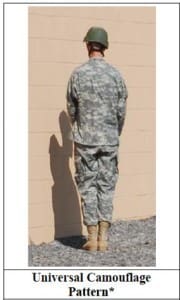
UCP
The Army’s current issue UCP was used as a baseline.
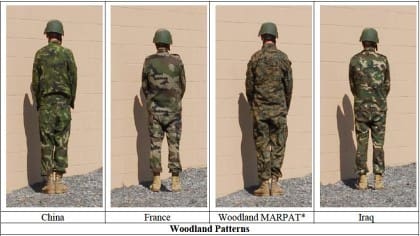
Woodland Patterns
Four Woodland patterns were included in the test.
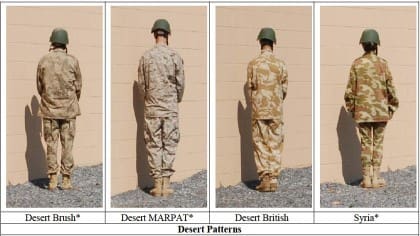
Desert Patterns
Four Desert patterns were used for testing.
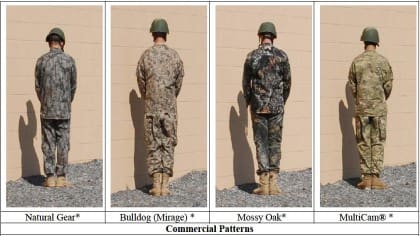
Commercial Patterns Tested
Natick also included four commercial patterns, all of which have been seen limited use by US troops.

The following patterns were eliminated from testing for a variety of reasons but mainly due to poor performance. In some cases the performance was low but this combined with limited accessibility for US forces or similar factors the patterns were eliminated.

From the report:
“Although detection data were collected on 18 patterns, five patterns (i.e., Sweden, Spec4 Woodland, Spec4 Urban, North Korea, and Woodland British) were eliminated from the final data analysis. The two Spec4 patterns were not available for desert image collection; therefore, they did not have a complete data set. Sweden, North Korea and Woodland British were eliminated, due to being the worst performers in two out of the three environments. Their similarity to other woodland patterns was further justification, although it must be noted that detection data are available for further analysis, if desired.”
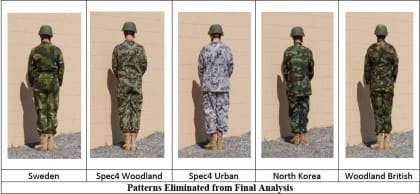
Patterns Eliminated

Finally, the report’s authors produced a very handy chart that show the overall performance of each pattern by environment. You are going to be genuinely surprised when you read the results. How they fared:
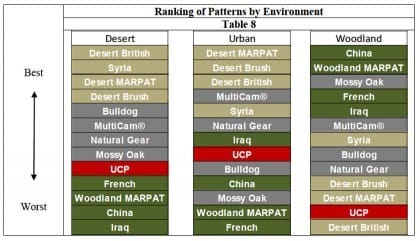
Overall Performance Chart

Ultimately, the entire report can be summed up very simply. As one reader who is a retired Special Forces Warrant Officer put it, “Nothing earth shattering; desert s@&* works great in the desert and green s@&* works great in the green area.”

Special Thanks to Defense Tech for the advanced copy of the report and for hosting it in PDF form for the public.
Afghanistan Camo Testing Announced

Tuesday, September 15th, 2009

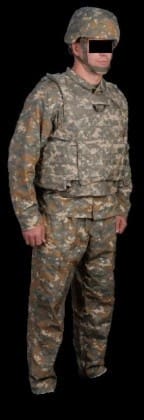
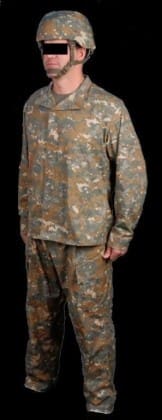
*UPDATED* Natick has been busy developing several new variants of UCP which retain the base pattern but replace individual colors. Word has it that some of them are down right ugly. It has recently been revealed by Brig. Gen. Peter Fuller, PEO-Soldier that the new “UCP-Delta” which integrates Coyote Brown into the pattern along with Multicam will be evaluated in Afghanistan beginning in October. In response to the Congressional directive to field a new camo pattern for operations in Afghanistan two Battalions worth of uniforms will be tested.

Below are two photos of UCP-Delta. One with an IOTV and one without.

UCP Delta with IOTV UCP Delta
Photos courtesy of PEO-Soldier

According to sources at Natick, 30% of the pattern of the UCP-Pattern is Coyote Brown. One advantage exhibited in the photos is that UCP Delta offers the perception that current UCP field equipment will not need to be replaced.

ACU Improvements

Wednesday, August 19th, 2009

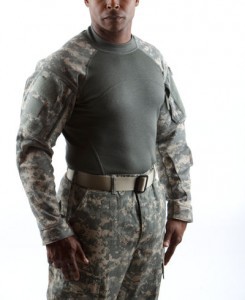
Over the last year the PEO-Soldier’s Program Manager for Soldier Protection and Individual Equipment has undertaken a major project to make incremental changes to the ACU. In an interview earlier this week with LTC Mike Sloane (Product Manager Soldier Clothing and Individual Equipment), Mr. Todd Wendt (Deputy Product Manager Soldier Clothing and Individual Equipment) and Mr. Fred Coppola (Deputy Project Manager Soldier Protection and Individual Equipment), we discussed these new improvements.

See the latest information after the jump.

Massif WACS

Monday, August 3rd, 2009

Massif Mountain Gear Company has just released the new Winter Army Combat Shirt (WACS), a new flame-resistant cold weather garment based on their Army Combat Shirt design issued to US forces since 2007. The WACS retains the features of the ACS that have made it so comfortable and user friendly but have integrated new materials for cooler climes. The soft and stretchy HotJohnsâ„¢ fabric used on several of Massif’s cold weather FR pieces is used on the torso and the Elementsâ„¢ softshell fabric sheds wind and rain and its fleece lining is cozy and warm yet retains flame protection and durability for areas not protected by body armor. Massif developed the WACS in cooperation with the U.S. Army and conducted extensive field-testing for the best design possible. Available in Small-XXLarge, all fabrics used in the WACS meet the stringent ASTM F2302-03 performance specification.

Winter Army Combat Shirt

Sales are restricted to US military members. Visit www.Massif.com for more information.

Ground Soldier Ensemble for Army SOF

Sunday, July 26th, 2009

According to Wired’s online defense journal Danger Room, InsideDefense.com broke the story earlier this week that the Army is going to field a “Brigade’s worth” of the Land Warrior II system now known as the Ground Soldier Ensemble or GSE at the request of a “Special Forces Commander” at Fort Bragg.

Improved Army Sweater

Tuesday, July 7th, 2009

PEO-Soldier has been working on a new version of the venerable 5 Button Sweater. Designed in World War One, the 5-Button Sweater was manufactured from wool and offered in a brown color. Aside from the most minor of changes over the years, the sweater didn’t receive any modifications until the late 90s when the material was changed from wool to acrylic.

Improved Army Sweater

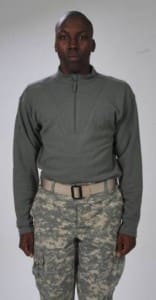
The most striking change is from Brown to Foliage Green to better blend in with the Army’s universal Camouflage Pattern. Also absent in the new version are the buttons which have been swapped out for a zipper with cloth pull. The new sweater is also reported to be inherently FR so they may have gone back to wool. However, they claim it is of “next to skin” quality so it may be of another material.


Army Combat Pants

Sunday, July 5th, 2009

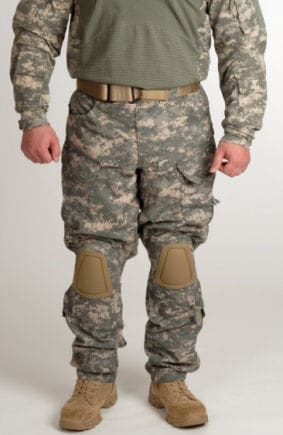
Yes, the Army IS working on a new pair of pants to complement the Army Combat Shirt. The idea was to develop a pair of trousers that were designed specifically for combat. In addition to protection from flash and flame another major requirement was built in knee protection.

Army Combat Pants

Produced by Massif, manufacturers of the ACS, the Government design features hard knee pads developed by Crye Precision. They are made from 7.3-ounce, fire-resistant twill and offer a reinforced, stretchable seat. This last feature was added since so many Soldiers have to slide down steep slopes in mountainous regions. Limited User Evaluations (LUE) were completed earlier this year in Georgia and West Virginia. Further tests are scheduled for FY10 in Afghanistan but who knows what will happen now due to the Congressional monkey wrench.

It is very important to note that at this point there is no validated requirement nor a formal program to procure the ACP. The development and evaluations are another case of the folks at PEO-Soldier leaning forward in the foxhole.

Congress Cares About Camo

Wednesday, June 17th, 2009

It seems someone clued Congress in on the fact that the Universal Camouflage Pattern issued to troops fighting in Afghanistan is far from the ideal. So Congress has told the Army to issue something better. Well, the first word in UCP is after all “Universal” and that makes it a compromise since it has to blend in everywhere. Oddly, Afghanistan is not monochrome and there are a variety of environments to blend in with so ultimately a “Universal” camouflage is what is called for after all. Maybe it just needs to be tuned a bit.

Here is the wording from the Conference Committee Report.
“The conferees understand that soldiers deployed to Afghanistan have serious concerns about the current combat uniform which they indicate provides ineffective camouflage given the environment in Afghanistan. Accordingly, the conferees direct that within funding made available the Department of Defense take immediate action to provide combat uniforms to personnel deployed to Afghanistan with a camouflage pattern that is suited to the environment of Afghanistan.

The conferees further direct the Secretary of the Army to provide a report on the program plans and budgetary adjustments necessary to provide appropriate uniforms to deployed and deploying troops to Afghanistan. The report shall be submitted to the congressional defense committees by the end of fiscal year 2009.”

So Congress wants the Army to reprogram money “immediately” to provide an alternative camo pattern for forces in Afghanistan and report to the Armed Services Committees before the end of the fiscal year on it will be accomplished. Can you imagine how this went over when word reached PEO-Soldier? “The jig is up, they’re on to us”.

Now please remember, that this still isn’t law. The President hasn’t signed it YET but is expected to soon.

So how will this play out? Interesting question, considering when asked just weeks ago at the Soldier Systems APBI about the possibility of alternative camouflage patterns, PEO-Soldier officials gave a curt, “No”. However, it has come to our attention that the 173d Airborne Brigade has been granted approval to wear Multicam during their OEF rotation. So that option seems open…maybe. Alternatively, it is highly unlikely that any new SOCOM patterns will be used by general purpose forces. 3-color desert pattern is still available but was replaced by the “superior” UCP so institutional momentum may veto its use. Desert MARPAT is a possibility, if the Army can wade through the interservice rivalry issues. And finally, what about an entirely new pattern, or old for that matter? Several promising designs were tested by Natick in the 2003-2004 time frame before UCP was adopted virtually out of nowhere.

Ultimately, it is going to be about cost. It isn’t just uniforms. There are a variety of other equipage and accouterments that must also be produced in an alternative pattern. And all of this while the Army is still in the throes of a complete roll out of the UCP pattern. Who will foot the bill? Congress has essentially issued budgetary guidance to the Army to reprogram funds.