TYR Tactical

Archive for the ‘Profession of Arms’ Category

The US Army Releases A Two Volume Book About Operation Enduring Freedom

Thursday, November 18th, 2021

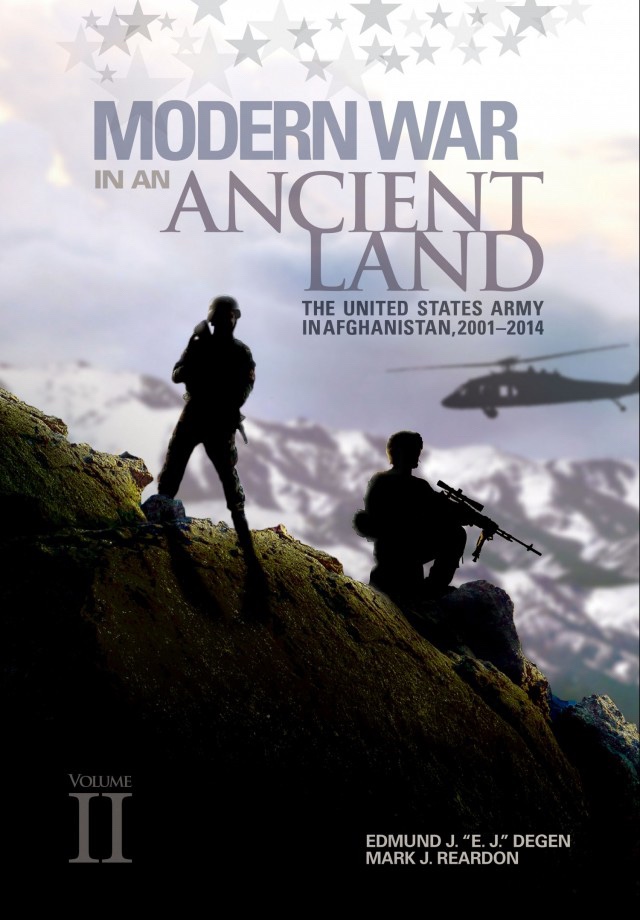
WASHINGTON – The U.S. Army Center of Military History released Modern War in an Ancient Land: The United States Army in Afghanistan 2001–2014, a two-volume history, today.

These volumes, prepared by the Operation Enduring Freedom Study Group, present a first cut operational-level narrative of how the U.S. Army formed, trained, deployed, and employed its forces in Afghanistan from October 2001 to December 2014. At the same time, it delves into the tactical realm when such insights amplify the implications of operational decisions or occurrences.

To write this history, the study group, led by Edmund J. “E.J.” Degen, embarked on an extensive research program that relied heavily on primary source documents. The group also conducted dozens of oral history interviews with key military and civilian leaders. These volumes include fifty maps, a wide range of campaign photography and artwork, and volume-specific indexes.

The Army routinely conducts after action reviews of operations that capture lessons learned and are intended to help guide and inform future decisions by military leaders at all levels.

The process of researching, analyzing and writing the history can take several years, Degen noted that, “It’s important to capture these historical lessons as soon as we can as they may apply to future wars.”

As part of the Army’s continuous campaign of learning, CMH will write more in-depth histories of all aspects of the war in Afghanistan, including operations from 2015 to 2021, the evacuation of Kabul, and security force assistance.

The two-volume book set will be released as CMH Pub 59-1-1 and will be available in print, as an eBook, and as a free pdf download starting November 17, 2021. Access to these options are found at: history.army.mil/html/books/059/59-1

The general public can also purchase print copies of these volumes from the U.S. Government Publishing Office. bookstore.gpo.gov

For additional information about the history of the U.S. Army in OPERATION ENDURING FREEDOM please visit:

history.army.mil/catalog/pubs/70/70-83 and history.army.mil/catalog/pubs/70/70-131

Air Force Releases Alternate Component Fitness Score Charts

Tuesday, November 16th, 2021

WASHINGTON (AFNS) —  

The Air Force will officially add new alternative components to physical fitness assessments beginning Jan. 1, 2022. The updated scoring charts can be found here.

After announcing the components in July, over 9,000 data points were collected to determine the point values for each component by assessing approximately 2,000 Airmen from 23 installations.

Airmen will have the choice to perform these options to meet the strength and cardiovascular requirements:

Cardio

Traditional 1.5-mile Run

High Aerobic Multi-shuttle Run (20M HAMR)

Strength

Traditional Push-ups

Hand Release Push-ups

Sit-ups

Traditional Sit-ups

Cross-Leg Reverse Crunch

Plank

“While testing these components at various installations, we received a large amount of positive feedback,” said Lt. Gen. Brian Kelly, Air Force deputy chief of staff for manpower, personnel, and services. “The changes to the physical fitness assessments reflect what we learned and our desire to provide Airmen with additional flexibility in maintaining fitness standards.”

Airmen can schedule their assessment and sign up for their desired cardio option via myFitness, which will be available for scheduling starting on Dec. 10. While members can select their desired cardio option when scheduling their assessment, they will select their desired strength components at time of their assessment.

While the waist measurement is no longer a component of the fitness assessment, DoD Instruction 1308.3 still requires Airmen to be measured for and maintain a healthy body composition to ensure physical readiness. The Air Force Surgeon General, who has responsibility for overall Airmen health, has reviewed alternatives and determined waist-to-height ratio as the best available method for assessing body composition. AF/SG will be providing guidance on this program in the coming months.

In addition to the approved new options, the Air Force continues to test future alternatives. Key tenets for new options include ensuring the test is an equivalent measure of fitness, regardless of testing method, and ensuring approved alternatives can be available at every location so all Airmen have the same set of options. This currently limits options like swimming or biking where sufficient equipment is not available at all locations. Likewise, based on equipment requirements and the need for continued testing, the one-mile walk is not being incorporated as an option at this time. The two-kilometer walk will remain a fitness component for those who are not medically cleared to perform the two approved aerobic options.

The Air Force Services Center is working with installation Fitness Assessment Cells to schedule and conduct training for Unit Fitness Program Managers and Physical Training Leaders to ensure proper administration of the new components.

The alternative events will not apply to Guardian annual fitness tests as the U.S. Space Force develops and implements their service-specific Holistic Health Assessment over the next year.

By Secretary of the Air Force Public Affairs

Multi-Domain Warfare Students Observe real-time C2 of AFSOUTH Operations, Get a Taste of Multi-Domain Operational Planning

Thursday, November 4th, 2021

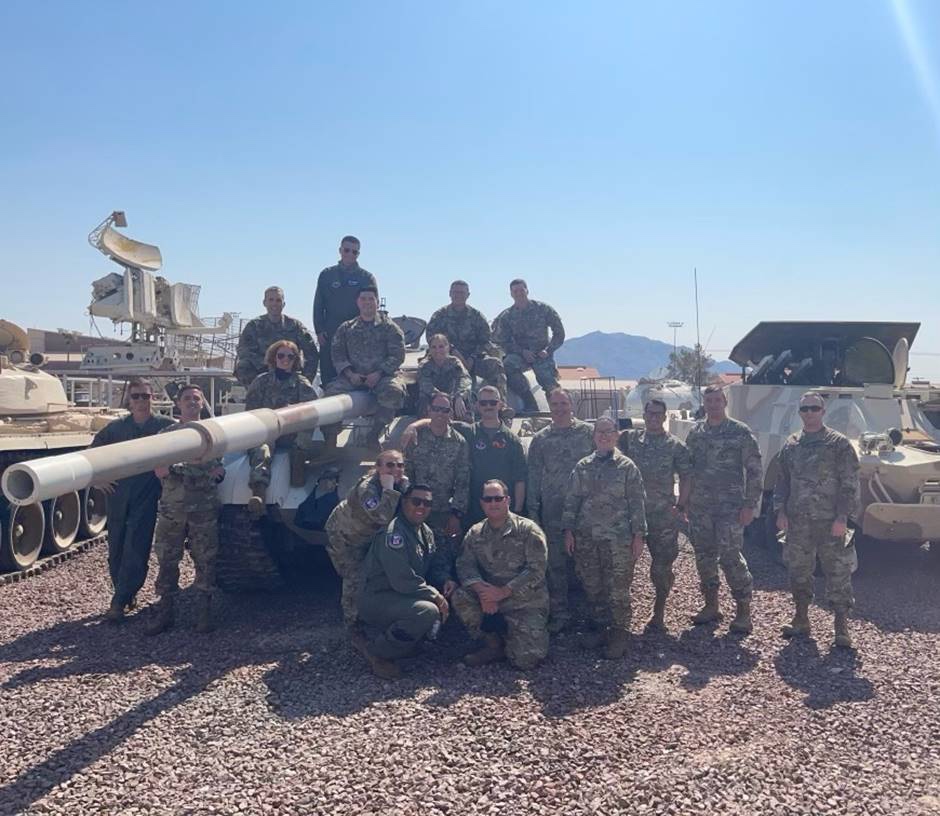
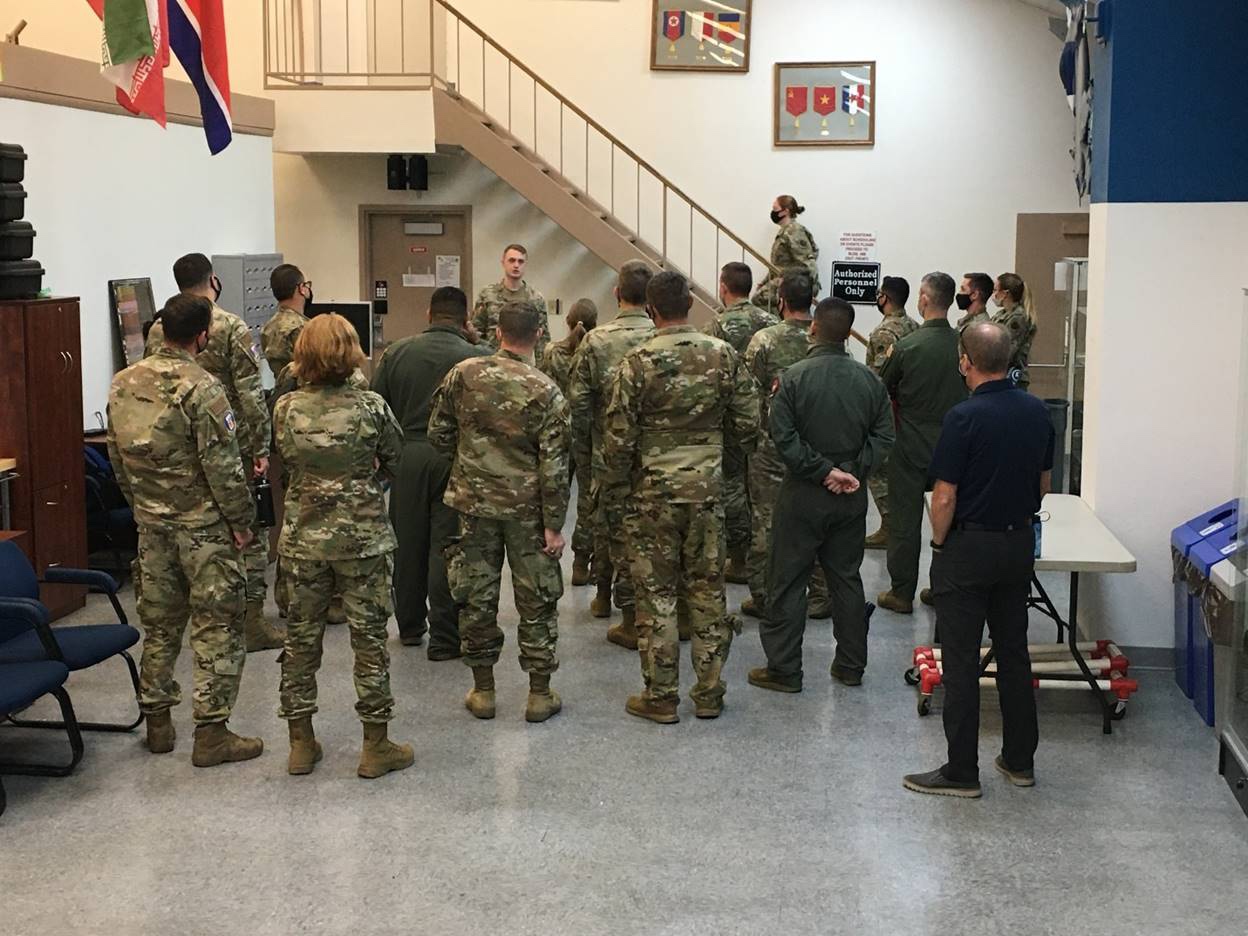
The Multi-Domain Warfare Officer Initial Skills Training class 21B visited the 612th Air Operations Center at Davis-Monthan Air Force Base, Arizona, to observe real-time operations, Sept. 27-28. 

The 612th AOC’s mission is to “plan, command, control, execute, and assess air, space, and information operations to meet Secretary of Defense, Chairman of the Joint Chiefs of Staff, and Commander, United States Southern Command’s taskings across the full spectrum of military operations.” 

Davis-Monthan AFB was the third of a four-leg trip for the Multi-Domain Warfare Officer, or 13O, students traveling to geographic and functional operations centers. The 13Os had just visited the Shadow Operations Center – Nellis, or ShOC-N, at Nellis AFB, Nevada, as well as the Combined Space Operations Center at Vandenberg Space Force Base, California.  Their next and final stop will be the 616th Operations Center at Joint Base San Antonio, Texas.

“When the class arrived, they received a brief about how 13Os have been used in AFSOUTH [Air Forces Southern] and some of the unique characteristics of the command and AOC,” according to Maj. Nathaniel “Crowbar” Butler, a 13O Class 20A graduate, assigned to the 612th AOC Strategy Division. “We then provided them with initial data and assumptions to begin planning for a strategic deterrence mission. We were able to provide real-world lines of effort, priorities, and constraints to shape their planning.”

The training exercise provided the students with real-world exercise planning experience using real-world products that were not derived in an academic environment.

Butler continued, “Their deliverable was a brief that demonstrated how they would employ a task force, with a synchronized IO [information operations] plan, to build partnership in our AOR [area of responsibility] and reinforce the message that the U.S. is the ‘Trusted Partner’ in South America.”

Both teams successfully met the air component’s intent and demonstrated an ability to use their training in a competition environment scenario.

“It’s just amazing to witness how far we’ve come as a brand new career field.  When I graduated as part of the very first 13O class, we were still an experiment in almost every sense of the word,” weighed in Lt. Col. Marcus “Troll” Bryan, 705th Training Squadron commander/leader of the 13O schoolhouse, Hurlburt Field, Florida.

Bryan continued, “The first 13O graduates didn’t know what to expect when we left the schoolhouse nest. In many instances, AOCs were a hodge-podge of various career fields where organizational culture was dependent on command climate.  Now we have 13O students visiting 13O graduates, executing real-world 13O planning events as part of their training, and most importantly building a culture of operational C2 expertise across the globe!”

Lt. Col. Benjamin “Dragon” Lee, 705th TRS director of operations and 13O graduate, seconded that view.  “By the time this class graduates, they’ll know where their first follow-on assignment will be, and most (if not all) of those assignments will be to Air Components like they saw on this TDY.  This world-wide 13O network and culture is one of many 13O career field milestones that will help the USAF lead the joint force in an era of strategic competition.”      

The demand signal from the air components for confident operational command and control experts capable of integrating multiple domains is stronger than ever. The 20-week AFSC [Air Force Specialty Code]-awarding course is the most rigorous operational-level planning course in the USAF, preparing 13Os to lead operational planning within the air component from day one.

To learn more about 13O training and the Multi-Domain Warfare Officer career field, visit the following websites:  intelshare.intelink.gov/sites/C2/13O/SitePages and www.milsuite.mil/book/groups/13O.

The 705th TRS reports to the 505th Test and Training Group and 505th Command and Control Wing, both are headquartered at Hurlburt Field, Florida. 

By Deb Henley, 505th Command and Control Wing, Public Affairs

AFCLC Launches Updated Culture Guide App, Introduces New Educational Course with Certificate

Saturday, October 30th, 2021

MAXWELL AIR FORCE BASE, Ala. (AFNS) —  

Airmen now have at their fingertips the opportunity to receive credit for learning about another country’s culture while simultaneously responding to the Air Force chief of staff’s action order to understand the nation’s strategic competitors.

This can be achieved by accessing the latest version of the Air Force Culture and Language Center’s Air Force Culture Guide app.

Howard Ward, AFCLC director, unveiled version 2.0 of the app to a virtual audience Oct. 15, the last day of the 2021 Virtual Air University Language, Regional Expertise and Culture Symposium.

Ward described the updated app as a one-stop shop for accessible, relevant and impactful curriculum in addition to culture field guides.

“It’s a delivery method that can deploy curriculum at enterprise scale, untethered from the constraints of government systems, which is especially great for total force Airmen, and it’s designed to accelerate learning for strategic competition by putting AFCLC’s ‘Global Classroom’ right in your pocket,” he said.

Shortly after its initial release in 2017, The Wall Street Journal recognized the original version as one of the six indispensable apps for business travelers.

The changes to the original app include:

Enhanced accessibility to AFCLC’s Expeditionary Culture Field Guides – Users no longer need to download one of the 69 guides to view their content. Touch the block containing the name of the guide for it to open. Plus, there are seven new ECFGs on the way.

Accelerated learning for strategic competition – Touch the Courses button at the bottom of the screen to view the first new course. Developing Cultural Competence is designed to baseline the user on what culture is, why it matters and how users can learn more as their career progresses. Two more courses will be released soon. These courses will allow each service member to achieve Air Force Chief of Staff Gen. CQ Brown, Jr.’s Action Order C: Competition individually by learning the fundamentals of culture for adversary understanding. Upon completing these courses, users will receive a certificate ready to upload to their learning record, as applicable.

A video library will be coming soon to further enhance learning capabilities on the go.

The app is available through the App Store and Google Play, and it’s safe for Department of Defense mobile devices. More than 20,000 individuals are already utilizing the app, and for those individuals, an automatic update to Version 2.0 is now available.

By Lori M. Quiller, Air Force Culture and Language Center Outreach Team

Marines Update Tattoo Policy

Friday, October 29th, 2021

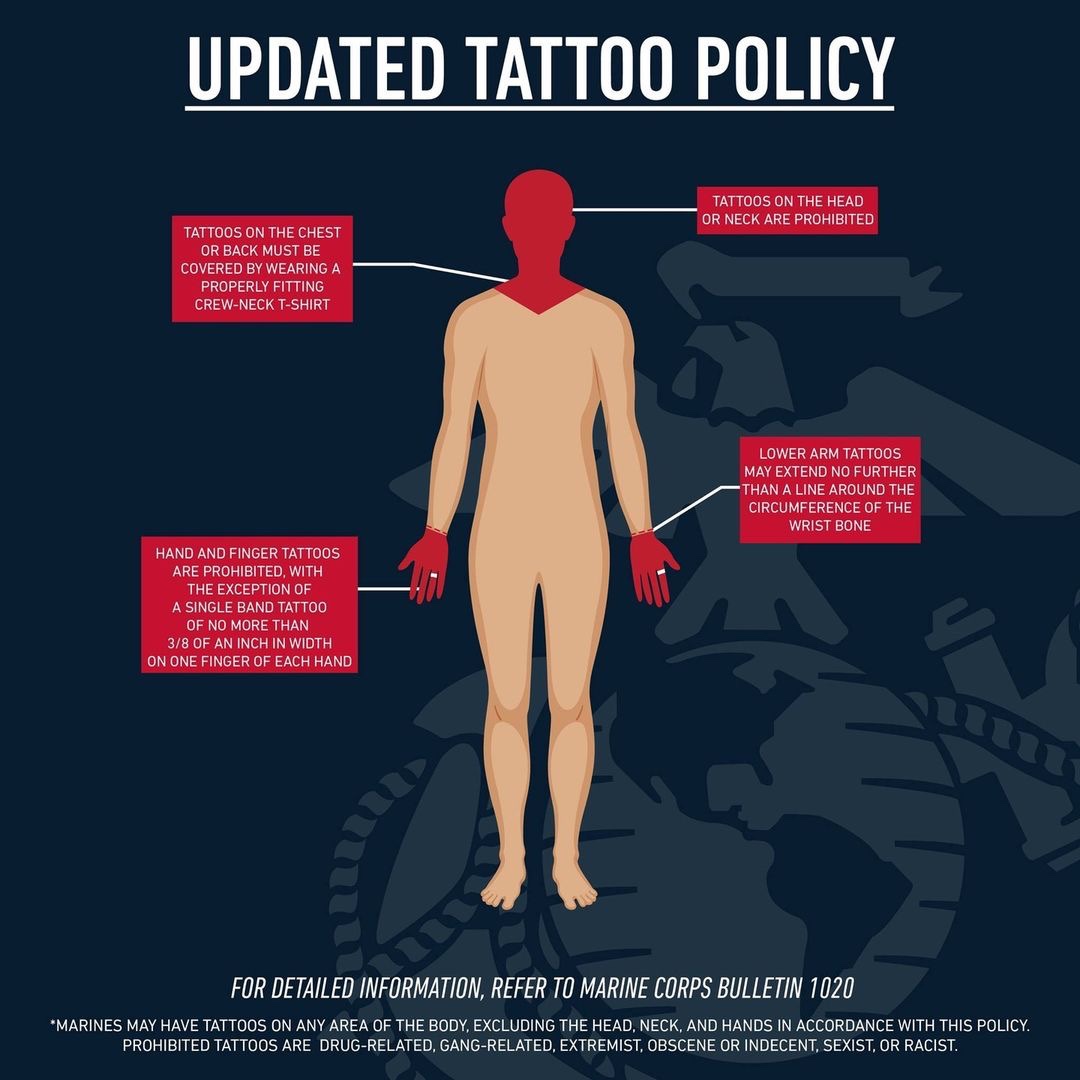
Today, the Commandant of the Marine Corps has approved changes to the Marine Corps policy regulating tattoos. Key policy changes can be found in Marine Corps Bulletin 1020, uploaded here: go.usa.gov/xeaHF.

Hurlburt’s Multi-Domain Warfare Students Learn More about Peer Threats and JADC2 Emerging Technologies at Nellis

Friday, October 29th, 2021

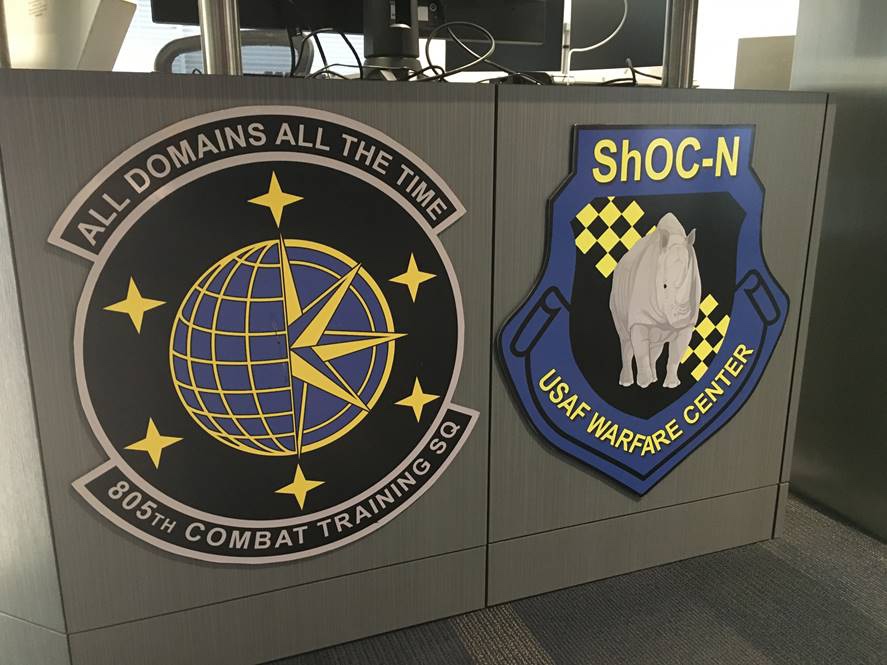
The Multi-Domain Warfare Officer Initial Skills Training class 21B visited the 805th Combat Training Squadron’s Shadow Operations Center at Nellis Air Force Base, Nevada, also known as the ShOC-N, to observe the experimentation and incubation of new command and control technologies and development of C2 tactics, techniques, and procedures, Sept. 23-24.

Nellis AFB, Nevada, was the second of a four-leg trip for the Multi-Domain Warfare Officer, or 13O, students traveling to geographic and functional operations centers.  The class’ destinations included the Combined Space Operations Center, or CSpOC; Space Delta 5, at Vandenberg Space Force Base, California, the 612th Air Operations Center, Davis-Monthan AFB, Arizona, and the 616th Operations Center at Joint Base San Antonio, Texas.

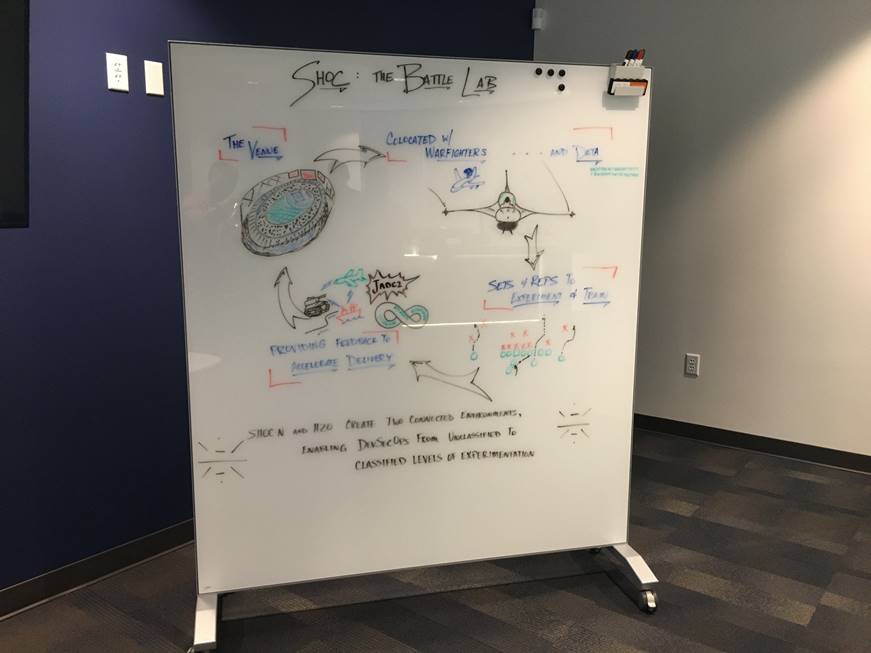
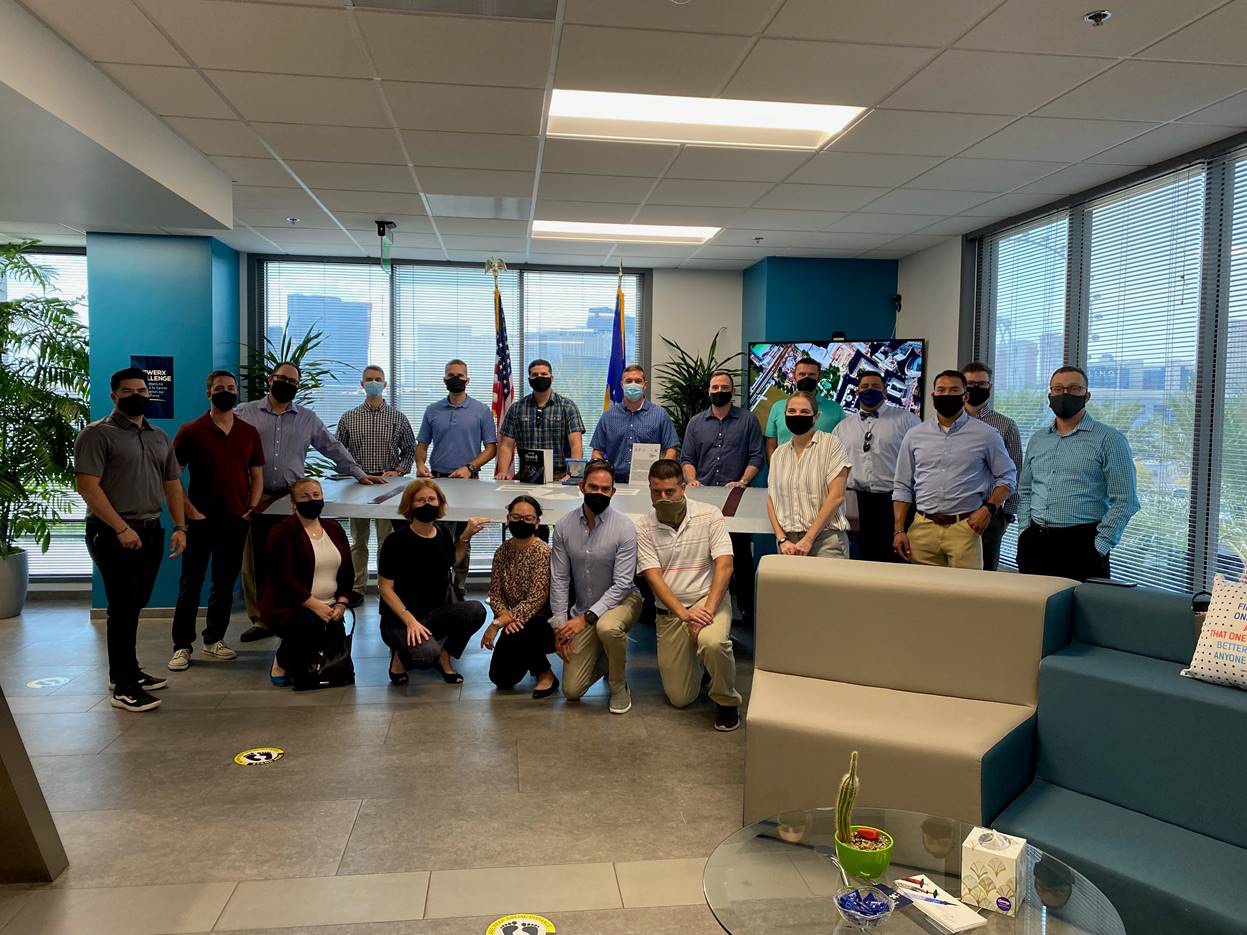
The 19 students of class 21B also toured ShOC-N’s downtown Las Vegas site, the Howard Hughes Operations, or H2O, facility. AFWERX briefed the 13Os about their latest efforts to discover innovative opportunities within industry and Department of Defense partners for delivering tangible capabilities to warfighters.

In 2019, the Joint Chiefs of Staff tasked the ShOC-N to become the U.S. Air Force’s Joint All-Domain Command and Control, or JADC2, Battlelab. Part of this task as recently evolved to make the ShOC-N the primary location for data gathering and sharing to further enable the U.S. Air Force’s Advanced Battle Management System Battlelab ecosystem.

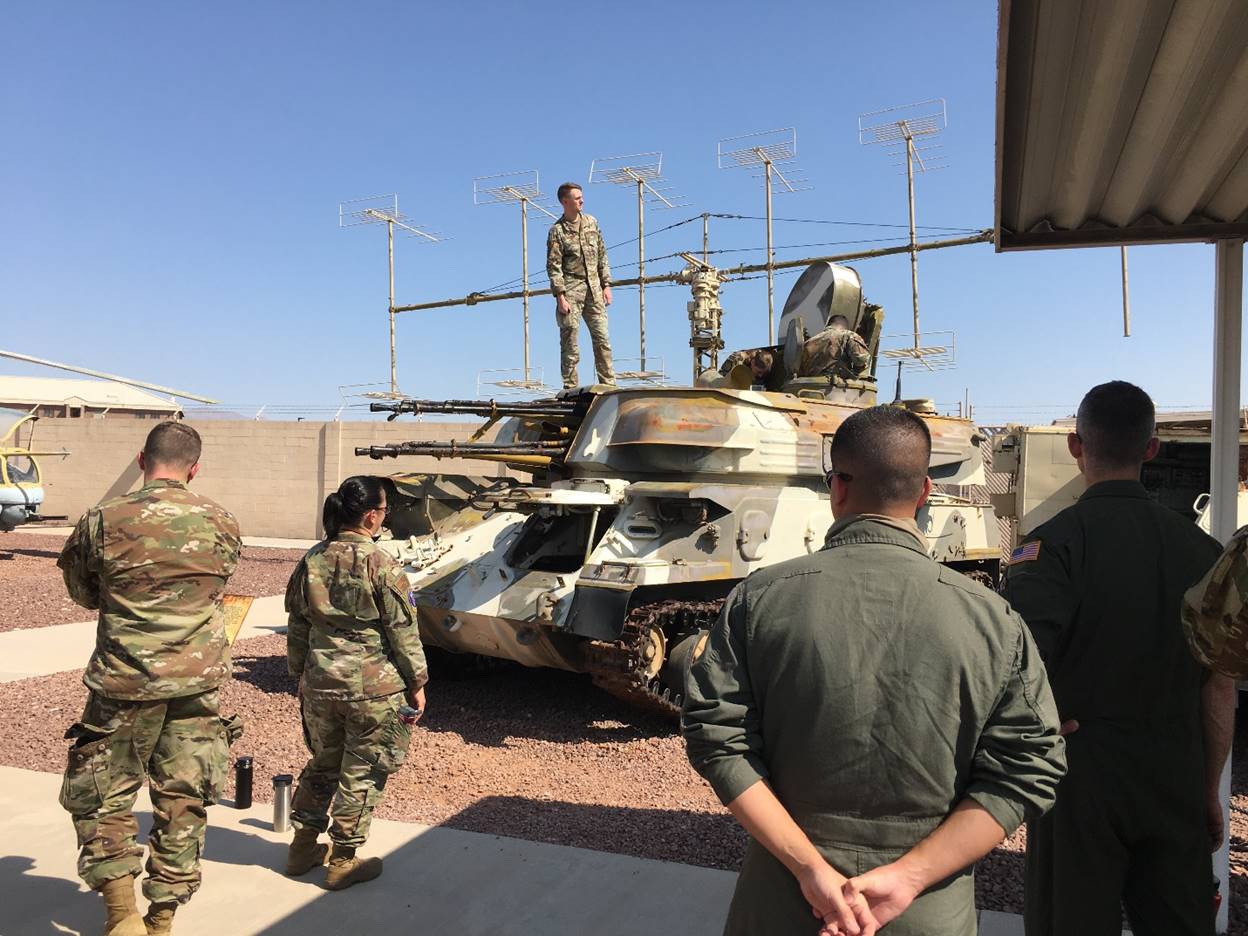
The 13O students’ Nellis training concluded with peer adversary Integrated Air Defense Systems and threat emulation briefings from the 547th Intelligence and 57th Information Aggressor Squadrons, respectively.

“Our adversaries’ threats and capabilities are real; within months, these 13Os are going to be the multi-domain operational planning experts that senior leaders look to for COAs [courses of action] on what to do, how to do it, the risks involved, and how to effectively mitigate those risks,” according to Lt. Col. Joe “DACO” Thompson, 705th Training Squadron operational warfare training flight director.

Thompson continued, “13Os can’t provide COAs without knowing who is doing what and where. A lot of ‘what and where’ is on the ground at Nellis, but there’s also a lot of ‘what and where’ within our sister services’ components and non-air domains. We teach them that, and this TDY [temporary duty] reinforces that critical 13O mindset.”

The 705th Training Squadron’s Multi-Domain Warfare Officer Initial Skills Training course is taught at Hurlburt Field, Florida. The 13O course deliberately develops a multidisciplinary force skilled in operational art and design across all domains.  13O graduates will be operational planners versed in the joint planning process, representing the U.S. Air Force’s equity in the joint planning environment, affecting Joint All-Domain Command and Control, or JADC2, and Joint All-Domain Operations in a high-end, near-peer conflict.

To learn more about 13O training and the Multi-Domain Warfare Officer career field, visit the following websites: intelshare.intelink.gov/sites/C2/13O/SitePages/Home and www.milsuite.mil/book/groups/13O.

The 705th TRS reports to the 505th Test and Training Group and 505th Command and Control Wing, both are headquartered at Hurlburt Field, Florida.

Deb Henley

505th Command and Control Wing Public Affairs


Multi-Domain Warfare Students Observe Real-Time CSpOC C2 Operations

Saturday, October 23rd, 2021

The Multi-Domain Warfare Officer Initial Skills Training class 21B visited the U.S. Space Command’s Combined Force Space Component Command at Vandenberg Space Force Base, California, to observe real-time operations, Sept. 20-21.

Vandenberg SFB was the first of a four-leg trip for the Multi-Domain Warfare Officer, or 13O, students traveling to geographic and functional operations centers. The 13Os also traveled to the Shadow Operations Center – Nellis, or ShOC-N, at Nellis Air Force Base, Nevada, 612th Air Operations Center, Davis-Monthan AFB, Arizona, and the 616th Operations Center at Joint Base San Antonio, Texas.

The 19 students of class 21B were able to tour and observe real-time operations at the Combined Space Operations Center. The CSpOC’s mission is to execute operational command and control of space forces to achieve theater and global objectives. 

The 13O students were also given the opportunity to talk to several senior U.S. Space Force leadership, including CFSCC Commander Maj. Gen. DeAnna Burt. Discussions focused on inter-service interactions and daily planning challenges facing CSpOC Guardians such as command relationships, authorities, and the development of C2 strategies as USSPACECOM components are reorganized, and new components become operational. 

Maj. Gen. Burt stressed the significant role local 13Os have and continue to play in overcoming these challenges, bringing all these efforts together into one integrated plan. 

“Observing real-time CSpOC operations allowed our students to witness first-hand many of the space capabilities, threats, limitations, and planning considerations previously covered in our classroom academics,” said Lt. Col. Ernie “Bert” Chen, 705th Training Squadron deputy director of operational warfare training, Hurlburt Field, Florida.

The Multi-Domain Warfare Officer course is taught by the 705th Training Squadron whose mission is to provide advanced operational level multi-domain C2 training and education for joint and coalition senior leaders and equip air operations center warfighters through tactics development.

To learn more about 13O training and the Multi-Domain Warfare Officer career field, visit the following websites:  intelshare.intelink.gov/sites/C2/13O/SitePages/Home and www.milsuite.mil/book/groups/13O.

The 705th TRS reports to the 505th Test and Training Group and 505th Command and Control Wing, both are headquartered at Hurlburt Field, Florida.

New Marine Corps Annual Rifle Qual: A Shooter’s Perspective

Thursday, October 21st, 2021

OKINAWA, Japan —

U.S. Marines across Okinawa participated in the new Annual Rifle Qualification from Oct. 4-8. This consisted of a three-day course of fire that tests Marines’ marksmanship skills in a dynamic-shooting environment.

The intent of ARQ is to provide an enhanced combat centric evaluation that uses a lethality based scoring system with more realistic standards. Shooters utilize artificial support to engage moving targets both while on foot and remaining stationary.

Day one

The day began with heightened nerves and rigid composures. However, not for battlesight zero, but for what was to occur in the days to come. These Marines were the first on the island to shoot the new ARQ course of fire.

“When I first heard about the range changing, I was concerned,” said Sgt. Morelia Capuchino Diaz, a food service specialist with Camp Courtney Mess Hall, Combat Logistics Regiment 37. “I wasn’t sure what to expect.”

She expressed that she came to the range really nervous. She knew the course of fire was going to be more difficult and physically demanding due to moving while shooting in full gear. Overall, it was unfamiliar for everyone and that meant all of the Marines needed to work side-by-side to conduct the range in a timely and proper manner.

What changed?

The Marines still shoot at the 500, 300, 200, 25 and 15-yard line, however, major adjustments were made. A few changes include: static engagement of stationary and moving targets, barricades for weapon stabilization, on the move engagements of static targets, and an adjusted scoring system.

“It’s more combat oriented and combat effective to train this way,” said Staff Sgt. Kaleb Bill, a marksmanship school house staff noncommissioned officer with Marine Corps Installations Pacific, Marine Corps Base Camp Butler’s Formal Marksmanship Training Center. “It also judges Marines based on their lethality as opposed to precision style shooting.”

Shooting this new course of fire allows Marines to make their own judgements and think critically. In a combat situation, while the fundamentals still apply, they may need to determine how to utilize the materials they are given by themselves.

The preparatory period of instruction has also been adjusted with the new rifle qualification. Grass week, a scheduled time Marines use to practice marksmanship fundamentals, is now a command dictated event. There is no longer a formal requirement to attend a grass week. However, it is still strongly encouraged by range personnel to participate in these preparatory classes.

“It’s more combat oriented and combat effective to train this way.”

Staff Sgt. Kaleb Bill

Marksmanship school house SNCO

“It is highly, highly recommended that you attend,” said Bill. “I strongly encourage all commanders to enforce grass week to ultimately prepare the Marines for the new ARQ. I can’t stress it enough. It may not be a requirement, but conduct the grass week, the preparatory training and issue out range books to your Marines.”

Day two

The second day of the range was the first time the Marines officially shot the new rifle qualification course of fire. Each shooter had an opportunity to run through the course of fire and ask the coaches as many questions as they needed. It was communicated to them to use the time allotted to completely understand the drills and ask for help.

As the day progressed, Capuchino expressed that she started to understand the course of fire a little better, however, there was still a clear adjustment period to work through.

“At first I was a little off because it was something new, especially the failure to stop – going from the pelvis to now the head and also applying a lot of individual headshots,” she said. “I felt way more confident once I realized we had a lot of opportunities for each drill to get at least one destroy for each.”

A ‘destroy’ is a zone on a target where the shots must impact to be counted. Additionally, failure to stop drill used to consist of shooting into the chest and pelvis zone. However, now the drill has transitioned to chest and head shots only.

The hardest part was time management during the second day, says Capuchino. The Marines were still learning and had not fully grasped the time hacks and how long it would take to shoot which she expresses was very stressful.

Day three: Prequalification

“The third day I was more confident, but was still learning the course of fire,” said Capuchino. “Even though it was a little intimidating, the challenge of it made me want to succeed. It is something new and as Marines say, we need to adapt and overcome.”

Capuchino explains that she’s always enjoyed a challenge, especially as a competitive person. With a wide smile, she continues to say she and her friends have always tried to compete and beat each other’s rifle scores. Fortunately for her, Capuchino has been a strong shooter since recruit training and sees this range as an opportunity to challenge herself and mentor her junior Marines about the new rifle qualification.

“My favorite part about the range is you get to make decisions on your own,” said Capuchino. “Even though it’s a different range, we still use the fundamentals we were previously taught. Now it’s just more high-tempo and you have to think fast. Like during the barricade drills, you have eight seconds to get a controlled pair. So you’re standing and you have seconds to get into position, aim right, take those rounds and get up.”

Day four

Day four was originally slated for qualification day, however, due to inclement weather the Marines were unable to finish and had to continue shooting on the fifth day.
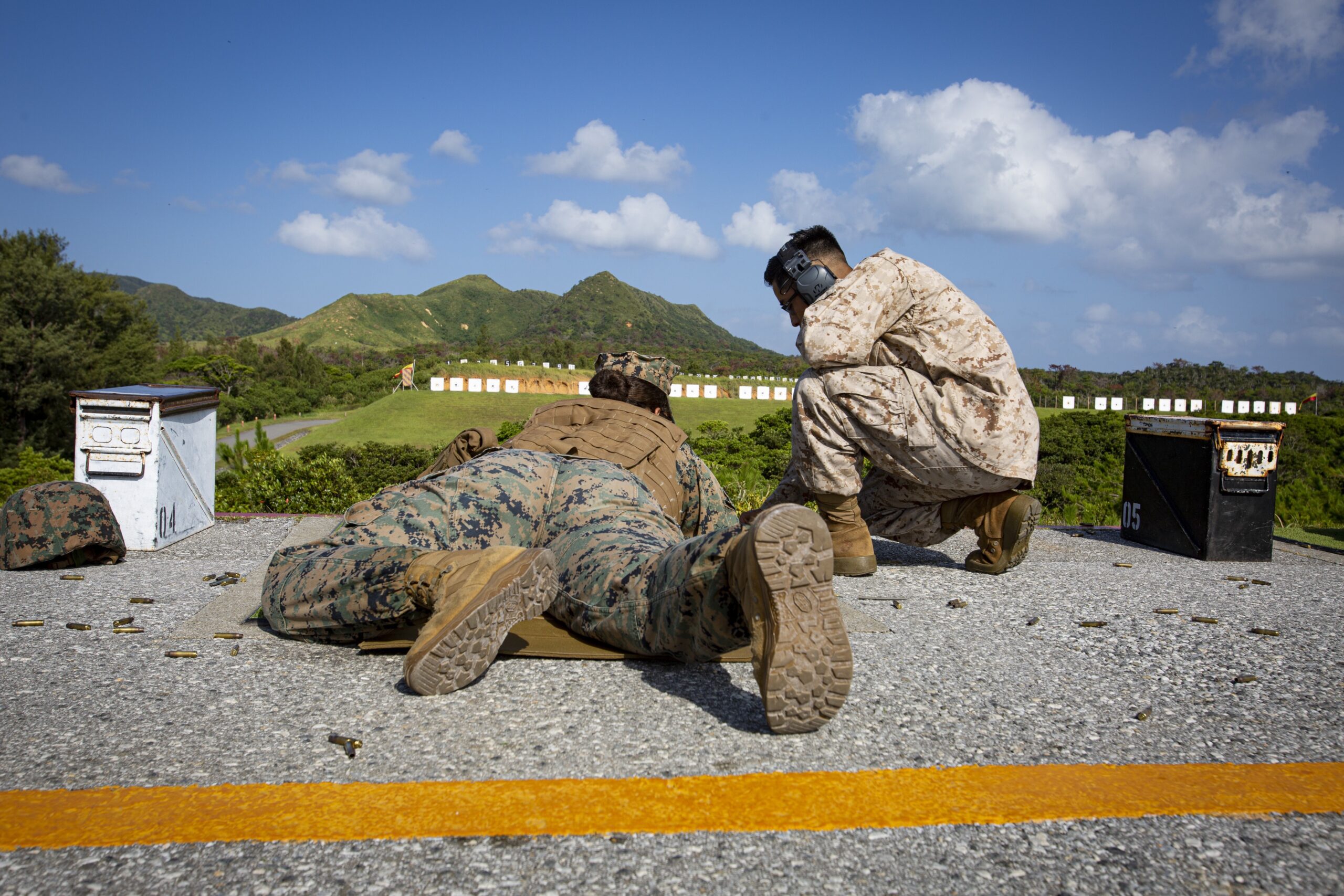
Despite shooting through rain and wind, Capuchino was doing better than ever.

“At this point I already knew where all my holds were at and all I had to do was get used to applying all the fundamentals faster,” she said. “I was nervous, but I ended up getting all three ‘yes’ for qual due to good coaching and sufficient.”

While shooting at the 25 and 15-yard line, a ‘yes’ means that the Marine gets all of their shots for that drill in the destroy zone.

Day five: Qualification

“The last day I was confident and knew what to expect,” she said. “I was ready to shoot my best, and I ended up getting higher than I expected.”

The range was finally complete and Capuchino finished with an expert score. Achieving this score was a significant accomplishment to her because of her initial intimidation of the new course and the values she holds of leading from the front with an expert score.

“Especially now as you get higher up in rank, you need to set the example for your junior Marines,” she said. “I try to do well so my Marines see that I am trying, and then hopefully that helps instill that motivation to continue to improve themselves despite a challenge. As a leader, it’s now our role to tell them our mistakes and give advice on what they should and shouldn’t do so it can help set them up for success.”



Despite the inclement weather, success reached Capuchino and other shooters on the range. Every Marine finished with a qualifying score, which to range staffs’ knowledge, this was the first time there were no unqualified Marines.

“After shooting this new ARQ, I can tell that I like this range, and it is better than the last,” said Capuchino. “I prefer this new course of fire because it goes back to that combat mindset and is combat oriented. As you are shooting, take into consideration that the chances of going into combat are always there. It’s important to take what we learn here and apply that knowledge if ever needed. Remember, train as you fight.”

By Cpl Karis Mattingly