Aquaterro

Archive for the ‘Training’ Category

82nd Abn Div Small Arms Master Gunner on New 25m M16/M4 Zero Target

Friday, December 30th, 2016

Recently, we told you about the 82nd Abn Div Small Arms Master Gunner Facebook page. This is the type of stuff they have going on over there and I’m very impressed. This example came from this week’s “Walk through Wednesday” and is definitely worth reading and the page is a must follow.

We have a guest post for Walk through Wednesday. Mike Lewis was the 82nd Airborne Small Arms Master Gunner before me. He worked with Ash Hess, John Brady, and Paul Meacham on developing the new zero target that will be discussed today….

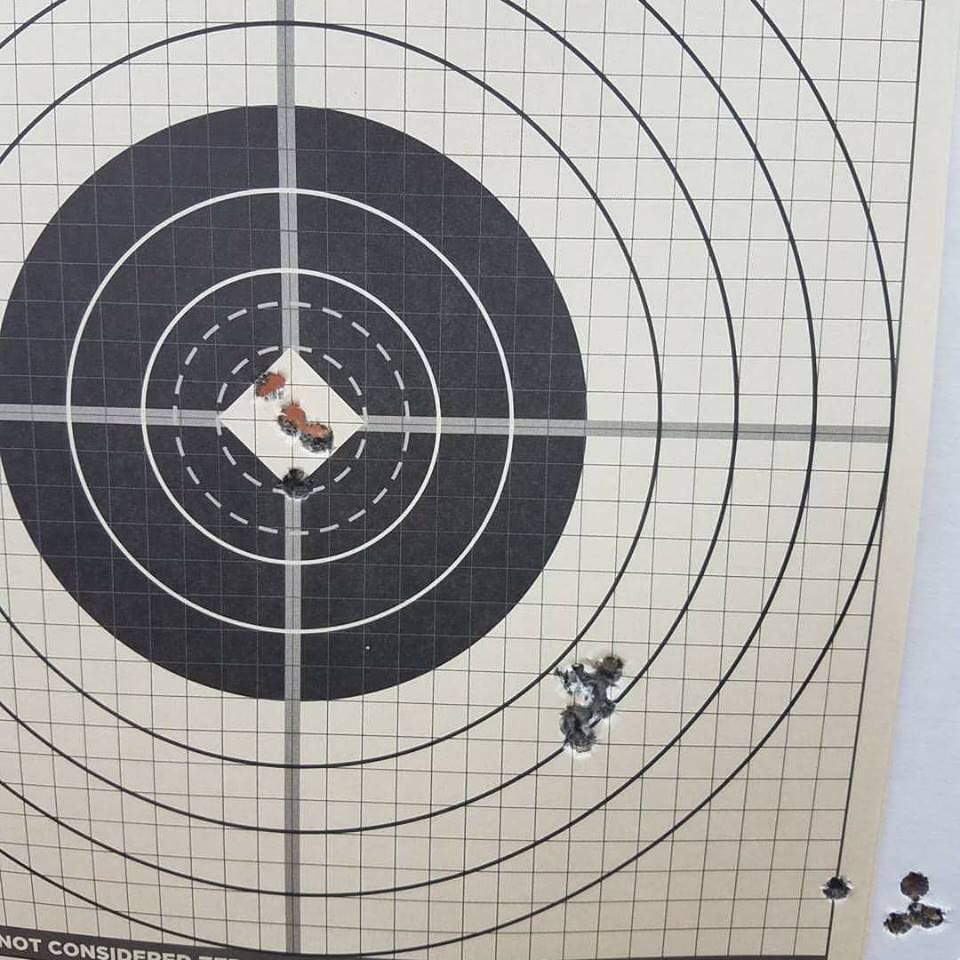
Hello, shooters. I’m SFC (Retired) Mike Lewis and previously served in the 82nd Airborne Division SAMG position. Today’s Walkthrough Wednesday is on the new 25m M16/M4 zero target and zeroing. It is quite a bit different from the zero targets you’ve previously seen on Army ranges, for multiple reasons to be discussed below. It’s also a more useful multipurpose target. This is designed for zeroing the M16/M4 series weapon, use as a scoring target for conducting short-range marksmanship (SRM) training, and use as a scoring target for use in pistol training. It was designed in a collaborative effort between myself, SFC Ash Hess at the Maneuver Center of Excellence (MCoE), SFC Paul Meacham at the 101st Airborne Division (AASLT), and SSG John Brady at the 10th Mountain Division (LI).


The first and biggest change is the pattern of the target itself. We did away with the silhouette previously used for decades. The silhouette was inserted years ago as a training tool to overcome the human predisposition against shooting other humans. However, zeroing isn’t training; it’s mechanically aligning the sights with the trajectory of the round at a given point. When zeroing the key is proper marksmanship through use of the Shot Process and Functional Elements, producing tight shot groups. Therefore, we should use the target that gives the best possible way to find the center of visible mass (CoVM) in order to use proper aiming then aligning the point of aim and point of impact. The silhouette doesn’t present that. A bullseye-style target was selected, but a circle is difficult for the human eye to find the exact center of; it is easy to find the center of a diamond, so one was overlaid on the circular bull.


There are two dotted rings on the zero target at CoVM, a 4 MOA circle and the legacy 4 cm circle. Using the 4 cm circle gives one a “minute of man” zero at 300 meters and is less than optimal. Shooters should easily be able to print 4 MOA groups on demand. The goal is zeroing within the 4 MOA circle, the tighter the group, the better for a precise zero.

The grid you’re used to has been changed. It was set up to work with the iron sights, and the grid was harder to use for optics that have a .5 minute of angle (MOA) adjustment (CCO or most RCOs) or a .333 MOA adjustment (some RCOs). The grid is now a 1 MOA grid making it much easier in zeroing the optic that has become the primary sighting systems. The odd adjustments of the irons require more math and understanding of the different sight radius of the M4 and M16.

There is a table at the bottom of the target showing adjustment values for each sighting system. Noticeably missing are the numbers formerly placed on the margins of the adjustment grid. The reason is knowing your equipment. You should know whether you have a .333 or .5 MOA adjustment value (optics) and be able to do the math of counting and multiplying by 2 or 3. It’s simple. You should also know your adjustment on the M4 irons are .75 MOA windage (rear) and approximately 1.75 MOA elevation (front) per click. The old target was made for the least common denominator, not knowledge of the weapon and its use.

Now that we’ve covered the target itself, let’s talk ballistics. A POA/POI zero at 25 meters does not a 300 meter zero make. The trajectory of the round crosses the sight plane at 36 meters as it would at 300. This is the reason the Marine Corps uses 36 in zeroing. The Army uses 25 as we know. To achieve a 300 meter zero at 25 one of two things must happen, either a ballistic offset or a mechanical offset must be used. Some of us remember the carrying handle iron sights being used on the M16 and M4. We remember that zeroing at 25 meters required adjusting the elevation wheel on the rear sight one click and then moving it one click back after zeroing; this is the mechanical offset. That method isn’t available on the backup iron sight or the optics currently in use, necessitating a calibrated ballistic offset. For a 300 meter zero achieved at 25 meters, the offset is .3 inches, or about 1 MOA low. This adjustment must be made for a 300 meter zero obtained on a 25-meter range and should be confirmed and refined at true distance (300 meters).

Any error in using the offset is amplified when using a bullet drop compensator (BDC) as in the reticle pattern of the RCO. Although the manufacturer specified the RCO is designed to be zeroed at 100, the Army’s doctrine states using a 25 meter zero for 300 is the method. Not using the previously described offset makes the entire BDC calibration invalid. My preferred method of zeroing the RCO is placing the tip of the chevron (the 100-meter aiming point) on the point of aim (CoVM) and using a point of impact 1.4 inches (about 5.5 MOA) low for a 100 meter zero. Again, this should be confirmed and refined at true distance (100 meters in this case).

Any aiming or other error in the shot process degrades the ability to achieve a precise zero. This has a detrimental impact on accuracy of your shots and lethality as a Paratrooper. Do some dry fire drills. Get out there and work your zero.

SureFire Field Notes – Mike Pannone

Thursday, December 29th, 2016

SureFire Field Notes is a multi-segment informational video series with tips and techniques from subject matter experts of all backgrounds. In this episode, Mike Pannone of CTT-Solutions discusses a technique for performing a magazine exchange with hand-held light in hand.

Mike Pannone is a former operational member of U.S. Marine Reconnaissance, Army Special Forces (Green Beret) and 1st SFOD-D (Delta) as well as a competition USPSA pistol shooter holding a Master class ranking in Limited, Limited-10 and Production divisions. He has participated in stabilization, combat and high-risk protection operations in support of U.S. policies throughout the world as both an active duty military member, and a civilian contractor. After sustaining a severe blast injury Mike retired from 1st SFOD-D and worked as a Primary Firearms Instructor for the Federal Air Marshal Program in Atlantic City and the head in-service instructor for the Seattle field office of the FAMS. He also worked as an independent contractor and advisor for various consulting companies to include SAIC (PSD Iraq), Triple Canopy (PSD Iraq), and The Wexford Group (Counter IED ground combat advisor Iraq and pre-deployment rifle/pistol/tactics instructor for the Asymmetric Warfare Group). Mike was also the Senior Instructor for Viking Tactics (VTAC), and Blackheart International. He started his own consulting company full time in late 2008.

AFSOC Takes Delivery of Christini All-Wheel Drive Motorcycles

Wednesday, December 28th, 2016

This photo if from recent New Equipment training by Fayetteville, NC-based Tactical Mobility Training for Air Force Special Operations Command’s recent purchase of Christini All-Wheel Drive motorcycles. 

TNVC Announces Week-Long Training Event, Dark Gulag

Friday, December 23rd, 2016

Dark Gulag is a 1 Week Joint Training Event designed to provide students with a full spectrum Special Operations experience. BAT Defense, TNVC, and Greenline Tactical have partnered to take students from the light to the dark side at the AMTEC Training Facility in Perry, Florida, and the Altair Training Facility in Naples, Florida. On-site lodging is available at both locations.

Dark Gulag is comprised of three individual classes that can be attended separately or as a package. Sign-up is done individually on each company’s website. Or, you can sign up for the entire package and use discount code: DARKGULAG for discounted tuition for the week. Each course has different gear requirements, but student prerequisites are the same: All students must be Legal U.S. Citizens. Proof of citizenship is required to train. Students must have basic tactical weapons handling skills and be able to provide proof of successful completion of previous tactical weapons instruction courses from vetted / reputable trainers or show Military / LE credentials. Safety is paramount in all firearms training – especially at night. Students will be expected to follow instruction. Failure to do so, leading to unsafe conditions, will result in immediate dismissal from class and forfeiture of tuition without reimbursement.

If you want to sign up for the entire event, you must do so at each company’s website:

www.GreenLineTactical.com for daytime Combat Carbine ($500) Feb 4-5, 2017

www.TNVC.com for Night Fighter: Armed Professional ($750) Feb 7-9, 2017

www.BatDefense.com for Aerial Target Interdiction: Night Fighter ($1,650) Feb 11-12, 2017

Range fees and UTM munitions are included in the prices. Signing up for all three will allow you to save $100 on each class.

82nd Abn Div Master Gunner Has A Facebook Page

Thursday, December 22nd, 2016

Not only does the 82nd Abn Div Master Gunner have a Facebook page, but you should be following it, whether you’re an All American, or not.

The Master Gunner is doing a good job of offering regular, relevant content and is soliciting feedback from the followers.

I like what I’m seeing.

www.facebook.com/82ndAbnDivSAMG

The Range At Austin – Gunfighter Club

Wednesday, December 21st, 2016


The primary purpose behind the GUNFIGHTER Club is helping students sustain their skills. The secondary purpose is providing a gateway for improving their skills. Whether you need to brush up, or invest time at building a solid foundation this program is an excellent balance of value and performance.

The GUNFIGHTER Club gives access to all training classes put on by the Range at Austin for a low monthly fee of $225.00. The monthly fee will give you access to 16 hours per month of training.

What else do you get for being a part of GUNFIGHTER Club; access and opportunity. You will have access to participate in our staff’s monthly 2-hour Professional Development or PRODEV sessions commensurate with your skill level. In addition, the opportunity to try new courses of fire, drill of the day and concealment league scenarios.

The goal for the GUNFIGHTER Club is to sustain skills we know to be perishable, but also to improve upon them and that takes hard work. I have struggled over the years recognizing the limitations to training opportunities and the frequencies of training. It is my intention to shatter these barriers that prevent folks from reaching their goals.

The monthly fee does not include ammunition, rentals or supporting equipment and cannot be used in conjunction with any sales or specials to include our guest instructors. The first 3 months must be paid in advance to join with monthly payments beginning after and no rollover for training hours.

For more information or to secure your spot please feel free to contact me at jeffg@therangeaustin.com
V/R,

Jeff Gonzales
Director of Training
The Range at Austin

Wes Doss Joins Panteao Instructors

Thursday, December 8th, 2016

New Instructor at Panteao Productions

Columbia, SC, December 7, 2016 – Panteao Productions is happy to announce an addition to the Panteao instructor lineup. Panteao will be introducing new videos with instructor Wes Doss, Founder, President, & General Operating Manager of Khyber Interactive Associates, LLC,.

Wes is an internationally recognized firearms, tactics, and use of force instructor with over 30 years of military & law enforcement experience, as well as significant operational time with both military & law enforcement tactical operations & protective service organizations. His real-world experience taught him first hand that there is more to prevailing in austere situations than merely pressing a trigger, and understanding the why as much as the how is crucial to overcoming high demand violent conditions. Putting years of experience, both domestic and abroad to use, Wes has worked to cultivate training methodologies that are safe, efficient and most importantly relevant to the world around us.

Wes is also a published author, with numerous articles in various publications, such as American Hand gunner, American Cop, Police Magazine, Law Officer, SWAT magazine, ASLET “The Trainer”, and The NTOA “Tactical Edge”. Wes is also the author of the bestselling books “Train to Win”, and “Condition to Win” both are training psychology/philosophy books focused on law enforcement and military trainers and professionals.

“I had heard great things about Wes from others in the training community. Then one of our instructors, Freddie Blish, introduced me to Wes,” said Fernando Coelho, President of Panteao Productions. Fernando added, “Wes brings a new perspective to our instructor cadre that will be a great benefit to the viewers of our training videos.”

The first two video titles with Panteao from Wes Doss are currently in pre-production and are scheduled to be filmed in February 2017. For more info on Wes and his company, Khyber Interactive Associates, you can visit his websites at: www.KHYBERTRAINING.com and www.LSLUSTOUR.com.

You can find his page on the Panteao website here: panteao.com/instructors/wes-doss

58th Rescue Squadron Resiliency Weekend

Tuesday, December 6th, 2016

I was fortunate enough to be invited to a Resiliency Training offsite with the 58th Rescue Squadron, stationed at Nellis AFB, Nevada. Led by Lt Col Stephen C, the 58th is made up of Combat Rescue Officers, Pararescuemen (PJs), SERE Specialists and support personnel from 14 different careerfields.

Squadron members and their families made the short trip from Las Vegas, to nearby Saint George, Utah, to learn about how to better deal with the stresses of combat operations, and military life in general. Pioneered by USSOCOM, resiliency training is officially known as Preservation of Force and Family. More recently, Air Combat Command, as the responsible USAF command for the Guardian Angel Weapon System, instituted a similar program for their Battlefield Airmen. Last weekend’s event is a result of this initiative.

In addition to advances in nutrition and physical training, one of the goals of the program is to provide training to recognize stress and reduce the stigma of getting help for mental issues. Stress inoculation is key in training, but preparation and awareness of what one should expect, are also crucial. Those last bits were the focus of the weekend’s agenda.

As families accompanied them, the location was a perfect way for everyone to get away from Las Vegas for a few days. Saint George offers some great opportunities for outdoor recreation and bonding. The Squadron’s various elements also had ample time to accomplish mid and long-term goals, including planning on how to make them a reality.

The first day, Operational Psychologist Maj Richard S, 432nd Wing Operational Psychologist discussed adjusting to life after deployment and how to turn the switch off from operational life when you get back home. The next day, Lt Col Richard B is the lead SERE Psychologist at Fairchild. Having served in AFSOC at Cannon AFB, NM, Lt Col B concentrated on warrior mindset.

That evening, the 58th Rescue Squadron Booster Club presented a banquet for the unit and its families. While the active duty members were TDY, the families’ meals were made possible thanks to the sponsorship of Air Rescue Concepts and Soldier Systems Daily.

The next morning, Steve Tarani presented an interactive seminar for the Squadron members and their spouses. The topic was perfect for the weekend’s focus; Resiliency training, mental toughness and preparedness.


He has been teaching for over 30 years, concentrating on protection, of people, assets and facilities. These days he usually concentrates on train-the-trainer but he also offers seminars like this to improve the safety and security for high risk audiences.

Steve is a very engaging speaker. The talk was excellent and applicable, to the military participants just as much as their families. Mindset, awareness and threat mitigation were key points of his talk. Steve tied recent real world events into the training, including last week’s vehicle and knife attack in Ohio. The talk was especially important for family members, who often find themselves alone while their spouse is deployed because Steve discussed situational awareness and how to become a hard target.

After a team lunch, Maj John T gave an engaging talk about Fatigue Management and Performance. Rather than putting all of us to sleep after lunch, he offered fatigue countermeasures and the important of understanding circadian rhythms and adjunct medications. I also now understand the difference between snuggling and cuddling. Last but not least, Lt Col Stefanie S wrapped up the day with a discussion on the importance of nutrition for Special Operations Forces.

Patrick Van Horn author of ‘Left of Bang’ wrapped up the presentations on Sunday afternoon. Patrick is the author of, “Left of Bang: How the Marine Corps’ Combat Hunter Program Can Save Your Life” and the CEO of The CP Journal, a behavioral analysis training company.  His presentation centered around Combat Profiling, which is a method of proactively identifying threats based on normal behavior and other cues from one’s surroundings.  Patrick explained how the foundation of combat profiling is that there are universal similarities in humans, despite cultural differences. The idea is to take a proactive approach to combat profiling by establishing baselines, identifying anomalies from that baseline and then acting on them.

All of the presentations were excellent and discussions with the members of the Guardian Angel community indicated they agreed.

The good news in all of this is that the military has become much better at recognizing and treating physical, emotional and mental stressors. Programs like this help to inoculate military personnel and their families toward these conditions, in order to help mitigate their effects. What is most important, is that personnel understand that these organizations continue to invest in their well being. Their units are there to help, and the stigma of seeking assistance is no longer there. The goal is to keep these warriors in the fight.

I want to thank the Airmen of the 58th Rescue Squadron for their hospitality. It was a joy to catch up with old friends, make new ones, and speak with Airmen and their families.