Wilcox Ind RAID Xe

Archive for the ‘Training’ Category

Canipe Correspondence – The Fitness Debate

Saturday, October 6th, 2012

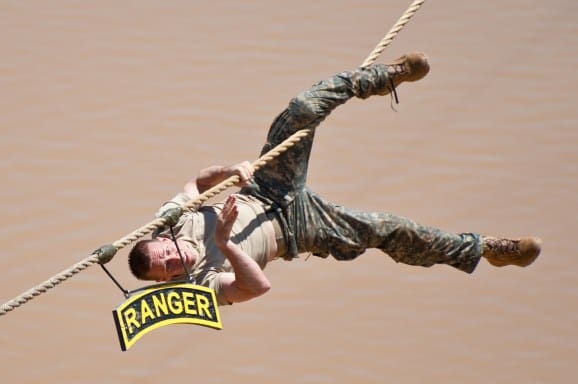
I didn’t have a good title for this. I still don’t, and the one above this line kind of sucks. Sorry folks. I say this because I am not sure how there could ever be a debate. I regularly talk with guys who are weak, overweight, lazy, or make lifestyle choices that limit their lifestyle and performance. These guys don’t work at Best Buy, they’re not executives in an office, they’re Military and Law Enforcement “professionals.” I always get the same line at some point in the conversation, “I see a bunch of skinny guys that can’t do their job” or “You’re telling me you’d rather have an unmotivated stud that a motivated fat guy?” Well, I don’t know about that. Yeah, some fit guys suck at work. That dude can probably summon up some effort on demand if he had to. You can’t summon up a 6-month fitness program on demand though. Plus, I have to assume if a guy has a job protecting the public, his buddies on his flanks, our Nation and it’s way of life he should take that seriously. I’m not really sure what a motivated fat guy is, unless he’s injured. An otherwise capable guy with those responsibilities wouldn’t let him self be a poor physical performer if he had all that heart and motivation he speaks of. That logic bomb is pretty much a JDAM on the argument in most cases.

20121006-104216.jpg

Why is physical performance important? Well, we (Military and LE) work jobs that at their fundamental level are physical. When the dispatch calls up that shots have been fired, or some dirtbag starts lobbing indirect fire on your platoon, it’s time to do your job. All the mandatory Equal Opportunity training or additional details you picked up probably won’t be at the forefront of your mind at that point. All those things used as excuses to not work out, or train combatives, or eat a decent meal that didn’t come in a bag, won’t seem that important. You’ll remember that you are a cop, or an infantryman, or whatever got you on the middle of this shit show. You’ll begin to move, and do what you know what you need to do. For the first few steps everyone will most likely feel like a world-class sprinter. And then, something magical will happen. All that hard work you put in at the gym, on the trail, on the bike, will allow you to stick to the plan and perform your job to the maximum of your potential. Or conversely, all those skipped training days, missed opportunities, and upsized value meals will come up and assist you in snatching defeat from the jaws of victory. Which one are you?

I know guys with legitimate reasons (not excuses) to be out of shape. Guys get injured, it’s common in these fields of endeavor. In my day job all of the 5 guys I work closest with have had on the job injuries while they were still in the military that took over 6 months to recover from. That was just to get functional again, and most aren’t 100% and may never be. Broken backs, shattered knees, gunshots, dislocated hips, all kinds of gnarly stuff. I know guys that get stuck in truly austere locations that don’t have access to equipment or proper nutrition, or work a schedule where they literally don’t have time to work out often. Guys attend schools or training programs that literally run 20-24 hours a day for 8-12 weeks. This stuff is legitimate, it takes away the opportunity to stay fit, and it’s not a reflection of an individual decision to let yourself go.

20121006-104413.jpg

There are limitations during everyday life that can make this a difficult task. There aren’t a lot of 9-5 jobs in the military or law enforcement. It’s a tough sell to work 12-16 hour days in the rear or on shift and then take 2 more away from the family to go run or go to the gym. It helps me out to just plan on that being a part of my work day, to mentally accept that I don’t exercise before or after work, I work out as a part of work. I don’t go to the gym after work, because work isn’t over until my workout is complete. There are also a number of good programs that aren’t as time consuming. I’m not a huge Crossfit fan because I think Olympic lifts for time are a recipe for disaster, and that their benefit is in proper execution rather than rapid execution. That said, the concept of group workouts, competing against yourself and others, and a culture of striving to gain higher levels of performance is pretty motivational and it warms my heart to see all the formerly fat people outside my local Crossfit gyms. Most of these workouts from Crossfit, Gym Jones, or similar programs aren’t that time consuming and there is usually a facility and good coaches to support them in every town. It’s fun, like going to the bar with your friends, only instead of Miller Lite you get kettlebells and pull-ups. My buddy Pat McNamara at TMACS, Inc. offers a great functional fitness class in addition to his firearms and tactics classes. For a military or LE guy wondering what direction to go to improve, that’s a great place to start or refine you current routine. He’s a beast, and is proof that after destroying your body for over two decades, getting older, and getting opened up by ortho surgeons a bunch of times that you can still crush 20 year-olds in the gym daily if you understand the importance of physical performance and apply yourself accordingly.

20121006-104754.jpg

Try eating right also. I live on the road now, and that’s the hardest thing of all for me. Sometimes, it’s just easier to eat a cheeseburger and go to bed and I fall victim to that more than I’d like. All calories are not created equally. Get yours from the foods your body needs for function, not what it needs to get rid of to function. Fortunately, most restaurants are good about offering healthier choices now. If they don’t advertise them, just ask and they can usually help you out. If they can’t, go somewhere else. Check out the Paleo diet, or the Eat This, Not That books for some easy ways to improve your diet. You’re giving up performance in your diet that no amount of exercise can replace. Take some time to do the research and eat healthy. You’re buying food anyways, you might as well buy good food.

I know starting a plan to workout and sticking to it is pretty demoralizing initially. Get over that initial discomfort and check the ego of not being the baddest dude in the gym. The improvement happens so rapidly that after a couple of weeks you’ll be recovered by the next day and ready to shoot for that next goal, max rep, 5K time, or target body weight. Utilize a coach or partner as your honest broker, sanity check, and motivator. Most importantly, get out there an do it so you can be ready when it’s time to perform on the job. It’s something we can all do, and it improves your quality of life in every aspect.

www.tmacsinc.com
www.morrisonsystem.com
www.gymjones.com

Jon Canipe served on Active Duty with the US Army as a Special Forces Weapons Sergeant at 5th SFG(A) and was a Senior Instructor at the JFKSWCS, training SFQC students in planning, unconventional warfare, small unit tactics, CQB, and advanced marksmanship. He is a veteran of multiple combat tours, and still serves in the Army National Guard’s 20th SFG(A) in addition to working as an industry consultant and small arms instructor.

Gunfighter Moment – John McPhee

Saturday, October 6th, 2012

Mad Minute

The Mad Minute can make or break a unit’s ability to shift on the fly or flex to the situation. This is a simple concept and when used effectively is a combat multiplier. Warrior leaders, use this and your warriors will never fail you.

This is how the Mad Minute works. Say you have 10 targets to hit in one night. During planning and the Orders brief or however your unit does it, have your guys remember just the first target. Tell them there are additional targets and to be prepared for a long night, but have them know the first one cold. You execute and the first hit goes down flawless. Before you load vehicles or exfil (depart your target) leaders talk over the plan for what’s next on the hit list. Then leaders brief your warriors and make sure they are tracking (understand) on the next plan. If there is no time, brief the plan in the vehicle. If you’re in a helicopter draw stick figures on paper or small white board. It’s easy. Depict house, helo, men and an arrow of which way to move to the target. Simple caveman cave wall drawings. This way it’s fresh in the warriors’ minds and they know what to do. Establish stick man SOPs if need be.

Shrek says, "Right in the middle of the worst mass casualty event I ever witnessed."

Shrek says, “Right in the middle of the worst mass casualty event I ever witnessed. A day I wish I could forget.”


Photo: Dalton Fury and Shrek conducting a Mad Minute in combat.
Note: When talking on a street always position yourself to watch each other’s backs.

Take the time to always do a mad minute. Senior leaders let your men tell you what they are going to do for each separate mission. This is not time to bullshit or play grab ass. Say the plan and move out. This is why it’s called the Mad Minute and not the mad hour, happy hour or 10 minutes. Too much extraneous communication can lead to confusion. Or, debate could cause someone to think the plan has changed. This is not the time to debate anything. Say the plan, be clear and concise.

If however, the goal of your Mad Minute is to change the plan, get your leaders together and change it. Be sure to make clear this is a change to the original plan so there is no confusion. Then brief your warriors, “Change 1 is…….”

We do this to make sure we don’t make any mistakes and cost any warriors’ lives because of doubt or misunderstanding. Mission success is directly tied to your plan. If your plan fails, you fail. If you forgot the plan and got a warrior killed you’ll bear that guilt every second for the rest of your life. Shit happens, but it happens because of your mistakes, it’s an unacceptable, worst possible scenario for everyone.

Some things to consider. Don’t over plan. This could lead to a warrior over thinking rather than focusing on what he is supposed to do. This will make him inflexible and unable to adapt to the situation. Keep the plan simple with room for flexibility because the enemy will never do what you want. Otherwise, we would not have war. However, if the situation changes, go with it and let the plan swing the other way. But don’t things cowboy style. That has disaster written all over it. There is a sweet spot of not overplaying and yet retaining some type of plan. There may be time for cowboy shit, but that is last ditch scenario when the plan went to shit and you’re trying to fix or get out of a bad situation. At this point it’s Medal of Honor action. The problem is you should avoid this situation at all costs seeing as most MoH are given to dead men.

So take a minute talk through the plan (whether you need it or not), disseminate to your warriors and move out smartly. I can tell you how many hits this simple act saved my and my mates asses.

The mad minute is simple. Just make sure you warriors understand what’s next. This takes a second and when used regularly can increase your units effectiveness. Also when used regularly, it’s the right time and place for a senior leader to change a plan due to ever changing intel and enemy situation.

-Shrek

SGM (ret) John McPhee served a distinguished career in U.S. Army Special Operations for over 20 years, retiring in 2011.

John has spent his adult life in Special Operations and Special Mission Units. He is a Master Instructor in all aspects of special activities, missions and operations. He has over 6 years of private special activities consulting and is a Subject Matter Expert (SME) in: Special Activities, Operational Preparations, Limited Signature Operations, Reconnaissance, Singleton Operations, High Threat Dignitary Protective Services, Extreme Long Range, Designated Marksman, Advanced Precision Rifle Marksmanship, Combat Marksmanship, Live Fire CQB/CQC, Advanced Pistol Marksmanship, Advanced Carbine Marksmanship, Ariel Gunnery (Rifles, Shotguns, Ariel Personnel and Vehicle Interdictions, Mechanical, Ballistic and Explosive Breaching, Freefall Instructor Programs, Infiltration/ Exfiltration Techniques, Ground Mobility, Unit Pre-Deployment Training, and Research and Development of; Soldier Systems, Weapons, Ammunition, Thermal and Night Optics.

Qualifications;
Special Forces Target Interdiction Course
US Army Sniper School
NRA Rifle, Pistol and Shotgun, Instructor
NRA Range Safety Officer
Advanced Mountain Sniper Course, Instructor
Advanced Freefall, Instructor (Ratings Current)
Freefall Coach (Ratings Current)
California Personal/ Executive Body Guard Certification (Rating Current)
2005 Budweiser World Cup Super Heavyweight Jiu-Jitsu Champion
2004 Presidential Security Detail (Ariel Heavy) Cartagena, Colombia

He has trained countless U.S. Special Operations forces, thousands of International Tier 1 Operators and Special Forces around the world. He is one of the handful of operators with over a decade of combat having served in multiple theaters from Bosnia and South America to recent war efforts in Iraq and Afghanistan.

Gunfighter Moment is a weekly feature brought to you by Alias Training & Security Services. Each week Alias brings us a different Trainer and in turn they offer some words of wisdom.

HALO Counter-Terrorism Summit Announces Final Training Lineup and New Terrorism, Cyber Security and Disaster Response Courses

Friday, October 5th, 2012

The HALO Counter-Terrorism Summit, a national security training event taking place October 29 – November 2, 2012, announced the addition of world-class military, homeland security and cyber security experts to its training team. The comprehensive 30-course curriculum designed for local, state and national security stakeholders features newly added courses in the areas of terrorism, cyber security and disaster response. The HALO Summit will educate delegates on the most current and relevant threats that exist throughout the U.S. and the world, and provide thought-provoking content and tools that can be used to mitigate threats ranging from international terrorist activity and large-scale natural disasters to local organized crime units and drug cartels.

NEW TRAINING COURSES AND SPEAKERS:
·Sergeant Major of the Army (ret.) Jack Tilley – Mr. Tilley served as the 12th Sergeant Major of the Army from 2000-2004. He will talk about the role that military and law enforcement play in keeping America safe and how that’s accomplished by evolving toward reality-based training, both in concepts and technology.
·“Think Like the Enemy: A Navy SEAL’s Guided Tour Through Your Adversary’s Mind”“ – by Robert DuBois, former Navy SEAL with experience in over 30 countries and author of Powerful Peace: A Navy SEAL’s Lessons on Peace from a Lifetime of War
·“The Mumbai Attacks: A Strategic Assessment” – by Matthew Miller, Senior Intelligence Analyst with the San Diego Law Enforcement Coordination Center and former Chairman of the Port of San Diego, Area Maritime Security Committee, Intelligence Subcommittee
·“The ER is Full: Deploying the ER to the Field”- by Dr. Steven Phillips, Director of Specialized Information Services and Associate Director, National Library of Medicine, National Institutes of Health, U.S. Department of Health & Human Services.
·“Saving Lives Through Social Media” – by Dr. Eric Frost, Director of the San Diego State University Visualization Center and Co-Director, SDSU Homeland Security Graduate Program
·“Organized Crime and the Internet” – by Francesca Bosco, Emerging Crimes Unit, United Nations Interregional Crime and Justice Research Institute
·“Mobile Hacking” – by Blake Turrentine, Black Hat Training

The Summit’s keynote speakers include: General Michael Hayden (ret.), former director of the CIA and NSA; Deputy Chief Michael Downing, Commanding Officer of the Los Angeles Police Department’s Counterterrorism and Special Operations Bureau; and Alejandro Poiré Romero, Secretary of the Interior, Mexico. Opening remarks will be provided by San Diego Chief of Police William Lansdowne.

The HALO Counter-Terrorism Summit takes place Oct. 29 – Nov. 2, 2012 at Paradise Point Resort in San Diego, California. For information or to register, call (619) 881-9125 ext. 3, email info@thehalocorp.com or visit www.TheHaloSummit.com.

Vickers Tactical Inc Announces Partnership With Alias Training & Security Services

Tuesday, October 2nd, 2012

20121002-171014.jpg

“Vickers Tactical Inc is now scheduling classes through our friends at Alias Training & Security Services. Since coming on the scene, Alias has proven to be a great fit for the Vickers Tactical classes and has done an excellent job coordinating and scheduling classes for me.”

– Larry Vickers
Vickers Tactical Inc

Colonial Shooting Academy

Monday, October 1st, 2012

Luxury indoor ranges are beginning to catch on as Gun Culture 2.0 begins to take hold. Earlier this year, Richmond, Virginia became home of Colonial Shooting Academy, the largest indoor range in the US. Already, it’s garnered a 5 star rating from the National Shooting Sports Foundation and once you get a glimpse inside, you’ll see why.

20120930-184811.jpg

A soon as you enter the facility you are greeted with a modern, well stocked gun store. Boasting 5000 sq ft of retail space, CSA offers a variety of firearms, both new and used, but also popular clothing, holster and firearms accessory brands.

20120930-185119.jpg

All told CSA offers 50,000 sq ft of space, featuring three ranges open to the public as well as a private club area for members. Each range features a similar set up with individually controlled target carriages and .30 rated ballistic glass between positions to enhance safety. Additionally, whenever a range is active, CSA positions a Range Safety Officer on the range. VSA also requires shooters to watch a short range safety video to review the fundamentals prior to taking to the range regardless of whether they are renting a gun, or bringing their own.

20120930-184848.jpg

Three roof mounted air handlers run full time on any active range, keeping a constant air flow and filtering out gun powder and airborne led. In fact, they do such a great job that CSA is able to sell lead for recycling.

20120930-185922.jpg

The basement is a law enforcement training area that includes a tactical range as well as a full shoot house that is rated up to .30 ball. That’s right, ball, not frange. This area not only incorporates male and female locker rooms but also a private vehicle bay entrance and a small ready room.

20120930-191322.jpg

In the event you get hungry, CSA has opened their doors to a great food vendor, Mosaic which offers both snacks as well as light meals.

20120930-190747.jpg

CSA also offers in-house gun smithing and firearms training. If you ever needed a reason to visit Richmond, now you’ve got one.

www.colonialshooting.com

Canipe Correspondence – Why Measure Performance?

Saturday, September 29th, 2012

I recently started following an online debate about performance related to shooting, where one group of high-performing individuals (serious USPSA shooters) were conversing about a training philosophy that doesn’t use any set, specific metrics for performance. There were a number of interesting thoughts on the topic, most everyone being in agreement that you need to be able to track your level of proficiency, work to improve it, and measure it to see how that level has risen or fallen. The arguments piqued my interest because I come from a background strongly rooted in tactics versus competition, but I personally found that the methods used for improvement among that crowd carry over nicely, even if some specific things don’t work for my uses. I like what they had so say, and likewise had a fair amount of negative feelings over the notion of not working towards a measurable goal or standards in my training. This isn’t a rant against a specific organization or trainer, because frankly I’m not going to worry much about people or organizations who are unconcerned with quantifiable performance. It’s mostly just because I find the notion of not using performance standards in general preposterous.

I am not sure why we would fall into some category in a gunfight that is unlike other forms of competition in terms of the level of preparation and performance tracking helping us out. What do pro football, motocross, ultramarathon running, or even golf have in common with fighting? Easy: there is a clear cut winner and loser, and there are tremendous penalties for screwing up the details. I challenge you to find a quarterback in the NFL who the coach sends out onto the field because the player felt he had to confidence to prevail, without ever measuring his ability to perform the tasks required to do so. I challenge you to find a Badwater winner who just trotted around the neighborhood a little bit and said “I’m ready to win this. What the hell is this stopwatch I keep hearing about?” Golf would be even more boring if we didn’t keep score. Nobody who just goes out and swings clubs around until it feels right wins a green jacket at Augusta. So why would we not use a performance-based system of improvement to meet out full potential when the difference in a win or loss isn’t a championship, a trophy, bragging rights, or a personal record, it is being dead? There was an argument made that if someone failed to meet a standard, then they would not have the confidence to perform in a real-life fight. When someone decides to kill you, you’re in the big leagues now, whether you want to be or not. Sure would be nice to have big-league skills right around then, wouldn’t it? I don’t need someone to tell me I’m ready, I want to know I’m ready because I can do (insert task) to (insert standard)!

I have been fortunate enough to attend a number of schools and a selection process, and then work in them later in my career. I’ve also trained with most of the reputable tactical trainers in the industry as well as some top-level competitors. There is a common bond between all of these places and people that I’ve encountered: they have all had a set of performance standards you are measured against and then you know whether you’re as good as you think you are. If you don’t know where you’re at, you have no idea where to go from there. Like one of my partners says, “It’s not hard to be the fastest motherf**ker in a one man race.” I shudder to think at the state of the force had I passed people on their confidence to perform rather than their abilities. I would have had a 100% GO rate. Fortunately, it was never a floating set of standards based on one guys individual potential or my intuition. I’m not some master educator, I’m more of a knuckle dragger. But I know we could afford to hire people that were, and they all dealt in standards. You stand in the hallway with a list of #1-150 for all of your peers to see, and nobody other than #1 feels good about it. Lesson: It’s important to know if you suck or not. Feeling like you can win something that you can’t isn’t “confidence”, it’s stupidity. Working to meet that standard is where the greatness comes out.

This little piece has been pure opinion, experience, and a little bit of a rant. Everyone else is welcome to theirs as well, but I doubt anyone is going to change my mind, that you can’t reach your full potential in anything without tracking your progress and seeing where you stack up against yourself and others. You have to be measured in training, because when the time comes for real you’re going to be measured, whether you’re ready or not.

Jon Canipe served on Active Duty with the US Army as a Special Forces Weapons Sergeant at 5th SFG(A) and was a Senior Instructor at the JFKSWCS, training SFQC students in planning, unconventional warfare, small unit tactics, CQB, and advanced marksmanship. He is a veteran of multiple combat tours, and still serves in the Army National Guard’s 20th SFG(A) in addition to working as an industry consultant and small arms instructor.

Gunfighter Moment – Larry Vickers

Saturday, September 29th, 2012

‘It is in most shooter’s best interest to become as proficient as possible with a handgun. The reasons are very simple; because of amount of concealed carry permits issued around the country most people are most likely to use a handgun in a lethal encounter. In addition, sight alignment and trigger control are most difficult to master with a handgun so this causes a trickle down effect; the better you become with a handgun you are automatically becoming a better shooter with virtually every other small arm.’

-Larry Vickers
MSG, US Army (Ret)

Larry Vickers is a decorated US Army Special Forces veteran and national pistol champion. Mr. Vickers has nearly two decades of special operations experience (1st SFOD-D), much of which was spent as his unit’s Primary Firearms Instructor. In addition to his special operations accomplishments, his competitive shooting has yielded a 10th and 9th place finish in the 1993 and 1994 USPSA Limited Nationals as well as a 1st place finish in CDP class at the 2001 IDPA Mid-Winter Nationals at Smith & Wesson. Mr. Vickers is a founding member of IDPA. In addition to being a highly experienced operator and national pistol champion, Mr. Vickers is also one of the premier 1911 pistolsmiths in the country and his work has been featured in several firearms publications and on the cover of American Handgunner. In addition to all this, Mr. Vickers has served as a consultant and technical expert to the firearms industry. Mr. Vickers is featured on two new firearms, tactics, and accessories focused T.V. shows called Tactical Impact and Tactical Arms.

www.VickersTactical.com

Gunfighter Moment is a weekly feature brought to you by Alias Training & Security Services. Each week Alias brings us a different Trainer and in turn they offer some words of wisdom.

Rough Creek Shoot Out

Friday, September 28th, 2012

20120928-173707.jpg

Presented by Craft International, the Rough Creek Shoot Out is touted as a civilian training event. Limited to just 45 guests, it offers 3 days of training with Chris Kyle and the crew from Craft.

There are 3 blocks of training – Pistol and Carbine, Precision Rifle and Hand to Hand along with an optional 4th block with full auto weapons that is limited to just 25 participants and will set you back an extra $1000 on top of the $2000 the base program runs.

The event will be held at Rough Creek a 4500 acre, 5 star resort.

For full info visit www.thecraft.com/training_civilian_roughCreekEvents