GORE-TEX WINDSTOPPER

Archive for the ‘weapons’ Category

Chris Costa’s Out Of Town Bag

Saturday, September 27th, 2014

IMG_7671.JPG

Chris Costa shared some photos of the bag he uses for times he finds himself more than an hour away from home, as well as its contents.

IMG_7670.JPG

The bag itself is a Costa Ludus x MAP System by London Bridge Trading. The equipment come from the following sources:
Carbine – War Sport Industries, LLC
Pistol – Salient Arms International
Lights – SureFire, LLC
Holster – Raven Concealment Systems
IFAK – Dark Angel Medical, LLC
Survival Kit – Solkoa
Light Accessory Loop – Thyrm
TNVC, Inc

IMG_7672.JPG

FBI 9MM Justification, FBI Training Division

Thursday, September 25th, 2014

This has been making its way around the Internet and we thought it was worth sharing.

May 6, 2014

FBI Training Division: FBI Academy, Quantico, VA

Executive Summary of Justification for Law Enforcement Partners

  • Caliber debates have existed in law enforcement for decades
  • Most of what is “common knowledge” with ammunition and its effects on the human target are rooted in myth and folklore
  • Projectiles are what ultimately wound our adversaries and the projectile needs to be the basis for the discussion on what “caliber” is best

  • In all the major law enforcement calibers there exist projectiles which have a high likelihood of failing LEO’s in a shooting incident and there are projectiles which have a high ting incident likelihood of succeeding for LEO’s in a shooting incident
  • Handgun stopping power is simply a myth
  • The single most important factor in effectively wounding a human target is to have penetration to a scientifically valid depth (FBI uses 12” – 18”)

  • LEO’s miss between 70 – 80 percent of the shots fired during a shooting incident
  • Contemporary projectiles (since 2007) have dramatically increased the terminal effectiveness of many premium line law enforcement projectiles (emphasis on the 9mm Luger offerings)
  • 9mm Luger now offers select projectiles which are, under identical testing conditions, I outperforming most of the premium line .40 S&W and .45 Auto projectiles tested by the FBI
  • 9mm Luger offers higher magazine capacities, less recoil, lower cost (both in ammunition and wear on the weapons) and higher functional reliability rates (in FBI weapons)
  • The majority of FBI shooters are both FASTER in shot strings fired and more ACCURATE with shooting a 9mm Luger vs shooting a .40 S&W (similar sized weapons)
  • There is little to no noticeable difference in the wound tracks between premium line law Auto enforcement projectiles from 9mm Luger through the .45 Auto
  • Given contemporary bullet construction, LEO’s can field (with proper bullet selection) 9mm Lugers with all of the terminal performance potential of any other law enforcement pistol caliber with none of the disadvantages present with the “larger” calibers
  • Justification for Law Enforcement Partners

    Rarely in law enforcement does a topic stir a more passionate debate than the choice of handgun caliber made by a law enforcement organization. Many voice their opinions by repeating the old adage “bigger is better” while others have “heard of this one time” where a smaller caliber failed and a larger caliber “would have performed much better.” Some even subscribe to the belief that a caliber exists which will provide a “one shot stop.” It has been stated, “Decisions on ammunition selection are particularly difficult because many of the pertinent issues related to handguns and ammunition are firmly rooted in myth and folklore.” This still holds as true today as it did when originally stated 20 years ago.

    Caliber, when considered alone, brings about a unique set of factors to consider such as magazine capacity for a given weapon size, ammunition availability, felt recoil, weight and cost. What is rarely discussed, but most relevant to the caliber debate is what projectile is being considered for use and its terminal performance potential.

    One should never debate on a gun make or caliber alone. The projectile is what wounds and ultimately this is where the debate/discussion should focus. In each of the three most common law enforcement handgun calibers (9mm Luger, .40 Smith & Wesson and .45 AUTO) there are projectiles which have a high likelihood of failing law enforcement officers and in each of these three calibers there are projectiles which have a high likelihood of succeeding for law enforcement officers during a shooting incident. The choice of a service projectile must undergo intense scrutiny and scientific evaluation in order to select the best available option.

    Understanding Handgun Caliber Terminal Ballistic Realities

    Many so?called “studies” have been performed and many analyses of statistical data have been undertaken regarding this issue. Studies simply involving shooting deaths are irrelevant since the goal of law enforcement is to stop a threat during a deadly force encounter as quickly as possible. Whether or not death occurs is of no consequence as long as the threat of death or serious injury to law enforcement personnel and innocent third parties is eliminated.

    “The concept of immediate incapacitation is the only goal of any law enforcement shooting and is the underlying rationale for decisions regarding weapons, ammunition, calibers and training.”1

    Studies of “stopping power” are irrelevant because no one has ever been able to define how much power, force, or kinetic energy, in and of itself, is required to effectively stop a violent and determined adversary quickly, and even the largest of handgun calibers are not capable of delivering such force. Handgun stopping power is simply a myth. Studies of so?called “one shot stops” being used as a tool to define the effectiveness of one handgun cartridge, as opposed to another, are irrelevant due to the inability to account for psychological influences and due to the lack of reporting specific shot placement. In short, extensive studies have been done over the years to “prove” a certain cartridge is better than another by using grossly flawed methodology and or bias as a precursor to manipulating statistics. In order to have a meaningful understanding of handgun terminal ballistics, one must only deal with facts that are not in dispute within the medical community, i.e. medical realities, and those which are also generally accepted within law enforcement, i.e. tactical realities.

    Medical Realities

    Shots to the Central Nervous System (CNS) at the level of the cervical spine (neck) or above, are the only means to reliably cause immediate incapacitation. In this case, any of the calibers commonly used in law enforcement, regardless of expansion, would suffice for obvious reasons. Other than shots to the CNS, the most reliable means for affecting rapid incapacitation is by placing shots to large vital organs thus causing rapid blood loss. Simply stated, shot placement is the most critical component to achieving either method of incapacitation.

    Wounding factors between rifle and handgun projectiles differ greatly due to the dramatic differences in velocity, which will be discussed in more detail herein. The wounding factors, in order of importance, are as follows:

    A. Penetration:

    A projectile must penetrate deeply enough into the body to reach the large vital organs, namely heart, lungs, aorta, vena cava and to a lesser extent liver and spleen, in order to cause rapid blood loss. It has long been established by expert medical professionals, experienced in evaluating gunshot wounds, that this equates to a range of penetration of 12?18 inches, depending on the size of the individual and the angle of the bullet path (e.g., through arm, shoulder, etc.). With modern properly designed, expanding handgun bullets, this objective is realized, albeit more consistently with some law enforcement projectiles than others. 1 Handgun Wounding Factors and Effectiveness: Firearms Training Unit, Ballistic Research Facility, 1989.

    B. Permanent Cavity:

    The extent to which a projectile expands determines the diameter of the permanent cavity which, simply put, is that tissue which is in direct contact with the projectile and is therefore destroyed. Coupled with the distance of the path of the projectile (penetration), the total permanent cavity is realized. Due to the elastic nature of most human tissue and the low velocity of handgun projectiles relative to rifle projectiles, it has long been established by medical professionals, experienced in evaluating gunshot wounds, that the damage along a wound path visible at autopsy or during surgery cannot be distinguished between the common handgun calibers used in law enforcement. That is to say an operating room surgeon or Medical Examiner cannot distinguish the difference between wounds caused by .35 to .45 caliber projectiles.

    C. Temporary Cavity:

    The temporary cavity is caused by tissue being stretched away from the permanent cavity. If the temporary cavity is produced rapidly enough in elastic tissues, the tensile strength of the tissue can be exceeded resulting in tearing of the tissue. This effect is seen with very high velocity projectiles such as in rifle calibers, but is not seen with handgun calibers. For the temporary cavity of most handgun projectiles to have an effect on wounding, the velocity of the projectile needs to exceed roughly 2,000 fps. At the lower velocities of handgun rounds, the temporary cavity is not produced with sufficient velocity to have any wounding effect; therefore any difference in temporary cavity noted between handgun calibers is irrelevant. “In order to cause significant injuries to a structure, a pistol bullet must strike that structure directly.”2 2 DiMaio, V.J.M.: Gunshot Wounds, Elsevier Science Publishing Company, New York, NY, 1987, page 42.

    D. Fragmentation:

    Fragmentation can be defined as “projectile pieces or secondary fragments of bone which are impelled outward from the permanent cavity and may sever muscle tissues, blood vessels, etc., apart from the permanent cavity”3. Fragmentation does not reliably occur in soft tissue handgun wounds due to the low velocities of handgun bullets. When fragmentation does occur, fragments are usually found within one centimeter (.39”) of the permanent cavity.4 Due to the fact that most modern premium law enforcement ammunition now commonly uses bonded projectiles (copper jacket bonded to lead core), the likelihood of fragmentation is very low. For these reasons, wounding effects secondary to any handgun caliber bullet fragmentation are considered inconsequential. 3 Fackler, M.L., Malinowski, J.A.: “The Wound Profile: A Visual Method for Quantifying Gunshot Wound Components”, Journal of Trauma 25: 522?529, 1958. 4 Handgun Wounding Factors and Effectiveness: Firearms Training Unit, Ballistic Research Facility, 1989.

    Psychology

    Any discussion of stopping armed adversaries with a handgun has to include the psychological state of the adversary. Psychological factors are probably the most important relative to achieving rapid incapacitation from a gunshot wound to the torso.5 First and foremost, the psychological effects of being shot can never be counted on to stop an individual from continuing conscious voluntary action. Those who do stop commonly do so because they decide to, not because they have to. The effects of pain are often delayed due to survival patterns secondary to “fight or flight” reactions within the body, drug/alcohol influences and in the case of extreme anger or aggression, pain can simply be ignored. Those subjects who decide to stop immediately after being shot in the torso do so commonly because they know they have been shot and are afraid of injury or death, regardless of caliber, velocity, or bullet design. It should also be noted that psychological factors can be a leading cause of incapacitation failures and as such, proper shot placement, adequate penetration, and multiple shots on target cannot be over emphasized. 5 Ibid.

    Tactical Realities

    Shot placement is paramount and law enforcement officers on average strike an adversary with only 20 – 30 percent of the shots fired during a shooting incident. Given the reality that shot placement is paramount (and difficult to achieve given the myriad of variables present in a deadly force encounter) in obtaining effective incapacitation, the caliber used must maximize the likelihood of hitting vital organs. Typical law enforcement shootings result in only one or two solid torso hits on the adversary. This requires that any projectile which strikes the torso has as high a probability as possible of penetrating deeply enough to disrupt a vital organ.

    The Ballistic Research Facility has conducted a test which compares similar sized Glock pistols in both .40 S&W and 9mm calibers, to determine if more accurate and faster hits are achievable with one versus the other. To date, the majority of the study participants have shot more quickly and more accurately with 9mm caliber Glock pistols. The 9mm provides struggling shooters the best chance of success while improving the speed and accuracy of the most skilled shooters.

    CONCLUSION

    While some law enforcement agencies have transitioned to larger calibers from the 9mm Luger in recent years, they do so at the expense of reduced magazine capacity, more felt recoil, and given adequate projectile selection, no discernible increase in terminal performance.

    Other law enforcement organizations seem to be making the move back to 9mm Luger taking advantage of the new technologies which are being applied to 9mm Luger projectiles. These organizations are providing their armed personnel the best chance of surviving a deadly force encounter since they can expect faster and more accurate shot strings, higher magazine capacities (similar sized weapons) and all of the terminal performance which can be expected from any law enforcement caliber projectile.

    Given the above realities and the fact that numerous ammunition manufacturers now make 9mm Luger service ammunition with outstanding premium line law enforcement projectiles, the move to 9mm Luger can now be viewed as a decided advantage for our armed law enforcement personnel.

    MDM – Alexander Arms – Semi Auto .338 Lapua Magnum

    Wednesday, September 24th, 2014

    The Ulfberft (Viking Sword) is a newish semi auto DMR in .338 Lapua from Alexander Arms.

    IMG_7591.JPG

    It’s been in production for about 8 months. Weighing in at 19.8 lbs, the semi-auto operating system mitigates recoil meaning it will reliably engage targets out to 2000 m.

    IMG_7593.JPG

    When you disassemble the weapon you can see how few parts there actually are and it definitely gives me a crew served machine gun vibe.

    Make sure you check it out on the Alexander Arms website for more info.

    www.alexanderarms.com

    MDM – Geissele Automatics

    Tuesday, September 23rd, 2014

    IMG_7544.JPG

    ALG Defense has introduced a Forged Sling Swivel with QD. It will hold 850 lbs and is forged from 7075 T6 aluminum.

    www.ALGdefense.com

    IWI Launches A Foldable, Detachable, Stainless Steel Sight For The TAVOR And X95 Families Of Assault Rifles

    Tuesday, September 23rd, 2014

    IWI Sights-1

    Functioning as a standard sight, it will be supplied as part of the TAVOR and X95 package

    Ramat Ha’Sharon, Israel, September 22nd, 2014 – Israel Weapon Industries (IWI) – a leader in the production of combat-proven small arms for governments, armies, and law enforcement agencies around the world – launches a foldable, detachable, stainless steel sight designed for the TAVOR and X95 families of assault rifles. Functioning as a standard sight connected via Picatinny rails, it will be supplied as part of TAVOR and X95 rifles package. Platforms include additional back-up sights built into the Picatinny rails.

    IWI Sights on IWI X95

    Meeting military standards – MIL-STD – the sight can be quickly and easily removed in order to install reflex sights, telescopes, night vision devices, etc. Enabling night shooting via built-in Tritium illumination, the new stainless steel sight can be ordered without Tritium lighting, in order to meet specific local regulations. Cost-efficient and reducing maintenance expenses, each sight can be individually replaced when needed. Calibration is easy and user-friendly, requiring no special tools – and is unaffected by sight detachment.

    www.israel-weapon.com

    LaRue Tactical Trijicon RMR Mount, LT827

    Tuesday, September 23rd, 2014

    rmr_mount_lt827

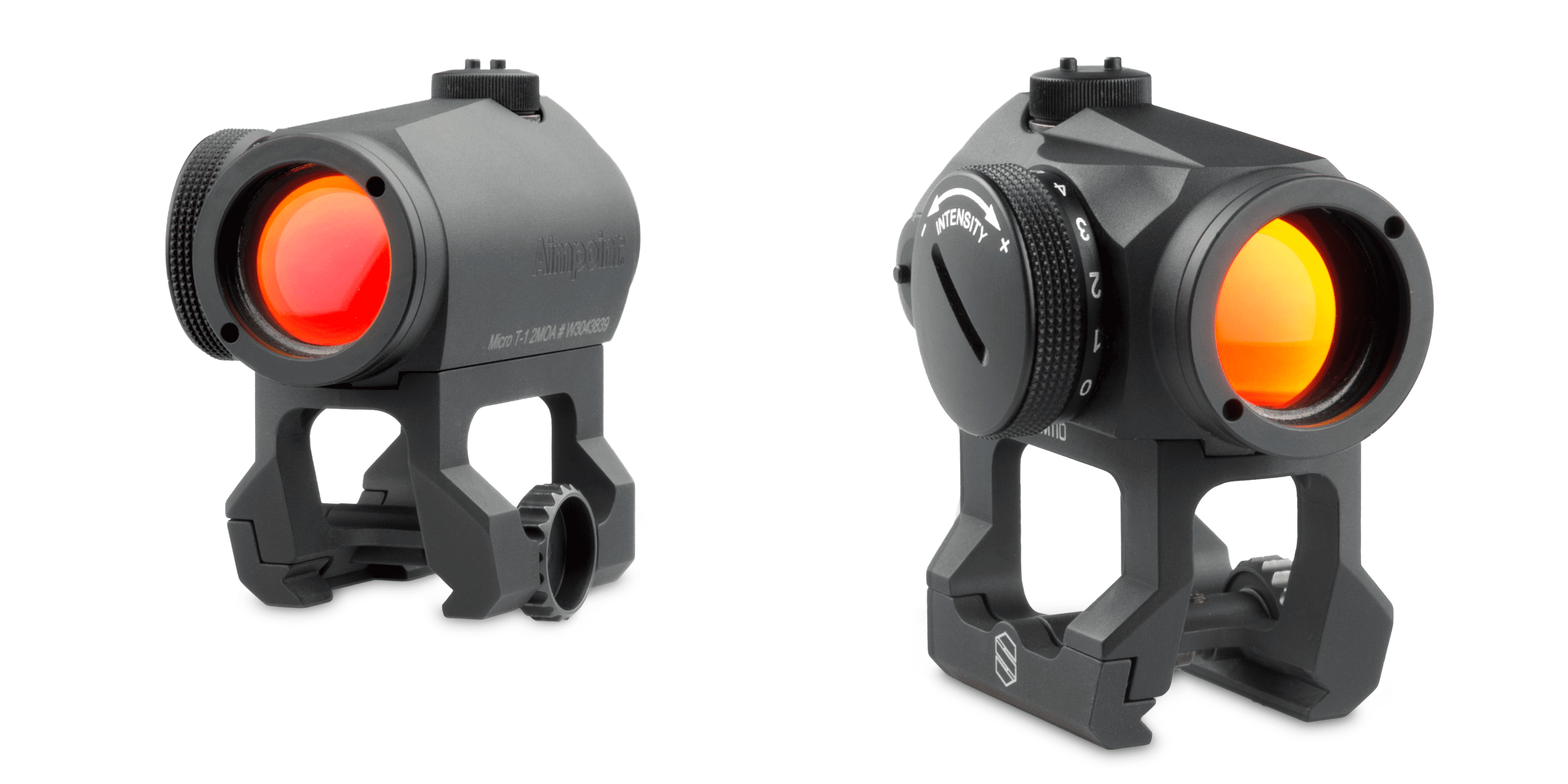
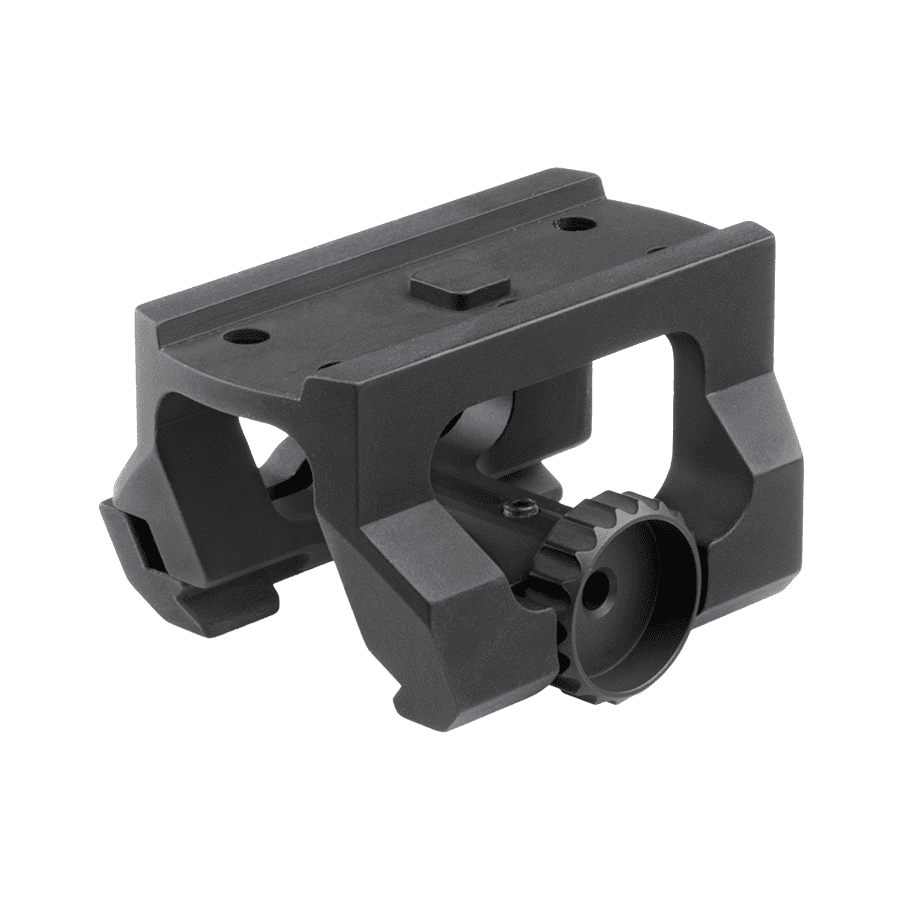
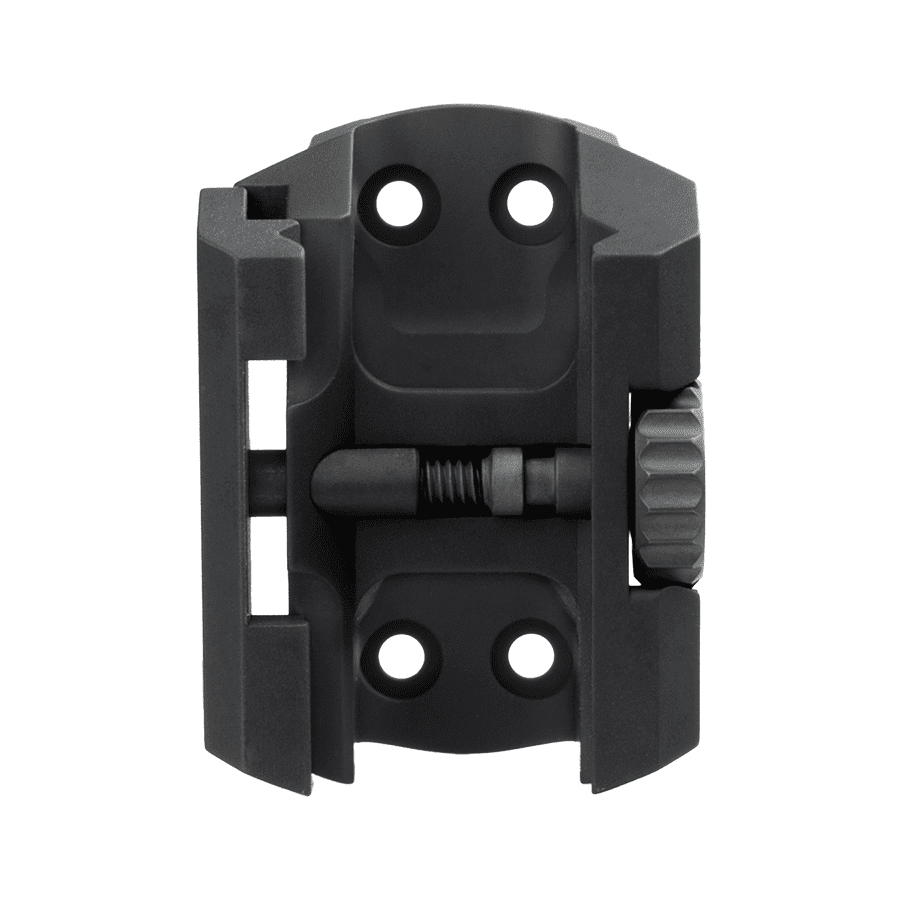
    LaRue Tactical’s LT827 is a mount designed for use with the Trijicon RMR. Machined out of bar-stock aluminum and matte black anodized, the LT827 is designed specifically for use with standard AR-15 flat top receivers. It positions the optic at lower-1/3 cowitness when used with iron sights, and features a slight cantilever which allows for positioning of the optic slightly forward of the front-edge of the receiver.

    www.laruetactical.com/larue-tactical-trijicon-rmr-mount-lt827

    Daniel Defense Expands Color Finish Options To Additional Firearms

    Monday, September 22nd, 2014

    Black Creek, GA – September 22, 2014 – Daniel Defense, engineering and manufacturing the world’s finest firearms, precision rail systems and accessories, today announced the expansion of their exclusive finishes, Mil Spec+™ and Daniel Defense Tornado™, to additional models.

    02-142-01198-047_mk12_tornado

    The Daniel Defense MK12 — introduced at SHOT Show this year — with an 18-inch stainless steel barrel and rifle length gas system, is now being offered in the Daniel Defense Tornado finish. The gray cerakote is not the only visual difference on this Special Purpose Rifle. The stainless steel, MK12 profile barrel has a bead blasted, chemically passivated finish that resembles the base metal. “We’ve invested a lot of man hours and capital toward development of the MK12,” noted Jordan Hunter, Director of Marketing for Daniel Defense. “The New Tornado finish and bead blasted, stainless steel barrel provide this precision firearm with a new appeal.”

    02-151-23026-067_v11_tornado_l

    “We’re also happy to publicize that the V11 is now available in our new finishes,” Hunter continued. The DDM4v11, which features Daniel Defense’s SLiM Rail™, their first rail system with the KeyMod attachment method, is available in Mil Spec+, Tornado as well as Black. “Demand since the release of the V11 has been exceedingly strong. With the encouraging response to these distinct finishes, making them available on this firearm is a no-brainer.”

    danieldefense.com

    US Army Developed Ironman Ammo Pack Costs More Than Commercial Version It Emulates

    Sunday, September 21st, 2014

    A little over three years ago the US Army told us about this great new high capacity ammunition carriage system that they had developed for the M240 Machine Gun. It was so awesome they even gave it a cool name. The ‘IronMan’ was created by Natick’s Quick Reaction Cell and the Rapid Equipping Force after a Soldier identified the need for a means to carry and feed up to 500 rounds of linked 7.62. We literally thought this was a one off kind of a thing to support the 34th ID and that would be the end of it.

    Interestingly, the Army spent a lot of time (initial prototypes in 45 days with an operational assessment almost two years later) and money to develop these things before they finally purchased a bunch of them. When we first wrote about it in July of 2011, we noted the conceptual similarity to the existing TYR Tactical MICO. The MICO Machine Gunners Assault Pack was created first, on TYR’s dime, and chances are really good that some enterprising GI saw the MICO and wanted one. Instead, he got the IronMan.

    Above is the Army’s IronMan and below the TYR Tactical MICO. They are definitely different executions of the same concept.

    Yeah, yeah, yeah, it’s been done before. There’s no question, the concept isn’t new. Below you can see a ‘China Lake’ pack system built for the SEALs and used with the M60.

    IMG_7497.JPG

    The difference here is that the government designed something that was already commercially available and incurred greater costs than the commercial model’s. Even worse, we hear reports that the issue models have trouble feeding and that units have been buying the MICO from TYR Tactical as replacements. That’s paying twice for the same capability.

    In the time it took the Army to finalize and test their design, TYR Tactical has continued to develop the MICO, not only ensuring it will work with both the M240 and Mk48 but also introducing adapters for the M249 and Mk46 5.56mm weapons. They’ve also developed a tripod carrier accessory for the pack.

    If any SSD readers have experience with the IronMan (or the MICO for that matter), please share it in the comments section. We are hearing that most are out of service for various issues.

    From here on out, we’ll just refer to it as ‘IronyMan”. When all is said and done, the Army takes years to field a system that already exists commercially and pays more to do it. Sound familiar?