GORE-TEX Professional

Archive for the ‘Acquisition’ Category

Acquisition Reform Means a Focus on Warfighter Success

Thursday, March 5th, 2026

The War Department aims to modernize how acquisition — the buying of weapons and other materiel from manufacturers — is done to ensure American warfighters get the best tools, at the right price, and as quickly as possible. 

In November 2025, for instance, Secretary of War Pete Hegseth announced a reorganization of the existing program executive offices into portfolio acquisition executives. 

“The acquisition chain of authority will run directly from the program manager to the PAE,” Hegseth said at the time. “Each PAE will be the single accountable official for portfolio outcomes and have the authority to act without running through months or even years of approval chains. And they’ll be held accountable to deliver results.” 

The secretary said PAEs will be empowered with authorities to make decisions on cost, schedule and performance trade-offs that prioritize time to field and mission outcomes.  

During a panel discussion yesterday as part of the Air and Space Forces Association’s warfare symposium in Aurora, Colorado, Air Force Gen. Dale R. White, director of critical major weapon systems, said that effort will be transformational in the acquisition community. 

“I think now we take it down to the next level and just think about where we are with our [program offices], what we’re doing with the PAEs, giving them authority to make decisions in real time, make trades, and be able to do probably the most important thing with this whole transformation,” White said. “[And that] is not measure ourselves against acquisition outcomes but measure ourselves against mission outcomes, allowing that PAE to look at the operational problem and work to figure out a solution to that problem and be able to have the decision space to do so.” 

White said it’s not just PAEs that must be empowered to do their job, but the acquisition enterprise as a whole must be aligned to make acquisition success about meeting mission requirements for the warfighter, not just a positive business outcome. 

“We’re just not empowering PAEs; the idea is you get unity of command,” he said. “You get unity of effort. You allow that contracting officer to have a voice in solving that operational problem, that [financial management] person, that engineer; you change the cultural mindset of how we look at what we’re doing.” 

There are plenty of examples, White said, of where there was acquisition success that didn’t result in operational mission success. 

“We may have done well on the acquisition side, but how well did that align to the operational need and what we’re trying to do,” he asked. “It is really that hard reset. It’s the empowerment piece and changing the dynamic by which we study the problems that we have.” 

For acquisition professionals, White said, acquisition reform will require them to lead with conviction. 

“Lead with vision, lead ruthlessly and lead with an intent to solve the operational problem,” he said. “If you want to know what acquisition as a warfighting function means, it means come together as a team, the operational team, the acquiring team, and deliver on the outcome. Sometimes that means you’re going to make some tough decisions that you have to have courage to make; make the decision, drive for the outcome.”

By C. Todd Lopez, Pentagon News

US Army Activates Capability Program Executive (CPE) Enterprise Software and Services (ES2)

Sunday, March 1st, 2026

?

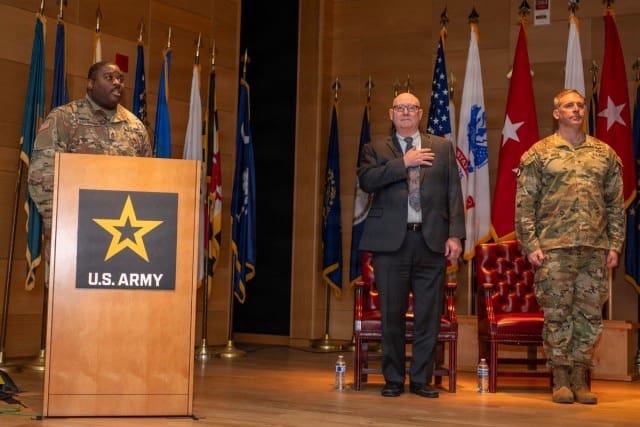
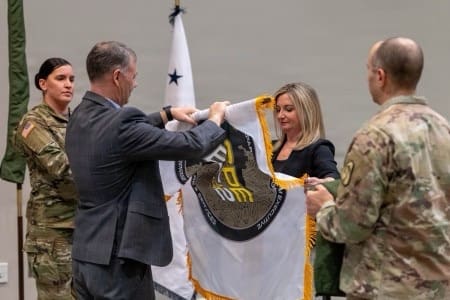
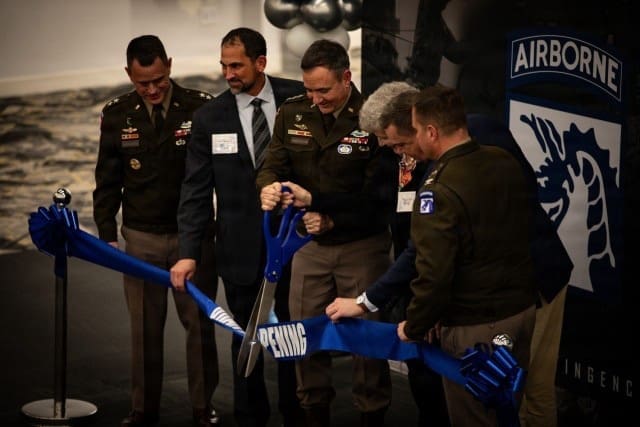
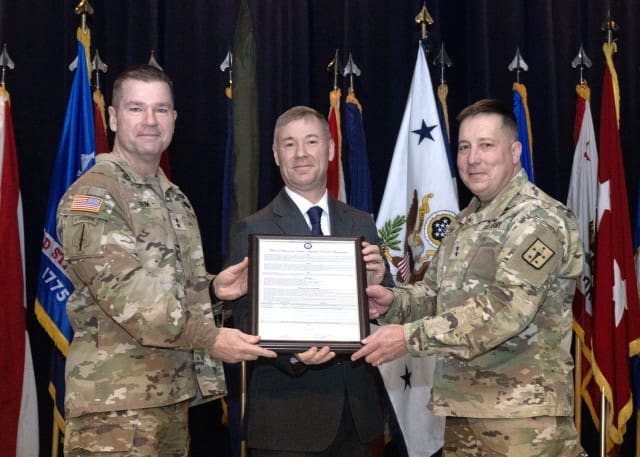
FORT BELVOIR, Va. – On Feb. 25, the Hon. Brent Ingraham, Assistant Secretary of the Army for Acquisition, Logistics and Technology, joined leaders from the former U.S. Army Program Executive Office (PEO) Enterprise in unveiling the acquisition organization’s new name, logo and colors at an activation ceremony. The organization is now officially known as Capability Program Executive (CPE) Enterprise Software and Services (ES2).

As one of the Army’s 13 newly designated capability program executives, CPE ES2 will continue its core mission of delivering software and services that drive operational readiness, providing seamless support for mission-critical systems and warfighting capabilities. CPE ES2 will report directly to Hon. Ingraham and continue to work closely with the Army Chief Information Officer on technology initiatives.

According to Miranda Coleman, CPE ES2’s acting Capability Program Executive, the organization will remain focused for the rest of fiscal year 2026 on operationalizing low-code/no-code, delivering at speed, maturing Agile practices, maintaining adaptability and flexibility, and managing talent.

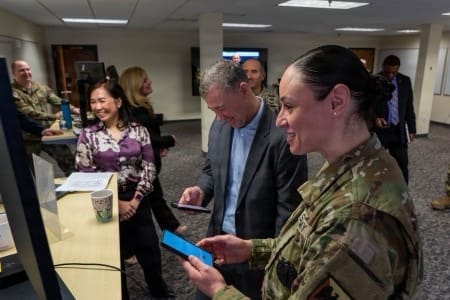
“We have a lot of work ahead of us, but I’m confident we’re off to a fantastic start,” said Coleman, whose team highlighted several CPE ES2 software programs for Hon. Ingraham at a pre-ceremony capability demo.

As part of the organization’s transition to becoming a capability program executive, CPE ES2 has renamed its four portfolios to align with Army domains and better convey their areas of focus:

Project Manager (PM) Integrated Personnel and Pay System – Army is now PM Human Resources and Force Management (PM HR-FM).

PM Enterprise Business Systems and Convergence is now PM Logistics and Finance (PM LOG-FIN).

PM Defense Integrated Business Systems is now PM Acquisition, Training and Readiness (PM AT&R).

Project Director (PD) Enterprise Services is now PD Business Technology Solutions (PD BTS).

An updated organizational chart with all CPE ES2’s leaders, portfolios and product offices is available on the newly updated CPE ES2 website.

By Erika Christ

Army Transforms Acquisition Process to Enhance Ammunition Support for Warfighters

Friday, February 20th, 2026

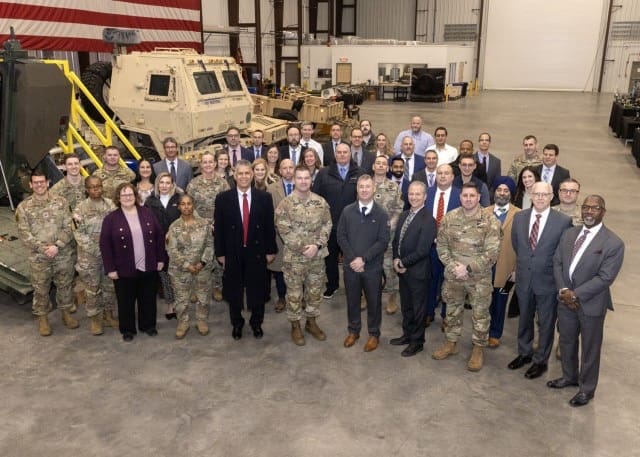
PICATINNY ARSENAL, N.J. – The U.S. Army has established the Portfolio Acquisition Executive for Agile Sustainment and Ammunition, PAE AS&A, at Picatinny Arsenal under the command of Maj. Gen. John T. Reim. The move is a key part of broader Continuous Transformation efforts intended to increase efficiency and accelerate the delivery of critical capabilities to the warfighter.

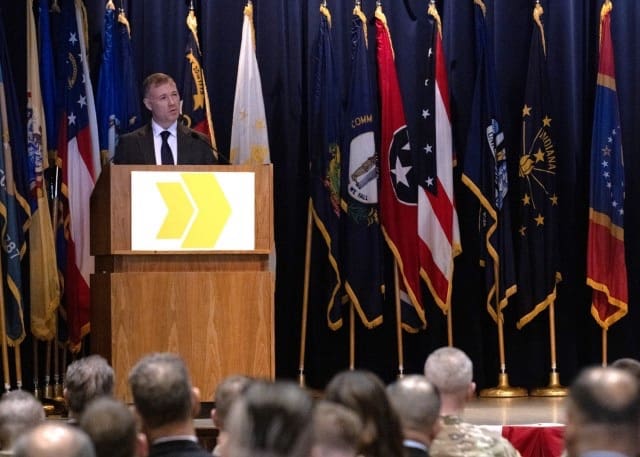
The new organization was activated at a ceremony held on January 20 at Picatinny Arsenal where several thousand team members from all involved organizations were introduced to the new command. The Assistant Secretary of the Army for Acquisition, Logistics and Technology, the Honorable Brent Ingraham, presided over the ceremony and spoke to the significance of the new organization as a key part of the Army’s Acquisition reform initiative.

Following the ceremony, Ingraham witnessed a live demonstration featuring the Purpose Built Attritable System and a TRV-150 drone dropping smoke and a M69 training grenade onto a target simulating a small group of enemy Soldiers with a vehicle. This showed off one of DEVCOM’s latest innovations, the Picatinny Common Lethality Integration Kit or Picatinny CLIK. These are just a few of the of lethal UAS and counter-UAS technologies being developed by U.S. Army Combat Capabilities Development Command Armaments Center. The DEVCOM Armaments Center now serves as the Systems Center, a key enabler, of the PAE AS&A.

Subject matter experts from the PAE AS&A and DEVCOM Armaments Center then also briefed Ingraham on other lethal UAS, counter-UAS munitions, advanced artillery, next-gen energetics, expeditionary logistics and supply chain enabling systems that are the result of joint efforts of the two Picatinny based organizations.

“This marks a significant milestone in our journey to modernize Army Acquisition,” Ingraham said as he addressed the audience. “We are combining the capabilities of the Joint Program Executive Office for Armaments and Ammunition with critical combat logistic capabilities from PEO Combat Support and Combat Support Services to ensure fully capability alignment under our new structure.”

“Today we turn the page to an exciting new chapter in Army Acquisition,” Ingraham continued. “Every role in the organization plays an invaluable part in this journey. Cross organization engagement and agility are essential in ensuring the success of this transition. The future of Army Acquisition is bright and PAE AS&A is poised to lead the way.”

Ingraham’s visit underscored the installation’s vital role the various commands at Picatinny Arsenal play in maintaining readiness — delivering the capabilities, expertise, and innovation that ensures our Warfighters and allies are equipped to succeed in any environment.

“As we embark on this journey, we align our actions with the strategic guidance provided by our leadership including the President of the United States, the Secretary of War, the Secretary of the Army and the Chief of Staff of the Army,” said Reim who followed Ingraham. “This initiative is not merely a restructuring of our acquisition processes. It is a fundamental rethinking of how we approach the delivery of capabilities to our Soldiers, our joint warfighters, and our international partners.”
Legacies of Excellence

The Army is fundamentally restructuring its acquisition process to prioritize speed and efficiency over traditional approaches. As part of this initiative, the Army is establishing six Portfolio Acquisition Executives with increased focus on capabilities over specific programs.

The transformation includes the integration of the former Program Executive Office Combat Support and Combat Service Support, PEO CS&CSS, into the Capability Program Executive for Combat Logistics, CPE CL, led by Brig. Gen. Camilla White. PEO CS&CSS brings an unmatched history of logistics and sustainment support to the new CPE CL. It encompasses more than 200 programs spanning the Army’s transportation, ordnance, quartermaster, engineer, and training equipment portfolios.

As the CPE CL, it will continue to develop and deliver modernized tactical wheeled vehicles, engineering equipment, watercraft, power generation systems, and other force sustainment capabilities to Army, Joint, and global partners.

At the same time, the Joint Program Executive Office for Armaments and Ammunition, JPEO A&A, will realign into the Capability Program Executive for Ammunition & Energetics, CPE A&E, led by Col. Jason Bohannon. JPEO A&A has consistently delivered innovative acquisition solutions to provide Joint Warfighters and allied partners with overmatch capabilities. The JPEO was comprised of four project offices covering Combat Ammunition Systems, Close Combat Systems, Maneuver Ammunition Systems and Joint Services.

As the CPE A&E, it retains responsibility for life-cycle acquisition management of all conventional ammunition, which includes integrating budgets, acquisition strategies, research and development and life-cycle management across all ammunition families.

CPE CL will be headquartered at Detroit Arsenal, Michigan, while CPE A&E will remain at Picatinny Arsenal. Unlike the previous Program Executive Offices, each PAE will have comprehensive responsibilities and accountability for managing the full spectrum of acquisition activities, including requirements development, technology maturation, product development, testing, contracting, fielding, sustainment, and international sales. This flattened acquisition system empowers PAEs to make timely, risk-based decisions and accelerates capability delivery to Warfighters through problem-focused requirements, smarter contracts, informed risks, and faster pivots.

“This restructure achieves unity of command by establishing and empowering PAE AS&A with the full authority to direct research and development, prototyping, testing, production, and sustainment,” said Reim. “By prioritizing outcomes over processes, this new construct empowers us to award contracts faster by cutting through bureaucracy. Overall, this approach unburdens the acquisition enterprise and allows us to deliver warfighting capabilities at speed and scale.”

Accelerating Ammunition Acquisitions

Under the leadership of Maj. Gen. Reim, PAE AS&A will oversee an entire capability area including all conventional ammunition requirements including direct and indirect fire ammunition, close combat systems, explosives, and pyrotechnics, in addition to logistics, fielding, and sustainment. PAE AS&A will have oversight of the organic munition production facilities.

Maj. Gen. Sean Davis will serve as the new Deputy Portfolio Acquisition Executive adding the sustainment capabilities of the Army’s Combined Arms Support Command, CASCOM to PAE AS&A. CASCOM trains and develops adaptive Sustainment professionals for the total force while integrating innovative Army and Joint Sustainment capabilities, concepts and doctrine to sustain large scale combat operations in a multi-domain operations environment. It is also a part of Transformation and Training Command and is located at Fort Lee, Virginia. PAE AS&A is committed to supporting the warfighter through an innovative approach to ammunition acquisition and sustainment that leverages existing authorities to deliver tangible benefits, including accelerated capability delivery, smarter contracts, and informed risk management.

In addition to the two new CPEs, PAE AS&A will oversee multiple acquisition enablers including senior contracting officials, a test and evaluation integrator, the Sustainment Future Capability Directorate and the system center lead overseeing coordination among Army Combat Capabilities Development Command Centers. The PAE AS&A System Center Lead is Chris J. Grassano, the firector of the DEVCOM Armaments Center. The new structure will enable holistic management of conventional ammunition development, production and sustainment under a single command resulting in increased efficiencies and accelerated delivery of lethality aligned with the emerging Army Warfighting Concept.
Looking Ahead

In conjunction with this reform, the Army is investing $1.1 billion per year to overhaul depots, arsenals, and ammunition plants that produce and sustain Army equipment. This commitment will not only modernize facilities but also strengthen the defense supply chain and create jobs.

For industry partners, these reforms will mean faster contracts, clearer points of entry, and fewer bureaucratic hurdles. Soldiers will benefit from receiving new capabilities, such as drones, long-range fires, and next-generation command and control systems, years faster than before.

By Michael Chambers and Eric Kowal

Fort Bragg Opens Lieutenant General Gavin Joint Innovation Outpost

Tuesday, January 27th, 2026

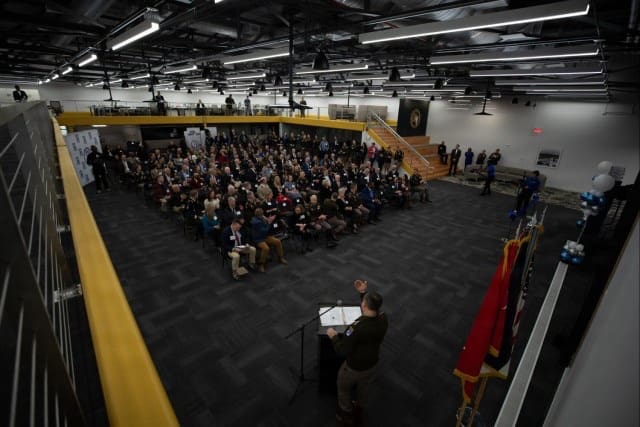
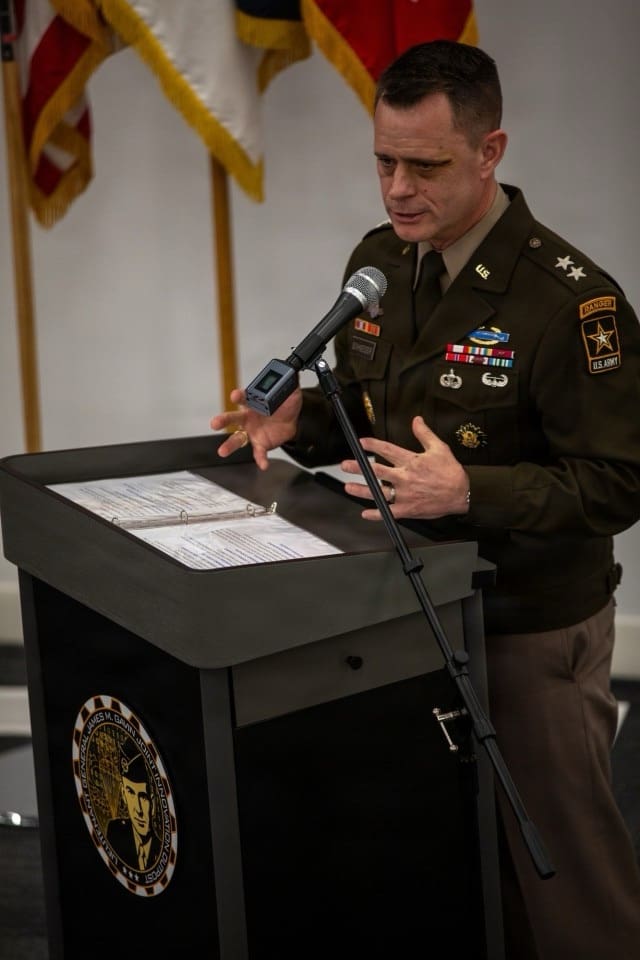
FORT BRAGG, N.C. — In support of the Department of War’s transformation initiative, Fort Bragg and the XVIII Airborne Corps officially opened the Lt. Gen. James Gavin Joint Innovation Outpost on January 23, 2026.

As the first facility of its kind, building on U.S. Army Division innovation labs, the JIOP serves as a center that bridges tactical and operational challenges with rapid innovative solutions. Designed as a hub for military personnel, academia, and industry, the JIOP aims to collaboratively address problems faced on the modern battlefield.


The facility is named in honor of Lt. Gen. James Gavin, who commanded the 82nd Airborne Division during World War II, leading the division through pivotal moments such as D-Day, Operation Market Garden and the Battle of the Bulge. Following World War II, Gavin became the head of U.S. Army Research and Development and was renowned for his innovative concepts, including the use of helicopters to transport infantry ? air assault ? and the development of modern air cavalry.

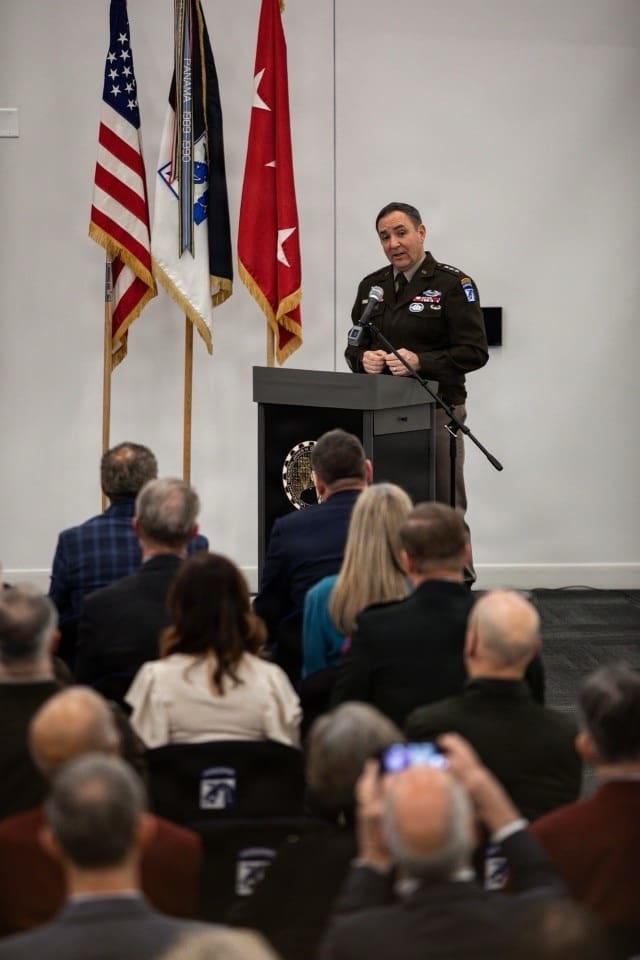
“We are honored to name this facility after Lt. Gen. James Gavin, a true visionary who understood the importance of innovation,” said Lt. Gen. Greg Anderson, XVIII Airborne Corps commanding general. “The JIOP will carry on his legacy by fostering the kind of bold thinking and collaboration that he championed throughout his career.”

Appropriately named after Lt. Gen. Gavin, the JIOP focuses on rapid innovation for the modern and future global battlefields.

“The future of warfare is here,” said Rob Braun, XVIII Airborne Corps Chief Technology Officer. “It’s driven by technology and success is impossible without partnerships. The Lt. Gen. James M. Gavin Joint Innovation Outpost is an investment in that future, where we will develop and test cutting-edge capabilities while forging enduring new partnerships with the best of the military, industry, and academia to meet the future head on.”

While the U.S. Army currently collaborates with industry through the Assistant Secretary of the Army for Acquisition, Logistics and Technology office, the JIOP represents the first concerted effort to focus on rapid innovation coordinated with industry and academia at the operational level. The JIOP will connect Soldiers from all ranks and levels to innovative teams capable of developing solutions for current battlefield challenges.

“Every piece of technology we develop at the JIOP has one ultimate purpose: to enhance the lethality and survivability of our Soldiers on the battlefield,” said Col. Thomas Monaghan, director of the Joint Innovation Outpost. “This is about ensuring our warfighters can dominate any adversary, anywhere in the world.”

In addition to addressing modern battlefield problems, the JIOP will foster and strengthen ties between Fort Bragg and regional academic and industrial partners. “At the JIOP, we are creating a dynamic ecosystem where our Soldiers can collaborate directly with the brightest minds in industry and academia,” said Anderson. “This partnership is essential for accelerating innovation and maintaining our competitive edge.”

In recent years, Fort Bragg and the XVIII Airborne Corps have led the way in Soldier innovation through events like Dragon’s Lair and exercises such as Scarlet Dragon. Dragon’s Lair is a competition similar to Shark Tank, where Soldiers pitch innovative technological solutions that range from battlefield applications to improvements in daily quality of life. Scarlet Dragon involves industry partners field testing new technologies with the XVIII Airborne Corps and its subordinate units.

Looking ahead, Dragon’s Lair will feed the JIOP with innovative ideas, which will then flow into Scarlet Dragon for testing, creating a quick, tri-series process to rapidly address challenges for Soldiers in modern and future combat environments. “Fort Bragg has always been a proving ground for Army innovation, and the JIOP is the next chapter in that legacy,” added Monaghan.

MAJ Matthew St. Clair

GAO Report on Weapon Systems Testing

Wednesday, December 17th, 2025

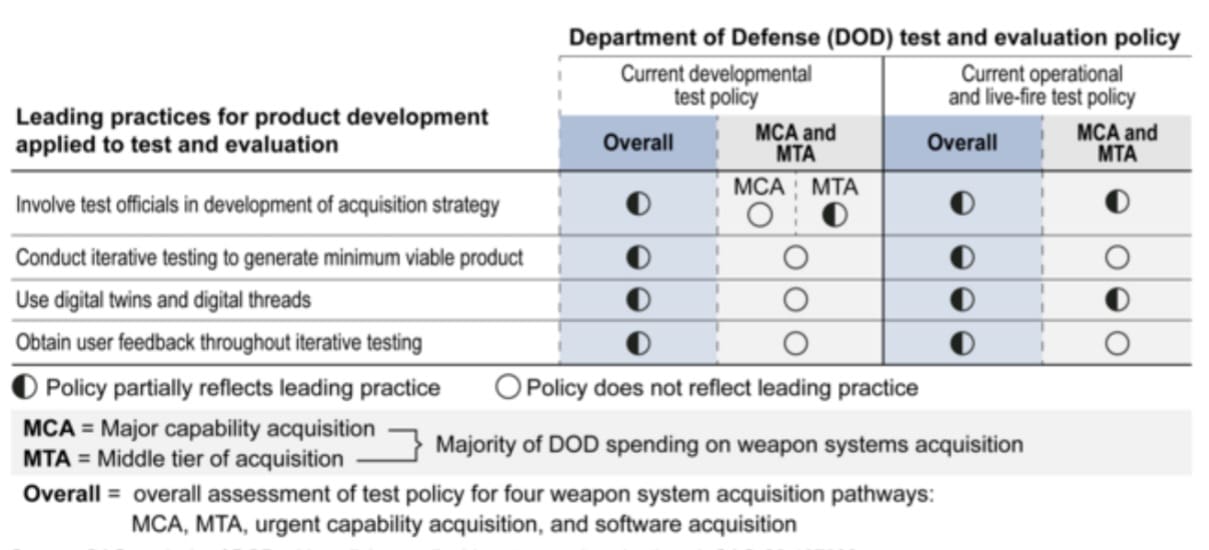
In a recent report entitled, “Weapon Systems Testing: DOD Needs to Update Policies to Better Support Modernization Efforts” the Government Accounting Office suggests that the US military adopt iterative testing processes to further modernize its newly adopted acquisition methodology.

Common in software development, iterative testing is a repeated cycle of developing, testing, and refining a product in small, incremental steps, using user feedback and data from each cycle to make gradual improvements, rather than aiming for a perfect release all at once. Already adopted to rapidly fill emerging warfighting gaps like Counter-UAS and Electromagnetic Warfare, where there is little to no current capability, this process has not yet been applied to larger systems such as aircraft, ships and armored vehicles. In fact, the constant swing for the fence and a 10X capability improvement has stymied multiple programs.

The GAO offers 13 recommendations. They are extensive and directed at the Department writ large as well as the service departments.

Specifically, they recommend involvement of testers in acquisition strategies; iterative approaches to testing, including use of digital twins and threads; and ongoing end user input. DOD concurred with seven recommendations, partially concurred with five recommendations, and did not concur with one recommendation.