SIG SAUER - Never Settle

Archive for the ‘AI / ML’ Category

Army Leverages Army SBIR and xTech Prize Competitions to Secure AI Pipeline

Saturday, June 15th, 2024

WASHINGTON — The U.S. Army Small Business Innovation Research and xTech Programs collaborate with artificial intelligence innovators to find and scale solutions across the Army. Led by the Office of the Assistant Secretary of the Army for Acquisition, Logistics and Technology, Army SBIR and xTech prize competitions support a secure, Army-ready AI pipeline.

In March 2024, Mr. Young Bang, ASA(ALT) principal deputy, announced the ASA(ALT) AI Implementation Plan, that kicked off with a 100-day sprint. The plan aims to deliver a single, coherent approach to AI across the Army, aligning multiple, complex efforts within 100 and 500-day execution windows, and establishes the baseline to continuously modernize AI and contributing solutions as technologies rapidly evolve.


The Army SBIR and xTech Programs’ initiatives are at the forefront of these efforts to drive digital transformation and deliver required AI capabilities across the Army.

As the 100-day window concludes this summer, the Army is outlining a plan that leverages the outcomes of the 100-day sprint to adopt industry solutions without competing with commercial vendors. However, there are inherent risk factors associated with the adoption of AI solutions.


“Some of the obstacles include looking at and understanding AI risks such as poison data sets, adversarial attacks and trojans,” Bang said. “Developing AI in a controlled, trusted environment owned by the Army or Department of Defense can make addressing these risks easier.”

Bang and his team have prepared an initial AI Layered Defense Framework called #DefendAI to help tackle the risks associated with third-party algorithms, while helping to operationalize industry AI technologies. His team is looking to collaborate across industry and academia to evolve the framework and prioritize capability exploration and implementation in support of Army programs, such as Project Linchpin, which is building an operational pipeline of trusted AI solutions.

Initiated by Program Executive Office Intelligence, Electronic Warfare and Sensors, Project Linchpinaligns with Bang’s AI risk evaluation efforts. Bharat Patel, Project Linchpin-Sensor AI product lead, noted that the program aims to deliver commercial capabilities to the Army by applying fundamental concepts such as test and evaluations, and adopting an AI risk framework.

“It’s your infrastructure, it’s your standards, it’s your governance, it’s your process. All those areas are things that we’re taking on, because that’s how you can tap into the AI ecosystem and that’s how you deliver capabilities at scale,” Patel said.

ASA(ALT) is progressing with the AI Implementation Plan and its alignment to Project Linchpin to prepare the Army for AI at scale. As these initiatives ramp up, the Army SBIR and xTech Programs are strategically focused on leveraging excellence in the private sector to speed up the Army’s broad adoption of AI.

Army SBIR’s AI funding

The Army SBIR Program collaborates with small businesses and Army customers to align innovative solutions with Army priorities. It awards more than $350 million annually to reinvigorate the Army’s technology ecosystem, and is prioritizing and funding cutting-edge AI solutions.

The program has invested nearly $102 million in active AI projects in fiscal year 2024, distributed among approximately 75 small businesses across the country, and aims to align small businesses with the Army’s larger AI pipeline through funded AI initiatives.

In FY24, Automated Detection and Prevention solutions received $30 million in Army SBIR investments, representing 29% of the program’s AI and machine learning portfolio by the number of awards. Within this framework, the Army categorizes technologies as automated systemic-based controls that stop threats and predict the next attack for improved prevention.

There are currently 20 active Army SBIR Automated Detection and Prevention awards with organizations such as PEO IEW&S; PEO Simulation, Training and Instrumentation; and Army Test and Evaluation Command.

Army SBIR investments in FY24 have directly supported Army programs such as Project Linchpin, with two awards made in FY24 and 16 additional planned to start in FY25. The Joint Program Executive Office Armaments and Ammunition also recently leveraged $48 million in Army SBIR funding to modernize munitions manufacturing processes using AI.

Looking forward to FY25, Army SBIR’s AI/ML portfolio is projecting upwards of $105 million in AI funding. Six AI-focused solicitations are slated for release this summer, which will comprise approximately $55 million of the FY25 funding. Several of the solicitations, which include an AI/ML open topic solicitation, align to Project Linchpin thrust areas, amongst other potential Army transition partners.

xTech’s scalable AI

In late 2023, Bang requested that Dr. Matt Willis, the director of Army Prize Competitions and Army SBIR Program, and his team leverage xTech prize competitions to scale AI. This led to the launch of xTechScalable AI in December 2023, which sought innovative AI solutions from U.S.-based small businesses with scalable solutions to defend against adversarial AI threat vectors.

Leveraging prize competition authorities, xTech offers cash prizes along with opportunities for participants to receive direct feedback on their solutions, plus mentorship and networking opportunities with Army customers to help accelerate their unique AI solutions towards Army capabilities. xTech competition winners find themselves well-positioned to compete for follow-on contracts, such as Army SBIR awards.

xTechScalable AI was not the first competition aligning AI with Army needs. Earlier in the year, the xTechPrime competition funded two Army SBIR contract awards to inform Project Linchpin pipeline tools and services, totaling almost $4 million.

The xTechScalable AI competition is following a similar track, offering up to $370,000 in cash prizes and $8 million in follow-on Army SBIR contract awards for critical AI solutions.  Through these competitions, 150 small businesses received exposure and feedback from Army customers and experts, and introductions to follow-on contract opportunities to continue the development of their AI solutions for the Army.

“xTech is a valuable mechanism for identifying and nurturing scalable, commercial AI solutions to strengthen the Army’s security framework,” Willis said. “Paired with ASA(ALT)’s vision, we can operationalize AI to enhance data accuracy and combat cybersecurity threats.”

xTechScalable AI 2 launched in March 2024 and focuses on identifying small businesses with game-changing technologies that can feed into Project Linchpin’s operational AI pipeline. The competition offers up to $603,000 in cash prizes and opportunities post-competition to submit proposals for a Phase I or Phase II Army SBIR contract valued at up to $250,000 and $2 million, respectively.

xTech will host the finals at the Association of the United States Army Annual Meeting and Expo in October. Additionally, xTech will hold more AI-focused competitions in the coming year, including several AI-focused Technical Grand Challenges.

Commercial vendors and small businesses have made quick progress in developing and implementing AI capabilities. As part of ASA(ALT)’s AI Implementation Plan and the upcoming 500-day execution window, Army SBIR and xTech are adopting AI solutions and preparing them for operational use in a secure, government-owned environment.

“Army SBIR and xTech are committed to strategically investing in areas where we can leverage the excellence of the private sector and transition technologies to Army programs such as Project Linchpin,” Willis said. “We have the funding and processes in place to drive industry collaboration and investment opportunities for these large-scale Army efforts.”

About the programs

The Army SBIR Program offers Phase I contract opportunities to U.S.-based small businesses showing commercial viability, feasibility and technical merit. It also offers Phase II and Direct to Phase II contracts to vendors with mature technologies meeting Phase I qualifications.

The Army SBIR Program releases contract opportunities on an ad-hoc basis to address current and expected Soldier needs. The program will promote new contract releases via solicitation announcements and email. For more information, please visit the Army SBIR website.

Established in 2018, the Army xTech Program offers prize competition opportunities for entities including nontraditional vendors direct exposure to Army laboratories, program executive offices, program managers and end-users. Participants receive feedback from Army DoD stakeholders and have access to training, mentorship and networking, and opportunities to win non-dilutive cash prizes.

For current and upcoming competitions, visit the xTech website.

By Anna Volkwine, Office of Army Prize Competitions and Army SBIR Program

AimLock: Leading the Charge in Semi-Autonomous Weapons Tech

Wednesday, May 22nd, 2024

Denver, CO – AimLock, a pivotal innovator in the defense industry, continues to redefine precision targeting and engagement capabilities with its state-of-the-art semi-autonomous weapon systems.

Since its inception in 2009 and incorporation in 2013, AimLock has been at the forefront of integrating cutting-edge technologies such as artificial intelligence, sensor management, and computer vision into advanced weapons systems, enhancing targeting accuracy and operational efficiency in combat scenarios.

AimLock’s dedication to enhancing the capabilities of warfighters while ensuring their safety through advanced technologies is unwavering,” said Bryan Bockmon, CEO of AimLock. “Our systems are designed to increase the speed, accuracy, and safety of military engagements, making them indispensable in modern warfare.

Revolutionizing Military Engagements with Core Targeting Module

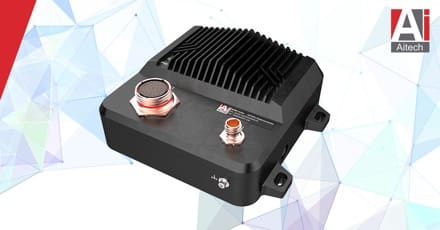
Central to AimLock’s technology suite is the Core Targeting Module (CTM), a robust computing solution that drives precision in fire control and platform management across air, ground, and unmanned systems. The compact, IP67-rated CTM brings unprecedented processing power to various military applications, from unmanned mission computing to guided weapons launch control.

Seamless Integration with Legacy Systems

AimLock excels at marrying new technologies with existing military hardware. Integrating the Core Targeting Module into legacy systems enhances their efficacy without necessitating complete overhauls, bridging the gap between traditional and modern warfare technologies.

Innovative Semi-Autonomous Weapon Systems

AimLock’s portfolio includes the I-M1 and R-M1 systems, which significantly enhance the capabilities of medium-range rifles and machine guns by introducing autonomous targeting features that improve accuracy and reduce response times in dynamic combat environments.

The R-S1 system, part of AimLock’s R-S Series, offers versatile applications, ranging from sniper overwatch to precision strike capabilities. It is designed to function effectively in both ground and aerial engagements.

Remote Operated Launch System (ROLS)

The Remote Operated Launch System further underscores AimLock’s innovation in semi-autonomous weaponry. Integrating the Core Targeting Module with a single launch tube for APKWS, ROLS extends the reach and precision of this established weapon system across various new platforms.

Leading the Future of Defense Technology

As AimLock continues pushing the boundaries of military technology, it invites defense departments and industry stakeholders to experience the transformative effects of its semi-autonomous systems. With a steadfast commitment to enhancing combat effectiveness and warfighter safety, AimLock remains a player in the evolution of modern military operations.

For more information on AimLock’s innovative solutions or to schedule a demonstration, please contact us.

SOF Week 24 – Anduril Pulsar EW System

Thursday, May 9th, 2024

Offered in ground and vehicle mount versions, the Pulsar is a family of modular, multi-mission-capable EW systems which rapidly identify and defeat current and future threats across the electromagnetic spectrum, including small and medium-sized drones using Artificial Intelligence and Machine Learning.

Initially developed in 2020, Pulsar has been in operational use conducting electronic countermeasures (ECM), counter unmanned systems, electronic support, electronic attack, direction finding, and geolocation on air, ground and maritime platforms, but was not offered commercially until now.

Pulsar uses software defined radios and an open architecture to enable futire upgrades as well as integration with other systems.

Army Invests Nearly $50 Million in Artificial Intelligence and Machine Learning

Tuesday, April 23rd, 2024

WASHINGTON — The U.S. Army invested $50 million in small and nontraditional businesses to develop a variety of artificial intelligence and machine learning solutions under its AI/ML open-topic solicitation.

Released in December 2022, the U.S. Army Small Business Innovation Research Program’s solicitation sought to enhance the Army’s operational capabilities and address broader national security efforts by tackling critical information gaps via AI technologies. With the help of industry, the Army prioritized the development of solutions ranging from radio-frequency identification to language translation.

During the Phase I performance period, 39 small and nontraditional vendors delivered concepts within these priority areas that highlighted their technologies’ commercial viability and technical feasibility. Now the Army will fund 26 of the selected businesses to a total of nearly $50 million to transform their concepts into prototypes ready for demonstration.

View the full AI/ML Open Topic infographic here.

The Army SBIR Program offers Phase I contract opportunities to small and nontraditional vendors exhibiting commercial viability, feasibility and technical merit. The program provides Phase II and Direct to Phase II contracts to vendors with mature technologies capable of gaining increased federal support and solving Army needs.

Vendors receive access to technical, acquisition and operational Army experts. These specialists offer information on the Army’s critical needs while providing guidance from within the Army research and development ecosystem. Selectees capitalize on this by collaborating with technical points of contact that serve as a resource for vendors as they mature their technologies for insertion into Army acquisition programs.

The Army SBIR Program releases contract opportunities on a rolling basis to respond to current and anticipated Soldier technology needs. The program will continue to promote new contract releases via topic announcements and email. We encourage you to follow U.S. Army SBIR|STTR on Facebook, X (formerly Twitter) and LinkedIn for the latest program announcements, updates and solicitation opportunities.

The Office of the Assistant Secretary of the Army for Acquisition, Logistics and Technology leverages technologies and capabilities to provide U.S. Soldiers a decisive advantage in any environment by developing, acquiring, fielding and sustaining the world’s finest equipment and services. For more information, visit the ASA(ALT) web page and follow @ArmyASAALT.

Please contact the Army SBIR mailbox if you have any questions.

By Daniel Smoot, Office of Army Prize Competitions and Army SBIR Program

Army, Industry Discuss Future Implications of Augmenting Humans with AI

Friday, March 22nd, 2024

AUSTIN, Texas — As artificial intelligence becomes increasingly integrated into a number of industries, organizational leaders from the public and private sector are considering both the opportunities and risk posed by this rapidly evolving field of technology.

During a March 12 South by Southwest Conference panel in Austin, tech enthusiasts from the U.S. Army and industry discussed how advances in AI-augmented humans and humanoids — non-human entities, such as robots, that possess human characteristics — have the potential to reshape how humans work and accomplish complex tasks.

The panelists additionally discussed the importance of pursuing responsible AI, so that the new technology will serve to improve human lives and abilities.

“AI is not a panacea,” said Army Futures Command Director of Integration Col. Troy Denomy, who participated in the panel. Denomy clarified that AI can be a useful tool in optimizing the capabilities of humans and machines but is not a replacement for human brainpower or skill. He added that the Army does not want to create situations in which humans are working for robots but rather seeks to enable robots to work for humans.

To better understand the advantages AI can offer, the Army is evaluating new AI assistance methods through its Soldier-centered design model, which places Soldier participation and feedback at the core of experimentation efforts. The method takes inspiration from private industry best practices shaped around ensuring end-user satisfaction, such as Microsoft’s human-centered design methods.

Panelist Steven Bathiche, who leads Microsoft’s Applied Sciences Group, highlighted how AI developers are shifting away from remote-controlled programming toward task-based programming, which allows humans to complete more complicated tasks by automating the repetitive ones. Bathiche commented on the Army’s historical ability to enable greater innovation and problem-solving in emerging fields of technology through mutually beneficial partnerships with entrepreneurs and industry.

Fellow speaker Young Bang, who serves as Principal Deputy Assistant Secretary of the Army for Acquisition, Logistics and Technology, emphasized that interfaces with technology must evolve alongside the technology itself, so that analysts and Soldiers can more easily and intuitively interact with AI systems. Carefully assessing risk is also critical, and the Army continues to apply frameworks to identify and counteract risks, including when adopting third-party generated algorithms. The Army also plans — with the help of industry — to deepen its understanding of how integrating new AI capabilities may impact Soldiers’ well-being and behaviors, with an aim of improving personal, professional and operational outcomes.

“It’s about innovation and failing quickly. We don’t want programs that last 10 years and then decide to kill it. We want to learn faster and faster from our mistakes,” Bang said.

By Army Futures Command

Battlefield Technology Focus: Featuring OKSI, KAGWERKS, Firebird Electro-Optics & ONYX Industries

Friday, February 9th, 2024

During SHOT Show 2024, leading tech experts curated a parlor space to showcase pushing the boundaries of innovation with elite technologies. They all share the same goal; to bring the warfighter technical solutions required to overcome challenges faced on the ever-evolving battlefield.

Let’s cover down on Tech:

OKSI – Their Autonomous Precisions Weapon Systems includes Passive Ranging, Sentry Remote Weapon System, EO/IR Seeker for APKWS, and an 81mm Precision Guidance Kit. Additionally, they have Unmanned Autonomous Systems & Networks portfolio, which includes Autonomous Vehicle Kits, GPS-denied Navigation, Coordinated Drone Teaming & Swarming, and ATD/ATR.

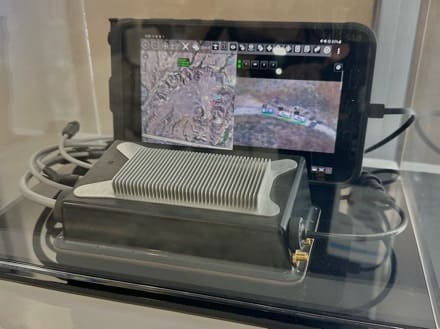
KÄGWERKS – Their chest mounted radio systems featuring Silvus Technologies MN MiMo tech was on display, along with the Dock Ultra body worn compute system. The system enables operators to do real time processing of map data, image recognition, along with other AI/ML capabilities.

Firebird Electro-Optics – Their weapon mounted and handheld LED & LEP illuminators, along with their MAID MFAL dual beam single aperture laser, focusable VCSEL illuminator was on display. They also showcased their SWIR and LWIR solutions, with active and passive range finding and designation.

Onyx Industries – The Sentry Remote Weapon System was on display in the parlor and show floor in partnership with Persistent Systems, LLC, showcasing its multifunctional ATD/ATR human in the loop capabilities, in both its kinetic and ISR variants, ready to be deployed in overwatch or terrain denial positions.

GA-ASI Uses Autonomy to Close F2T2EA Engagement Chain

Thursday, January 11th, 2024

-Avenger Flight Demonstrates Multi-Objective Collaborative Combat Mission

-GA-ASI Combines Skills of Multiple Autonomy Providers to Advance UCAV Ecosystem

SAN DIEGO – 09 January 2024 – General Atomics Aeronautical Systems, Inc. (GA-ASI) demonstrated its rapidly maturing open standards-based autonomy ecosystem for Unmanned Combat Air Vehicles (UCAVs) on an MQ-20 Avenger® as part of a live flight test on Nov. 2, 2023. The flight combined three autonomy providers, government-provided human-machine interface (HMI) hardware, and GA-ASI’s autonomy core to meet multiple objectives for collaborative combat missions and closed the Find, Fix, Track, Target, Engage, and Assess (F2T2EA) engagement chain using a mix of Live, Virtual, and Constructive (LVC) entities.

The flight, which took place from GA-ASI’s Desert Horizon Flight Operations Facility in El Mirage, Calif., illustrates the company’s commitment to maturing its open standards-based autonomy software ecosystem for Autonomous Collaborative Platforms (ACPs). Designing the system around government-owned and -maintained standards avoids vendor lock and allows rapid integration of best-of-breed capabilities in areas such as Artificial Intelligence (AI), HMIs, and other skills from third-party providers.

“This flight underscores GA-ASI’s commitment to proving combat operational readiness for vendor-agnostic autonomy architecture for UCAV platforms,” said GA-ASI Vice President of Advanced Programs Michael Atwood. “Ultimately, GA-ASI’s series of flight tests demonstrate our unmatched ability to deploy best-of-breed mission software, autonomy, and hardware capabilities on unmanned platforms, accelerating the operationalization of this critical technology for the warfighter. This most recent test shows multi-service compatibility of the autonomy core through the integration of USAF and Navy software skills together.”

Another important goal of GA-ASI’s flights is to demonstrate the company’s commitment to developing an open government standards-based autonomy ecosystem that enables rapid integration and validation of third-party tactical software applications. GA-ASI is focused on supporting the emerging App Store-based model that allows organizations to rapidly develop and deploy software while maintaining safety of flight and ensuring warfighters have up-to-date access to the industry’s best capabilities.

Autonomy skills for the recent flight test were provided by GA-ASI, Scientific Systems Company, Inc. (SSCI), and NAVAIR PMA-281’s ARCANE (Architecture and Capabilities for Autonomy in Naval Enterprise) Team. The PMA-281 ARCANE Team accomplishes Intelligent Autonomy & AI integration, compliance, and sustainment objectives for Naval Aviation UAV Tactical Operations. Different skills on the aircraft were activated based on the F2T2EA phase or via human-on-the-loop interaction using the FOX tablet HMI. A government-furnished autonomy core and Open Mission Systems (OMS) messaging protocols were used to coordinate between provider skills during different F2T2EA phases. Rapid integration of these disparate skills was made possible by utilizing government standards, such as OMS, and adhering to state-of-the-art government autonomy design methods.

Collaborative mission autonomy capabilities provided by SSCI successfully commanded a fully autonomous multi-vehicle Defensive Counter Air (DCA) mission—from Combat Air Patrol (CAP) through detection, identification, tracking, and multiple successful engagements.

“Our Collaborative Mission Autonomy (CMA) development kit enables the team to perform development and integration in short time frames in a tactically relevant way,” said David “Heat” Lyons, SSCI’s Vice President of Business Development and former F-16 Weapons Officer and combat fighter pilot. “For the warfighter, we are demonstrating mission-ready behaviors on GA-ASI’s UCAV that are trustworthy, understandable, and explainable.”

GA-ASI provided weapon-target pairing (WTP) and electronic warfare (EW) autonomy skills for the flight. These were developed using GA-ASI’s deep reinforcement learning (RL) framework. The mission skills were activated like play calls in real time, and their status was monitored by the pilot via the FOX tablet.

NAVAIR PMA-281’s ARCANE program delivered a cooperative weave skill, whereby a live lead MQ-20 was paired with a simulated follower MQ-20 to demonstrate a collaborative flight formation technique aimed at increasing survivability. This demonstration showcased the flexibility of GA-ASI’s autonomy core to rapidly integrate third-party best-of-breed skills in support of a wide range of evolving mission types.

Collectively, these skills were integrated into and orchestrated by the government-furnished autonomy core architecture that was enhanced by GA-ASI. The flexibility of the government managed autonomy core software stack enabled rapid and seamless integration of multi-UAS third-party behaviors.

Dominus Technological at SHOT Show

Monday, January 8th, 2024

Meetings are by appointment only – email SHOTshow@oksi.ai