Phantom Lights

Archive for the ‘Army’ Category

Eerie Company: A New Threat at the Joint Multinational Readiness Center

Wednesday, May 6th, 2026

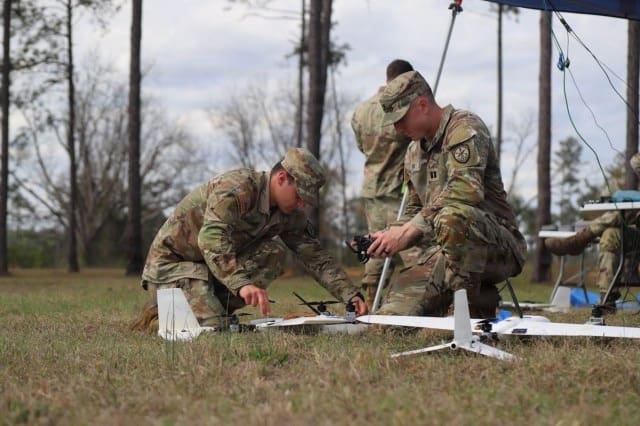
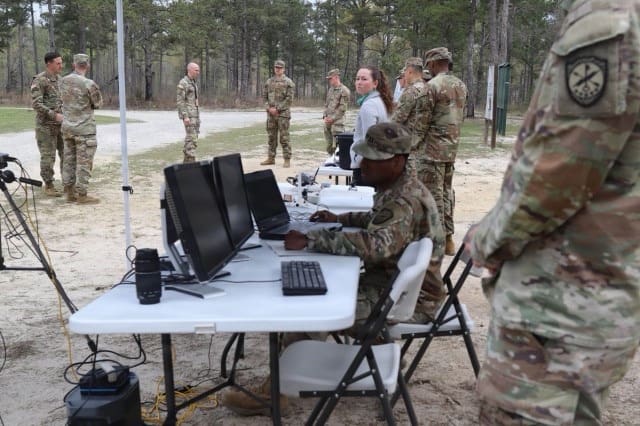
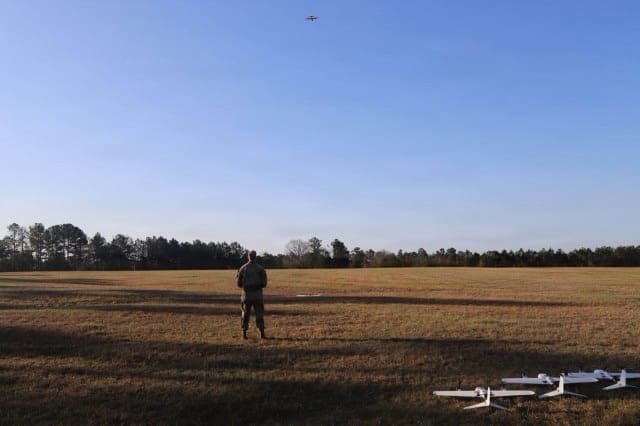
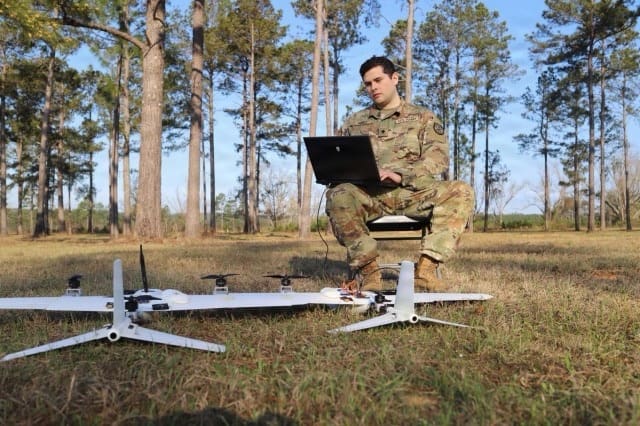
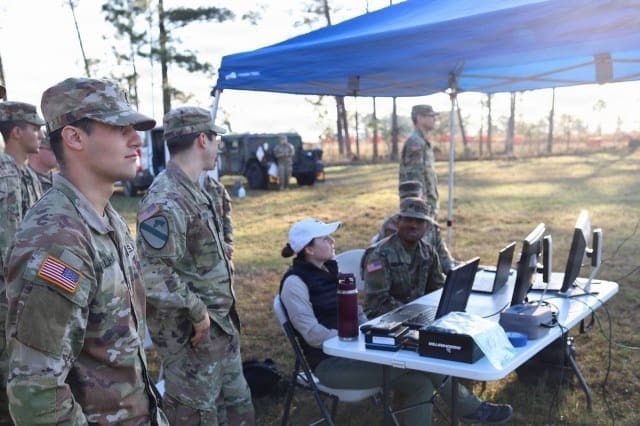
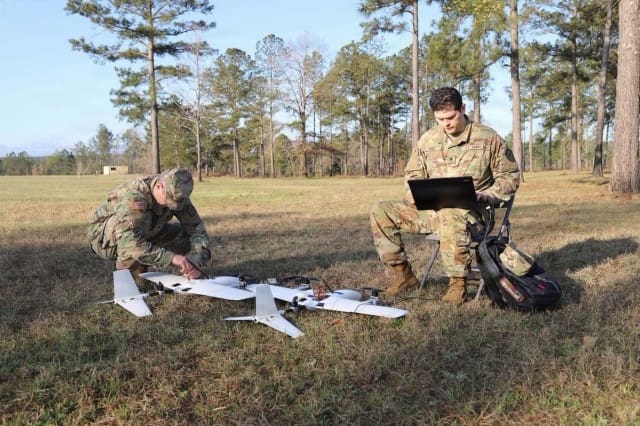
HOHENFELS, Germany — Soldiers assigned to the newly established Eerie Company, 1st Battalion, 4th Infantry Regiment, used first-person-view drone systems to enhance reconnaissance capabilities during Joint Multinational Readiness Center exercises in Hohenfels, Germany.

Acting as the opposing force during the exercise, the company replicated a modern battlefield threat by combining emerging drone technology and electronic warfare with traditional infantry tactics, creating a realistic training environment for rotational units.

Established in December, Eerie Company specializes in short-, mid- and long-range reconnaissance to provide timely, accurate battlefield intelligence. The unit was created to address the evolving demands of modern warfare and to increase situational awareness across the battalion.

“The rate at which modern warfare is moving, and due to current conflicts, this company was established to help bridge that gap and be the eyes and ears of the battalion,” said Army Capt. Luther Salmon, company commander.

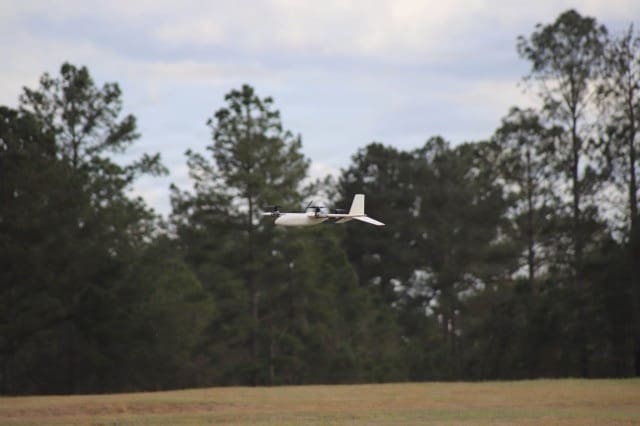
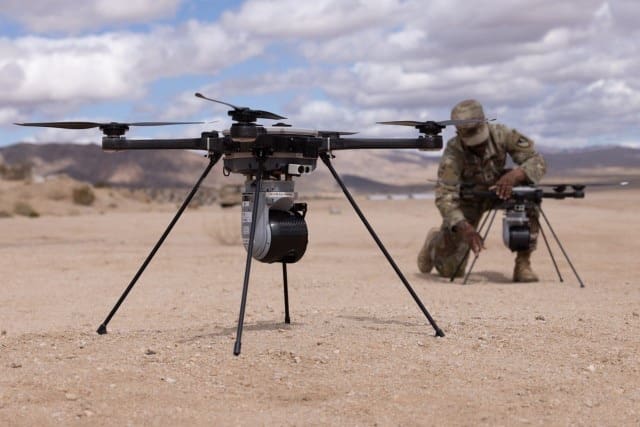
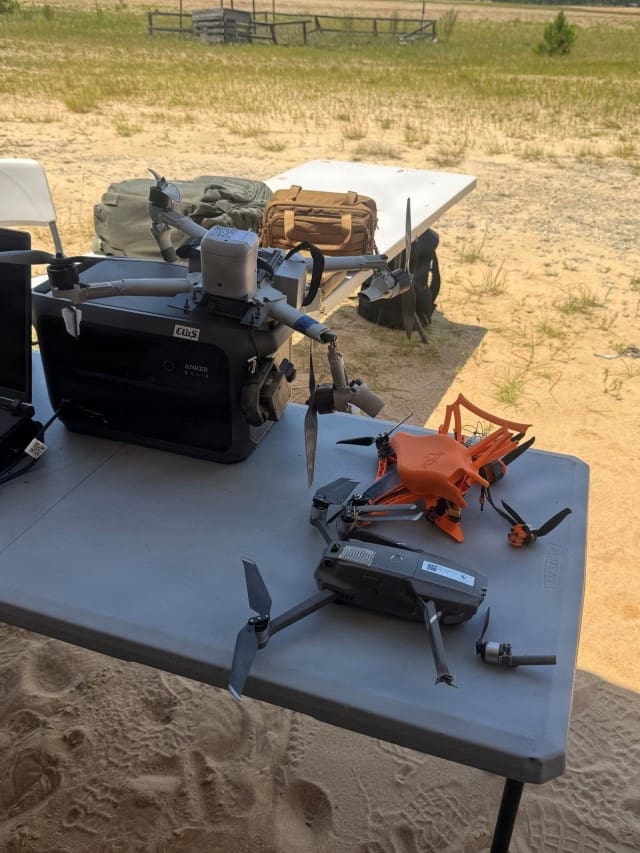
One of the primary systems the company employs is the Archer, a first-person-view drone used to replicate emerging aerial threats observed in ongoing global conflicts, including the war in Ukraine.

Army Spc. Ryan Hatcher, an infantryman and subject matter expert on the system, emphasized its effectiveness during training.

“It’s pretty good for an FPV,” Hatcher said. “Other FPVs we’ve flown here in Hohenfels, Germany, we’ve only been able to max out at eight to 10 minutes of battery life.”

Hatcher added that operating first-person-view drone systems is not limited to a specific military occupational specialty, which allows Soldiers from across the formation to qualify as drone pilots and contribute to reconnaissance efforts.

He said the Archer can be configured for multiple roles, including intelligence, surveillance and reconnaissance. In some scenarios, similar systems may be equipped with munitions, allowing Soldiers to train on identifying the differences between armed and unarmed drones.

Due to its limited range, the system is primarily employed in defensive operations, providing units with a close-range aerial perspective of the battlefield and enhancing their ability to detect and respond to threats.

Through the use of drone technology and specialized reconnaissance elements, Eerie Company continues to adapt to the rapidly changing operational environment, ensuring the battalion remains prepared for modern combat scenarios.

By SSG Troy Wharton

US Army Selects AV’s Switchblade 400 for LASSO Program

Tuesday, May 5th, 2026

Award establishes Switchblade 400 as key component of Army’s enduring next-generation loitering munition program

ARLINGTON, Va.– AeroVironment, Inc. (“AV”) (NASDAQ: AVAV) today announced that it has been awarded a prototype agreement from the U.S. Army for the Low-Altitude Stalking and Strike Ordnance (LASSO) program to support the rapid development, delivery and testing of the Switchblade® 400 loitering munition.

The award establishes Switchblade 400, AV’s medium-range, man-portable, anti-armor loitering munition, as a key component of the Army’s LASSO program, supporting the service’s modernization priorities for rapidly deployable, precision strike capabilities that can operate effectively in contested environments.

“This award reflects the Army’s confidence not only in Switchblade 400, but in AV’s ability to deliver at scale,” said Trace Stevenson, President of Autonomous Systems at AV. “Being selected under the LASSO program positions AV as a long-term partner to the Army as it modernizes its loitering munition capabilities, from development and testing through production, fielding, and continuous capability evolution.”

The first loitering munition purpose-built to operate within AV_Halo™, AV’s modular command-and-control ecosystem, Switchblade 400 incorporates advanced aided target recognition (ATR) and autonomous capabilities to detect, classify, and engage targets, day or night, in denied and contested environments while delivering the same anti-armor performance comparable to larger systems, like the Switchblade 600 Blk 2.

Core to Switchblade 400 is the implementation of a Modular Open Systems Approach (MOSA) in system design to ensure long-term system resilience and relevance allowing for interoperability, upgradeability, and affordability as missions evolve.

Known as the “Lightweight Tank Destroyer,” and sized to fit common launch tubes, Switchblade 400 enables a sensor-to-shooter concept of operations that allows a single soldier to detect, identify, and engage targets through a unified, networked architecture – shortening decision timelines while increasing precision, speed, and operational flexibility at the tactical edge. The system features an all-up round (AUR) weighing under 40 pounds that provides the soldier with a lightweight, man-portable, anti-tank weapon system.

“Switchblade 400 is the product of continuous feedback from the field and the soldiers who rely on our systems in real-world operations,” said Brian Young, Senior Vice President of Loitering Munitions at AV. “We are constantly leaning forward, integrating new capabilities, enhancing performance, and reducing the burden on the warfighter. That soldier-driven approach is central to how we develop, test, and deliver capability for the Army.”

The new OTA award under LASSO follows a recent $186 million delivery order from the U.S. Army for Switchblade® 600 Block 2 and Switchblade® 300 Block 20 explosively formed penetrator (EFP) loitering munition systems, part of the Army’s existing five-year, $990 million Indefinite Delivery, Indefinite Quantity (IDIQ) contract under the Lethal Unmanned Systems (LUS) Directed Requirement (DR), which was awarded in August 2024. It was the Army’s first Switchblade order containing EFP payload, delivering enhanced lethality against armored threats.

“The Army’s trust in the Switchblade family has been earned through years of real-world use by soldiers who rely on these systems every day,” said Jimmy Jenkins, Executive Vice President of Precision Strike and Defense Systems at AV. “That trust reflects a clear operational need for precision, speed, and adaptability at the tactical edge—capabilities the Switchblade family is designed to deliver as missions and threats continue to change.”

FlyTrap 5.0 Puts Emerging Tech in Warfighters’ Hands

Tuesday, May 5th, 2026

PABRAD? TRAINING AREA, Lithuania – U.S. infantry Soldiers from the 2nd Cavalry Regiment and paratroopers from the U.K. Parachute Regiment prepare for the force-on-force phase of Project FlyTrap 5.0 at Pabrad? Training Area, Lithuania, May 2. FlyTrap 5.0 integrates autonomous and unmanned ground vehicles, first-person view drones and counter-unmanned aerial systems on the simulated battlefield.

The day marked the third consecutive day of preparation and system integration for the exercise, which included an exercise briefing attended by U.S. Soldiers and U.K. paratroopers participating in the force-on-force portion of FlyTrap 5.0. Soldiers spent the remainder of the day conducting drone familiarization, operating unmanned ground vehicles and rehearsing C-UAS procedures in preparation for the upcoming engagement.

Among those preparing was Spc. Arthur Tugman, an infantryman assigned to 1st Squadron, 2nd Cavalry Regiment, who has taken on the role of unmanned ground vehicle operator for the exercise, a mission set outside his traditional infantry duties.

“My role in FlyTrap 5.0 is to serve as an unmanned ground vehicle operator, where I operate various unmanned ground vehicle platforms to transport equipment, Soldiers, unmanned aerial systems and counter-unmanned aerial systems to wherever they are needed,” Tugman said.

The integration of infantry Soldiers into UGV operations reflects a broader theme running through FlyTrap 5.0; placing emerging technology directly in the hands of warfighters regardless of their primary specialty, and using their feedback to drive rapid improvements across the force. FlyTrap 5.0 hopes to organically assimilate these new duties to Soldiers already assigned to units.

Tugman said the speed at which his unit has been able to absorb and operate the new systems has been one of the more surprising aspects of the exercise.

“Something I learned that I didn’t expect was how fast the United States Army is able to integrate new systems into warfighting tactics,” he said. “I’d say this equipment is very easy to use. I’m able to pick it up, turn it on, and send it wherever it needs to go, as far as it needs to go, as fast as it needs to go.”

That ease of use, Tugman said, has direct implications for how the soldiers could employ these systems at scale across the force.

“If all our technology works the way it’s supposed to, we will preserve manpower as well as accomplish the mission faster and more effectively,” he said.

For Tugman, the measure of success extends beyond the exercise itself. He described his goal as helping establish repeatable, standardized procedures for integrating C-UAS and UGV capabilities into 2nd Cavalry Regiment’s formations; procedures he hopes will eventually be adopted Army-wide.

U.S. and Allied forces conduct Project Fly Trap 5.0 as part of a series of linked exercises, including Sword, Saber Strike, Immediate Response, and Swift Response, which transform experimentation into capability. During Flytrap, Soldiers integrate counter-unmanned systems, AI-enabled command and control, and live data networks to move faster, decide faster, and fight more effectively across all domains.

Story by SGT Max Elliott

196th Mobile Public Affairs Detachment

Balikatan 2026: 5th Battalion, 3rd Artillery Regiment, 7th Infantry Division Conducts HIRAIN Live-Fire Iteration

Monday, May 4th, 2026

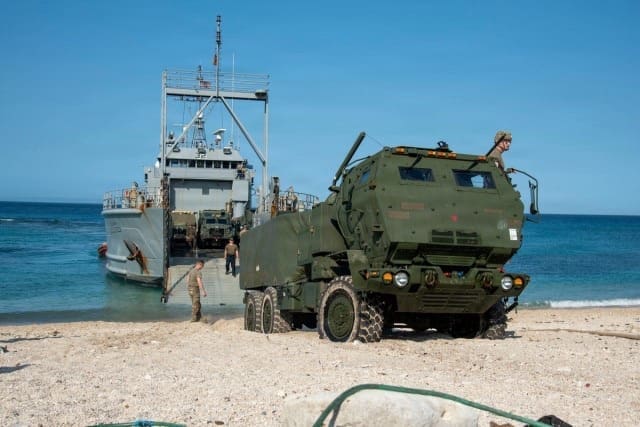
PALAWAN, Philippines– Soldiers from the 5th Battalion, 3rd Artillery Regiment, 7th Infantry Division (Multi-Domain Command-Pacific) conducted a High Mobility Artillery Rocket System live-fire iteration on April 27, 2026, in Palawan, Philippines. Conducted in coordination with U.S. Marines, Philippine marines and Australian soldiers, this event was part of a counter landing live fire exercise designed to repel a simulated enemy landing force across multipleranges, from deep-water approaches to shallow littorals, in defense of the island. The HIMARS maneuvered onto the beach from a concealed position and launched four Reduced Range Practice Rockets, effectively demonstrating the system’s mobility and precision. Thepractice and preparation by Alpha battery soldiers resulted in an exceptionally fluid and rapidly executed fire mission.

“Today what we demonstrated was the absolute power that the land component brings to the fightin the pacific.” Said Lt. Col. Alexander Mullin, commander of the 5th Battalion, 3rd ArtilleryRegiment. ”Huge gains were made with the interoperability between the nations’ forces, communication and coordination of multiple fires were on full display during the exercise.” Mullin stated, “through being here we are demonstrating the cross-domain contact layer concept, which is our ability to provide a covering force in the pacific and achieve decisive effects.” The Cross-Domain Contact Layer is not merely a system or standalone capability; rather, it serves as a framework for synchronizing legacy, exquisite and emerging capabilities. It integrates sensing,effects, and artificial intelligence-enabled command and control into a persistent, all-domain architecture that maintains continuous contact from the operational deep area to the close fight.

Positioning HIMARS for these exercises is a formidable logistical undertaking. Meticulous attention is required to adhere to host nation regulations during road movements, necessitatingacute situational awareness of local infrastructure, including small bridges and low-hanging power lines. Upon departing paved routes, the HIMARS navigates unforgiving jungle environments, mountainous terrain, and sandy littoral zones. Throughout this process, all logistics are closely coordinated in partnership with the Armed Forces of the Philippines.

“All the live fires that we have done could not have been done without the support of the Philippine marines and the Philippine Army as we make our movements across the country,” said 1st Sgt. Shawn Washburn, Alpha Battery, 5th Battalion, 3rd Artillery Regiment, 7th Infantry Division.

The environment challenges soldiers to operate beyond their comfort zones of typical home station training, acclimating them to the rigorous conditions they may encounter in future conflicts. Furthermore, the tropical climate provides invaluable opportunities for personnel to adapt and endure weather challenges while sustaining operations in an austere environment and maintaining physical readiness.

Story by SSG Brandon Rickert 

7th Infantry Division

Elite Army Engineers Leverage ENFIRE at Best Sapper Competition

Sunday, May 3rd, 2026

The annual Best Sapper Competition gathers the U.S. Army’s elite engineers to compete in tests of skill, endurance, and creativity in leveraging advanced technologies.

That’s why the Army’s ENFIRE reconnaissance system played a role in this year’s competition held at Fort Leonard Wood, Mo., from April 20 to 23.

Cory Baron, who manages Product Director Combat Terrain Information Systems (PD CTIS) which fields ENFIRE, explained why the system was included in the competition for the third year in a row.

“Being invited to participate in the Best Sapper competition is an incredible honor,” said Baron. “To be asked to come back again and again is a testament to the work the team has done to advance these capabilities and continue to shape the future of the program.”

The Instrument Set, Reconnaissance and Surveying (Common name: ENFIRE) supports Soldiers by expediting deliberate route, area and zone reconnaissance, route clearance, hazard identification, inventory, and construction management efforts through the integration of digital tools into a single platform.

The Best Sapper Competition began in 2005 and is hosted by the U.S. Army Engineer School. Competition officials say Best Sapper not only proves the best engineering team but aims to “challenge and test the service members’ knowledge, physical prowess and mental fortitude.”

Ahead of the competition, PD CTIS engineers planned the ENFIRE lane, which recons would be conducted, and how to best utilize system software and hardware. The team then participates in a full dress rehearsal to ensure ENFIRE competition parameters are feasible and responds to questions from senior leadership. PD CTIS does not play a role in evaluating competitors but remains on site throughout the event for technical support if needed.

PD CTIS leverages events like the Best Sapper Competition to evaluate capabilities in a high paced and highly dynamic environment, putting ENFIRE through its paces in unprecedented ways.

“Supporting and observing in real-time, our systems being used to answer complex engineer challenges, is an incredible opportunity to receive critical feedback that help us in the program office shape future iterations of the tools to maximize utility of system,” Baron said.

ENFIRE demonstrated ease of use for the engineers with almost no training provided by PD CTIS staff. Competitors tested new ENFIRE and ENFIRE Dismounted functionality at a strenuous level, proving reliability in a high-pressure environment.

While the competition provided engineers an opportunity to prove their skills on ENFIRE it also provided PD CTIS an opportunity to improve the system, currently in its 12th iteration. During the competition the team identified minor software issues that will be addressed with planned fieldings in 2027 and 2028.

“The insights the team receive through facilitating and observing competitors is priceless,” Baron said. “Observing the system function in an extreme environment to support engineer mission tasks at speed is a critical factor in the evolution of the kit as we continuously modernize these capabilities.”

By M. Scott Bortot

Department of War Overhauls Acquisition to Speed New Technology to Troops – The Enablers are Here

Saturday, May 2nd, 2026

ABERDEEN PROVING GROUND, MD – In a decisive move to maintain military superiority, the Secretary of War directed a fundamental transformation of the department’s acquisition process. This mandate requires a new approach to deliver critical capabilities to troops in the field with greater speed and urgency. The new paradigm needs enablers that mitigate risks in equipment programs, particularly in system reliability and long-term sustainment—factors that account for up to 70 percent of a weapon system’s total cost. As organizations accelerate timelines and reduce full-up system testing programs, they must adopt approaches that ensure system robustness and mitigate risk. The following menu of options provides program managers, acquisition personnel, and sustainment professionals with the tools they need today.

Early Engineering Component Analysis

Engineers perform rapid analysis for individual components long before a full system reaches large-scale operational tests. By using advanced simulators and lab environments, engineers find and fix potential failure points early in the design process when they can make modifications most simply and inexpensively. This proactive approach streamlines final system-level testing, saving both time and resources and is applicable to both Commercial-Off-The-Shelf systems/components and developmental items.

Modeling and Simulation

Modeling and Simulation (M&S) serves as one of the most powerful and inexpensive tools for accelerating development. Digital testing—covering everything from vehicle dynamics to the thermal performance of electronics—allows for the rapid exploration of designs before manufacturers build a physical part. In one instance, M&S predicted that a circuit card’s original design would lead to over 300 component failures. A simple, validated redesign reduced displacement by approximately 80 percent, avoiding a costly delay.

Scorecards and Engineering Reviews

The Transformation Decision Analysis Center (TDAC) developed reliability scorecards for weapon systems and artificial intelligence applications based on leading practices from industry, government, and academia. These scorecards, along with early engineering reviews, provide substantial risk mitigation—even for commercial off-the-shelf systems—by using existing information to identify challenges before they emerge.

Leveraging All Data Sources

To make the most informed decisions, programs must leverage all available data. By using Bayesian-based statistical approaches, organizations create a more complete picture of system performance and potentially reduce the need for physical testing by 60 percent or more.

Mastering Modern Complexity

Today’s military systems increasingly feature complex, software-intensive designs. Systems-Theoretic Process Analysis (STPA), a modern hazard analysis technique from the Massachusetts Institute of Technology, analyzes these systems effectively. It identifies risks that emerge from the complex interactions between components, rather than just individual failures—a crucial step for developing robust autonomous and AI-enabled platforms.

Function-Based Reliability

Ultimately, mission performance dominates. A function-based assessment places test results into an operational context. This approach prioritizes risk mitigation by connecting system performance directly to the essential tasks soldiers perform, ensuring development always focuses on what matters most for mission success.

Fielding at the Speed of Relevance

The transformation of the acquisition system serves as an urgent and necessary step to equip U.S. forces for the future. This mandate does not call for cutting corners; rather, it requires us to be smarter and more proactive. By embracing these risk-reduction strategies, we empower the acquisition workforce to manage risk intelligently and deliver superior capabilities to the warfighter with speed and relevance. To meet the department’s objectives, TDAC continues to provide proven methods to minimize reliability, acquisition, and sustainment risks alongside partners such as the Army Test and Evaluation Command and various Army DEVCOM centers.

By David Mortin, Ph.D.

Elbit America Wins US Army Contract to Delivery Next-Generation Binocular Night Vision Systems

Friday, May 1st, 2026

Ready for the fight and ruggedized for battle, the BiNOD system provides Soldiers with the visual overmatch needed now

FORT WORTH, TEXAS – May 1, 2026 – Building on decades of trusted night vision performance, Elbit Systems of America (Elbit America) was awarded a firm-fixed-price contract through Army Contracting Command, Aberdeen Proving Ground, Maryland, to develop and test the Binocular Night Observation Device (BiNOD), as well as establish a vehicle for future production orders. This contract will enable Elbit America to compete for the next phase, which is valued at up to $450.6 million and positions the company to compete for additional future production orders that could result in the delivery of a significant number of systems for United States Soldiers.

For nearly three decades, the AN/PVS-14 monocular night vision system set the global benchmark, trusted by American and allied forces in operation around the world. Today, BiNOD is set to redefine that benchmark and deliver the next evolution of overmatch for all parts of the maneuvering force.

Engineered to elevate Soldier situational awareness and survivability in low-light environments, Elbit America’s BiNOD is an affordable, ruggedized, lightweight, helmet-mounted binocular night vision system purpose-built for the modern battlefield. The two-tube configuration unlocks true stereoscopic vision to Soldiers, providing enhanced depth perception, spatial awareness, and more intuitive movements in complex environments. Its enhanced optics provide sharper imagery, boost contrast, and accelerate target acquisition in dynamic conditions.

BiNOD represents an evolutionary leap from legacy night vision systems, while maintaining operational commonality with today’s platforms and accessories. Designed for sustainment at the unit level, the system is also field upgradable, enabling rapid adaptation to evolving mission requirements, without compromising durability and performance.

“BiNOD is the modern night vision upgrade our Soldiers need now,” said Erik Fox, Senior Vice President and General Manager of Elbit America’s Warfighter Systems Division. “With BiNOD we’re delivering the visual overmatch required on today’s battlefield, while keeping the system lightweight and comfortable for Soldiers during extended missions.”

“As warfare evolves, one constant remains: dominance at night matters. At Elbit America, we create that advantage by building side?by?side with the Soldier,” said the company’s President & CEO Luke Savoie. “From BiNOD to our next?generation systems, we’re not just delivering night vision, we’re shaping it. Rugged, trusted and able to be produced in mass, BiNOD is offered at a price point for our customers to get them at volume. Elbit America gives our nation’s Warriors the confidence to move first, see farther, and maneuver at night just like it’s the day. That’s why the U.S. Army counts on us as its night vision partner, and why we’ll keep pushing the boundaries of what’s possible.”

The U.S. Army’s BiNOD program was previously known as the Night Vision Device-Next (NVD-N) program.

MORE: www.elbitamerica.com/f5035

Army’s Catalyst Pathfinder Driving Soldier Innovation at Combat Training Centers

Friday, May 1st, 2026

ADELPHI, Md. — The U.S. Army’s Catalyst Pathfinder program began driving bottom-up innovation at the Joint Readiness Training Center at Fort Johnson, Louisiana in March and will continue with about one rotational training unit each month. The program is integrating Soldier-driven technologies into large-scale combat operations, supporting both rotational units and the Opposing Force.

Managed by the U.S. Army Combat Capabilities Development Command, known as DEVCOM, Army Research Laboratory, Catalyst Pathfinder fosters direct collaboration between Soldiers, researchers and industry to accelerate the development and deployment of cutting-edge solutions to meet evolving operational needs and support the Army’s continuous transformation.

JRTC is one of the Army’s four premier Combat Training Centers, providing the Army’s most rigorous and realistic training environments. Units conduct large-scale collective exercises that integrate combined arms, joint enablers and emerging capabilities.

The Catalyst Pathfinder program’s recent rotation at JRTC brought together elements from Fort Bragg’s 3rd Special Forces Group, the 82nd Airborne Division, and the 18th Airborne Corps, while also providing enduring support to the training center and its Opposing Force, which participates in every rotation.

Going forward, the program will continue to expand its enduring support to JRTC itself, while also assisting the many units rotating through for large-scale training exercises.

“Soldiers are our greatest innovators,” said Dr. Arwen DeCostanza, Catalyst Pathfinder program manager at DEVCOM Army Research Laboratory. “This rotation at JRTC demonstrated the program’s commitment to enhancing readiness by embedding Soldier-driven innovation directly into the Army’s most demanding training environments.”

The program will establish a Design, Innovation, Research, and Technology (DIRT) lab at JRTC that will serve as a hub for Soldier-driven experimentation and rapid prototyping. The DIRT lab will empower Soldiers to shape the technologies they need to succeed, bridging the gap between academia, industry and operational units to collaboratively deliver battlefield-ready capabilities.

The program also deployed its Buildable Innovation Shop for Operational Needs, or BISON, a mobile makerspace equipped with 3D printers and tools for drone development, to JRTC for the March rotation. Currently stationed at Fort Bragg, the BISON traveled with the units to JRTC to enable on-the-fly design, repair and fabrication in the field, allowing Soldiers to create mission-specific solutions during training.

After the rotation, the BISON returned to Fort Bragg, but there are plans to potentially include a BISON in the permanent JRTC buildout for use by both the Opposing Force and any rotating units interested in forward innovation capabilities.

“This approach transforms the Army’s culture by integrating Soldier-driven experimentation and rapid prototyping into the innovation process,” DeCostanza said. “Through hands-on training in advanced manufacturing, robotics, AI and drones, we are building a cadre of technical experts who will lead the Army into the future.”

The Catalyst Pathfinder program, now in its fifth year, has expanded to support 13 DIRT labs across six states and two countries, including the new lab at JRTC. These labs provide Soldiers with the tools to move quickly from ideation to action and to engage with academia, small businesses, and government researchers to rapidly build prototypes.

“By integrating Soldier-driven experimentation into the innovation process, the program is transforming the Army’s culture and ensuring that its most critical capability gaps are addressed by those closest to the challenges,” DeCostanza said.

Soldier-led innovations previously developed in DIRT labs to address real-world operational gaps are gaining traction and being pushed forward for additional experimentation and feedback in operational environments during this JRTC rotation.

These technologies were built in the Airborne Innovation Lab at Fort Bragg and brought to JRTC by the 82nd Airborne Division:

  • Modular Drone Case allows Soldiers to safely jump with small unmanned aerial systems using lightweight, rucksack-mounted cases with interchangeable, 3D-printed padded inserts.
  • PRC-162 Cooling Case (Modular Airborne Radiator) addresses overheating issues with the PRC-162 radio, a critical communications system, by reducing radio temperatures by approximately 20 percent through a 3D-printed sleeve housing cooling fans.
  • ISV Tablet Mounting System and Airdrop Antenna System addresses critical gaps for the 82nd Airborne Division’s Infantry Squad Vehicle fleet, providing a tool-less, hood-mounted bracket that clips securely into place and can be stowed during airdrop. The solution ensures full communications capability while maintaining compliance with airdrop safety requirements.
  • PRC-162 ISV Roll Cage Mount eliminates the need for the radio to be held on a Soldier’s lap, which limits mobility and slows entry and exit from the vehicle. This mount provides a stable, accessible solution for rear-seat occupants.

The Catalyst Pathfinder program and 82nd’s innovation team will use the outcomes of the experimentation at JRTC to scale these critical solutions to unit needs in partnership with the Pathway for Innovation and Technology.

“By focusing on Soldier-identified needs, we are accelerating the Army’s technological edge and ensuring readiness for future challenges,” DeCostanza said. “This program showcases the power of collaboration between Soldiers, academia, and industry.”

By DEVCOM Army Research Laboratory Public Affairs