Pirata Series from OTB Boots - Coming March 2026!

Archive for the ‘Guest Post’ Category

Max Talk Monday: Texas Class 2019 Break Contact Flank (Right) Team Drill

Monday, March 25th, 2019

This is the fifteenth installment of ‘Max Talk Monday’ which shares select episodes from a series of instructional videos. Max Velocity Tactical (MVT) has established a reputation on the leading edge of tactical live fire and force on force training. MVT is dedicated to developing and training tactical excellence at the individual and team level.

Break Contact Flank (Right) Team Drill is video footage of a team break contact drill conducted at the Texas Class 2019. This was a team level live fire training exercise with simulated enemy to the right side of the trail. As some are likely to point out, the team was moving on a trail, and a rolling (multi-target) contact is simulated from the right side, in order to keep the peel going for longer for training benefit. Utilizing a trail is an effective training aid because the route in is clearly markedly / recognizable; moving back along same is the drill for getting out of the contact – back along the route already traveled. The drill shown is the immediate action drill, which can be subsequently modified by leadership if required due to increased complexity of the situation. However, it is important to have a drilled, violent, effective immediate action drill to maximize the chances of surviving a contact such as this.

MVT Tactical Manual

Max is a tactical trainer and author, a lifelong professional soldier with extensive military experience. He served with British Special Operations Forces, both enlisted and as a commissioned officer; a graduate of the Royal Military Academy Sandhurst. Max served on numerous operational deployments, and also served as a recruit instructor. Max spent five years serving as a paramilitary contractor in both Iraq and Afghanistan; the latter two years working for the British Government in Helmand Province, Afghanistan. 

Website: Max Velocity Tactical

YouTube: Max Velocity Tactical
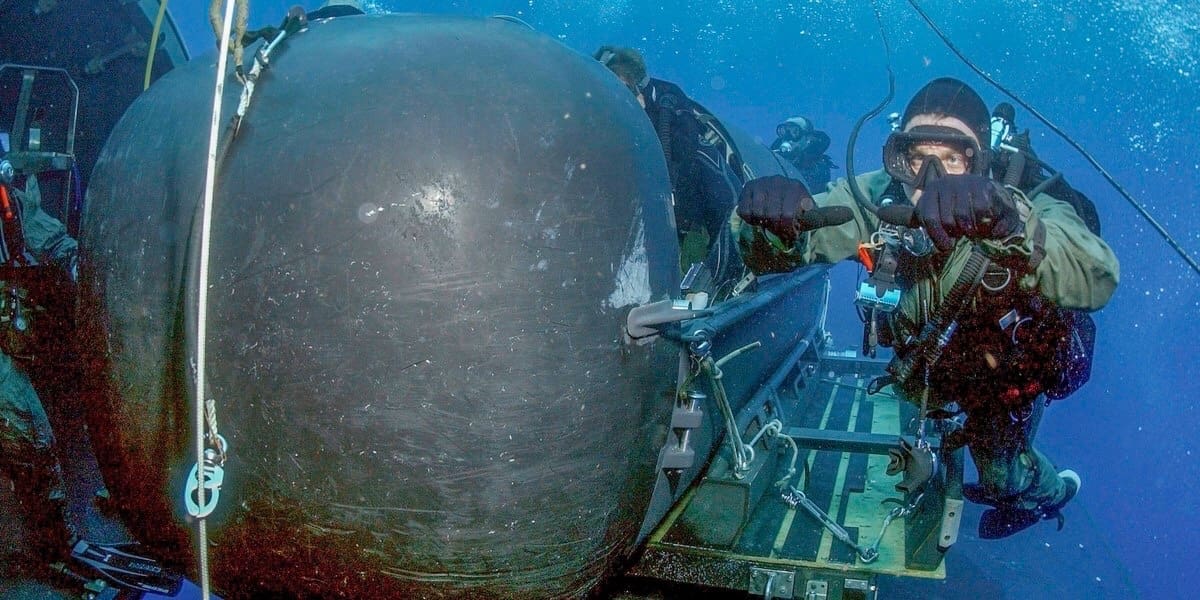
SCUBAPRO Sunday – Hand signals

Sunday, March 24th, 2019

Good communication is crucial when diving with someone you never have dove before with. You can always use Dräger talk, but sometimes that doesn’t work that well. There are universal hand signals very similar to the hand and arm signals when patrolling.  

There are a lot of different hand signals, used by divers especially in different fields of diving. However, with some basic hand signals, you can dive with anyone in the world.  

Going Up or Down

Use a thumbs up signal to indicate that you are going up, or a thumbs down to indicate the opposite.

I’m Okay

Place your thumb and forefinger together forming a circle and leave the other three fingers extended upright. This is the same as you would say OK as you would above water.

Stop

Signal your dive buddy to stop by holding up one hand; the same as you would in any other instance. You can also use a closed fist like being on patrol.

Changing Direction

Just like with up and down, point your thumb (or your index finger) to indicate which direction you’re heading. You can point again like on land

Turn Around

To let everyone know it’s time to turn around, put your index finger up and rotate in a circle. Similar to rally-up.

Slow Down

Place your hand in front of you with your palm facing down. Wave your hand up and down to indicate that you need everyone to slow down a bit.

Level Off

To indicate that you want to level off once you’ve reached a certain depth, put your hand out in front of you, palm down, and wave it back and forth.

Something’s Wrong

Place your hand out in front of you, fingers spread and palm down. Wave your hand back and forth in a rocking motion. It is similar to the hand signal maybe.  

Help!

Wave your entire arm from outstretched by your side to over your head. Repeat the motion as long as you need to.

I’m Low on Air

It takes practice to be able to make your air last. Clench your hand into a fist and pull it in toward your chest. Repeat as much as you need to indicate how urgently you need to resurface. When diving a rebreather, you should point at the pressure gauge. With some of the newer rebreathers, you can pull your gauge out and show it to your dive buddy if needed.  

I’m Out of Air

If something has gone wrong with your equipment, signal quickly and repeatedly. Place your hand, palm down in front of your throat and move back and forth in a cutting motion.

You can always pull on your buddy-line to get your buddies attention, and once you have dived a couple of times together, you will start to understand what each other wants and needs. Diving at night or in low-viability is way different than diving in the day time in clear water. Sometimes diving in real lousy visibility in the day time is worse than diving at night. So, knowing how to communicate is very important. Bottom line is as long as you and your dive buddy understand what you are saying to each other you should be good. So, make sure you at least talk to the person your diving with to have the basic’s down.


New Marksmanship Test Aims To Create More Realistic Environment

Sunday, March 24th, 2019

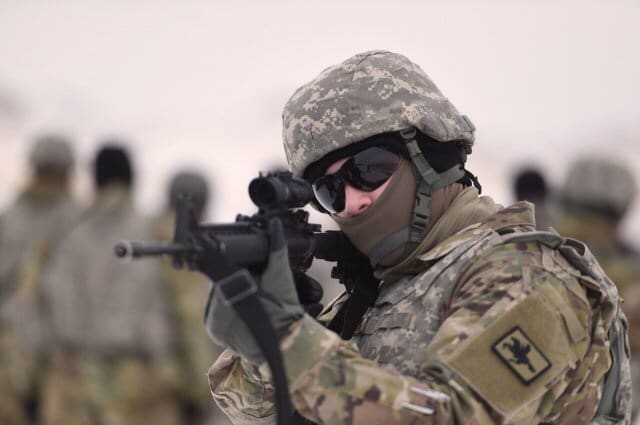
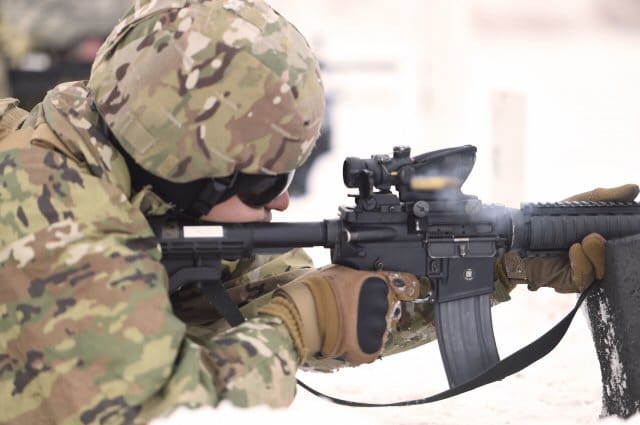
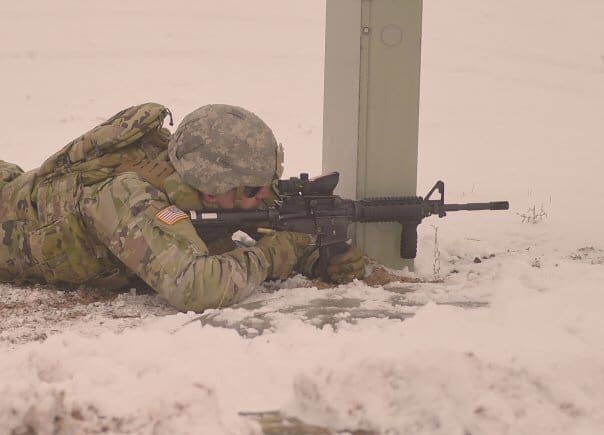
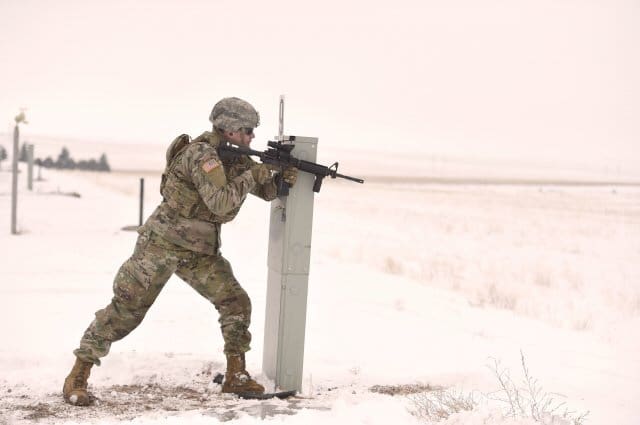
CAMP GUERNSEY, Wyo. — While it hasn’t received as much attention as the new Army physical fitness evaluation, the 40 targets on the rifle marksmanship range are also about to be engaged in a more combat-focused manner.

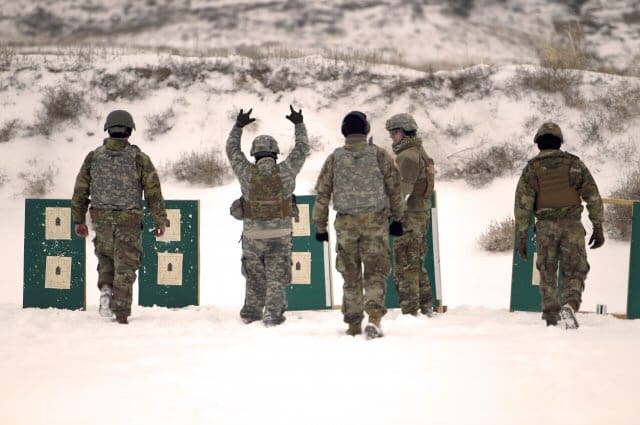
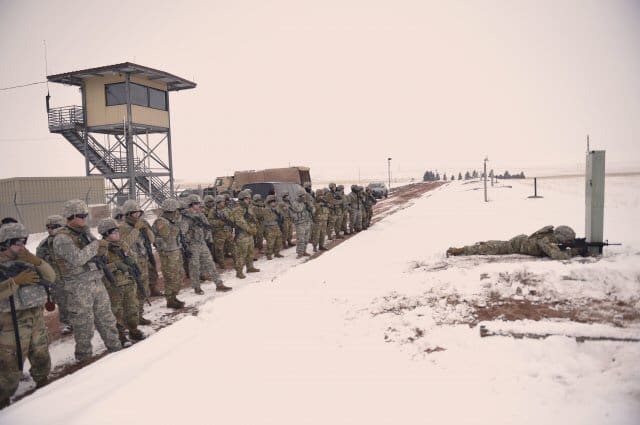
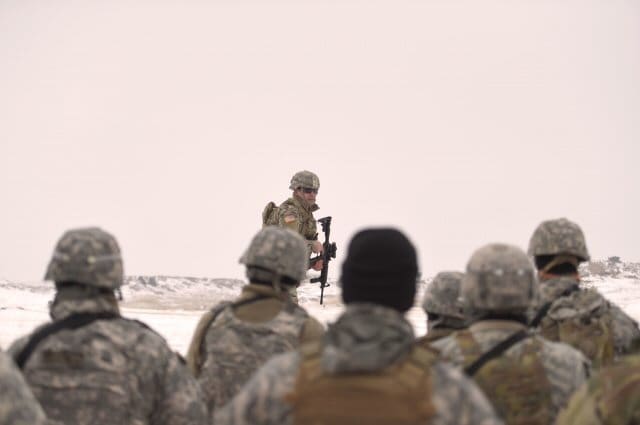
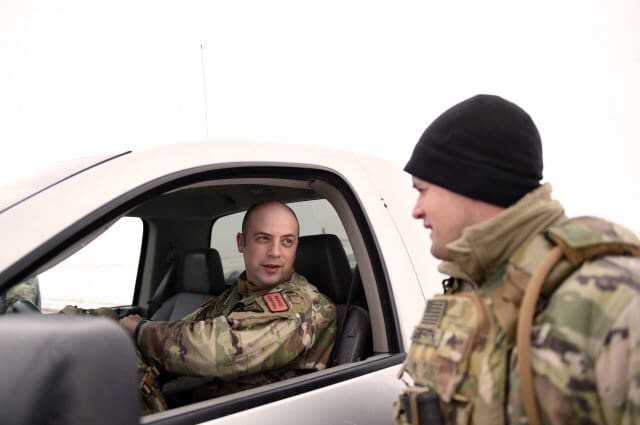
Soldiers from the Wyoming Army National Guard’s C Company, 1st Battalion, 297th Infantry Regiment (Forward) were the first to try out the new test at Camp Guernsey Joint Training Center as part of pre-deployment training that will require them to conduct the proposed analysis two more times this year.

The new marksmanship test has been undergoing evaluations and changes for about two years, primarily by the active duty’s airborne infantry units, and is slated to become the Army-wide standard for rifle marksmanship qualification in the fiscal year 2020.

“It’s a lot more functional and realistic, integrating more of a rifleman’s tasks,” said Staff Sgt. Zach Semmons, a squad leader with 1/297th. “You have to maintain situational awareness, keep a round count, and execute combat magazine changes, all while engaging the targets.”

According to an Army Times article from Jan. 17, 2018, Brig. Gen. Christopher Donahue, commandant of the U.S. Army Infantry School, said the proposed changes are all aimed at increasing Soldier lethality and presenting a more realistic shooting environment based on what the Army has seen in 16 years of combat.

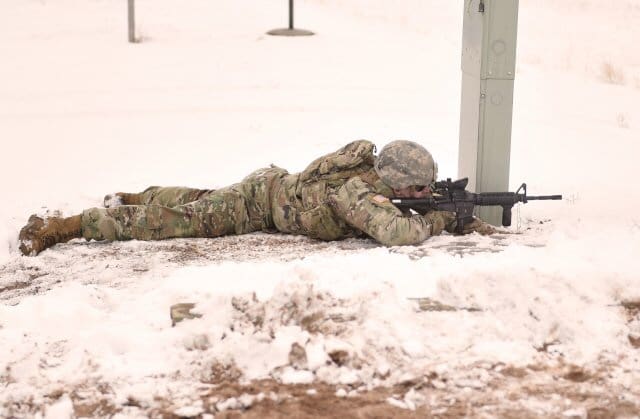
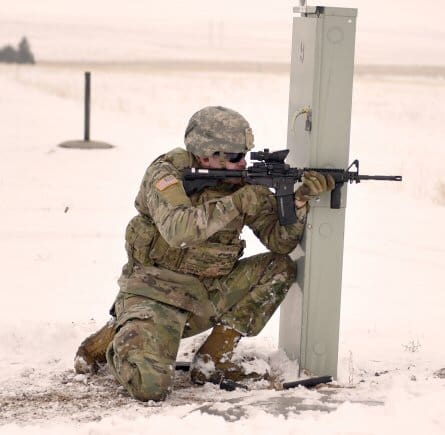
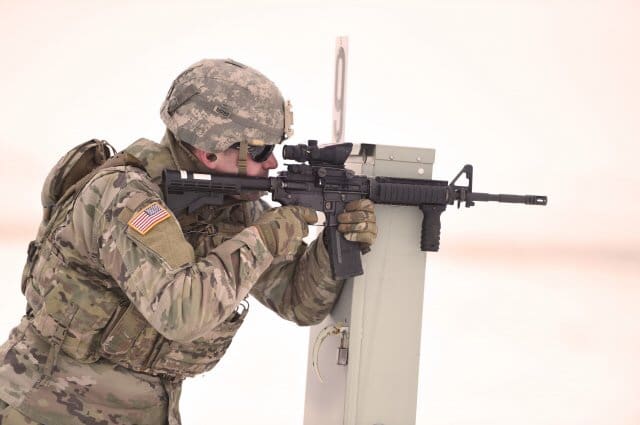
As it sits now, the new weapons qualification will feature four shooting positions–prone unsupported, prone supported, kneeling supported, and standing supported. Soldiers are issued four 10-round magazines, to engage 40 pop-up targets from the four shooting positions. Some iterations will show three or four targets at a time, forcing Soldiers to be extremely focused.

Sgt. Sol Griffith, a fire team leader with the Afton-based infantry company, said the unit will conduct the qualification with its parent unit in Alaska soon, and again during mobilization training at Fort Bliss, before deploying overseas this year.

During the March 7 training day, Griffith demonstrated the test for his comrades before they conducted the current qualification for their annual records when they concluded that test, the rest of the unit tried out the future test.

Spc. Lance Pierce, a target systems repairer, assigned to Camp Guernsey’s Training Center Command, learned about the new standard last year while attending a course at Training Center University, and built a software program that would run the test and the targets at Camp Guernsey.

“This is the first unit to try it out,” he said before the demonstration. “No one had any use for the program until now.”

“Now you have three or four targets up at the same time, and you have to transition between them very thoughtfully,” said Griffith. “It’s not like it was with someone yelling what target is coming up. Plus, the tower doesn’t tell you when to do a (magazine) change. You have to know when to do it, and then, do it.”

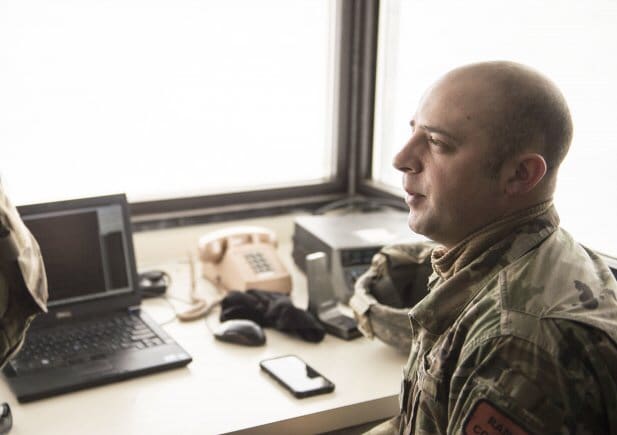
The new standard is going to be difficult for a lot of shooters, even those who hold the rifleman occupational specialty. For instance, the range noncommissioned officer in charge announced from the tower’s public address system that Griffith hit 22 of the 40 targets during the demonstration. “Sgt. Griffith usually hits 40 out of 40,” the tower announcer added.

As for the rest of the unit, Semmons said about half the Soldiers met the minimum qualifying standard of 23 hits, and a 32 was the high score of the practice round.

“It was the first time trying it for most of them,” he said. “But, I think it went extremely well, and they were very receptive to it. They liked the mag change and engaging more targets.”

By Sgt. 1st Class James McGuire, Wyoming National Guard

Kit Badger – Pros and Cons of Security Contracting

Friday, March 22nd, 2019

Ivan from Kit Badger goes over the ups and down of working for a private security contractor.

Read all about it at kitbadger.com/pros-and-cons-of-security-contracting.

FirstSpear Friday Focus – Noveske Discreet Rifle Bag

Friday, March 22nd, 2019

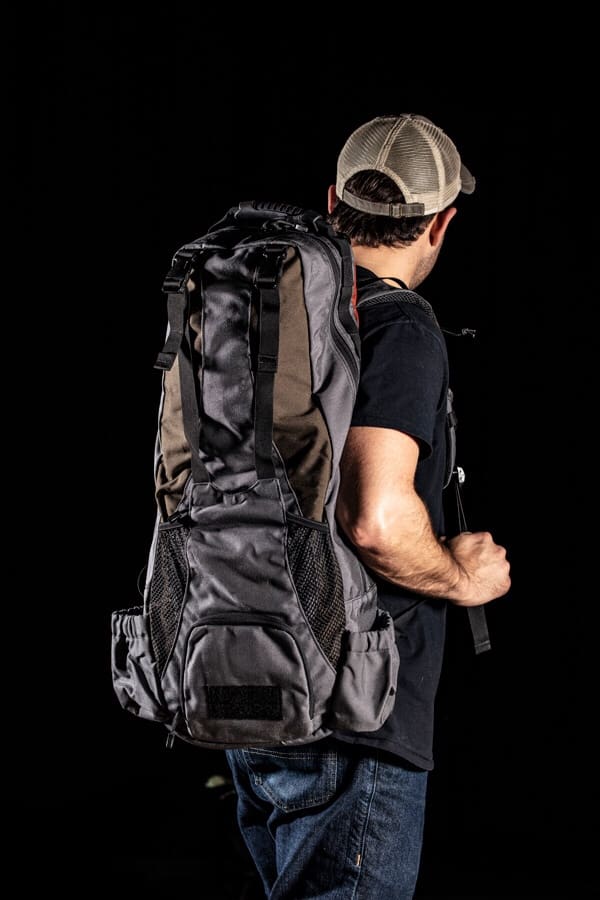
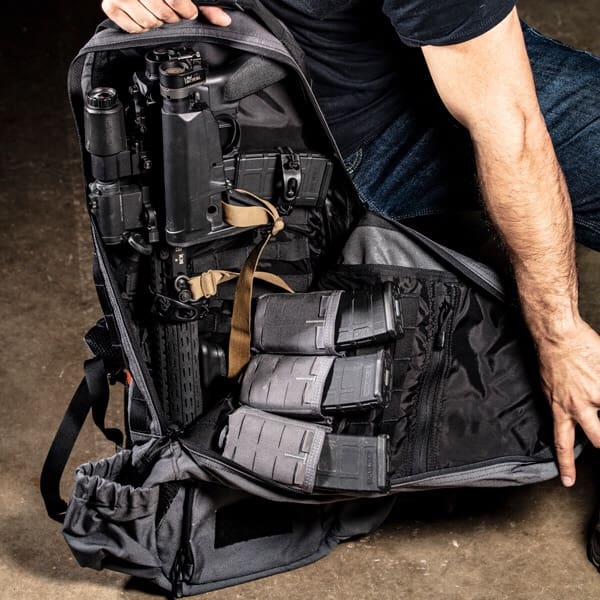
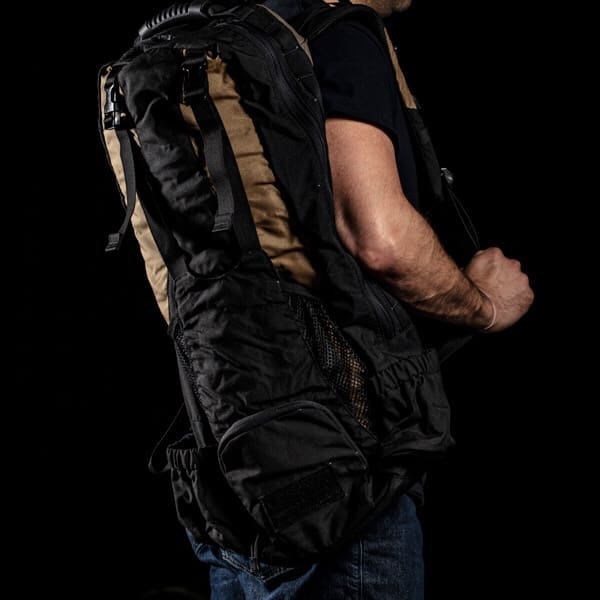
This Friday we are taking a look at a popular low vis rifle bag from FirstSpear originally designed at the request of Noveske Rifleworks.

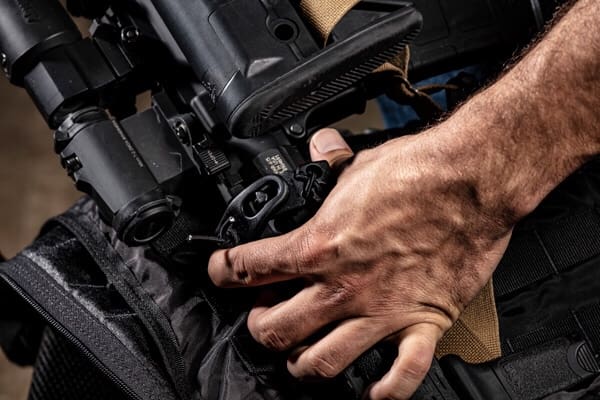
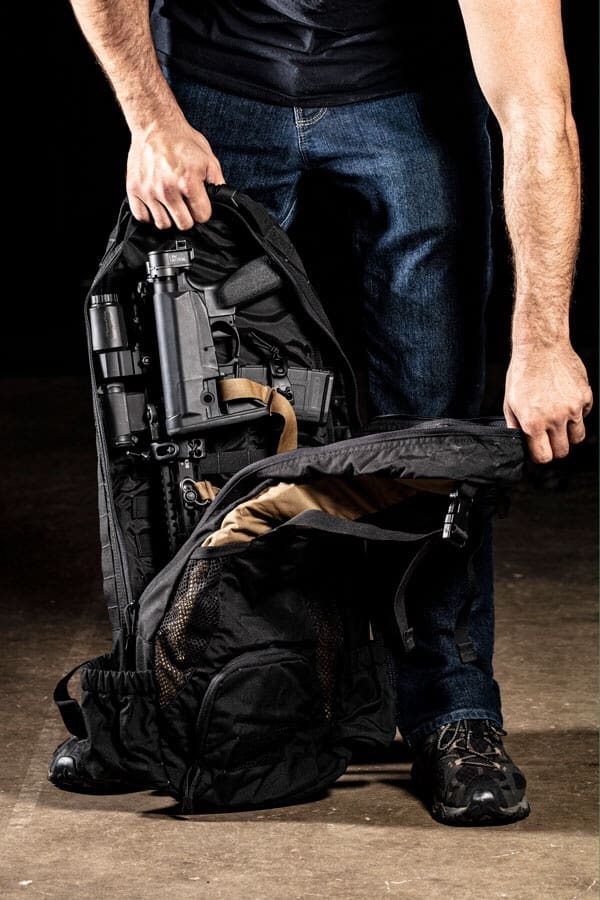
Utilizing varied colors and more commercial material applciations this backpack offers a very soft look with the design and strength to support and quickly deploy a short barreled rifle or sub gun.

Features an exterior beaver tail style pocket with adjustable straps to secure another bag or loose clothing. The bag also features a hidden pocket as well attachment points on the inside of the bag to secure pockets as well as the included accessories to secure the rifle inside the bag.

Dimensions: 28¼” x 13 ¼” x 5″

Made in the USA with USA Materials

www.first-spear.com/noveske-discreet-backpack

SureFire Field Notes Ep 41 – Going in Alone with Bill Blowers

Thursday, March 21st, 2019

SureFire Field Notes is a multi-segment informational video series with tips and techniques from subject matter experts of all backgrounds. In this episode, Bill Blowers of Tap-Rack Tactical discusses the circumstances that would require you to clear a structure as an individual, and how he would accomplish that if required to do so.

Bill was a police officer in Washington State for over 25 years, retiring in February 2018 as a Sergeant. He also served in the United States Army from 1986 to 1992. He was assigned to SWAT in 1995 and absent a single year, stayed on SWAT for the remainder of his career. He served as a ballistic shield carrier, breacher, entry team member, team training coordinator and ended as a team leader. As a team leader, Bill has successfully planned or participated in approximately 1500 pre-planned and in progress SWAT callouts. He has over 5000 training hours and has personally trained SWAT officers in different locations around the USA.

www.tap-rack.com
www.surefire.com

Brigantes Presents – High Angled Solutions – Helix Tactical Training

Wednesday, March 20th, 2019

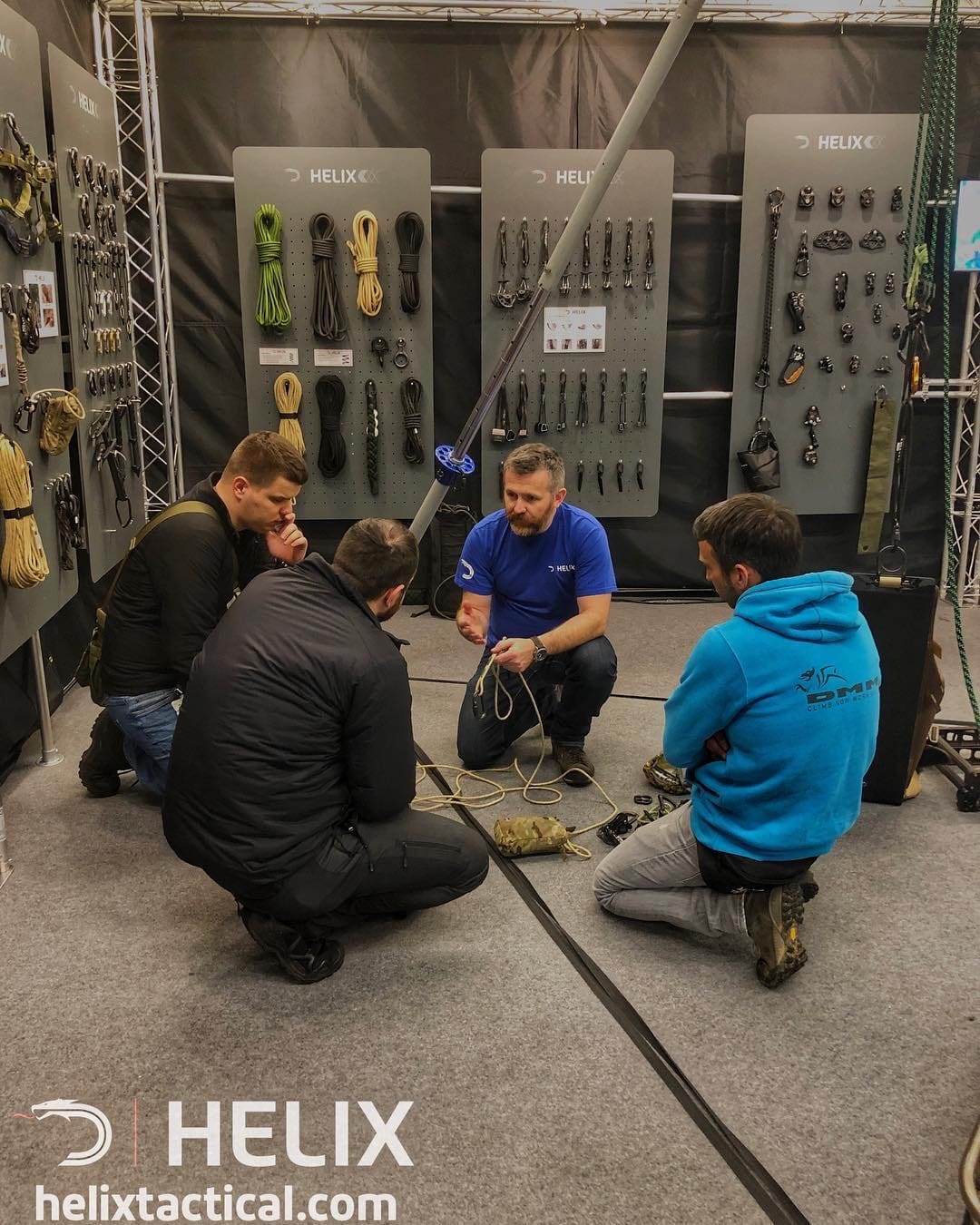
Helix understand that first class equipment is only one part of the equation and that without a trained operator or user it is unlikely to be utilised to its full potential.  

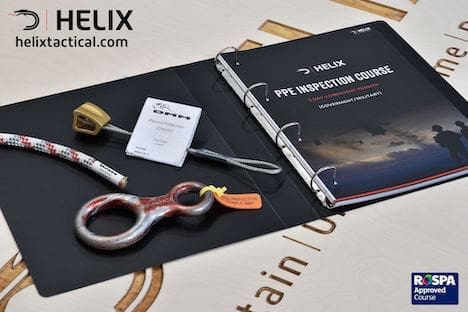
This year, Helix Training are delivering a number of RoSPA approved, open three-day PPE courses. These courses are designed to qualify an individual as a PPE inspector with an understanding of the following:

• Health and safety regulations related to the choice, purchase and use of PPE and work equipment.

• Responsibilities for the inspection of PPE prior to, during and after use including management systems.

• Practical skills providing the user with the ability to identify damage and defects, and the procedures to retire damaged or obsolete items.

• How the above relate to government and military organisations and activities both within the UK and overseas whether conducting training, operations or adventure training.

The course is assessed with both a written and practical exam on the final day. On successful completion of the course, the qualification is valid for three years.

They have scheduled a number of non-residential open courses for 2019, which are delivered from our office in Llanberis. Helix are able to deliver closed courses internationally.

For more information contact international@brigantes.com

For UK customers: warrior@brigantes.com

US Army Small Arms Championship Winners Announced

Tuesday, March 19th, 2019

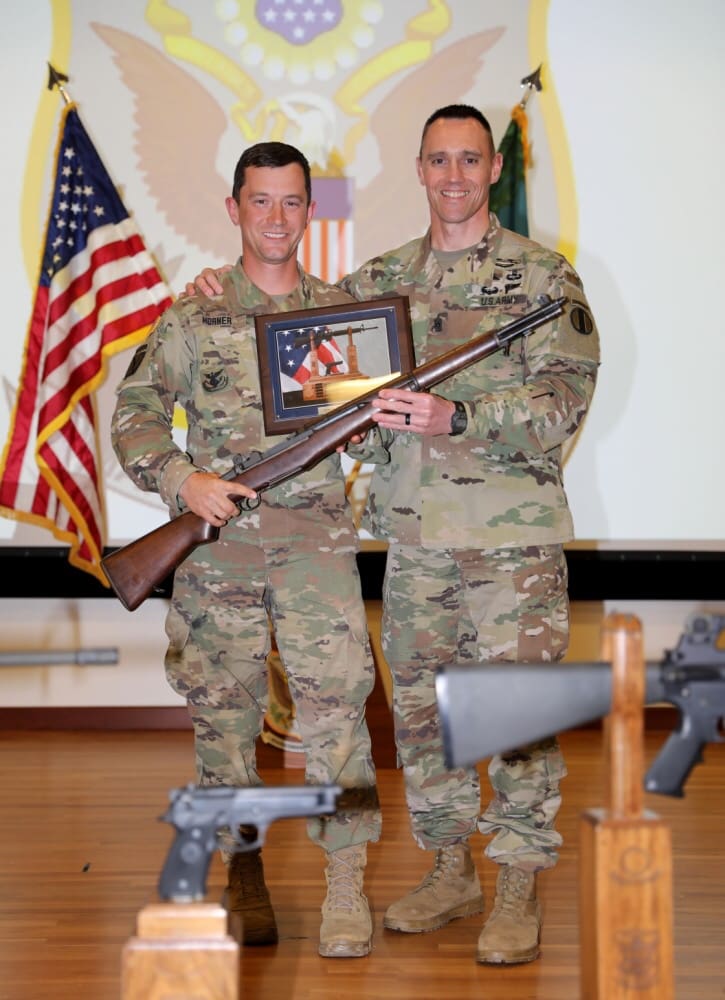
FORT BENNING, Ga. – The 2019 U.S. Army Small Arms Championships, which is hosted by the U.S. Army Marksmanship Unit, concluded it’s seven-day competition at Fort Benning, Georgia on March 16 with an awards ceremony.

The annual competition, which is commonly called the All Army, is the Army’s premier marksmanship competition that tests Soldiers ability on both their primary and secondary weapons through 11 different course of fire. This year, more than 260 Soldiers from across the United States and all four components of the Army (active duty, National Guard, Reserve and ROTC) came seeking the top titles as they battled it out in both tactical and civilian-style rifle and pistol matches, as well as a multigun match.

This year’s winners are:
• The 2019 All Army Champion: U.S. Army Reserve Sgt. 1st Class Daniel Horner with the Army Reserve Careers Division. (Suffolk, VA native)

• The 2019 All Army Champion Team: The U.S. Army Reserve team from Army Reserve Careers Division. Team members are: Sgt. Joseph Hall, Sgt. 1st Class Daniel Horner, Staff Sgt. Rafael Fuentes, Sgt. 1st Class Charles Parker, and coach: Sgt. Maj. James Mauer.

• The 2019 All Army Lt. Gen. Benjamin C. Freakley Trophy awardee: Texas A&M Cadet Brannon Sickels. This marksmanship excellence award is presented to the top cadet having the highest combined score from all rifle and pistol excellence in competition matches. During the All Army Championships, Sickels earned his Distinguished Pistol Shot Marksmanship Badge.

• The 2019 All Army Col. Ralph Puckett Awardee: Texas Army National Guard Sgt. Jaymes Sendo. This for excellence in marksmanship award is presented to the combined top novice shooter from all the rifle and pistol Excellence in Competition matches.


• The 2019 All Army Multigun Champion: U.S. Army Reserve Sgt. 1st Class Daniel Horner with the Army Reserve Careers Division.

• The 2019 All Army Pistol Champion: U.S. Army Reserve Sgt. Christopher Liming.

• The 2019 All Army Rifle Champion: National Guard Maj. Samuel Freeman with the National Guard Marksmanship Training Center.


• The 2019 All Army Open Division Champion: North Dakota Air National Guard Senior Airman Gavin Rook.

• The 2019 All Army Top Cadet: Texas A&M Cadet Brannon Sickels.

• The 2019 All Army Novice Division Champion: U.S. Army Sgt. 1st Class Tyler Virgin with 1st Corps.

• The 2019 All Army High Drill Sergeant: U.S. Army Sgt. 1st Class Daniel Varela from the 198th Infantry Training Brigade.

• The 2019 All Army Pistol Champion Team: Texas Army National Guard. Team members: Staff Sgt. Justus Densmore, Sgt. Tyler Greene, Capt. Robert Lee, Sgt. Jaymes Sendo, and coach: Staff Sgt. Michael Richey.

• The 2019 All Army Rifle Champion Team: California Army National Guard. Team members are Master Sgt. Philip Brock, Sgt. 1st Class Jonathan Garcia, Staff Sgt. Wayne Gray, and Sgt. Obed Gutierrez.

• The 2019 All Army Multigun Champion Team: U.S Army 1st Corps Team. Team members are: Sgt. 1st Class Tyler Virgin, Sgt. Ashton Foster, Staff Sgt. Nicholas Wirts, Staff Sgt. Logan Frost, and coach: Staff Sgt. Jeffery Lewis.

Story by MAJ Michelle Lunato, US Army Marksmanship Unit