XC3 Weaponlight

Archive for the ‘Maritime’ Category

Aquabotix Launches Three New Products

Sunday, December 2nd, 2018

Aquabotix launches three new products in the SwarmDiver family of products:
• the SwarmDiver STEALTHline for covert defence applications;
• the SwarmDiver NIGHTLINE line to support special operations missions; and
• the SwarmDiver EDGE line for security, deterrence and harbor management purposes.

Sydney, Australia and Fall River, Massachusetts, USA – UUV Aquabotix Ltd (ASX:UUV) (“Aquabotix” or the “Company”) today announces that it has launched three new products – SwarmDiver STEALTHTM,  SwarmDiver EDGETM and SwarmDiver NIGHTLINETM, in addition to the Company’s existing base SwarmDiverTM product. The three new products are tailored for specific defence and commercial applications and expand the use cases for the SwarmDiverTM family of products. These three new products will be offered in addition to the Company’s existing base SwarmDiverTM product.

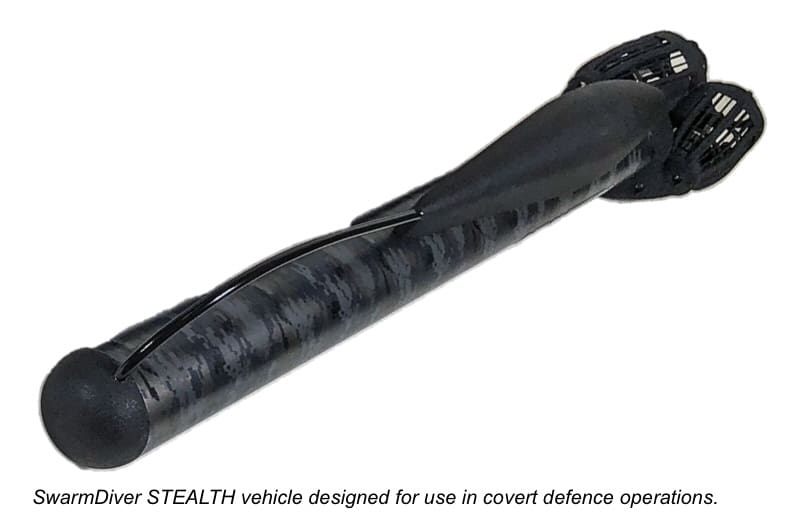
SwarmDiver STEALTHTM The SwarmDiver STEALTHTM line is intended for use in covert defence operations. This line of vehicles features a ruggedized exterior coating over a specialty graphic camouflage paint, a low-noise emitting motor, and no visible vehicle status lights to deliver a stealthy mission capability for SwarmDiver STEALTHTM to transit through littoral, harbor, and other challenging zones where avoidance of adversary detection is critical.

Aquabotix created the STEALTH model to address military end-user and large defence company demand for a highly effective means of covertly collecting intelligence and transferring data in littoral environments where enemies are continuously monitoring activity through the use of acoustic sensors, electromagnetic spectrum monitoring, and visual detection. Beyond collecting intel, the STEALTH line can be used to securely transfer data between two points without the risk of interception posed by wireless transfer methods.

SwarmDiver NIGHTLINETM The SwarmDiver NIGHTLINETM shares the same key features as the STEALTH line, including the ruggedized camouflage exterior and low-noise motors, and also has an added ultraviolet (UV) coating to make nighttime recovery of those vehicles easier. The UV coating is invisible to the naked eye, but can be detected at night or in low light environments when illuminated by the right wavelength UV light source. Aquabotix created this variant specifically with special forces use in mind.

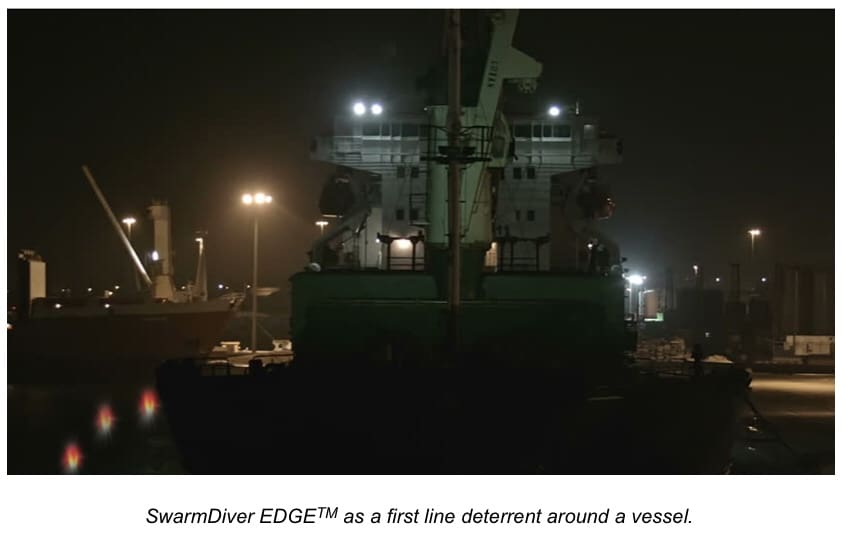
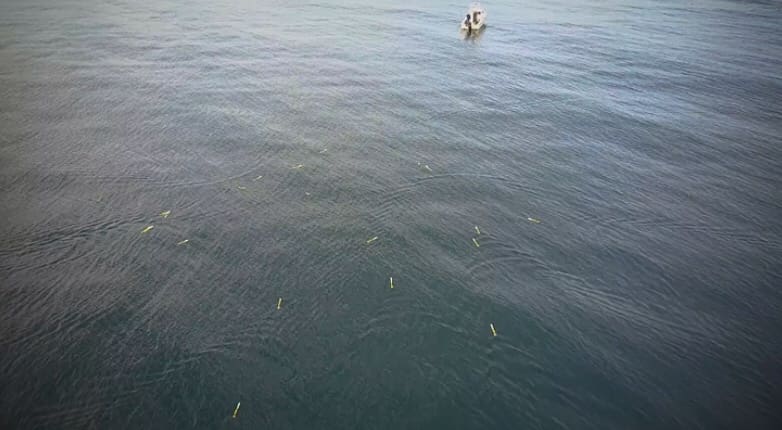
SwarmDiver EDGETM The SwarmDiver EDGETM line has applications in governmental, defence, and commercial domains. This line of vehicles is equipped with high intensity lights to create a visual boundary and act as a first line deterrent along a shore line, around a vessel or docking area, or near any other item of interest. Aquabotix created the EDGE line of vehicles to respond to threats of piracy, militant, or other disruptions to commercial and governmental activities.

Whitney Million, Aquabotix’s Chief Executive Officer, commented “Our SwarmDiver product has literally dozens of applications and end-uses, solving problems that, to date, were difficult to manage, and in some cases, unsolvable, for commercial and governmental maritime and naval users. The three new products focus on only some of these issues. We plan to continue to evolve our family of products in order to enable our commercial and governmental partners to solve the challenges they face in real world situations around the globe.”

For more information on the distinguishing characteristics and applications for use of SwarmDiver, please visit:

SCUBAPRO Sunday – Frameless/Gorilla Mask

Sunday, November 25th, 2018

SCUBAPRO’s FRAMELESS is diving’s original frameless mask, and it’s still the best. Its distinctive rectangular single-lens shape is classic, providing an excellent field of view on the periphery as well as straight ahead. By eliminating the frame, you create a mask that sits closer to your eyes. This provides a broader field of view to better take in the underwater sights, plus it reduces volume which makes it easier to clear. Also, since there is no frame, the buckles attach directly to the skirt. This enables the mask to fold relatively flat for packing or for slipping into a BC cargo pocket.

The soft silicone skirt on the FRAMELESS is comfortable yet durable, and the double-edge seal feels good against the skin. The push-button buckle system is easy to use and allows for quick adjustments. Buckles attach to flexible tabs on the skirt; this optimizes strap angle when dialing in the fit. The wide headband spreads the load on the back of the head, greatly enhancing comfort.

After decades on the diving scene, the original FRAMELESS continues to be the mask of choice among professional divers throughout the world. With its excellent field of view and comfortable fit, this stellar mask is destined to maintain its dominant position on the cutting edge of diving well into the future.

The Frameless Gorilla has a slightly larger and wider lens in a matte finish. Single lens mask, featuring a unique lens and skirt assembly without a frame. The Gorilla Mask is a new SCUBAPRO classic for professionals. This single window lens design is for a superior field of vision. Mask has a tempered safety glass lens and a quality double -feathered edge silicone rubber skirt for exceptional comfort and fit. The unique assembly of the lens and skirt without a frame reduces weight, size and lowers the masks overall internal volume for a streamlined style and a snug fit.

This classic robust quality mask positions the buckles on the exterior of the mask body for convenience and comfort. The buckles system is easily adjusted with one-hand. The mask has a large easy to reach with gloved-hand, nose pocket for ear equalization. The wide split strap design provides even tension on the face for a perfect seal.

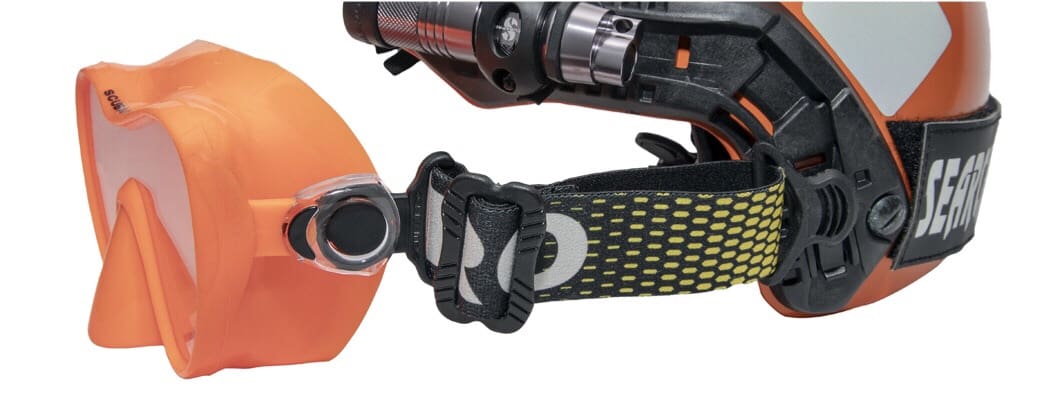
SCUBAPRO is always trying to set the bar for diving higher. The newest figures for the Frameless and Frameless Gorilla mask is the addition of the comfort strap adapter. This can be added onto any existing masks and adds several features to one of the most iconic masks ever made.

-It allows the Frameless/ Frameless Gorilla mask to be used with the SCUBAPRO comfort strap. The Comfort Strap is similar to a ski goggle strap in design, and it clips right into the mask buckle adapter and offers a wide adjustment range. It is also a lot less likely to break mid-dive as it is a nylon strap.

-The adapter also makes the mask non-magnetic for EOD use, as it removes all metal parts.

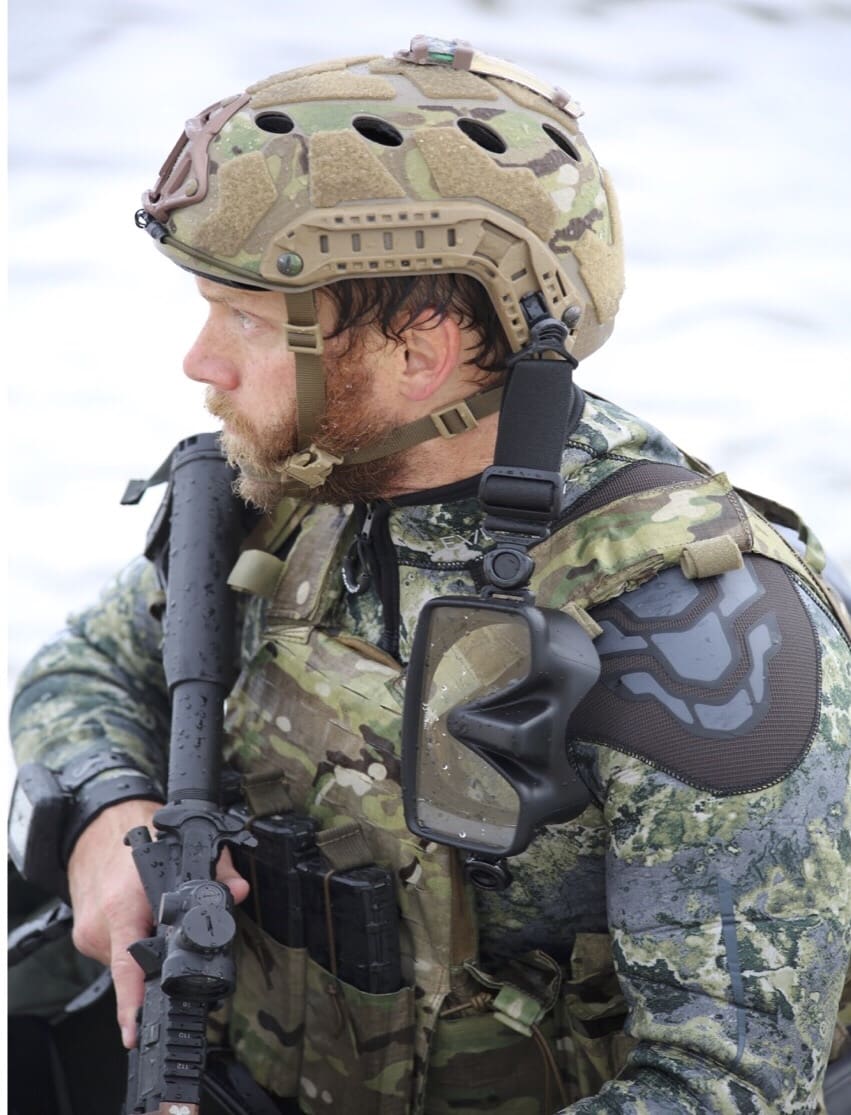
– It allows the masks to be used with the Odin helmet mask strap. The Odin system allows any mask with quick clips to be attached to any helmet that has the Ops-Core ARC rail systems. The Odin straps are perfect for any time you have to wear a helmet well diving. Like driving a DPV, Wearing Jetboots or for Search and Rescue Operations.

For more information contact ecrazz@clannfive.com

Photos by Paul Wildman.

SCUBAPRO Sunday – SeaWing Nova and Jet Fin Skins from MATBOCK

Sunday, November 18th, 2018

SCUBAPRO and MATBOCK have teamed up to make Skins for two of SCUBAPROs most iconic fins. The SeaWing Nova’s and the Jet fins. The Patent pending MATBOCK Skins is a multi-layer adhesive/fabric laminate designed to give the user the ability to camouflage/ change any surface desired. The Skins are waterproof and oil resistant and can be used multiple times. These skins are designed and laser cut specifically for the SCUBAPRO SeaWing Nova’s and Jet fins.

www.matbock.com/collections/skins/products/scuba-pro-skins

SCUBAPRO Sunday – Mask Clearing and Replacing  

Sunday, November 11th, 2018

When you are first learning how to dive. You learn basic skills in the pool before you move to open water. One of the most basic is clearing your mask. There are a couple of reasons you will have to clear your mask. It isn’t sitting right on our face, and it is leaking a little. You are diving with a group of people, and you get kicked in the face, and your mask gets knocked off. This is a skill you should always practice, especially if you have not dove in a long time. No matter how often you dive being good at the basic skills will always pay off.

This is one of the most basic skills to have, but it is also one of the most important. Let’s say you are doing a 3-hour night dive. About 15mins into it your mask starts leaking. You have to clear it every couple minutes. So you decide to change out your mask. This could be a quick thing, or if you have never practiced this, it isn’t going to help at all.

Leaking mask 

After you have inhaled slightly press the top part of your mask to your forehead while blowing slowly through your nose. Tilt your head back slightly looking up while exhaling through your nose. Start to exhale thru your nose slowly. Watch for bubbles if you close to your target. The water will slowly start to leave. You don’t have to do this fast.

Flooded mask

This is just as easy as clearing a partially flooded mask. Let say you are diving in a group and someone kicks you in the face knocking your mask off. First put your mask back on, make sure that you have a good seal and there isn’t anything in its way, like part of your dive hood. Then using the same method above to clear it. Take your time. If you go to fast you will push out more air then water. So go slow and don’t waste your air. If you are really deep when you do this, there will be more pressure, making it a little harder to push the water out. Sometimes it is better to leave the mask strap off and just let the water pressure and your hand hold the mask to your face. Once you have some air in your mask then you should put your mask strap on.

If you are only able to dive a couple of times a year. Then you need to get in the water and practice your basic skills, and this is one that will help a lot. There is nothing worse than being on a night dive, and your mask won’t stop leaking, and you can’t see anything. The best way to perfect this skill is to practice it over and over again in a controlled environment like a swimming pool. The primary keys for being able to clear a flooded mask is to relax. This is the reason you had to do all those flutter kicks on the side of the pool with your mask full of water. Lastly, if you have to do a 3-hour dive and you go thru all these steps, and nothing works, well you at least get a good story out of it.

SCUBAPRO Sunday – Clearing Your Ears

Sunday, November 4th, 2018

The inability to clear ears not is one of main reasondivers cant start a diver or finish it if they cannot clear at the start. It is easy to clear/equalize your ears almost all the time. Even the best of divers can have trouble clearing on a dive. But with a few of these technic’s I hope that you won’t have to end a dive because of ear problems. Some of these also work for skydiving or flying. It is always a good practice to try and clear your ears before you even get into the water. At your dive brief, the Dive Supervisor should ask everyone if they canclear their ears. 

Valsalva

This is the most common way to equalize. I am sure you learned it when you first started to swim. This method teaches you to pinch your nose so that no air can pass through your nostrils, and then gently “blow” your nose. This forces air into your inner ear space, equalizing the pressure within to the outside pressure often with an audible popping or clicking sound. The key to this is the word “gently.” Don’t blow your eardrums out before you dive.

Frenzel

To perform this maneuver, you thrust your jaw forward.  This slight shift in your natural anatomy will cause the Eustachian Tube to straighten and open, thus allowing gases to travel in the direction of higher pressure to lower pressure until full equilibration occurs.

Voluntary tubal opening

Try yawning with your mouth closed by contracting the muscles in the back of the roof of your mouth and throat while pushing your jaw forward and down. Tensing and stretching the muscles pulls the eustachian tubes open.

Toynbee

The Toynbee technique of clearing your ears is to pinch your nose and try to swallow. This tenses the muscles in the throat and soft palate to pull the tubes open, while your tongue compresses air against them. This results in a decreased pressure against the middle ear and Eustachian Tube, which will open in response.

Lowry

This is a combination of Valsalva and Toynbee. Pinch your nose and then blow against your closed nose while swallowing at the same time.

If your ears are particularly stubborn while trying the equalizing methods tilt your head from side to side or look up towards the surface. It helps stretch the folds surrounding the eustachian tubes making it easier to open them.

Medication

First, it is not recommended to take anything before you dive. If you have to dive and do take a decongestant, make sure it will last for the duration of the dive.

Good Luck and I hope this helps.

SCUBAPRO Sunday – Combat Swimmer Gear

Sunday, October 28th, 2018

When conducting combat swimmer operations you will need to have a certain amount of gear on you. This gear will depend on a of couple things. First what you will be doing during the dive, second what you will be doing at the end of the dive. If you are just doing a straight up dive and never leaving the water you can get away with just a gun belt with maybe a couple extra pouches for an extra mask, mask strap or fin straps. If you plan on conducting a ship attack or a raid, you will need more then just a pistol belt. This will be up to the diver and the mission requirements.

Gear Common to all

Items to have on you at all times.

– Gun Belt

– Pistol Holster

– Pistol Mag Pouch

– Water pouch and bottle.

– Radio pouch

– E and E kit

– First aid kit

– Extra mask/ mask strap/ fin strap

– Knife

– Signaling device, strobe/ flares

Gun Belt

There is a lot of them out there right now. There are many things you need to think of when setting it up. You need it to be able to easily expand the belt for the type of thermal protection you will be wearing, IE wetsuit /drysuit thickness.  You need to always have your pistol holster and mag pouches in the same place for muscle memory. Other things to think of are, will you be climbing? If so can the belt be used as a harness by adding leg loops or can it be put over a climbing harness? Can you swim with it on without it rubbing the hell out of your legs? Items like the S+S Precision gear retention track are a great way to move items around with little effort. Lastly a good set of suspender’s will help keep your belt in place and stop it from spinning as you swim.


Pistol Holster– One of the things you need to look at for this is, where you want it to sit, if you want it on your thigh, on your hip or a spot in the middle. If you have it on your thigh you need to make sure it does not move around as you are swimming. It also needs to be able to be easily moved if you have to adjust your belt for the think ness of your wetsuit. It also needs to be able to lock your pistol in so it will not fall out; a bungee is a good item for it to have to lock the pistol in but that can also get stuff on something. Should it have a flap cover to protect the gun a little from small things in the water? With all this stuff it should be able to drain water fast.

Mag pouch –They need to be able to keep your magazines in place when you are diving and be able to get to them out fast when needed. Keeping them free of items in the water and be able to drain water fast. This goes for everything you carry anything it. A good mag pouch is great for carrying an extra mask.

Water Pouch- Be able to carry the water bottle you use. A Nalgene bottle is a great bottle to use, as it’s easy to fill in the field. It also doesn’t take up as much room on a belt.  Typical tactical Nalgene bottle pouches have a mess bottle that drains water fast. Depending on if you have to carry something on your back or not you can also use a Camelbak on long dives when it is hot, it’s nice to drink something other then seawater when your legs start to cramp up.

Radio pouch– as radios advance it means that the people at the TOC want to know more and more what you are doing and when you are doing it. So that means that you might have to take a small radio with you to maintain comms, you might have to take along a survival radio. They can be one of the same but you might have to carry two. As one is none and two is well two is twice as much to carry.

E and E kit -Your E and E/R kit can just be a candy bar and some money to pay some people off or it might be more extensive, like having way to purify water, start a fire and kill a bear. No matter what you have, it needs to be waterproof and negatively buoyant as will everything on this list. You can laminate dollar bills in between two 3×5 cards, so it looks like they are just 3×5 cards for write info on. Then if you need the money just rip them open. This way they are hidden and waterproof. Most good kits are small and can be used for about every situation just by adding one or two items depending on what you are doing. If you have to dump all your gear for whatever reason, make sure you have your kit on you separate from everything else.

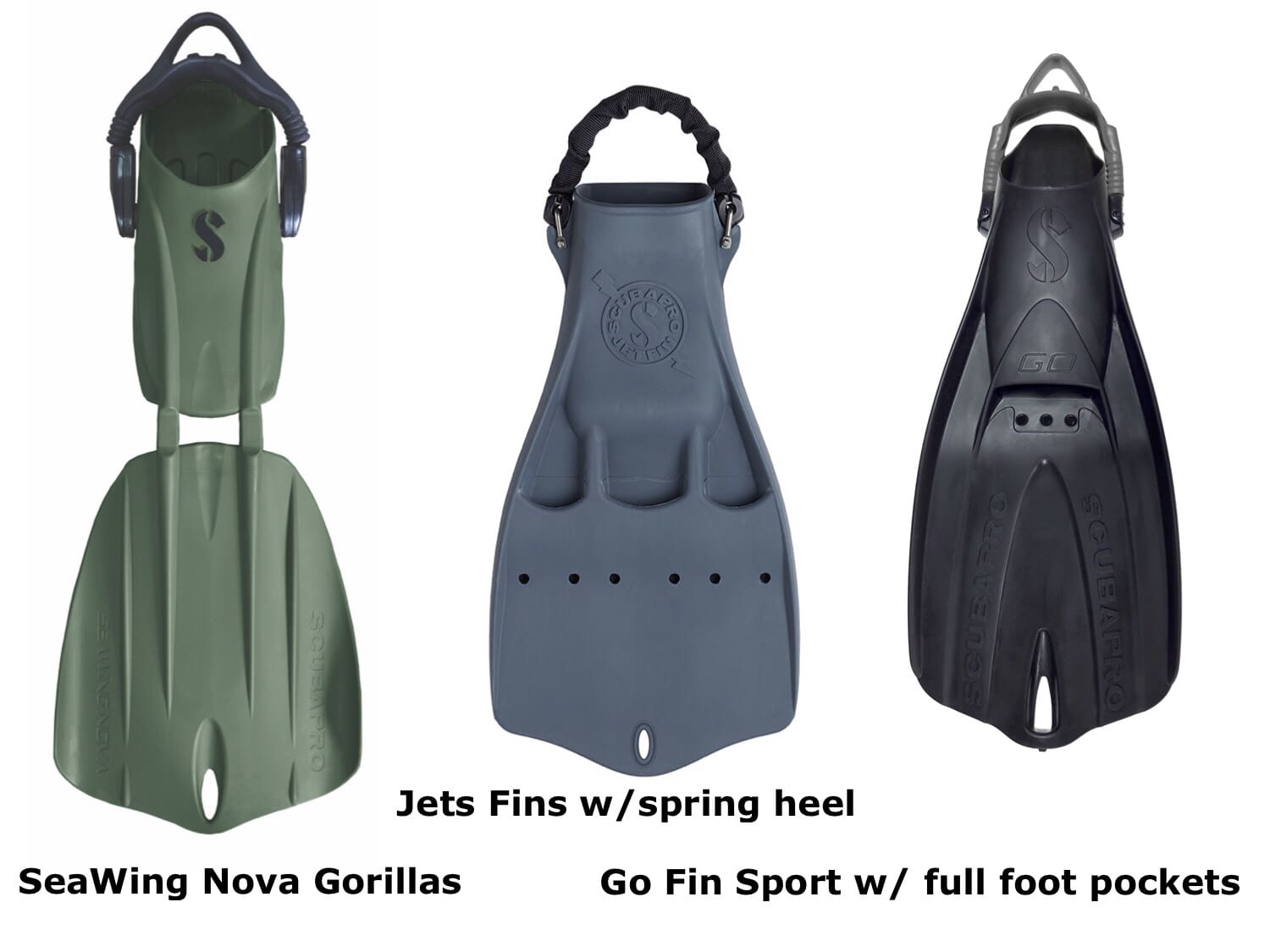
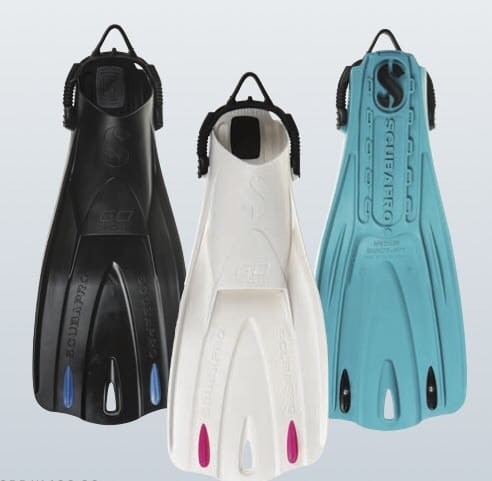
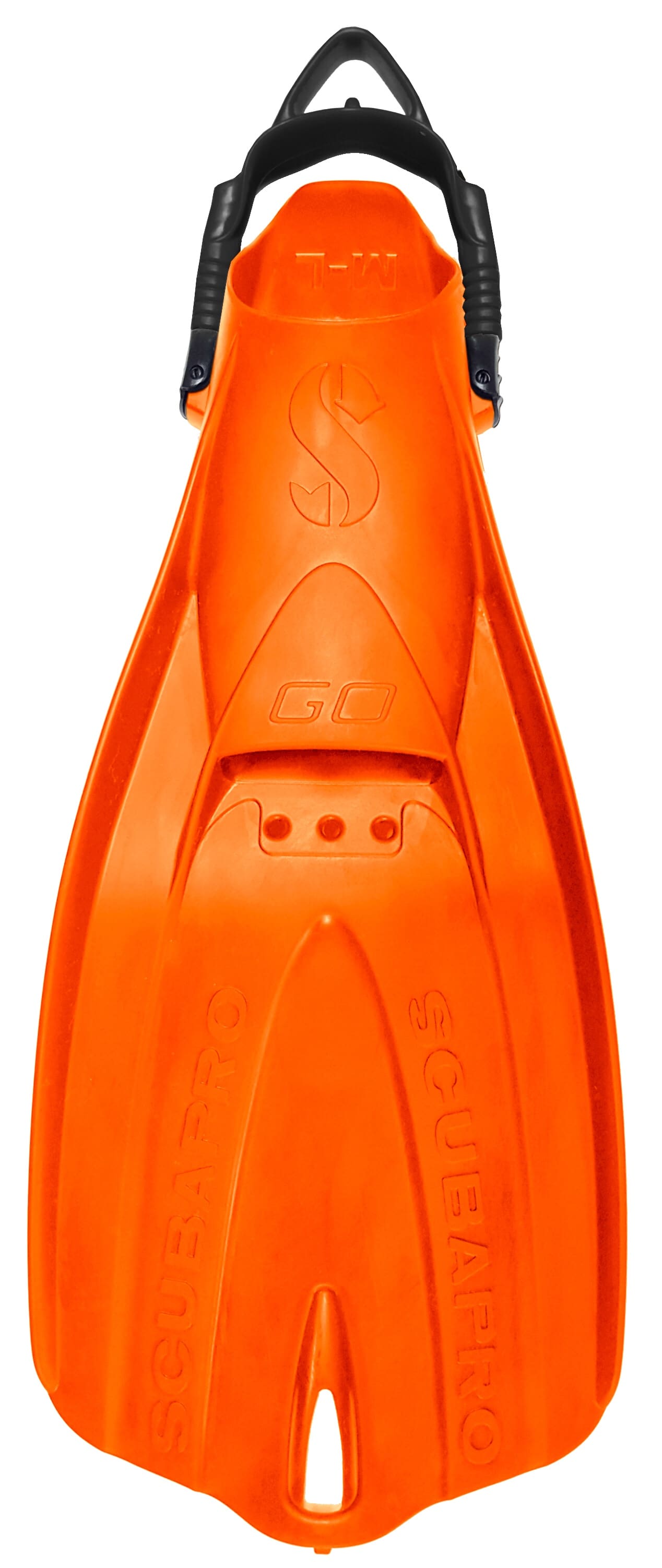
Extra straps / Masks- It is best to keep an extra mask/ mask strap and an extra fin strap on you. The extra mask should be the same mask that you are diving. You can put an extra pouch on your dive rig straps and put the mask in there. You can also switch your mask strap out to one of the newer comfort straps. They are made of the same martial that ski goggle straps are made of. As for an extra fin strap you can keep that in there also. You need to have a plan on how to change your fin strap out. This will depend on how it breaks. If it breaks in the middle on the strap, it’s not as bad as if it rips away from the fin and takes some of the fin with it. Most fins have the ability to replace the rubber strap with a  steel spring version. Cave divers started using screen door springs because they wanted something that was extremely reliable. They almost never break. They have them for Jet Fins, Twin Jet max and also the Seawing Nova’s.

Knife– Knives are very personal, and everyone has the one that they like. The main thing to remember about your knife is have it in a place that you can reach it on a dive. Some people like it on their legs others like it on their waist. Some people have one on the leg and on their chest (again one is none). Keep it sharp and clean.

Signal devices – You can and probably do carry both a strobe and a flare when diving. The Flare is for emergencies and a strobe for overt and covert signaling. Both need to be waterproof and easily accessible if needed. The bad think about a flare is they are a onetime use. So make it count if you are going to use it. Almost all that are geared towards the military can handle a combat swimmer dive. Lastly you can carry a signal mirror. It is 100% waterproof and never needs batteries.

No matter what gear you take on a dive you make sure it is probably maintained. Make sure you prepare for the conditions and environment you will be in and adapt you gear and E+E kit for it.

SCUBAPRO Sunday – Buoyancy

Sunday, October 21st, 2018

Buoyancy is key to a lot of things. It helps make the dive easier in a lot of ways. When using a closed circuit rig (CCR) it keeps you from rocketing to the surface, it prevents you from dropping to the bottom when you stop to fix your gear or “Dräger” talk/ yelling at your dive buddy.

There are two keys to buoyancy: balance and breathing

The two significant factors in achieving neutral buoyancy.

• 1st Wear the right amount of weight for the dive. This will differ depending on the thickness of your wetsuit/ dry suit and gear you are wearing.

• 2nd Breathing slowly and evenly and not having too much air in your breathing bag. If diving a CCR

What is the best way to maintain proper buoyancy?

Pre-dive preparation. Buoyancy control begins, with the pre-dive preparation. As you pick what to wear for a dive. Double-check to make sure nothing has changed that could affect buoyancy. A new wetsuit is more buoyant than an older one and will need more weight. A new suit has more inherent buoyancy at first because diving, especially deep diving simply bursts its bubbles. New gear; compare the old version to the new. Gear is always being updated with new buckles or martial so when you switch from old to new make sure you know what the buoyancy is of the new stuff. So when you go to the new magazine pouch make sure you know how it is in the water. Check the weights on a scale; often there is variation between claimed and actual weight. If diving open circuit, are you using a new cylinder? Some cylinders are negatively buoyant when full and simply less negative when empty; others sink first and float later.

Do a buoyancy check. Here is the best way to do a proper buoyancy check. With your lungs half-full, you should float at eye level with no air in your BC. If you are diving open circuit, remember the average cylinder loses about 5 pounds as it empties. So you might have to add about 5 pounds to your weight if you have done your buoyancy check with a full one.

Keep a log

Keeping a log of what gear you have wore, what the temperature was and the type of water (salt/fresh /brackish). What equipment you used, how much lead you carried, how much your body weighs and whether you seemed too heavy or light.  Knowing the weight of the gear that you used on the dive will help. Make sure you understand that if you are going to remove something during the dive you need to account for that on the return trip home. If you plan ahead by recording in training what you used it will help when you have to do it the next time.

Saltwater VS Freshwater.

If most of your diving is done in the ocean, then ballast calculations should be done in the ocean. Jumping in the pool to check your balance will get you close, but it won’t be 100% correct. If you switch back and forth, you’ll need to adjust your ballast. Be prepared to add anywhere from 4 to 7 pounds going from fresh to saltwater.

Buoyancy, Trim, Position, and Breathing

The secret is buoyancy control, begins with fine-tuning your weighting. How much lead you put into your pouches or have on your weight belt. If you are carrying just the right amount of weight, you will only have to put a little air in your BC. That means less drag and more efficient finning. Less BC inflation also means less buoyancy shift with depth, so you’ll have to make fewer adjustments. There are many tricks, but buoyancy control is the fundamental skill. Precise control of your buoyancy is what enables you to hover motionless and fin through the water, at any depth, without using your hands at all or stirring up mud or silt from the bottom. In addition to using the right amount of weight, make sure you are correctly balanced to optimize your position under water. Keeping a more horizontal position makes you more hydrodynamic. Distribute the weight as uniformly as possible from side to side; you should never notice that you put on more weight on one side while diving. You must also consider the weight of your dive gear and any other additional gear you might be wearing. I.E gun belt or special gear. Make sure it is balanced on your body and it doesn’t shift when you are diving. The lowering you wear your dive rig can cause a tendency to push the diver forward (upside down) in the water, so the placement of weight towards the back can help reverse this position, especially on the surface. While carrying weight in the pockets on the back of the vest or taped to you rebreather can help with the adjustment. Lastly, any dive weight you put on should be easy to remove in an emergency.

The factors that affect your buoyancy besides ballast weight are BC inflation, your trim, exposure suit, depth and breathing control. Your ballast weight and your trim are the only two factors that, once you’ve selected them, stay put. Ballast is the amount of weight it takes to keep you neutral in the water. Trim is about the position of your body weight relative to the position of your weight. Sometime when diving a rebreather you can tape lead washers on it to help with your trip.

There is one more thing to understand that will help with your buoyancy. It is controlling your breathing. Make sure you maintain proper breathing. Take long, relaxed breaths this will allow you to maintain control over your buoyancy.

To determine the amount of weight you need, you take your body weight, the diving suit you are going to use, the weight of your equipment and the environment you are diving in salt or fresh water. You can use about 10 percent of your body weight,  is a good starting point for a full  5 mm or more and for a 3 mm suit, use 5 percent of your body weight.

Dry suits and thick neoprene suits require more ballast to counteract the increased buoyancy of those suits in comparison with the thinnest. Body composition (the muscular density, for example) will also influence the necessary weight.

Remember to calculate for everything you are going to do and wear on your dive. If you are doing a long dive and plan to leave or remove something half way thru your dive. Say doing a ship attack, and you are taking limpets off. Plan for the whole dive. To check your buoyancy get into water deep enough to stay in an upright position, without treading and releasing all air from the vest. Inhale, in a normally, the surface of the water must be at the level of your eyes. When you exhale, you should sink until water covers your head and inhale again, you should emerge once again until the level of the eyes. Adjust your weight in small increments about 1 pound at a time.

Once you get your ballast weight and trim dialed in, you will be ahead of about 75% of all divers toward perfect buoyancy control. Now you can fine-tune your BC inflation to compensate for the very predictable changes due to breathing down your tank and changing depth and use only breath control to drop gently down to that cleaner shrimp, hover inches above it as long as you want and lift away from it harmlessly.

Lastly, there are advanced classes that you can take that focus on advanced skills like this. This may seem like a lot of work, but it will help make diving a lot better and make you more efficient at it.

www.scubapro.com

SCUBAPRO SUNDAY -Regulators

Sunday, October 14th, 2018

A regulator system is required to reduce the pressure of the compressed air contained in the cylinder to ambient pressure to supply breathable air when needed. It is also possible to connect pressure gauges (analog or digital), IP inflators to provide buoyancy compensators, dry suits and other devices to this system. The regulator system is composed of a pressure reduction device and one or more breathing devices. In this article, the pressure-reducing device and the breathing device will be indicated, respectively, by the terms “first stage” and “second stage.”

First Stage

Regulators can use either a piston assembly or a diaphragm assembly. The piston or diaphragm controls and reduces the air pressure from high pressure to moderate pressure in the first stage. Either design may be equally good and equally sensitive to the diver’s inhalation needs except under conditions where high flow is required: there the piston regulator delivers much more air than the diaphragm regulator. The first stage uses a standard piston, balanced piston or diaphragm mechanism. Air is compressed and stored in the tank under high pressure. To reduce this pressure, the first stage is a valve or piston that lowers the pressure to about 140psi to let air into the hose. The valve opens to allow some air into the hose and then closes again. A regulator compensates the pressure as it decreases in the tank when the air is used and as the diver changes depth which causes change the ambient water pressure.

Standard Piston

Standard piston first stages are the simplest mechanism with minimum moving parts to control the pressure drop from a tank to feed the second stage. Which translates to high reliability and durability, combined with minimal maintenance requirements.

Balanced Piston

First stages with air balanced pistons deliver significantly more air to the second stage than any other first stage, while their performance is unaffected by the changing tank pressure. A balanced system allows the use of lighter and more sensitive components, resulting in ultra fast breathing response, instant delivery of air on demand and extra high airflow.

Balanced diaphragm

The inner mechanism in a diaphragm first stage is isolated from the surrounding water. This feature makes it especially suitable for diving in cold-water conditions or murky water. In this system, the air flows through a seat & pin assembly, controlled by a loaded diaphragm. The seat receives equal inter-stage pressure from both sides, making it react independently of tank pressure. Balanced diaphragm systems deliver a slightly lower flow than piston regulators, due to the smaller diameter air passageways. However, these differences in performance are only detectable at great depth. Cold-water divers typically prefer diaphragm regulators because they are less likely to free flow in cold water than are piston regulators.

First Stage Body 

This metal cylinder contains the mechanisms that reduce the high-pressure air in the scuba tank to an intermediate pressure. High-pressure air flows in one side of the first stage body undergo pressure reduction and then flows out through the low-pressure hoses.

Yoke

The regulator first stage body is held against the scuba tank’s valve through one of two methods: a Yoke or a DIN fitting. This diagram illustrates a yoke fitting, also called an international fitting. The “yoke” is the metal oval that fits over the tank valve to hold the regulator in place. Two types of coupling fittings are used to attach a regulator’s 1st stage to the tank: DIN and Yoke.

Yoke couplings are more commonly found worldwide and are generally always used by the ever-popular aluminum 80 tanks.

DIN fittings are safer than yoke fittings and are the only fittings that can couple with high-pressure tanks. The advantage of DIN fittings is that they screw into the tank valve and trap the high-pressure o-ring so it cannot protrude, this can occasionally happen on a Yoke.

Yoke Screw

The regulator’s yoke is equipped with a yoke screw–a metal screw that runs through the regulator yoke and tightens the regulator first stage body onto the tank. To tighten the yoke screw, the diver turns the black, plastic handle attached to the screw.

Dust Cap

Keeps water from entering the regulator first stage body when not connected to the tank. The dust cap is a rubber cap that can be placed over the regulator first stage opening and tightened down using the regulator yoke screw. This seals closed the opening on the first stage.

Port/ Port Plug

Regulator first stage bodies have multiple openings, or ports, that regulator hoses and transmitters can bed screwed into. Most, regulators have more ports than the standard number of hoses, which allows divers to position their hoses in a variety of configurations. These openings are called ports, and the plugs that close the regulator ports when they are not in use are called port plugs.

Second stage

The second stage of a regulator is basically the part that goes in your mouth and delivers air upon demand. It contains a mechanism that reduces the intermediate pressure in the hose coming from the first stage to the surrounding water pressure making it comfortable and easy to breathe. The second stage also contains a piston or diaphragm construction which starts and stops the airflow. The mouthpiece, an exhaust valve, and an emergency purge valve/button are all parts of the second stage. The exhaust valve lets the air escape into the water when you exhale. It is a one-way valve and does not allow water in. When the purge button is pushed, it forces air to flow continuously into the second stage chamber forcing any water out of the mouthpiece through the exhaust valve.

This unit is supplied, with the intermediate pressure coming out of the first stage through the low-pressure hose. It reduces pressure further to balance air with the ambient pressure. The second stage may be balanced or unbalanced and equipped with a Venturi effect control (V.I.V.A.) and/or with an inhalation resistance control.

Second Stages 

There are two main types of the Second stage, Air Balanced, and Downstream

AIR-BALANCED VALVE

Air-balanced valve technology provides the optimum breathing comfort preferred by demanding divers. The air-balanced valve technology of SCUBAPRO’s second stages fine-tunes the pressure of the air delivered by the first stage to decrease inhalation resistance to the lowest possible level. The result is an ultra-high airflow that remains exceptionally stable under all breathing conditions.

CLASSIC DOWNSTREAM VALVE

The classic downstream valve is the best solution for resorts and rental facilities worldwide, as well as many recreational divers. These second stages are particularly noted for their legendary safety and reliability. A specific inhalation effort is always required to overcome the spring tension and opens the valve that lets the air flow in.

Parts of the Regulator

1. Purge Button
The purge button is located on the face of the regulator second stage. The purpose of the purge button is to flood the second stage with air, forcing water out of the second stage. Divers use the purge button when the second stage has been allowed to fill with water–for example, when a diver removes the regulator from his mouth during the regulator recovery skill.

2. Ease of Breathing Adjustment
Most regulators has a lever or knob that allows divers to adjust breathing resistance. This feature helps to prevent regulator free flow (a state when air flows rapidly out of the regulator second stage without the diver breathing from it), which typically occurs when the breathing resistance has been lowered too much. A free flow can quickly empty a tank.

Many second stage adjustments have a setting labeled “pre-dive” to help prevent free flow at the surface, and one labeled “dive” for easy breathing once underwater. As a diver descends, he can adjust the ease of breathing to compensate for the increased difficulty of breathing as he descends.

3. Exhaust Valve
The second stage exhaust valve is the plastic unit that channels exhaled air bubbles away from a diver’s face. The exhaust valve is usually located below the regulator’s mouthpiece to channel air down and to the sides. Helping to keep a diver’s field of vision clear of bubbles.

4. Mouthpiece
The Mouthpiece is the part of the regulator that a diver bites down on. High-quality mouthpieces are made of silicon or soft rubber and comes in a variety of shapes and sizes to fit divers’ mouths. Mouthpieces are removable and replaceable. A diver should check to make sure that his mouthpiece is secured to the regulator second stage with a SCUBAPRO Quick release mouthpiece clamp. Try not to use zip-ties. They are not designed for long-term water exposure. The SP Quick clips are designed for long-lasting UV and saltwater exposure.

Octopus

The Octopus /alternate second stage, does the same thing as a primary second stage. The Octopus second stage is not intended to be used, except in the case of an out-of-air emergency. A diver with an alternate second stage can allow a diver that is having an out-of-air emergence to breathe from their tank without putting themselves at risk.

1. Mouthpiece
The mouthpiece is the part of the regulator second stage that a diver bites down on. Alternate second stage mouthpieces should be a standard size to fit any diver’s mouth–not a custom mouthpiece. The idea is that any diver should be able to use the mouthpiece in an emergency.

2. Low-Pressure Hose
Low-pressure hoses (LP hoses) transport air from a regulator first stage to its second stages. An alternate second stage’s LP hose is usually longer than the LP hose attached to the primary second stage. This extra length makes it easy for an out-of-air to use an alternate second stage connected to a tank he is not wearing. The LP Hose attached to an alternative second stage is frequently a bright color, such as yellow, to make it easy to see.

3. Purge Button
The purge button on the alternate second stage, has the same function as a purge button on the primary second stage–to remove water that has entered the second stage. Alternate second stage purge buttons are usually brightly colored–this one is neon yellow. The bright color makes it easy for an out-of-air diver to locate the alternative second stage in an emergency.

4. Ease of Breathing Adjustment
Just like the ease of breathing adjustment on a primary second stage, the ease of breathing adjustment on an alternate second stage can be used to increase or decrease breathing resistance during a dive. If ease of breathing adjustment is present, a diver should adjust it so that the breathing resistance of the alternate second stage is increased. The diver should also turn any pre-dive/ dive adjustment to “pre-dive.” The regulator will still work if needed, but this adjustment will ensure that the alternate will not free-flow during the dive.

5. Diver adjustable inhalation resistance control

Second stages equipped with this system have an over-sized external control knob acting directly on the spring tension, allowing the diver to adjust the inhalation resistance to adapt it to the needs of the dive conditions. Adjusting the control knob (clockwise rotation) causes an increase in inhalation resistance. Adjusting with a counterclockwise rotation reduces the spring tension for lower inhalation effort. All depends on the diving conditions, such as in strong currents, when the diver spends some time with his head down and when the second stage is used as an alternate air source (octopus).

SCUBAPRO AIR2

The Air 2 is a second stage regulator and a balanced inflator for your BCD in a single, compact housing. SCUBAPRO introduces the inflator concept to diving almost 30 years ago with the introduction of the AIR2 ( Alternate Inflation Reg). The Air 2’s air-balanced power inflator valve gives a steady stream of air, regardless of the pressure in your tank. The Air 2 has a fixed Venturi Initiated Vacuum Assist (VIVA) Flow Vane for safe and uncomplicated use now has a dive/pre-dive switch. This switch allows the regulator mechanism to be set more like that of a standard second stage regulator. It is CE-certified for waters 50°F (10°C) or warmer.

Post dive

Close the cylinder valve and drain the system by pushing on the purge button of each second stage. Once the system has been depressurized disconnect the first stage regulator from the valve. All inlets must be closed with the provided protective caps to avoid the entry of debris, dirt or moisture. If the cylinder valve is equipped with a reserve system, the rod should be put in the “open” position (fully lowered) to indicate that the cylinder needs to be filled.

Care And Maintenance

Regulators are precision devices that are essential to the diver’s safety. After every dive and especially if in chlorinated water (pools), rinse the regulator with fresh water, preventing water from entering the system by following these steps:

1.    Ensure that the high-pressure inlet of the first stage regulator is closed with the special protective cap.

2.    Should water accidentally enter the low-pressure hose, connect the regulator to the cylinder, open the valve and press the second stage purge button down until all water has been expelled.

3.    Dry your regulator entirely in a dry ventilated place, away from heat and direct sunlight. So not in your garage.

4.    Store in a cool, dry place.

This is from our older site but it is still good.

ww2.scubapro.com/en-GB/HKG/technology-index