SIG SAUER - Never Settle

Archive for the ‘Mobility’ Category

US Army Eyes Commonality with Tactical Wheeled Vehicle Refresh Effort

Tuesday, September 7th, 2021

DETROIT ARSENAL, Mich. — With a nod from the Army Futures Command, the Program Executive Office for Combat Support & Combat Service Support will explore the potential use of modified commercial off-the-shelf solutions for a new, common Tactical Wheeled Vehicle, or TWV Fleet.

The Army Requirements Oversight Council on July 30 approved the Common Tactical Truck (CTT) Abbreviated Capabilities Development Document, or A-CDD, which allows the PEO to begin a rapid prototyping effort to provide Army Transporters modernized capabilities while incorporating as much commonality with the commercial trucking industry as possible.

Alvin Bing, the Army’s product manager, Heavy Tactical Vehicles, PEO CS&CSS, explained that dovetailing the CTT program’s desired capabilities with commercial trucking industry research and development projects is a winning proposition.

“Aligning CTT with industry R&D efforts enables rapid and continuous integration of future technologies that can significantly reduce obsolescence issues,” Bing said. “With CTT, the Army wants as much industry involvement as possible so we can increase competition while at the same time, leveraging momentum gained through industry’s rapidly advancing fields of driver safety systems, cybersecurity, artificial intelligence, machine learning, autonomy, improved fuel economy and vehicle electrification, off-road mobility, and predictive maintenance. This will allow the Army to modernize at the pace of industry by integrating new technologies with minimal cost.”

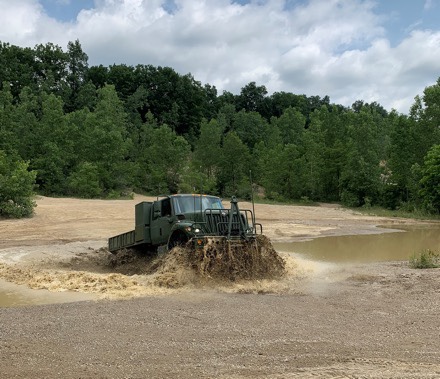
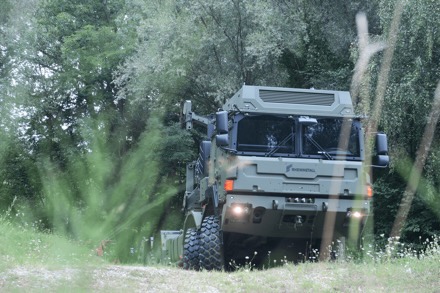
Within the Army’s TWV Fleet, the CTT falls between the Family of Medium Tactical Vehicles and the Heavy Equipment Transporter. CTT seeks to bolster TWV mission roles currently performed by vehicles in the Army’s heavy fleet.

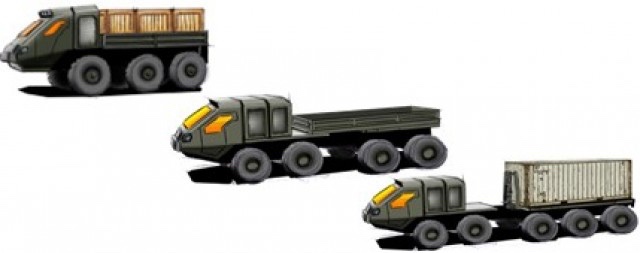
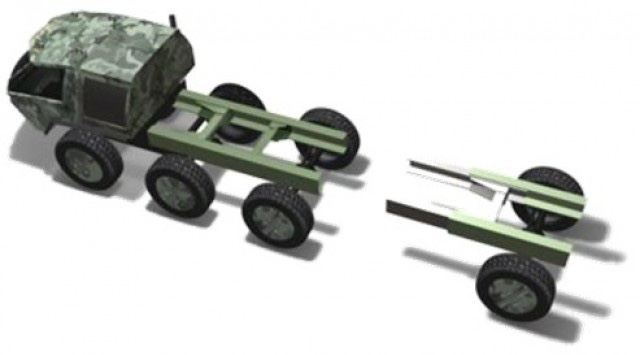
“As the Army’s CTT acquisition lead, our intent is to procure a HTV Family of Vehicles to replace the M915/M1088 Tractors, Heavy Expanded Mobility Tactical Truck, and Palletized Load System with a commercial-based CTT designed with a modular truck platform,” Bing continued. “This will mitigate future obsolescence, leverage best commercial practices, lower procurement costs through commercial economies of scale, and take advantage of interchangeable repair parts across the fleet — resulting in streamlined supply chains and reduced total lifecycle costs.”

According to Don Overton of the Army Futures Command Sustainment Capabilities Integration Directorate’s Requirements Division, ultimately, this effort will inform a future CTT Capability Development Document, which will outline the final, approved operational requirements for a common system that will deliver capability meeting overall operational performance criteria.

“In terms of capability gaps in this portion of the TWV fleet in support of Multi-Domain Operations, we’ve reached design maturity, and without a holistic overhaul, we can’t overcome design limitations and will simultaneously drive operations and sustainment costs to untenable levels. Commercial technologies and economies of scale exist that will help the Army close those gaps and address the increasing age of the current HTV fleet. Now is the right time to modernize with a Common Tactical Truck in support of MDO,” he emphasized.

CTT’s desired characteristics include:
Drive by wire and active safety
Mission roles
Commonality with industry
Digitization (autonomy, prognostics)
Demand reduction
Force protection
Survivability
Sustainment

Industry representatives who are interested in possibly participating in CTT should be on the lookout for announcements and requests for information on SAM.gov in the coming months, Bing said. His acquisition team anticipates holding industry one-on-one meetings tentatively slated for mid-to-late Fiscal Year 2022.

Bing’s team plans to award Other Transaction Authority-based contracts in Fiscal Year 2023 to three vendors to produce multiple prototypes each. OTAs are designed to help the government speed capability to the field vs. traditional contracting methods.

Soldier Touch Points will be leveraged throughout the competitive prototyping phase. These assessments are important ways to incorporate valuable Warfighter feedback into the acquisition program, thereby providing Army Transporters the optimal CTT solution. Currently, the notional plan is for prototype runoff testing to beginning in late Fiscal Year 2023, followed by a down select to a Federal Acquisition Regulation-based production contract in Fiscal Year 2025.

CTT fielding is projected to begin in Fiscal Year 2028.

By Rae Higgins, Program Executive Office, Combat Support & Combat Service Support

Jankel Establishes Major UK Military Vehicle Production Capability in the Midlands

Monday, September 6th, 2021

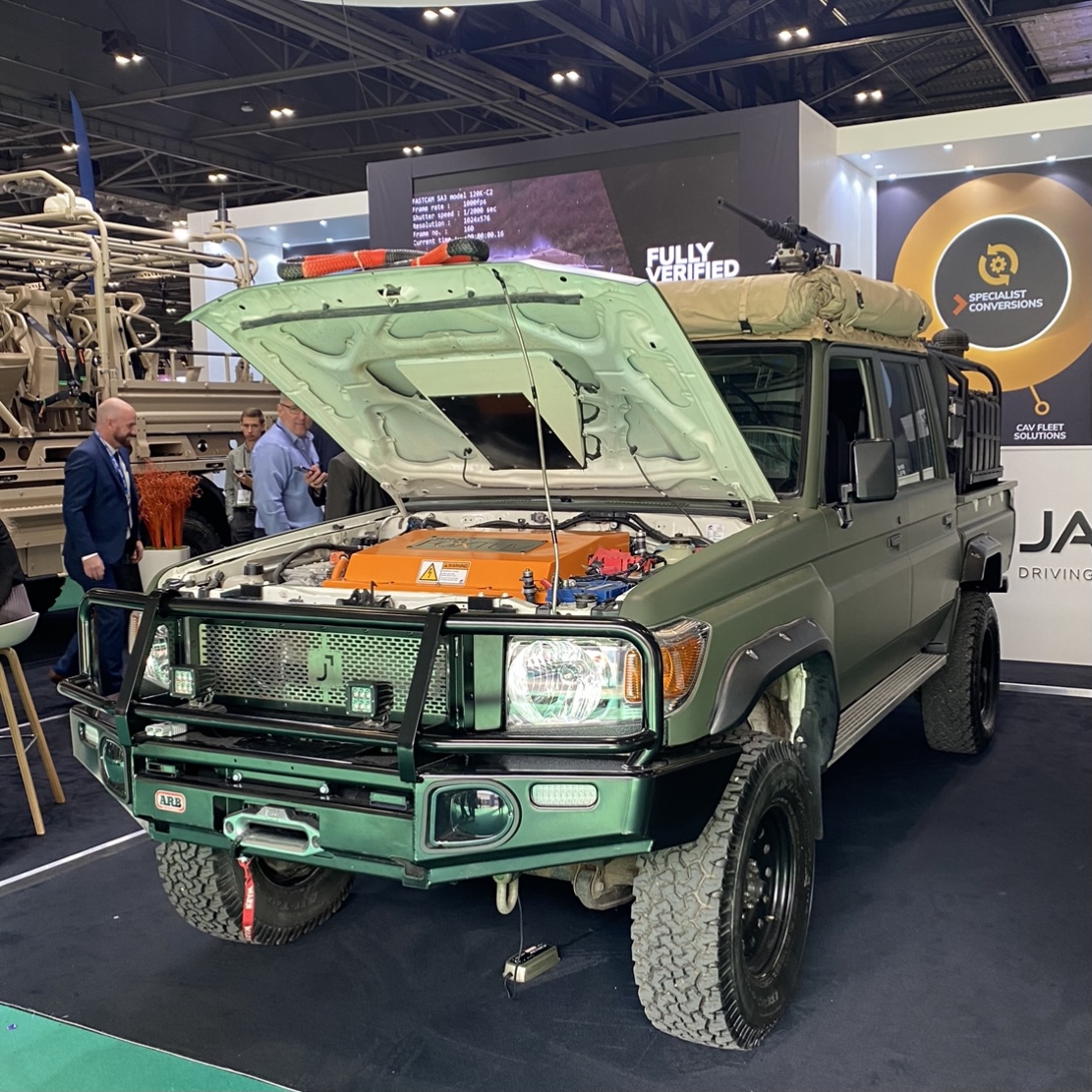
Jankel, a world-leader in the design and manufacture of high-specification defence, security and NGO protection systems, has announced the establishment of a major new UK-based military vehicle production capability. Situated in Coventry in the Midlands the new production line sits in the heart of the UK’s traditional automotive manufacturing hub and is surrounded by an extensive and comprehensive automotive supply chain within easy logistic reach. The new set-up delivers 3600 square meters of open plan floor space supported by 1500 square meters of stores and offices that can be configured to manufacture military vehicles of various types at significantly improved rates over that previously achieved by Jankel.

The establishment of this capability comes off the back of several major vehicle contract wins including the Belgium MOD’s (BeMOD) new Light Tactical Transport Vehicle (LTTV). All 199 LTTV vehicles will be assembled on the new line prior to export. At the same time, Jankel’s other UK production facilities in Rustington and Weybridge will be working to deliver a number of other specialist defence and security sector vehicle orders that have been announced recently or are due to be announced in the near future. On a global level, Jankel also have a significant manufacturing capability in USA.

The establishment of the new Midlands production capability reinforces Jankel’s position as one of the very few UK-based military vehicle companies that can deliver immediate on-shore production of large vehicle orders to the demanding quality standards required of the defence and security sectors. With a total floor space of over 10,000 square meters split across three major sites, Jankel can deliver multiple production programs concurrently, supporting both the UK MoD and export customers, whilst creating and sustaining important skilled jobs in UK.

Andrew Jankel, Chairman at Jankel said: “I’m delighted to be able to announce the establishment of our new production capability that will take us to the next level in terms of UK-based military vehicle production capacity, underlining our successful growth strategy”. He added: “Jankel is one of a very few small to medium (SME) UK defence focussed companies left that is winning global vehicle contracts; designed, developed, built and supported in Britain. We remain focused on innovative, fast and cost-effective product development using and sustaining traditional skills that are becoming harder to find in the UK – Driving Mission Success”.

Jankel will be exhibiting at DSEi in London 14-17 September 2021 on stand H4-580.

Airless Tires Undergo Punishing Evaluation at Army’s Tropic Regions Test Center

Friday, August 6th, 2021

YUMA PROVING GROUND, Ariz. — U.S. Army Yuma Proving Ground and its constituent test centers test virtually every piece of equipment in the ground combat arsenal in extreme environments to ensure it will work wherever in the world American forces are serving.

To ensure gear can survive the unforgiving rigors of jungle warfare, the Army relies on Tropic Regions Test Center (TRTC), which conducts realistic evaluations in a variety of tropical locales.

Though the deserts of Southwest Asia have been the most common location of American military involvement for nearly twenty years, the majority of the world’s conflicts have occurred in tropical areas, which have ground conditions from dense jungles to savannas with 20-foot tall grasses. Testing equipment under inhospitable tropic conditions provides insights that may never be discovered in an environmental chamber. Will muddy, biomass-laden jungle terrain destroy the integrity of wheels and tires on a combat vehicle, for instance?

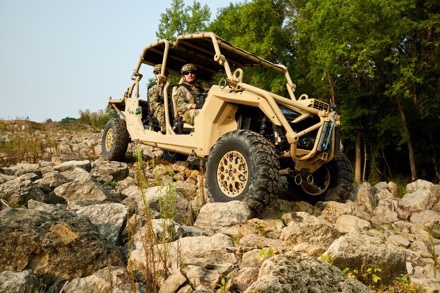
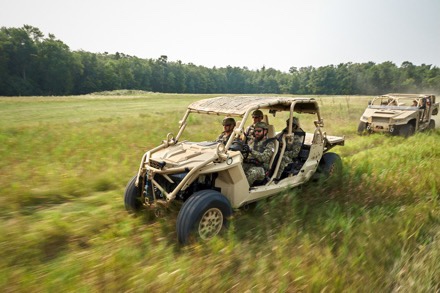
One recent TRTC test involved the Polaris MRZR, a military version of the popular off-road vehicle that American forces have used in places like Afghanistan in recent years.

“It is not as comfortable, but it is sturdier and heavier with a rolling cage,” said Carlos Mora, TRTC test officer. “It is more mission-oriented.”

The MRZR under test was outfitted with Tweels instead of standard tires. The Tweel, produced by Michelin, is an airless radial tire designed to work like an ordinary pneumatic tire. In addition to the obvious advantage of never having to worry about flat tires, utilizing Tweels has second order effects that are useful for Soldiers.

“One reason for this technology is to reduce weight on those small vehicles so you don’t have to carry a spare tire, jacks, or materials to fix a puncture,” said Mora.

The Tweels also have the ability to conform to multiple different terrain types, and can last three times as long as standard tires. Putting the Tweels through their paces on land deep within the jungle of the nation of Suriname that TRTC have utilized in previous vehicle tests gave the evaluation a particularly realistic operational flavor.

“All of these old mining roads and logging roads were the perfect scenario for the vehicle,” said Mora. “The customer also liked the composition of the soils.”

There was also the added benefit of microclimates and terrain features that are only sometimes associated with the tropics.

“We added a portion of savanna, which is a sandy terrain with small brushes,” said Mora. “It turned out to be very demanding.”

Tweels are also designed to power through serious damage for far longer than even run-flat pneumatic tires. Using a drill bit, testers damaged the Tweels to simulate as if they had been shot prior to some of the evaluations.


By necessity, TRTC provides substantially more assistance to its customers than other test centers, which are located in the United States and do not require complicated visa and country clearances from various embassies and the military for American visitors.

“We always have the support of the embassy and the national police, so everything we do is sanctioned and approved by the foreign minister and the U.S. embassy,” said Ernest Hugh, TRTC director. “That’s part of the process we take care of to ensure the visit is seamless for the customer.”

The American embassies and associated military groups within each delegation assist TRTC in securing the necessary permissions to conduct testing in a variety of countries.

“We work closely with the United States embassies in all of the host nations in which we conduct tests,” said Hugh.

Warrior East 21 – Hippo Multipower Polaris MRZR 5kW 24V Exportable Power Generator Upgrade Kit

Wednesday, August 4th, 2021

The Hippo Multipower Polaris MRZR 5kW 24V Exportable Power Generator Upgrade Kit was designed in conjunction with Galvion and incorporates a couple of their technologies like their Squad Power Management and a battery. Passengers can connect to vehicle power while in transit and simultaneously top off their radio batteries.

Created with input from USSOCOM’s Family of Special Operations Vehicle program, the heart of this system is a 3-stage generator that puts out up to 5kW @ 24 vac in power running off the power plant of the MRZR.

At only 70 lbs, the generator fits below the payload area of the vehicle leaving OEM specifications of the area unchanged.

Units and agencies can procure Hippo Multipower systems by contacting Atlantic Diving Supply.

Clandestine Media Group’s New Gun Truck – The Specs

Wednesday, August 4th, 2021

What started out as a 2021 Ford Ranger Lariat has now become one impressive gun truck thanks to the efforts of Clandestine Media Group.

Right up front you’ll note that it’s a Ford Ranger which might seem like an odd choice for a gun truck. CMG acknowledges this and explains that it’s nigh impossible to get an actual Toyota Hi-Lux in the US. Instead, they went for a Ford Ranger which is becoming more popular with foreign SOF.

Primary Sponsors:

Leitner Design Bed Rack ACS Forged with all accessories

Addictive Desert Design – Stealth Fighter Front and Rear bumpers with sliders

Camburg Suspension CAMBURG FORD RANGER 2WD/4WD 19-21 FOX 2.5 FACTORY DSC KIT

Grey Man Tactical interior and exterior molle systems plus accessories

Other Parts:

Method Race Wheels MR701 Black

Nitto Ridge Grapplers 285/75R17

Baja Design Lights

Warn VR EVO 10-S

Factor 55 Fairlead and UltraHook

Safari Snorkel

Truck Vault Bed System

Alpha Rex Headlights

The truck was built with the help and expertise of Colorado Adventure Rigs and High Country 4×4.

It’s used by the team for photo shoots and available to clients for marketing needs.

Learn more at www.clandestinemediagroup.com/blog/2021/8/2/clandestine-media-group-company-gun-truck-specs

Rheinmetall’s Optionally Manned Fighting Vehicle Concept Down-selected for U.S. Army’s program – Team of Industry-leading Experts to Digitally Design Advanced OMFV

Monday, July 26th, 2021

The U.S. Army has awarded American Rheinmetall Vehicles – a Sterling Heights, MI, U.S. subsidiary of leading defense industry giant Rheinmetall – a develop¬mental contract for the Phase 2 Digital Design of the Optionally Manned Fighting Vehicle (OMFV) program. American Rheinmetall Vehicles will execute Phase 2 with its teammates, a group of unsurpassed defense industry companies, including Raytheon Technologies, L3Harris Technologies, Textron Systems and Allison Transmission.

The U.S. Army’s OMFV program is a ground-modernization effort to replace nearly 3,800 Bradley Fighting Vehicles among the U.S. Army’s Armored Brigade Combat Teams.

“This is a great win for American Rhein¬metall Vehicles and Team Lynx as a whole,” said Matt Warnick, Managing Director of American Rheinmetall Vehicles. “With this contract award, we take another important step forward in bringing the kind of next-generation technology solution, partnership and industrial capability the U.S. Army deserves and that Team Lynx is so well prepared to deliver for the OMFV program.”

Team Lynx will work with the U.S. Army on the digitally engineered design and development of the team’s OMFV concept using Rheinmetall’s proven Lynx KF41 Infantry Fighting Vehicle (IFV) as the point of departure for the design. The team’s solution will provide the U.S. Army with a next-generation infantry fighting vehicle featuring a game-changing platform with a modular open systems architecture. This will enable rapid insertion of new capabilities as they become available, guaranteeing overmatch today and overmatch tomorrow.

Variants of American Rheinmetall Vehicle’s Lynx KF41 IFV are advancing in multiple countries around the world. The Hungarian Army became the launch customer in 2020 with an order for 218 locally produced vehicles. In Australia, for the Land 400 Phase 3 program, Rheinmetall was down selected along with one other combat vehicle manufacturer for a risk reduction test phase that involves extensive vehicle testing comprised of field trials, survivability and mobility testing. The KF41 performed to a high standard.

The Digital Design Phase kicks off the OMFV program and continues through early 2023, laying the foundation for future development and production phases. Team Lynx is developing industrialization plans to fully deliver the OMFV as a Made in the USA, next-generation vehicle. The team will grow U.S. Defense manufacturing capacity and introduce advanced manufacturing capabilities. Competition for Phase 3 (Detailed Design) is anticipated to start in 2023, followed by Phase 4 (Prototype Build and Test), which results in government testing in early 2026.

“We are incredibly proud at American Rheinmetall of the commitment we are making to the US Army, to Soldiers and to advanced American technology, design and production,” said Stephen Hedger, CEO at American Rheinmetall Defense, the U.S. parent headquarters for Rheinmetall.

U.S. Army Live-Fire Exercise at Fort Benning Demonstrates Future Lethality of Kongsberg Remote Weapon Systems

Friday, July 16th, 2021

Kongsberg systems still superior in accuracy, reliability and network capabilities

JOHNSTOWN, PENN., July 15, 2021 – During a multi-day demonstration at Fort Benning, Georgia, KONGSBERG Defence and Aerospace used four different remote weapon systems to demonstrate future lethality and cutting-edge capabilities which can be leveraged by the more than 17,000 systems already fielded in the U.S. military’s current inventory. This also was the first ever demonstration where multiple targets were engaged using multiple unmanned platforms simultaneously.

The ground-breaking demonstration was held at the U.S. Army Maneuver Center for Excellence and spanned July 14-15, 2021. Two light combat vehicles and two unmanned ground vehicles were each equipped with different configurations of the KONGSBERG CROWS-Javelin (CROWS-J) and Protector RS6 Remote Weapon Station (RWS), all while networked to one another through the Common Protector Interface (CPI), the standard in remote lethality architecture for U.S. Army and U.S. Marine Corps remote weapon systems.

“KONGSBERG remote weapon systems are powerful force multipliers, especially with the addition of Multi-User, Multi Station (MUMS) capabilities and network advancements that bring incredible value to the U.S. military and allied forces as we continue to earn and prove our position as the remote weapon system of choice for deployment across a broad range of platforms,” said Scott Burk, vice president of Business Development at KONGSBERG Defence and Aerospace. “Our continued investments in the architecture and platforms overall maximize the U.S. military’s current inventory, training and provisioning while providing groundbreaking advancements in capability. We wanted to demonstrate new capabilities – rather than competencies we’ve long ago qualified for the Department of Defense – and we are pleased the engagements were flawless.”

QinetiQ North America’s Robotic Combat Vehicle-Light (RCV-L) unmanned vehicle was among the platforms used, demonstrating advanced network lethality capabilities and innovations that meet the needs of the Army and other customers well beyond the next decade. The CROWS systems also simultaneously demonstrated Tech Refresh’s backwards compatibility with legacy CROWS systems.

Further, KONGSBERG continued to showcase its PROTECTOR RS6 platform by successfully firing XM914 (30x113mm) from a lightweight, Flyer Defense Ground Mobility Vehicle (GMV). The RS6 RWS is the system selected by the U.S. Marine Corps for the Marine Air Defense Integrated System (MADIS) program. This firing followed immediately after the successful firing of Javelin anti-tank missiles from the same systems for the US Army at Redstone Arsenal in Alabama in May. This further validates the inherent flexibility of the RS6 design, which allows users to address a broad range of threats and operational needs – C-UAS, SHORAD, ATGM, Maneuver Support, Manned / Unmanned Teaming (MUM-T) – from a single system.

With more than 20,000 systems delivered worldwide and 14 years of CROWS experience, KONGSBERG will continue to support the soldiers with new systems, capabilities and features meeting tomorrow’s requirements while maintaining, supporting and keeping up to date a wide range of CROWS variants and support equipment. All CROWS and RWS systems are produced in the KONGSBERG Johnstown, PA facility. Continuing the execution of this contract secures 3,000+ jobs, both directly and through the KONGSBERG U.S. supply chain. With systems sold to 26 nations, KONGSBERG is the world-leading provider of remote weapon stations.

Warrior West 21 – HDT Hunter WOLF

Thursday, July 1st, 2021

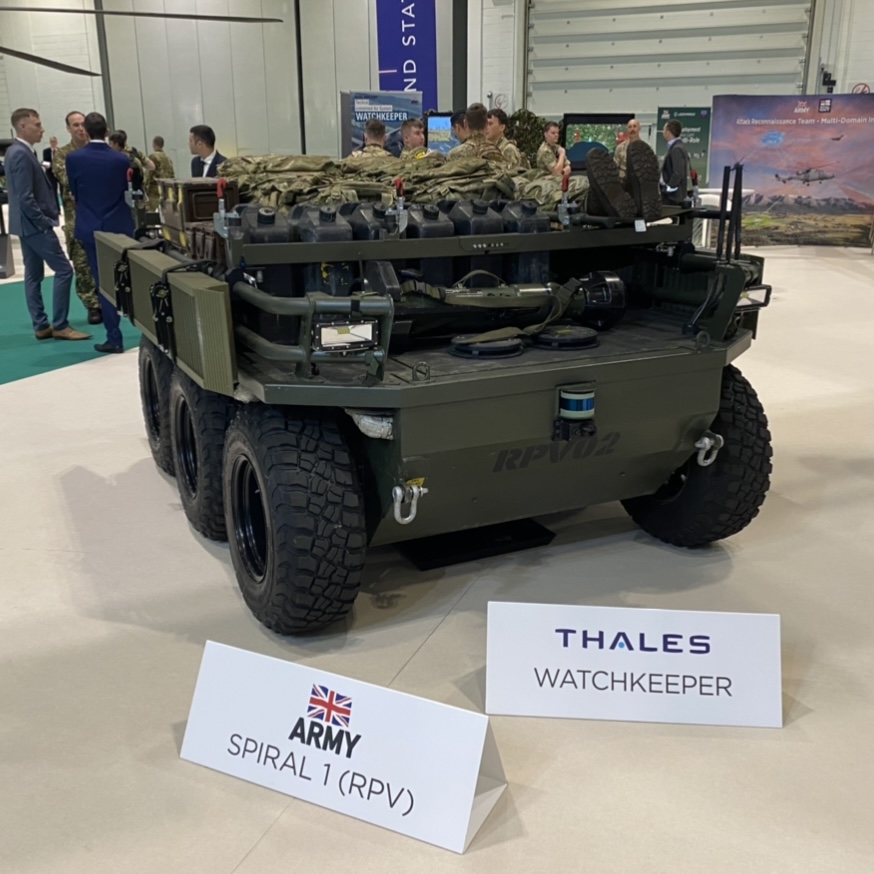
One of the first things you see upon entering Warrior West is HDT’s Hunter Wheeled Offload Logistics Follower (WOLF), a 6×6 load-carrier for dismounted infantry.

Capable of carrying 1,000 kg (2,200 pounds) off-road for more than 300 km (200 miles) at up to 12 mph, and 120 hour endurance with its onboard fuel tank, the JP-8 / electric hybrid powertrain provides both a “silent drive” and “silent watch” capability. It will also produce five kilowatts of power.

This particular model spent quite a bit of time with the 10th Mountain Division, including a JRTC rotation, where the Army learned about how to use a small robotic vehicle in direct support of the squad.

What interests me about the Hunter WOLF is the modular architecture which allows the quick reconfiguration of multiple mission payloads.

At Warrior West, it is fitted with the MPR060 Water Purification System which produces 60GPH (227 LPH) maximum flow rate on freshwater sources and 30GPH (113.6 LPH) maximum flow rate on saltwater sources.

HDT products are available for unit and agency orders from ADS, Inc.