Wilcox Ind VIPR

Archive for the ‘Munitions’ Category

Lockheed Martin Announces Strigo And New Product Center Of Missile Technology Solutions To Support The Arsenal Of Freedom

Wednesday, August 12th, 2026

ORLANDO, Fla., Aug. 10, 2026 — Lockheed Martin (NYSE: LMT) announced today the launch of Strigo™ – a new set of modular defense solutions that includes radio-frequency (RF) sensors, missile datalinks and missile seeker technologies built on a common baseline. Leveraging common architectures, Strigo solutions can be reconfigured quickly for a range of missions, from air defense to missile defense to air-to-surface engagements and beyond.

To support the rapid development of Strigo solutions, Lockheed Martin has established a dedicated product center to accelerate the concept-to-delivery pipeline of these new capabilities. The product center serves as a storefront of ready-now and near-ready solutions that can be quickly adapted to, and evolve with, a customer’s mission set.

Within the Strigo Product Center, Lockheed Martin conducts proactive research to develop and produce new RF sensor and missile technologies before a requirement is even formalized – ensuring the hardware is available at the pace of evolving threats.

WHAT’S NEW

Established less than two years ago, the Strigo Product Center has already advanced multiple concepts from initial design through successful testing, demonstrating a faster path from innovation to operational capability.

Specifically, technologies developed through Lockheed Martin’s Strigo family of solutions have informed aspects of the PrSM Increment 2 seeker package.

WHY IT MATTERS

Speed to Capability: Driven by speed and Lockheed Martin’s extensive expertise in developing sensor solutions, the Strigo Product Center enables concepts to move from sketch to tested solution in months, not years, accelerating delivery of critical capabilities to warfighters.

Supporting the Arsenal of Freedom: The Strigo Product Center delivers solutions that can be rapidly adapted to counter emerging threats, helping America and its allies maintain a decisive advantage on the battlefield.

Investing with Intent: Lockheed Martin has committed $250 million to date to the Strigo Product Center. This investment fuels proactive innovation that stays ahead of customer requirements while leveraging modular architectures to lower lifecycle costs and guarantee long?term sustainment.

EXPERT PERSPECTIVE

“By putting proactive research and development at the forefront, the Strigo Product Center lets us test and deploy new solutions at unprecedented speed. That’s how we turn ‘what if’ into ‘what’s next’ faster than ever before,” said Stacy Kubicek, vice president and general manager, Lockheed Martin Sensors and Global Sustainment. “Leveraging our deep expertise in advanced sensor and missile technologies, this long-term investment reshapes the way we develop and deliver next-generation, mission-ready capabilities, ensuring our warfighters have the solutions they need the moment threats evolve.”

WHAT’S NEXT

Lockheed Martin will continue to invest in new RF sensor, missile seeker and missile datalink technologies to accelerate today’s munitions acceleration efforts while laying the foundation for the next generation of U.S. military capabilities.
Mistral Inc and Uvision Receive an Additional Order Under US Army Lethal Unmanned Systems Program

Thursday, August 6th, 2026

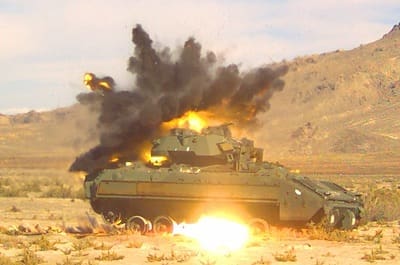
More than $50 million delivery order expands HERO 120 systems and ancillary equipment in support of U.S. Soldier training, readiness, and mission success
BETHESDA, Md., Aug. 5, 2026 — Mistral Inc. and Uvision announced today that they have received an additional order under the U.S. Army’s Lethal Unmanned Systems (LUS) program in support of the Capability Portfolio Executive (CPE) Mission Autonomy, Precision Strike Reconnaissance Systems (PSRS).

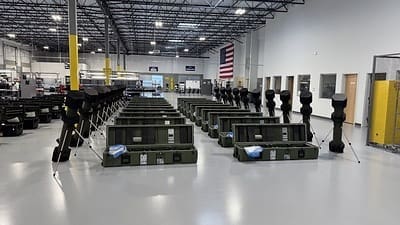
Valued at more than $50 million, this order will increase the quantity of HERO 120 loitering munition systems and ancillary equipment provided to U.S. Warfighters. The award supports the Army’s continued effort to equip Soldiers with advanced, reliable, and mission-ready capabilities that enhance training, readiness, and operational effectiveness.

HERO 120 systems are being domestically manufactured in support of the U.S. Army Lethal Unmanned Systems program.

This additional order represents an important milestone for Mistral Inc. and Uvision as they continue supporting the U.S. Army’s LUS program. The additional systems and equipment will help soldiers train, build proficiency, and prepare to employ a precision strike capability designed for the demands of the modern battlefield.

Under the LUS program, Mistral Inc. and UVision work together to deliver the HERO 120 to the U.S. Army. Uvision is the design authority for HERO 120 and is a major partner in the development, manufacturing, and delivery of the system. Mistral Inc. and Uvision remain focused on providing the DOW with proven capability, responsive support, and reliable delivery as the program continues to advance.

“This is an important step forward for Mistral Inc., UVision, and the U.S. Army’s LUS program,” said Yoav Banai, Senior Vice President at Mistral Inc. “This award increases the number of HERO 120 systems and ancillary equipment available to our Soldiers, allowing them to train, build confidence, and prepare for mission success. Mistral Inc. and Uvision are proud to continue supporting the Army and remain committed to providing warfighters with the tools they need to win the fight.”

The HERO 120 loitering munition system supports precision strike capability for modern tactical formations.

“Uvision is proud to support the U.S. Army’s LUS program,” said Jarmin Blanton, Vice President of Business Development, Sales & Marketing at Uvision Inc. “As the design authority for HERO 120, UVision remains committed to delivering a mature, effective, and reliable system that supports soldier training, readiness, and mission success. The continuation of the LUS contract reflects the continued strength of the partnership between Mistral Inc. and Uvision Inc. and our shared commitment to supporting the Army’s precision strike requirements.”

Tiberius Aerospace Entered into Cooperative Research and Development Agreement with US Army Combat Capabilities Development Command Armaments Center to Advance Sceptre Precision-Guided Artillery Program

Wednesday, August 5th, 2026

Tiberius Aerospace, the modern defense technology company building next-generation weapon systems and AI-powered defense solutions for the United States, the United Kingdom and allied nations, today announced that it has entered into a Cooperative Research and Development Agreement (CRADA) with the U.S. Army Combat Capabilities Development Command Armaments Center (DEVCOM AC) to support the continued development and maturation of Sceptre, the company’s next-generation precision-guided, ramjet-powered 155mm artillery munition.

The CRADA establishes a collaborative research framework between Tiberius Aerospace and DEVCOM AC, enabling the parties to collaborate on mutually agreed research and technical activities relating to the Sceptre program. CRADAs are a long-established mechanism through which the U.S. Army works with industry to accelerate the development and maturation of technologies of mutual interest.

Unlike conventional rocket-assisted projectiles, Sceptre uses a liquid-fueled ramjet that provides sustained propulsion throughout flight, delivering a step change in the performance of tube artillery. Fired from a NATO-standard 155mm howitzer, Sceptre is designed to accelerate beyond Mach 3, reach altitudes exceeding 65,000 feet and deliver precision effects at ranges of up to 150 kilometers, with target accuracy within five meters, even in GPS-denied environments.

Crucially, Sceptre requires no new launcher or bespoke firing platform, enabling armed forces to dramatically extend the capability of their existing artillery inventories without introducing a new weapon system. Its propulsion system uses a multi-fuel liquid propellant compatible with readily available military fuels, including diesel, JP-4 and JP-8, reducing logistics, storage and sustainment requirements while leveraging existing battlefield fuel supply chains.

Designed from the outset as a software-defined weapon, Sceptre combines advanced propulsion with a modular open architecture that enables continuous capability upgrades throughout its service life. Through integration with GRAIL, Tiberius Aerospace’s AI-powered platform for the continuous iteration of weapon systems, new targeting capabilities, guidance algorithms, mission software and autonomy can be rapidly integrated throughout the munition’s lifecycle. By connecting operational requirements with engineering, testing and federated manufacturing, GRAIL enables Sceptre to evolve continuously in response to emerging threats, accelerating the delivery of improved capability to the battlefield.

In April 2026, Tiberius Aerospace achieved a world-first demonstration by successfully launching a liquid-fueled ramjet from a NATO-standard 155mm howitzer. Together with previous demonstrations of round integrity under launch conditions of approximately 16,000 g, successful fin deployment and stable aerodynamic flight the company’s disciplined flight-test program continues to systematically validate each of the core technologies underpinning Sceptre.

The CRADA further expands Tiberius Aerospace’s collaboration with the U.S. Department of Defense and marks another important milestone in the maturation of the Sceptre program.

By combining advanced propulsion, precision guidance, software-defined architecture and AI-enabled continuous iteration.

Lockheed Martin and Rheinmetall Move Forward with ATACMS Co-Production in Europe

Wednesday, July 8th, 2026

ANKARA, Türkiye, July 7, 2026 – During the NATO Summit Defense Industry Forum, Lockheed Martin (NYSE: LMT) and Rheinmetall announced the signing of a memorandum of understanding (MOU) that addresses the immediate demand for locally produced munitions in Europe.

With the support of the United States and German governments, the agreement marks the next step toward establishing a joint venture to create the first European centre of excellence for the manufacturing, integration and distribution of ATACMS across NATO and allied European forces.

“This partnership marks a watershed moment for European security and allied industrial cooperation. By combining Lockheed Martin’s unmatched missile expertise with Rheinmetall’s manufacturing excellence, we’ll deliver combat-proven capabilities faster and more efficiently to our allies,” said Jay Pitman, president, Lockheed Martin International.

“Bringing ATACMS co-production to Germany is a strong signal for Europe’s defense industry and for NATO’s long-term resilience. This partnership combines proven U.S. technology with European manufacturing strength, creating industrial value in Germany while expanding the capacity allies need to meet growing security demands.” said Dennis Goege, chief executive for Europe at Lockheed Martin.

Armin Papperger, CEO Rheinmetall AG: “Our aim is to strengthen the defence capabilities of Germany and Europe. Together with our friends at Lockheed Martin, we are now establishing the industrial base in Germany for modern defence systems, which are in great demand by the armed forces of Europe. By establishing ATACMS production at Rheinmetall’s Unterluess site, we are creating new capabilities for Germany and Europe, securing supplies for our customers and strengthening our autonomy in defence policy. We are grateful that Rheinmetall has been selected to set up and operate the world’s first and only production facility for ATACMS guided missiles outside the United States.”

Commissioned over 125 years ago, Rheinmetall’s Unterluess facility is one of the company’s most important sites. A total of about 4,000 employees work there. Its core competencies include the production of weapon systems and ammunition, as well as the development, manufacture, and maintenance of tracked vehicles. Unterluess is the largest privately owned firing range in Europe. Last year, the “Werk Niedersachsen”—one of the most modern production facilities for artillery ammunition—was put into operation. A rocket motor factory is currently nearing completion. Production of rocket motors and guided missile components is scheduled to begin as early as 2027.

By co-producing ATACMS missiles on European soil, the partnership supports local capability, increases allied deterrence and contributes to economies on both sides of the Atlantic. Backed by decades of extensive combat employment, ATACMS has consistently proven its operational effectiveness, precision, and mission reliability in high-intensity conflicts. With significant global demand for ATACMS, Lockheed Martin will continue operating its current production line in Camden, Arkansas until transition is complete.

The agreement underscores Lockheed Martin’s commitment to Europe, forging deep, long-term co-production ties with European industry and customers. Lockheed Martin has been a strategic partner for the defense and security of Europe for more than 75 years and remains steadfast in its support of customers and partners across the region.  

USSOCOM Seeks Air Loitering Munition for Use with Fixed Wing Aircraft

Thursday, July 2nd, 2026

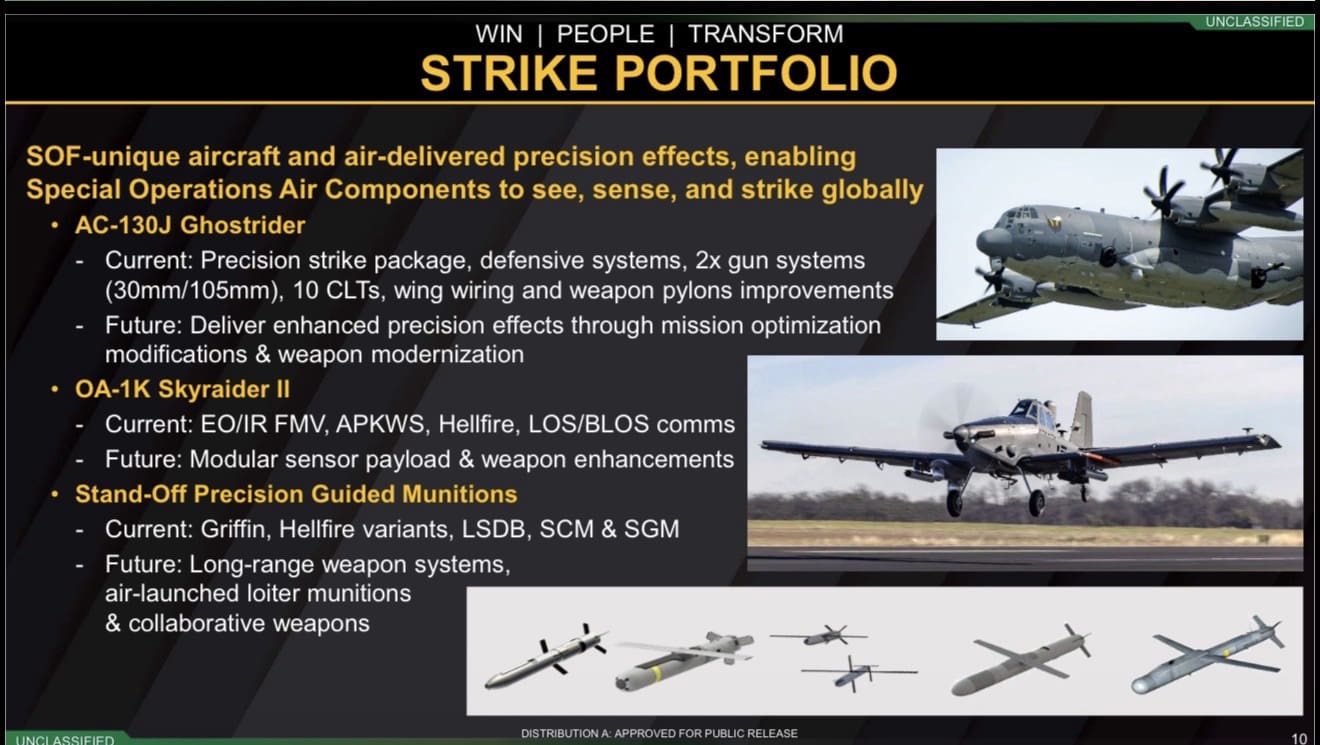
In a Sources Sought Notice issued recently to industry, Headquarters (HQ) USSOCOM Special Operations Forces (SOF), Acquisition, Technology & Logistics (AT&L), Program Executive Office-Fixed Wing (PEO-FW) is performing market research to understand Industry capability to deliver an Air Loitering Munition (ALM) Stand-Off Precision Guided Munition (SOPGM) with an extended range and capabilities beyond the current SOPGM portfolio. This capability was briefed by PEO-FW during SOF Week as it relates to the strike portfolio.

In particular they are seeking precision munitions which can be released from SOF fixed-wing air platforms (lugged munitions, Common Launch Tube (CLT) launched munitions or other release mechanism), preferably capable of employment from CLT.

Attributes:

Munition Weight: Not-to-exceed 95 lbs

System form factor:

For CLT form factor: 5.9 inch diameter, 42 inches max overall length.

For Lugged or other release mechanism: 14 inch lug spacing, 90 inches overall length (maximum), 9 inch diameter (maximum); release from either a BRU-71 or BRU-78

Seeker Assembly: Passive system (limited Radio Frequency emissions) with integrated Automatic Target Recognition (ATR)

Warhead/payload weight: maximize kinetic warhead in conjunction with munition NTE weight

Employment Environment: Contested and non-Contested with Intra Missile Communications

Minimum TRL 6

Range: min 75NM from launch point to loitering point – launch altitudes between 5000 to 30,000 feet MSL

Loitering Time: min 40min once reaching loitering point at altitudes between 500-3000 AGL

Speed: 50 -100 kts cruise and loitering, 100kts+ minimum dash speed on attack profile

C2 Integration: System shall support government-owned FANTOM Core collaborative mission autonomy to command and control the platform flight controller via a machine-to-machine (M2M) API and/or C2 integration via BMS (Battle Management System)

Logical/electrical Interface Capability: Identify compatibly, with substantiation, of 1553/UAI (via 1760) or BMS Generic CLT compatible  

Environmental Profile: Typical operational temperatures and dynamic forces associated with SOF aircraft

Mission Profile: Pre-planned routing with altitude changes and/or direct-to loiter point

Cost target: Best value at quantity points of 500, 1000, 3000 (ROM level costing sufficient)

Interested parties must submit a white paper by Jul 27, 2026 12:00 PM EDT.

Tactical Photonics Presents Europe’s Most Precise Laser Targeting Payload for Drones, Free of US Export Controls

Thursday, June 18th, 2026

At under 2 kg and nearly half of the cost of US equivalents, it is the most accurate European payload in its class with the longest targeting range, designed for off-the-shelf integration across drone platforms.  As Russia’s GPS jamming spreads across the region, laser designation offers the only targeting solution that does not rely on GPS at all.

June 17, 2026 – Vilnius, Lithuania. When GPS guidance fails, a drone can drift off course by as much as 100 km. Over the last month, at least six drone incidents across Europe have been linked to GPS jamming and spoofing – and the problem is spreading. For ordinary Europeans, it means air raid sirens, evacuation orders, and, in Romania’s case, waking up to a drone embedded in your apartment building.


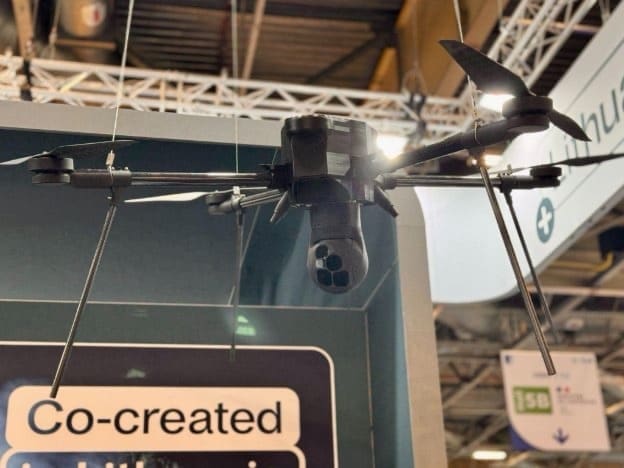
3D-printed plastic prototype of a payload mounted on a real-size drone, Eurosatory 2026 (Source: Tactical Photonics )

Russian electronic warfare (EW) demonstrated the scale of this problem when Ukrainian strike drones were diverted across the region within 48 hours, one striking the chimney of an Estonian power plant.

When a drone is knocked off its course, it does not stop flying. It can wander hundreds of kilometers and deliver whatever payload it carries wherever it happens to land.

However, Europe has an emerging solution to this. Current targeting systems rely on GPS or radio links, both of which Russian jamming has shown it can disrupt. Laser targeting designators don’t need GPS at all. They  work on fundamentally different principle: light cannot be intercepted or spoofed. Until now, similar high-tier systems had to be acquired through US-based companies, controlled by the US authorities.

Tactical Photonics, part of Aktyvus Photonics Group, is changing that by presenting the most accurate laser targeting payload in its 2 kg class, with the longest targeting range. To do so, the company joined forces with Lithuanian talents and built a separate entity powered by Aktyvus Photonics laser technology. A key benefit of laser designation is precision strike capability – ensuring guided munitions hit exactly where intended.

The payload functions as a laser designator, it marks targets with a laser spot, which laser-guided munitions then home in on to strike with precision. The payload does not carry or launch munitions itself, but determines exactly where they land.

“We built this because we were asked to – by Ukrainian and Baltic national forces. Europe has invested billions in the next generation of tactical drones, but it has not solved the targeting problem. And the payload is usually what determines whether the drone is useful or not,” says Laurynas Šatas, CEO of Aktyvus Photonics Group.

“Lasers are key here, as they turn a surveillance drone into a precision strike platform, and these are still US-made, ITAR-controlled, and out of reach for programmes that cannot wait for a US State Department approval. There were no commercially viable companies in Europe providing laser payloads, and we intend to change that.”

According to the company, the payload weighs under 2 kg and is designed to hit small moving targets at ranges beyond 3 km. This is enabled by 4-axis mechanical stabilisation – a critical differentiator in this class of system. Most payloads in this weight category rely on 2-axis stabilisation and digital image processing, which limits both range and accuracy. Four mechanical axes maintain a stable targeting lock on small moving targets even as the drone itself manoeuvres, replicating the performance of much larger systems in a fraction of the weight.

4 axes. 3 km range. 2 kg. 1 system. For comparison, the equivalent US system from L3Harris WESCAM weighs approximately 15 kg and costs two times more. With this component, a drone can guide the full range of laser-guided STANAG 3733 NATO munitions.

Beyond precision, the system significantly increases situational awareness for the operator. It enables forces to operate beyond line of sight (BLOS), requires less crew training than comparable systems, and is designed for rapid deployment across multiple drone platforms.

“Military experts ask how can a European company build this better and cheaper than established American suppliers. Well, the answer is where we come from. Lithuania has been a global hub for laser science for decades. Some of the world’s leading laser companies were and are being built here. We have extremely well-trained scientists and engineers. The knowledge is here, the supply chain is here, and the cost base reflects that. It is not a surprise that this technology gets cheaper when it is built in the country that helped invent it,” adds Šatas.

The system is compatible with fixed-wing drones and helicopter-type drones. It can also work alongside loitering munitions – which carry a SAL seeker that homes in on the laser-marked target, rather than marking targets themselves.

European defence investment grew by 14% last year, faster than any other continent, reaching €739 billion, the steepest climb since the 1950s and double the level of a decade ago.

“As spending increases, Europe needs to become more independent in every area and own different parts of the supply chain,” continued Šatas.

“We are not building drones. We are building the part that determines how precise a drone can be, and making that part available in Europe at a price and scale that procurement officers can actually work with.”

The payload made its public debut at Eurosatory 2026, one of the world’s leading defence and security exhibitions, displayed on a small drone at the Lithuanian national stand. Production is set to scale to 600 units per year from 2027.

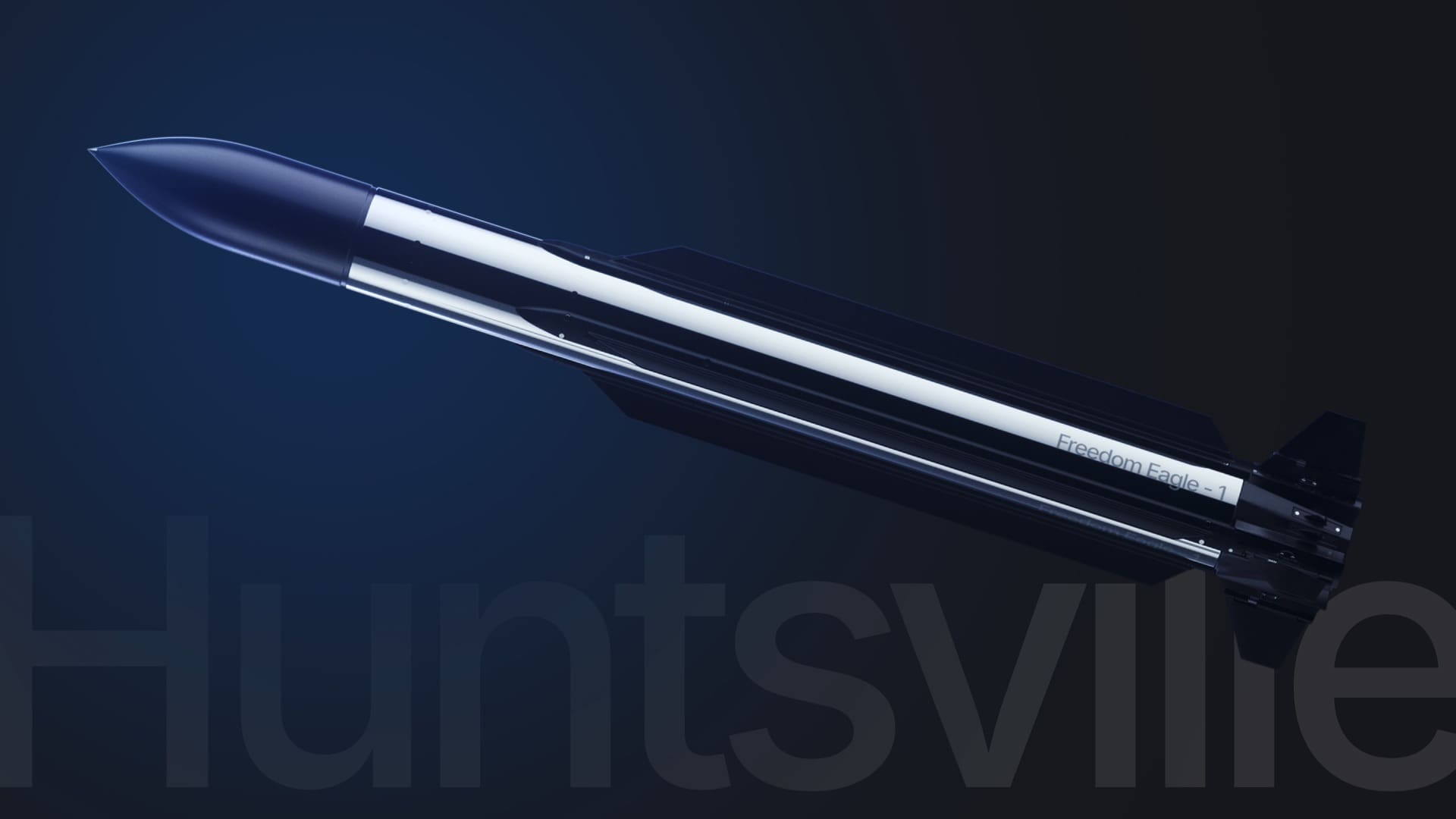
AV Expands Huntsville Facility to Accelerate Production of Next-Generation Freedom Eagle-1 Interceptor

Friday, May 29th, 2026

Facility expansion positions AV to scale production, accelerate fielding, and provide cost-effective defense against mass aerial threats

ARLINGTON, Va., May 26, 2026 – AeroVironment, Inc. (“AV”) (NASDAQ: AVAV), a global defense technology leader, today announced an additional government investment of $20.2 million in AV’s Huntsville, Alabama facility to increase quantities of Low-Rate Initial Production (LRIP) and accelerate future Full-Rate Production (FRP) of the Next-Generation Counter-Unmanned Aircraft System Missile (NGCM), known as Freedom Eagle-1 (FE-1). 

The expanded site will serve as the system-level integration, manufacturing, and production hub for FE-1, enabling rapid scale-up of interceptor production and accelerated delivery timelines to meet urgent U.S. Army and Combatant Command operational needs.  

The 24,000-square-foot expansion and associated job growth in Huntsville reflect AV’s continued investment in meeting evolving national security demands for subsonic missiles while strengthening cost-effective production capacity, driving innovation, and supporting on-time delivery. 

“Growing our presence in Huntsville places AV more firmly at the center of the Army’s air and missile defense ecosystem, enabling tighter integration, faster iteration, and more efficient production at scale,” said Wahid Nawabi, Chairman, President and Chief Executive Officer at AV. “That proximity is critical as we begin production of Freedom Eagle-1, a system designed to deliver a scalable, cost-effective response to increasingly complex and high-volume aerial threats.” 

The investment builds on AV’s recent selection and $95.9 million contract award under the U.S. Army’s NGCM and Long-Range Kinetic Interceptor (LRKI) programs, executed through the U.S. Army Combat Capabilities Development Command Aviation & Missile Center (CCDC AvMC) and the Aviation & Missile Technology Consortium (AMTC), and marks the next phase in transitioning Freedom Eagle-1 from development to scaled production and operational fielding. 

In March, AV announced a $97 million contract to design and integrate prototype test environments for next-generation missile defense sensor testing at Redstone Arsenal — a Huntsville-based federal center that is home to more than 70 organizations, including NASA, the FBI, Missile Defense Agency, Army Program Acquisition Executive Fires, and the future U.S. Space Command headquarters. 

“This expansion is a critical step in scaling production of Freedom Eagle-1 and accelerating its delivery to the field,” said Jimmy Jenkins, Executive Vice President of AV’s Precision Strike and Defense Systems Group. “By increasing manufacturing capacity, strengthening integration, and enabling production at volume, we’re delivering a cost-effective interceptor designed to counter increasingly complex and high-volume aerial threats.” 

Freedom Eagle-1 is designed to address these challenges with a combination of performance and affordability. The system is a low-cost, high-performance interceptor capable of neutralizing Groups 2 and 3 UAS while maintaining residual capability against Group 1 UAS, fixed-wing, and rotary-wing aircraft, with increased lethality, extended range, and rapid launch capabilities. 

The system has achieved several key development milestones, including a successful live-fire demonstration of its dual-thrust solid rocket motor, controlled test vehicle launches, and warhead testing, demonstrating technical maturity and reduced risk as the program transitions toward field deployment. 

“As the nation’s defense and security demands increase, it is crucial that we meet capability needs, and there is no better place for AV’s expansion as Alabama continues to lead in defense manufacturing and innovation,” said Congressman Robert Aderholt (AL-04). 

The expansion in Huntsville also reflects AV’s broader strategy to scale domestic manufacturing capacity, following a recent announcement of a $30 million expansion of its Albuquerque, New Mexico campus, a move that is expected to generate more than $670 million in economic impact over the next decade, create more than 450 high-wage jobs, and boost production of mission-critical defense and space technologies. 

US Army Selects AV’s Switchblade 400 for LASSO Program

Tuesday, May 5th, 2026

Award establishes Switchblade 400 as key component of Army’s enduring next-generation loitering munition program

ARLINGTON, Va.– AeroVironment, Inc. (“AV”) (NASDAQ: AVAV) today announced that it has been awarded a prototype agreement from the U.S. Army for the Low-Altitude Stalking and Strike Ordnance (LASSO) program to support the rapid development, delivery and testing of the Switchblade® 400 loitering munition.

The award establishes Switchblade 400, AV’s medium-range, man-portable, anti-armor loitering munition, as a key component of the Army’s LASSO program, supporting the service’s modernization priorities for rapidly deployable, precision strike capabilities that can operate effectively in contested environments.

“This award reflects the Army’s confidence not only in Switchblade 400, but in AV’s ability to deliver at scale,” said Trace Stevenson, President of Autonomous Systems at AV. “Being selected under the LASSO program positions AV as a long-term partner to the Army as it modernizes its loitering munition capabilities, from development and testing through production, fielding, and continuous capability evolution.”

The first loitering munition purpose-built to operate within AV_Halo™, AV’s modular command-and-control ecosystem, Switchblade 400 incorporates advanced aided target recognition (ATR) and autonomous capabilities to detect, classify, and engage targets, day or night, in denied and contested environments while delivering the same anti-armor performance comparable to larger systems, like the Switchblade 600 Blk 2.

Core to Switchblade 400 is the implementation of a Modular Open Systems Approach (MOSA) in system design to ensure long-term system resilience and relevance allowing for interoperability, upgradeability, and affordability as missions evolve.

Known as the “Lightweight Tank Destroyer,” and sized to fit common launch tubes, Switchblade 400 enables a sensor-to-shooter concept of operations that allows a single soldier to detect, identify, and engage targets through a unified, networked architecture – shortening decision timelines while increasing precision, speed, and operational flexibility at the tactical edge. The system features an all-up round (AUR) weighing under 40 pounds that provides the soldier with a lightweight, man-portable, anti-tank weapon system.

“Switchblade 400 is the product of continuous feedback from the field and the soldiers who rely on our systems in real-world operations,” said Brian Young, Senior Vice President of Loitering Munitions at AV. “We are constantly leaning forward, integrating new capabilities, enhancing performance, and reducing the burden on the warfighter. That soldier-driven approach is central to how we develop, test, and deliver capability for the Army.”

The new OTA award under LASSO follows a recent $186 million delivery order from the U.S. Army for Switchblade® 600 Block 2 and Switchblade® 300 Block 20 explosively formed penetrator (EFP) loitering munition systems, part of the Army’s existing five-year, $990 million Indefinite Delivery, Indefinite Quantity (IDIQ) contract under the Lethal Unmanned Systems (LUS) Directed Requirement (DR), which was awarded in August 2024. It was the Army’s first Switchblade order containing EFP payload, delivering enhanced lethality against armored threats.

“The Army’s trust in the Switchblade family has been earned through years of real-world use by soldiers who rely on these systems every day,” said Jimmy Jenkins, Executive Vice President of Precision Strike and Defense Systems at AV. “That trust reflects a clear operational need for precision, speed, and adaptability at the tactical edge—capabilities the Switchblade family is designed to deliver as missions and threats continue to change.”