TYR Tactical

Archive for the ‘Parachuting’ Category

US Army Medics Jump With Plasma, Test New Lifesaving Delivery Method

Tuesday, October 1st, 2019

FORT BRAGG, N.C. — According to U.S. Army Medical Research and Materiel Command, bleeding is the leading case of death on the battlefield. When service members receive serious wounds, they are often transported to a surgical team for treatment. These casualties often suffer from severe blood loss due to the inability of their blood to clot normally, which represent approximately 40 percent of combat casualties.


The USAMRMC says frozen blood is currently the standard for treatment. But due to technical and logistical limitations, the demand for a more transportable plasma product with the same hemostatic properties grew.

The U.S. Army Medical Materiel Development Activity, along with a partner company, are testing transportation methods to deliver freeze dried plasma, or FDP, to address this issue and increase the survival rate of wounded Soldiers.

New Roads, Louisiana native Cpt. Robert Crochet, a primary medical test officer, and an Army Medical Department Board – alongside medical personnel assigned to the 432nd Blood Support Detachment, 44th Med. Brigade at Fort Bragg – are testing FDP’s ability to be transported safely and quickly using means that were previously dismissed due to risk of breakage.

Currently used is French frozen plasma, which is contained inside glass tubes, unlike the new FDP, which is sealed inside a ready-to-use bag along with a 250ml bag of sterile water for injection and rehydrating. These are then stored inside a hard plastic sheath designed to protect the product during transport.

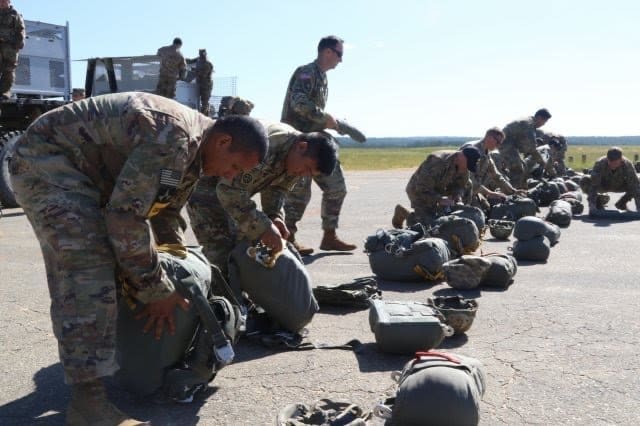
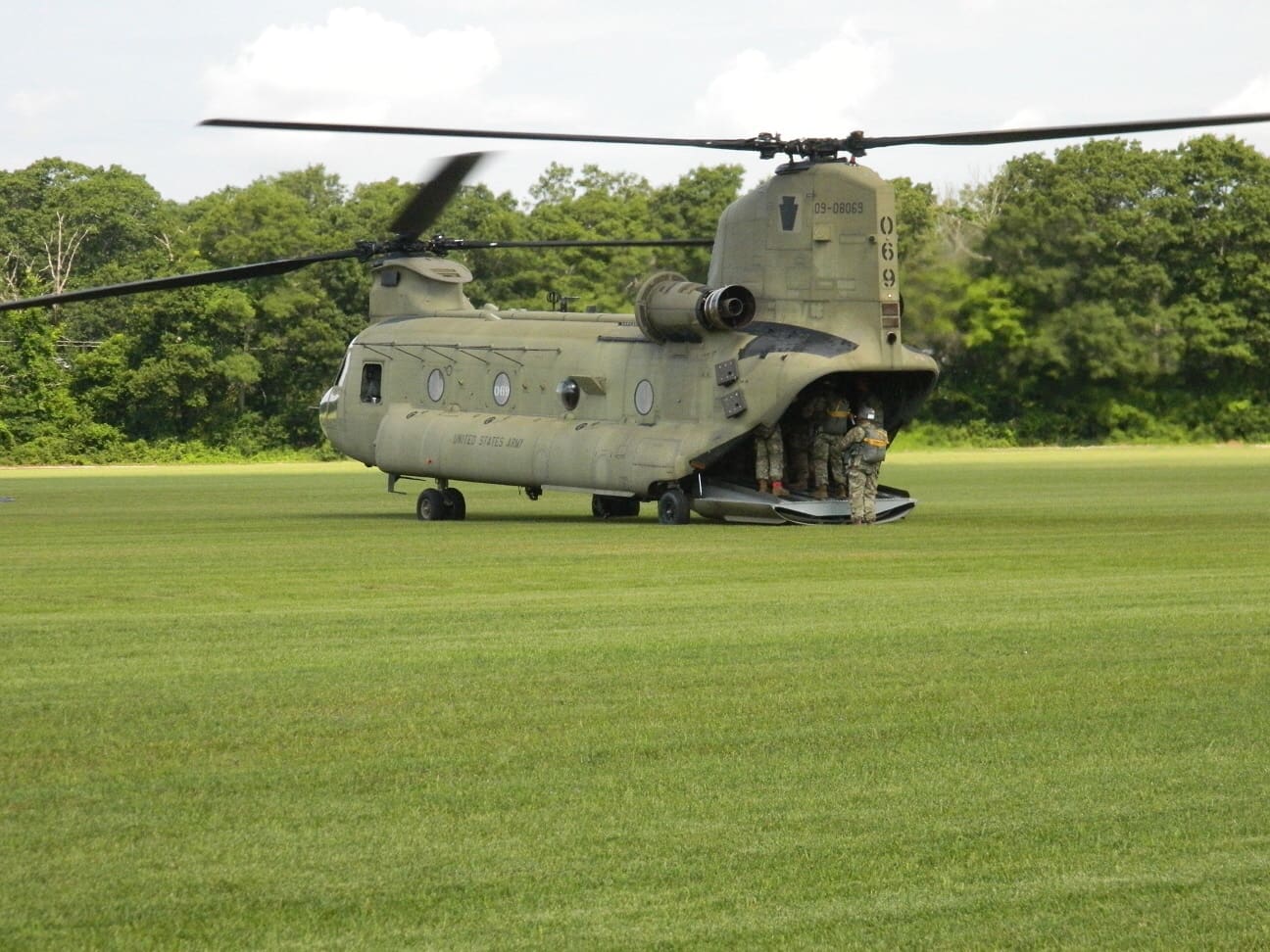
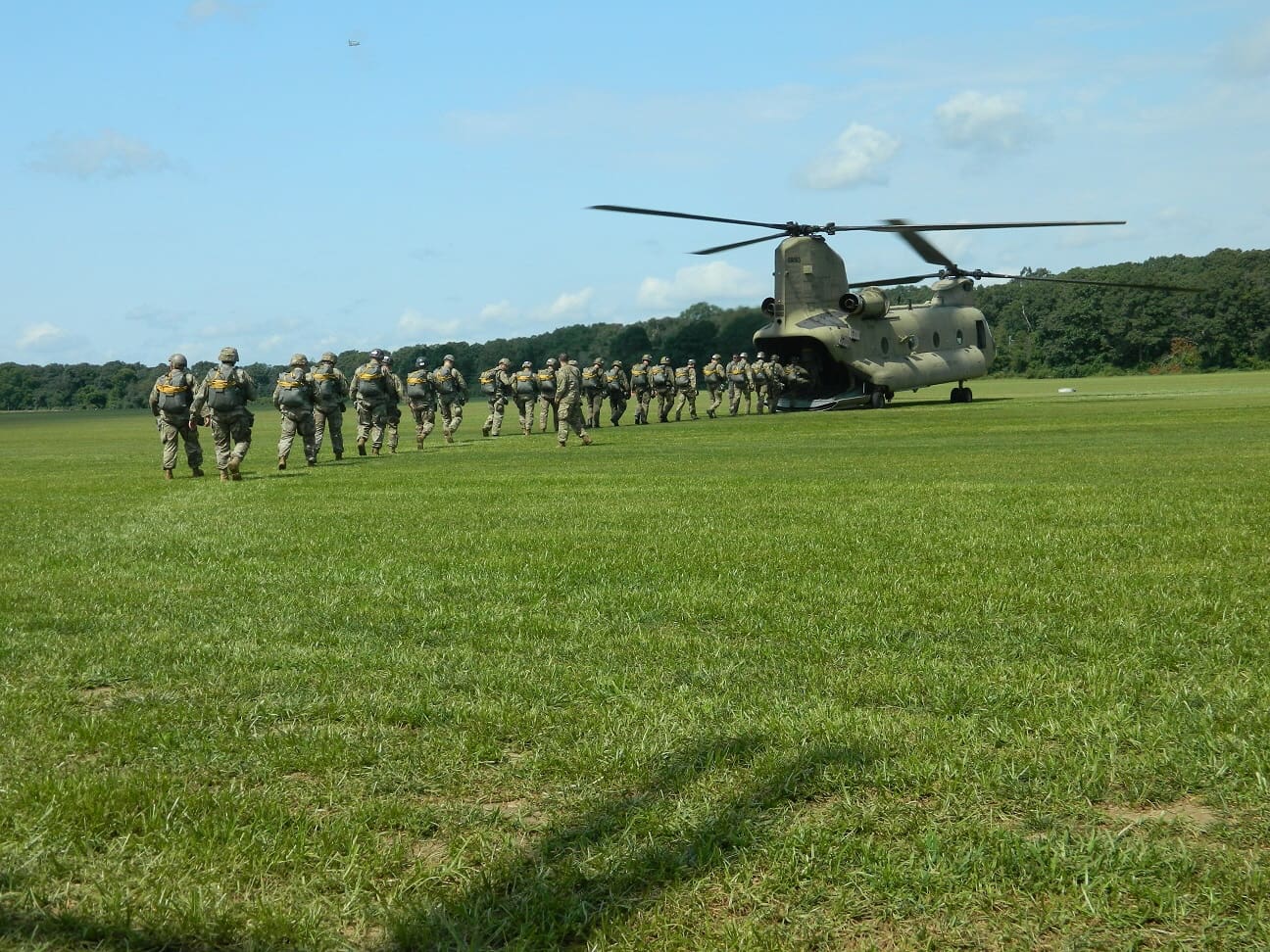
For the test mission, Soldiers of the 432nd BSD rehydrated the FDP and packaged it, then waited for transportation by a CH-47 Chinook helicopter. The airborne Soldiers from Fort Bragg then jumped out of the Chinook with the plasma packed in their bags. Upon landing, Crochet and his team inspected the containers and the FDP for signs of damage. They reported their findings to members of the research and development teams for on-sight data collection.

“Tourniquets helped in enhancing survivability for our war fighters, but it’s blood that keeps them alive,” said Col. Roberto E. Marin, material systems branch chief, AMEDD Board.

According to USAMRMC, there is no current method to supply troops in the battlefield with FFB; it has to be maintained by role 2 medical facilities, advanced trauma management and emergency medical treatment, with the ability to freeze and store the blood at constant temperatures. Medical teams operating in a Role 1, unit-level medical care, do not have the ability to store FFB, thus limiting treatment available for wounded Soldiers, according to USAMRMC officials.

Another disadvantage with FFB is the amount of time required to prepare the blood for use on wounded soldiers.

“Currently FFB takes roughly thirty minutes to thaw for surgical use,” Crochet. “With freeze dried plasma, it takes roughly 1-6 minutes to rehydrate and become ready to administer to the casualty. Those minutes can be the difference in life or death.”

Currently FDP and it’s airborne delivery method is still in the testing phase.

By SGT Brian Micheliche

Is The Army Looking to Expand Use of MOLLE 4000 Airborne Rucksack to General Purpose Forces?

Thursday, September 19th, 2019

Terry Baldwin sent me a link the other day with this note:

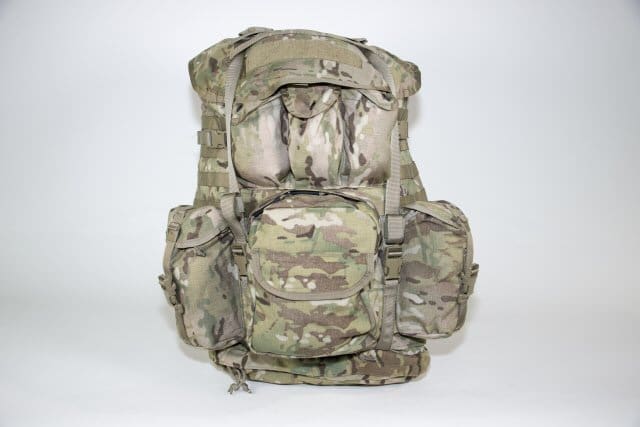
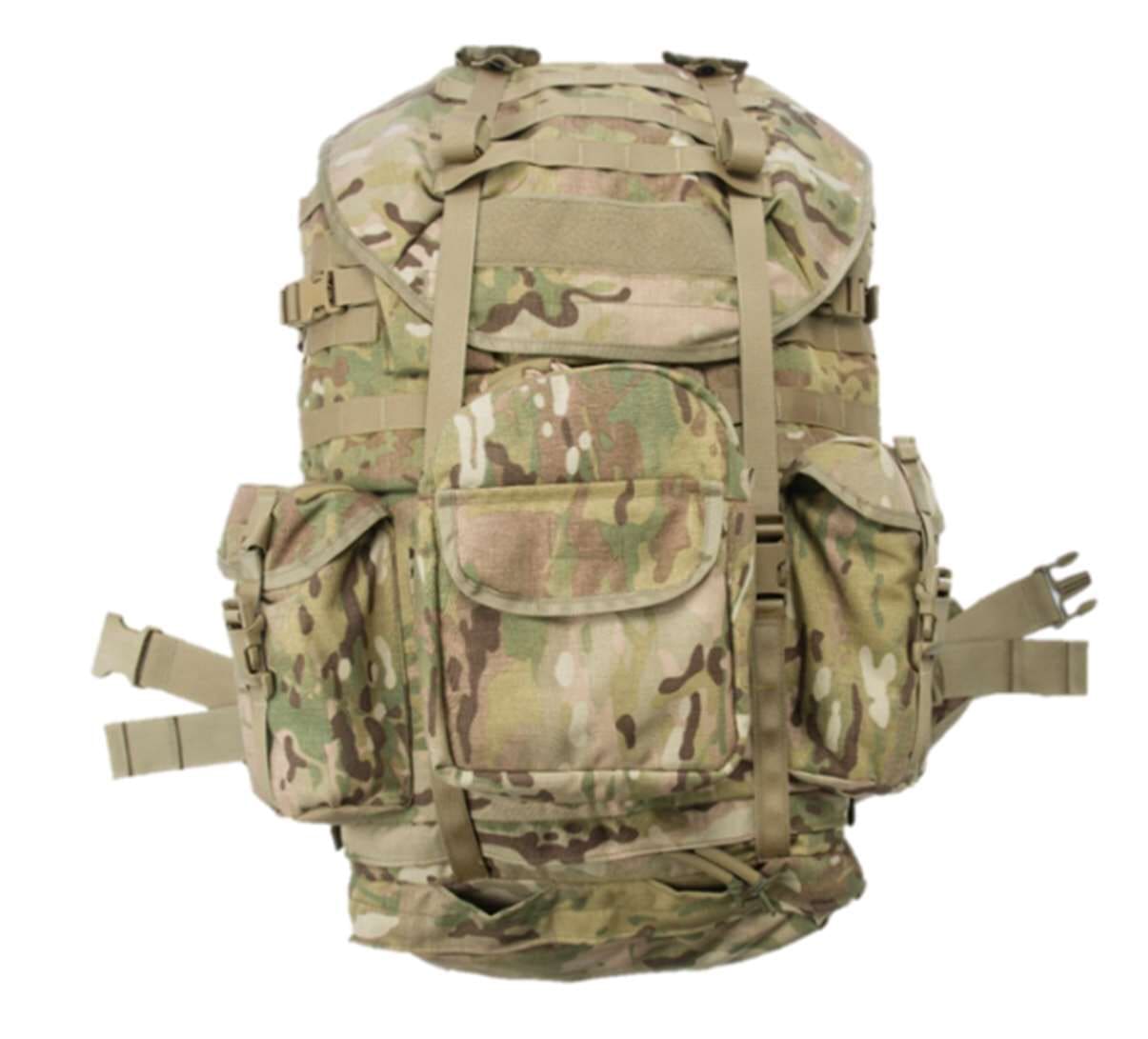
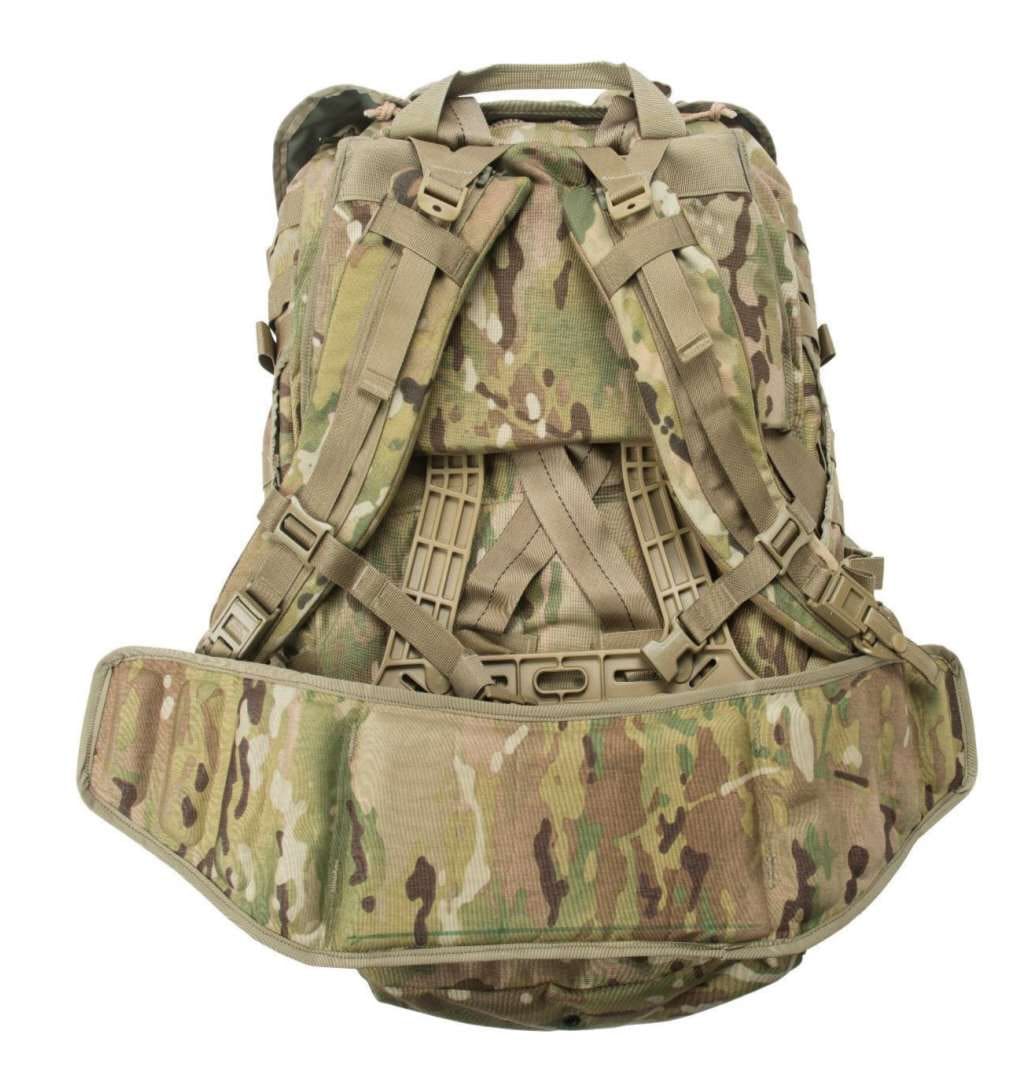
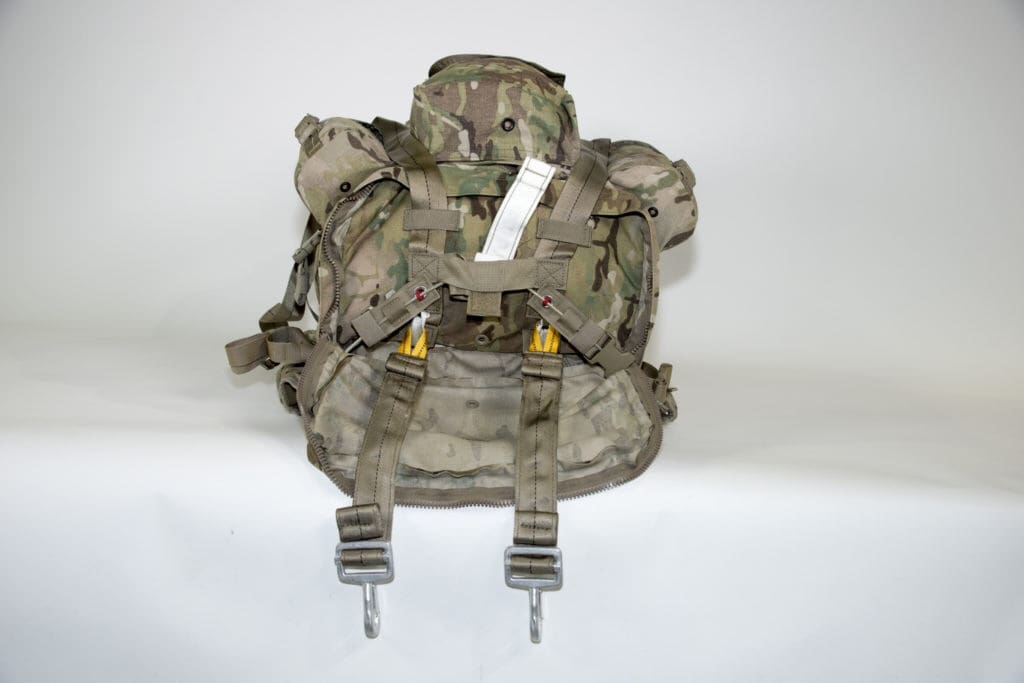
I admit, this particular item of kit has really captured my interest. It seems from the pictures that the “final” version of the rucksack is even more of a large ALICE-clone than the prototypes suggested. The rigging geometry, likewise, would be very familiar to you or me. It also appears, from a separate slide briefing that it is being considered not only for Airborne units but also as a possible Service-wide replacement for the Molle Large. Note, the standard Molle waistpad / belt used with the prototypes has been replaced by what looks like an OCP version of the pad /belt on the Marine’s FILBE pack. The shoulder straps also have  a new 4-point connection arrangement above the envelope pad. Interesting stuff.

He had run across a sources sought notice from earlier this year. The Army is looking to build more of its new MOLLE 4000 Airborne Rucksacks. What is interesting is the description. Up to now, it has only been intended for airborne troops.

Considering the numbers of 130,000 packs and the Army’s concentration on modernizing it’s Close Combat Forces, this looks like a possible fielding for the BCTs.

Here’s the info on the MOLLE 4000 Ruck:

“The new MOLLE Rucksack for Airborne and General Purpose Forces [ emphasis added] is a Government-owned design. It has an approximately 4000 cubic inch capacity and made of 1000 Denier nylon coated fabric, has an external frame, adjustable shoulder straps and an adjustable waist belt. The exterior of the rucksack has multiple storage pockets and pouches of varying dimensions. The interior of the main compartment of the rucksack has a pouch for carrying a radio / hydration bladder or other similarly sized equipment. The interior of the main compartment of the rucksack has a center zippered flap that divides the main compartment into two approximately equal upper and lower halves. The bottom of the rucksack has a separate [Air Items] storage compartment and above that a zippered access into the lower part of the main compartment.”

LTC Terry Baldwin (USA, Ret) contributed to this report.

ParaDry Systems Launches a New Website

Thursday, August 22nd, 2019

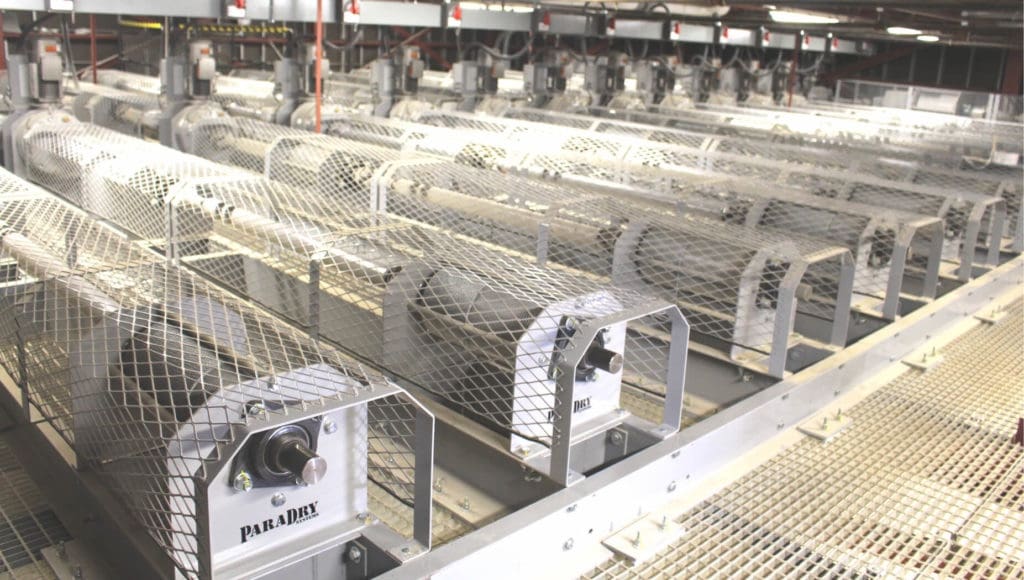
Sanford, FL – ParaDry™ Systems, a line of motorized lifts purpose-designed to facilitate parachute maintenance and inspection, has recently launched a new website. The new site is simple and clean, emphasizing streamlined navigation for users. “People who visit paradrysystems.com want to learn about the product,” says Jack Hoffend, Sales Manager of ParaDry®Systems. “The straightforward design allows folks to move around quickly and efficiently, getting the information they need.”

The site consists of four pages: Home, Products & Services, Completed Projects, and a Contact page. The Home page pulls double duty by putting a brief yet informative description of the product line front and center, letting users skip the extra step of navigating to a separate About page. Users can also move from the Home page directly to the Products & Services and Completed Projects pages.

The Products & Services page is comprised of four sections: a section for Lift Configurations; a section for ParaRam, a specialized lift designed to handle Ram-Air chutes; a section for ParaDry®Systems’ innovative Expeditionary Tower; and a section for information about Rigging Inspection & Review. The Completed Project Page provides a succinct overview of select projects by answering who, what, when, and where. The final page, the Contact page, makes available expected information like fax, phone, and physical address. It is also a simple online form giving users the opportunity to get in touch with the company. Users can safely upload files such as drawings and photos to get a conversation moving in the right direction.

A design detail seen on the Home and Contact pages is subtly colored topographic map lines used as a background. This small detail assures users that while they may not be in familiar territory, they’ve reached someone who is. ParaDry®Systems staff is prepared to guide clients through the ups and downs of properly outfitting a parachute drying tower.

ParaDry®Systems was designed by rigging specialists to operate safely and continuously for decades in the elevated heat and humidity of a parachute drying tower. Suitable for new builds and paraloft tower renovations, the system can be configured to meet a base’s specific needs, always emphasizing safety, efficiency, and reliability. Veteran rigger and senior installer on many ParaDry®Systems projects, Gregory Keatley says, “It is the best product on the market today. It’s really one of the best looking and operating shaft drive units I’ve ever installed and used without fault!”

www.paradrysystems.com

Strike Hold! Presents: Operation Dragoon 75 – Dispatch from the Front

Friday, August 16th, 2019

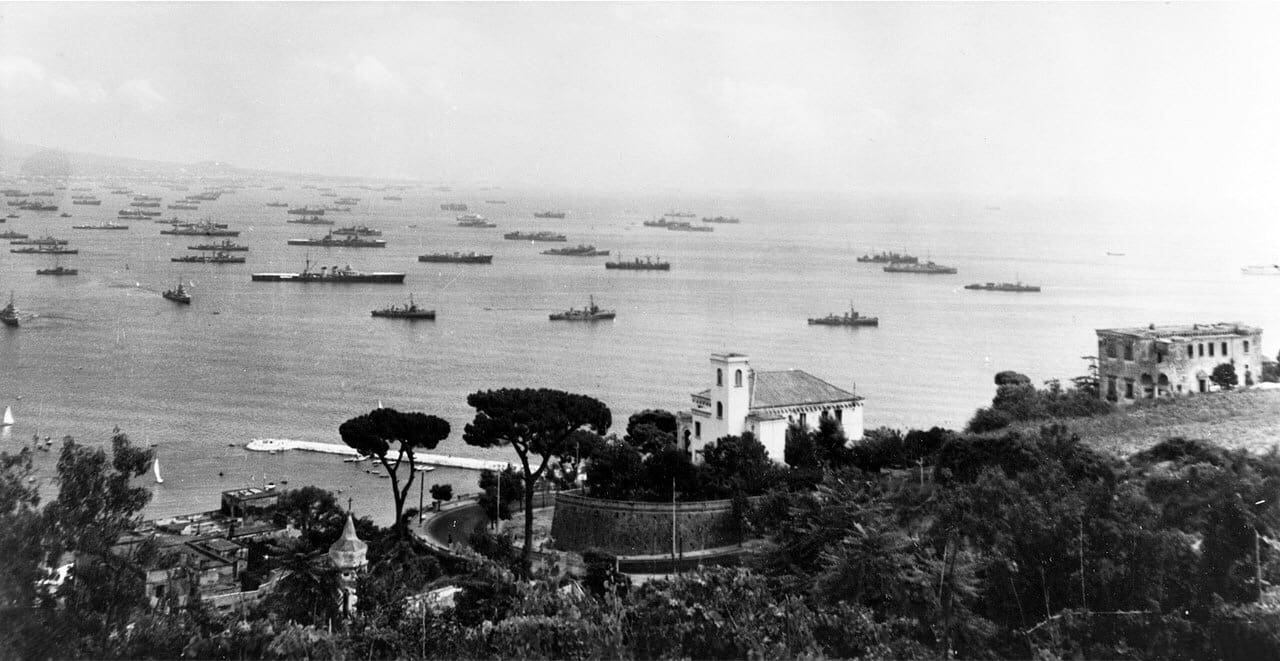
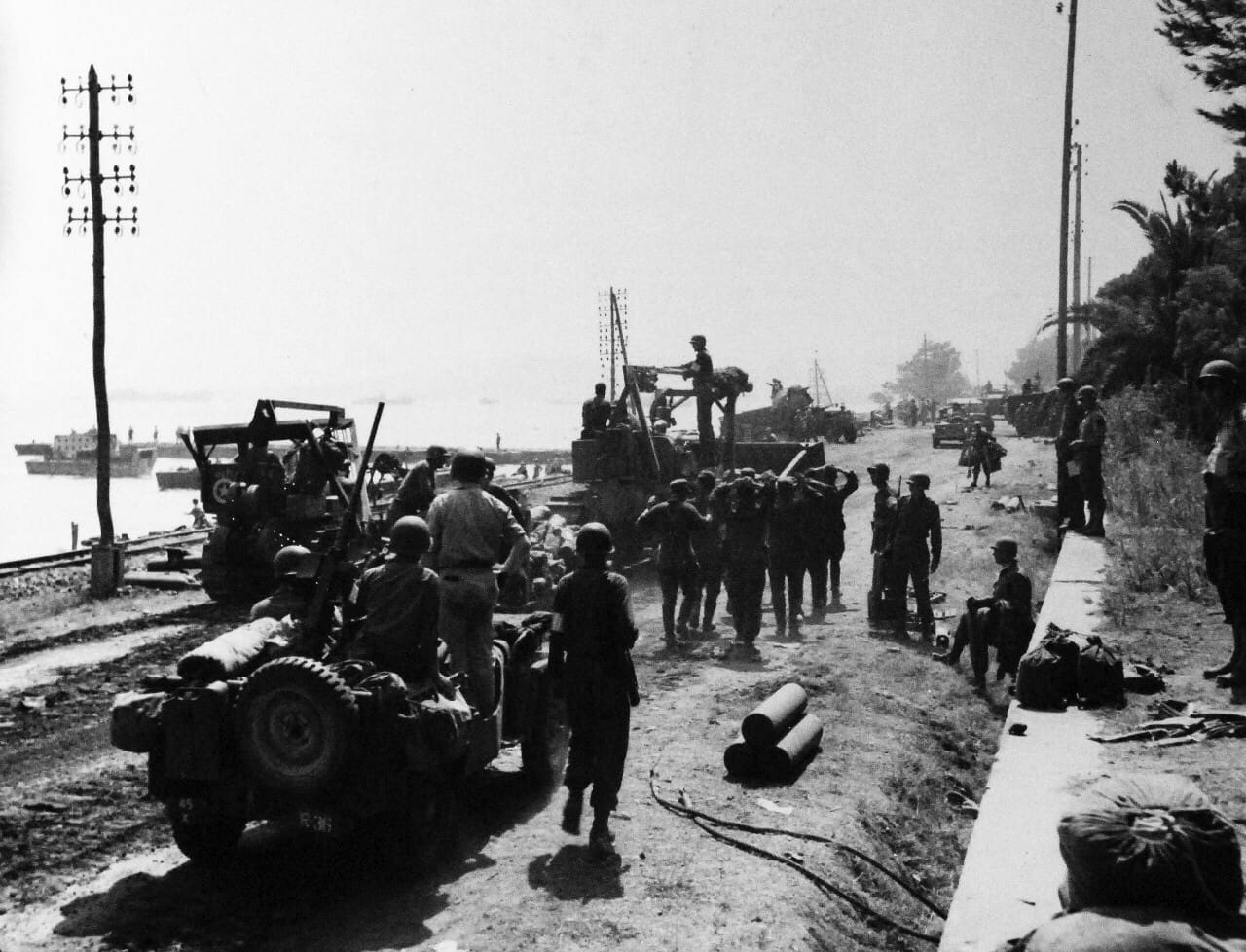
Operation Dragoon, the Allied invasion of southern France, was originally supposed to be launched simultaneous to the invasion of Normandy – thus catching the Nazi forces in France and Western Europe between the horns of a two-pronged assault. However, due to there not being enough ships, aircraft, crews, and materiel to allow both invasions to happen simultaneously, the southern invasion was postponed.

Sometimes known as “The Forgotten D-Day”, Operation Dragoon (earlier known as “Operation Anvil”, whilst the Normandy invasion was known as “Sledgehammer”) was re-scheduled for mid-August 1944. By that time it was also clear to the Allied High Command that another way into, and through, France was necessary because the Normandy ports could not cope with the volume of supplies needed to keep the armies fed, armed, fueled, and moving.

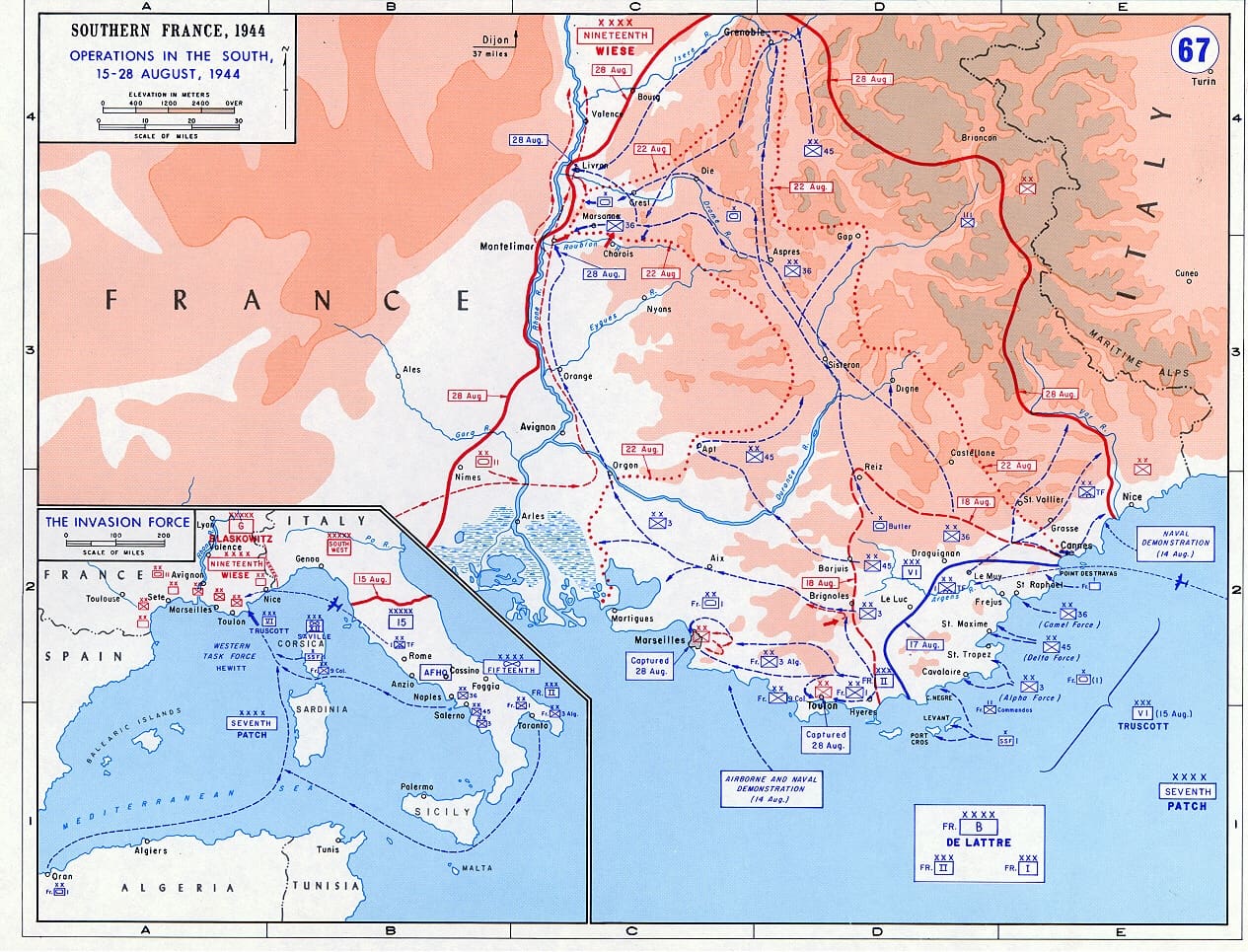
The goals of Operation Dragoon were to secure the vital ports on the French Mediterranean coast and increase pressure on the German forces by opening another front. After some preliminary commando operations, the US VI Corps landed on the beaches of the Côte d’Azur under the shield of a large naval task force, followed by several divisions of the French Army B.

Allied forces were opposed by the scattered forces of the German Army Group G, which had been weakened by the relocation of its divisions to other fronts and the replacement of its soldiers with third-rate Ostlegione outfitted with obsolete equipment. Hindered by total Allied air superiority and a large-scale uprising by the French Resistance, the weak German forces were swiftly defeated.

The remaining German forces withdrew to the north through the Rhône valley, to establish a stable defense line at Dijon. Allied mobile units were able to overtake the Germans and partially block their route at the town of Montélimar. The ensuing battle led to a stalemate, with neither side able to achieve a decisive breakthrough, until the Germans were finally able to complete their withdrawal and retreat from the town. While the Germans were retreating, the French managed to capture the important ports of Marseille and Toulon, putting them into operation soon after.

The Germans were not able to hold Dijon and ordered a complete withdrawal from Southern France. Army Group G retreated further north, pursued by Allied forces. The fighting ultimately came to a stop at the Vosges mountains, where Army Group G was finally able to establish a stable defense line. After meeting with the Allied units from Operation Overlord, the Allied forces were in need of reorganizing and, facing stiffened German resistance, the offensive was halted on 14 September – one month to the day after the invasion.

Three days after the end of Operation Dragoon, on the 17th of September 1944, “Operation Market-Garden” was launched. With Operation Market-Garden the Allied Command sought to leapfrog over the German forces in The Netherlands – using airborne forces to capture key bridges over the Rhine – and then punch through into the industrial heartland of Germany.

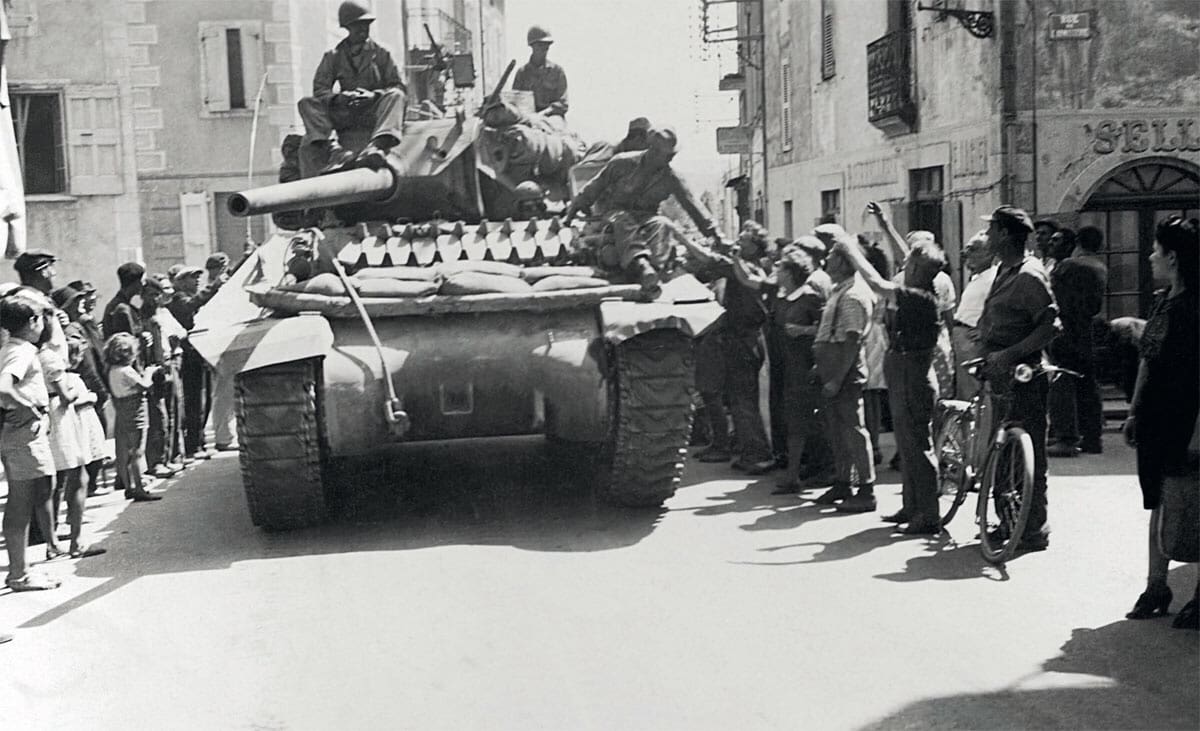
Operation Dragoon was considered a success by the Allies. It enabled them to liberate most of Southern France in a time span of only four weeks, while inflicting heavy casualties on the German forces. Although a substantial part of the best German units were able to escape, the captured French ports were put into operation, allowing the Allies to solve their supply problems.

Article features some text and photos from Wikipedia.

This week marks the 75th Anniversary of Operation Dragoon, and once again our friends from the WWII Airborne Demonstration Team are on the ground and in the air doing what they do best – commemorating the brave troops of the Airborne Forces who were critical to the Allied victory. They recently posted a “Dispatch from the front lines” on their Facebook page, and we’d like to share that with you:

Dragoon Update—Photos from the front!

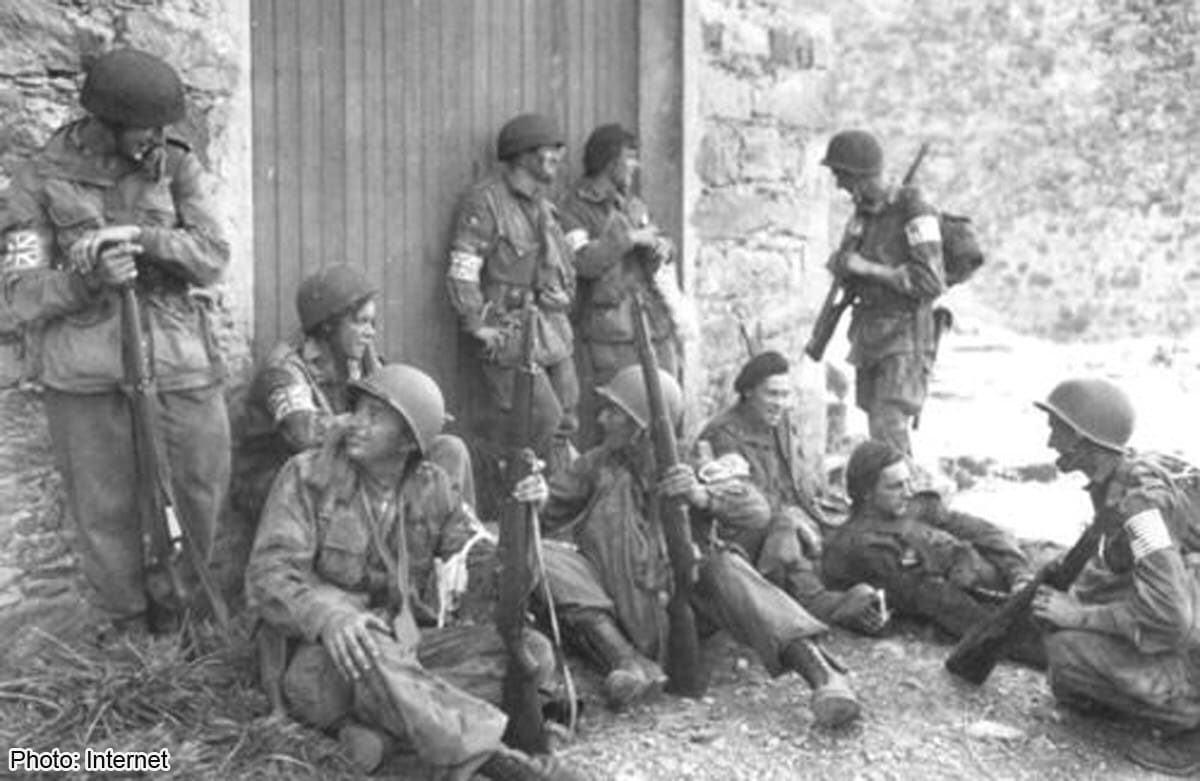
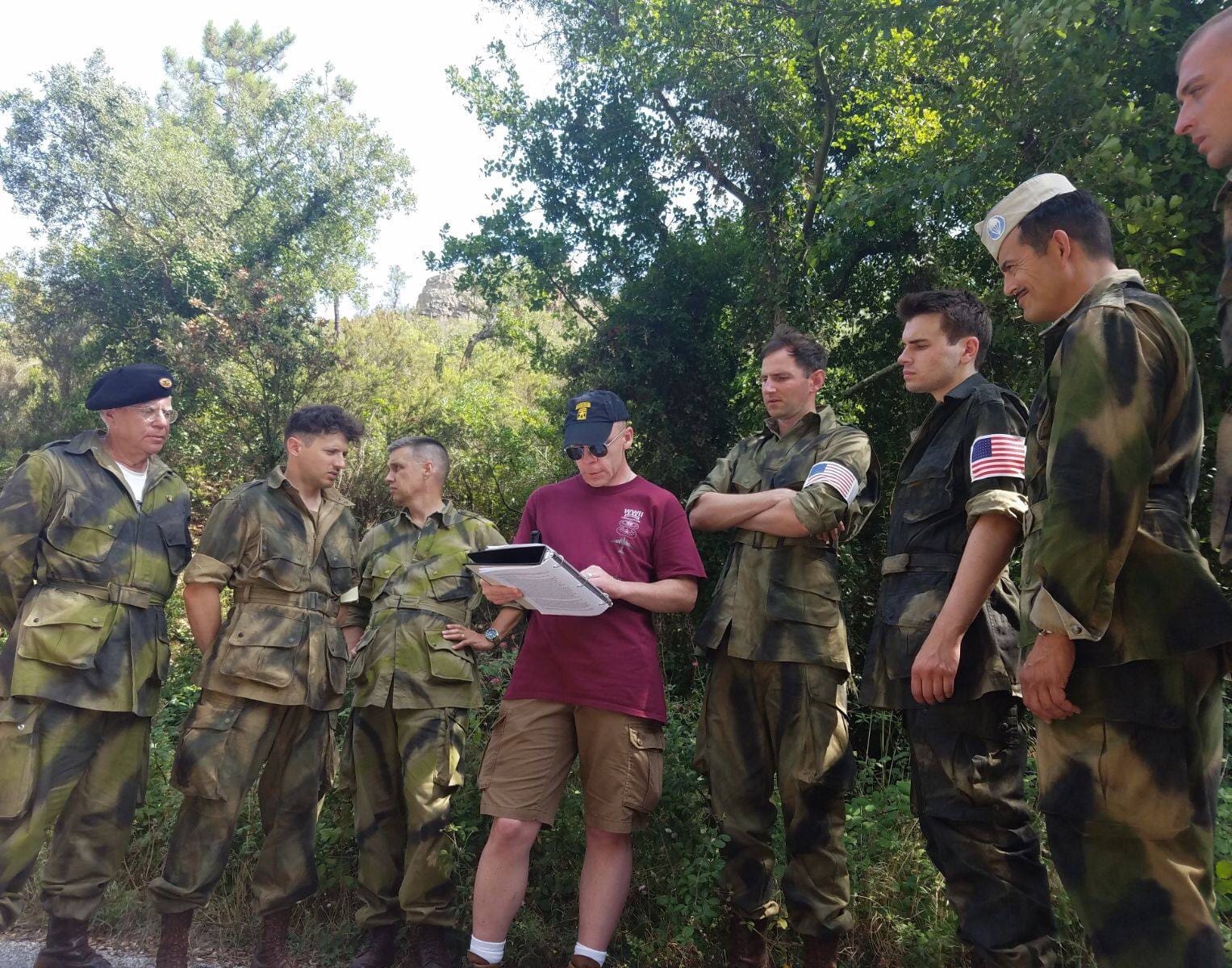
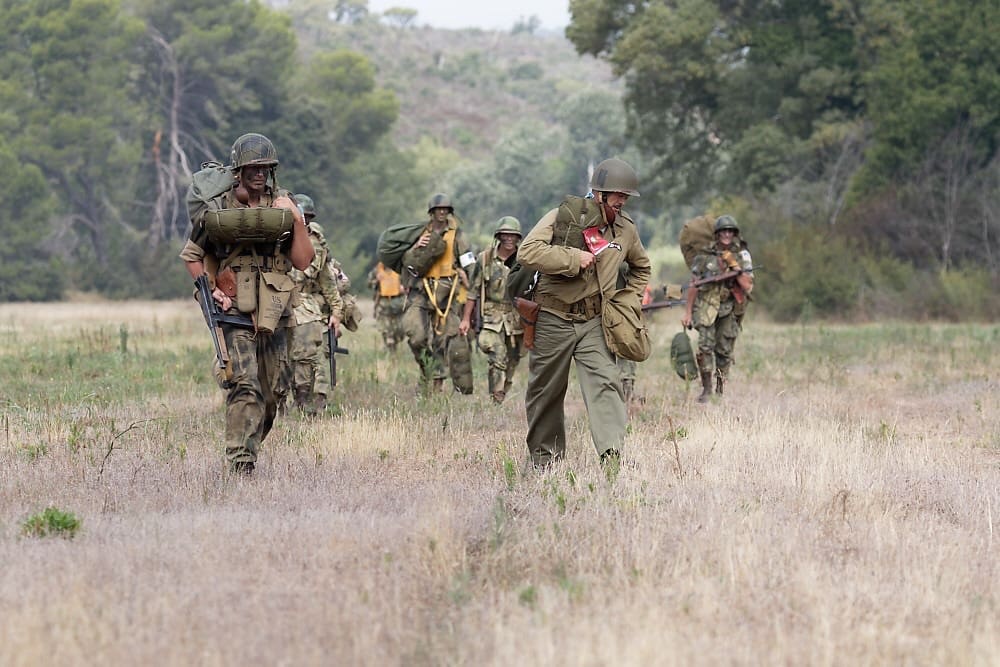
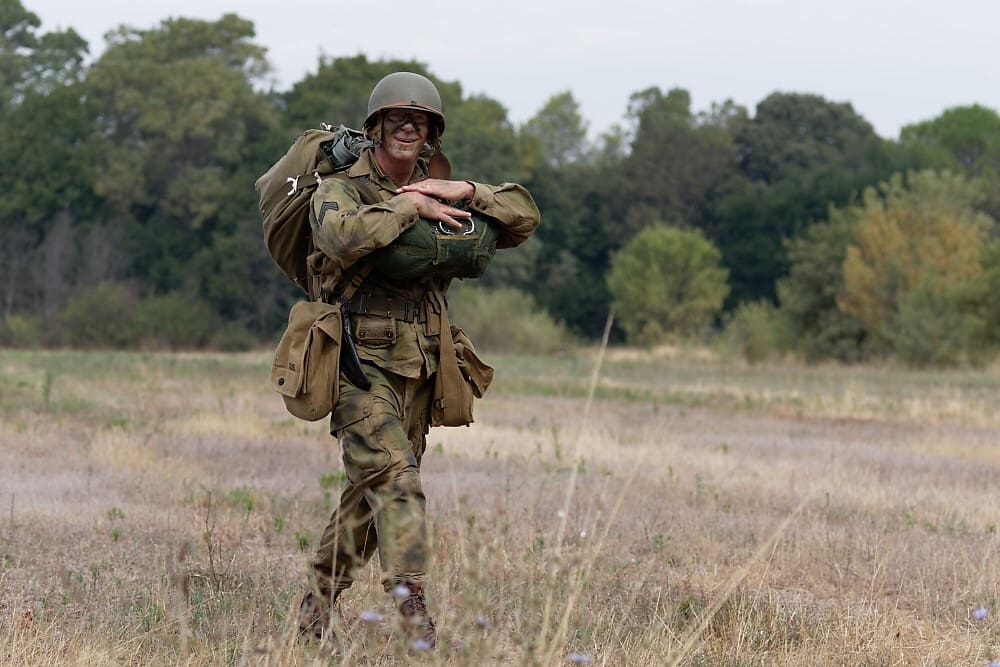
U.S. Army Airborne, British Airborne, and U.S. Marine Corps Airborne attached to the Office of Strategic Services—we’re privileged to be honoring them all! These units were part of the Allied 1st Airborne Task Force represented by our team members here.

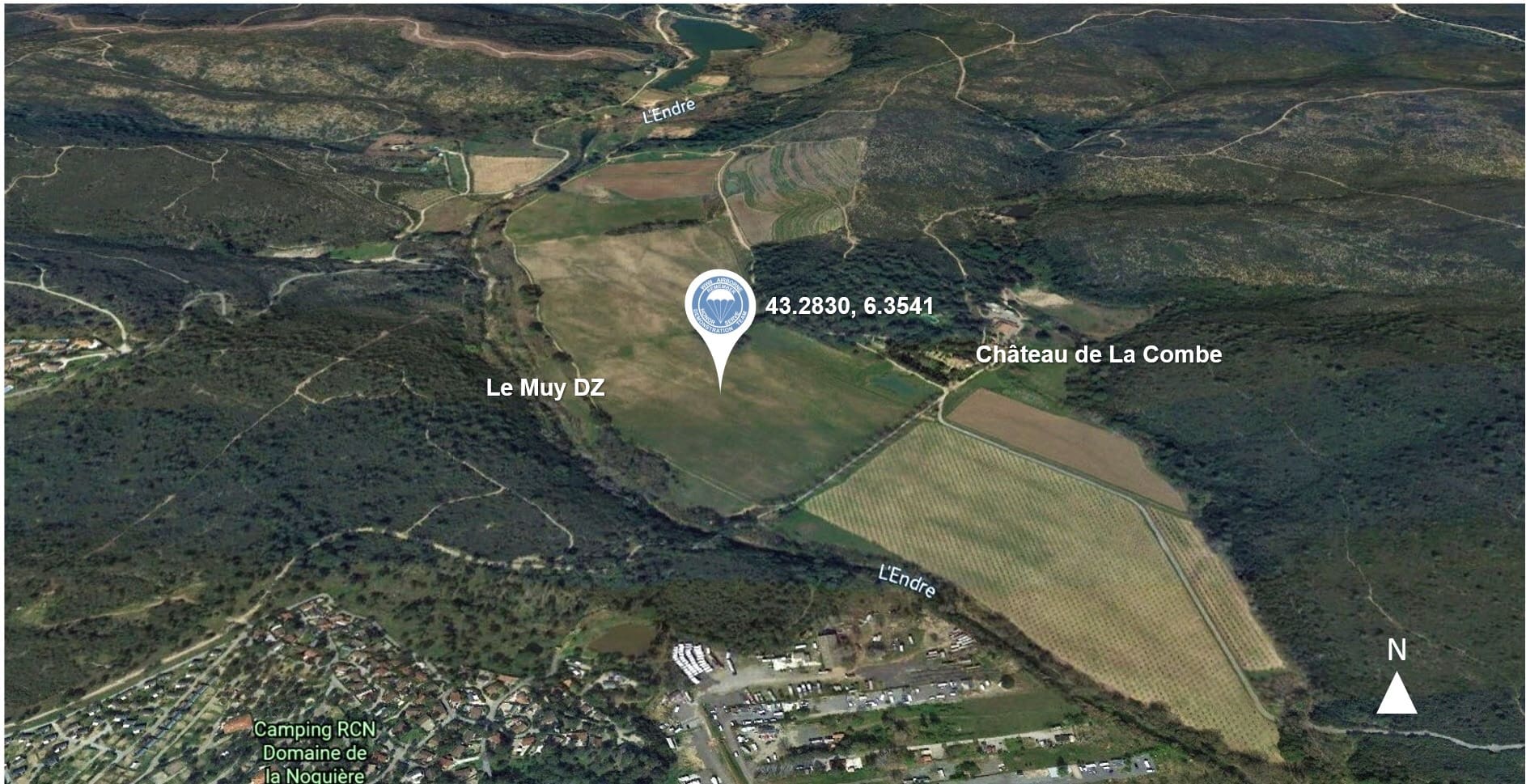
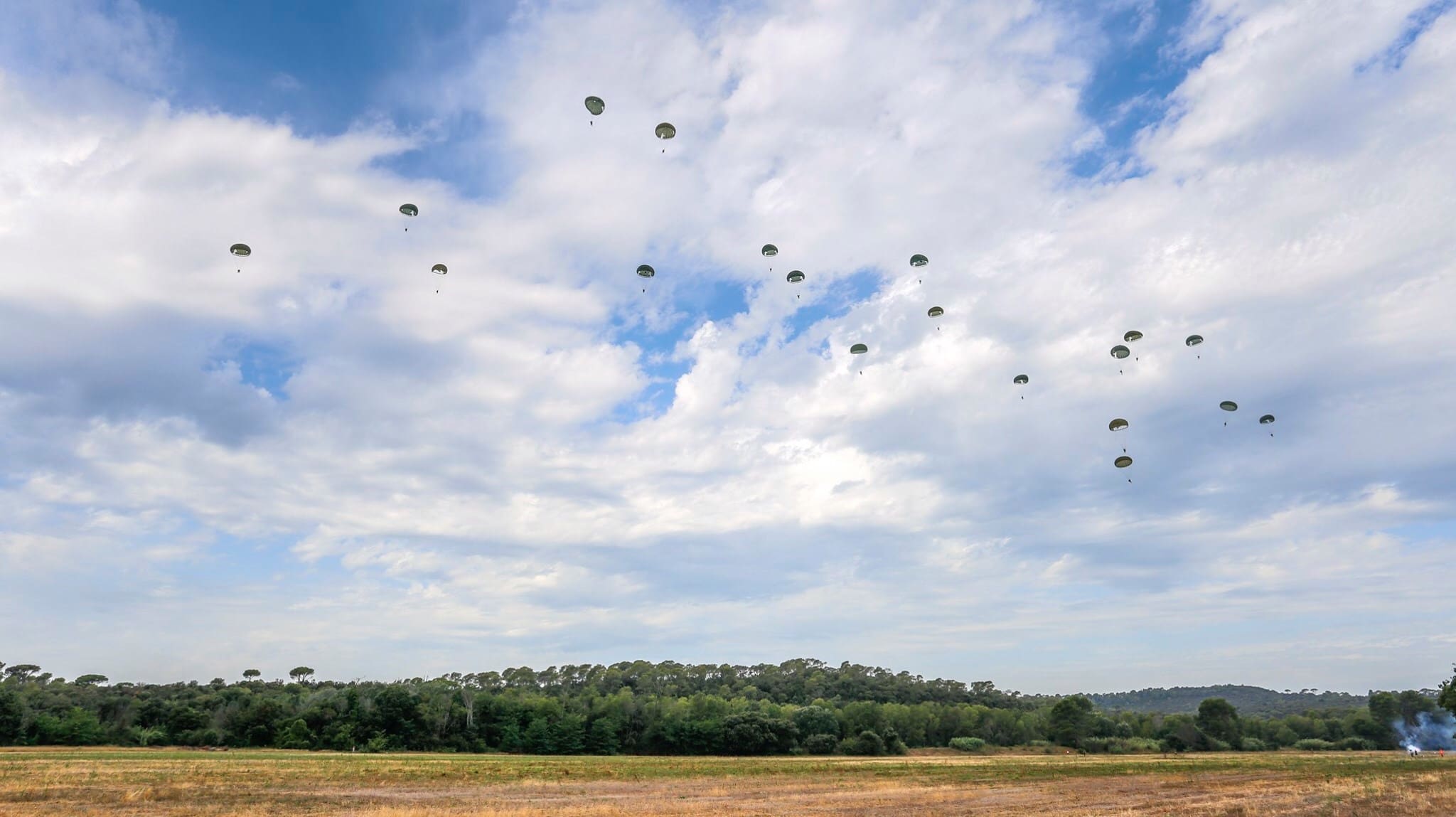
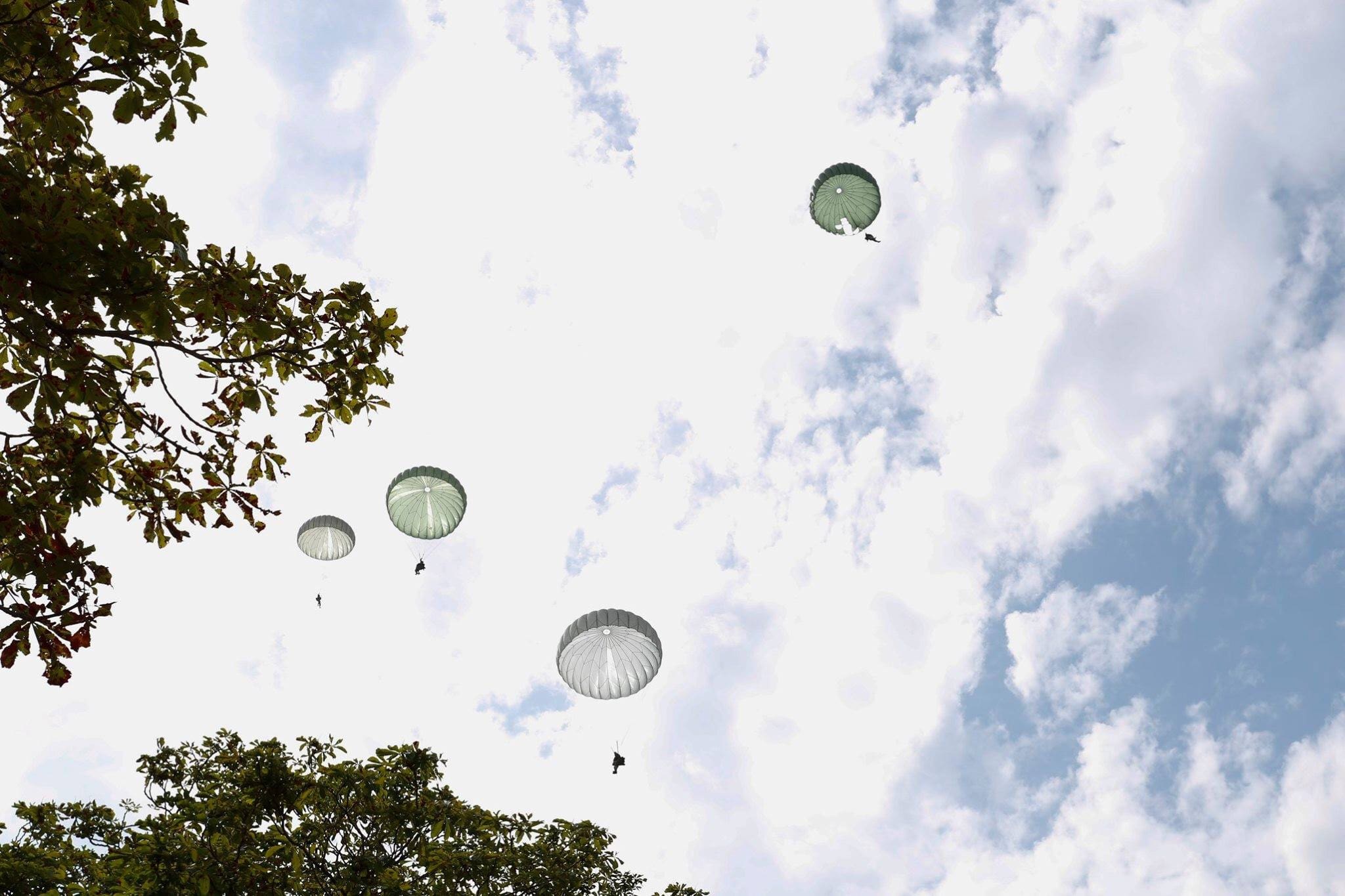
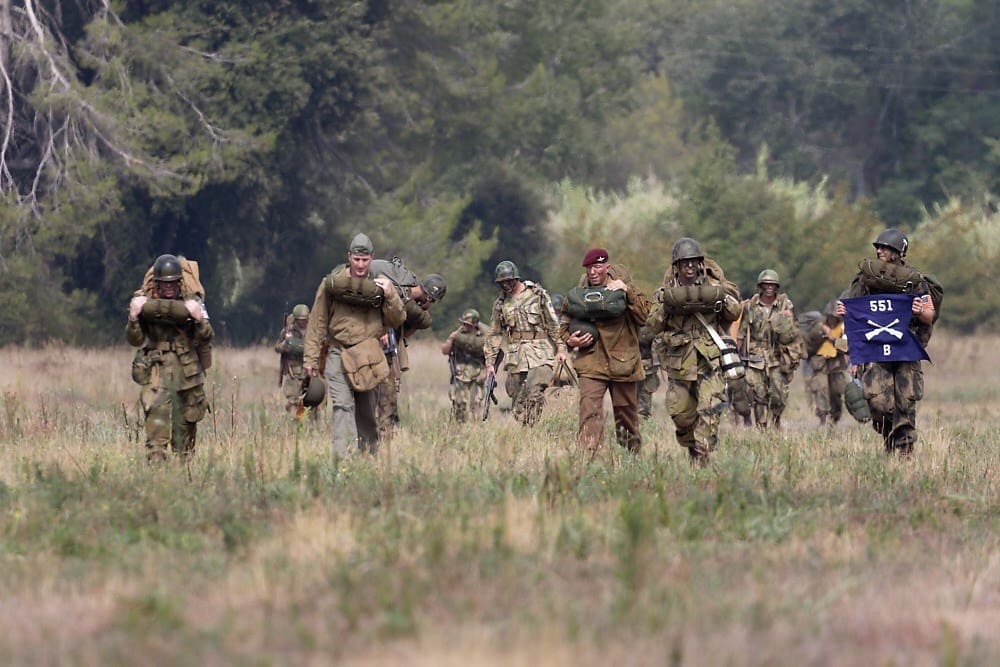
The 1st Airborne Task Force was a short-lived airborne unit created specifically for Operation Dragoon–the invasion of Southern France. The combined unit strength was 9,000 men. It consisted of a near-random grouping of parachute infantry regiments, many of which had served in Italy and which were accustomed to the mountainous terrain of Southern France. During Dragoon, most landed in drop zones like the one seen here. Forests and mountains made the area dangerous, but also forced units to be split apart, testing their true abilities as Airborne infantry.

Among the units we honored during our jump on Monday was the 551st Parachute Infantry Regiment. Virtually nothing of the 551st’s history was known to the American public until a renewed interest in the unit in the 1990’s prompted veterans to seek recognition for it. The 551st was originally commissioned to capture the French Island of Martinique which was being used as a supply station for Nazi U-Boats. The 551st trained in secret in Panama far away from the more famous Airborne regiments. The invasion of Martinique was called off, but Operation Dragoon put the 551st on French soil, nevertheless.

On the fog-blanketed morning of August 15th, the 551st parachuted into a drop zone not far where we are shown here. Immediately the 551st liberated the town of Draguignan and a week later, Nice.

During the Battle of the Bulge this outlier within the Airborne community was summoned to take the fight to the enemy in the north. Assigned to move through the American lines and infiltrate four miles into Nazi occupied territory, the 551st achieved every objective assigned—but at a terrible cost. It entered the battle on January 3, 1945. By January 6, it had lost 85% of its troops. Of its 643 men only 14 Officers and 96 men lived to see the 551st’s victory.

The unit was famous for an acronym that many on our team take pride in sharing: GOYA. We’ll let you look that up. But it sums up a simple formula for life success. Of all the motivational messages and themes out there, we think the 551st had it right—one of the many reasons we admire them and want to make sure that their story stays alive to inspire others.

Special thanks to our friends and brothers at French Airborne Command for inviting us to join them and for making this jump possible. To the memory of all who served in 1st Airborne Task Force and to the 551st, we salute you! Airborne All The Way!

Photos by WWII ADT, Ville du Muy and by Jean-michel Maurel via Airborne Command

Originally published by strikehold.net.

National Airborne Day

Friday, August 16th, 2019

Strikehold’s Leapfest Wrap-Up

Monday, August 5th, 2019

We are fortunate to share Strikehold.net’s coverage of Leapfest 2019, the annual military parachuting competition hosted by the Rhode Island National Guard.

Leapfest is the largest, longest standing, international static line parachute training event and competition. Conducted by the Rhode Island Army National Guard, the purpose of Leapfest is to promote international camaraderie and Esprit de Corps among Airborne Soldiers, while also showcasing the capabilities of the Rhode Island National Guard.

Paratroopers are specially selected, trained, and highly disciplined soldiers. They are able to rapidly deploy, land, and sustain a powerful combat force to achieve strategic objectives – such as seizing and holding key terrain or infrastructure. They can also be dropped behind enemy lines to conduct raids and other types of tactical interdiction missions. They are typically used as countries’ rapid deployment forces, with the ability to operate on any terrain in any environment with little warning.

Airborne forces can vary in size from an airborne company, a regimental combat team, or to an entire division or corps. To become a paratrooper, a soldier must go through rigorous physical and psychological training and conditioning in order to be ready to jump and fight without hesitation.

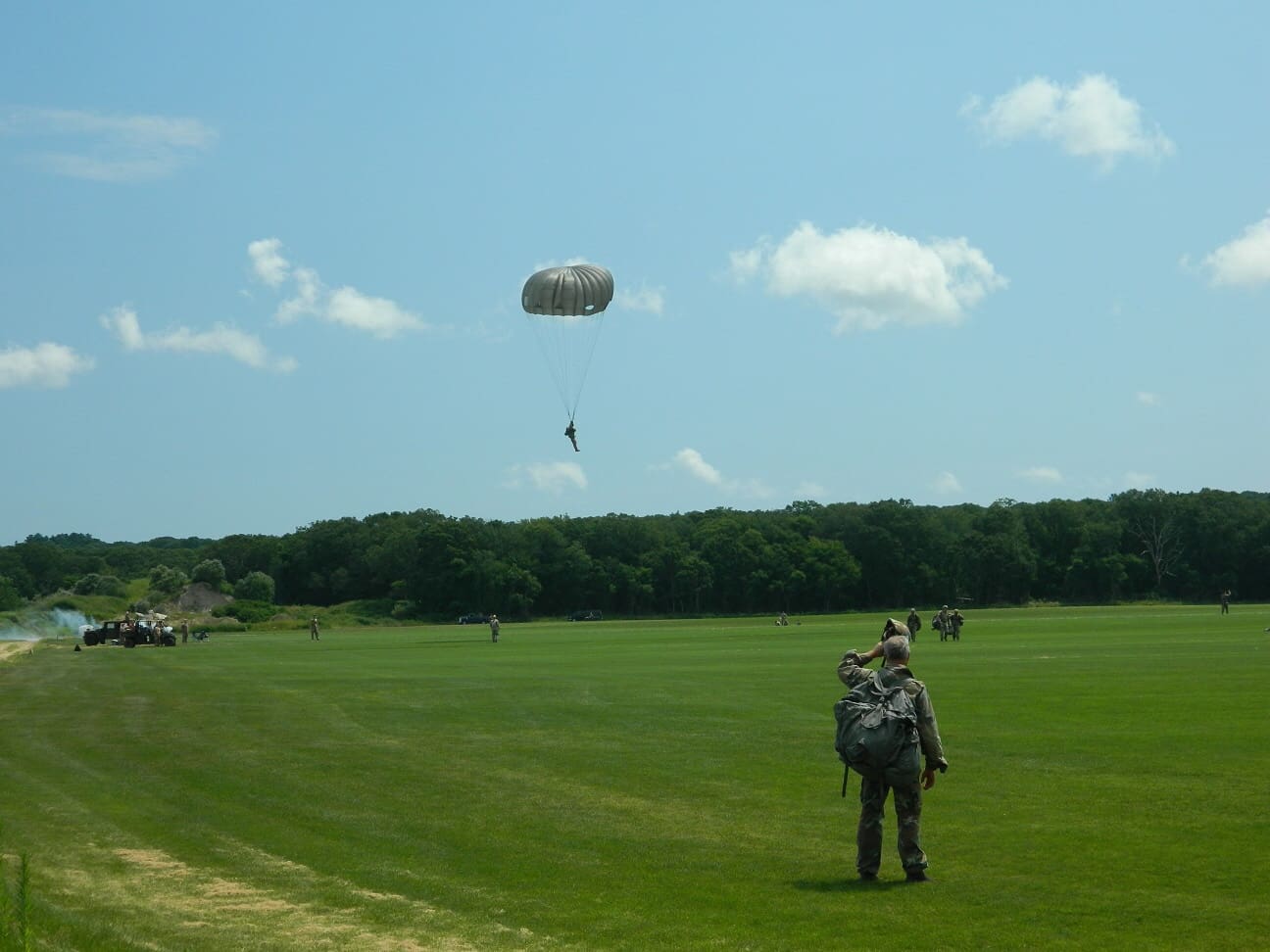
Leapfest is routinely attended by teams from across the Armed Forces of the United States (both Active and Reserve forces) as well as multiple international teams. Participants aim to land as close as possible to a marked, designated area within the landing zone. Upon landing and completing a PLF (parachute landing fall), participants are timed by qualified judges until they reach the designated area.

Each team consists of 5 participants: 4 jumpers and 1 alternate jumper. Each jumper must complete 2 jumps to be qualified for the individual award, and each team must complete 8 jumps in total to be qualified for the team award.

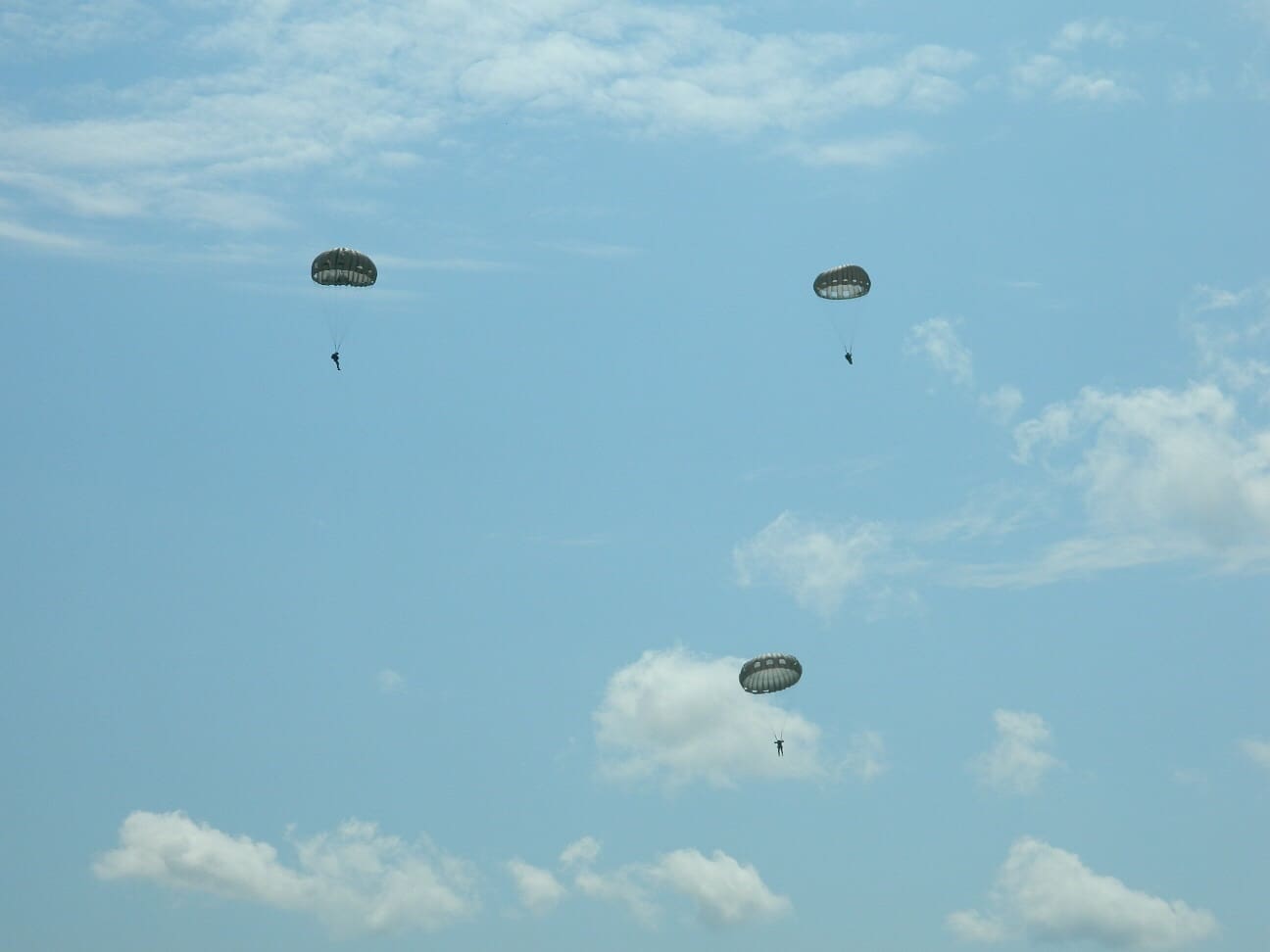
Jumpers exit from a CH-47 Chinook helicopter at an altitude of 1500 feet (457 meters) using an MC-6 static line, steerable, parabolic parachute. The MC-6 is the latest advanced-design steerable, round-canopy, parachute, and was developed through the Special Operations Forces Tactical Assault Parachute Systems (SOFTAPS) program. The MC-6 utilizes the same SF-10A canopy that has been in use with US Special Operations Forces for over 10 years. The MC-6 Maneuverable Troop Parachute System consists of the SF-10A Main Canopy, the T-11R Reserve, and the T-11 Harness.

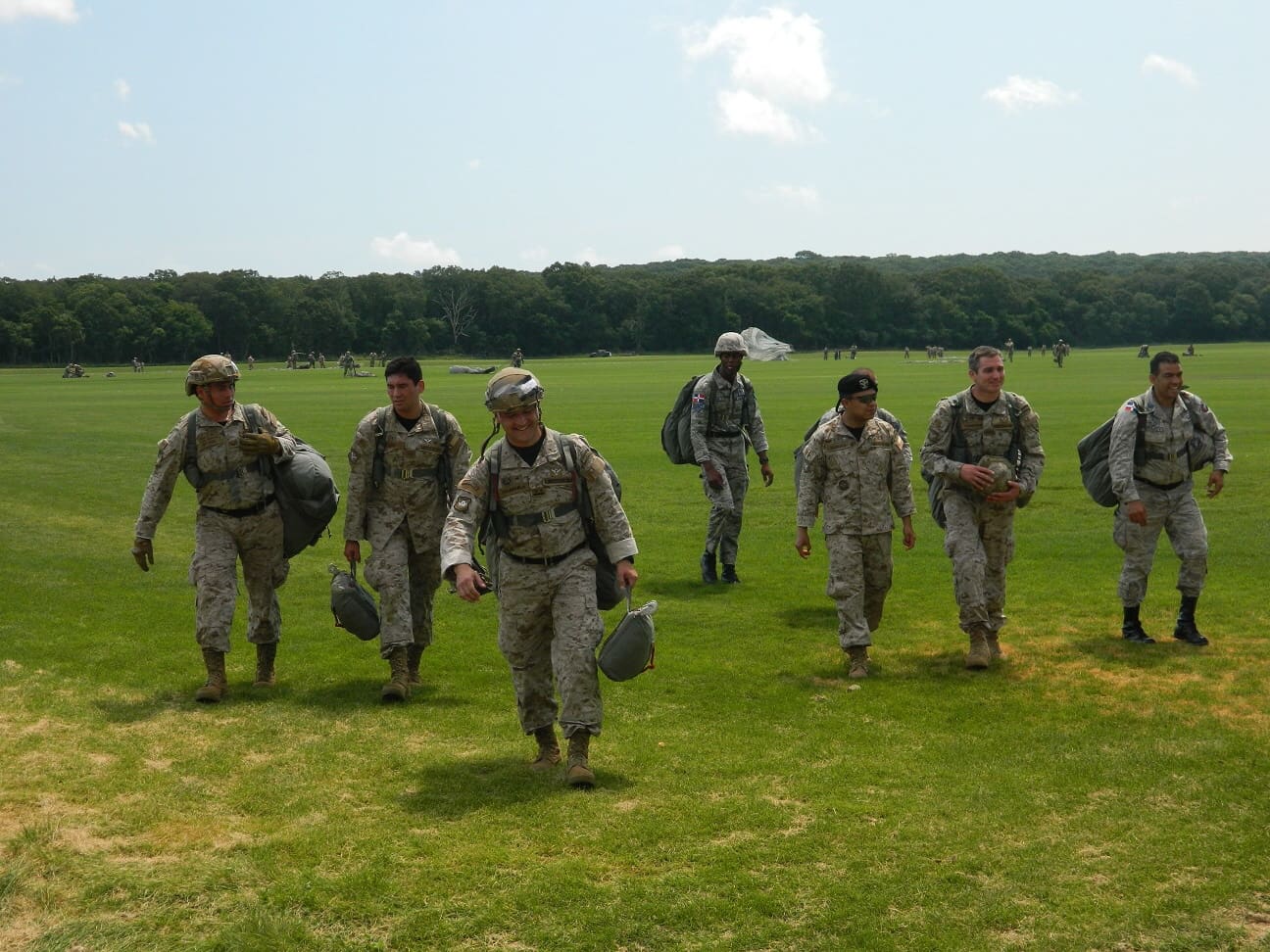
This year there was a total of 35 teams from the US and 20 teams from 12 international Partner Nations. This year’s international teams hail from Canada, Chile, Czech Republic, Dominican Republic, Germany, Netherlands, Italy, Jordan, Mexico, Morocco, Qatar, South Africa, United Kingdom and New Zealand.

In addition to the competition, Leapfest also features a day of friendship jumps conducted by international Jump Masters, followed by a Wings Exchange Ceremony prior to the official Closing Ceremonies.

Further info about Leapfest can be found online and on Facebook.

To view all of the photos taken during the competition, visit strikehold.net/2019/08/04/leapfest-2019.

Thanks Lawrence!

3rd Bn, 75th Ranger Rgt Jump Test SPEAR Packs

Monday, July 22nd, 2019

FORT BENNING, Georgia — Army Rangers here are evaluating three Mystery Ranch backpack variations by jumping out of U.S. Air Force C–130 Hercules aircraft.

The three commercial off the shelf variants tested by Soldiers with the 75th Ranger Regiment’s 3rd Battalion included an Assault Pack, Patrol Pack, and Recce Pack.

Forty-seven Soldiers from the 75th Regimental Special Troops Battalion conducted 45 static line infiltration training jumps on Benning’s Fryar Drop Zone, using the backpacks as part of their combat equipment load.

The new backpacks range from 3,200 cubic inches for the Assault pack to 6,200 cubic inches for the Recce pack, according to Lt. Col. Dave Dykema, with the U.S. Army Operational Test Command’s (OTC) Airborne and Special Operations Test Directorate (ABNSOTD) based at Fort Bragg, North Carolina.

He said the new backpack variations provide modularity to support various mission requirements not supported by the Army’s legacy All-purpose Lightweight Individual Carrying Equipment (ALICE) backpack.

“The ABNSOTD was professional and user friendly,” said Capt. Joshia Auerbach, the 75th’s Regimental Air Officer.

“They responded to our need rapidly, and tested the equipment in a manner that was quick and efficient for the Ranger Regiment, expertly incorporating testing into our training schedule.”

“These rucksacks provide a modern load carrying solution that can now be certified for static line airborne operations,” said Staff Sgt. Jake Leveille, 75th Regimental Air NCO.

Spec. Thomas Lewis, Squad Rifleman, said he understood the importance of operational testing the new backpacks.

“Participating in this test provided me with insight on how the Army ensures our equipment is safe and suitable, before fielding it to the force,” he said.

“Soldiers enjoy getting involved in training hard during operational testing,” said Dykema.

“They have the opportunity to operate and offer up their own suggestions on pieces of equipment that can impact development of systems that future Soldiers will use in support of combat missions,” he added.

Highly-instrumented test drops help test overall survivability of equipment used during airborne operations, according to Dykema.

By SFC Ian Seymour, Airborne and Special Operations Test Directorate, U.S. Army Operational Test Command

Editor’s Note: The test packs are the SPEAR program packs, selected for issue by USSOCOM which were being certified for static line jumps.

563d RQG Airmen Rescue Injured Mexican Fishermen

Saturday, July 20th, 2019

DAVIS-MONTHAN AIR FORCE BASE, Ariz. —

Airmen from Davis-Monthan Air Force Base’s 563d Rescue Group traveled more than 1700 miles, to save two critically injured Mexican fishermen onboard the Mazatun fishing vessel, July 10, 2019.

 The fishermen were injured when their vessel’s crane collapsed more than 1300 miles southwest of San Diego in international waters at approximately 8 p.m., July 9. Fishing nets obstructed Mazatun’s propellers during the incident making the boat unable to transit under its own power. The two severely injured fishermen were transferred to Mazatun’s sister ship, Tamara, who began making the three day journey to the nearest land, a Mexican naval outpost on Socorro Island located more than approximately 840 miles away.

 Due to the severity of the injuries and the ship’s isolated location, an urgent request was made for the specialized skills of U.S. Air Force Rescue. In response, the 563d RQG deployed multiple HC-130J Combat King II aircraft from the 79th Rescue Squadron to Tamara as it sailed to Socorro Island, July 10. Pararescuemen from the 48th Rescue Squadron parachuted from the HC-130J into the ocean. They intercepted and boarded the Tamara, and provided trauma care for the injured fishermen. They quickly stabilized the patients and offered continued care for the rest of the voyage to Socorro Island.

 “The relationship that was built with the captain of the ship allowed a seamless integration of our PJs medical capabilities to be able to provide the best treatment for the two injured fishermen,” said Capt John Conner, 48th RQS flight commander of flight 3. “It also allowed us the opportunity to work how we were going to transfer the patient on the ship to Socorro Island. That relationship was key.”

 Tamara reached Socorro harbor Friday evening, July 12. The pararescuemen transferred the fishermen to the Mexican naval medical clinic on the island where they would stay overnight. The next day an air ambulance transported them to Mazatlan, Mexico for further treatment.

 “The unsaid skill Air Force Rescue offers is the ability to solve difficult problems in a timely fashion. This mission highlights rescue professionals’ ability to network within the 563d RQG, 355th Wing and a greater Tucson medical community to solve an incredibly difficult problem, and continue solving problems throughout the mission’s execution which can be seen by the infil methods, follow-on aerial resupply, and transfer of care/exfil conditions,” said Captain Michael Erickson, 48th RQS director of operations. “Air Force Rescue’s successful execution of the mission demonstrates one of the ways Davis-Monthan’s culture of readiness and problem solving skills can support the greater joint force and our mission partners.”

 “This is the longest domestic rescue the 563d RQG has accomplished,” said Lt. Col. Scott Williams, 79th RQS commander. “The unique nature and location of the accident required specialized care, and I’m proud of the job our entire team did to ensure these men returned home to their families.”

By A1C Kristine Legate, 355th Wing Public Affairs