SIG SAUER - Never Settle

Archive for the ‘Profession of Arms’ Category

The Baldwin Articles – Leadership and History

Monday, January 1st, 2018

Lately there has been quite a bit of talk about the connection between history, professional military education and quality training on this site. Perhaps we can all initially agree on a couple of facts to frame some additional discussion. First, war is a bloody art form much more than it is a science and requires continuous study and practice to truly master even at the tactical level. Second, planning, managing and conducting good training is also an art – and in many ways is just as hard to master. For the sake of brevity, I am going to address training separately in part two of this article so that we can concentrate on history as a component of professional education up front.

So how can studying history help make you a better soldier and build stronger units? To be sure there is an important caveat; any “lessons” gleaned from history cannot and will not give definitive answers to today’s military questions. The past is not some accurate predictive tool that can somehow be used to prophesize future outcomes. Nevertheless, the study of history certainly often provides valuable context that can and does serve to inform decision makers in the present. Therefore, it is safe to say that seeking to understand events and characters in history does indeed teach and enlighten.

Obviously countless others have had a similar opinion about the enormous utility of historical study. I do not think it is an exaggeration to say that a great many notable historical figures have been self-acknowledged students of history. That has certainly been true of military leaders. Roman generals like Caesar studied the writings of the ancient Greek warriors intently. Not just to learn how they fought, but also how they successfully trained, motivated and sustained those earlier formidable armies. Later others studied Caesar’s campaigns to capture his insight into war. Each generation in turn contributing and perpetuating an unbroken military historiographic circle of life.

We now live in a golden age of information. I have more educationally sound books about all aspects of warfare throughout history sitting on the shelves in my home than were ever available to any general in WWII. Moreover, my collection is extremely modest compared to the exponentially greater volume of material accessible through any modern digitally empowered library. It would be a shame – really a crime – if those of us with that kind of fingertip access to vast reservoirs of information did not take full advantage of all of that educational abundance.

Based on my own personal experiences, I have always been able to learn a great deal about my profession from men and women who died long ago. Military philosophers and theorists like Clausewitz still speak to me. Over time I internalized his concepts, Sun Tzu’s teachings and Machiavelli’s advice and was no doubt the better soldier, trainer and leader for having done so. For me, reading “Lee’s Lieutenant’s” and “This Kind of War” or “The Uncertain Trumpet” was never some academic exercise that was not destined to serve any practical purpose. I learned to appreciate history from the example set by the leaders I met early in my career. In turn, I have tried to pass on that historical sensibility to those I have had the privilege to serve with, lead, and mentor over the years.

In fact, studying books like those above was vital to my vocational education and eventually critical to whatever success or failure I might achieve while practicing my profession. Most importantly, I was able to make better and timelier decisions in ambiguous and challenging circumstances than I would have if I had not had that reasonably broad and sufficiently deep historical exposure beforehand. I simply would not have full confidence in any senior military leader who had no informed sense of history.

To be clear, I am not talking about a formal educational or degree producing program. No one needs to run off and get a PhD in Military History in order to be a good soldier or capable leader. Indeed, we can start at the small unit level with resources we already have readily available. How many leaders out there have made the effort to teach their subordinates their unit’s unique history – let alone the Army’s service history? I can tell you that the answer is not enough. What campaign streamers do you display on your colors? What battles do the elements of your unit crest represent? Why is your unit called the Manchus or Cotton Balers or Devils in Baggy Pants. Of course you might ask, is that “minutiae” really truly important to know? How will that information help “kill the enemy” or keep my people alive?

The answer is simple and ancient in origin. Expending the energy to inculcate a unit’s history helps build stronger teams. The Roman Legions understood this dynamic. Even today, the USMC – better than any of the other services – still understands and leverages this important bonding practice. So why doesn’t the Army do the same? Some units certainly do, but far too many do not even try. Some units consider it a waste of time and a distractor from other priorities. I would argue that the leaders of those units have the wrong priorities. They are shortchanging the professional development of their soldiers and failing in arguable their most important duty. That is to build motivated, cohesive, and ultimately winning teams.

And no, this does not mean a unit has to “stand down” or curtail other training to get it done. Some still serving NCOs or former NCOs out there probably think I am trying to put another rock in your already-too-full professional rucksack. The fact is that particular rock has always been your responsibility. You are the keepers of a unit’s history, and by extension the Army’s history, and have always had the responsibility to pass on that knowledge to your soldiers. The majority of NCOs do not need a reminder. They know they have the mission and do a superb job. But far too many do not – probably because they were never taught what right looks like when they were growing up. You cannot set the example or effectively teach what you don’t know or don’t value.

Obviously, we need to work diligently on correctly that problem at the unit level. However, we should not stop there. What are some of the positive aspects of studying history for broader professional development? Below I have selected three relevant quotes from my favorite fiction book, “Starship Troopers” by Robert Heinlein. For those not familiar with the work, be advised that the book has absolutely nothing to do with the movie series of the same name except the title. I have literally read the book a hundred times or more and always carried a paperback copy with me on deployments. I also loaned it out many times. But it was not the plot or the characters that keeps drawing me back. Rather it was the core ideas; the embedded concept of civil responsibility and duty as well as selfless service and even insight into conflict and war itself.

As many of you know, Heinlein was a brilliant, unique and even odd historical figure. He wrote science fiction primarily and never saw combat himself. Yet in Starship Troopers, Heinlein was able to capture the quintessential rationale of voluntary military service and martial virtue. He clearly intended to present more of a philosophy of duty than a practical military theory or strategic concept of war. Still, his book is a recognized military classic and has been on the recommended reading list for the Army and the USMC for many years. That is not to say that all of Heinlein’s ideas were original. He was well read and had an inquisitive mind so I suspect he had read at least potions of Clausewitz and Sun Tzu and quite possibly Machiavelli as well.

I appreciate this first quote because it perhaps explains why Sun Tzu still resonates after more than two thousand years. Why Clausewitz and Jomini are still read intently to be both interpreted and misinterpreted by countless professional soldiers. And perhaps it also explains why no more contemporary authors have ever been able to convincingly threaten their intellectual authority or supplant them.

“Basic truths cannot change and once a man of insight expresses one of them it is never necessary, no matter how much the world changes, to reformulate them. This is immutable; true everywhere, throughout all time, for all men and all nations.”

The second quote might appear to be no more than a restatement of Clausewitz’s basic theory. And I am reasonably sure that was Heinlein’s original source. But it does expand on the idea that in war it is the application of coercive violence and not killing itself that is actually the military “means” to the political “end” or “objective” that Clausewitz referred to repeatedly.

“War is not violence and killing, pure and simple; war is controlled violence, for a purpose. The purpose of war is to support your government’s decisions by force. The purpose is never to kill the enemy just to be killing him . . . but to make him do what you want him to do. Not killing . . . but controlled and purposeful violence.”

Lastly, I have used what I call “the cooking analogy” below many times to try to explain the notion of military education and realistic training providing immense value added on and off the battlefield.

“…unskillful work can easily subtract value; an untalented cook can turn wholesome dough and fresh green apples, valuable already, into an inedible mess, value zero. Conversely, a great chef can fashion of those same materials a confection of greater value than a commonplace apple tart, with no more effort than an ordinary cook uses to prepare an ordinary sweet.”

Unfortunately, higher-level professional training and education is largely undervalued in the institutional military. That is a counterproductive but systemic organizational attitude. To use Heinlein’s analogy, the services consequently only manage to consistently produce good “fry cooks” that can perhaps reliably fashion an edible meal but have a limited repertoire. In other words they are generally “tactically sound” in the most limited sense but not necessarily adaptive, multifunctional or innovative in any way.

We simply do not produce many world-class chefs; i.e. master craftsmen or artists with more advanced skills that can take the raw material and other means provided to them and produce results approaching a tactical, operational or even strategic work of art. We need military artisans who can be hard fighters AND consummate trainers AND equally deep thinkers. Leaders that have the intellectual tools necessary to profoundly reflect on the art and artifices of war and the disciplined aptitude to translate the resulting thoughts into practical applications. The enduring challenge for us remains how to identify, cultivate and encourage the intellectual development of more martial master chefs at every level.

That brings us to the final point for now. It would certainly be possible to put a committee together and “distill” the more advanced works of Sun Tzu, Clausewitz, et al into 3×5 cards of command approved military axioms that every soldier could carry in his or her breast pocket. Laminated of course and dutifully memorized and regurgitated on command. But that will not make us any smarter. To seek legitimate understanding of Sun Tzu and the others it is important to consider the social, cultural and historical context in which they lived and wrote. In other words, it takes intellectual effort. There is no shortcut.

If simply taken literally, out of context, or only partially and imperfectly understood, Sun Tzu’s or Clausewitz’s or Machiavelli’s ideas can be truly dangerous rather than helpful to a soldier or politician trying to make a decision with life and death implications. Therefore, the services – especially the Army – would clearly be best served by providing more opportunities for high quality, practical and continuous professional education at all levels. This could start by making the effort to instill a deeper appreciation of history in Army leaders of all grades. That is probably the single most useful thing we can do to improve the U.S. Military’s tactical, operational and strategic rate of success in the future.

LTC Terry Baldwin, US Army (Ret) served on active duty from 1975-2011 in various Infantry and Special Forces assignments. SSD is blessed to have him as both reader and contributor.

US Army Sniper Training Circular 3-22.10 Officially Released on Army Publishing Directorate

Wednesday, December 20th, 2017

The US Army’s Maneuver Center of Excellence has released Training Circular 3-22.10, Sniper and it is available for download to DoD personnel on the APD website.  


Christopher M. Rance, writer for the sniper training circular highlights what snipers can expect with the new manual.

-The sniper training circular has been completely revised and updated in various topics to include; sniper planning, employment, field craft, marksmanship, ballistic programs, and complex engagements.

-The Individual Sniper Weapon System Training Strategy is provided to include the official qualification for all sniper weapon systems. The new sniper qualification complies with the U.S. Army’s Integrated Weapons Training Strategy. DD Form 7785, Sniper qualification scorecard can be accessed on APD.

-Subject matter experts from across all branches of services to include NATO partnered nations contributed to this training circular. This was a collaborative effort and stands as a great example of interoperability between services and nations.

-The intent of this training circular was to create uniformity within the sniper community, and to align sniper training and employment with current U.S. Army doctrine.

TC 3-22.10, Sniper is restricted to U.S. Government Agency Personnel. Personnel must have a Common Access Card to access the training circular. Get your copy at armypubs.army.mil.

Paladin Press is Closing Down

Friday, November 10th, 2017

PP Logo

Paladin Press has announced they’re shutting down operations as of 29 November 2017.

For many of us who date to the days before the internet, Paladin Press was the source of all sorts of arcana on gunsmithing, weapon use, military history, and living lives of action adventure, or perhaps merely pretending to do so.  Revenge pranks, surveillance gadgets, lockpicking, Sykes-Fairbain knife fighting, new identities, and 10/22 Exotic Weapon Systems were all part of the lore.

The era of clipping an order form from a magazine ad and sending off your check or money order has passed but Paladin Press survived.  It outlasted “Soldier of Fortune” magazine, who was a major advertising and marketing channel for their publications.

While business was probably not as brisk as it once was, we’d speculate that the passing of owner/founder Peder Lund  in June 2017 probably had a lot to do with this business decision.

Currently, most of the books are 65 percent off, so if you want to score some great deals by the end of the month, order soon.

Paladin Press


If Not You, Who?

Tuesday, October 24th, 2017

Recent events have resulted in debate regarding the nature of service in our all volunteer force. A friend shared this Army recruiting poster from 1985 with me. Incidentally, that’s the same year that I joined the Army Reserve while a junior in high school.

3A6F8EB8-836D-4CED-9F98-7C0CABEB1CFF

If you serve(d), do you feel it was your duty? If you have not served, how do you view our volunteer force?

On a larger scale, do you think the country and its military have lost touch with one another?

US Coast Guard Creates New Armed Deployable Forces Officer Specialty

Tuesday, October 17th, 2017

Early this month, the United States Coast Guard announced the creation of a new sub-specialty for officers who will serve in the Armed Deployable Specialized Force and lead Maritime Safety and Security Team (MSST), Tactical Law Enforcement Team (TACLET), or Maritime Security Response Teams (MSRT). These officers will oversee and conduct tactical operations, CBRNE detection/identification, advanced planning, fast rope operations, hook & climb operations, deployable boat operations, and multi-vehicle operations.


The All Coast Guard Officer message is below.

ALCGOFF 135/17 – CREATION OF OFFICER SUB- SPECIALTY CODE (OSC) – OAR-17 ARMED DEPLOYABLE SPECIALIZED FORCES

04 OCT 17
ALCGOFF 135/17
SUBJ: CREATION OF OFFICER SUB- SPECIALTY CODE (OSC) – OAR-17 ARMED DEPLOYABLE
SPECIALIZED FORCES
A. Coast Guard Officer Specialty Management System Manual, COMDTINST M5300.3
1. Per Ref A, COMDT (CG-721) created an OSC for the Armed Deployable Specialized Forces (DSF).
Officers serving in this sub-specialty oversee and conduct tactical operations, CBRNE
detection/identification, advanced planning, fast rope operations, hook & climb operations, deployable
boat operations, and multi-vehicle operations. These capabilities are conducted exclusively in the DSF. The
sub-specialty will codify the knowledge, skills, and abilities (KSA) expected of officers in the DSF.
2. The new OSC establishes standards which contain standards, qualifications, experience, and training
necessary to proceed through the Armed Deployable Specialized Forces competency. There are three
routes to demonstrate proficiency – Competencies, Education, or Certification.
a. Apprentice: This level requires the basic qualifications, training, and experience that junior officers are
expected to achieve during their first assignment to a Maritime Safety and Security Team (MSST),
Tactical Law Enforcement Team (TACLET), or Maritime Security Response Team (MSRT).
b. Journeyman: This level requires that officers complete a successful operational or staff assignment
within designated response ashore billets.
c. Master: This level requires that officers complete a successful operational or staff assignment within
designated O5/O6 response ashore billets.
3. All officers who meet the requirements for their unit type are invited to apply for OAR-17. Any waivers
may be requested from CG-721.
4. The CG-OAR17 OSC is available via CG Portal, PSC-opm-3 Webpage:
https://cg.portal.uscg.mil/units/psc/psc-opm/opm-3/SitePages/Home.aspx.
5. PSC-opm-3 POC: Mr. Brandon Chittum,
6. CAPT Chris J. Glander, PSC-OPM, sends.
7. Internet release is authorized.

US Army Releases FM 3-0 Operations, Just In Time For AUSA

Sunday, October 8th, 2017

It’s Saturday night, how about you curl up with a book?


PDF: www.apd.army.mil/epubs/DR_pubs/DR_a/pdf/web/ARN5095_FM%203-0%20FINAL%20WEB

EBook: www.apd.army.mil/epubs/DR_pubs/DR_a/pdf/ARN5942_FM%203-0%20FINAL%20WEB

The Baldwin Articles – Leadership and Volunteers vs Conscripts

Wednesday, September 6th, 2017

I have a lot of Vietnam era Special Forces (SF) friends. Their generation trained and mentored me and I owe them all a great deal both professionally and personally. They all volunteered to be SF eventually but many were initially drafted into the Army. I will be at Fort Campbell later this month for a couple of days during the 5th Group reunion and I look forward to seeing a good number of them there. I likewise intend to interact with as many of the current members of the Group still in the fight as possible. I also have a Nephew who just signed up for the Ranger Regiment option who will be starting Infantry OSUT at Fort Benning next month. I immediately recommended that he read Starship Troopers. In that classic book, Heinlein was able to capture the quintessential rationale for voluntary military service and martial civic virtue. After reading the book he solicited my opinion on conscription vs volunteerism. Coincidentally, the U.S. Army in Vietnam specifically had been something that I had spent considerable time on in my most recent Military History seminar. I am not a veteran of that war but with complete respect for my friends that served there I offer this as my professional answer to my Nephew’s question.

Despite an almost unbroken string of tactical victories, the war in Vietnam obviously did not end successfully from our perspective. And today, despite a similar impressive series of tactical victories, the final outcome of GWOT is still very much in doubt. But that does not have anything to do with who did or did not serve or fight those battles. The U.S. Military has used a number of methods to fill the ranks in peace and war. A small “professional” volunteer army supplemented by mobilized volunteer militia forces and short-term recruits was the standard for most of our history. More formalized systems of conscription were established and routinely used from the Civil War onward but only during times of conflict until after WWII. But the fact is that the country has always struggled historically to get enough manpower to meet wartime needs. So conscription was inevitably used in every war in our history until quite recently. And just as inevitably that draft was hated and in as much as possible shirked by those that could. Up to and including the Vietnam War.

Hal Moore
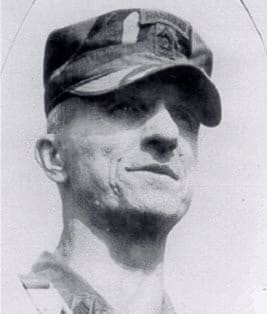
*The picture is from the book We Were soldiers Once…and Young of then LTC Hal Moore and SGM Basil Plumley. It was taken shortly after their battalion returned to base camp after the fight in the Ia Drang Valley at LZ X-Ray, November 1965. These are the kind of men I think of when I talk with appropriate reverence about long-service volunteer Regulars.

The key to the institutional continuity and ultimately the battlefield success or failure of the Army has always traditionally been the long-service volunteer “Regular.” During the period of 1865-1898 those stalwart and unsung heroes – volunteers all – kept the professional faith during a time of not-so-benign public neglect. Again in 1920-1940 another generation did the same thing for a nation that was not as appreciative of the sacrifices involved as it perhaps should have been. WWII was a watershed and unique event for volunteerism and conscription in U.S. history. It was a “good war” and millions volunteered to serve throughout the conflict. The government generally used the selective service system as a means to meter the flow of manpower into the training bases of the individual services. The system was for once not seen as coercive or onerous and was accepted as a wartime necessity. However, the peacetime draft after WWII was only grudging accepted and was increasingly seen as unfair even long before Vietnam heated up.




American military history provides plenty of evidence that introducing untrained or poorly trained troops onto the battlefield is always ill advised. It does not matter if these inadequately prepared novices are volunteers, conscripts or mobilized militia. In most cases in WWII the recruits, regardless of how they were assessed into service, were formed into units after initial training and had the opportunity to develop at least some critical unit cohesion prior to deploying overseas. The fairly typical story of the “Band of Brothers” that Steven Ambrose wrote of is one good example. Those soldiers had been training together for two years with the same small unit leaders before they jumped into Normandy in 1944. Because of that pre-established unit cohesion they were also able to successfully integrate the individual replacements that came later and collectively endure the hardships of Bastogne.

Combat is not an individual sport! Army leadership manuals for decades have highlighted the fact that soldiers perform better and are more prepared psychologically if they have had the chance to bond with their teammates and their leaders before facing their first battle. It is safe to argue that unit cohesion and teambuilding are immensely more important than whether the soldier was originally a volunteer or conscript. Historically, Vietnam was the first and probably the last and only truly “long war” that we as a nation have fought with conscripts. But at the start of the war that was not the significant problem that it would be by the end. When Hal Moore deployed his battalion – as a unit – to Vietnam in 1965 they had been training together for months much like the units of WWII. The men trusted their leaders and the leaders knew and trusted their men. Unit cohesion had been established stateside and individually and collectively Moore’s unit displayed and maintained the highest level of professional acumen throughout their combat tour.

It is clearly evident in hindsight that the Army in particular struggled in Vietnam not just because of conscription itself but also because of a number of other inter-related and truly counter-productive personnel management policy decisions. First, the Army established a totally individual replacement model in country. Units remained in place on paper but were continuously receiving new personnel including leaders. In the course of twelve months the turnover would be close to 100%. In other words the units were continuously taking 8-10% “casualties” every month before they even encountered the enemy. These new replacements would literally join their units in the field and be in combat essentially with strangers sometimes within hours. It should be no surprise that unit cohesion began to degrade more and more over time and minimum professional standards and even basic discipline declined even more precipitously.

That methodology meant an even more dysfunctional transition for leaders. New lieutenants and captains might not even have a chance to learn their NCOs names and faces before they were expected to lead those men in a firefight. Trust and confidence between leaders and led suffered from this lack of opportunity to at least attain some level of professional familiarity ahead of time. The Army also began to rely more and more on “shake and bake” NCOs that were hastily trained and promoted but did not have the requisite experience to be truly effective small unit leaders. The traditional glue that holds units together in combat, those long-service Regulars, became more and more rare as the war dragged on. To make matters worse, the Army decided to have a 6-month rotation policy for officers. After half a year in the field the officers would be moved to a staff position on one of the relatively safer bases. This policy served to widen the distrust between the officers and the men and helped to further damage the already shaky cohesion of many American units.

The result was an Army that came out of Vietnam stigmatized with rampant drug use, alcoholism, indiscipline and racial violence. That is the battered but not beaten Army I joined in 1975. The Army’s own personnel policies in conjunction with what was perceived as a coercive and unjust draft had exacerbated rather than ameliorated all of those predictable internal cultural problems. Had the same misguided policies been applied to a volunteer army at war the outcome might not have been much different. Fortunately the Army does sometimes learn from its mistakes. The individual replacement concept for combat was completely discredited and is no longer used. Unit deployments including combat rotations have become the norm in any locations where the Army is not permanently stationed like Germany or Korea. The GWOT has likewise been a long war and it has no doubt strained and bruised the volunteer U.S. military. But because of the kinds of personnel management reforms mentioned above it has NOT had the same debilitating effect on unit cohesion and combat effectiveness that the war in Vietnam had on that Army.

Moreover, it is unlikely that we will use large scale conscription again to fill the ranks any time in the foreseeable future. For one thing the realistic requirements of the services are actually quite small as compared to the eligible cohort of the population available. We just do not need the masses of soldiers in the information age that we did in the industrial age. That means that any draft – no matter how fairly administered – would by necessity be limited and therefore inequitable in practice. From the military’s point of view – if a draft became necessary again – we would always want the “best and brightest” possible. But that too would be unfair because no matter how they were selected the draftees would be shouldering the entire burden of service and the majority of the population would be effectively exempt. As a side note, there is still some professional discussion of the possibility of a “targeted draft” for certain specialized skills that might not be inclined to enlist voluntarily – computer hackers for example.

Finally, as a practical matter a 2-year enlistment – whether draft or volunteer – is no longer viable. It takes a year or more to prepare even entry level personnel for the (relatively) lowest tech military jobs available today. The Air Force actually learned this lesson right after WWII and paid bonuses and improved quality of life specifically to keep maintainers and pilots in service as long as possible to recoup the significant initial training investment. The Strategic Air Command (SAC) would not have been able to keep their nuclear bombers ready to fly at a moment’s notice without that professional continuity. The Navy did the same with their nuclear ship programs. Short term personnel with the resulting high turnover tempo were not suitable for keeping nuclear missile subs or aircraft carriers and air wings at a constant high state of readiness and continuous deployment. Even as early as Vietnam the ground combat services were beginning to recognize the need for longer term recruits. If the draft had not ended I suspect the services would still have gone back to Congress and asked to extend the term of service for draftees from 2 to 3 and perhaps even 4 years. When I enlisted, 3 years was the shortest option offered – and that was for infantry! For more technical fields the minimum was 4 years. Bottom line, a recruitment program that relies on volunteers is more suitable to fill and sustain the military’s modern manpower needs. For now it appears that sufficient numbers of those essential long-service volunteer Regulars are choosing to stay in. And despite all the other challenges, that bodes well for the future of the Army, the other services and our Nation.

Global Guerillas Is Hosting The Entire Run Of William S Lind’s ‘On War’ Columns

Thursday, August 24th, 2017

If you are a member of the Profession of Arms, then William S Lind’s writings on Fourth Generation Warfare are required reading.

Global Guerillas is now hosting the entire run of ‘On War’ as well as Lind’s other writings at their website. I encourage you to check it out, along with Global Guerillas’ other assets.