Aquaterro

Archive for the ‘UAS’ Category

Mayman Aerospace Unveiling First Full-Scale Model of Razor P100 Military VTOL During SOF Week 2024

Friday, April 26th, 2024

Ventura, Ca./ 23 April 2024 – Mayman Aerospace will unveil a full-scale model of Razor, its high-speed Air Utility Vehicle, during SOF Week 2024, May 6-10 in Tampa, Florida.

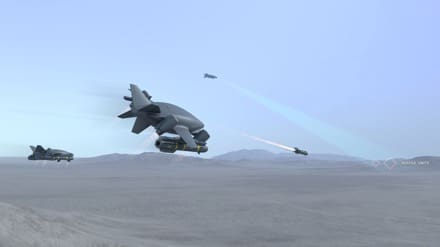
Razor is the name for the military variant of the dual-use, jet-powered, high-speed vertical take-off and landing (HS-VTOL) vehicle, from US-based manufacturer Mayman Aerospace. Derived from the Speeder design, the scalable Razor aircraft will be sized for payloads up to 1,000lb. Prototypes are already under construction for flight test in Q3 this year. The 100lb-payload Razor P100 is expected to fly first, and the 500lb-payload Razor P500 soon after. Mayman Aerospace will showcase a full-scale Razor P100 model during SOF Week 2024.

With more than US$120 million in LOI commitments from customers in Europe and Australia, plus US$3.25 million in US Department of Defense funding, Mayman Aerospace has been expanding its experienced engineering team while ramping up for flight testing.

Mayman Aerospace has also announced development of SkyField™, an AI-driven, autonomous Razor operating environment engineered for seamless integration into existing third-party battlefield management systems. SkyField will enable immediate, effective Razor operations alongside existing hardware and software systems, plus a simplified route to future capability development.

“We are excited to further define and develop Razor and the SkyField operating system as we work to bring the aircraft’s extensive capabilities to the warfighter. Razor is just the first step in creating the SkyField flight mesh. Alongside our Department of Defense colleagues, we are realizing the full capability unlocked by Razor’s unique design in combat scenarios, humanitarian and disaster relief operations, and training,” says David Mayman, CEO and founder of Mayman Aerospace.



Razor fulfills disparate missions in an era where real-world battlefield requirements are rapidly evolving. The need for combat mass through multiple, highly capable, low-cost, and attritable platforms is rapidly emerging. Razor’s low cost, jet speed, and VTOL versatility make it uniquely suitable for the next-generation battlespace.

Easily transported for mass launch in the field, from ships, or the air, Razor may be configured for contested logistics, armed with Hellfire or Brimstone missiles as a range extender for precision attack, flown as a low-cost cruise missile, or equipped with advanced sensors for ISTAR, electronic warfare, and the suppression of enemy air defenses (SEAD). The aircraft will also be used as a high-speed, low-cost target drone, requiring no special launch infrastructure for air-to-air and air defense training.

Mayman Aerospace will be in the BlackHays Group booth #4802 in the JW Marriott Hotel Small Business Conference Room

GA-ASI Mojave Lights Up the Yuma Desert in Live-Fire Demonstration

Wednesday, April 24th, 2024

Minigun Integration Showcases the Firepower and Versatility of STOL UAS;
Highlights Ability to Rapidly Integrate New Multi-Mission Capabilities

SAN DIEGO – 23 April 2024 – General Atomics Aeronautical Systems, Inc. (GA-ASI) confirms that its Mojave Unmanned Aircraft System (UAS) destroyed static targets in live-fire tests on April 13, 2024, validating the system’s battlefield relevance and recording another milestone for the demonstrator aircraft.

GA-ASI partnered with Dillon Aero to mount two of Dillon’s DAP-6 Gun Pod Systems onto the Mojave aircraft. Mojave performed seven passes across two flights during the demonstration, expending around 10,000 rounds of ammunition as the UAS shredded a variety of targets.

“Seeing our Mojave perform this live-fire demo really emphasizes the versatility of the Mojave UAS and what it can do,” said GA-ASI President David R. Alexander. “Mojave has the ability to act as a sensor, shooter, and sustainer while mitigating threat environments and vulnerabilities and safeguarding human lives.”

Mojave and its short takeoff and landing (STOL) capability has built significant interest in the military and aerospace communities. Mojave is unique: a UAS with significant payload capacitythat can perform in areas once consideredunsuitable for UAS operations. Its ability to take off and land from unimproved landing sites at short distances as well as operate from aircraft carriers – as it did in November 2023 as part of a demonstration with the United Kingdom’s Royal Navy – is capturing imaginations and changing expectations about how large unmanned systems can be used.

The live-fire demonstration took place at Yuma Proving Ground, Arizona, and was funded via GA-ASI’s internal research and development budget.

The Mojave technical demonstrator shares common systems and components with GA-ASI’s modernized Gray Eagle 25M, effectively providing an expeditionary Gray Eagle STOL capability. In addition to a wing kit option for Gray Eagle, GA-ASI is planning one for the larger MQ-9B aircraft, which includes SkyGuardian® and SeaGuardian®models.

The actual Mojave STOL UAS with multi-mission payloads will be on display in GA-ASI’s booth (#792) at the Army Aviation Mission Solutions Summit in Denver, Colorado, April 24-26, 2024.

Vice Chancellor Robert Habeck Opens Drone Factory and Development Hub of German Manufacturer Quantum During Delegation Trip to Ukraine

Friday, April 19th, 2024

Berlin, Germany – 18 April 2024 – On the occasion of a delegation trip to Ukraine, Vice Chancellor and Federal Minister for Economic Affairs and Climate Action, Robert Habeck opened the new production facility of Quantum-Systems GmbH in Ukraine. The plant opening took place on 18 April in the presence of the Ukrainian Minister of Strategic Industry, Oleksandr Kamyshin, and the Ukrainian Deputy Minister of Defence, Ivan Hawryliuk.

Continuous support of Ukraine 

Quantum Systems attracted attention at an early stage of the war of aggression by Russia with its engagement for Ukraine. The company is expanding this commitment with the new local production facility. The European drone champion from Munich, Germany, has been supporting the Ukrainian Armed Forces with the delivery of its reconnaissance drones and operates a local service, support, training and logistics center with 25 Ukrainian employees. They train drone pilots and implement technological advancements in the reconnaissance systems directly on site.

The Quantum Systems Vector reconnaissance drones have been in use in Ukraine since May 2022. So far, 212 systems have been made available through the German Enablement Initiative. By the end of the year, a total of 500 Quantum Systems reconnaissance drones are expected to have been delivered to Ukraine. The new production facility is expected to increase production capacity to up to 1,000 drones yearly including spare part production.



Investing up to six million euros 

The new plant will be the company’s second site in Ukraine and is expected to employ around 100 people by the end of the year. Quantum Systems is investing up to 6 million euros over the next two years. For the company, this is a vote of confidence in Ukraine and its employees there, and at the same time a sign of the company’s own commitment to providing Ukraine with long-term support in the defence of its country.

Quantum Systems currently produces as a dual-use company with around 250 employees at three locations for the civil and public sector. The production facility in Ukraine is the fourth plant among a total of seven locations worldwide.

The Netherlands To Upgrade Their MQ-9A Capabilities

Sunday, April 7th, 2024

SAN DIEGO – 26 March 2024 – The Royal Netherlands Air Force (RNLAF) is working withGeneral Atomics Aeronautical Systems, Inc. (GA-ASI) to make important upgrades to their growing fleet of MQ-9A Remotely Piloted Aircraft (RPA). The RNLAF announced in 2023 that they will double their number of MQ-9A Reapers from four to eight and now are making upgrades to their aircraft to include capabilities such as maritime radars, a communications relay, extended range fuel tanks, electronic support measures (ESM), and weapons. The upgrades will take place incrementally over the next three years.

“The RNLAF is using the MQ-9A for an increasing set of NATO missions,” said Lieutenant-Colonel Jan Ruedisueli, commander of the RNLAF’s 306 Squadron. “With these upgrades, we will support NATO’s ISR and maritime surveillance missions throughout Europe.”

GA-ASI will integrate the new payloads for the RNLAF, including a maritime radar currently operating in other areas of the world, ESM, weapons, and a communications relay that is purpose-built to connect all services of the Netherlands Ministry of Defence.

“We’re excited to continue upgrading and increasing the mission capabilities of the RNLAF’s fleet of Reapers,” said Jaime Walters, vice president of International Strategic Development at GA-ASI. “One of the key aspects of our aircraft is the modularity of our platforms allowing them to rapidly meet the full spectrum of customer requirements.”

The MQ-9A Block 5 has a 3,850-pound (1,746-kilogram) payload capacity that includes 3,000 pounds (1,361 kilograms) of external stores. It provides a long-endurance, surveillance capability with full-motion video, Synthetic Aperture Radar/Moving Target Indicator/Maritime Radar, and ESM. An extremely reliable aircraft, MQ-9A Block 5 is equipped with a fault-tolerant flight control system and a triple-redundant avionics system architecture. It is engineered to meet and exceed manned aircraft reliability standards.

GA-ASI Adds New Capabilities to its Predator Mission Trainer

Saturday, March 23rd, 2024

SAN DIEGO – 21 March 2024 – In a move that will be welcomed by many of its international customers, General Atomics Aeronautical Systems, Inc. (GA-ASI) has installed enhanced operating software into its Predator Mission Trainer (PMT) simulator that resides at GA-ASI’s Flight Test & Training Center (FTTC) in Grand Forks, North Dakota. The new PMT Plus software was developed jointly by GA-ASI and CAE-USA allowing international flight crews to train on the latest version of Operational Flight Program (OFP) software and as well as the latest capabilities including Automatic Takeoff and Landing Capability (ATLC).

“With this upgrade, our international customers can now train on the latest version of OFP for their fleets of MQ-9A Remotely Piloted Aircraft,” said GA-ASI President David R. Alexander. “For our MQ-9A customers, the PMT Plus will be an exciting enhancement for them, enabling cutting-edge mission training. In addition, the new software will enable us to efficiently upgrade to future OFPs to meet our customers’ operational needs.”

In addition to its OFP and ATLC capabilities, PMT Plus improves the visual graphics for conducting operationally realistic Intelligence, Surveillance, and Reconnaissance (ISR) mission training, including the addition of maritime entities. The improved user interface at the Instructor Off-board Station (IOS) allows instructors to add elements into scenarios more rapidly, either during a lesson or immediately before a lesson, which saves time and enables a more student-centric learning experience.

“Collaboration is critical to delivering efficient mission training at the point of need,” said CAE Defense & Security Group President Dan Gelston. “Our longstanding relationship with GA-ASI enables agile development and rapid integration so customers not only gain enhanced training capabilities but also benefit from efficiencies like a smaller hardware suite, which adds additional value.”

The enhanced software also reduces the PMT’s footprint, enabling a reduction in electrical and Heating, Ventilation, and Air Conditioning (HVAC) demand, while producing a quieter learning environment for students and instructors.

The PMT was purchased from CAE and has been a core component of GA-ASI’s customer training at the FTTC since 2020. The FTTC has been the centerpiece of GA-ASI’s customer training capability since its founding. In 2023, GA-ASI announced the opening of a new hangar at the FTTC specifically to support international crew training.

GA-ASI Tests Sonobuoy Dispensing System with MQ-9B SeaGuardian

Friday, March 22nd, 2024

SAN DIEGO – 20 March 2024 – On Feb. 27, 2024, General Atomics Aeronautical Systems, Inc. (GA-ASI), in cooperation with the Naval Air Systems Command (NAVAIR), conducted a series of tests on GA-ASI’s Sonobuoy Dispensing System (SDS) using the MQ-9B SeaGuardian® Unmanned Aircraft System (UAS) on the U.S. Navy’s W-291 test range in southern California.

GA-ASI’s SeaGuardian flew the full test flight event configured with the SDS pod andSeaVue multi-role radar from Raytheon, an RTX business. During the test, the SDS pod dropped eight AN/SSQ-53 and two AN/SSQ-62 sonobuoys. Upon dispensing, the sonobuoys were successfully monitored by the SeaGuardian’s onboard Sonobuoy Monitoring and Control System (SMCS).

“This was a very successful demonstration of our SDS capability,” said GA-ASI President David R. Alexander. “The demonstration helped us prove out the SDS, which is an important component for our Anti-Submarine Warfare capability.”

The SeaGuardian was flown under a NAVAIR Interim Flight Clearance. The SDS pod is fitted with an advanced pneumatic ejection system developed, designed, and manufactured by AEREA in Italy. AEREA also supplies the internal structure assembly.

MQ-9B SeaGuardian is a medium-altitude, long-endurance RPA system. Its multi-domain capabilities allow it to flex from mission to mission. SeaGuardian has been used by the U.S. in several recent demonstrations, including Northern Edge, Integrated Battle Problem and Group Sail. The aircraft is currently being operated by the Japan Coast Guard (JCG) and the Japan Maritime Self-Defense Force (JMSDF).

DroneShield Awarded $4.3 Million U.S. Government Contract

Thursday, March 21st, 2024

• A repeat U.S. Government order of $4.3 million contract for its handheld C-UxS systems.

• Further material orders are anticipated from this customer.

DroneShield Ltd (ASX:DRO) (DroneShield or the Company) is pleased to announce it has received a repeat order of $4.3 million from a U.S. Government customer for a number of its handheld C-UAS systems.

The delivery is expected to be complete over the next 15 days, using available stock on hand.

DroneShield has been working with this customer for several years, with a number of smaller preceding orders. This is the first material contract from the customer, and subsequent material larger orders are expected in near term. The exact timing and quantum of future orders will be advised to market as further information becomes available.

“Widespread global conflict continues to provide clear evidence of the rapid evolution of unmanned systems.” Tom Branstetter, Director of Business Development stated, “This U.S. government end-user has and always will require cutting-edge capabilities to maintain its decisive advantage. This initial order is a testament to our team’s unwavering commitment to addressing complex challenges and further highlights our key position in the counter-unmanned systems space.”

Matt McCrann, DroneShield US CEO, commented: “DroneShield products have undergone extensive evaluations from a number of U.S. Government agencies in the last several years, and we’re honored by the customer relationship we have and pleased to start seeing the results of these efforts.” McCrann continued, “In addition to market leading product performance, the ability for us to rapidly deliver DroneShield solutions was important to the customer. We’re proud to be able to do so in support of their urgent operational requirements, as drone threats continue to rapidly escalate.”

GA-ASI Hosts Joint Industry/Government Open Architecture Conference

Friday, March 15th, 2024

February Conference Focused on Modular Open Systems Approach for UAS

SAN DIEGO – 13 March 2024 – General Atomics Aeronautical Systems, Inc. (GA-ASI) hosted an Open Architecture Symposium on Feb. 29, 2024, at its headquarters in Poway, California. At the symposium, government and industry speakers highlighted the tools, communities, and partners required to put Modular Open Systems Approach (MOSA) into practice in the development of Unmanned Aircraft Systems (UAS). More than 80 attendees from approximately 30 organizations attended the event, which featured addresses from the U.S. Army, U.S. Air Force, Chief Digital & Artificial Intelligence Office (CDAO), and industry speakers, as well as demonstrations of GA-ASI’s open architecture efforts.

“Open Architecture is key to GA-ASI systems,” said GA-ASI CEO Linden Blue, who spoke at the event. “The Department of Defense’s MOSA efforts are building products that are quicker to integrate and faster to iterate. This enables best-of-breed competition and forms the basis for delivering new capabilities, such as mission autonomy, across our platforms.”

The symposium highlighted a large cross-section of government and industry. GA-ASI appreciated the support and participation of guest speakers from more than a dozen companies. The conversation covered lessons learned from experienced integrators of Future Airborne Capability Environment (FACE) and Open Mission Systems (OMS) capabilities, highlighted the diversity of products aligned to MOSA technical standards, and spotlighted growing autonomous capabilities built on open foundations. The Symposium highlighted the rich ecosystem, challenges, and opportunities surrounding open architecture initiatives across the Department of Defense.

The new Gray Eagle 25M (GE 25M) brings MOSA to the Multi-Domain Operations (MDO)-capable system to ensure incremental enhancements can be made at the speed of emerging threats. Rapid integration of technology enables GE 25M to act as an information quarterback, receiving data from multiple reconnaissance assets, employing launched effects, and extending communications networks. GE 25M flew for the first time in Dec. 2023 and adheres to MOSA principles, leveraging modernized avionics, data links, sensor integration, and a laptop ground control station.