Salomon Forces Genesis MID GTX

Archive for the ‘UAS’ Category

Marines Seek Dismounted Counter small Unmanned Aircraft System (CsUAS) for Squads and Platoons

Thursday, July 18th, 2024

Under a request for information from industry entitled, “Dismounted Counter small Unmanned Aircraft System (CsUAS)” Marine Corps Systems Command’s Program Manager (PM) Ground Based Air Defense (GBAD) Dismounted Counter small Unmanned Aircraft System (CsUAS) has announced its on the lookout for systems to support “every” Marines’ ability to conduct self-defense against threat Groups 1 and 2 small UAS (sUAS).
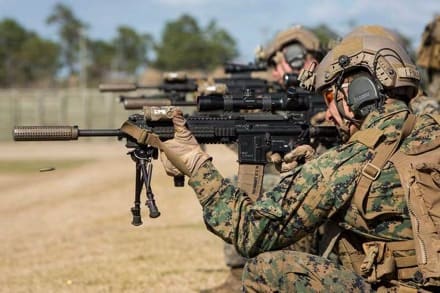
Photo: LCpl Christian J Robertson/Marine Corps

Specifically, capabilities for the Squad and Platoon organizations across the MAGTF that are capable of detecting, tracking, identifying and defeating Group 1 and Group 2 UAS.

The Squad-level solutions need to be carried by dismounted Marines with little to no impact on their primary mission.  The Platoon-level solutions may be transported in light tactical vehicles, assembled without the use of material handling equipment and operate on battery power.

They explain the reasoning behind the requirement below:

With the proliferation of UAS as a threat on the modern battlefield, Marines require the ability to maintain awareness of friendly UAS and conduct self-defense against threat UAS.  Every unit down to the individual Marine, regardless of geographic location on the battlefield, is vulnerable to reconnaissance and, more dangerously, attack from threat sUAS.  To facilitate freedom of movement, Marines require the ability to conduct self-defense against the threat.  This has been proven through multiple Department of Defense (DoD) experiments, training exercises, and has been proven during real-world operations.  

Each phase of the kill-chain requires a different component making dismounted CsUAS more difficult in terms of Size, Weight and Power (SWaP).  The dismounted CsUAS capability will be employed and support all elements of the Marine Air Ground Task Force (MAGTF), not just professional air defenders.  The dismounted CsUAS solution will need to be easy-to-use, easy-to-train, light-weight and use systems currently organic to the Marine Corps to the maximum extent possible.

The Joint CsUAS Office (JCO) has identified dismounted CsUAS capabilities as a vulnerability to the Joint force.  The Marine Corps Warfighting Lab (MCWL) identified the need for dismounted CsUAS throughout multiple experiments.  Additionally, Tactical Training and Exercise Control Group (TTECG), Infantry Officer Course (IOC), both Schools of Infantry (SOI), and other units continue to fly threat UAS against Marine units during field exercises and training events.  Each experiment and training exercise shows Marines are vulnerable to threat UAS and require the ability to defend themselves from the threat. 

Without a CsUAS capability to employ at lower echelons in an integrated and layered defense, every unit and every Marine will be vulnerable to reconnaissance and attack from threat UAS, risking mission success and loss of life. 

The solutions may include capabilities described below:

Detect / Track / Identify

• Squad level.  Passive detection system that can detect UAS using acoustic or radio frequency (RF) detection.  Sensor should be body worn with limited impact on primary mission equipment.  Components may include a Handheld tablet, bracelet, earpiece, and/or glasses that receives alerts, warnings, notifications from an external sensor(s) (i.e. radars and/or passive detection systems).

• Platoon level.  Passive detection system that can detect UAS using acoustic or radio frequency detection.  Sensor can be vehicle, mast or tripod mounted.  Components may also include a handheld tablet, bracelet, earpiece, and/or glasses that receives alerts, warnings, notifications from an external sensor(s) (i.e. radars and/or passive detection systems).

Defeat:

• Squad level.  Non-kinetic – Directional RF and/or Global Positioning System (GPS) jammer, ideally able to mount on organic rifle.  Kinetic – A rifle / rifle optic capable of tracking and defeating small UAS.  Enhanced ammunition for existing firearms (buckshot-like 5.56, 7.62, .50, .40mm).

• Platoon level.  Non-kinetic – Omni-directional RF/GPS jammer and/or spoofer.  Kinetic – A rifle / rifle optic capable of tracking and defeating small UAS.  Enhanced ammunition for existing firearms (buckshot-like 5.56, 7.62, .50, .40mm).

If you’ve got a solution, the Marines want to hear from you. Responses shall be submitted no later than 1700 Eastern Time on 2 August 2024.  Telephone replies will not be accepted.

The RFI specifies how submissions must be formatted and where to send them, so be sure to check it out.


OMNISCIENCE by OKSI – OMNIseek

Friday, July 12th, 2024

So far this week, we’ve introduced you to OMNISCIENCE, an overarching AI environment by OKSI, used to enhance current unmanned aerial systems with software to speed the ability to identify and characterize the operating environment. To add context, we offered a video depicting OMNInav which is used for UAV navigation in GPS-denied environments, analyzing the terrain as the UAV flies, comparing it to mapping data and maintaining position on the fly.

This video explains OMNIseek which provides Automatic Detection and Recognition (ATD/ATR). This goes way beyond the phase change detection systems we’ve seen in the past by not only detecting items of interest in the field of view, but characterizing what they are as well.

OMNISCIENCE components can be used alone or in conjunction with one another, depending on customer requirements and each application is customized to the user’s existing equipment.

OKSI is a privately held small business headquartered in Los Angeles, California. Learn more at www.oksi.ai.

LinkedIn: www.linkedin.com/company/oksi-ai

Microdrones Welcomes Lengemann Corporation to Its Global Distribution Network

Tuesday, July 9th, 2024

The Supplier Will Expand Distribution of Fully Integrated EasyOne Drone LiDAR Systems and LP360 3D Point Cloud Software Across Florida and the Caribbean

For Immediate Release

Huntsville, AL –– Microdrones is pleased to announce that Lengemann Corporation, a leading supplier of positioning solutions for Construction, Engineering, and Surveying Professionals, has joined the Microdrones distribution network. Lengemann Corporation is now authorized to sell the fully integrated EasyOne Drone LiDAR systems and LP360 3D Point Cloud Software, expanding their offerings in Florida and the Caribbean.

“Adding the Lengemann Corporation to our distribution chain will help expand our coverage and network throughout the state of Florida, ” said Aaron Beach, Western Regional Sales Manager for Microdrones. “Their extensive experience and dedication to customer service are a great match with our values. With their expertise, we are confident that Lengemann will effectively introduce our EasyOne solutions to a wider audience, benefiting surveying and engineering professionals throughout Florida and the Caribbean.”

Mike Woodley, Sales Manager at Lengemann Corporation, shared his enthusiasm for the partnership: ” The reputation ofthe Microdrones products and their fully integrated solutionsspeak for themselves. The EasyOne will help enable our customers to create powerful data deliverables like 3D point clouds and orthomosaics. These systems will help our clients collect data efficiently and safely while cutting costs and saving time.”


Pictured above: The EasyOne system from Microdrones includes a drone, perfectly integrated LiDAR sensors, LP360 software, workflow, training, and support. The equipment easily packs into a compact case that is easy to transport. All EasyOne systems are made in the U.S. and available in NDAA-compliant versions.

Lengemann Corporation has been in business for over 60 years and is known for its exceptional customer service and technical support. They are the only authorized Topcon and Sokkia master repair facility in Florida and operate one of the largest privately-owned GPS networks in the U.S., known as L-Net. Their new onsite training facility is equipped to meet all survey and machine control needs.

“The addition of LP360 software to our product lineup is a significant advantage for our customers,” added Woodley. “It’s one of the premier software solutions for analyzing and creating point clouds for LiDAR and photogrammetry. It’s intuitive and easy to use, which we believe will greatly enhance our customers’ workflows.”

The EasyOne systems from Microdrones are compact, optimized, lighter, safer, and more efficient. These fully integrated systems make it easier than ever for users to plan, fly, collect, process, and visualize geospatial data projects. Lengemann Corporation’s knowledgeable staff is committed to meeting and exceeding customer needs and expectations daily.

“We are excited about this new partnership,” said Woodley. “Combining Microdrones professionalism and cutting-edge technology with our customer service and expertise will create a tremendous opportunity for our clients.”

To learn more about Microdrones, visit www.microdrones.com.

To learn more about GeoCue, visit www.geocue.com

Overwatch Group and PteroDynamics Ink Strategic Relationship

Friday, July 5th, 2024

Companies Sign Exclusive Distribution Agreement for Transwing® VTOL UAS in the UK, Kingdom of Saudi Arabia, and United Arab Emirates

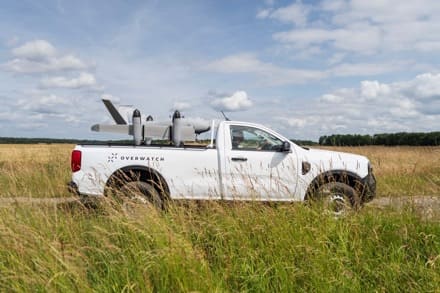
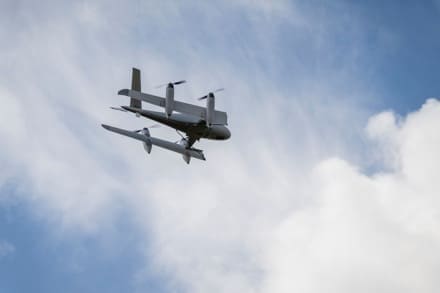
Overwatch Group, a UK-based end-to-end design and manufacture company specialising in advanced unmanned system and munitions technologies, and PteroDynamics Inc., an innovator in vertical takeoff and landing (VTOL) aircraft systems, today announced a landmark long-term strategic relationship and the first distribution agreement to bring the pioneering dual-use autonomous Transwing® (VTOL) to certain territories outside the United States. Overwatch will be the exclusive sales representative of the Transwing® unmanned aerial systems (UAS) aircraft on behalf of PteroDynamics within the United Kingdom (UK) for all non-commercial sales, and in the United Arab Emirates (UAE) and the Kingdom of Saudi Arabia (KSA) for all prospective commercial and defence sales. Overwatch has also made a strategic investment in PteroDynamics.

As the first distributor for this technology, Overwatch will help expand the employment of the Transwing® aircraft platform outside the United States, starting in the UK, UAE, and KSA. Overwatch will bring its engineering expertise in unmanned systems and payloads to satisfy requirements for potential customers in these territories.

PteroDynamics’ Transwing® is a revolutionary VTOL aircraft system that overcomes the limitations inherent in other VTOL designs by marrying the speed, range, and endurance of fixed-wing aircraft with superior VTOL performance in an efficient, highly automated platform. The aircraft folds its wings to transition seamlessly between vertical and winged horizontal flight, requires no additional launch and recovery infrastructure, and occupies a minimal footprint, making it immediately ready for VTOL operations out of the box. Its unique performance characteristics provide defence and commercial operators with a more cost-effective, autonomous alternative for critical logistics resupply and other missions to remote locations without runways, which are currently undertaken by crewed aircraft, boats, or other less practical means.

Prototypes of the Transwing® are currently under assessment by the U.S. Naval Air Warfare Center Aircraft Division (NAVAIR NAWCAD) for the Blue Water Maritime Logistics UAS (BWUAS) program for automated long-range maritime resupply missions. Automating maritime logistics and resupply also represents a significant opportunity for commercial operators. Unplanned downtime of offshore oil and gas production results in average losses of U.S. $49M per year per producer, and nearly 100,000 commercial sea-going vessels of more than 100 gross tons make 4.4 million ports of call yearly, each time requiring deliveries prior to coming to port, which are costly and difficult to schedule.

Drew Michael, CEO at Overwatch Group said, “We are extremely proud to have secured our long- term strategic relationship with PteroDynamics. Both companies are dynamic engineering enterprises that design and manufacture unique, patented technology from the ground up. Our R&D of cutting-edge payload technologies continues to gather pace as we develop our next generation of drones, and we now wish to extend our expertise into wider markets. Having assessed the market, the Transwing® stood out as transformational dual-use technology, and the whole of Overwatch is excited by how we will enhance it.”

Matthew Graczyk, CEO at PteroDynamics said, “PteroDynamics’ ability to build successful working strategic relationships with leaders in our industry enables us to accelerate innovation and build the solutions that solve the critical unmet needs of our customers. Not only does Overwatch have deep domain experience in avionics and aero-mechanical engineering, but their ties with commercial and defence customers in the UK, KSA, and UAE will prove to be a game-changing advantage for both companies. We are excited to work closely with Overwatch and look forward to growing this important strategic relationship.”

GA-ASI and Lockheed Martin Developing Net-Enabled Weapons Capability for MQ-9B SeaGuardian

Friday, June 28th, 2024

SAN DIEGO – 27 June 2024 – General Atomics Aeronautical Systems, Inc. (GA-ASI) and Lockheed Martin (NYSE: LMT) are collaborating to provide Net-Enabled Weapons (NEW) capability for GA-ASI’s MQ-9B SeaGuardian® Unmanned Aircraft System (UAS). The addition of NEW capability for SeaGuardian will bolster the Intelligence, Surveillance, Reconnaissance and Targeting (ISR&T) capability for the aircraft.

The NEW technology provides expanded sensor targeting applications for the precision targeting of long-range weapons. SeaGuardian’s demonstrated persistence coupled with its vast array of precision targeting sensors enables more efficient kill chains, especially in contested environments. GA-ASI’s MQ-9B SeaGuardian® UAS, and SeaVue multi-role radar from Raytheon, an RTX business, will effectively leverage Lockheed Martin’s extensive NEW expertise to further refine targeting capabilities for future theater deployments. Initial testing was completed on June 5, 2024, with F/A-18s on the U.S. Navy’s W-289 test range in Southern California.

GA-ASI and Lockheed Martin have been developing Link 16 messages to communicate with weapons inflight using the SeaGuardian Systems Integration Lab (SIL) in preparation for overwater range test flight.

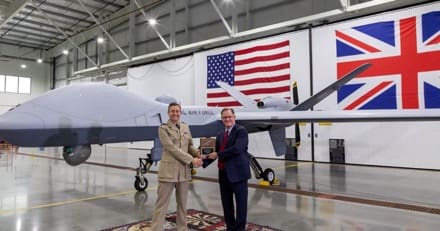
“This is a very important system attribute for SeaGuardian to enable naval long-range targeting CONOPS against high-end threats at much less risk to manned platforms,” said GA-ASI President David R. Alexander. “We appreciate Lockheed Martin’s support in helping us prove out the NEW technology, which is an important component of our ISR&T capability.”

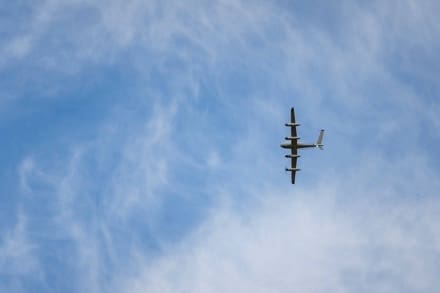
MQ-9B SeaGuardian is a medium-altitude, long-endurance UAS. Its multi-domain capabilities allow it to flex from mission to mission. SeaGuardian has been used by the U.S. in several recent demonstrations, including Northern Edge, Integrated Battle Problem, and Group Sail.

Netline Presents Its New DF Sensor – Directional Detection of Drones Regardless of Their Spectral Signature

Wednesday, June 26th, 2024

Addressing the rapid changes in drone threats, Netline’s new DF sensor detects and locates standard, non-standard and DIY drones. “A robust, comprehensive solution for elusive drone threats with unknown spectral signatures”

June 25, 2024 – Netline Communications Technologies Ltd. – a leading developer and manufacturer of high-end electronic warfare and tactical spectrum dominance systems for defense forces and homeland security agencies, presents a novel approach to drone detection with its new non-database direction-finding (DF) sensor. 

Netline’s new development is designed to detect all dronethreats in the covered area – including various non-standard and DIY drones, which are the most elusive threat in recent war zones and conflict areas. 

“Netline is stepping up to meet the growing field demands for a comprehensive system that can identify and locate all potential drone threats”, asserts Mr. Shai Palti, Netline’s CEO. “As the drone industry evolves, defense forces face new and complex challenges. Netline’s new approach provides our clients with a robust solution for detecting, locating, and mitigating every threat in the spectral area, even if it’s a new drone with unknown spectral signatures or communication links”. 

“Innovative and Adaptive Algorithm with No Specific Data”

The new version of Netline’s DF sensor is based on three detection steps. First, the sensor scans the spectrum for all radio frequencies (RF) in the relevant bands, then separates targets from the spectral noisy environment using a hybrid algorithm, and finally tracks the suspicious targets to define their threatening level according to different parameters.

The strategic deployment of two or more DF sensors in the covered area empowers users with precise localization abilities. This is achieved through the intersection of the two direction lines, ensuring a comprehensive and effective drone detection and localization system. 

These abilities join Netline’s battle-proven drone mitigationsystems. Based on SDR technology, Netline’s jammers disrupt the communication between the drone and its operator, block GNSS signals, and cover all potential drone frequencies.

“At Netline we constantly learn and monitor the evolving threats in different war zones around the world to develop critical and rapid solutions. Our R&D teams have developed this innovative and adaptive algorithm that recognizes common factors of airborne threats, indicating their existence without needing specific data”, summarizes Mr. Palti.

For more information on Netline Communications Technologies Ltd, please visit the company’s website: www.netlinetech.com

Australia Deputy Prime Minister Visits DroneShield Facility

Monday, June 24th, 2024

DroneShield Ltd (ASX:DRO) (DroneShield or the Company) is pleased to advise that Hon Richard Marles, Deputy Prime Minister of Australia and Minister for Defence, has visited the new DroneShield Sydney facility in mid June.

DroneShield was included into the Australian Government’s Ukraine aid package in late 2023, contributing its rapidly deployable C-UAS sensors and effectors, and was approximately half of the total package amount at the time ($10m out of the $20m total). Its products are continued to be used on the frontlines in Ukraine to stop Russian drones, as well as a substantive number of other locations globally.  

The Company has moved into the new and substantially enlarged premises earlier this year, with the facility currently hosting approximately 130 staff, including over 100 engineers, as well as operations, business and corporate teams. With a larger own manufacturing floor combined with growing outsourced manufacturing capacity, DroneShield has a current manufacturing capacity of approximately $400m per annum. All of DroneShield’s R&D and manufacturing is done in Australia.

Hon Richard Marles receiving a brief at the DroneShield facility

Hon Richard Marles, Deputy Prime Minister of Australia and Minister for Defence, commented: “DroneShield is an example of an Australian high-tech success story, with world-class cutting edge local R&D and manufacturing, and growing exports around the world, with focus on the US.”

Hon Richard Marles inside the DroneShield anechoic test chamber

Oleg Vornik, DroneShield CEO, commented: “Over the last 10 years, DroneShield has become a global leader in AI-powered C-UAS solutions. Critically in the current geopolitical environment, it is also a significant sovereign manufacturer. We are pleased to have had an opportunity to brief the Deputy Prime Minister on our operations, and look forward continuing to support Australia and its allies with our advanced technologies.”

Hon Richard Marles receiving product brief in the display area from DroneShield CTO Angus Bean


Schiebel Opens Facility in France

Friday, June 21st, 2024

Vienna, 20 June 2024 – The Schiebel Group is strengthening its European footprint by establishing Schiebel Aéronaval SAS in Toulon, France.

The CAMCOPTER® S-100 has been in service with the French Ministry of Armed Forces since 2012. In order to more closely support this successful partnership and meet the operational requirements of the Armed Forces in case of major engagements, Schiebel has established a company in France, situated close to its customer, in Toulon. The new Schiebel entity will provide localised support for the French Navy’s fleet of S-100 within the framework of a 5-year contract DMAé (Direction de la Maintenance Aéronautique) awarded to Schiebel at the end of 2023.

Schiebel Aéronaval SAS will house a production and repair facility to conduct the assembly and maintenance of the S-100 systems for the French Navy and other customers. The new Schiebel company will also have a training department to train operators and maintenance technicians.

Furthermore and significantly, the entity is intended to become the main European production and payload integration site for the evolving CAMCOPTER® S-300.

Schiebel Aéronaval SAS embeds itself into the French Aerospace industrial network, works closely with other local French companies and is expected to generate many employment opportunities in the Toulon area.

“We are extremely proud to count France, renowned for its emphasis on strategic autonomy, among the CAMCOPTER® S-100 users. Opening a facility in Toulon not only enables us to serve the French Navy better, but also to be closer to our French industrial partners and benefit from the advantages of the region, including direct access to the sea. We are more than excited about the new opportunities this important step will bring“, said Lubos Sramek, CEO of Schiebel Aéronaval SAS.