XC3 Weaponlight

Archive for the ‘UAS’ Category

AeroVironment, Inc. Completes Acquisition of Arcturus UAV, Expands Portfolio with Medium Unmanned Aircraft Systems

Monday, February 22nd, 2021

• Arcturus UAV’s complementary capabilities provide program diversification, increase key customer penetration and enhance shareholder value

• Transaction adds leading medium Unmanned Aircraft Systems to AeroVironment’s portfolio of intelligent, multi-domain robotic systems

• Vertical takeoff and landing (VTOL) JUMP 20 unmanned aircraft system delivers reliable, multi-mission capabilities without launchers or runways to USSOCOM and other customers

AeroVironment completes acquisition of Arcturus UAV (Photo: AeroVironment)

SIMI VALLEY, Calif., Feb. 22, 2021 – AeroVironment, Inc. (NASDAQ: AVAV), a global leader in unmanned aircraft systems, today announced it had completed its acquisition of Arcturus UAV, Inc. a leading designer and manufacturer of high-performance unmanned aircraft systems (UAS). The approximately $405 million transaction was previously announced in a press release on January 13, 2021.

The United States Special Operations Command (USSOCOM) selected Arcturus UAV as one of six companies qualified for the potential $975 million indefinite-delivery/indefinite-quantity MEUAS IV contract in June 2020. The contract enables awardees to compete for site-specific task orders and provide USSOCOM with unmanned aircraft systems services and support for intelligence, surveillance and reconnaissance (ISR) operations. Arcturus UAV employs its VTOL JUMP 20 in support of USSOCOM operations, minimizing the logistical footprint of UAS operations while delivering multi-payload, multi-mission capabilities. Arcturus UAV is also one of four awardees selected for funded development and demonstrations supporting the U.S. Army’s FTUAS program, a potential billion dollar, and next-generation UAS program.

“Like AeroVironment, the Arcturus UAV team is laser-focused on supporting its customers around the world with the most reliable and effective products and services for their missions,” said Wahid Nawabi, president and chief executive officer. “As we welcome the Arcturus UAV team to AeroVironment, we commit to maintaining or exceeding the high level of service our existing and new customers experience. The JUMP 20 and T-20 platforms, combined with associated ISR services, represent a significant expansion to AeroVironment’s portfolio of intelligent, multi-domain robotic systems that will enhance long-term shareholder value and help our customers around the world Proceed with Certainty.”

AeroVironment completed the acquisition of Arcturus UAV on February 19, 2021, resulting in Arcturus UAV becoming a wholly-owned subsidiary operating under the AeroVironment brand. 

DroneShield Partners with M2K Technologies to Bring Revolutionary Anti-Drone Systems to Indian Market

Tuesday, February 16th, 2021

DroneShield Ltd (ASX:DRO) (“DroneShield” or the “Company”), a global leader in drone detection and mitigation, and M2K Technologies, part of M2K Group with business interests in Defence & Aviation, Biologicals, Real Estate and Entertainment, have entered into an Agreement to collaborate and distribute DroneShield solutions in the Indian market.

Oleg Vornik, DroneShield’s CEO, commented, “M2K Technologies is a strong business partner in the Indian market, which has been seeing a rapid rise in the c-UAS requirements, being driven by non-State (such as criminal and terrorist) and State-based use of UAS, including escalation of the India-China border conflict along the Line of Actual Control (LAC).”

Vikash Bhagchandka, President M2K commented, “We are pleased to partner with DroneShield for addressing the imminent threat emerging from rogue drones faced by forces and security agencies and provide solutions across industries to protect our borders, prisons, airports, petrochemical complexes and other critical infrastructures and VIPs. We are actively engaging in multiple procurement processes in India in the c-UAS space through our partnership.”

The Australia-India defence relationship has been considerably strengthening in recent years, including signing of multiple landmark defence arrangements between the countries in June 2020, as part of the Australia-India Comprehensive Strategic Partnership announced by Prime Minister Scott Morrison and Indian Prime Minister Narendra Modi. India is already part of “the Quad”, which brings together the US, Australia, India and Japan for naval exercises. DroneShield has participated in DefExpo 2020 in India as part of Team Defence Australia.

For further information, please contact info@droneshield.com

IDEX 2021: UVision will unveil a Comprehensive Simulation Solution for HERO Loitering Munition Operators

Monday, February 15th, 2021

UVision Will Present its Range of Combat Proven Loitering Munition Systems for the First Time at IDEX UAE Show

February 15, 2021 UVision Air Ltd. will present for the first time two advanced Simulator Configurations. The newly inducted simulators complement the existing classroom simulator training system by enabling the operator to train during deployments. At the show, UVision will also highlight the high precision, combat-proven Hero Series of Loitering Munitions.

UVision’s Hero Training and Simulation System provide an advanced loitering weapon and payload simulation in a virtual realistic environment. With the two new configurations, UVision presents a comprehensive solution for HERO operators allowing a higher level of training flexibility. The Classroom configuration provides a robust simulation solution with a rich and versatile scenario generator for multiple trainees. The Portable & Embedded field simulator configurations allow Hero operators continuous hands-on training (at various levels) during deployments; hence maintaining the highest level of operational proficiency and readiness – anytime, anywhere.

The HERO series of loitering munitions consists of eight loitering munition systems, designed for different missions at various ranges using various types of payloads. The HERO systems are the fastest sensor-to-shooter loitering munitions, allowing forces in the front-line to independently locate time sensitive targets, and track and attack with pin-point precision. Each munition can handle different missions ranging from lightweight static or moving targets (such as light-duty vehicles and human targets) to larger fortified or heavily armored targets such as MBT (Main Battle Tank), enemy air defenses and other strategic objectives.  The HERO series unique design enables the munitions to carry out pinpoint strikes in urban areas or remote locations, with minimal collateral damage. In cases where an attack is aborted, the systems can be recalled and another target selected. With extremely low noise and thermal signature, these systems integrate highly advanced, stabilized electro-optic day/night cameras, and are ideal for deployment from air, land and naval platforms.

According to Major General (Ret.) Avi Mizrachi, CEO of UVision, “the HERO Simulators increase the effectiveness of our systems while reducing the operating costs. All of the HERO Loitering Munition Systems meet a wide range of air, naval and ground forces requirements, thus ensuring combat superiority as well as survivability for even the most complex missions. Our latest field deployed simulator further enhances the reach-out of our systems and strengthens the proficiency and combat worthiness of the operators.”

At the show, UVision will display the Hero series of Loitering Munition Systems which provide the combat warrior with unique qualities to the modern battlefield by providing the tactical echelons with unprecedented precise lethal capabilities while minimizing sensor-to-shooter cycles and maintaining operational independence. Such advantages are truly “Battlefield Game Changers” which are recognized by major NATO military forces and leading operational customers worldwide, who use the HERO series in field operations.  


Autonomous Drone Start-up, Flare Bright Ltd Closes Initial Investment Round

Friday, February 12th, 2021

Flare Bright closes its £500,000 seed equity funding round.  The main investors were two cornerstone Venture Capital firms: Britbots, who opened the round, and Highland Venture Capital who closed it.  The company was greatly supported by OION who introduced the company to a number of High Net Worth investors, and together with a few other Angel investors completed the round. This secures the funding for Flare Bright through to 2022 and is complemented with other UK Government grants through its Future Flight competition and contracts, including an MOD Defence and Security Accelerator Rapid Impact award.  

Flare Bright’s Board now consists of Dominic Keen, the CEO of Britbots, who is currently Chairing the Board and Scott Carnegie from Highland Venture Capital who joins as a Non-Executive Director.  The two co-founders, Kelvin Hamilton (CEO) and Conrad Rider (CTO), together with Chief Commercial Officer Chris Daniels, complete the Board.  

CEO Kelvin Hamilton says, “we’re delighted to have such a quality and committed group of investors join the company and help us rapidly scale up and deliver on our cutting-edge technology.”

Experienced Venture Capitalist and Flare Bright’s new Non-Executive Director, Scott Carnegie adds, “When Flare Bright pitched to Highland Venture Capital we immediately recognised its potential and our investment committee were unanimous in backing this company.  I am very much looking forward to joining the Board.”

Flare Bright was founded in November 2015 and after a number of years of experimentation with autonomous drones, accelerated its progress a couple of years ago.  It has grown to twelve staff who are driving the technological boundaries of autonomy in drones.  

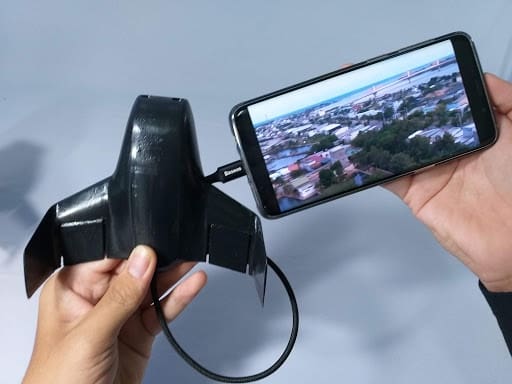
Flare Bright is a rapidly growing aerospace company which specialises in its UAS product: SnapShot, designed to be the lightest and simplest way to get aerial images at the single press of a button. 

Flare Bright has three core products:

• The MOD’s Defence and Security Accelerator is funding the ruggedisation of SnapShot for the defence and security market.

• SnapShot is being developed to measure winds accurately at altitudes up to 100m.  This is part of a wider InnovateUK project to create live wind maps of urban, industrial and other difficult environments.

• It is developing a precision air-dropped drone for delivering small items such as medicines, vaccines or critical parts to remote places cheaply and efficiently.

Flare Bright is increasing the endurance, controllability and capability of small drones, and will be introducing thermal imagery into its range soon.

“>

DroneShield – Next Gen Artificial Intelligence Software Rollout

Thursday, February 11th, 2021

DroneShield Ltd (ASX:DRO) (“DroneShield” or the “Company”) is pleased to announce the rollout of its first fully Machine Learning/AI based detection and classification software to all of its existing customer systems.

DroneShield utilises its proprietary techniques in signal processing and Machine Learning/AI to do near-real time detection and identification of unmanned robotic systems and, more broadly, other potential threats in the Electronic Warfare fields. The result is a dramatic increase in detection responsiveness, lower false positives and a significant increase in the speed at which new threats are detected, classified and tracked by the DroneShield systems.

One of the key achievements that sets DroneShield’s technology substantially ahead of the existing technologies globally, is a very lightweight machine learning architecture designed to run on low power FPGA (Field-Programable Gate Array) hardware. This enables the system to be deployed for long term periods in power scarce, air-gapped environments.

The software is designed to run on all DroneShield platforms including RfPatrolTM, DroneSentryTM and DroneSentry-XTM.

Future device software updates will build on this system architecture and increase performance and the number of detectable threats.


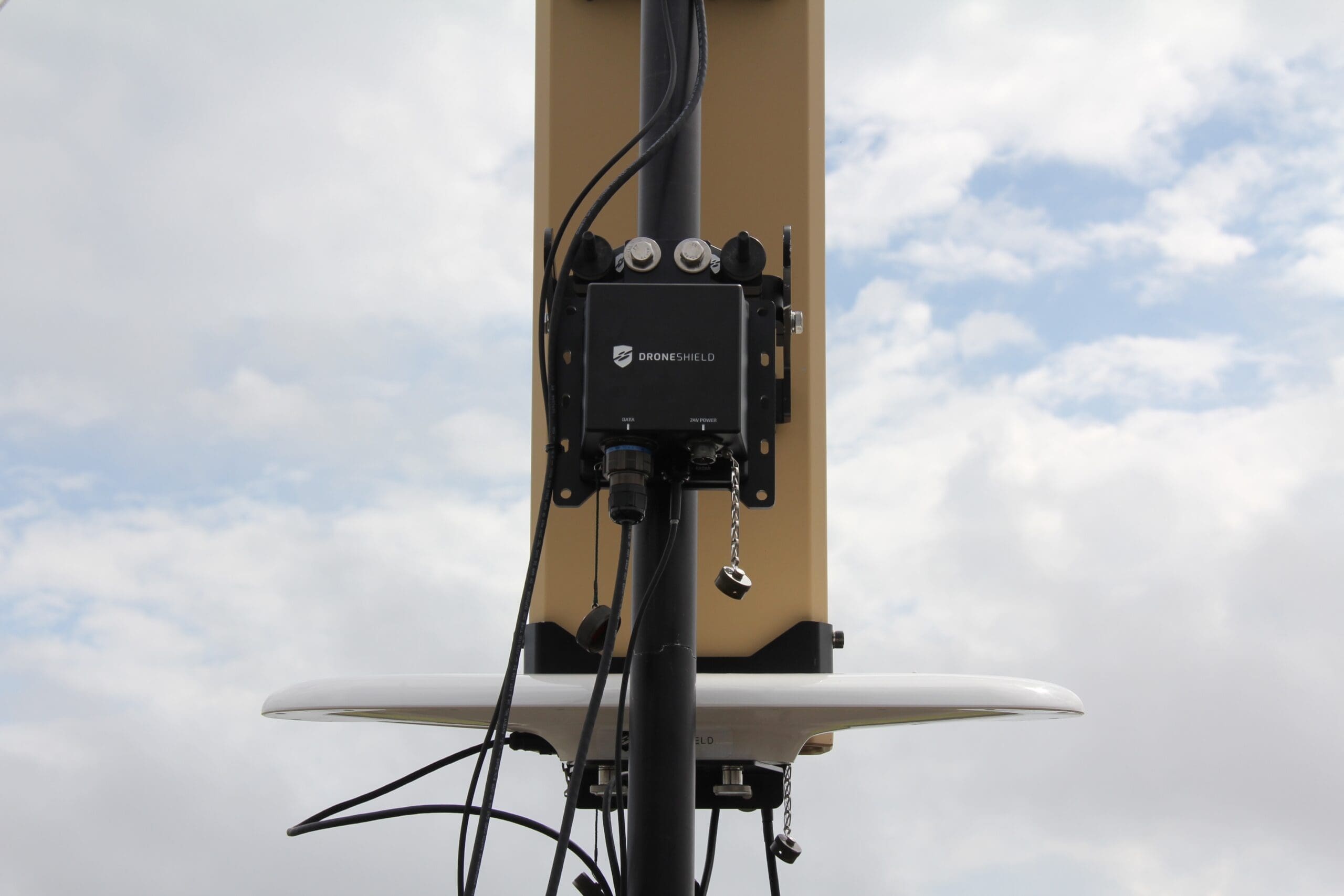
Image: DroneSentry system

For inquiries, please contact info@droneshield.com

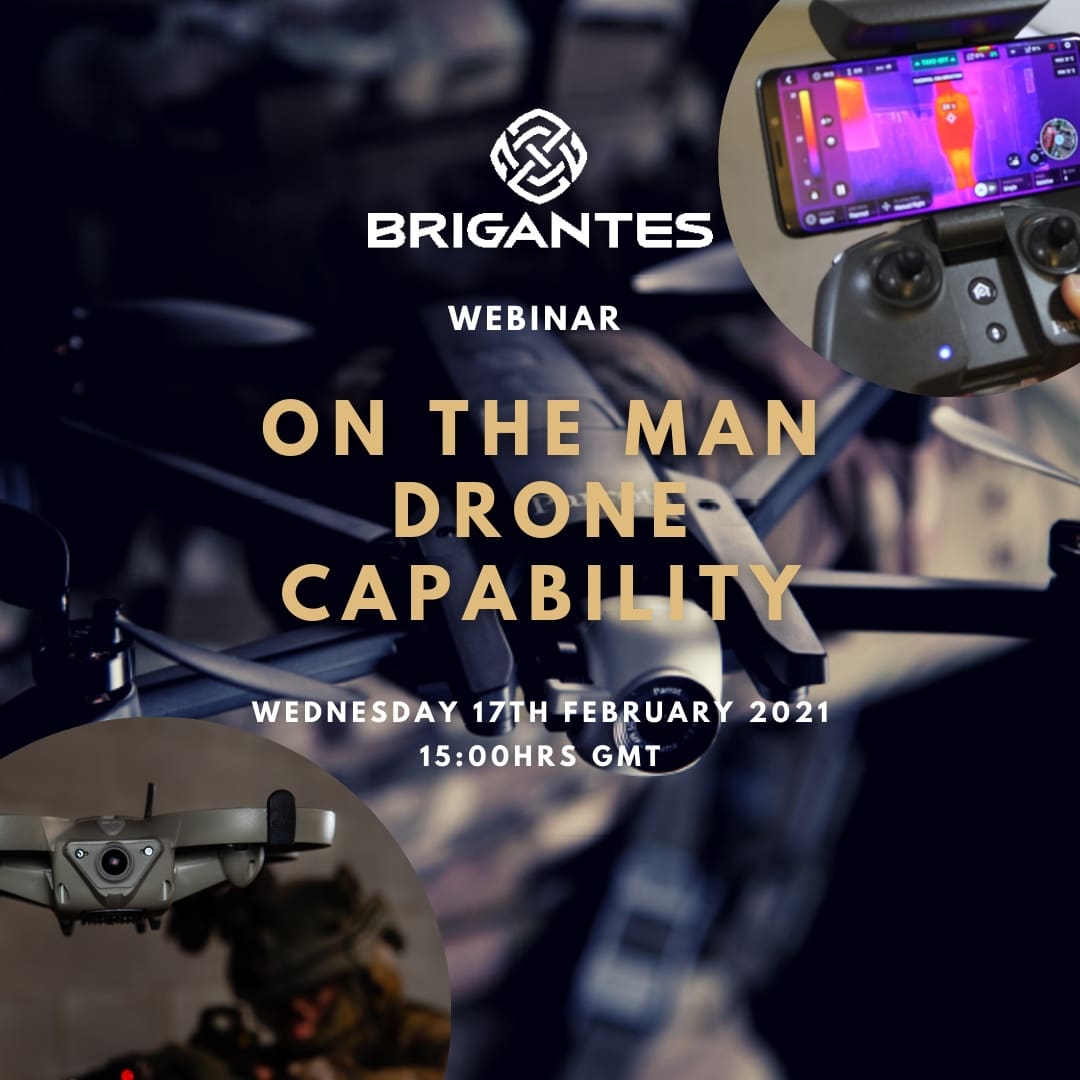
Brigantes Presents – The On-the-man Drone Capability Webinar

Wednesday, February 3rd, 2021


Innovations in hardware and software integration have made small, on-the-man drones a valuable and necessary asset for the troops on the ground in all military operations today and Brigantes are leading the way with demonstrating how these drones can be used effectively.

In the webinar, Matt Williams, CEO at Brigantes, discusses with leading drone experts, the key developments in smaller, lighter drones and how the innovations in hardware and software integration have made them a valuable and necessary asset for the guys on the ground in all military operations.

Agenda includes:
– Recce
– Mapping
– Survey
– Command and Control
– Planning
– Kinetic
– Distraction
– Targeting
– Training

Would you like to know more? Click here to register.

For more  information on how Brigantes can assist in your military procurement needs contact tribe@brigantes.com


Increasing Intelligence, Surveillance and Reconnaissance Coverage with Automated Wireless Recharging of Small Tactical UAVs

Wednesday, January 20th, 2021

The U.S. departments of Defense and Homeland Security will spend billions of dollars over the next few years on unmanned aerial and ground vehicles (UAVs) and sensor systems. The U.S. Army and U.S. Marine Corps will make greater use of Class I mini/micro vertical takeoff and landing (VTOL) UAVs to provide tactical intelligence, surveillance and reconnaissance (ISR) capabilities at the small unit level. Other branches of the Department of Defense and the Department of Homeland Security are also dramatically increasing the use of drones and sensors as crucial components of infrastructure, border, and base defense systems.
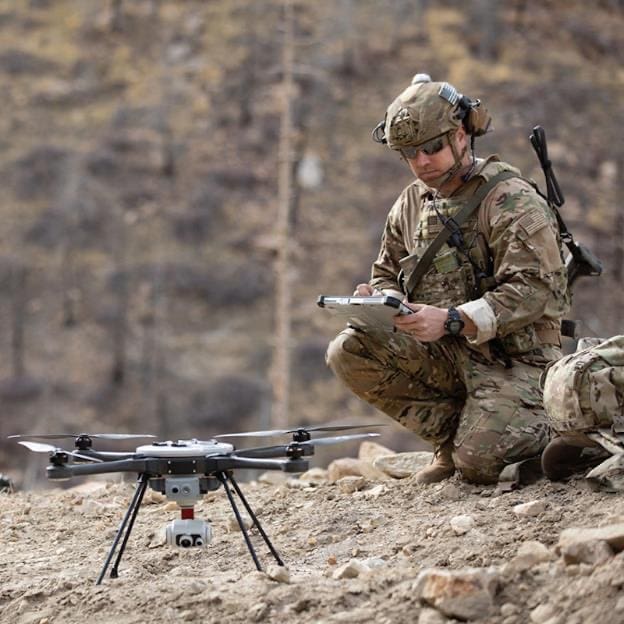

Small, portable, VTOL, UAV systems provide a unique and flexible maneuverable airborne platform for close-to-mid-range intelligence, surveillance and reconnaissance (ISR) coverage. Class I drones of this type are rapidly becoming the must-have “eye in the sky” for military and security forces seeking crucial information-based tactical command and control capability.
Photo: FLIR Systems R80D SkyRaider Class I VTOL UAV system. Copyright: FLIR Systems.

Virtually all small UAV platforms, however, rely on batteries that provide only a short amount of flight time before they need to be recharged or replaced – manually. This need to manually replace and recharge batteries presents obvious tactical and logistical issues.

But what if there was a way for UAVs to be autonomously, automatically and wirelessly recharged whenever and wherever necessary? Well, now there is. WattUp® radio frequency (RF) wireless charging technology from Energous Corporation.

As WattUp is an embedded technology, there is no need for cables, ports or battery doors that reduce the physical integrity of devices and increase the complexity of product design and manufacturing. By eliminating these features, hardware can have greater physical integrity, including being dust- and waterproof – keeping internal circuitry fully protected. And as there is no need to manually disconnect and replace batteries or connect chargers – multiple cables, connectors and adapters can be eliminated.


Illustration by U.S. Army. U.S. ground troops patrol while unmanned ground vehicles carry their extra equipment and small UAVs provide aerial surveillance coverage.
Use of this image is for informational purposes only – the appearance of U.S. Department of Defense (DoD) visual information does not imply or constitute DoD endorsement.

WattUp uses RF signal technology similar to Wi-Fi or Bluetooth to establish a link between a Power Transmitter and a Power Receiver. Once a connection is established, the transmitter sends power to the receiver along the same signal path. This “conversation” happens 100x/second and sends power safely to devices or batteries at various distances.

WattUp does not use magnetic coils requiring precise alignment or physical contact with the device for charging to take place – power is transmitted through the air at near-field and mid-field ranges. This capability makes WattUp ideal for devices that have rounded or irregular shapes – like most UAVs. WattUp systems also can be set up to charge automatically as soon as the device is within range of a transmitter, with a single transmitter capable of charging several devices simultaneously.
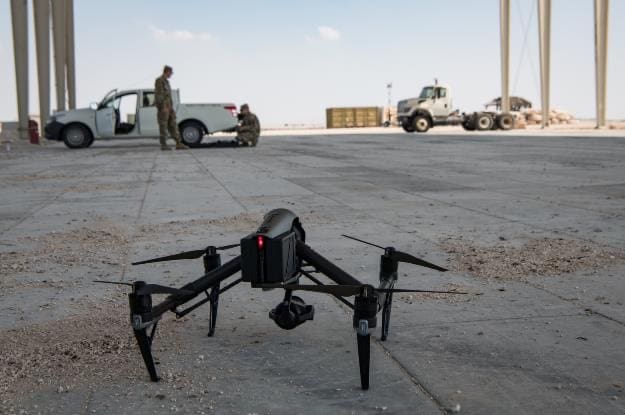

A drone that is part of the 379th Expeditionary Security Forces Squadron (379th ESFS) counter-small unmanned aerial systems (C-UAS) program stands ready Nov. 5, 2020, at Al Udeid Air Base, Qatar. The 379th ESFS Defenders have established one of the most robust C-UAS programs in the U.S. Central Command area of responsibility to detect and defend against adversarial drones that pose a potential threat to the safety and security of AUAB.
Photo credit: U.S. Air National Guard photo by Tech. Sgt. Brigette Waltermire. Use of this image is for informational purposes only – the appearance of U.S. Department of Defense (DoD) visual information does not imply or constitute DoD endorsement.

Finally, WattUp’s secure, cloud-based, management software enables users to track a battery’s state of charge and determine when it will need recharging. It also enables users to monitor the health and status of batteries held in depots and storerooms so that batteries can be issued with full assurance.

WattUp® RF wireless charging technology can potentially bring many new benefits and capabilities to military and homeland security UAV operators. For example, when multiple UAVs are providing roving aerial surveillance for base and infrastructure defense, a WattUp-enabled drone could be set to automatically fly back to a landing / charging pad to recharge at the end of its flight time, while a fully charged UAV lifts off to take its place. With UAVs automatically rotating in and out of service and recharging autonomously, uninterrupted ISR coverage of areas of interest could be achieved.

WattUp also has a potential role in the unmanned aerial systems (UAS) rich operational scenarios envisioned in the U.S. Army and U.S. Marine Corps concepts for the squad of the future. Autonomous ground vehicles such as the MUTT military utility tactical truck could be utilized as automated mobile RF wireless charging stations, enabling tactical VTOL UAVs to recharge near the forward edge of the battle area.

Without the need for manual interaction, power transmission could also be done safely at higher levels (to achieve shorter charging times) than is possible when human operators are present. WattUp systems are also scalable, so power transmission levels can be adjusted as necessary for the application and operating environment. For example, a 15W Base Station system could be scaled up to 30W or 45W, while charging distance can scale from 5mm for high power devices, up to few meters for lower power applications.
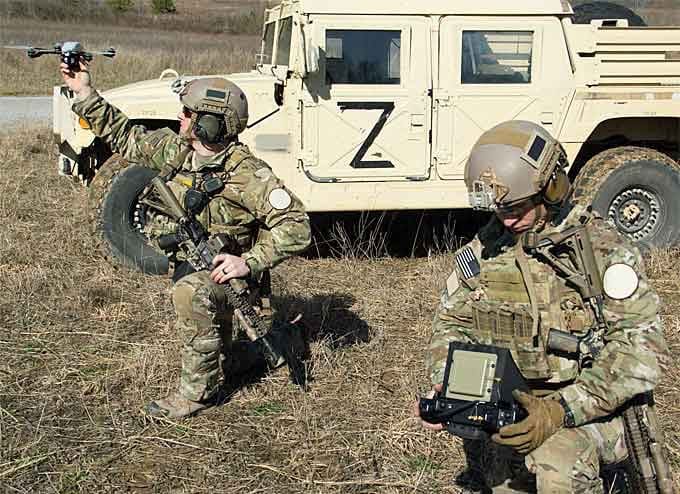

Soldiers deploy a small ‘quadcopter’ style UAV system on a tactical reconnaissance mission.
Photo: InstantEye Robotics Mk-3 GEN4-D1 small unmanned aerial system. Copyright: InstantEye Robotics.

Unmanned aerial systems, and the sensor packages they carry, have become a must-have facet of military and security forces today – and their importance will only continue to grow. Short flight times and manual battery changing and charging, however, limit how much critical ISR capability they can deliver.

Implementing WattUp RF wireless charging technology could help small UAS operators overcome the issues associated with current battery charging options, and thus be a force multiplier for critical tactical ISR capabilities.

For further information about employing WattUp® RF wireless charging technology in military applications, visit energous.com/military.

By Lawrence Holsworth and James Pope

Brigantes Presents – The Loki 2 Drone from Sky Hero


Wednesday, January 20th, 2021

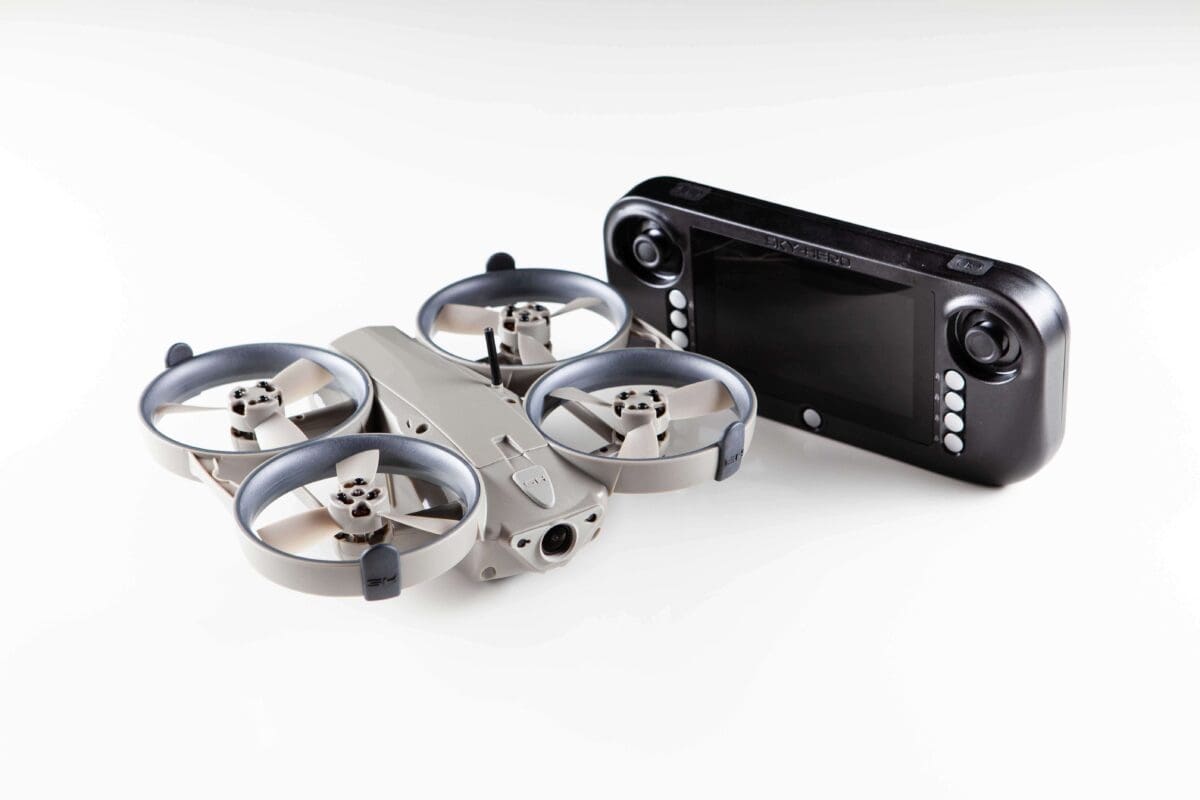
The Sky Hero Loki MK 2 allows military personnel and police officers to gather crucial intelligence of immediate threats before entering complex terrain such as dense urban areas, confined spaces and underground passages.

The Loki Mk2 is an operational support tool offering dependable methods of analysis and diffusion of videos. With extreme performance in most light conditions the camera allows users to track and anticipate target movements enabling reliable and rapid situational awareness for precise decision making. The zero latency and guaranteed no frozen images enables reliable and rapid situational awareness for precise, immediate decision making.

The encryption of both video signals and the flight commands is a crucial feature that ensures maximum security in all use cases and the new autopilot has been developed to ease the control without the need for training. The precise position holding of the drone in GPS denied and low light environments allows the operator to perform his mission with complete peace of mind.

For more information contact warrior@brigantes.com

Or visit brigantes.com/products/loki-mk2 and register for more information.