SIG SAUER - Never Settle

GSS Gear Tactical Takedown Sale – THIS Weekend!

February 15th, 2012

If you are in the Tidewater this weekend, make sure you head over to the GSS Gear Pro Shop at 1569 Diamond Springs Road, Suite C in Virginia Beach, VA 23455. The 17th and 18th of February, they are going to throw a great sale with items up to 50% off! Plus, they’ll have some great eats. Hope to see you there.

www.GSSgear.com

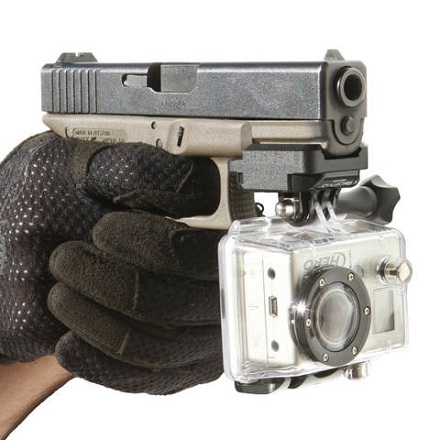
StrikeMark GoPro GLOCK Mount

February 15th, 2012

StrikeMark has introduced a Glock mount to their line of GoPro mounting products. Designed to fit all Glock models, it’s made from 6061-T6 Aluminum with a powder coated matte-black finish and comes with a nylon-tipped set screw and a 3/32 hex key for easy installation.

You can order it directly from StrikeMark.

This article was originally posted on TacticalFanboy.com.

New Cap from Mil-Spec Monkey

February 15th, 2012

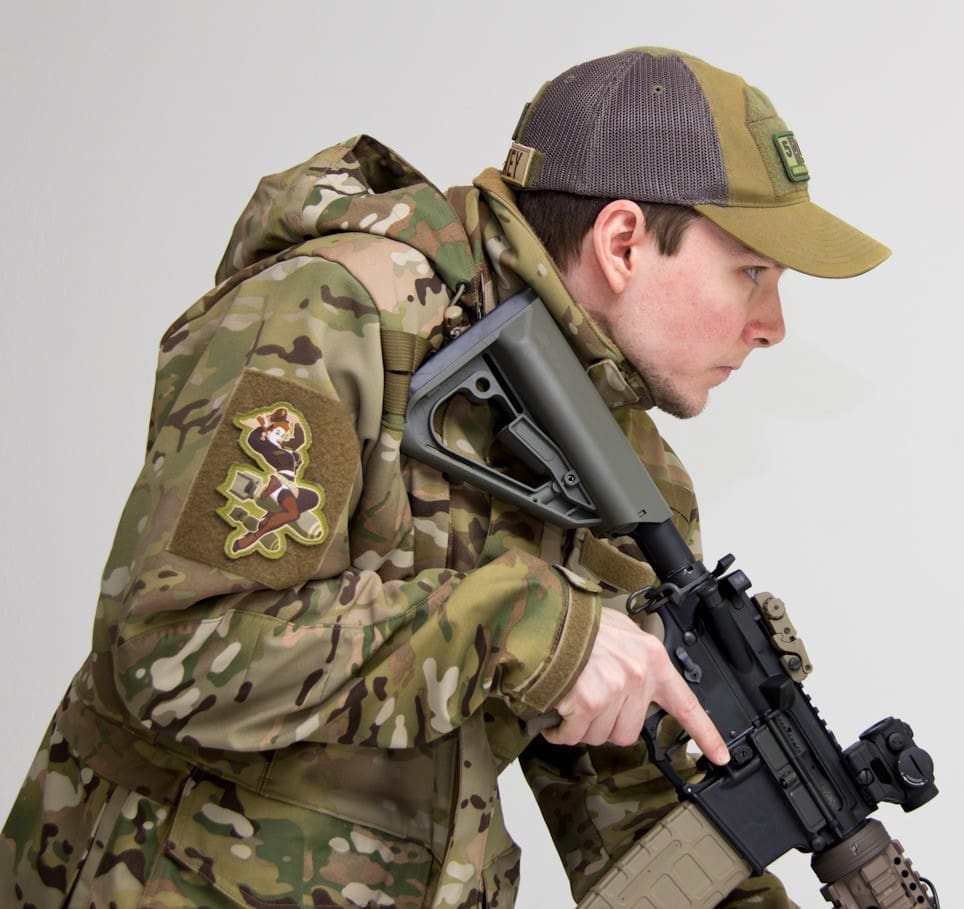
Mil-Spec Monkey recently released his latest headgear creation, the MSM CG-Hat Mesh RAW. Based on the original Cool Guy Hat DLUX which featured built-in tethered hearing protection, the latest model is a bit more streamlined and features Grey mesh panels to keep your noggin cool.

It’s a classic American ballcap design with a few modifications necessary for “tactical” use. Naturally, there is plenty of Velcro but it doesn’t overwhelm the cap’s appearance. The front panel is approx 4″ x 3″ and the rear is 3″ x 3″ with a 5.5″ x 1″ strip at the bottom for name tapes. There is even a 2″ x 2″ diamond up top in place of that annoying riveted button found on traditional ballcaps. Here, MSM runs you through the various caps as well as their new earpro system.

Currently available in two sizes with one unique color scheme, the Loden fabric panels combined with Grey mesh panels and OD Velcro looks pretty good. The sizing is important because it is a Flexifit cap so no floppy adjusters in the pack.

milspecmonkey.com

Hat tip to Tactical Fanboy.

No MACC 2012?

February 15th, 2012

Apparently, it seems that there will be no Multi-Agency Craft Conference this year. Held each year at Little creek Amphibious Base here in the Tidewater of Virginia by the American Society of Naval Engineers (ASNE) in conjunction with NSWCCD Combatant Craft Division (CCD) MACC serves as a platform for the exchange of technical information regarding small craft.

But this year, budget concerns have delayed planning so much that ASNE has determined they cannot present MACC on base and have decided to put on an entirely new conference called High-Performance Craft Expo 2012 on the waterfront in Norfolk, Virginia. It will feature exhibits, in-water displays, vendor presentations, panel discussions and networking opportunities in addition to technical discussions and an opportunity for attendees to learn about and comment on plans for MACC 2013.

MACC is a bit of an institution and predates the current war so the fact that it fell through the cracks is a bit disconcerting. Especially with future defense initiatives focusing on SOF and the Pacific rim with its immense littoral challenge.

www.navalengineers.org

Soldier Dogs – Coming Next Month

February 15th, 2012

Military Working Dogs are a vital part of military operations across the spectrum of operations. Author Maria Goodavage (an accomplished reporter and editor) has a new book about MWD operations coming out next week: Soldier Dogs: The Untold Story of America’s Canine Heroes. From the video and excerpts, it looks very good. Soldier Dogs: The Untold Story of America’s Canine Heroes is available on Kindle and Nook, as well as from Indiebound, Barnes & Noble, Blackstone Audio and Amazon. You can follow updates on Facebook if so inclined.


-DR

Me and My Good Ideas – Ha!

February 15th, 2012

I think I was leaning a little too far forward in the foxhole and had a little too much time on my hands. Remember, it was 1994 when I wrote this so some of the terminology may seem dated. Funny how 18 years later we are almost there with two separate uniforms.

To: Editor

INFANTRY Magazine

Ft Benning, GA 31995-2005

19 November, 1994

Dear Editor,

I am presently serving in Haiti and feel the Battle Dress Uniform(BDU) is seriously lacking as a field uniform. In fact, during my eight years in the Army I have found the BDU woefully inadequate as both a garrison and combat uniform. Because it is a compromise between these two roles it does neither well. It’s hot, doesn’t stand up to pressing well, doesn’t provide adequate protection from the environment, isn’t compatible with other Clothing and Individual Equipment(CIE) items, as well as a myriad of other problems too numerous to mention here. What’s needed are two separate uniforms. First, a Garrison Dress Uniform(GDU) and second, a Generation II BDU.

The GDU is intended to be worn as a day-to-day uniform in classrooms and offices, while performing details, and during local tactical training such as land navigation. It’s manufactured from a comfortable, durable fabric that can be pressed for daily wear. The GDU’s jacket has two chest pockets and is cut bush style to allow the bottom of the jacket to be worn in or out of the trousers depending on the weather. Tucking the jacket in will show off the belt and provide an incentive to maintain a trim military appearance. The jacket’s long sleeves feature an upper arm pocket for pens and other items. The GDU trousers retain the present design of the BDU trouser while eliminating the leg ties and bug flap. Because the GDU is designed as a garrison uniform, the double elbows, seat, and knees found on the BDU are eliminated. The IR treatment is also not necessary. The simplification of construction allows the GDU to be issued as part of the Soldier’s clothing bag at a great savings. Since it’s designed to be pressed the GDU has a longer service life than the BDU.

The GEN II BDU is configured for wear on the battlefield and issued at the unit as TA-50 to be worn only in a field environment. It will last thirty days under combat conditions. The GEN II BDU must be abrasion resistant, fire retardant, wind proof, hydrophobic (water hating), permeable to allow sweat vapor to escape, treated to retard the growth of odor causing bacteria, and incorporate anti-IR coating. Unlike the present BDU, it’s compatible with insulating underlayers as well as outer layers such as ECWCS. The material features a reversible camouflage pattern so that one uniform is functional in several theaters. Twice in the last four years American Soldiers have deployed to the middle east wearing woodland BDUs which provided no camouflage in that region. Had their uniforms been reversible they would have arrived better prepared to fight. The GEN II BDU jacket is designed to interface with other CIE items. In lieu of the front opening found on the current BDU, the GEN II BDU has covered slide fasteners that begin at the bottom hem and go up under the arm to form pit zips for ventilation. The side zips will interface with the ECWCS parka as well as Ranger Body Armor (RBA). The jacket’s two chest pockets are accessible while in the prone. A lack of lower pockets enables the jacket to be tucked in for rappelling or parachuting. The jacket has waterproof/breathable elbow panels which serve as pockets for removable padding to be used for FIBUA, parachuting, or long periods in the prone. Each sleeve has a forward slanting pocket capable of holding one 30 rd M-16 magazine. These will be the only pockets readily accessible while wearing armor. The jacket’s standup collar incorporates a hide away hood which will protect the wearer’s head and neck from the elements as well as flashburns.

The trousers resemble the present field pants with several modifications. The are no rear pockets and the seat features a waterproof/breathable panel. Waterproof/Breathable panels are also found on the knees which accept removable padding. Trouser legs feature covered overboot zippers presently found on the CPOG to facilitate rapid donning and doffing. The legs will also interface with a waterproof/breathable gaiter to keep water from entering the tops of boots.

Adoption of these two uniforms gives the Soldier an inexpensive uniform for garrison wear which projects a positive military image and a combat uniform optimized for wear on the modern battlefield. The cost savings will be felt immediately as only those Soldiers who need combat uniforms for their duties will receive them. The garrison uniform will be less expensive to manufacture than the current BDU as well as better suited to pressing which will give it a longer service life.


ADS Unveils Army Camouflage Finalist PatternsADS Tactical

February 14th, 2012

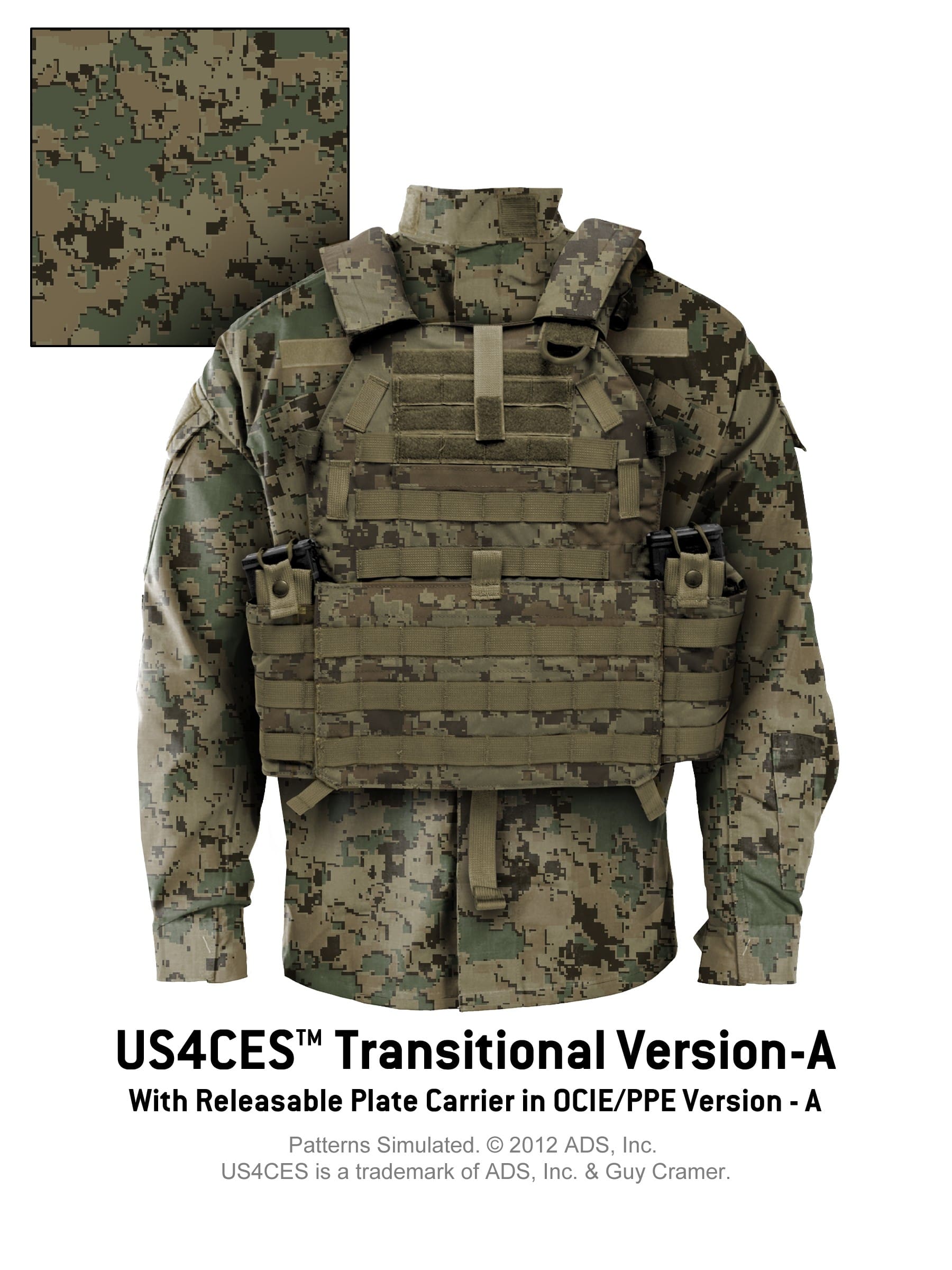
We just received the following information from ADS regarding their US Army Camouflage Improvement Effort finalist patterns developed in conjunction with Guy Cramer. As you know from reading SSD, they submitted two pattern families named Alpha and Delta. We previously broke the story on the Delta patterns during SHOT Show. Interestingly, the cleaner Alpha pattern (seen here) outperformed the Delta variants during the Army’s Picture-in-Picture down-select process. Here are the first images and descriptions of the patterns released to the public. While these images are simulated, meaning the pattern has been superimposed on an ACU coat and an armor vest, they do give you a great idea of how the environmental-specific patterns will work with their OCIE pattern.


Read the rest of this entry »

UVR Defense Tech in Alpha-Testing of Durable UV Camo Coatings

February 14th, 2012

With the proliferation of simple technologies to monitor increasing portions of the electromagnetic spectrum simple visual signature camouflage is no longer enough. Much work has been done in IR and NIR suppression. UVR Defense Tech specializes in the ultraviolet portion of the EM spectrum. The more you learn about this area of expertise, the more important you will realize that UV defense is not a one size fits all solution and has to be tuned based on the military operating environment.

UVR Defense Tech is currently Alpha testing two durable UV signature management solutions – UVRC-P for Shelter Fabric and UVRC-A for uniforms and other simple fabrics.

UVRC-P for Shelter Fabrics
Military tents and other fabric shelters for field use, e.g., mess-halls and operating theaters, are usually constructed of a PVC (Polyvinyl Chloride) coating on a polyester substrate. UVRC-P may be sprayed, rolled, brushed, or printed onto the PVC as a thin, matte, hard-wearing topcoat; intimately bonded to the PVC. Drying in minutes, the UVRC-P acts as UV camouflage, reflecting the percentage of UVA appropriate to the surroundings; for example, 7% in foliage or 22% in desert sand. Though applied for its camouflage attributes, UVRC-P also increases the life of the PVC substrate by blocking (reflecting/absorbing/scattering) the near-UV light. UVRC-P will not alter the visible or near-IR properties of the fabric. This patent-pending camouflage will soon be available to license in 7%, 22%, 50%, and 80% UV reflectances.


UVRC-A for Uniforms
UVRC-A is water-based and non-toxic. It may be sprayed, rolled, brushed, or printed onto standard military fabric. UVRC-A has most of the properties of UVRC, in that it serves as UV camouflage, without significantly altering the visible or near-IR camouflage substrate. However, UVRC-A is a durable – projected 50 washes – addition to the fabric. UVRC-A will be available as 7% and 22% UV-reflective compounds, in ready to apply liquid form. Licensing will be available.


www.uvrdefensetech.com