For Easter, Tactical Distributors is offering 20% off the entire site except 511 and Magpul. The sale lasts from now until Sunday night at 2359. Use code “TDEASTER20” at checkout.



For Easter, Tactical Distributors is offering 20% off the entire site except 511 and Magpul. The sale lasts from now until Sunday night at 2359. Use code “TDEASTER20” at checkout.
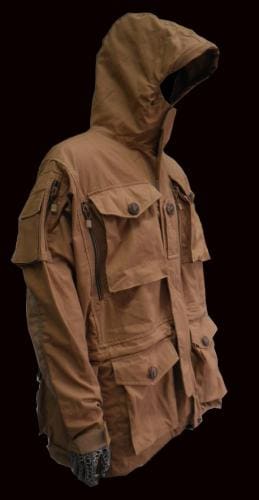 SORD USA has just announced that they are now offering their Smock in A-TACS camouflage (NYCO) as well as MultiCam (NYCO) and Tan (100% ripstop Cotton). We have chosen to include a photo in Tan because the A-TACS pattern works so well it masks some of the smocks features.
Redback One chief instructor Jason Falla has been wearing the SORD smock for a few months now and everyone who has seen it has been asking where they can get one. SORD USA heard their pleas and has answered them.
The smock features ELEVEN pockets (five around the waist, four on the chest and two on each bicep). Rather than the wire usually found in the brim of the hood, SORD is using a tube to shape it. The smock also integrates pit zips as well as 1000D Cordura elbows as well as tie down points for gloves at the cuffs. When buttons are used, they are of the slotted variety.
Four chest pockets consist of two large pockets with button closure and two side zip opening pouches for easy access while wearing body armor or chest rigs with a single zippered opening on the left chest allowing access to garments underneath. The waist features five pockets with the center rear pocket being a larger poacher-style pocket.
Generous bicep pockets consist of a large zipper opening main pouch, with a smaller top opening pocket for range cards, etc. The outer face of the bicep pockets features a large 4†x 4†Velcro panel for attaching IFF, ANFs, etc. SORD has also included a cover spare panel of matching material for instances where the IFF panel is not needed.
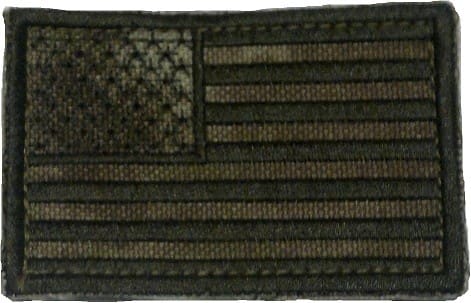
Additionally, they will have the Field Uniform Jackets and Pants in A-TACS within the week. They are also currently updating their website with caps in 3 versions; SORD logo, Velcro patch and US flag variants. Finally, check out the US flag on A-TACS background.
To order your smock visit www.sordusa.com.
In their first update in quite some time, Crye Precision adds many of the products they have unveiled over the past year. In particular, look at the return of the Crye Boonie Hat.
Created by celebrity international designer Gok Heston-Cumquat McKeith, their new range Eyepro has something for the enlisted ranks as well as toff officers. Did we mention they are on sale?

You, me, and probably every one you know missed out on the Magpul billet lowers released a few years back. AR15.com bought the rights to the design and after a couple of years of development hell, they have begun to roll off the line.
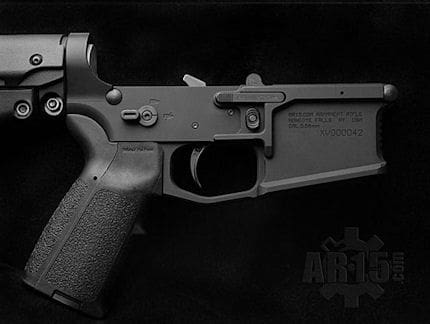
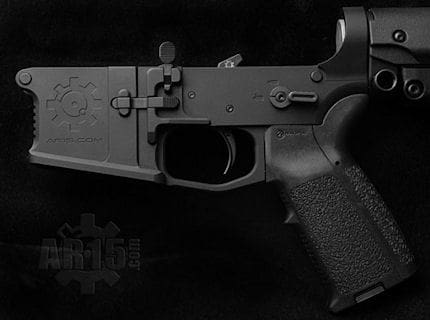
FEATURES
• Magazine well – aggressively flared for easier loading, and with a textured front
• Markings – Bolt Face Logo is milled rather than outlined, and other than the company name below it, all text is on the right side of the magazine well. We chose to mark these 5.56mm vs. ‘multi’ to differentiate the 5.56 platform vs. the 7.62 platform to come later. Also, FIRE selector pictograms on both sides are at 68 degrees vs. 90 degrees to support both 45 and 90 degree selectors.
• Trigger guard – integral “Magpul” style vs. the often seen ’round’ version to maintain the clean lines
• Roll Pins – there are no roll pins required in the assembly of this lower; the trigger guard is built in, and the bolt catch/release assemblies both use a threaded pin
• Takedown pin – comes with a threaded takedown pin detent spring channel so your takedown pin detent and spring remain in place when the stock is removed
• Ambi-Bolt release – receiver features a bolt release on the right hand side, and this lever includes the AR15.com name
• Trigger – Geissele Automatics Super 3 Gun trigger with a slightly heavier spring and a laser etched BFL on the hammer
• Selector – Battle Arms Development Short Throw ambi selector
• Stock – Magpul CTR, UBR, PRS
• Grip – Magpul MIAD
• Mag Release – Norgon Ambi
The lower assemblies are currently restricted to AR15.com Lifetime members but eventually, they expect to keep them in production as a general release item.
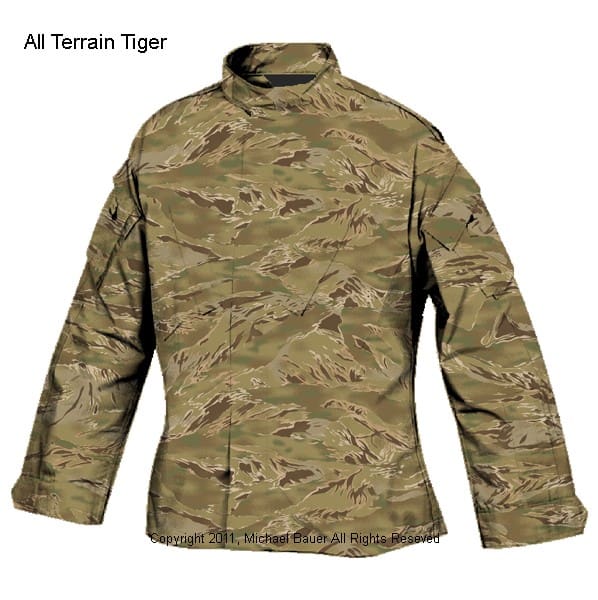
Ever since my days as a kid, I’ve always liked the Tiger pattern. Maybe the old versions were more art than science, but they were definitely distinctive. Over the ensuing years, Tiger Stripe Products started to produce recreations of the Viet Nam advisor pattern and then began to develop new, unique patterns culminating with the initial modern USAF blue tigerstripe pattern. While the Air Force chose to go a slightly different direction, TSP hasn’t stopped their work. In addition to a couple of patterns developed for specific clients they have just released images of their newly reworked All Terrain Tiger patterns. In addition to the version above, they have also produced “digital” variants. You will notice that the colorway is very familiar as it is proving the be the most effective for use with transitional patterns based on the 2009 camo testing.
Check the entire line out at www.tigerstripeproducts.com.
Finally, we are beginning to see the development of the requisite mobile telecommunications infrastructure required to fully leverage commercial smart phones for military applications. You constantly read articles in the main stream media about how the military is going to adopt this phone or that phone. The problem is that, while they might work great in garrison where there is a well established backbone to facilitate their use, once you get to the field they become so many bricks; deadweight that is incapable of talking to one another let alone linking to the outside world. Now, companies like Harris Corporation are developing deployable 3G networks.
From the Harris press release:
Jointly developed by Harris and Battleground Telecommunications Systems (BTSâ„¢), KnightHawk 3G is a customizable cellular Network In a Box (NIB) compatible with commercial off-the-shelf (COTS) equipment, including smartphones and tablets. Each KnightHawk 3G is installed with BTS Praefectusâ„¢ Mission Management Software, which automates configuration and management of the cellular network, and enables each KnightHawk to operate autonomously or as a scalable network with hundreds of nodes for increased range. This compatibility allows users in the battlefield to leverage existing applications, thereby enabling them to track a team’s location, automatically translate foreign languages, and conduct remote training using existing advanced programs.
KnightHawk 3G features UMTS High Speed Packet Access, providing extremely fast connectivity of 14.4 mbps for downloads and up to 5.76 mbps for uploads. It also offers the benefits of small size, weight and power (SWaP), making it ideal for mobile, multi-mission requirements in challenging environments.
My biggest concern is that the system includes phone and tablets. This is kind of like having to purchase your phone from AT&T to use it on their network. Open architecture would be much better. On the plus side, a data network is drastically needed to leverage the Soldier-as-a-sensor concept. The idea is simple. Look at every Soldier deployed as a multimode sensor. He carries a variety of devices that could constantly be collecting data which is of interest simply because of where he is located. Now, if we could provide a data bus on the Soldier and his weapon and network all of his sensor heads, process the data on him to send back the tasty bits so as not to clog up the network with spam and then take all of that data and process it and then feed it back to the Soldier as a usable product we are on to something. The networks haven’t really exited to do this. Now that they are emerging, the difficult work of expanding the TPED capacity begins.