Colt

Archive for the ‘AFSW’ Category

MAG Exchange – Two Months Out

Monday, August 3rd, 2026

MAG Exchange is a private event held during evenings during the ARC WEPTAC which brings together industry leaders, innovaters, and professionals for an exclusive evening of networking, product showcases, and mission-focused solutions.

October 26-27 on Tucson, AZ.

Companies interested in exhibiting should contact PK at info@magexchangemil.com.

www.magexchangemil.com

Senior Leaders Chart Course for Future Force

Friday, July 17th, 2026

WRIGHT-PATTERSON AIR FORCE BASE, Ohio (AFNS) —  

More than 60 Air Force senior leaders gathered at Wright-Patterson Air Force Base, Ohio, June 10-12, for the semiannual Corona summit, a strategic planning forum focused on policy development, force readiness and future force initiatives.

Formalized by Gen. Curtis LeMay in 1961, Coronas serve as a venue for the Air Force’s top echelon to foster collaboration and refine strategic decisions on an array of topics as diverse as training, deterrence and air warfare doctrine. This recent iteration provided a decision-making forum designed to build upon recent policy modifications and address key areas essential for maintaining a ready and capable future force.

“I have traveled to our installations worldwide, meeting face-to-face with the Airmen who execute our mission every day,” said Air Force Chief of Staff Gen. Ken Wilsbach. “They share their real, day-to-day challenges with me, and Corona is where we turn that feedback into strategic action – making decisions to dismantle barriers, modernize our capabilities, and build a better Air Force from the bottom up.”

The three-day summit provided a decision forum to build on recent policy changes and discuss key areas to ensure a ready and capable force for the future.

Joining the traditional cadre of Major Command commanders and Headquarters Air Force senior leaders were their respective Command Chief Master Sergeants, alongside a diverse group of general officers representing various operational and functional directorates.

The group agreed on a host of policies and changes, including those related to basic military training, the use of AI and protecting bases from drones and other threats.

BMT Next (Modernizing Basic Military Training)

To better prepare incoming personnel for the complexities of future conflicts, a comprehensive curriculum update will be implemented for BMT by 2027. Under this revitalized model, training will more closely align Airmen with the broader Air Force mission. The curriculum will heavily emphasize “Airmindedness,” military professionalism and the Air Force Core Values.

Pairing those three skills with the specialty training that follows, Airmen will arrive at their first duty stations equipped with the foundational skillsets essential for modern warriors.

Not only will what they learn change, the physical training environment will undergo a significant transformation, too. There are plans to construct a dedicated Air Force Training Range, which will serve as the centerpiece of the BMT compound. This facility is designed to orient the trainees’ mindset around the Air Force’s primary power projection platform: the air base.

Point Defense of Air Bases

Recognizing the evolving threat environment, the decision was made to establish Point Defense Flights at select Air Force installations. Initially, these specialized units will be composed of personnel drawn from multiple career fields.

Concurrently, a dedicated new Air Force Specialty Code is being developed to formalize and sustain this base defense capability.

Artificial Intelligence

To harness the strategic advantages of emerging technologies, Wilsbach announced forthcoming Headquarters Air Force-level guidance regarding AI integration. This initiative aims to institutionalize proven AI best practices currently utilized across the enterprise.

A primary objective includes developing programs that leverage AI to automate repetitive administrative tasks, thereby freeing up Airmen for mission-critical duties.

Emphasizing a forward-looking approach, the summit also highlighted the ongoing efforts of the Chief Master Sergeant of the Air Force’s task force dedicated to AI innovation.

The Future of Guardian Angel & Tactical Air Control Party Weapon Systems

The Air Force will not combine its Guardian Angel (GA) and Tactical Air Control Party (TACP) weapon systems into a single unit. Each will retain its distinct identity and core, specialized competencies.

GA remains focused on personnel recovery, while TACP continues its role in precision strike, distributed command and control and integrating airpower with ground combat. The two may train together periodically to be interoperable in conflict, with MAJCOMs setting the training standards.

Building on TACP’s existing expertise in airpower integration, it was designated as the lead weapon system for One-Way Attack missions for employment by the Joint Forces Air Component Commander.

Leaders also moved to bring greater discipline to how the Air Force uses the term AFSPECWAR (Air Force Special Warfare) for the GA and TACP communities. Over recent years, the term has increasingly been used in an operational context, and the summit reaffirmed that AFSPECWAR is neither a mission nor a weapon system. It remains a term of enduring value for recruiting, accessions, initial skills training and the shared warrior ethos that unites communities of extraordinary Airmen.

To ensure clear command relationships, distinct capabilities, accurate authorities, preserved community identity and specificity in combat employment, the Air Force will use precise terms for specific weapon systems. This decision ensures operational clarity and honors the valor of the Airmen in the GA and TACP weapon systems.

Audit

In compliance with congressional directives, the enterprise-wide comprehensive financial audit continues. To ensure effective execution and accountability, Wilsbach directed all MAJCOM commanders to provide bi-monthly progress updates, emphasizing that audit readiness must remain at the forefront of their daily operational workflows.

In addition to the key decisions listed, other priorities were discussed at the forum to include readiness, both aircraft and personnel, along with streamlining enterprise-wide logistics-informed command and control (C2). Leaders focused on taking care of Airmen with talent management discussions, mission focused assignments and developmental opportunities.

Other operational discussions included a renewed focus on Camouflage, Concealment and Decoys, as well as the speed of information and the ability to make tactical adjustments in dynamic threat environments with a Digital Fires Report.

As the Air Force’s senior leaders gathered in Dayton to tackle the most complex challenges facing the force, the above decisions impact not only the 665,000 Airmen, but also allies, partners, industry and supportive local communities. Some of the initiatives are internal to the Air Force, while others are further reaching.

“This summit was a resounding success because we didn’t just talk about the future – we made concrete decisions to shape it,” Wilsbach said. “Whether we are modernizing our training, fortifying our defenses to guarantee readiness, or leveraging AI to return valuable time to our Airmen and their families, we are building a force postured to win.”

By TSgt William A. O’Brien

Secretary of the Air Force Public Affairs

Modernizing Air Force TACP Ground Evaluations

Tuesday, March 17th, 2026

FORT CAMPBELL, Ky. — Air Force tactical air control party (TACP) operators from the 19th Air Support Operations Squadron underwent a comprehensive mission evaluation in January, utilizing advanced electronic warfare and autonomous drone technology to validate new ground combat standards.


The evaluation, which became a requirement for Air Force Special Warfare TACP units roughly two years ago, ensures operators maintain combat mission readiness through a full mission profile. The rigorous assessment covers every phase of a deployment, including preparation, infiltration, action on objectives, exfiltration, and a final mission debrief. Special Operations Warfare Ground Evaluations are conducted every 24 months to validate the unit’s combat mission readiness and ability to operate in in contested environments.


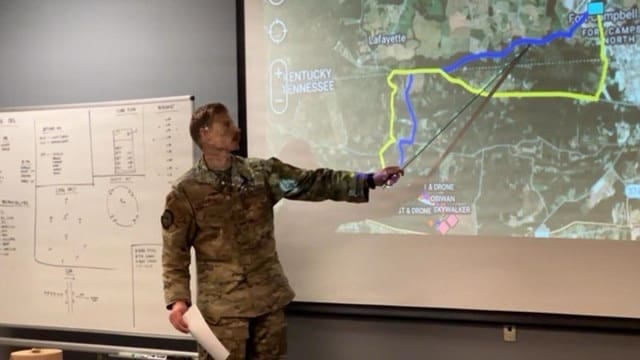
The evaluation began in a classroom setting where the team received a warning order detailing the mission. Lt. Col. Craig Lowrey, the 19th ASOS director of operations, served as the team leader during the exercise. He said the initial phase required the team to analyze the overarching mission set and discuss the scheme of maneuver while identifying the expectations for both friendly and enemy forces.

Once the planning phase concluded and a written portion was completed, the team moved to the field for a target acquisition mission. Evaluators provided only a rough area of interest, forcing the team to rely on specialized equipment to pinpoint an enemy location on an airfield.

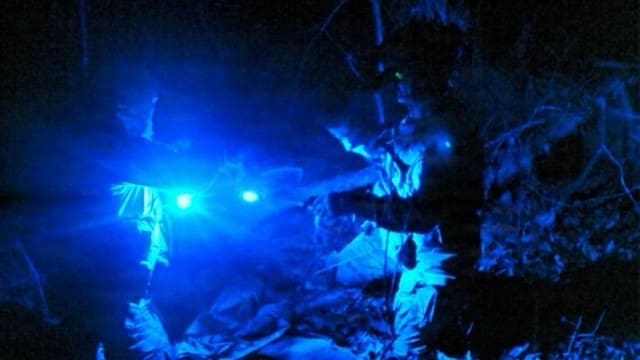
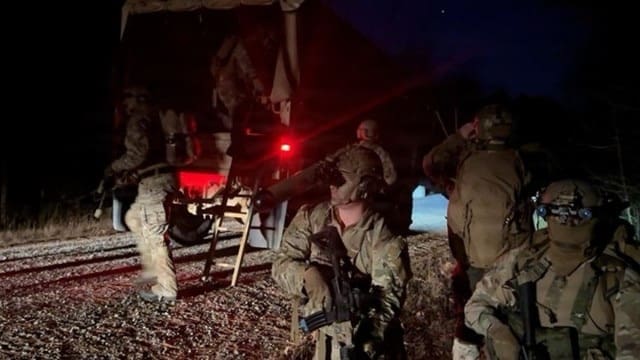
The insertion took place in total darkness, requiring every operator to utilize night vision goggles. 1st Lt. Michael Morin, a ground evaluator assigned to the 19th ASOS, said the lack of ambient light made the mission particularly difficult.

Upon reaching the vicinity of the objective rally point, the team secured the area. While the assistant team leader maintained security, the team launched a small Unmanned Aircraft Systems (sUAS) Skydio X2D drone. The sUAS was flown several hundred meters from the target area, obscured by the tree line, to get eyes on the objective.

The sUAS, which features 3D mapping and collision avoidance, allowed the team to navigate the forest and locate targets in a large open area. This provided the commander with a live video feed to refine the targeting data.

Simultaneously, the team utilized Electromagnetic Spectrum Operations (EMSO) using the Beast+ platform. This handheld device identifies and tracks adversary signals, such as radio or cellular communications.

“It can hear what kind of frequencies are being used,” Morin said. “It can help us pinpoint where radio traffic is coming from.”

By combining the signal data from the Beast+ with the visual data from the drone, the commander was able to determine the exact direction and location of the enemy.

Lowrey said the team made its way through multiple checkpoints before reaching the objective area. By using the technology to refine their targeting, they were able to send reconnaissance and surveillance teams forward to pinpoint high-priority targets. This allowed the team to successfully coordinate simulated airstrikes and artillery strikes.

The introduction of these ground evaluations reflects a shift in how the Air Force tests its special warfare operators. Morin noted that because these evaluations are relatively new, units are still refining the process to ensure operators are tested to the highest of their abilities.

The integration of low-profile, high-power technology like the Beast+ and Suas autonomous drones are essential for the TACP community as it prepares for near-peer conflicts where the electromagnetic spectrum is a primary battlefield.

By Jedhel Somera

WEPTAC Industry Trade Show – Nellis AFB – Jan 14-15 2026

Monday, December 15th, 2025

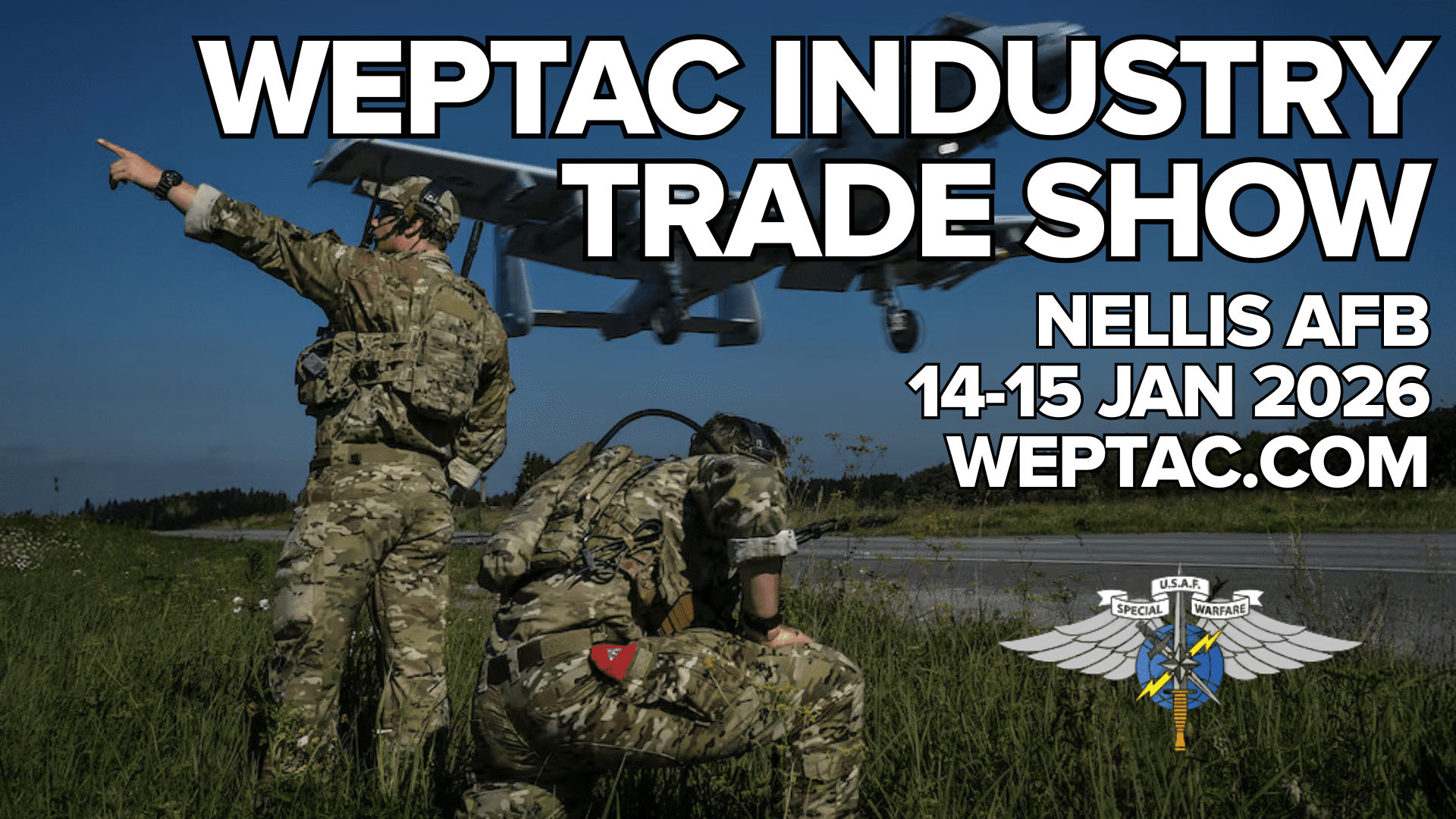
WEPTAC / AFSPECWAR will be held Jan 14-15 at Nellis AFB. Open to all military personnel, you’ll meet over 50 of the best companies industry has to offer.

2025 AFRC WEPTAC & MAG Exchange Cancelled

Thursday, November 13th, 2025

The Air Force has cancelled the 2025 Reserve Component WEPTAC Conference but plans to reconvene in person during their normally scheduled meeting in October 2026.

Consequently, the MAG Exchange event is also postponed until Fall of next year. Please update your schedules accordingly.

Special Warfare Training Wing Launches First-Ever Zulu Course

Wednesday, November 5th, 2025

Chapman Training Annex, Texas — The Special Warfare Training Wing (SWTW) marked a historic milestone today as it launched the first-ever Zulu Course, a groundbreaking common skills training program uniting Air Force Special Warfare (AFSPECWAR) career fields under one standardized curriculum.

The Zulu Course is aimed at aligning common training standards across Combat Control, Pararescue, Tactical Air Control Party, Special Reconnaissance, and their respective officer careers. By consolidating critical early-stage training, the course strengthens interoperability among AFSPECWAR Airmen and enhances mission readiness for global operations.

“This course is the result of deliberate data-driven analysis and a shared commitment to producing the world’s most capable operators,” said Lt. Col. Benjamin Schmidt, Director of Plans and Policy for the SWTW. “The Zulu Course establishes a shared foundation for our operators from day one, ensuring graduates leave here with the same core skills, knowledge base, and mindset.”

Held at the Chapman Training Annex in San Antonio, Texas, the Zulu Course brings together skillsets that were previously taught at multiple locations into a single, cohesive program that’s focused on the basic skills of shoot, move, communicate, casualty care, weapons, advanced insertion/extraction skills, individual skills, and small team operations. The course is taught by instructors with operational experience across the AFSPECWAR enterprise, combining expertise from multiple career fields to deliver holistic training.

The name “Zulu” was chosen as based off the Air Force Specialty Code (AFSC) system. Zulu is the phonetic alphabet code that denotes an AFSPECWAR Airmen, with the enlisted code being 1Z and the officer code being 19Z.

“This is a defining moment not just for the Wing, but for the future of Air Force Special Warfare,” said Col. Kaveri Crum, commander of the SWTW. “A tremendous amount of time and effort has gone into making the Zulu Course a reality. I could not be prouder of this team.”

The inaugural class will spend 16 weeks mastering the common skills curriculum before moving on to their respective advanced training courses. The lessons learned from this first iteration will help refine future courses to better deliver the skills that the operational field requires.

With the launch of the Zulu Course, the Special Warfare Training Wing continues to assess, select, and train, now with an even stronger and more unified foundation.

Story by 1st Lt Casen Salitore, Special Warfare Training Wing

M.A.G. Exchange Dates Shift to 7-8 December

Thursday, October 9th, 2025

Due to the government shutdown, ARC WEPTAC and M.A.G. Exchange are shifting from October 20-21 to December 7-8 at the Hilton DoubleTree Hotel-Tucson Airport.

One Month Out for MAG Exchange at Tucson, AZ

Saturday, September 20th, 2025

We’re about a month away from the first MAG Exchange in Tucson. The focus is on ANG and AFRC ground combatants who are attending WEPTAC.