Phantom Lights

Archive for the ‘Army’ Category

US Army Awards Contract to Evaluate Ammunition Industrial Base

Friday, March 18th, 2022

Yesterday DoD announced:

McKinsey & Co. Inc., Washington, D.C., was awarded a $16,397,621 firm-fixed-price contract to develop a model to evaluate the bottlenecks and capacities of the ammunition industrial base, assess outside the continental U.S. ammunition supply chain dependency and risk, and to develop financial assessments of government-owned, contractor-operated facilities. Bids were solicited via the internet with one received. Work will be performed in Washington, D.C., with an estimated completion date of March 15, 2024. Fiscal 2021 research, development, test and evaluation, Army funds in the amount of $16,397,621 were obligated at the time of the award. U.S. Army Contracting Command, Newark, New Jersey, is the contracting activity (W15QKN-22-C-0038).

Soldier Lethality Team Reimagines Movement, Vision and Combat Capabilities

Thursday, March 17th, 2022

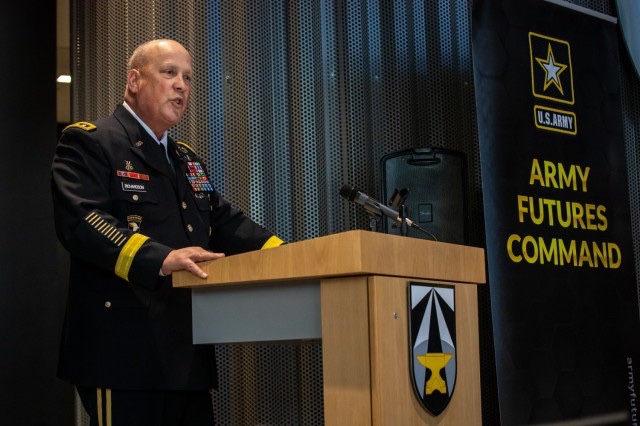
AUSTIN, Texas — The Army’s vision for a future force includes the ability to expertly wield modern weaponry, systems and technologies, at command, squad and individual Soldier levels.

To tackle the challenge of how to best prepare American Soldiers for the fast-paced, multi-domain battlefields of the future, U.S. Army Futures Command is developing equipment designed to improve Soldier movement, vision and combat capabilities.

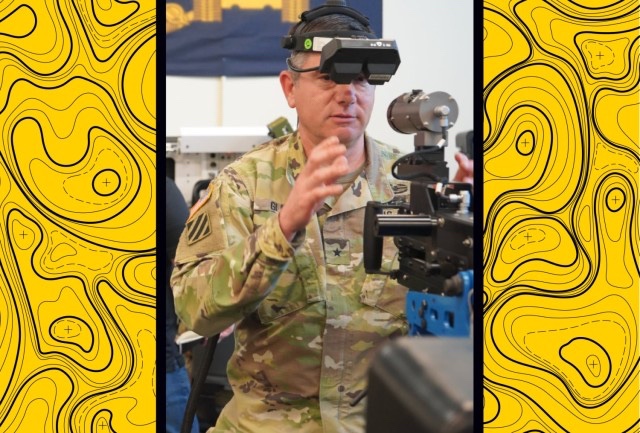
Coordinating modernization priorities in this area is the Soldier Lethality Cross-Functional Team, based at Fort Benning, Georgia. Brig. Gen. Larry Q. Buris serves as the CFT’s director and as Fort Benning’s Infantry School Commandant, ensuring the needs of the Close Combat Force — a group that includes select infantry, scouts, combat medics, forward observers, combat engineers and Special Operations Forces — are at the forefront of Soldier Lethality CFT efforts.

“Close combat is warfare characterized by brutal physical confrontation,” Buris said. “The CCF designation identifies those positions in the brigade combat team that are truly the tip of the spear, those who close with and destroy our adversaries.”

Buris noted that CCF “make up 4% of the military, but since World War II, have sustained 90% of the casualties — and they receive less than 4% of the DoD budget for Science and Technology.”

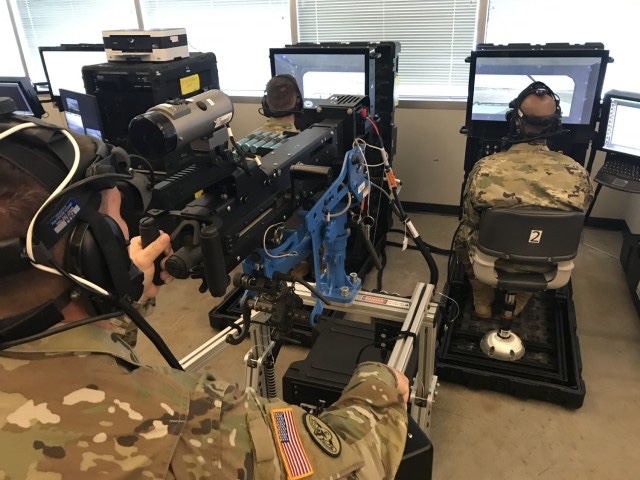
The Soldier Lethality CFT seeks to not only identify unique and evolving warfighter needs, but also to harness promising technologies in ways that skillfully and efficiently meet these needs, through improved equipment, training and resources. The team works closely with Program Executive Offices and other partners across the Army to apply Soldier-centered design, frequently using Soldier touchpoints to ensure advances align with Soldiers’ tactical requirements. The CFT includes approximately 55 Soldiers, Department of the Army Civilians and contractors working across four divisions: Capabilities Management, Operations & Integration, Acquisition Management and Science & Technology.

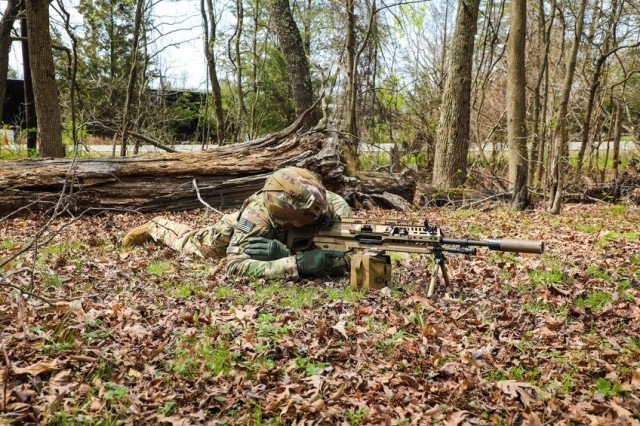
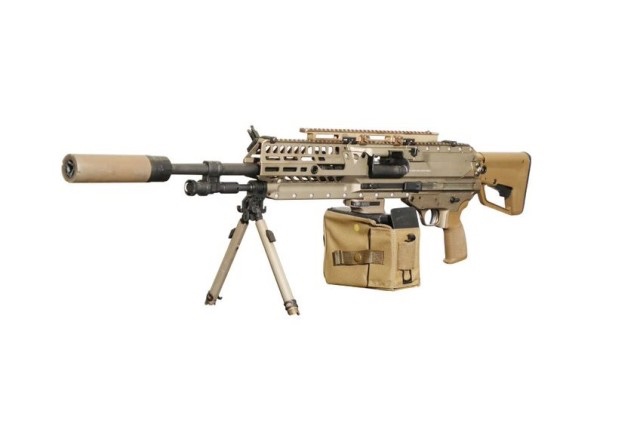
One of the CFT’s signature efforts is the Next Generation Squad Weapons (NGSW) program. The NGSW program includes a common fire control, common family of ammunition and two 6.8mm caliber weapons – a rifle (the XM5) and an automatic rifle (the XM250). The XM5 and XM250 will eventually replace the M4/M4A1 Carbine and M249 Squad Automatic Weapon, respectively, in the CCF.

The program, which is scheduled to begin fielding prototypes by late 2022, aims to provide Soldiers with the highest quality, most capable small caliber weapons and ammunition to achieve and retain overmatch against adversaries. Specific advantages offered by the NGSW include increased performance at range, integrated squad fire control, enhanced ergonomics, lightweight case ammunition technologies and signature suppression capabilities. The new weapons will improve Soldier mobility and maneuverability, enhancing ability to execute missions and evade adversaries.

The Soldier Lethality CFT is additionally working to advance the Army’s Integrated Visual Augmentation System program. IVAS allows for augmented reality capabilities, such as the ability to see around corners or project 3D terrain maps onto a Soldier’s field of vision, to increase lethality. IVAS also maps and captures 360-degree images of any environment, day or night, and preserves that information for Soldiers to use during training and rehearsals. The Army continues to work with Microsoft, which manufactures the mixed-reality headsets through a fixed-price production agreement with the Army, to develop their durability for all-weather field use.

Until recently, the CFT also led the development of the Enhanced Night Vision Goggle-Binocular for the Army. The ENVG-B offers improved depth perception and rapid target acquisition by providing dismounted Soldiers with unparalleled vision day or night, including in low or no light, fog, smoke and inclement weather. In 2021, the CFT transitioned the ENVG-B to the Maneuver Capabilities Development and Integration Directorate’s Soldier Readiness Division for further development and fielding, in an effort to continually improve the visual aids available to Soldiers operating in low-visibility environments.

To learn more, visit the Soldier Lethality CFT on Twitter.

By Maureena Thompson, Army Futures Command

US Army Seeks Sources for M240 6.8mm Conversion Kits

Wednesday, March 16th, 2022

The U.S. Army, Army Contracting Command-New Jersey at Picatinny Arsenal, NJ 07806-5000 is conducting a market survey / sources sought notice on behalf of the Project Manager Soldier Lethality (PMSL) for an M240 6.8mm conversion kit for M240B and/or M240L. Presently, the M240B and M240L machine guns are 7.62mm weapons.

From the RFI:

The conversion kit should include all hardware and instructions needed to modify a standard M240B and/or M240L to fire the 6.8mm ammunition. This will include a new barrel assembly and may include changes to the weapon powering through updates to the gas regulator, drive spring, or other means. The barrel assembly may be either of the standard barrel length (M240B) or short barrel (M240L). Information on 6.8mm ammunition type, specifications, and availability should be provided.

The winner of the US Army’s Next Generation Squad Weapons program to replace the 5.56mm M4 Carbine and M249 SAW with weapons firing 6.8mm for close combat forces (XM5 & XM250) should be announced soon. From the beginning of this effort many have referred to it as an ammunition program. This Army RFI demonstrates the veracity of that claim.

While there have been several different candidate weapons involved, there were three very different ammunition types in the running until late last year. All were developed to meet the Army’s requirement to create what is essentially a 270 WSM but with a 20% weight reduction for both ammo and weapons.

The most radical type of ammunition offered up was the so-called case telescoped cartridge from Textron, a rimless technology with the projectile embedded within the case. They are no longer in the running and such a modification to the M240 desired by the Army would have been impossible.

Slightly less ambitious is True Velocity’s polymer cartridge case with its peculiar neck design where the projectile is inserted into the case. TV’s ammunition is intended to be manufactured in their proprietary machines.

Finally, SIG SAUER’s ammunition division introduced a hybrid case with a brass body and steel head. With this construction, they claim to gain an significant increase in velocity over conventional brass ammunition as well as the desired weight reduction. It can be manufactured with current machinery, but adds the step of attaching the two case components together.

However, despite Textron’s exit from the program, I will assert that there are still three candidate cartridges. Along with SIG and True Velocity, the Army is sure to have cooked something up in-house, if only for experimentation purposes to establish a baseline of 6.8 conventional, brass case ammunition.

Both the Army and industry know a lot about how such a cartridge would perform across all JPEO Ammunition’s requirements and how to manufacture it with the machines currently located at Lake City Army Ammunition Plant.

In fact, no matter which type of ammunition is elected for NGSW, it will be manufactured at Lake City Army Ammunition Plant. The program has budgeted for a new next gen ammo building there.


270 WSM next to SIG’s 6.8mm Hybrid Cartridge.

You’ll note that NGSW is a Carbine and SAW replacement and those are currently 5.56mm weapons. When you consider that the next gen is 6.8mm, regardless of which form it takes, is the equivalent of 270 WSM, then you realize it will outperform 7.62mm NATO. Then, you’ll ask yourself why you’d provide the Infantry Company a weapon with a shorter range which delivers less energy on target than what the Squad is carrying. From the beginning, it was a forgone conclusion that if feasible, at least some of the M240s in inventory (around 100,000 across DoD) would be rechambered to 6.8.

In fact, True Velocity demonstrated this capability in the M240 last year, and reports are that the US Army has conducted experimentation with their own 6.8mm ammunition.

This move makes complete sense and I’m glad to see the Army moving forward with it. However, since the Army has yet to announce which team has won NGSW and therefore which type of ammunition the 6.8 conversion will be required to fire, it will be more difficult for industry to offer specifics in response to the Army’s sources sought notice.

Eric Graves

Editor

Army AMD Community to Recognize ‘Godfather of IBCS’ in Ceremony at Missile Range

Tuesday, March 15th, 2022

WHITE SANDS MISSILE RANGE, N.M. – Senior active and retired leaders of the Army’s air and missile defense community will formally recognize Dr. George A. Foust as the “Godfather of IBCS,” at a ceremony Wednesday at White Sands Missile Range.

The Integrated Air and Missile Defense Battle Command System (IBCS) is the fire control and operational center capability for the Army Integrated Air and Missile Defense (AIAMD) architecture. AIAMD provides a common mission command and sensor/weapon integration network for all Army AMD echelons that improves protection against threats in complex integrated attack scenarios.

Foust’s doctoral dissertation, entitled “Communication Command and Control (C3) in Air Defense” was hailed as the visionary document which charted the path for the Integrated Air and Missile Defense Battle Command System (IBCS) modernization efforts in the air and missile defense community.  This seminal work introduced a more robust, network-centric, C3 integrated fire control system, ultimately becoming the backbone of the AIAMD concept.

The Army Integrated Air and Missile Defense (AIAMD) program is a top Army AMD modernization priority.  The Army’s modernization strategy ensures we will continue to have overmatch in a fundamentally different future environment, and part of this includes prioritizing the development of air-defense systems to ensure a capable force.

The ceremony may be viewed on the Air & Missile Defense Cross-Functional Team Facebook page at www.facebook.com/AMDCFT.

Photos of the ceremony will be located on the Army Futures Command Defense Visual Information Distribution Service (DVIDS) site at www.dividshub.net/unit/AFC.

An article citing Dr. Foust’s career highlights and contributions is in the recent edition of the Air Defense Artillery Journal at tradocfcoeccafcoepfwprod.blob.core.usgovcloudapi.net/ada-journal/archive/ada-journal/2022/PB_44_21_3_ADAJ_Web_Final.


Army Special Operations Forces Use Project Origin Systems in Latest Soldier Experiment

Friday, March 11th, 2022

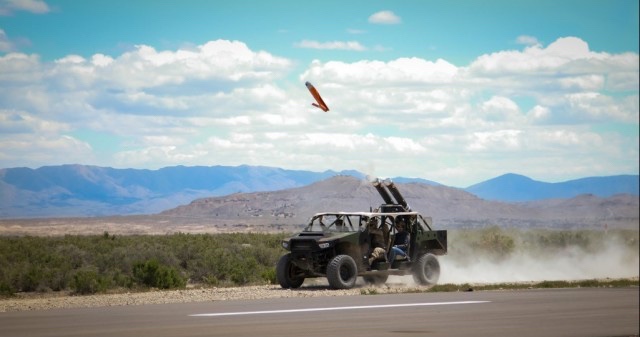
DUGWAY, Utah — Army Green Berets from the 1st Special Forces Group conducted two weeks of hands-on experimentation with Project Origin Unmanned Systems at Dugway Proving Ground. Engineers from the U.S. Army DEVCOM Ground Vehicle Systems Center were on site to collect data on how these elite Soldiers utilized the systems and what technology and behaviors are desired.

Project Origin vehicles are the evolution of multiple Soldier Operational Experiments. This GVSC-led rapid prototyping effort allows the Army to conduct technology and autonomous behavior integration for follow-on assessments with Soldiers in order to better understand what Soldiers need from unmanned systems.

For the two-week experiment, Soldiers with the 1st Special Forces Group attended familiarization and new equipment training in order to develop Standard Operating Procedures for Robotic Combat Vehicles. The unit utilized these SOPs to conduct numerous mission-oriented exercises including multiple live-fire missions during the day and night.

The live-fire operations employed the M240 and M2 machine guns and the MK19 automatic grenade launcher.

“These live fire operations were critical to determining the military utility of the Robotic Combat Vehicle unmanned technology,” said Todd Willert, GVSC’s project manager for Project Origin. “The unit was successful with integrating the systems into their formation for both offensive and defensive operations.”

The Green Berets incorporated numerous Origin modular mission payloads to assist with long-range reconnaissance, concealment, electronic warfare and autonomous resupply operations.

A senior medical sergeant with the 1st Special Forces Group said the modularity of payloads provides flexibility for use in a variety of mission sets: “The upscaling of capabilities for a direct heavy-weapon system gives us the advantage we’ve never had before in typical dismounted roles.”

Willert stated the inclusion of Special Operations Forces into technology assessments provides more depth in understanding what is needed to mature unmanned systems for the Army’s Operating Force.

In addition, this experiment supports the continual development of the Army’s Robotic Technology Kernel — the Modular Open System Architecture-based library of software that can be used for ground autonomy — along with the Warfighter Machine Interface, the Army’s library of modular software used by Soldiers to control robotic vehicles. This open systems architecture approach will enable common unmanned maneuver capabilities across the ground vehicle fleet.

“We are in the process of tailoring software packages to meet the needs of end users,” Willert said. “Autonomy — at various levels — offers great opportunities for different mission sets that improve Soldier safety and reduce cognitive burden. The professional and thoughtful comments from these Soldiers will greatly assist us with developing behaviors for future unmanned systems.”

1st Special Forces Group Detachment Commander added, “The robots are best employed to maximize the standoff between Soldiers and enemy threats.” He went on to say, “The Project Origin system, for any type of dismounted operations we conduct, would provide us increased capabilities to recognize and identify individuals on target from a much greater standoff while decreasing the risk to the force as our Soldiers accomplish their mission.”

Maj. Cory Wallace, the RCV Requirements Lead with the Next Generation Combat Vehicle Cross Functional Team, said: “Working with an Operational Detachment Alpha enabled us to understand new use cases and consider new approaches to integrating robotic and autonomous systems into future experiments.”

“The feedback from the operators gave us a completely new perspective as to how we need to shape our future development efforts in order to provide the most effective unmanned systems possible to Army formations, Wallace said.

A senior weapons sergeant summed up the event by saying, “The Project Origin system allows us an ability to operate the system outside of enemy fire. This allows an ability to focus on advanced tasks such as terrain analysis, developing enemy courses of action, and thinking ahead of the now, rather than seeking cover and returning fire.”

By Jerome Aliotta

NATO Allies Train in Poland for Exercise Saber Strike

Wednesday, March 9th, 2022

BEMOWO PISKIE TRAINING AREA, Poland — The United States and Polish militaries held a closing ceremony for the Polish phase of exercise Saber Strike on Feb. 26.

Including approximately 13,000 participants from 13 nations, exercise Saber Strike is a U.S. Army Europe and Africa multinational training exercise in Eastern Europe held bi-annually since 2010. Saber Strike demonstrates how U.S. Army Europe and Africa can deploy combat-credible European-based units to Poland, the Baltics and Central Europe. Saber Strike provides training in a winter environment and increases air defense-interoperability within the Baltic Region, while increasing the host-nations’ ability to integrate U.S. capabilities and reinforces the alliance.

“During Saber Strike we’re conducting air and missile defense training with our NATO Allies,” said U.S. Army Col. Patrick Thompson, 164th Air Defense Artillery Brigade commander. “This training helps build inoperability among our NATO Allies and partners.”

U.S. presence in Europe and the relationships built throughout the past 70 years provide the U.S. strategic access critical to meet NATO commitments. Saber Strike is designed to ensure that U.S. forces and participating allied forces are trained, able to operate together and are ready to respond to any threat from any direction.

Saber Strike 22 was also the exercise debut of four prototype Maneuver Short Range Air Defense platforms. The M-SHORAD defends maneuvering forces against unmanned aircraft systems, rotary-wing, and residual fixed-wing threats.

“The unit is conducting combined arms training strategy tied with their new equipment training to ensure the system is fielded as fast as it can to get it out to the force,” said U.S. Army Maj. Gen. Greg Brady, 10th Army Air and Missile Defense Command commanding general.

The 5th Battalion, 4th Air Defense Artillery Regiment, a part of 10th Army Air and Missile Defense Command, is the first unit in the U.S. Army to field, test and receive the M-SHORAD weapons system.

“We’ve been testing the capabilities of the M-SHORAD and U.S. link capabilities to be able to transmit data from our systems and sharing that to the Polish Army,” said U.S. Army Sgt. Brandon Anthony, a vehicle commander assigned to 5-4 ADA.

“We’re sending data links back and forth with the Polish so we can get air pictures and be able to track aircrafts in the sky,” said Jack Potter, a gunner for 5-4 ADA.

On March 10, 5-4 ADA is scheduled to conduct a live fire exercise demonstration on the Baltic Sea coast of Estonia.

Training events like Saber Strike 22 are planned well in advance and are not connected to any current or ongoing operations.

Follow all Saber Strike content on the Saber Strike DVIDS page.

Follow U.S. Army Europe and Africa on Facebook.

Story by SPC Olivia Gum

Photos by SSG Clinton Thompson

US Army Tests Commercial Satellite Internet in Pilot Program

Monday, March 7th, 2022

FORT BRAGG, N.C. — Soldiers assigned to the 50th Expeditionary Signal Battalion-Enhanced, 35th Corps Signal Brigade are in the early stages of using the Starlink commercial satellite system globally — improving transport diversity options for commanders and pushing data across the Army network at a faster rate.

The Starlink system, operated by SpaceX, consists of low earth orbiting satellites which provide high-speed, low-latency broadband internet across the globe. The terminal is small and lightweight, featuring a .6-meter phased array antenna and weighing only 15 pounds.

“The benefit of this system is the amount of time it takes for the signal to go up into space and come back down; it saves us a lot of time on latency,” said Chief Warrant Officer 3 Kyle Neese, the senior battalion network technician for the 50th ESB-E. “The old military satellite communication system uses what’s called geosynchronous [satellites], which orbit around the equator at a steady pace, but it takes a little over half a second for the signal to travel up and back down. With Starlink, it comes back at more than twice the speed.”

The 35th CSB aims to use the Starlink system to achieve faster broadband and increase internet speed capabilities in order to support XVIII Airborne Corps’ warfighters and their mission command systems.

“The Starlink terminal is being used to provide tactical network speeds of up to 70 megabits per second with approximately a third of the normal latency over military SATCOM” said Neese. “Testing is still being conducted to increase these speeds further in support of troops on ground.”

SpaceX is also piloting the creation of a miniature mobile satellite antenna to make the Starlink system more portable.

“So far, we’ve tested version one which comes with a dish, a power injector, and a router. The simplest way to hook the Starlink up to our kit is to take an ethernet cable and plug it into our router, which connects to our cradle point router and the cradle point router connects to our other systems as normal,” said Warrant Officer Corey McClure, a network technician for the 50th ESB-E. “This is the first of its kind to come on the market, and so far, it’s been great. It’s going to allow us to be a lot more flexible in terms of where we can set up and what we can do.”

Work is ongoing to assist with compatibility of the Starlink system with some of the current SATCOM equipment that the Army has in use.

“Starlink data rates exceed some of our current capabilities,” said Lt. Col. Mallory Wampler, the commander of the 50th ESB-E. “I know they’re still doing some engineering and design modifications to make the equipment more ruggedized like our 1.2 meter Hawkeye terminal, T2C2 and our Phoenix E systems.”

Wampler said she hopes to continue leveraging commercial off-the-shelf equipment to keep pace with technology improvements. “We are always looking to provide the most redundant Primary, Alternate, Contingency and Emergency plan or PACE plan as possible to support the warfighter and all mission command systems.”

From the initial implementation of this new equipment, the 50th ESB-E, 35th CSB has been at the spearhead of testing the Starlink system to meet the modern-day demand of signal equipment.

“We had the opportunity to work with the joint staff during the Bold Quest exercise last summer,” Wampler said. “We learned it brings a significant capability to the formation, which is good to align with our scalability. The bandwidth throughput is the most crucial factor with this new equipment, and I think it directly aligns with the 18th Airborne Corps’ line of effort when it comes to innovation and modernization. This is the future, and I’m excited to see where this equipment can take us.”

As part of XIII Airborne Corps’ Dragon Innovation Program, the 35th CSB is informing senior leaders on innovative ways to increase mission readiness in Corps Signal Brigades as part of the Army’s modernization efforts.

By SPC Maxine Baen

US Army Strykers Upgraded with Modernized Weapons System

Tuesday, March 1st, 2022

FORT CARSON, Colo. — The Warhorse Brigade at Fort Carson, Colorado began fielding and training on the Common Remotely Operated Weapon Station and the Common Remotely Operated Weapon Station-Javelin on Feb. 7, 2022.

The fielding of the new system, which replaces the Remote Weapon Station, is part of a larger effort to give Strykers more lethal capabilities.

“This modernization enhances our Soldiers’ ability to detect, identify and destroy targets and achieve overmatch against peer threats,” said Col. Andrew Kiser, commander of 2nd Stryker Brigade Combat Team, 4th Infantry Division.

The CROWS and CROWS-J system also allows for Soldiers to engage threats from inside the Stryker, providing a more lethal approach to eliminating threats from a distance.

“It improves crew safety and survivability,” said Sgt. Joshua Carroll, infantryman with Headquarters and Headquarters Company, 2SBCT, 4th Inf. Div. “We can engage farther than a dismounted javelin.”

The systems include improved visual capabilities, increasing the Stryker’s lethality.

“Including both optics and control of the primary vehicular weapon system, they allow operators to engage targets from inside the vehicle at extreme distance with an increased resolution in the camera feed,” Kiser said.

The Warhorse Brigade began its transition from a light infantry brigade to a Stryker brigade in the summer of 2020 and became fully mission capable as a Stryker brigade in late 2021. These latest upgrades to the brigade’s fleet make it the most modernized in the U.S. Army.

“It makes us the most lethal Stryker brigade in the Army,” Carroll said.

By SGT Gabrielle Pena