Tropo Performance

Archive for the ‘Army’ Category

NEW Army Training Requirements Regulation – Doc Is Cut In Half!

Saturday, June 7th, 2025

The Army has just published a “major revision” to the draft version of AR 350-1 Army Training and Leader Development, which has been floating around in draft format for the past few months.

The new directive is half of the size it used to be!

This major revision, dated 1 June 2025—

• Removes “resilience” (common mandatory training) (table C–1).

• Incorporates guidance from Executive Order 14183 (throughout).

• Incorporates guidance from Army Directive 2018-02, Global Cultural Knowledge Network, 4 April 2018 (throughout).

• Incorporates guidance from Army Directive 2018-07-4, Prioritizing Efforts-Readiness and Lethality (Update 4), dated 26 April 2018 (throughout).

• Incorporates guidance from Army Directive 2018-07-05, Prioritizing Efforts-Readiness and Lethality (Update 5), dated 9 May 2018 (throughout).

• Incorporates guidance from Army Directive 2018-07-11, Prioritizing Efforts-Readiness and Lethality (Update 11), dated 26 June 2018 (throughout).

• Incorporates guidance from Army Directive 2018-07-17, Prioritizing Efforts-Readiness and Lethality (Update 17), dated 28 November 2018 (throughout).

• Incorporates guidance from Army Directive 2018-07-18, Prioritizing Efforts-Readiness and Lethality (Update 18), dated 4 January 2019 (throughout).

• Incorporates guidance from Army Directive 2018-22, Retention Policy for Non-deployable Soldiers, dated 8 November 2022 (throughout).

• Incorporates and rescinds guidance from Army Directive 2019-31, Integration or Refresher Training for Prior Service Personnel, dated 3 October 2019 (throughout).

• Incorporates guidance from Army Directive 2021-08, Implementation and Sustainment of Army Medical Department Individual Critical Task Lists, dated 19 March 2021 (throughout).

• Incorporates guidance from Army Directive 2021-17, Lateral Appointment to Corporal and Eligibility for Basic Leaders Course, dated 21 May 2021 (throughout).

• Incorporates and rescinds guidance from Army Directive 2022-05, Army Combat Fitness Test, dated 23 March 2022 (throughout).

• Incorporates guidance from Army Directive 2023-11, Army Body Fat Assessment for the Army Body Composition, dated 9 June 2023 (throughout).

• Incorporates guidance from Army Directive 2025-02, Parenthood, Pregnancy, and Postpartum, dated 24 February 2025 (throughout).

• Incorporates guidance from Army Directive 2025-04, Initial Entry Training for Reserve Component Soldiers, dated 25 March 2025 (throughout).

• Incorporates guidance from Army Directive 2025-06, Army Fitness Test, dated 17 April 2025 (throughout).

• Changes Army Combat Fitness Test to Army Fitness Test (throughout).

• Removes requirements for Home Station Master Plan, Army Training Strategy, and Army Leader Development Strategy (throughout).

• Deletes previous chapters on Culture and Language and Distributed Learning Program (throughout).

• Reduces Training Support System content in this regulation; rather referring to specific regulations (throughout).

I realize it won’t make everyone happy but it eliminates some extraneous mandatory training requirements and allows commanders flexibility to concentrate on more mission focused training.

Get your copy here.

Mountain Peak Prepares 10th Mountain Soldiers for JRTC Rotation

Saturday, June 7th, 2025

FORT DRUM, N.Y. — In May, Soldiers from the 2nd Brigade Combat Team, 10th Mountain Division (LI), participated in Mountain Peak 25-01, a brigade-level, large-scale combat operation training exercise designed to prepare the unit for an upcoming rotation at the Joint Readiness Training Center in Fort Johnson, Louisiana, later this summer.

The exercise began with a joint forcible entry operation, in which units from the 2nd BCT and 10th Combat Aviation Brigade inserted forces into contested terrain. After the initial objective was secured, brigade elements shifted into a force-on-force scenario, in which supporting units took on critical roles throughout the operation.

Throughout the training, units maneuvered across rugged terrain and executed coordinated assaults to secure key objectives.

“It’s pretty impressive, just the level of planning that has to go into making sure logistics, tactics, maneuvering — all of it — comes together,” said 1st Lt. Rex Jones, a platoon leader with 4th Battalion, 31st Infantry Regiment. “And making sure every section gets something out of this, not just one or two.”

The Multi-Functional Reconnaissance Company operated forward of friendly lines, providing commanders with battlefield intelligence throughout the operation. Teams conducted close reconnaissance while avoiding detection to collect information and report on enemy positions.

“We bring a lot of diverse experience to the table,” said Staff Sgt. Austin Tyson, senior team chief with MFRC. “That gives us the operational freedom to make autonomous decisions and exploit weaknesses in the enemy wherever we find them.”

The 10th Mountain Division’s G3 team managed exercise planning and control.

“Mountain Peak is the only force-on-force event of this scale that we do here on Fort Drum,” said senior G3 exercise coordinator Will McNutt. “It’s a heavy lift to support from an exercise control perspective. Nothing else approaches the size and scale of Mountain Peak — many posts don’t even run an event like this for their brigades.”

Units conducted air assaults, coordinated movements across complex terrain, and integrated with aviation, reconnaissance, and multinational support assets.

Drone operators from the Canadian Manoeuvre Training Centre supported the opposing force with unmanned aerial systems. Their integration added complexity to the training and increased the realism of simulated threats.

“The scope and scale of this exercise have been instrumental in enabling our drone teams to build skills, push system limits, and foster seamless integration between units,” said Capt. Wesley Morfoot, staff officer, Canadian Manoeuvre Training Centre.

“Through trust, commanders and their teams have truly empowered them with the freedom to innovate in the field.”

Training emphasized mission command, unit-level coordination, and adaptation against a live opposing force.

The exercise allowed Soldiers to rehearse key tasks under realistic conditions while gaining experience across the brigade.

Mountain Peak allows Soldiers to put their skills to the test and hone in on their proficiency. This ensures every 10th Mountain Soldier maintains readiness and lethality, ultimately preparing these Soldiers for real-world operations.

By SGT Samuel Bonney

Smartshooter Awarded a $13M U.S. Army Contract for SMASH 2000L Fire Control Systems

Thursday, June 5th, 2025

YAGUR, Israel — SMARTSHOOTER, a world-class designer, developer, and manufacturer of innovative fire control systems, is proud to announce that its U.S. subsidiary, SMARTSHOOTER Inc., has received a new order valued at $13M from the U.S. Army for SMASH 2000L fire control systems. The systems will be deployed as part of the Army’s Transformation In Contact (TIC2.0) forces, a specially designated formation for accelerated testing and integration of advanced technologies on the battlefield.

SMASH fire control systems have already been acquired and operationally deployed by various branches of the U.S. armed forces, providing valuable field experience and demonstrating their effectiveness against evolving threats. Now, with the recent U.S. Army order, the technology will be integrated into the combat formation. This marks a major milestone in advancing U.S. dismounted counter-UAS capabilities.

Also known as SMASH 3000, SMASH 2000L (light) is SMARTSHOOTER’s lightest handheld-operated fire control system, which attaches to the Soldier’s rifle. Using computer vision, artificial intelligence, and advanced tracking algorithms, it enables Soldiers to detect, track, and precisely eliminate aerial and ground targets with unmatched accuracy. The system is especially effective against drones and small unmanned aircraft systems (sUAS), offering a high probability of kill for emerging threats.

Michal Mor, CEO of SMARTSHOOTER, said: “We are honored by the U.S. Army’s continued confidence in our SMASH technology. With SMASH 2000L, dismounted Soldiers are empowered with advanced fire control capabilities, ensuring precision in every shot—even in the most complex and high-pressure scenarios. The current contract is a significant step toward Army-wide fielding, and we are committed to supporting this important initiative.”

Combat-proven by the Israeli Defense Forces during Operation Iron Swords, SMASH systems have also been fielded by other NATO forces and are gaining traction across multiple branches of the U.S. military.

For further details, please visit: www.smart-shooter.com

Army Scientists Train Soldiers on How to Leverage AI Technologies

Thursday, June 5th, 2025

ADELPHI, Md. — A cohort of 25 Soldiers and three civilians mastered the fundamentals of artificial intelligence and machine learning as part of a special course taught by experts at the U.S. Army Combat Capabilities Development Command Army Research Laboratory, also known as DEVCOM ARL.


Mid-career Army officers, warrant officers and non-commissioned officers traveled from across the nation to attend the course. The goal was for participants to finish the course with an in-depth understanding of how they might leverage AI for their particular role in the Army.

“The instructors did a phenomenal job breaking down complex concepts like convolutional layers, generative adversarial networks and transformer models into digestible lessons, even for non-technical folks,” said Capt. Nathan Jackson, an active-duty air defense artillery officer stationed at Fort Knox, Kentucky. “I now see clear opportunities for AI to support everything from predictive modeling of officer career paths to optimizing air defense planning.”

This course, led by DEVCOM ARL researchers Dr. Mark Tschopp and Dr. Reginald Hobbs and Maj. Matt Work from the U.S. Army Futures and Concepts Center, represents one way that DEVCOM ARL prepares Soldiers for a future operating environment dominated by artificial intelligence.

“AI holds the extraordinary potential to swiftly analyze the deluge of data present within the future battlefield and to deliver actionable insight to Soldiers at the speed of relevance,” Tschopp said. “We want this course to equip Soldiers with the knowledge and decision-making capabilities to harness AI as a tool to gain a competitive edge over our adversaries.”

ARL launched the Artificial Intelligence for Soldiers course as part of the Army G-3/5/7’s Strategic Broadening Seminar program in 2024 to provide Soldiers with a unique learning opportunity in a critical technology domain.

The course features classroom seminars, guest lectures by Army leaders, tours of ARL research facilities and close-up demonstrations of the laboratory’s latest AI and robotics technology.

During the span of one week, course participants were provided a wealth of information that not only illuminated how AI systems work but also highlighted AI’s nature as a tool with real limitations and specialized applications. Once the course established a solid foundational understanding of AI and ML for the participants, the program coordinators demonstrated to the Soldiers the various ways that Army researchers have implemented AI in Army technology so far.

“It was fascinating to learn where AI opportunities are being explored and what AI limitations that scientists are trying to overcome,” said Maj. Mathew Miller, Army acquisition officer. “I was most impressed with where ARL scientists are applying AI now. I feel much more empowered to approach industry on the topic of AI, and I hope to reach out to ARL scientists in the future as a resource for attacking acquisition challenges.”

The course concluded on Friday with capstone presentations by the participants to Army senior leaders. Each team showcased what they had learned and proposed a new AI-driven capability that would address a future Army need.

U.S. Army’s Director of Strategy, Plans and Policy Maj. Gen. Stephanie Ahern congratulated the course participants for their growth and stressed the importance of continued education and engagement in this technology space.

“This course was about developing you all—as some of the Army’s rising leaders—to meet the challenges ahead,” Ahern said. “Your ability to work with experts who are working with AI every day and your ability to apply AI in the field are extremely essential to the Army mission. Please continue to be an agent of change; you are a part of the solution, and you are not in it alone.”

By U.S. Army DEVCOM Army Research Laboratory Public Affairs

Dragonflies Overhead: sUAS and 3D Printing Empowering the 4th Infantry Division

Tuesday, June 3rd, 2025

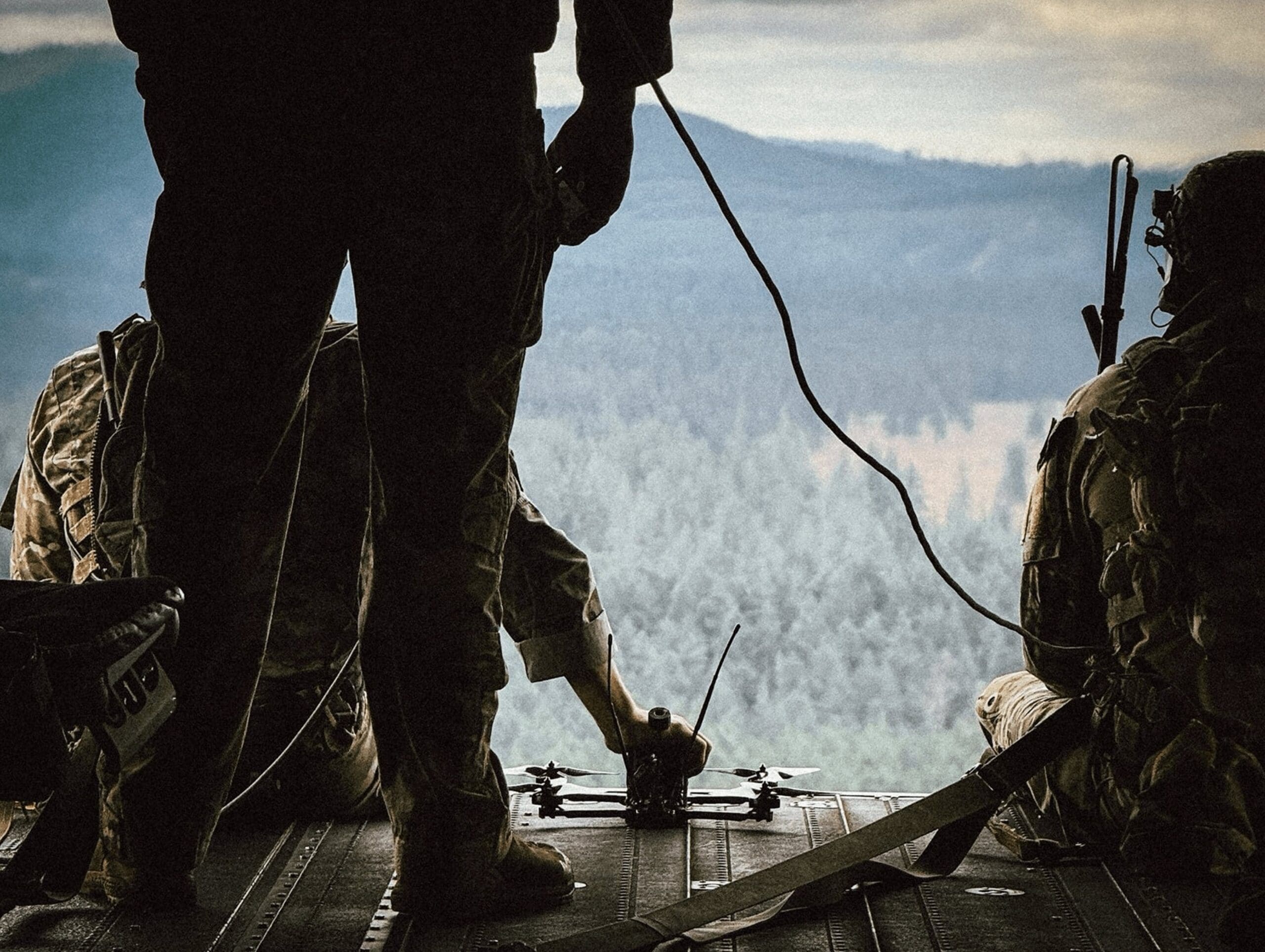
FORT CARSON, Colo. — A distinct hum and sharp buzz slice through the air inside the Ivy Eagle’s “Monster Garage.” The sounds emanate from a football-sized quadcopter, its rotors a blur as it expertly maneuvers around a complex, custom-built obstacle course.

The modern battlefield demands agility, adaptability, and technological superiority. Small unmanned aerial systems, sUAS, and 3D printing, also called additive manufacturing, technology have emerged as critical assets in achieving these objectives, providing essential reconnaissance, surveillance, target acquisition, electronic warfare and logistical support capabilities.

Pilots from the 4th Infantry Division’s sUAS Innovation Platoon, the “Dragonflies”, practice their maneuvering skills at the “Monster Garage” with the use of laptop-based simulators before progressing on to the obstacle course in the warehouse and completing larger field exercises to demonstrate how sUAS are playing a crucial role in the operational environment.

Brig. Gen. Eugene Ferris, the division’s former deputy commanding general for maneuver, said that the future of modern warfare will depend on the lethal integration and the effective deployment and sustainment of sUAS in dynamic and often contested environments, which are paramount for mission success.

Small Unmanned Aerial Systems

In military operations, sUAS serve many critical roles, providing real-time intelligence, enabling precision strikes, conducting electronic warfare, and even facilitating resupply in challenging environments.

The effectiveness of the sUAS Innovation Platoon, 6th Squadron, 17th Cavalry Regiment, 4th Combat Aviation Brigade, 4ID, in these varied and crucial roles is further amplified by the ability to tailor their designs for specific, demanding environments.

“For the 4ID and 4CAB, the ability to rapidly prototype and adapt sUAS designs is critical when operating in diverse and complex environments”, said 1st. Lt. Nicholas McDonald, platoon leader for the Dragonflies. “The performance characteristics of these systems extended flight endurance for persistent surveillance, low observability for stealth and robust construction for survivability.”

For the division, these advantages translate into tangible operational benefits: customizing sUAS to carry specific payloads or intelligence packages for information gathering, quickly prototyping and testing new sUAS configurations and integrations during training exercises to adapt to future threats.

The dynamic nature of military operations often necessitates swift responses to emerging threats or rapidly evolving tactical situations, empowering the 4th Infantry Division and the broader military to quickly translate urgent operational needs into tangible solutions for sUAS.

Additive Manufacturing

Additive manufacturing, or AM, is a transformative technology that revolutionizes how the military develops, deploys and maintains its sUAS fleets, offering unprecedented agility, customization and enhanced operational readiness.

Beyond conventional prototyping, AM enables the production of complex, lightweight components crucial for maximizing the flight performance of sUAS, reducing their signature and increasing their payload capacity. These demanding requirements necessitate the use of advanced materials and highly optimized designs, areas where AM offers significant advantages over traditional manufacturing methods.

Ferris explains that AM technologies offer specific benefits for military applications. The inherent flexibility of AM allows for integrating features that enhance functionality and survivability in contested environments.

Additive manufacturing constructs three-dimensional objects directly from a digital file. The process begins by digitally slicing the 3D model into numerous thin, horizontal cross-sections. Following these sliced instructions, the 3D printer builds the object layer by layer from the bottom up. This involves extruding melted material like plastic filament and selectively curing liquid photopolymer resin with light.

Soldiers can rapidly produce replacement parts for damaged drones, fabricate specialized tools and fixtures for maintenance at the battalion level, and even create custom adapters or mounts for unique mission requirements directly in the field, significantly saving Soldiers’ time and the division’s maintenance costs.

Such advancements in operational readiness and flexibility through AM directly support the framework established by the Ivy Division’s priorities.

Integrating the Ivy Division Priorities

Two of the division’s priorities — lethal teams and peak partners — play a significant role in sUAS and AM.

Ferris said AM empowers the 4ID to translate urgent operational needs into tangible solutions for sUAS quickly. AM enables the rapid design and fabrication of prototype sUAS or specialized components to address specific battlefield challenges.

Ferris said that units such as the 4CAB’s Dragonflies and the 10th Special Forces Group have made significant strides in integrating sUAS into training, ensuring that 4ID remains prepared for the challenges of modern warfare.

These technologies directly enhance the priorities of lethal teams by equipping Soldiers with superior situational awareness with sUAS reconnaissance and surveillance. Additive Manufacturing ensures these critical eyes-in-the-sky and other essential gear can be rapidly repaired and maintained even in austere environments, keeping teams equipped, informed and deadly.

To maintain this technological edge and ensure a future of skilled personnel, the 4th Infantry Division actively engages with the local community, especially in STEM education.

Keri Brandt, 4ID’s Ivy Human Capital Campaign manager, said the division’s collaboration with District 8 highlights its well-established connections within the wider Front Range community. Brandt explained that a significant part of their partnership development strategy includes a mentorship program for students in science, technology, engineering and mathematics. This program brings students to the military installation for on-site visits, allowing them to see directly how the 4ID applies coding, engineering, and technological principles in the operation of drone and robotics systems. Brandt explains that 4ID and Fort Carson service members participate in district events to help facilitate STEM competitions, fostering student engagement and learning opportunities.

The future holds significant promise for integrating AM and sUAS. Empowering units like the sUAS Innovation Platoon with organic manufacturing capabilities and integrating artificial intelligence and machine learning could lead to automated design optimization for battlefield repairs.

Ultimately, the potential for Soldier-level customization and repair of sUAS using user-friendly AM systems could revolutionize battlefield logistics and operational flexibility.

As AM and sUAS technology continues to mature and integrate with other advancements, its role in empowering the Ivy Division and the broader military with cutting-edge aerial capabilities will continue to grow, ensuring a decisive edge in future conflicts.

By CPL William Rogers

Academic Partnership Advances Quality Assurance for the Army Personnel Parachute System

Monday, June 2nd, 2025

NATICK, MASSACHUSETTS, UNITED STATES

NATICK, Mass. – In a strategic collaboration with the Army’s Personnel Airdrop Systems (PADS) team, a group of Northeastern University industrial engineering students culminated their senior capstone competition, delivering more than first prize.

The Parachute Quality Assurance Modernization Team, mentored by U.S. Army Combat Capabilities Development Command (DEVCOM) aerospace engineer Tashfiq “Tash,” Salam, stood out among 40 engineering teams, each challenged to develop real-world solutions for government and industry use.

Guided by a shared mission, the team of four delivered an award-winning design: a suite of integrated digital tools, modernizing quality assurance for one of Airborne’s most critical and lifesaving capabilities – the personnel parachute systems.

Under the Assistant Secretary of the Army for Acquisition, Logistics, and Technology ASA(ALT) acquisition standards, every newly manufactured parachute must undergo a thorough inspection before being fielding to units. For the PADS team, this typically requires inspecting 8 to 13 parachutes at a time. According to the students’ research, that process can involve manually reviewing more than 5,000 data points, inspecting and measuring every stitch of fabric, harness and compartment encompassing a parachute system.

“It’s physically demanding,” Tash said. “You’re handling this large parachute; you have to inspect every inch of it. There’s a lot of surface area and a lot of steps.”

Over the course of the capstone project, the team studied those protocols applying direct feedback from quality assurance specialists, engineers and industry professionals. Their final prototype introduced an integrated software system complete with a set of digital measuring tools, capable of logging exact measurements up to 1/16th of an inch with a single click.

Tash shared how the students’ concept significantly improved the QA process, demonstrating the ability to reduce manual inspection time by nearly two hours without compromising quality.
“This is a zero-tolerance environment,” Salam said. “And the operating environment continues to get more complex every day. We needed to ensure the parachute capability we deliver is 100 percent what Soldiers need and in the way they want it. Because at the end of the day, once they land, they still have a follow-on mission. The parachute is just a ride to the mission.”

To support their research, students conducted site visits at the U.S. Army Natick Soldier Systems Center in Massachusetts, where Tash serves as a government civilian with Product Manager – Soldier Clothing and Individual Equipment (PdM SCIE), under the Program Executive Office – Soldier. They also met with DEVCOM engineers and Rhode Island National Guard members to gather feedback from quality assurance specialists and Soldiers who regularly perform parachute inspections
With more than 200,000 military free-fall and static line jumps conducted annually, ensuring consistent quality in each parachute is critical to Soldier safety.

“They understood the weight of that responsibility,” said Tash. This wasn’t about checking a box on an academic checklist; they were creating a real capability.”

The centralized system also enhances traceability, allowing inspectors to better assess the acquired measurements and key data points through the digital took it. The data is reported with real time feedback giving the PADS QA team the ability to run analytics on past inspections, identify error trends and performance metrics. As described by Tash, the system supports the PADS team mission of continuously delivering world class products to the airborne warfighter.

Ensuring students were immersed in PADS and SCIE operations was faculty advisor and key partner Dr. B. Kris’ Jaeger-Helton, Director of Capstone Design for Industrial Engineering at Northeastern. Jaeger-Helton celebrated the project as an important model for real-world learning.

“The experience was both challenging and open-ended, with clearly defined security constraints that had to be followed as well, making it the ideal Capstone project,” she said.

This year’s team built upon the foundation of the 2023–2024 capstone, which transitioned the Army’s inspection records from paper-based logs to an Excel-based digital tool. With Tash’s mentorship, this year’s Capstone expanded that concept collecting data from the T-11, MC-6, and RA-1 parachute systems.

Jaeger-Helton, who supported both capstone efforts, emphasized the value of the Army–academic collaboration.
“The capstone students genuinely benefitted from the support of Tash’s dedicated and highly knowledgeable team,” she said. “As clients, the Army PADS team communicated the importance, seriousness, and value of this initiative, while also expressing their trust and confidence in the Northeastern team. I’m looking forward to continuing our partnership for more great initiatives.”

Now in his second year mentoring a NU engineering capstone, Tash highlighted the importance of engaging with emerging talent in support of innovation and advancing Army capabilities.

“That kind of ingenuity and creativity has to come from somewhere, and it often comes from a sense of purpose in what you’re working on,” Salam said. “There was a lot of pride in the student team because they knew they were doing something that matters.”

Story by Khylee Woodford 
PEO Soldier

Advising the Other Side of the COIN II

Saturday, May 31st, 2025

INTRODUCTION

In war, whether its counterinsurgency (COIN) operations or large-scale combat operations (LSCO), “the side that is best prepared, best understands an operational environment, adapts more rapidly, and acts more quickly in conditions of uncertainty is the one most likely to win.”[1] This is a lesson best observed in urban environments, such as in the large cities in Ukraine where the local population influences and are influenced by the tactical and operational outcomes of military operations. This document explores existing COIN doctrine and seeks to relate how, during LSCO, the principles of clear, hold, and build remain valid in terms of consolidating gains, especially through the lens of security force assistance (SFA). In doing so, it is important to define doctrinal terms such as COIN, LSCO, and consolidation of gains to frame the discussion of how clear, hold, and build connects to existing doctrine as it all relates to the ongoing military operations in Ukraine, for example. Therefore, the purpose of this document is to inform Army planners at all echelons of the utility of how clear, hold, and build are still relevant during LSCO to achieve those tactical gains that support decisive operational outcomes.

COIN, as a subset of irregular warfare, is defined as “the blend of comprehensive civilian and military efforts designed to simultaneously defeat and contain insurgency and address its root causes.”[2] If insurgency is the organized use of subversion and violence to seize, nullify, or otherwise challenge the political status quo in a country or region, then COIN is the unified approach to countering an insurgency’s momentum. There are several examples of recent U.S. COIN, such as in Afghanistan, Iraq, and Columbia. The important consideration in understanding COIN is it tends to be long-term, often decades to achieve desired strategic outcomes. Much of COIN, when active, is tied to country- or region-specific foreign internal defense programs, which recently have shifted away from lethal counterterrorism operations to building partner capacity to address the broader security challenges in a country or region.

“LSCO are extensive joint combat operations in terms of scope and size of forces committed, conducted as a campaign aimed at achieving operational and strategic objectives.”[3] During large-scale ground combat, Army forces focus on defeating enemy ground forces through a balance of offensive, defensive, and stability operations. Yet, critical to these three operations is the consolidation of gains once Army forces have achieved relative advantage over enemy ground forces, but how is consolidating gains understood or implemented at the tactical level?

Consolidation of gains are “activities to make enduring any initial operational success and to set the conditions for a sustainable security environment, allowing for a transition of control to other legitimate authorities.”[4] At the tactical level, this should look like short term, yet sustainable, stability activities or targeted civil-military operations in large urban centers, such as Mariupol in Ukraine. It also could translate into training and equipping local security or police forces, as part of broader campaign objectives, depending on the authorities, but it may not necessarily be an assigned mission of a security force assistance brigade (SFAB). During a LSCO fight, SFABs will most likely support their partner force and liaise between their partner and the U.S. joint force. If true, consolidating gains in the division’s rear area, especially in terms of SFA as part of hold and build, may be tasked to other available units, such as military police or combat engineers.

Critical to consolidating gains in the rear area, or uncontested areas outside of the rear area, is understanding the civil considerations and how civil support to U.S. military operations allows Army forces to maintain momentum to conduct limited offensive operations and shape the environment in terms of influencing local populace perceptions. This document examines consolidating gains through a clear, hold, and build construct with examples of how Ukrainian security forces used COIN-era SFA developmental activities in contested areas of the Ukraine since 2014, but before the Russian invasion in 2022. Finally, this document covers what support and liaise, two of the more prominent LSCO-focused advising tasks, should look like in post-invasion Ukraine also using a clear, hold, and build construct.

CLEAR, HOLD, AND BUILD IN UKRAINE (COIN AND LSCO)

In COIN doctrine, clear, hold, and build is part of a larger concept known as shape, clear, hold, build, and transition. This document does not explore shape or transition as it is outside the scope of advising partner forces while consolidating gains in division rear areas as part of broader SFA objectives. Although consolidating gains can mean almost anything during LSCO, such as establishing defensive perimeters in key terrain or conducting civil-military operations in large urban centers, the methodology to examine the proper context of advising partner forces on SFA is through a clear, hold, and build construct. In the following three sections, COIN is introduced and described first, followed by a brief description of what advising support and liaise should look like during LSCO through the hypothetical lens of U.S. advising teams.

Clear

In COIN, clear is an offensive-oriented task to remove insurgent forces and eliminate organized resistance in an assigned area. During the clear phase, it is critical for the United States to comply with the international law of war and avoid the destruction of civilian homes or the disruption of business as upsetting either will have negative amplifiable effects to U.S. COIN efforts, especially in large cities. Once insurgent forces have been removed or eliminated, eliminating their capabilities to influence or coerce becomes a police function that will rely heavily on military forces and intelligence assets until a host nation’s security sector institutions have the capacity to assume responsibility within an assigned area.

In 2014, Russia seized Crimea and sponsored an insurgency in eastern Ukraine that killed more than 13,000 people.[5] Russia annexed Crimea, resulting in demonstrations by pro-Russian supporters that broke out across Ukraine’s southern and eastern oblasts. In the Donbas region, for example, civil unrest eventually became an armed conflict, and despite a negotiated cease-fire, low-intensity fighting continued until the Russians invaded in full force in 2022. Yet, from 2014 to 2022, despite episodic clearing operations from Ukrainian security forces, the fighting in Donbas was largely a frozen conflict, or, in international relations parlance, a situation in which an active armed conflict ended without a satisfying peaceful resolution for both combatants.

In LSCO, like COIN, clear is also an offensive-oriented task and is the most dangerous and dynamic phase. Ukrainian security forces launched a counteroffensive 29 August 2022, to retake control of the southern regions of Kherson and Mykolaiv, which were occupied by Russian troops. By 12 November, despite heavily fighting acrost Kherson oblast, Ukrainian security forces recaptured the city of Kherson, breaking Russia’s access to that area of the Black Sea coast. In this example, and as a hypothetical, had U.S. advisor teams accompanied Ukrainian security forces during their counteroffensive, support and liaise could have demonstrated greater targeting capabilities from the Ukrainians to strike at large enemy troop movements that were deployed to repel the Ukrainian counter-offensive, reducing potential partner casualties.

Hold

In COIN, hold is a defensive-oriented task to secure the populace and separate them from the insurgents. During the hold phase, U.S. forces need to establish a firm and persistent government presence and control over the assigned area. It is preferable to establish a governance apparatus that replaces the insurgent’s apparatus. Concerning consolidating gains, it is during this phase where U.S. advisors conduct SFA developmental activities, such as organize, train, equip, build, and advise (OTEBA) security forces. While LSCO continues, advisor teams may remain in the corps or division rear area to develop capabilities and build greater capacity in the security forces and their institutions.

To this end, the U.S. effort to assist Ukraine during the hold phase was through security assistance, which encompassed formal training and equipping Ukrainian security forces, but on a grander scale, which included developing greater capacity in Ukrainian defense institutions. For example, from 2015 to 2021, the United States manned a training and advising mission in Ukraine located at the Joint Multinational Training Group–Ukraine (JMTG–U) in Yavoriv. JMTG-U focused on the defense and security training of Ukrainian security forces at the echelons of brigade and below. Because of JMTG-U’s mission, some analysts speculated Ukrainian forces had the resources to develop sufficient warfighting capabilities, and, equipped with the latest military gear, were able to provide a sustained defense against the Russians when they invaded in early 2022.

In LSCO, like COIN, hold remains a defensive-oriented task. Three days following the Russian invasion of Ukraine, on 25 February 2022, Russian forces launched a massive attack to capture Kyiv, Ukraine’s capital. Yet, Russian offensive efforts stalled, along with their 40-mile-long logistics convoy that was, then, about 24 miles from Kyiv. This allowed the Ukrainians to fortify much of Kyiv, even arming civilians with more than 25,000 assault rifles and approximately 10 million bullets.[6] Russian forces made little gains capturing Kyiv during their offensive and eventually withdrew, without admitting defeat. Ukrainian forces conducted a few counteroffensives, as part of the hold, to repel Russians from suburban areas in Kyiv.

In this example, and as another hypothetical, had U.S. advisor teams partnered with Ukrainian security forces to defend Kyiv, not only would the support and liaise function facilitate more accurate counterfires from Ukrainian artillery, but it would also facilitate a more accurate common operational picture of the Russian order of battle to be shared with other interested allies and partners. Finally, as the hold becomes permanent, U.S. advisors could enable further OTEBA activities in recruiting, training, and equipping local security forces in Kyiv to build on the consolidation of gains.

Build

In COIN, build is a stability-oriented task to restore essential services, restore civil control, provide support to infrastructure and economic development, and, in a continuation from the hold phase, build on the capability and capacity of the security forces. During the build phase, the emphasis is on stability activities in an assigned area. It is also during this phase when messaging the populace about security force legitimacy should be the strongest. Stated differently, if the populace does not believe their security forces can protect them from insurgent intimidation, coercion, or reprisals, the populace may not overtly support the local security force.

In LSCO, like COIN, build remains a stability-oriented task and is arguably the longest phase most associated with reconstruction, development, and governance. In SFA terms, the build phase is where most of OTEBA occurs and is usually in safe areas identified by security forces for the reconstitution of security forces. Although not exclusively support or liaise, as it has been in clear and hold, build is immensely an advise and assist function for U.S. advisor teams and their partner forces.

CONCLUSION

Although Carl von Clausewitz is famous for his observation that war is a continuation of policy by other means, he also states the defense is intrinsically stronger in war than the offense because the offense requires overcoming resistance and is constrained by limitations, such as the culminating point where seizing key terrain becomes too costly to clear and hold.[7] This is an applicable observation for the ongoing war in Ukraine, where offensive and defensive exchanges between Ukrainian and Russian military forces are ubiquitous, especially in the cities. Stated differently, although the fighting in Ukraine is fluid, held areas can become contested again, which is why it is important to understand the clear, hold, build construct is not always a linear sequence, as some phases may overlap.

The defense, where the hold phase occurs, is also where units begin to consolidate their gains. In COIN, the center of gravity is the population, but in LSCO the center of gravity is focused on the enemy. The tactical defeat of an enemy, however, does not necessarily translate into a victory for the United States and their partner forces. Ensuring enemies cannot transition a conventional military defeat into a protracted irregular conflict is not only a foundation for achieving victory, it is the very essence of why the rapid consolidations of gains in rear areas is so very important during LSCO and why supporting and liaising with local security forces matter during the clear, hold, and build phases.

By Robert Schafer, Center for Army Lessons Learned

[1] Army Doctrine Publication (ADP) 3-0, Operations, 21 March 2025, page 1.

[2] Joint Publication (JP) 3-24, Counterinsurgency, 30 April 2021, page III-1.

[3] ADP 3-0, Operations (21 March 2025), page 4.

[4] Field Manual (FM) 3-0, Operations, 21 March 2025, page 16.

[5] Kim, Lucian. “How U.S. Military Aid Has Helped Ukraine Since 2014.” National Public Radio. 18 December 2019. Retrieved 15 April 2025. https://www.npr.org/2019/12/18/788874844/how-u-s-military-aid-has-helped-ukraine-since-2014.

[6] Khurshudyan, Isabelle; O’Grady, Siobhán; Morris, Loveday. “‘Weapons to anyone’: Across Ukraine, militias form as Russian forces near.” The Washington Post. 26 February 2022. Retrieved 15 April 2025.

[7] Michael Howard and Peter Paret, Clausewitz: On War (Princeton, NJ: Princeton University Press, 1989), 358. In Book VI, Chapter 26, Clausewitz notes it is far from certain the defensive is always the stronger form of warfare, but it is the more advantageous to adopt because it presents more conditions favorable to its success. Clausewitz further observes the defensive is a more elementary form of warfare, and therefore more readily mastered. Clausewitz was a contemporary of Sir Arthur Wellesby, 1st Duke of Wellington, and most likely drew his conclusions on defense from Wellesby’ s successful defense of key terrain over Napoleon’s offensive charge of infantry and calvary near the village of Waterloo on 18 June 1815.

Download the article in PDF here: No. 25-1018, Advising the Other Side of the COIN II [PDF – 9.4 MB]

Army Aviation Leader Urges Branch to Embrace Change

Saturday, May 31st, 2025

NASHVILLE, Tenn. — Army Aviation is undergoing a significant overhaul in training and culture, a transformation described by Army Aviation Center of Excellence Commanding General Maj. Gen. Clair Gill as a “full scale change” during his address to the Army Aviation Association of America Summit opening ceremony on May 14, 2025, in Nashville. He emphasized the need for rapid transformation in the face of a rapidly shifting global landscape.

Gill stressed the core mission of Army Aviation: to support the Army and the nation. He quoted retired Gen. Eric Shinseki, former chief of staff of the U.S. Army, stating, “If you don’t like change, you’re going to like irrelevance even less,” and urged attendees to focus on providing capabilities to “see, sense, strike, move and extend the battlefield.”

A key component of this transformation, Gill explained, is the integration of unmanned aerial systems. He emphasized the Army’s intention to augment, not replace, manned aviation with UAS, stating, “I don’t want to be standing there when the music stops and not have a chair.” He outlined a plan for the aviation branch to lead this effort, focusing on aviation-specific expertise like airspace integration while allowing for broader operation of UAS by other specialties through universal control systems. The Army is currently determining the appropriate balance between training dedicated UAS operators versus enabling all soldiers to operate smaller UAS platforms.

Gill detailed how future combat teams are projected to include 500-700 UAS, a domain previously solely occupied by manned aircraft. He highlighted the challenges this presents for managing airspace, particularly coordinating with the Air Force, with a planned meeting scheduled later this month to address these issues. He envisions a future where UAS operations are automatically deconflicted through network integration, similar to how consumer quadcopters are prevented from flying in restricted airspace.

“I want the same thing for a UAS operator out there in a brigade combat team,” Gill said. “He pops down his tac device, and he gets ready to fly and he finds out that he’s underneath an active corridor, and it’ll just say, ‘you can’t fly here’.”

Regarding UAS personnel, Gill highlighted the divestment of the Shadow UAS system and the subsequent shift in training for 15E, Shadow mechanics and 15W, Shadow operators MOS to become tactical UAS operators, proficient in operating systems like small UAS, first-person view drones and utilizing additive manufacturing for parts production. 150U officers will become tactical UAS integrators, focusing on system acquisition, employment, lifecycle management, spectrum management, electronic warfare and airspace integration. He also noted UAS platoons are now training alongside infantry, operating from field positions rather than from protected shelters, signifying a shift towards a more integrated battlefield role.

He also discussed ongoing efforts to integrate position location information transmitters on aircraft — both manned and unmanned — allowing them to communicate their location and priority to other aircraft, enhancing situational awareness and safety.

Gill also highlighted the importance of the Aviation Tactics Instructor Course, emphasizing the need for instructor pilots, as lead trainers, to understand the operating environment and prepare young warfighters for the realities of modern combat, where traditional flight pattern work offers minimal survivability on the future battlefield. He underscored the importance of training units to operate effectively in challenging environments, even with legacy platforms like the Black Hawk helicopter.

Another component of the modernization effort focuses on addressing a perceived gap in pilot skillsets. Gill noted feedback indicating that many recent graduates are proficient system operators but lack fundamental flying proficiency.

“They’re great system operators, they don’t know how to fly the aircraft,” he said, adding the Army is re-evaluating its current training methods and platforms to ensure they effectively prepare aviators.

To address this, the Army is experimenting with innovative training methods, including augmented and virtual reality, plot-based learning models and a new pilot program. The pilot program involves a total of 48 students; two classes of eight students each have started. Pilot program students will earn FAA private pilot certifications, with a critical emphasis on solo flight — independent, unpartnered time in the cockpit. Gill believes this will foster maturity and produce a higher quality aviator.


“They’re going to be solo, solo in there,” he stated. “I think in terms of the maturity and development of somebody that’s going to be an aviator, it’s going to produce a tremendously better product that we deliver to the Army when they get to their first operational unit.”

Gill also stressed the importance of reinforcing a strong “warfighter culture” within Army Aviation, emphasizing the need for a mission-focused mindset across all roles, from maintainers to flight operations. He invoked the sentiment of former Army leader Lt. Gen. Walt Piatt, who noted that “every day in Army Aviation is a live fire event,” highlighting the constant operational tempo, in harsh conditions, and the need for training in austere environments.

Looking ahead, Gill discussed the integration of unmanned systems, anticipating launched effects in every division next year. He envisions a future where unmanned platforms handle certain tasks, allowing human pilots to focus on missions requiring deliberate human control.

“We’re not going to stop the flight school. We’re going to be flying aircraft for quite some time, but I do think that there are certain things that we can offload to unmanned things that we can focus where we want humans in the loop more deliberately,” Gill said.

Ultimately, Gill stated the Army Aviation branch aims to proactively deliver the capabilities demanded by commanders, rather than simply responding to requests. He concluded by emphasizing the branch’s readiness to meet future challenges.

“When the phone rings, we’ve got to be ready to meet tomorrow’s challenges today,” he said.

By Leslie Herlick, Fort Novosel Public Affairs