SIG SAUER - Never Settle

Archive for the ‘C-UAS’ Category

JIATF-401 Supports JTF-NCR’s C-sUAS Threat Simulation Exercise

Thursday, February 26th, 2026

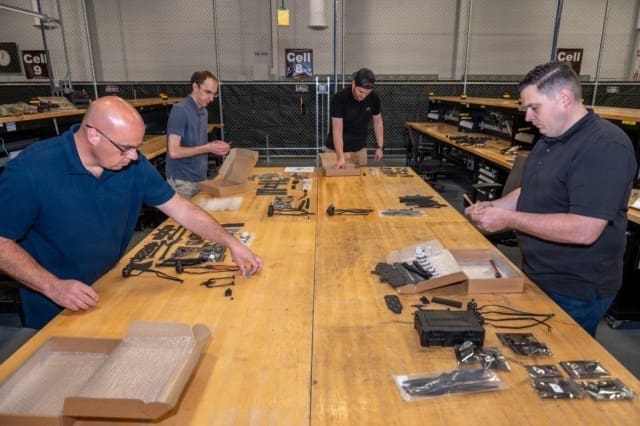
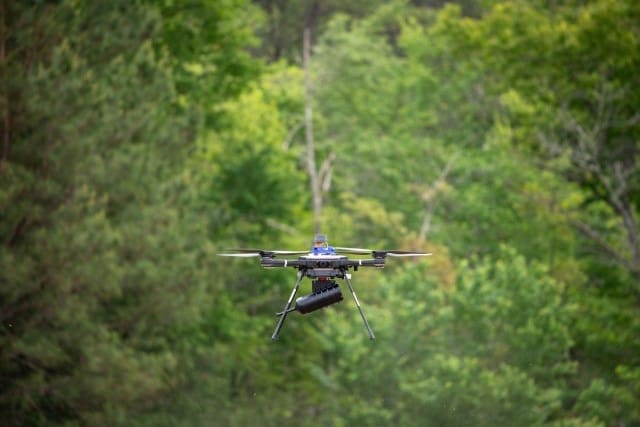
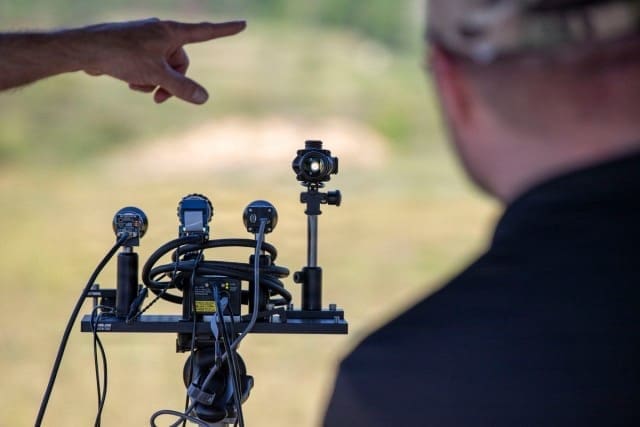
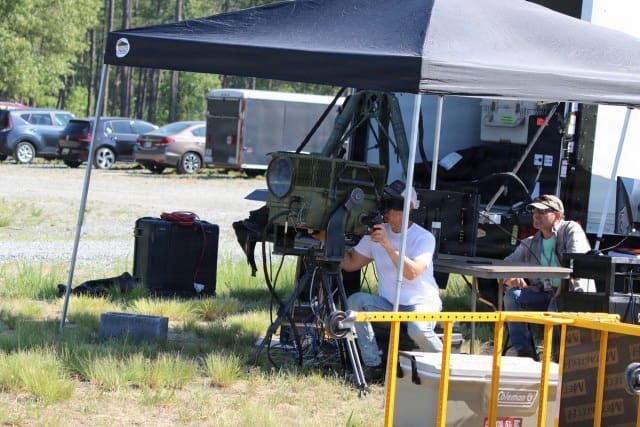
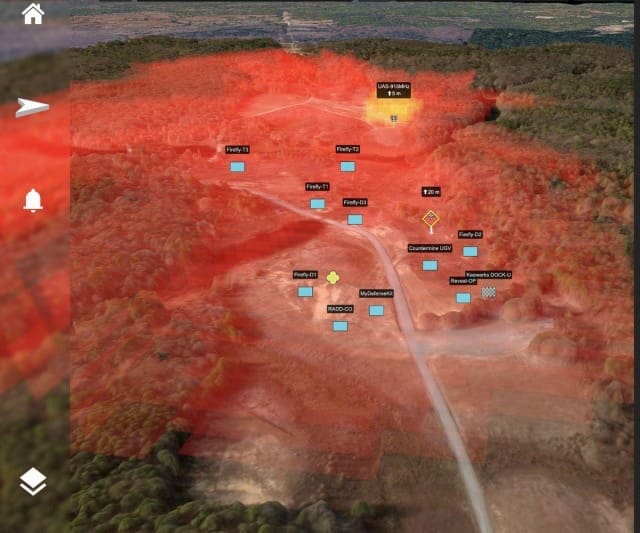
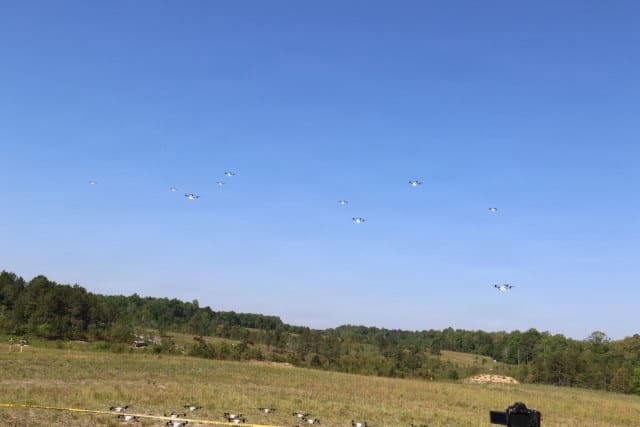
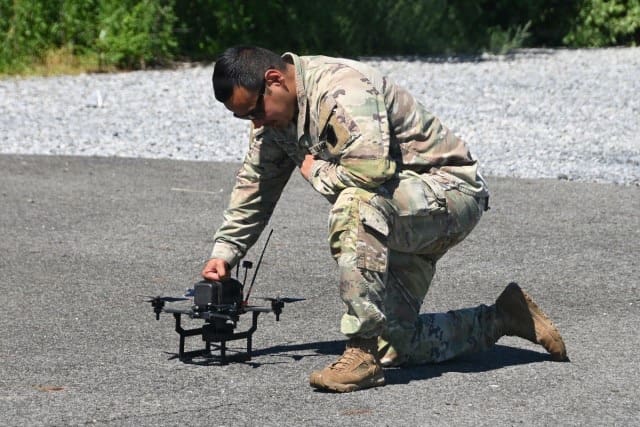
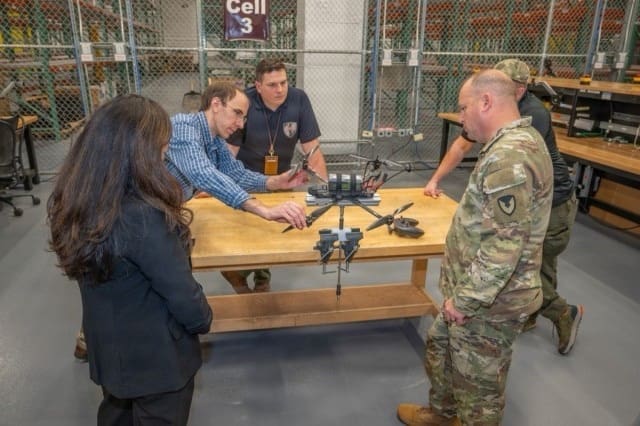
JOINT BASE MYER-HENDERSON HALL, Va. — Joint Inter-Agency Task Force – 401 participated in a multi-day Counter-Small Unmanned Aircraft Systems Threat Simulation Exercise this week, designed to test and evaluate cutting-edge technologies aimed at protecting the National Capital Region. The exercise was a collaborative effort involving the base defense forces of Joint Base Myer-Henderson Hall and key leaders from the Joint Task Force – National Capital Region, Combat Capabilities Development Command and the U.S. Army Military District of Washington. The Director of JIATF-401, Brig. Gen. Matt Ross, visited the exercise on February 18 and praised the team’s efforts to test and train our forces on cutting edge counter drone technology.

“The threats we face are constantly evolving, and exercises like this are critical to ensuring we stay ahead of our adversaries,” stated Ross. “Seeing these dedicated teams and advanced technologies in action gives me great confidence in our ability to defend the vital assets within the National Capital Region. This is innovation and collaboration at its finest.”

The exercise involved the execution of dozens of simulated sUAS incidents, utilizing various drone types to test eleven different sensor systems and three mitigation devices. These scenarios, run during both day and night, were designed to replicate real-world threats and enhance the readiness of regional security forces.

A key focus of the event was the interoperability between different agencies and the seamless integration of their technologies. The data collected will be instrumental in refining the multi-layered defense strategy for the NCR.

Col. Brian Reynolds, provost marshal of Joint Task Force – National Capital Region, emphasized the importance of the joint effort. “This training is about more than just technology; it’s about people and partnerships,” said Reynolds. “By bringing together interagency, federal, state and local law enforcement, we are building a unified and coordinated defense. The interoperability we are honing this week ensures that we can act as a cohesive team to detect, track and mitigate any potential aerial threat. Every agency brings a unique capability to the fight, and together, we create a formidable domestic shield for installations in the homeland.”

JIATF-401 and its partners remain committed to continuous innovation, joint force training, and the rapid delivery of state-of-the-art c-UAS capability our warfighters need to defend the homeland.

By LTC Adam Scher

Mehler Protection Unveils New Close Range Active Counter-UAS System for Land Vehicles at Enforce Tac 2026

Monday, February 23rd, 2026

KÖNIGSLUTTER, GERMANY (23 February 2026)

Mehler Protection presents SCILT, a new close-range protection system to counter drones attacking land vehicles from short range and low angles. The system is presented for the first time at Enforce Tac 2026.

Uncrewed Aerial Systems (UAS) increasingly no longer approach only from above. Instead, they emerge from terrain, ditches, flanks, and rear sectors, appearing at very short distance and leaving minimal reaction time. SCILT is conceived specifically to address this immediate close-in envelope, where conventional mobile air-defence systems and unit-level counter-UAS solutions reach detection and defeat limits.

SCILT is conceived as a dedicated last protective layer for individual vehicles, addressing the gap between large-scale mobile air defence systems and passive vehicle protection. Designed to counter small drones, including FPV drones, kamikaze drones, and loitering munitions, SCILT operates in close and very close-range engagements and is intended to defeat both single drones and multiple simultaneous threats in the immediate hazard zone.

The system combines effector modules, sensors, and operating logic directly on the vehicle, enabling defence against drones approaching from lateral and frontal directions as well as low-angles. Sensor kits can include electro-optical and other close-range surveillance sensors to support detection and operator decision-making. Cost-effective effector solutions support scalable employment across different mission profiles.

Key characteristics include:

  • Close and very close-range protection against drones
  • Sector-based configuration, allowing individual directions to be activated or deactivated depending on formation and movement
  • Three staged alert levels: detection alert, approach alert, and trigger alert
  • In its first version, SCILT operates deliberately with a man-in-the-loop architecture, with further automation planned as technology, procedures, and approval processes evolve

Effector modules use market available standard ammunition types in shotgun-calibre, ranging from rubber projectiles to hardened-core, tungsten-carbide fragment, and armour-piercing variants. This effector spectrum enables controlled hazard areas and scalable effects depending on scenario requirements, while cost-effective effector solutions support employment against both single drones and multiple simultaneous threats.

SCILT is controlled via a vehicle data bus and integrates into existing vehicle architectures. Where such interfaces are not available, the system operates as a self-contained package with its own close-range surveillance and control chain. Remote control units can be installed at multiple positions inside the vehicle.

The development of SCILT has been ongoing for approximately one and a half years. Mehler Protection conducted 48 test campaigns, including external and terminal ballistics, temperature behaviour, trigger reliability testing, and fragment-density measurements to determine the optimal effective range.

The first version of SCILT is planned to be available from summer 2026 as an effector package with sensor kits and control units that can be integrated into different vehicle configurations.

SCILT builds on Mehler Protection’s long-standing platform protection portfolio across land, air, and sea. The company supplies protection solutions for helicopters, land vehicles and naval systems, and is a main supplier of protection systems for almost all naval platforms currently under construction for the German Navy.

Learn more about Mehler Protection’s platform armour solutions.

NSWC Crane’s New Low-Cost, ‘Drone Killer Cartridge’ Achieves 92-Percent Kill Rate in Demonstration Event

Saturday, February 21st, 2026

Naval Surface Warfare Center, Crane Division (NSWC Crane) has designed and developed the Drone Killer Cartridge (DKC), a new and cost-effective family of ammunition for the warfighter that increases probability of hit and kill against drone threats while inherently reducing collateral damage.

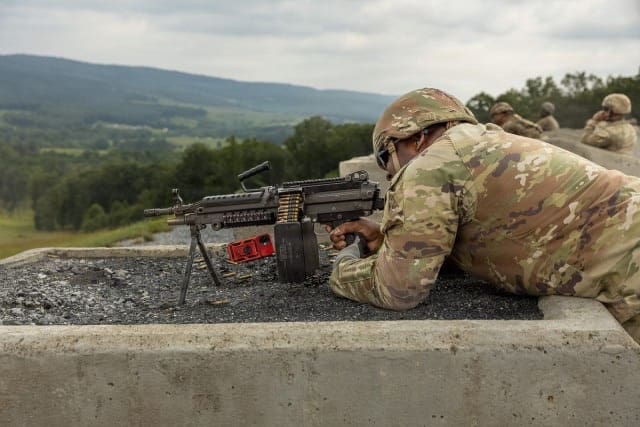
“We’re enabling extended range, shotgun-style effects through automatic rifles and machine guns with nothing more than an ammunition change,” said Brian Hoffman, Man-Portable Weapons Chief Engineer at NSWC Crane.

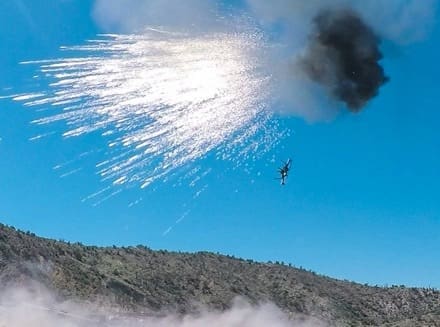
DKC is an ammunition technology that disperses a cluster of projectiles upon firing—for rifles, automatic rifles, and machine guns—with far greater range than a conventional shotgun. These effects increase the probability of hit and kill against Unmanned Aerial System (UAS) threats in a way that also reduces the risk of collateral damage for any projectiles that don’t impact the target. During a recent demonstration at Camp Atterbury in Edinburgh, Indiana, DKC achieved a 92% success rate against drone targets.

Col. Andrew Konicki, Program Manager of Ground Based Air Defense for Program Executive Officer Land Systems, said the Marine Corps plans to broadly leverage DKC for its enhanced capabilities and implement at the operator-level.

“The Drone Killer Cartridge represents a pivotal shift in countering the pervasive threat of enemy drones,” said Col. Konicki. “This type of ammunition provides an immediate and significant improvement to our kinetic kill capabilities by using standard-issued weapons that are already in the hands of Marines. The collaborative work between NSWC Crane and the Marine Corps has positive impacts across the ecosystem of Homeland Defense as well as self-protection for our forward deployed troops in harm’s way. With DKC, we are adding capability well beyond conventional options, while also bending the cost curve for neutralizing drone threats, particularly to the individual Marine. Crucially, its design reduces the risk of collateral damage, making it a dominant and urgently needed solution that will fundamentally change the fight for every Marine.”




Unmanned systems are reshaping tactics, challenging established operations, and creating life-threatening threats for warfighters globally. To counter this rapidly evolving and critical threat, the Department is aiming to improve overall defense capabilities.  

“By design, DKC provides broader terminal coverage on and around the intended target, which increases effectiveness against stationary and moving drones by helping offset imperfect aim,” said Hoffman. “There’s a good reason why bird hunters use shotguns. We’ve applied a similar philosophy to killing drones while amplifying overall performance. DKC sub-projectiles exit the barrel at velocities typical of centerfire rifle ammunition. Those velocities, and associated energies, far exceed shotgun capabilities and serve to extend effective range while offering more devastating effects on target.”

DKC technology provides an improved defense capability at an affordable price, ensuring versatility for end-users with rapid integration for a variety of mission sets. Engineers and technicians developed DKC from internal NSWC Crane Naval Innovative Science and Engineering (NISE) funding and Department of Homeland Security and Marine Corps investment. Because use of DKC involves only an ammunition change, timeline to initial fielding can be accelerated as it does not require qualification of a new weapon system. As a beneficial side effect of that approach, DKC eliminates the need for warfighters to carry excess weight of an additional weapon dedicated to countering drones.

“When you compare the cost it takes to kill a drone using DKC versus some other solutions that are being employed, it’s a night-and-day difference,” said Hoffman. “The projectiles used in segmented DKC and pelletized DKC are both inert, meaning there is no energetic material in the projectile itself. The separation mechanisms are purely mechanical, and the cartridge case, primer, and propellant are common to other ammunition types already in production. These attributes combine to help keep it elegantly simple yet effective while ensuring low-cost producibility.”

All DKC products are NSWC Crane-designed and U.S. Government-owned intellectual property (IP) with U.S. nonprovisional utility patent applications and Patent Cooperative Treaty applications on file. The DKC family includes both Pelletized and Segmented product options.  There is functional overlap between the two, though each type maintains unique priority rankings for effective range, target area coverage, suppressor compatibility, and cost. Segmented DKC includes a one-piece projectile that mechanically self-separates into discrete, spin-stabilized sub-projectiles prior to muzzle exit whereas Pelletized DKC includes a projectile assembly containing a stack of high-density, spherical buckshot-sized pellets that are mechanically disbursed at muzzle exit.

Hoffman said the technology enables the end-user to quickly dispatch UAS threats.

“The intent with our ammunition was to simply give operators a better chance of killing drones with cost-effective products that can be used in existing weapons.  If you aren’t the world’s best shot or don’t have a lot of experience engaging aerial targets, your odds go up immediately with DKC.  As a bonus and since these products are already mature, you won’t have to wait years for product development in order to access DKC and put it to good use. 

Hoffman said the DKC team and NSWC Crane family are excited and motivated to fast-track these products to the field and fleet to help meet urgent needs – not just for the Navy, Marine Corps, and DHS – but for the other U.S. Military Services, Government Agencies, and select foreign partners.

“The demand signal for DKC is increasing dramatically given the current threat environment and the more we socialize these products and the technology,” said Hoffman. “There are obvious reasons why it resonates with military operators and Counter-UAS stakeholders who understand the urgent need. DKC is effective, it’s affordable, and it can be used immediately with weapons that are already in service.” 

To view some footage of drone kills using DKC, high-speed video of the sub-projectiles as they exit the barrel, and additional introductory content.

The Drone Killer Cartridge technology is available for licensing to commercial ammunition and defense manufacturing partners. Initially designed for military applications, there also are applications for home defense, personal protection, and hunting. To learn more about the IP and licensing opportunity, please visit TechLink.

Breakthrough for Seasnake: Sweden Becomes First NATO Customer

Friday, February 20th, 2026

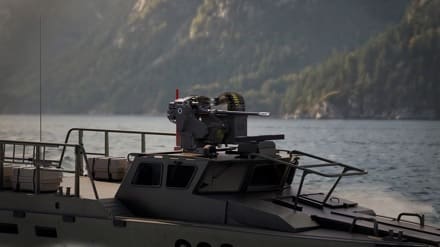
The newest NATO member, Sweden, has commissioned Rheinmetall to supply eight Seasnake 30 weapon systems for the Swedish Navy. These systems will be the primary armament of the new Combat Boat 90 fast military assault craft. The first order under the framework agreement is worth around €63 million and was placed in February 2026. Delivery of the first system is scheduled for February 2028.


The framework agreement also includes airburst and 30 mm calibre training ammunition, with a term of four years. Spare parts and services are also included in the agreement. Additionally, the contract includes an option for up to 29 extra Seasnake weapon systems.

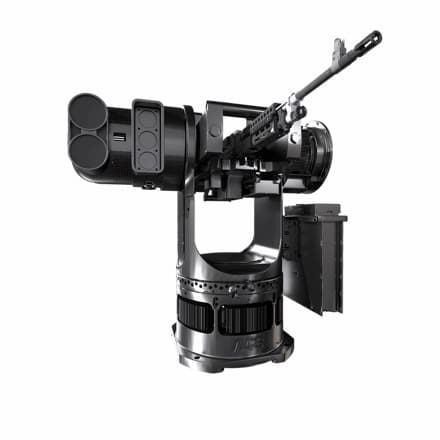
The Seasnake 30 is a state-of-the-art remote-controlled naval light gun designed for close-range defence. Alongside the weapon itself, the system incorporates modern daylight cameras, infrared sensors, and a laser rangefinder. It features automatic target detection and the ability to track multiple targets simul¬taneously. The revolver cannon’s nominal maximum rate of fire is 1,100 rounds per minute.

Thanks to its integrated airburst capability, the Seasnake 30 is particularly effective against air targets, such as drones. Its low silhouette and compact stealth design also make it difficult for enemy sensors to detect.

This order from Sweden marks an important market success for Rheinmetall, as it positions the Seasnake 30 with a NATO customer for the first time. This decision highlights confidence in the performance and future viability of Rheinmetall’s modern naval weapon systems. At the same time, the order reinforces the Group’s standing as a dependable provider of maritime defence solutions within the alliance.

Joint Interagency Task Force, FBI Deepen Drone Partnership to Bolster National Defense

Monday, February 16th, 2026

Army Brig. Gen. Matt Ross, Joint Interagency Task Force 401 director, visited the FBI’s National Training Center for counter-small unmanned aircraft systems in Huntsville, Alabama, yesterday to solidify a strategic alliance to protect the nation from unmanned aerial threats.

The visit centered on increasing collaboration between the War Department and the FBI to enhance homeland defense through joint training and the accelerated development of counter-UAS capabilities with federal interagency partners. 

A primary focus of the discussion was enhancing efforts to coordinate security preparations for this summer’s FIFA World Cup. Ross and Mike Torphy, FBI acting assistant section chief for UAS and counter-UAS, spoke with expert instructors who are teaching a specialized course for local law enforcement in each of the tournament’s eleven host cities across the nation. 

“The security of our homeland depends on a seamless, unified defense, and that is only possible through robust interagency collaboration,” Ross said. “The threats we face are shared, so our solutions must be as well. Our work with the FBI, to secure major events like the World Cup against the threat of drones, is a prime example of this strategy in action, but our goal is much broader: to build permanent, integrated [counter]-UAS capabilities across the federal government.” 

This synergy is foundational to building a more resilient national counter-UAS capability and ensuring state and local partners are effectively trained and equipped for any threat.  

Ross thanked Torphy for hosting the productive visit, which underscored the importance of combining JIATF 401’s lessons learned from the battlefield and expertise in joint training with the FBI’s critical law enforcement mission. 

“This is one example of how JIATF 401 is working with partners to enhance our counter-drone efforts,” Ross said. “No single person or agency can take on this task alone. It requires a whole-of-government coordination, and I am grateful that Mr. Torphy and the training center staff are supporting our mission to build a layered defense against the full spectrum of small UAS threats to the homeland.” 

The engagement in Huntsville signifies a deliberate move to formalize and expand the working relationship between the department and federal law enforcement. Future efforts will include the JIATF 401’s Joint Counter-Small UAS University in Fort Sill, Oklahoma, working closely with the FBI’s National Training Center to execute this shared mission.  

This partnership model, focused on joint capability development and shared training, will enhance security for specific events and serve as a blueprint for a more integrated national approach to all counter-UAS threats, Ross added. 

By Army LYC Adam Scher, Joint Interagency Task Force 401

2026 Canadian National Counter UAS Conference

Friday, February 13th, 2026

March 2nd and 3rd, 2026, please join the Kingston Police, Ottawa Police, and the Correctional Service of Canada for the 2026 Canadian National Counter Unmanned Aircraft System Conference at the Westin Ottawa, 11 Colonel By Drive, Ottawa ON. Conference topics include Organized Crime use of UAS for trafficking, Contraband into prisons, Narcotics and Firearms across national borders, Narcotics and Firearms within cities, protecting major events and mass gatherings from UAS attacks and miss-use, VIP protection, Protecting public infrastructure from drone attacks (power plants/lines, public safety & government buildings), weaponized UAS use in terrorist and national security related attacks, update on UAS use in Ukraine and future domestic trends, and A panel discussion on needed legislative changes to support enforcement and investigations. Please use links in attached flyers to register or go to Reservation-Link for hotel reservation and 2026 National Counter UAS Conference Tickets, Mon, Mar 2, 2026 at 8:00 AM | Eventbrite to register for the event.

Event registration is $335.00 CAD, and lodging is available for $229.00 CAD per night at the Westin.

DroneShield Appoints Michael Powell as COO to Support Global Expansion and Operational Scale

Wednesday, February 11th, 2026

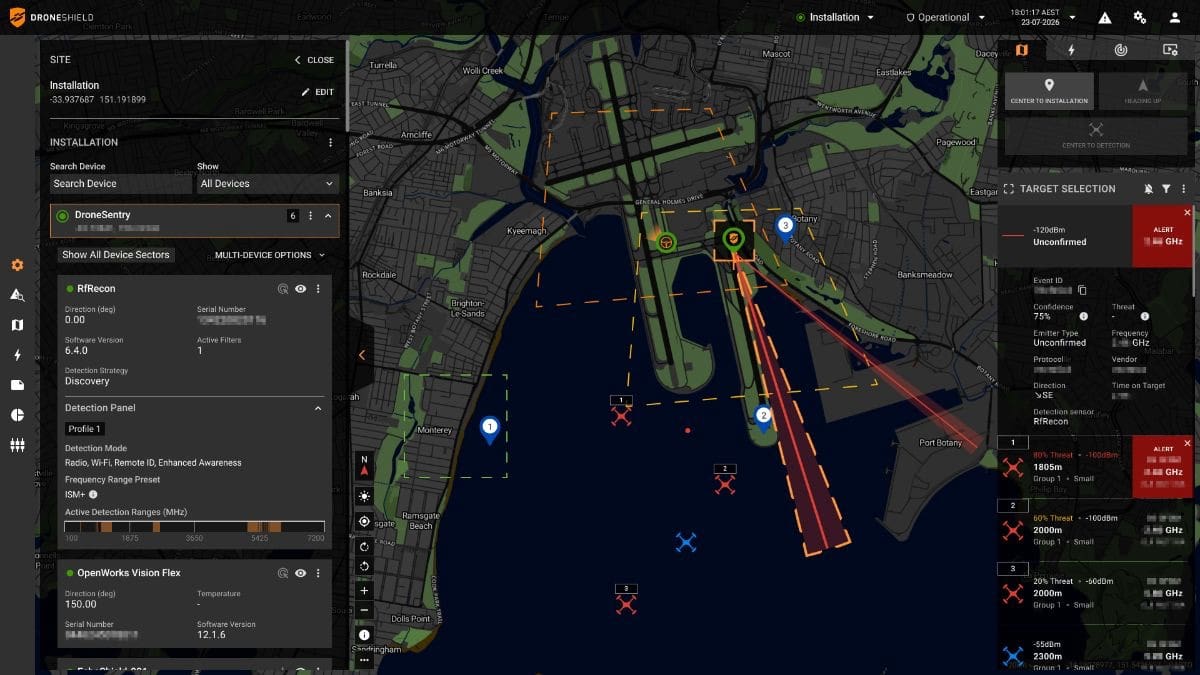
10 February 2026 – DroneShield (ASX:DRO), a global leader in counter-UAS technology, today announced the appointment of Michael Powell as Chief Operating Officer, reinforcing the company’s operational leadership as it enters its next phase of global growth.

The appointment follows a period of accelerated expansion for DroneShield, including increased activity across Europe and the United States, rising demand from defense, government, and critical-infrastructure customers, and a major expansion of manufacturing capacity at the company’s Alexandria, New South Wales facility. The expanded site significantly increases production throughput, shortens delivery timelines, and strengthens supply-chain resilience, positioning DroneShield to support long-term programs of record and sustained global demand.

Michael brings more than 25 years of senior executive and operational leadership experience across defense, aerospace, secure communications, simulation, railway and critical infrastructure markets. His career includes senior roles such as Chief Operating Officer, Managing Director, and Operations Director at leading international organizations including Thales Australia and Knorr-Bremse, where he led large, multinational teams and managed complex, multi-hundred-million-dollar operational portfolios.

Image: Michael Powell, Chief Operating Officer, DroneShield

Across these roles, Michael has built and scaled global manufacturing and supply-chain operations, led international business turnarounds, and delivered large-scale operational transformation programs, balancing execution discipline with the demands of high-reliability, mission-critical customers.

As Chief Operating Officer, Michael will be responsible for scaling DroneShield’s global operations, strengthening delivery and sustainment capability, and aligning engineering, manufacturing, and supply-chain functions to support the company’s expanding product portfolio and growing international customer base. His appointment reflects DroneShield’s focus on operational excellence as counter-UAS capability becomes embedded within national security, public safety, and critical-infrastructure protection frameworks worldwide.

“Michael is a proven operator with deep experience delivering complex programs at global scale,” said Oleg Vornik, Chief Executive of DroneShield. “As demand for counter-UAS capability continues to accelerate, his leadership will be instrumental in ensuring DroneShield scales with discipline, resilience, and a relentless focus on customer outcomes.”

Michael has lived and worked across Australia, Asia-Pacific, United States, Europe, and the Middle East. He holds a Master of Business Administration, a Bachelor of Engineering and is a Chartered Professional Engineer, and is a Fellow of the Institute of Engineers.

Grand Forks AFB Selected to Lead Point Defense Battle Lab

Sunday, February 1st, 2026

GRAND FORKS AIR FORCE BASE, N.D. —  

In October 2025, the 319th Reconnaissance Wing assigned to Grand Forks Air Force Base was selected to lead the Point Defense Battle Lab, supported by the 184th Wing, Kansas Air National Guard. The Total Force team at the battle lab supports Air Combat Command’s Point Defense Task Force, a larger Counter Small Unmanned Aircraft System (C-sUAS) effort within the Department of the Air Force.

The Point Defense Battle Lab will serve as a hub for collaboration, pushing boundaries in C-sUAS capabilities, ensuring the Air Force maintains tactical superiority against evolving threats, and is a key part of the service’s effort to develop and evaluate advanced technologies to defend installations from sUAS threats.

“The 319th Reconnaissance Wing is honored to lead the Point Defense Battle Lab alongside our Air National Guard partners,” said Col. Alfred Rosales, 319th RW commander. “Total Force integration enhances our ability to field emerging technologies and match our capabilities to the threat environment. The men and women of the 319th RW have extensive knowledge with unmanned, remotely piloted technology and will ensure our force is poised to secure our installations and defend the homeland.”

The PDBL is a critical initiative within the Department of the Air Force, designed to safeguard installations, protect vital assets, and ensure continuity of air operations. Specifically, the PDBL will focus on developing and validating tactics, techniques, and procedures for countering a wide range of airborne threats, including small Unmanned Aircraft Systems. The Battle Lab’s efforts will enhance the Air Force’s ability to detect, track, and neutralize these airborne threats effectively.

ACC selected the 184th Wing, in partnership with the 319th Reconnaissance Wing, based on combined current capabilities, missions, industry and academia partnerships and alignment with counter-small UAS fielding timelines. The 184th Wing was specifically selected for its expertise in air battle management, cyber operations, and AI-enabled intelligence, surveillance, and reconnaissance. The 134th Air Control Squadron’s continued efforts with the Air Base Air Defense System-Missile Defense, which has already positioned the 184th Wing as a leader in airbase defense, will also be contributing to the efforts of the Battle Lab.

“This is a significant opportunity for the 184th Wing to leverage our expertise and contribute to a critical national security mission,” said Col. Joe Deeds, commander of the 184th Wing. “Our Air Battle Managers, cyber warriors, ISR operators, and AI specialists are ready to work alongside the 319th Reconnaissance Wing to ensure the success of the Point Defense Battle Lab and to enhance the security of Air Force installations.”

The Point Defense Battle Lab (PDBL) will drive innovation and collaboration across the Total Force to address the growing challenges from increasingly widespread use of small Unmanned Aircraft Systems (sUAS). By integrating the expertise of the 319th Reconnaissance Wing and the 184th Wing, the PDBL will deliver critical tactical-level data, advanced site design concepts, and cutting-edge integration strategies for emerging technologies. Additionally, the lab will spearhead operational experiments and red teaming initiatives, ensuring the Air Force remains agile and prepared to counter evolving threats. Through its efforts, the PDBL strengthens the Point Defense Task Force’s ability to safeguard airpower, maintain combat readiness, and confidently respond to emerging challenges, further securing Air Force installations and operations.

By MSgt BreeAnn Sachs

319th Reconnaissance Wing Public Affairs