Phantom Lights

Archive for the ‘Comms’ Category

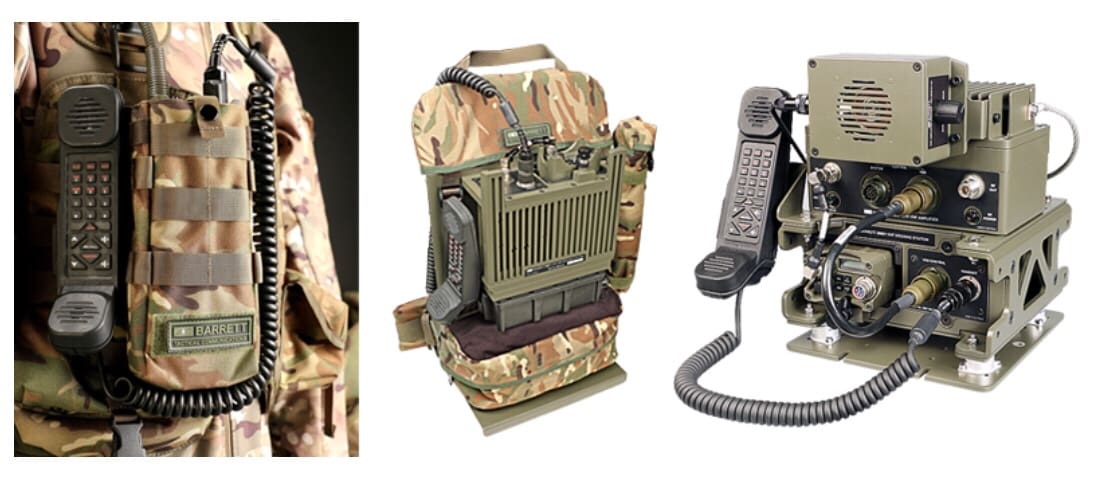
Barrett Communications completes contract for VHF modernisation program

Saturday, June 9th, 2018

Perth, Western Australia, June 11, 2018 – Barrett Communications have recently completed a contract worth AUD$7 million for tactical VHF equipment to an unnamed Middle Eastern military force. The new client has deployed the equipment as part of a planned modernisation of their existing military VHF systems.

The contract incorporated the full range of Barrett PRC-2080+ VHF equipment. The PRC-2080+ systems are designed for multi-role tactical military applications. This contract included the hand portable, manpack, mobile, base station and re-broadcast configuration. The Barrett PRC-2080+ system will provide secure voice and data communications over line of sight range.

Training was recently undertaken in country ready for full deployment within the coming months.

www.barrettcommunications.com.au

Marines To Field On-the-move Communications System This Fall

Friday, June 8th, 2018

MARINE CORPS BASE QUANTICO, Va. —

Marine Corps Systems Command is improving the way Marines communicate with a reliable and convenient on-the-move system.

The Mobile User Objective System, or MUOS, is a narrowband satellite communication system that uses commercial cell phone technology to increase access to voice and data communication while on the battlefield. The Marine Corps will be the first service to widely deploy the system as it has already fielded thousands of MUOS-capable AN/PRC-117G radios over the previous six years. Ultimately, the firmware within the radios will be updated to support the MUOS waveform and three new antenna kits will be added to support multiple operational configurations.

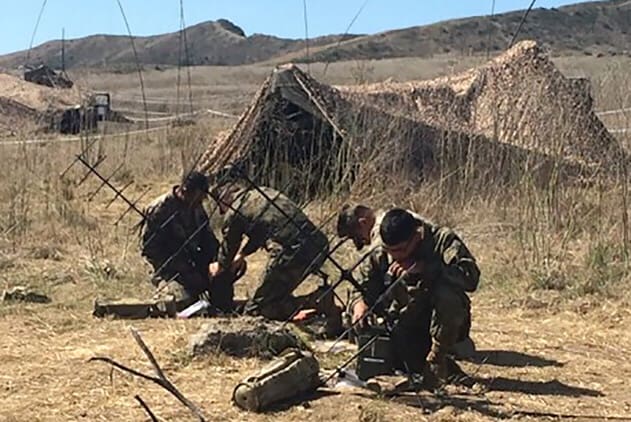
Marines from the 1st Marine Division test out the Mobile User Objective System at a Field User Evaluation in Camp Pendleton, California. MUOS is a satellite communication system that uses commercial cell phone technology to increase access while on the battlefield. Marine Corps Systems Command will begin fielding MUOS in the fourth quarter of 2018. (U.S. Marine Corps photo by Eddie Young)

“MUOS provides several advantages over legacy SATCOM,” said Capt. Shawn Avery, MUOS project officer in Command Element Systems at MCSC. “The most obvious to the operating forces will be the increased accessibility. This will allow us to explore new operating concepts by pushing on-the-move voice and data connectivity to the squad level.”

MUOS is designed to support users who require mobility, higher data rates and improved operational availability. The updated technology in the system offers a more secure and reliable beyond line-of-sight communication capability. The MUOS waveform will be added to the AN/PRC-117G and future multi-channel radios within the Marine Corps inventory.

“Previously, infantry companies had limited access to SATCOM, but now company commanders can employ their Marines beyond line of sight with a higher degree of confidence in maintaining those critical [command and control] links,” said Avery.

The three antenna kits that will be fielded within MUOS include: a traditional directional antenna for better data performance at-the-halt; a dismounted on-the-move antenna which enables voice and data access when mobile; and a vehicular kit that modifies the AN/VRC-114’s to accept MUOS.

MUOS is comprised of a space-based segment, a ground-based segment connected over fiber optic cables between multiple continents, and a software-defined radio terminal capable of running the MUOS waveform.

The new satellites are more robust and have more individual carriers, which allows the signal to be focused on a smaller geographic footprint, Avery said. This improvement enables on-the-move access while improving overall reliability in vegetation, urban environments and other extreme conditions where legacy SATCOM was challenged.

Additional improvements include the ability to roam, similar to a cell phone. Marines can begin in the continental United States, and then deploy and have immediate access to another satellite on the ground providing unmatched operational flexibility.

“The system takes some stress off of the operators, allowing them to walk around on patrol without the range constraints of terrestrial networks,” said Avery. “And in the past, users didn’t have access to the Defense Information System Network over SATCOM. We either had to hold terrain to extend terrestrial links to provide DISN access, which incurs significant operational risk, or lease commercial capabilities which have proven costly. With MUOS, we’re meeting the data exchange requirements of today’s force with equipment that is organic to the Marine Air-Ground Task Force.”

Initial fielding for the MUOS is scheduled for the fourth quarter of 2018, with initial operational capability planned for the first quarter of 2019.

By Kaitlin Kelly, MCSC Office of Public Affairs and Communication | Marine Corps Systems Command

OTTO Multi-Port Hub/PTT

Monday, June 4th, 2018

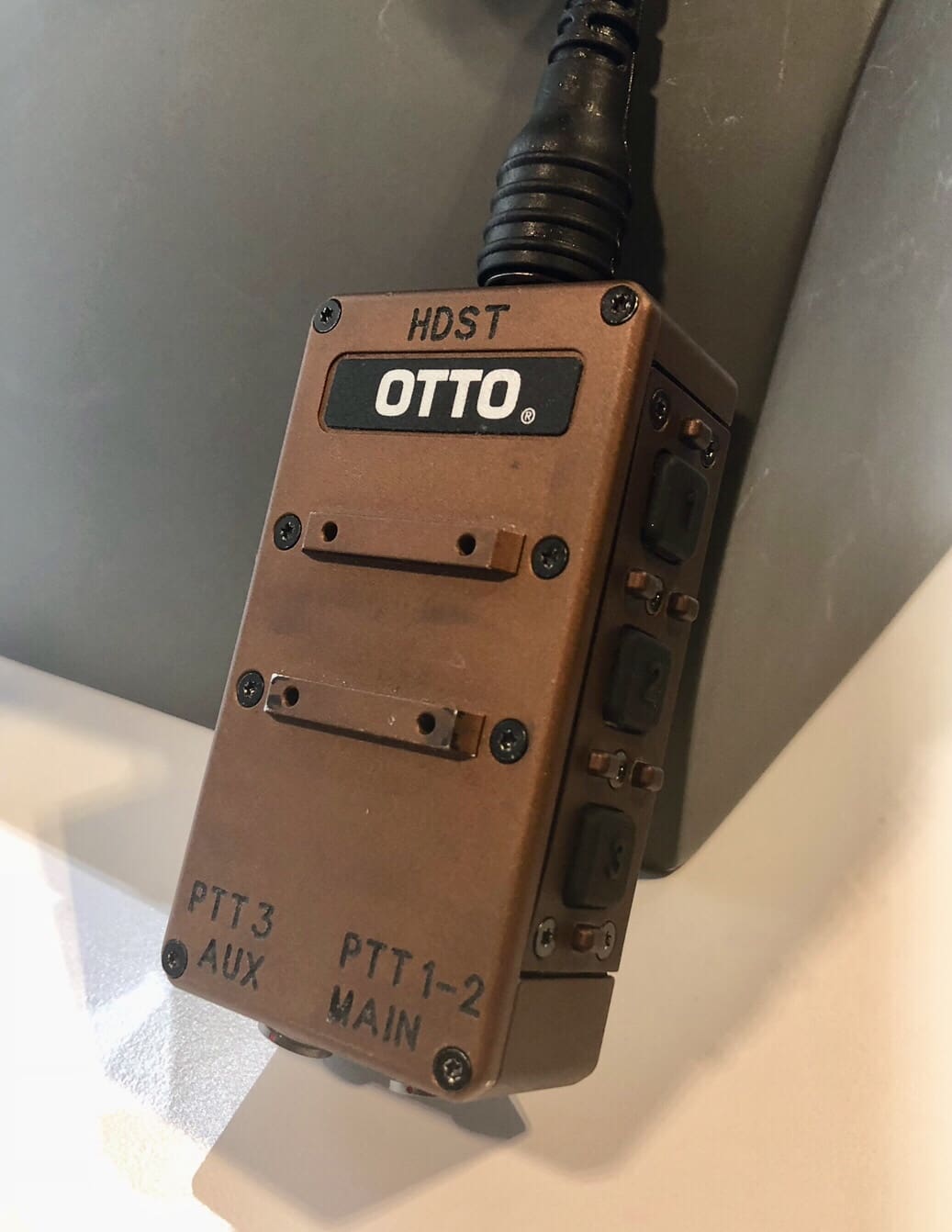
During SOFIC I got to take a look at OTTO’s new Multi-Port Hub/Push-To-Talk. It’s both lightweight, and easy to use. I asked them for some technical data and they provided me with this info.

Carpentersville, IL – OTTO Engineering, a US-based, industry leader in the design and manufacturing of two-way radio accessories for military, commercial, industrial, utility, and public safety applications has introduced its latest product for the military market.

img_0874.jpg

The OTTO Multi-port Hub was specifically designed to meet the demanding and mission critical needs of the Special Forces community.  The hub is compatible with major radio platforms, including the new multi-channel handheld radio AN/PRC-163, using detachable cables for each radio.  When used in conjunction with the new OTTO Active Circumaural headset or the new OTTO H3E In-the Ear headset, the OTTO Multi-port hub provides control of up to three communications platforms, each with a separate Push-To-Talk button. In addition, the hub offers modular compatibility with all vehicular and air based intercoms (ICS). Situational awareness can be controlled either via buttons on the headset or volume controls on the hub.

The electrical components of the OTTO Multi-port Hub are encased in a lightweight, machined aluminum housing to meet EMI and RF radiation requirements (MIL-STD-461).  The hub weighs in at a mere 4.8 ounces.  The compact package (1.83” W X 3.50” H X 1.20” D) fits easily onto a molle vest while providing easy access to the PTT buttons and talk-through controls.  Control buttons can easily be depressed while wearing gloves.

F2DF1199-78E0-49C4-961B-647B4F40B589

The unique design of the OTTO Multi-port Hub enables the device to be oriented for left-hand or right-hand use.  The hub features a reversible clip for securing the unit to a vest.

The hub is immersion rated to 1 meter of water for 31 minutes (IP68), but enhancements are already being implemented to improve the immersion performance to 2 meters of water for 4 hours.

Features of the OTTO Multi-port Hub

·         Machined aluminum, rugged construction

·         3 separate Push-To-Talk buttons

·         Left hand, right hand reversible

·         Up/Down volume, On/Off control buttons for situational awareness

·         Single/Dual/Triple Comm modularity

·         Molle attachment system included

·         Small, lightweight hub form factor

·         Compatible with all major radio platforms

·         Optional compatibility with both Android and iOS devices

·         Detachable cables for each radio/device

·         Volume control +/-12dB

·         No batteries required

OTTO is known for quality and thoroughly tests its products to ensure the highest quality, most durable products in the market.  The company is ISO9000 and AS9100 certified.  The OTTO Multi-port Hub, OTTO Active Circumaural headset, and OTTO H3E In-the-ear headset are all made in the USA at OTTO’s manufacturing facilities located in Illinois.

For more information about the OTTO Multi-port Hub, the OTTO Active Circumaural headset, the OTTO H3E In-the-ear headset or other OTTO two-way accessories, please visit us at www.ottoexcellence.com/communications  or call us at 888-234-6886 (OTTO).

Rampart Range Day 18 – HS-14 HyperSpike Acoustic Hailing Device

Tuesday, May 29th, 2018

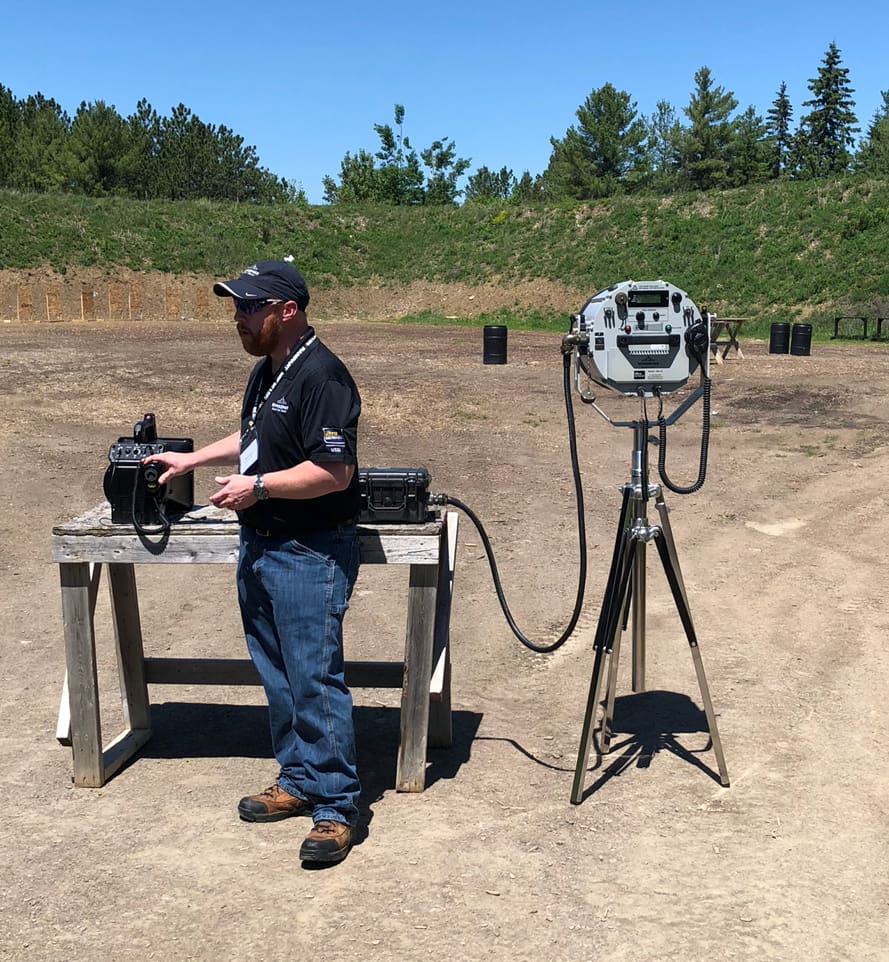
5331EDEB-B535-434F-A080-85F50398702B

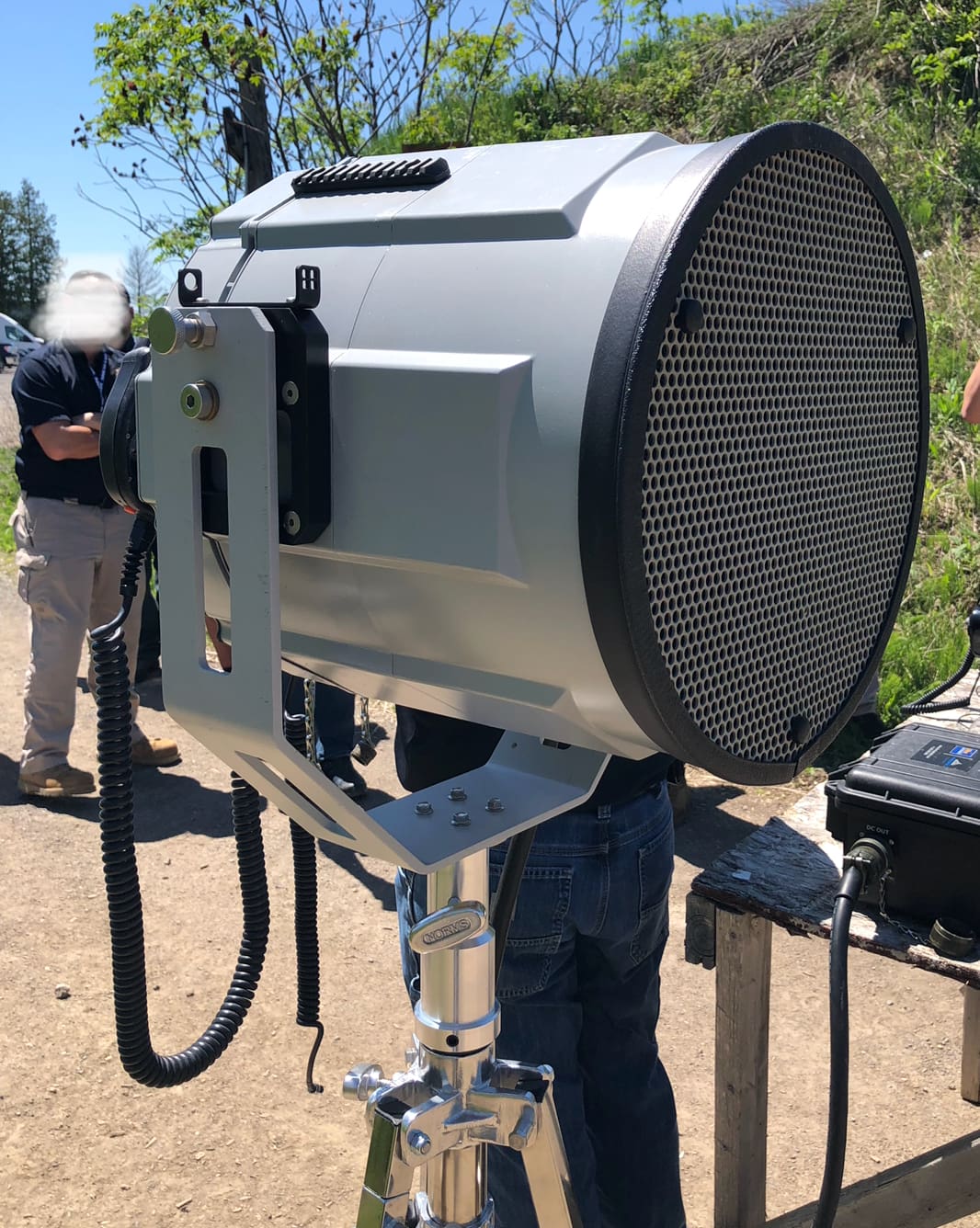
The HS-14 is a self-contained, lightweight (37 lbs), portable acoustic hailer for communicating long distances and penetrating high background noice. In fact, the 148 dB SPL peak acoustic output offers a range of up to 1500m with a beam width of +/- 12 deg. The frequency range is 300 Hz – 8 kHz, optimized for human voice.

0F085DA4-F53A-4EE0-A8D9-A84332762EA8

In addition to a built-in high frequency alert tone, there is an external microphone, which also allows the user to pre-record messages.
Additionally, it has an 16 GB file player to play prepared messages. You can also use a patch cable to connect external players, phraselators or even a stand alone blue tooth receiver.

HyperSpike devices are available in Canada from Rampart Corp.

New 10W Radio Frequency Modules For MPU5 MANET Radio

Thursday, May 24th, 2018

Higher transmit power delivers increased range and performance

NEW YORK, N.Y.— Persistent Systems, LLC (“Persistent”) announced today that it has released new 10W versions of its S-Band and L-Band RF modules. The new RF modules leverage cutting edge advancements in power amplifier technology, delivering increased output power and greater power efficiency. The RF modules also implement a more advanced RF filtering architecture providing increased noise immunity in congested and contested RF environments.

“We have taken everything we have learned and every new advancement in power amplifier and filtering technology and completely redesigned our S-Band and L-Band RF modules. Our customers value every bit of range and performance, and these modules truly deliver,” said Eric Stern, Director of Engineering at Persistent.

Solid state radio technology is improving at an unprecedented pace with every new advancement in the commercial wireless world. Persistent specifically designed the MPU5 architecture to be modular and upgradable, so that customers can take advantage of these advancements without needing to purchase a whole new system. The new 10W RF modules represent the first RF module upgrades to the MPU5 system.

For a limited time, Persistent is enabling customers to trade in their existing S-Band and L-Band RF modules and purchase new 10W versions at a significantly reduced cost.

“We expect our customers to achieve many years of service from their MPU5 radios. These upgrades demonstrate our commitment to the MPU5 platform, ensuring that it exceeds our customers’ requirements over the years to come,” said Leslie Hulser, Director of Programs at Persistent.

For more information on purchasing or upgrading your existing MPU5 radios, please reach out to your Persistent account representative.

www.persistentsystems.com

SOFIC 18 – Guardian Ruggedized Attach Patch for HEL-STAR 6

Tuesday, May 22nd, 2018

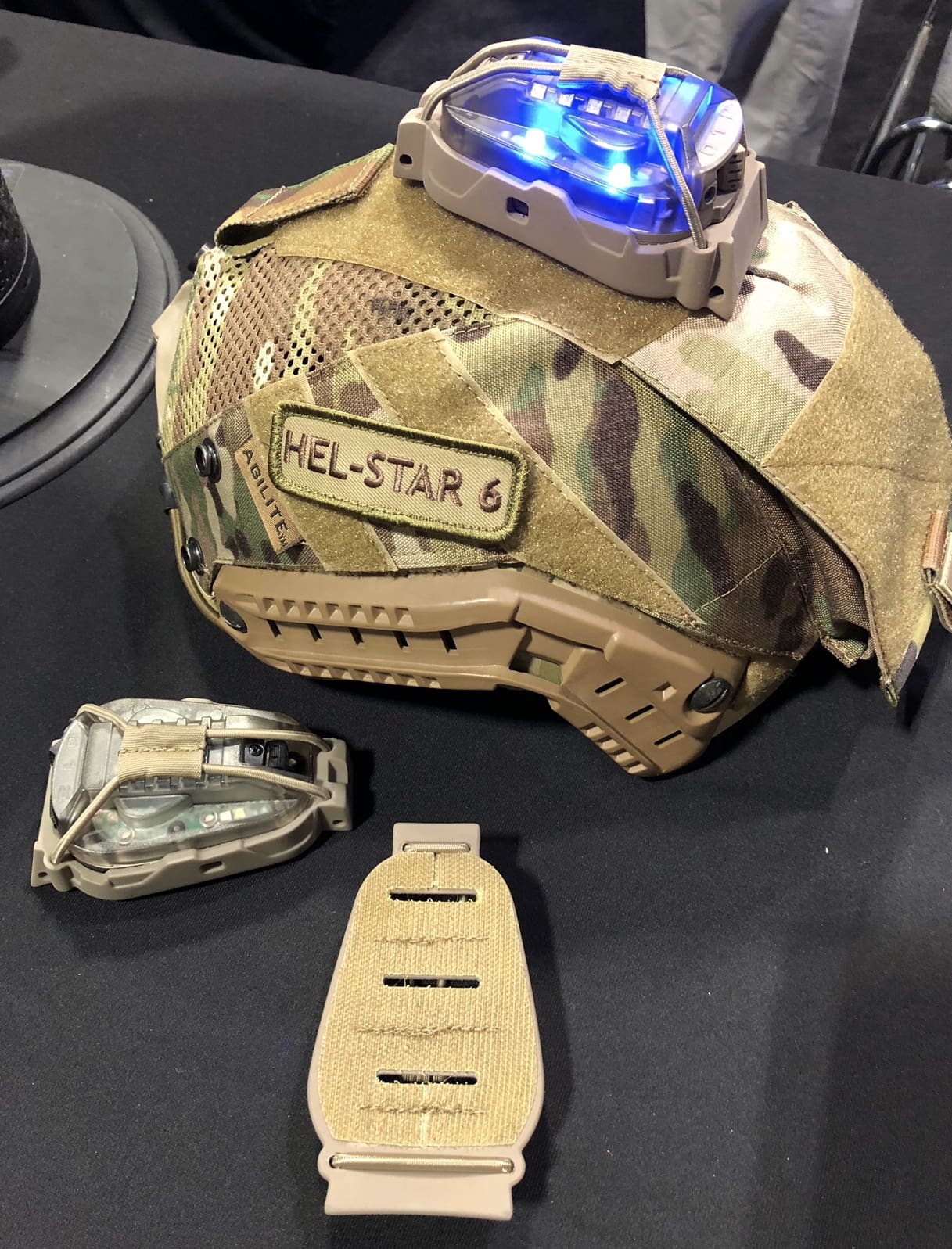
CORE Survival has introduced the Guardian Ruggedized Attach Patch, created by Agilite for their HEL-STAR 6 strobe light.

89D2413F-0A43-4D45-8E1B-DC44B1C4F2EC

Offered in Helmet Cover, MOLLE and Attach Parch versions, the Guardian holds the HEL-STAR 6 in place, yet offers full access to all functionality. Additionally, the Guardian reduces damage to the light by side impacts by 400%. Available in Tan and Black.

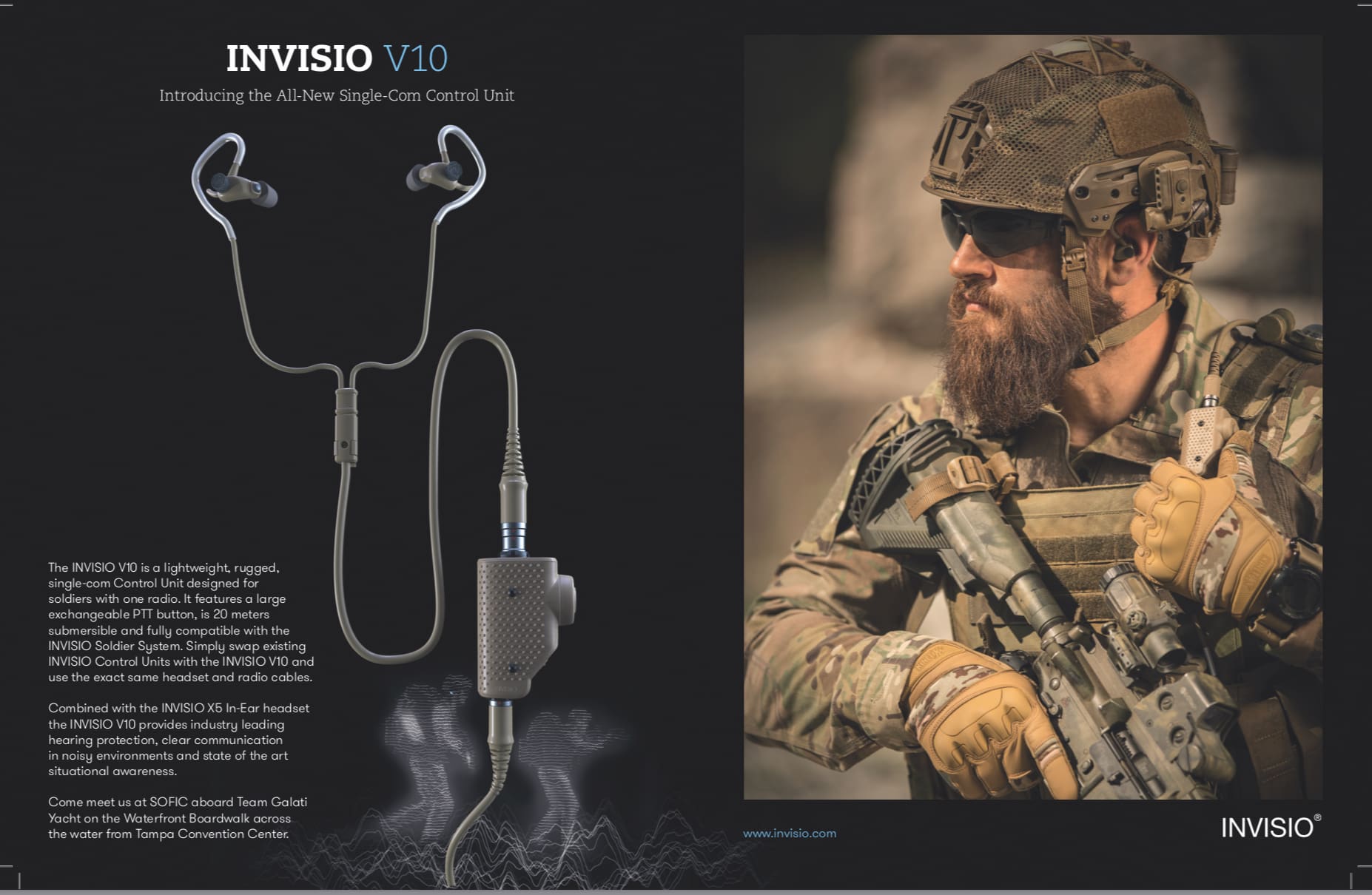
Invisio Unveils V10 Control Unit At SOFIC

Monday, May 21st, 2018

INVISIO offers cutting-edge personal communication and hearing protection systems that enable professionals to operate and communicate safely and clearly in noisy and mission critical environments.

The INVISIO systems are based on simplicity, modularity and flexibility to fit the communication needs for the modern soldier. The products include advanced control units, headsets and Intercoms all fully interchangeable and able to interface to a wide range of communication devices.

Introducing INVISIO V10 Control Unit

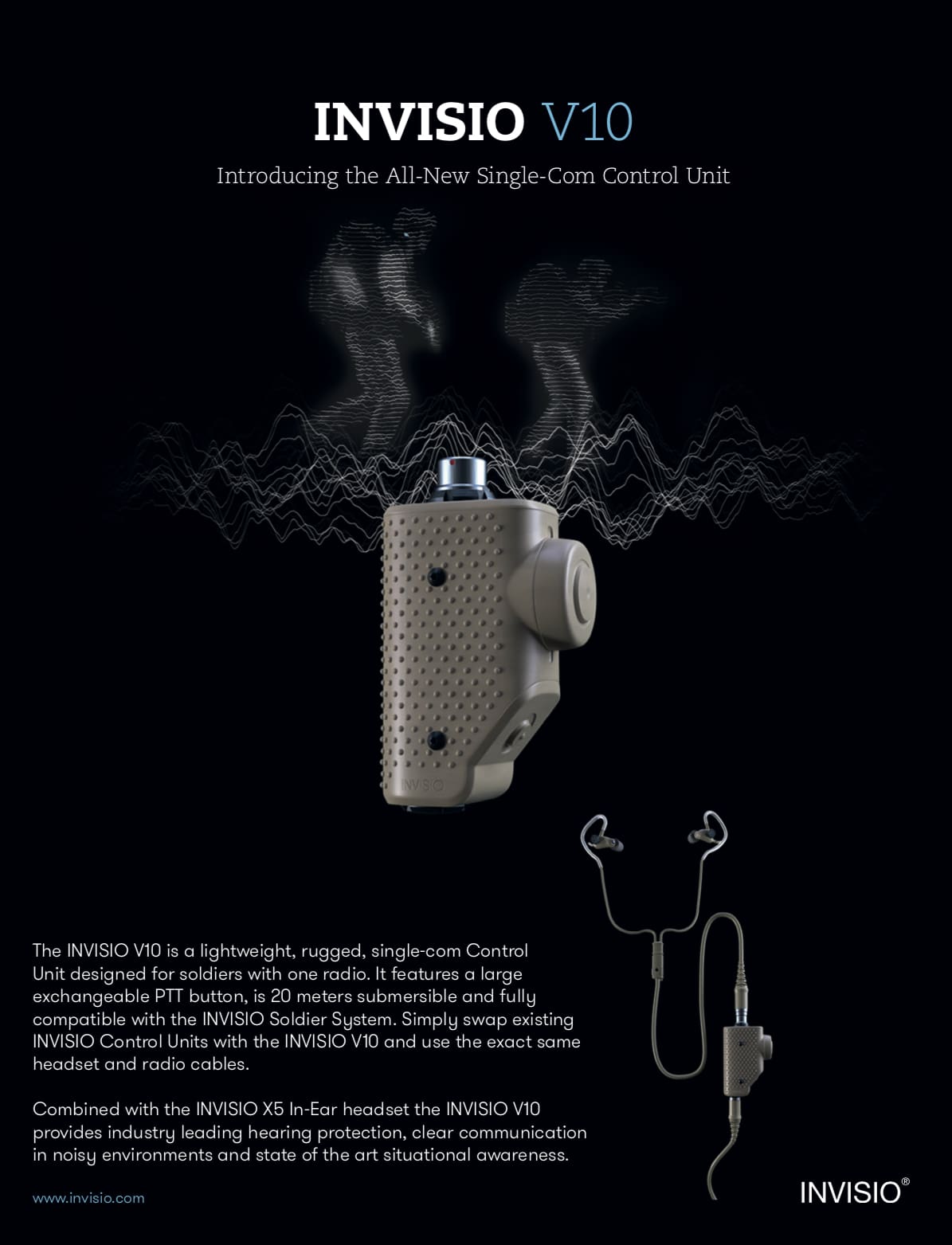
DF454499-C060-40F5-921B-6D712E90EA17

Our range of control units allow for communication on multiple talk-groups on a single radio, as well as multiple audio inputs to enable full compatibility with modern team and combat net radios. The all-new INVISIO V10 launched at SOFIC is a lightweight, rugged, single-com PTT designed for soldiers with a single radio. It features a large exchangeable PTT button, is 20 meters submersible and fully compatible with INVISIO soldier systems. Combined with the INVISIO X5 in-ear headset the INVISIO V10 provides industry leading hearing protection, clear communication and situational awareness.

The INVISIO Intercom bridges the gap between the mounted and dismounted soldier, making it possible for multiple users and radios to connect simultaneously using their existing soldier system. The soldier can access all vehicle communications directly from their INVISIO control unit, so there is no need to disconnect or connect other equipment when entering/exiting a vehicle.

Seamless plug and play integration between control units, intercoms, headsets and interface cables is key to the versatility of the INVISIO system. All systems feature INVISIO IntelliCable™, a unique identification that allows for easy deployment and enables all equipment to be interchangeable across current and future INVISIO systems.

4A328388-A29F-4588-ADD0-07B39CF12B34

INVISIO is headquartered in Copenhagen, Denmark and INVISIO Communications Inc. is located and operates within the US.

Come meet us on the Waterfront Boardwalk at SOFIC! Yacht name “Team Galati” located at the dock area at Harbor Island just across the water from Tampa Convention Center.

invisio.com

goTenna Pro – A New Solution For Tactical Partner-Force Comms

Friday, May 18th, 2018

I was an early adopter of goTenna, having participated in their crowdfunding campaign. When I saw the new goTenna Pro At SHOT Show in TSSi’s Booth, I was immediately excited about the possibilities it offers due to its integration with USSOCOM’s Android Tactical Assault Kit (ATAK) and a a wide variety of commercial personal cellular devices such as smart phones. These three components combine to provide a new practical solution for partner force communications interoperability.
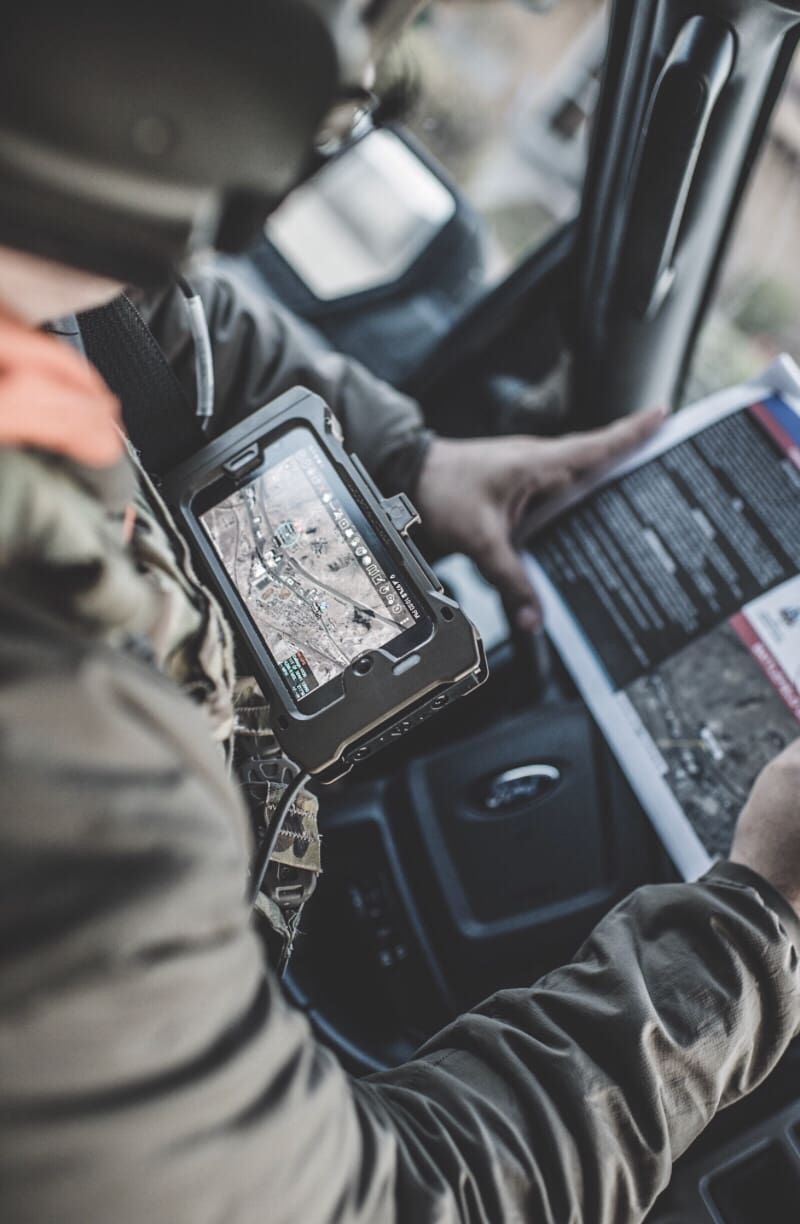
Chest mounted ATAK
The challenge of establishing secure interoperable communications with partner/coalition forces has been a problem since the advent of wireless communications over a hundred years ago.

The historical intractability of this problem has been rooted in the fact that it is not just one issue that needs to be solved, but a whole host of interweaving problems push and pull against each other in a tangled mess that has never truly been solved.

Fundamentally the barriers to truly operational interoperable communications systems are rooted in security, training/logistics, and budget disparities that come into play when dissimilar forces have to work together.

To illustrate the example, lets take a generic unnamed Type-1 secure tactical radio from US. Should an American force need to interoperate with a friendly partner force, they would be completely unable to for the following reasons:

1. Due to security policy restrictions (ITAR and more), US forces simply cannot provide the radio outside of their direct US command, no matter how trusted they may be.

2. These kinds of radios are complex and require hands-on training and experience to operate, and in an expeditionary environment its entirely possible, if not likely, that the partner would have no idea how to use the radio, even if it could be handed over to them.

3. The waveform run on these radios is usually restricted or highly technical to set up as well, making connection to a different radio system over the air impossible or disallowed.

4. These radios, at least the most advanced mesh networking ones, cost at least $15,000 a unit, and there is little chance any command is going to let a $15K piece of equipment get handed out to an outside party – even if they were allowed to do so.

Attempts to solve these issues have circled just about every possible path, from trying to make interoperable waveforms (never truly pulled off), or simply turning to commercial solutions like LTE or WiFi to try to bring in outside partners and then segregate them on the backend with digital firewalls – again not unlike a traditional internet model.

This turning to consumer products has actually worked well however, but the limits of LTE and WiFi are well known for any program office. They are an affordable, mature, and deployable technology when operating against a highly disadvantaged enemy, as were the most recent combat experience in Iraq and Afghanistan, but against any kind of peer or near-peer adversary, the thought of relying on LTE and WiFi on the battlefield isn’t considered realistic by anyone.  Therein the continued need for advanced standalone digital tactical radios, particularly cognitive mesh networking radios that can flexibly combat the countermeasures to be expected from a technologically advanced adversary.

But these radios are precisely the ones that offer the largest barrier to any kind of realistic partner-force interoperability, or at least, they use to be. There is a new interesting player in the field that, perhaps coincidentally, is also a cross-over from the consumer/commercial market, goTenna.

A small Brooklyn-based startup, goTenna started 5 years ago as a consumer radio system designed for hikers and skiers to keep in touch with each other with their smartphones while out doing activities in remote environments where there was no cell service.  They designed a unique radio system which thanks to its unique focus on just communicating short bursts of data for texting and location tracking (they explicitly do not try to support energy and spectrum hungry transmissions like video which bloat other systems), resulted in providing a robust long-distance secure digital data transfer in a form factor that was radically smaller, lighter, and perhaps most importantly, radically less costly than any other legacy radio system.
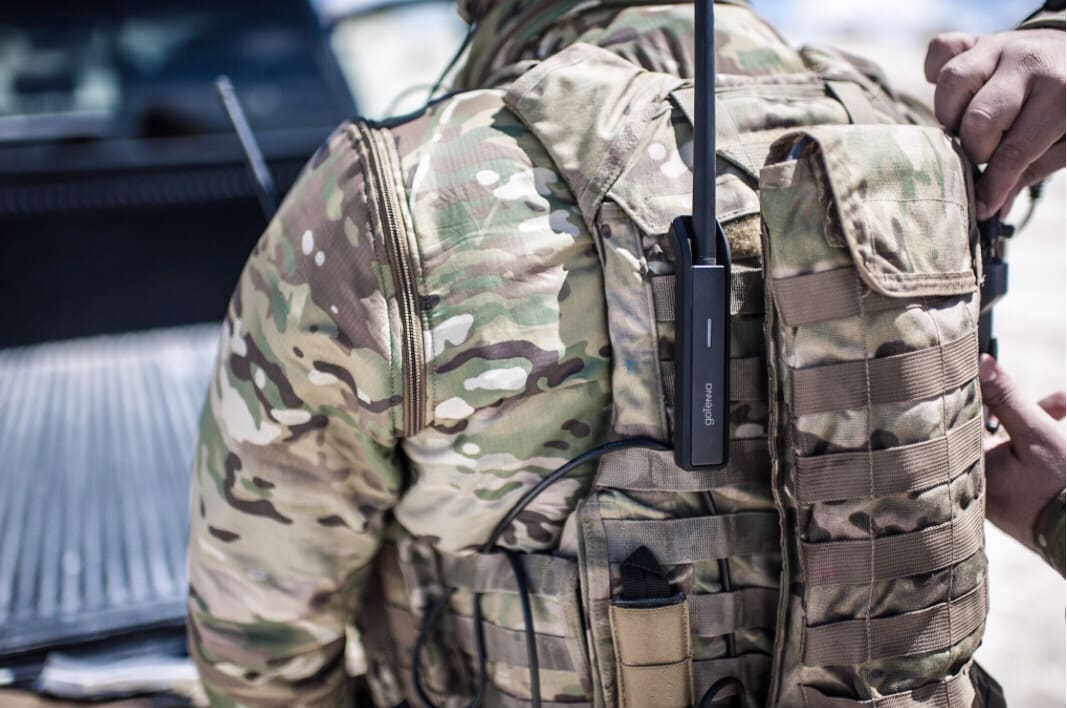
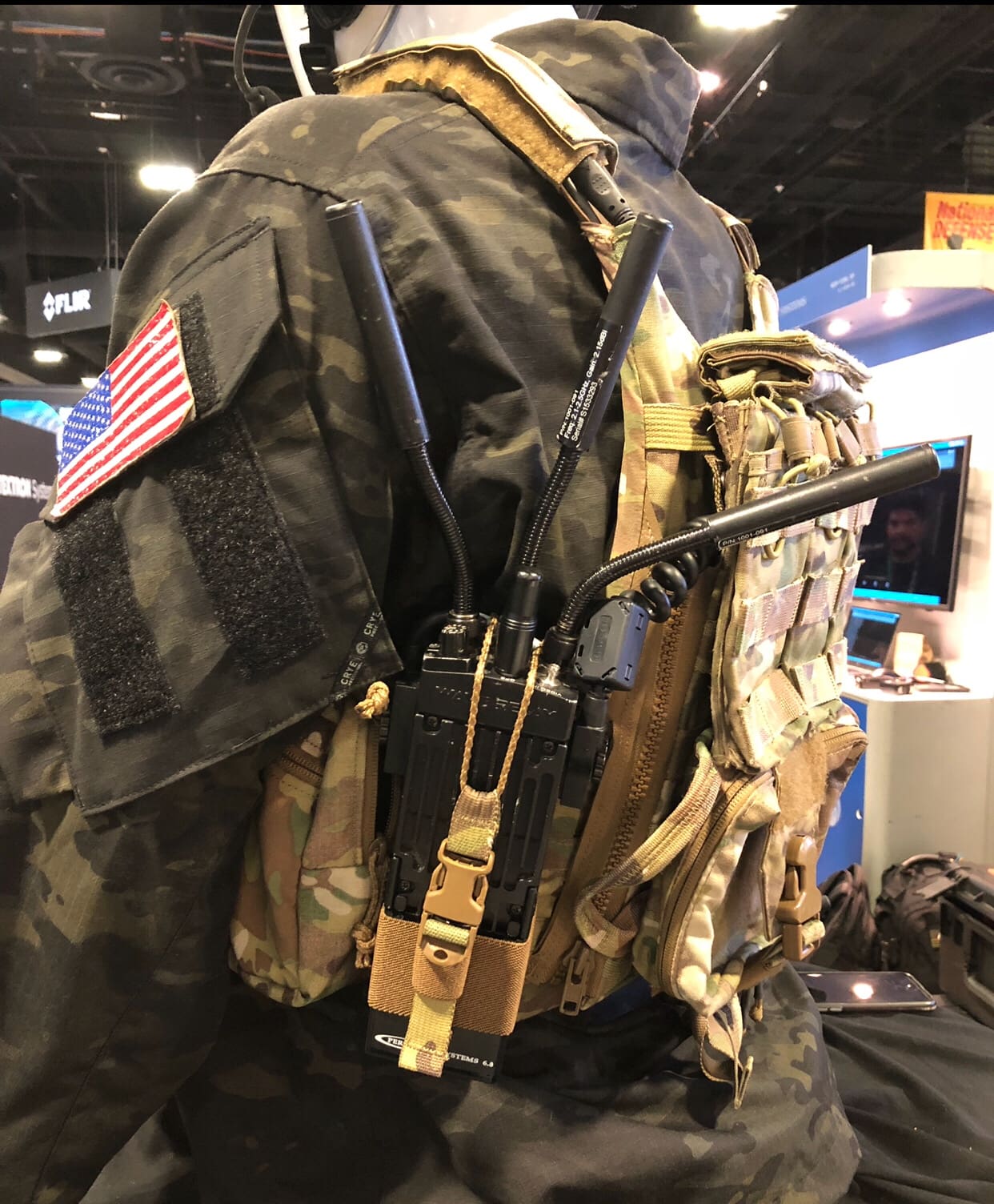
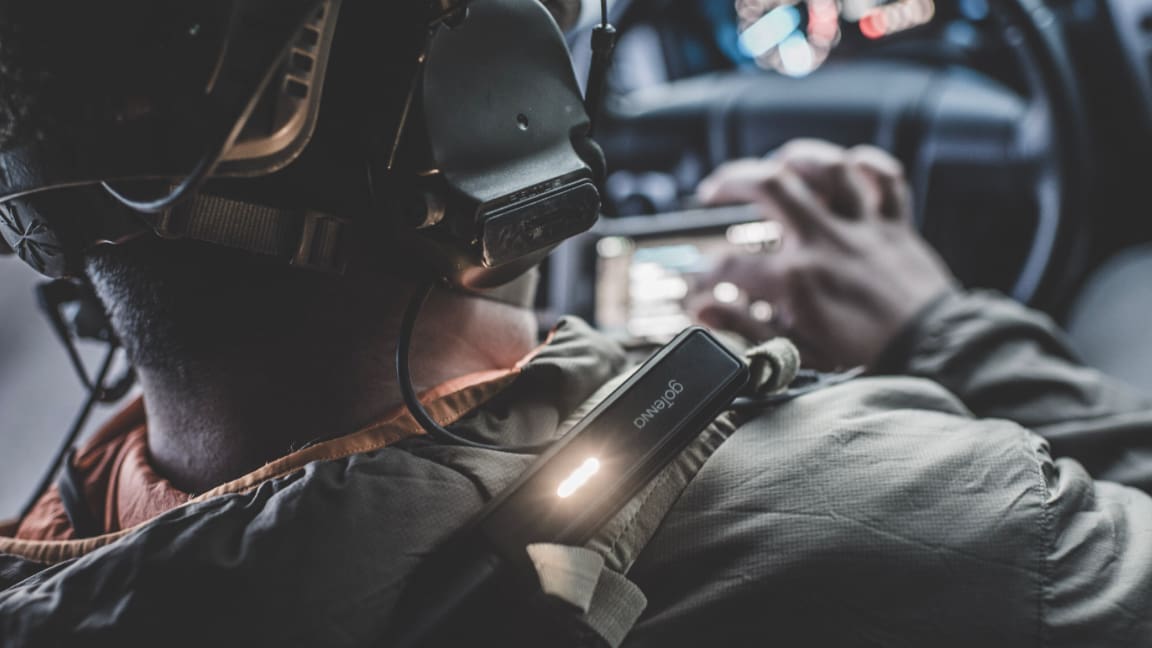
goTenna Pro mounted to PALS webbing
In 2016 USSOCOM’s Android Tactical Assault Kit (ATAK) program took notice of this little REI and Amazon.com product, and used their SDK to integrate it into their battle management application. The integration was not able to support all the features in ATAK, but the funny coincidence was that the consumer use case closely mirrored the most important features within ATAK, specifically:

• Blue force tracking (for consumers, find my friends)

• Cursor on target (for consumers, map pins)

• Command/control via chat (no difference, text messaging)

Those three simple features could all be supported within goTenna’s short bursts of data, and thus provided support the overwhelming bulk of ATAK’s core situational awareness and command/control features in an off-grid secure digital radio network, but now within a bearer that was radically smaller, unrestricted, and perhaps most importantly only a few hundred dollars.

This combination of the ATAK platform and the goTenna consumer product provided an answer to the elusive partner force communications problem, and that answer boiled down to an almost comically simple solution, “Just hand the radios out to partners.”

That was it.

Instead of trying to establish interoperable coalition communications with complex RF waveform synchronization or convoluted data security firewalls the answer ended up being “interoperability through ubiquity” as goTenna likes to call it.

73B5DABD-0A0F-42A6-B321-9FD2FD67695D

After removing the security policy restrictions (all goTenna security is run at the app level, not hardware, and thus have no ITAR or export controls), if one can cut the cost of secure mesh-networking radio system to only $499, the cost of their new upgraded goTenna Pro version, then simply carrying a stock of spare radios for handing out to partners on the fly when you need them to work with you is a practical and immediately deployable solution.

At that price point, if the partner were to break, steal, or otherwise do something you don’t want them to do to your radio, the cost of loss is negligible and you can just move on. Not something one could say when spending $15,000 or more a radio.

As an added bonus, all these communications on the goTenna/ATAK network also automatically bridge and backhaul back over any other data networks either within another tactical radio system (or Wifi, LTE, etc), or all the way back to the TAK server – offering a very interesting ability to mix and match different radio systems in powerful hub-and-spoke type architectures that can leverage goTenna’s small size, cost, and unrestricted status to expand the tactical edge in a meaningful and practically accessible manner.

Considering the increasing prominence of partner/indigenous force interoperation in today’s modern proxied conflicts, the criticality of finding a way to solve the interoperability issue is of utmost importance, and this model of using ATAK and goTenna for both blue force and green force communications has proven itself in Iraq, Afghanistan, and more locations of on-going conflict.
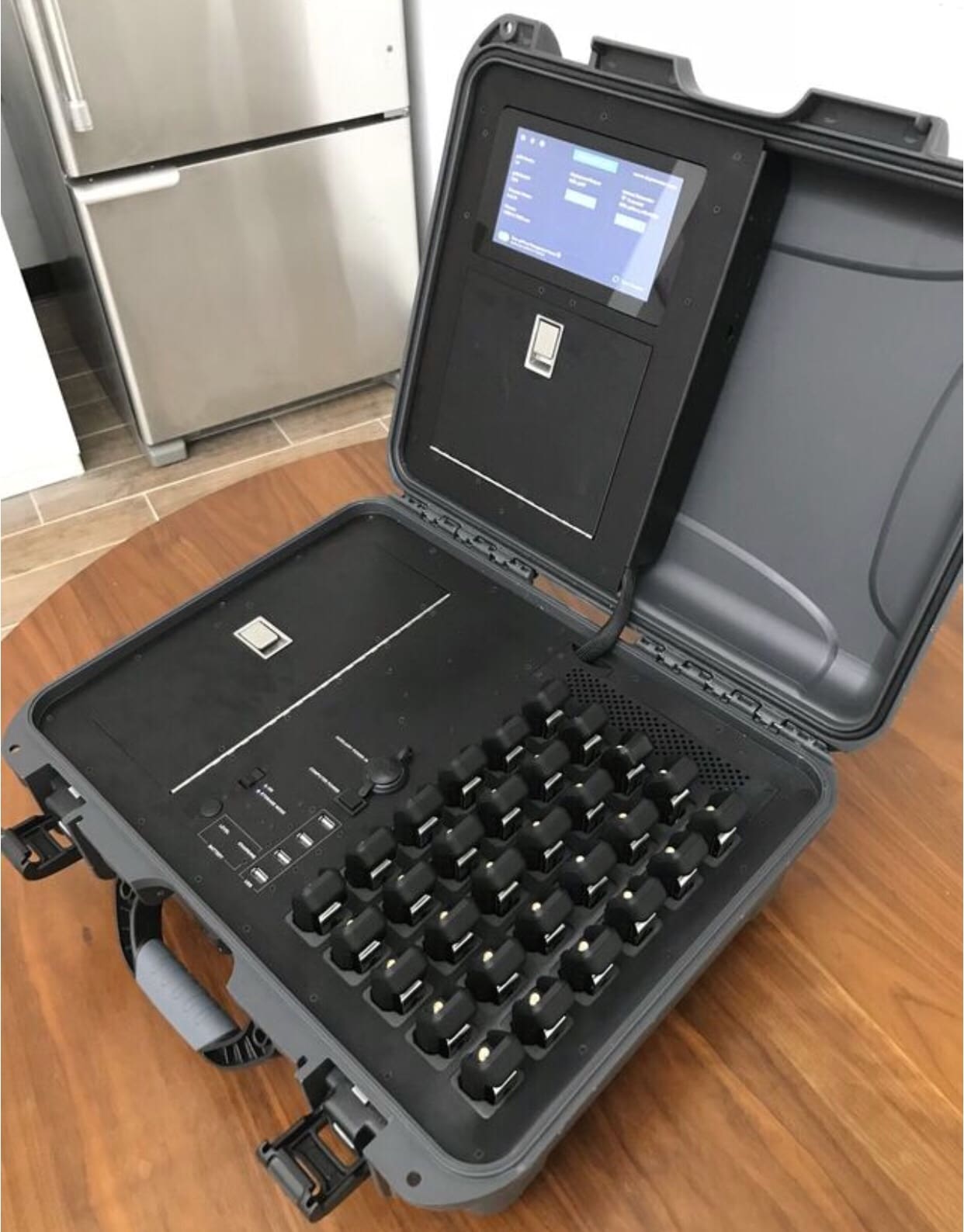
goTenna can accurately be called, at least for now, the world’s first and only hyper-low cost narrowband tactical mesh networking radio, which is something to be really thought about.  It is not every day that entirely new classes of radios are invented, it happens perhaps every 20 or 30 years, but when it does happen, these innovations present a powerful opportunity to radically change up legacy thinking about what might be possible at the tactical communications edge. Although it is still early, we are already starting to see how things might change as many major program offices around the world begin to turn their eye towards the example set by the SOF community already.

Be sure to check them out at SOFIC, in booth #1535, in the main hallway.