SIG SAUER - Never Settle

Archive for the ‘Department of War’ Category

Smart Shooter Awarded JIATF-401 Single-Award IDIQ Contract for SMASH Counter-Drone Systems with a Ceiling of Up to $150 Million

Monday, October 5th, 2026

Smart Shooter Awarded JIATF-401 Single-Award IDIQ Contract for SMASH Counter-Drone Systems with a Ceiling of Up to $150 Million

The 36-month contract establishes a framework for future orders to support U.S. force protection, base defense, and counter-UAS requirements under the Domestic Shield Program

HERNDON, Va., Sept. 30, 2026 — Smart Shooter, a designer, developer, and manufacturer of innovative fire control systems, today announced that it has been awarded a 36-month, single-award indefinite-delivery/indefinite-quantity (IDIQ) contract by the U.S. Department of War’s Joint Interagency Task Force 401 (JIATF-401), with a maximum ordering ceiling of up to $150 million. Under the agreement, Smart Shooter is the sole supplier of the SMASH fire control systems, training, and related services covered by the contract. The U.S. Department of War announced the award on September 29. 

JIATF-401 coordinates counter-UAS efforts across the U.S. military and federal agencies, working with government and industry partners to address evolving drone threats.

The contract supports JIATF-401’s Domestic Shield Program and associated global operational missions, addressing force protection, base defense, and counter-UAS requirements in the United States and overseas. The contract’s scope includes hardware, software and updates, training, and support services. The quantity, scope, and timing of future deliveries will be determined through individual delivery orders.

Combining artificial intelligence, computer vision, and advanced target-tracking algorithms, Smart Shooter’s lightweight, rifle-mounted SMASH fire control systems track the target, calculate the firing solution, and synchronize shot release when the weapon is precisely aligned. This brings precise kinetic counter-drone capability to the individual soldier through the standard service weapon, while preserving its normal use against ground targets. The operator retains the decision to engage, and the system can connect with external sensors and battle management systems.

The agreement follows Smart Shooter’s earlier contract with JIATF-401, announced in March 2026, and a series of new and follow-on awards Smart Shooter secured over the past year to support the U.S. Army, Navy, Air Force, and Marine Corps. Thousands of SMASH systems are already deployed across U.S. military services.

“Domestic Shield is about giving defenders the tools to stop small, fast-moving drones before they can harm forces, bases, and critical assets,” said Michal Mor, CEO and Co-Founder of Smart Shooter. “This award, and the framework it provides for future orders of up to $150 million, marks a significant milestone in the expansion of our activity in the U.S. defense market.”

“JIATF-401 is continuously working with industry partners to provide the counter-UAS capabilities needed to protect warfighters and installations,” said U.S. Army Brig. Gen. Matt Ross, director of JIATF-401. “Our approach allows us to identify the right capabilities for specific operational requirements and rapidly deliver those capabilities to the warfighter.”

Smart Shooter’s SMASH family of fire control systems is deployed by defense and security forces in the United States, Israel, the UK, Germany, and other NATO and allied nations. The company has offices in Israel, the United States, Europe, and Australia. For further information, visit www.smart-shooter.com

War Department Increases Two Hazard Pays for First Time in Nearly Quarter Century

Friday, October 2nd, 2026

The War Department announced an increase in hostile fire pay and imminent danger pay today for the first time since 2002.

A memorandum released by Tim Dill, assistant secretary of war for manpower and reserve affairs, states hostile fire pay will be issued at a full monthly rate of $450, which doubles the previous $225 rate, and imminent danger pay will increase to $275 from $225 monthly, effective today.

The memo was authored and signed in mid-July, but the increase in hazard pay appropriations goes into effect at the start of the new fiscal year.

“Those who face combat deserve higher compensation that reflects the risks that they willingly undertake on behalf of our nation,” said Anthony J. Tata, undersecretary of war for personnel and readiness. “Raising imminent danger and hostile fire pays for the first time in two decades is a step toward recognizing that sacrifice.”

Per the undersecretary of war (comptroller)/chief financial officer’s financial management regulation, a service member is entitled to hostile fire pay when the service member “performs duty in a hostile fire area … is exposed to a hostile fire event … is on duty during a month in an area in which a hostile event occurred that placed the member in grave danger of physical injury; or … is killed, injured or wounded by a hostile fire event.”

A service member is entitled to imminent danger when “[the service member] is subject to the threat of physical harm or imminent danger based on civil insurrection, civil war, terrorism or wartime conditions in a designated foreign area,” according to the same regulation.

The new memo tasks the services with coordinating with the Defense Finance and Accounting Service to ensure service members don’t receive concurrent hostile fire pay and imminent danger pay for the same period of service.

Under 37 U.S. Code § 351, the War Department is authorized to increase hostile fire pay and imminent danger pay to the new levels, and the secretary of war is authorized to establish any amount up to the statutory ceiling, according to a statement from Chief Pentagon Spokesman Sean Parnell.

The department always encourages service members and their families to consult local finance offices or their command financial specialists to learn how the changes will appear on leave and earnings statements, and to ask finance personnel questions about individual entitlements and eligibility.

Before the last increase in hazardous pay in 2002, pay rates varied by qualifying duty and the service member’s rank/pay grade — typically ranging from $100 to $240 per month.

By Matthew Olay, Pentagon News

Hegseth Delivers ‘State of the Force’ Address, Outlines Series of New Initiatives

Thursday, October 1st, 2026

Secretary of War Pete Hegseth delivered a speech on the status of the military today, during which he announced six new initiatives for the War Department. 

Speaking to both a broadcast audience and 600 O-3 officers and E-6 enlisted service members at Marine Corps Base Quantico, Virginia, Hegseth began by recounting the successful progress he has seen across the department over the past year. 

“For almost two years, you’ve heard me talk — over and over — about three core priorities: reviving the warrior ethos, rebuilding our military and reestablishing deterrence. And I’m proud to stand on this stage and report that the warrior ethos has been revived, our military is being rebuilt and American deterrence is back,” he said early in his remarks. 

The secretary went on to emphasize the high recruitment and retention numbers over the past year, mention that military standards that existed in 1990 are back in 2026 and discuss the “E-6/O-3 Rule” — the concept that asks whether a policy, procedure or decision helps or hinders the operational effectiveness and daily reality of an E-6 and/or O-3. 

“We fight to win. Clear missions, full hearts, hands untied. It’s all I ever wanted as a platoon leader, and it’s all my E-6 squad leaders ever wanted. … We let our leaders fight their formations, and then we have their back. It’s simple, yet you know in your business it’s incredibly powerful and liberating,” Hegseth said. 

After recapping the past year and reemphasizing the War Department’s priorities of strengthening the warrior ethos, rebuilding the military and maintaining peace through strength via deterrence, Hegseth outlined his six new initiatives: 

  • The creation of a new 4-star level combatant command: Autonomous Warfare Command. 
  • An effort to study the future of warfare titled “Project Meridian.” 
  • A future program that aims to align basing and infrastructure projects to ensure they are collectively advancing toward greater independence titled, federal operations for resilience, troop resources, energy, supply and survivability, or “Fortress America.” 
  • Calling for a new, state-of-the-art military installation through a project titled, “The Next Great American Base.” 
  • Expanding the ranks of future leaders commissioning into the joint force through a program that expands military training beyond the country’s military service academies and six military colleges to additional institutions of higher learning, titled “America’s Corps of Cadets.” 
  • Establishing an Office of Religious Affairs. 

Regarding the new combatant command, Autowarcom, Hegseth said that once established, it will focus on building autonomous and robotic capabilities across the joint force in “the fastest peacetime shift in modern history.” 

Additionally, the secretary announced that he has directed the direct reporting portfolio manager for unmanned systems to lead “Project Agincourt,” an organization that will establish the pathway for Autowarcom, as well as to execute the existing unmanned systems mission while prototyping a new acquisition model. 

Hegseth also said new military occupational specialties will be created in each military department to support the shift to autonomy. 

“Today, with … Autowarcom, we institutionalize — and we supercharge — the era of [super intelligence], robotics and autonomous systems, all in order to win,” he said. 

Turning next to Project Meridian, Hegseth said the Pentagon’s chief technology officer would partner with members of the private sector to study the future of warfare, and that the project is not about developing new strategies or policies. 

“Rather, its purpose is to creatively look into the future and identify the domains we must conquer, and capabilities we must master … to achieve technological and military dominance on the battlefield for decades to come; it is futuristic, on purpose,” Hegseth said. 

Regarding the Fortress America program, Hegseth said it calls for every American military installation to eventually run under its own power, hardening every installation on American soil against intrusion and bringing critical supply chains home. 

“No matter the circumstance, this department will have the power, the equipment and the supplies you need to take the fight to the enemy.?… The Department of War will be the insurance policy for the entire nation,” he said. 

Hegseth’s talk of Fortress America then segued into discussing the concept behind The Next Great American Base project, which he said will be a dynamic, self-sustaining power projection platform, and that leaders of every state in the union would be able to provide a “sales pitch” as to why the new installation should be in their state. 

“If your state wants the honor of hosting 15,000 to 25,000 of America’s great troops, show us why and how you’re going to do it — cutting through the red tape, offering up the land and rolling out the red carpet for our military families,” Hegseth said. 

Regarding America’s Corps of Cadets, the secretary said the Pentagon is partnering with six universities to increase the number of leaders who can commission into the military.  

“By embedding continuous military discipline and leadership development into new institutions — by growing our Corps of Cadets — the War Department will ensure our republic is defended by even more officers of unwavering character and patriotism,” Hegseth said. 

Turning to his final of the six initiatives, that of the Office of Religious Affairs, Hegseth said religious services in the military have been neglected and bureaucratized for too long. 

“Ninety-five percent of our force recognizes an Almighty God. Accordingly, our department has a sacred duty: first-class religious support, wherever we send our warriors,” Hegseth said. He also noted that the new office will report directly to the secretary of war’s office to cut through red tape. 

“This is not going to be a paper-pushing shop;?it’s going to have real teeth.?It’ll protect budgets, demand infrastructure and strengthen religious support,” Hegseth said. 

The secretary emphasized that the six announcements were all for the warfighters, as he and the War Department view them as the top 1% of society. 

“You are warriors; with that title comes great expectations. So, go forth this day and do good things, hard things. President [Donald J.] Trump has your back, and so do I,” Hegseth said. 

“We are the War Department, and we never back down — Godspeed,” he concluded. 

Today’s State of the Force speech came exactly one year to the day since Hegseth announced a series of new directives aimed at strengthening the War Department’s people and culture to the U.S. military’s most senior leaders, also at Quantico.

By Matthew Olay, Pentagon News

Drone Dominance Program Announces Gauntlet II Results

Friday, September 25th, 2026

The Drone Dominance Program (DDP) began its competitive selection with the Qualifier, held from June 8–19, 2026, at Camp Grayling, MI. During the Qualifier, 49 drone companies competed in rigorous day and night operations across two challenging mission areas: Long Range Strike and Tactical Assault in Confined Environments. The event featured highly innovative drone designs from across the industry and set the stage for the next phase of the competition.

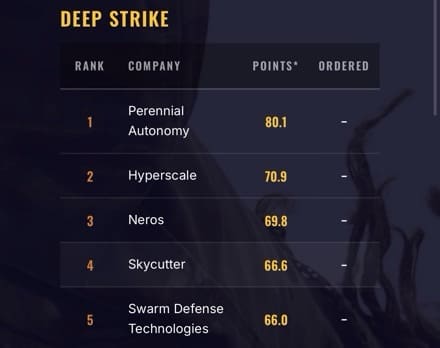
Following the Qualifier, Gauntlet II was conducted in August 2026 at Fort Carson, CO. Building on the earlier rounds, Gauntlet II missions evaluated drones on their primary find-fix-finish objectives, either at 15km stand-off ranges (Deep Strike) or in confined environments (Close Quarters Battle), with a subset of testing repeated at night. Additional test lanes assessed controlled kinetic engagement and electronic warfare (EW) performance, with drones flown against counter-UAS systems.

To qualify for Gauntlet II, all invited drone companies had to fulfill an order of 120 drones equipped with lethality payloads within about five weeks. Each company was paired with one or more lethality providers.

During Gauntlet II, companies were scored based on their performance in the event, evaluations by military operators, and demonstrated production and supply chain capabilities. At the conclusion of the competition, the Drone Dominance Program selected the Top 5 performers in both Deep Strike and Close Quarters Battle mission areas. DDP will place orders for 60,000 drones from these top-performing companies, with order quantities finalized upon contract award.

Full details available on the leaderboard.

Lockheed Martin and Department of War to Accelerate Air Dominance Missile Production Under New Agreement

Monday, September 21st, 2026

DALLAS, Sept. 17, 2026 — Lockheed Martin (NYSE: LMT) signed a framework agreement with the U.S. Department of War to rapidly accelerate the production and delivery of the AIM-260, Joint Advanced Tactical Missile (JATM).

WHY IT MATTERS

JATM is the most sophisticated air dominance missile, capable of deterring and defeating current and projected enemy air threats. This state-of-the-art weapon has increased range and effectiveness over existing air-to-air weapons and provides an asymmetric advantage to the joint force. JATM is compatible with a variety of Air Force and Navy aircraft including the F-22 Raptor and F-35 Lightning II, making it a highly versatile combat system.

EXPERT PERSPECTIVE   

“This agreement builds on years of collaboration to deliver this critical air dominance capability to the warfighter,” said Tim Cahill, president, Lockheed Martin Missiles and Fire Control. “We will deliver JATM at the speed our nation and allies demand while providing value for taxpayers and our shareholders.”

ADDITIONAL CONTEXT

Internal Investment: JATM is produced by Lockheed Martin in partnership with the U.S. Air Force and U.S. Navy. Lockheed Martin will support necessary investments to drive the production increase under this agreement. 

Multiyear Procurement: This agreement forms the foundational agreement for a multiyear procurement contract, pending Congressional approval, that provides long-term demand to strengthen and expand the defense industrial base for the program. 

Global Deterrence:  Australia recently announced a nearly $736 million investment to equip the Royal Australian Air Force with JATM. This agreement strengthens Australia’s air dominance, enhances interoperability, and provides a credible deterrent that supports the security of the United States and its allies.

Acquisition Transformation: This agreement is another direct outcome of the Department of War’s Acquisition Transformation Strategy, one of the most significant reforms to U.S. warfighting acquisition in decades. It reflects years of collaboration to modernize acquisition and deliver critical capability at the speed and scale required by today’s security environment.

DOW Hosts 2nd Interagency Summit to Strengthen Counter-Drone Defense

Saturday, September 12th, 2026

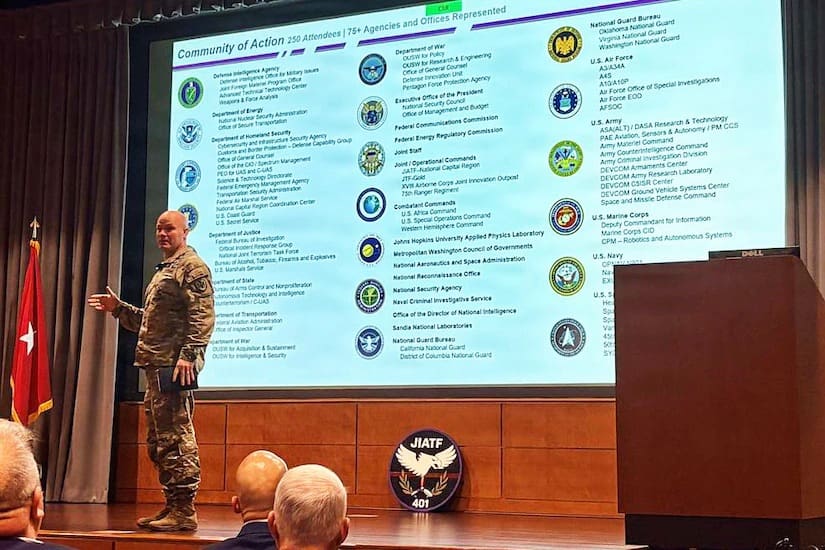
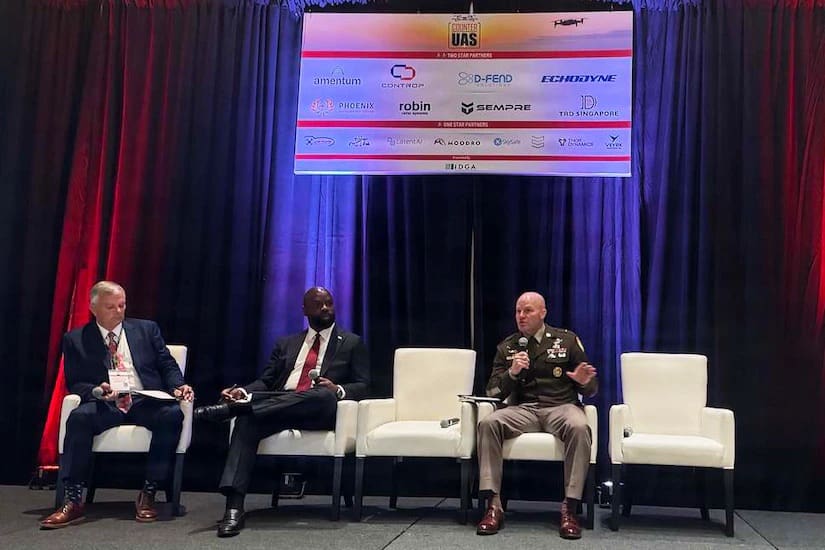
Joint Interagency Task Force 401 hosted its second interagency summit last month to accelerate cooperation against rapidly evolving drone threats.

The gathering brought together more than 200 leaders and experts from 75 departments and agencies to synchronize efforts to strengthen homeland defense against drones.  

The task force is the War Department’s premier counter-unmanned aircraft agency. Building on the momentum following the first full year since it was established in August 2025, the summit emphasized growing interagency partnerships that are rapidly delivering counter-UAS capabilities to warfighters, federal partners and local law enforcement. 

“Drones have fundamentally changed the operational environment,” said Army Brig. Gen. Matt Ross, JIATF 401 director. “To meet this challenge, we must outpace our adversaries by working together to deliver capabilities quickly. This summit is one way we are synchronizing a whole-of-government effort to secure our borders, defend the national airspace and protect the American people.” 

Discussions primarily focused on establishing a unified, cross-domain common operating picture for air traffic in areas critical for national security. Participants also took part in collaborative breakout groups focused on five key areas of counter-UAS integration for homeland defense:  

  • Major-event and critical-infrastructure preparation; 
  • Reporting, jurisdiction and information sharing; 
  • Authorities, policy and legislation; 
  • Capability access and the counter-UAS marketplace; 
  • Testing, standards and integration.  

The summit allowed participants to identify challenges, share best practices and strengthen coordination across agencies, while also highlighting innovations in the counter-UAS marketplace pioneered by JIATF 401.

It also highlighted the War Department’s efforts to transition emerging counter-UAS technologies from testing toward operational employment. The task force is conducting a directed-energy pilot program at multiple military installations to evaluate high-energy lasers, high-power microwaves and other novel technologies in an operational environment. Together, these initiatives demonstrate JIATF 401’s commitment to accelerating innovation, strengthening interagency partnerships and delivering effective counter-drone capabilities to the warfighter. 

“My charge for this summit is for each of you to walk away with specific actions to address problems,” Ross said. “We are all in this together, and it will take all of us working together to effectively counter the threat of drones and keep our warfighters and the American people safe.” 

The summit concluded with a unified commitment to maintain continuous interagency teamwork and information sharing. By aligning efforts across the department, interagency partners and federal agencies, JIATF 401 continues to cut through bureaucracy and rapidly deliver state-of-the-art counter-drone capabilities to warfighters worldwide.

By Army LTC Adam Scher, Joint Interagency Task Force 401

GPS-Free Test Flight Success Marks Critical Advance for Aviation, National Security

Wednesday, September 9th, 2026

The Defense Innovation Unit’s latest quantum sensing milestone shows aircraft can safely and accurately navigate vast stretches of ocean without relying on the same GPS that millions of civilians use to move through traffic.

The groundbreaking flight test was a success for MagNav, DIU’s magnetic navigation program, and is a critical advancement for the future of aviation and national security.

“This is a significant win for the department’s quantum sensing priorities, showcasing that MagNav capabilities are no longer a distant research goal,” said Kyle Norman, deputy director of DIU’s Kill Web portfolio. “We moved from problem sourcing to solicitation to prototype in a matter of months.”

The MagNav program launched in spring 2024 under the name “Transition of Quantum Sensing.” A total of 72 companies submitted applications to the commercial solutions opening, with Honeywell Aerospace ultimately selected to move forward with prototype development.

MagNav systems use quantum sensors to read the Earth’s natural magnetic field, turning the planet’s crust into an invisible, unjammable map that allows pilots to navigate safely regardless of weather, time of day or GPS availability.

The Earth’s magnetic field cannot be spoofed or blocked by hostile forces, Norman said. The new technology also significantly improves on legacy backup options such as radar mapping or visual cues like rivers, highways and cities.

The system was installed aboard an Embraer 170 aircraft to demonstrate real-world capabilities. The route took the aircraft over the Pacific Ocean, from Seattle’s Puget Sound to southern Alaska and back.

After four hours and 23 minutes of flying over the ocean without GPS, the MagNav system improved position accuracy by 89% compared to traditional backup navigation methods. The navigation data streamed directly to the pilots in real time via standard tablets, showing that military personnel can field the technology without a massive overhaul of cockpit instruments.

The test mission also added the complexity of the ocean surface — a featureless, constantly shifting expanse that would traditionally require internal sensors in the absence of GPS.

The problem, however, is that classical sensors drift over time. What starts as a small miscalculation can become a massive, dangerous deviation if left unchecked. By reading the Earth’s magnetic signatures, MagNav gives pilots a highly accurate, continuous map even when no visible landmarks exist.

Honeywell and DIU are preparing to demonstrate the technology on a U.S. military C-17 Globemaster III cargo aircraft later this year. By proving that aircraft can maintain pinpoint accuracy over the featureless ocean without GPS, the War Department is taking a significant step toward ensuring that military and commercial pilots can safely reach their destinations, no matter what happens to the satellite networks above them.

By Defense Innovation Unit Staff

New App Aims to Unify Military Fitness Training Across Branches

Wednesday, September 2nd, 2026

YOKOTA AIR BASE, Japan (AFNS) —  

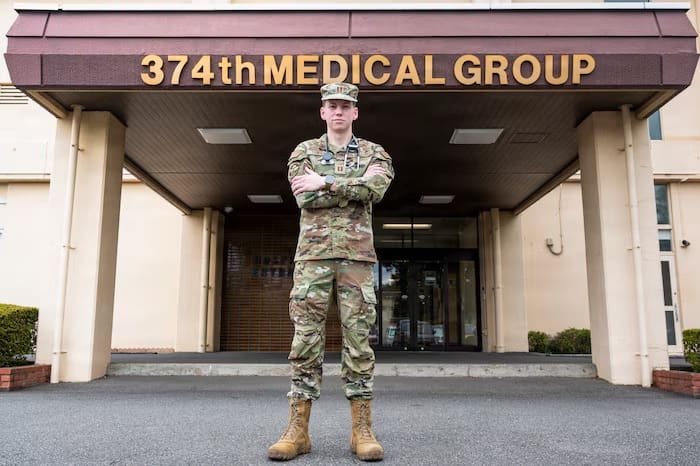
A newly developed fitness app is giving service members across the Department of War a single tool to build training programs tailored to their fitness test requirements at Yokota Air Base, Japan, Aug. 11.

U.S. Air Force Capt. Zachary Hicks, a family medicine physician and emergency medical services medical director at Yokota Air Base, developed the app to turn fitness requirements into actionable training guidance that service members can use to improve or maintain their readiness. The app goes beyond information and offers actionable guidance that members can use to improve or maintain their fitness. It also assesses a member’s current level, builds a starting program and adjusts over time, with an emphasis on improving weaker areas.

“There are apps for individual branches but none that unify them into one app, and this was something I wanted to solve,” Hicks said.

The idea traces back four years, when Hicks set out to create a more organized, actionable approach to fitness preparation. When updated fitness standards were released this year, he said it was time to build a solution.

“If you are doing well and you want to do great, then this app will help you,” Hicks said. “If you are doing great and wish to maintain that greatness, then this app will help you retain your fitness.”

The app has continued to expand since its development. Its most recent update added guidance for pregnancy and postpartum exercise, and Hicks is now developing nutrition guidance as the next addition.

To ensure the app aligned with official standards, Hicks transcribed each scoring calculator directly from service-specific scoring charts. He also built the training guidance using publicly available military resources, including the Air Force’s Warfighter Fitness Playbook.

“I did not feel the need to reinvent the wheel, but simply made it more accessible,” he said. For Hicks, the app’s purpose is simple: give every member, regardless of branch or starting point, a clear path to becoming stronger, more prepared and ready to reach their next fitness milestone.

By Senior Airman Tallon Bratton

374th Airlift Wing