XC3 Weaponlight

Archive for the ‘Guest Post’ Category

Army Enacts New Policy on Intellectual Property

Wednesday, January 30th, 2019

The following piece is courtesy of Dr. Bruce D. Jette, Assistant Secretary of the Army for Acquisition, Logistics, and Technology – ASA(ALT). His Office’s mission is to provide our Soldiers a decisive advantage in any mission by maintaining quality acquisition professionals to develop, acquire, field, and sustain the world’s best equipment and services through efficient leveraging of technologies and capabilities to meet current and future Army needs.

The Army continues to advance on a number of modernization and acquisition reform initiatives designed to develop and deliver new capabilities to warfighters more rapidly and cost-effectively than ever before.

More than ever, intellectual property (IP) is playing a critical role in our ability to modernize our weapon systems and maintain technological overmatch against our peers and near-peers.

The latest is a new policy on the management of IP signed by Secretary of the Army Dr. Mark T. Esper on Dec. 7.

According to Dr. Esper, “We must be careful to ensure that the policies and practices governing intellectual property provide us with the necessary access to effectively support our weapons systems, but do not constrain delivery of solutions to the warfighter and do not dissuade commercial innovators from partnering with us.”

IP is defined as “creations of the mind” — inventions, unique manufacturing processes, discoveries–in which owners are granted exclusive rights to control the use and dissemination. When discussing IP in the context of a weapon system or business system, we are often referring to technical data, like blueprints, drawings, technical specifications or computer software used in the system.

As a scientist, patent holder and former small business owner, I know that IP is the lifeblood of any company. It must be protected and fairly compensated, especially if we plan to attract the cutting-edge innovations of nontraditional companies that are so necessary in today’s environment. I also understand, however, that some IP is critical for the Army to be able to sustain its weapon systems over their long life cycles.

Through early planning for sustainment and appropriate investment in IP, we will give ourselves options. These options may improve readiness, reduce sustainment costs and increase availability–all critical factors in an Army facing unprecedented challenges from emerging threats, proliferation of technology and rapid innovation by our adversaries.

A BALANCED APPROACH

Developing a policy that carefully balances the goals of fostering private innovation with long-term sustainment considerations was my direction to Dr. Alexis Laselle Ross, the deputy assistant secretary of the Army for strategy and acquisition reform, who spearheaded this entire effort and worked across all stakeholders to make the Army IP policy a reality.

This new, balanced approach represents a significant change in the way we manage IP. Historically, we have defaulted to one of two scenarios. We either demand more data and rights than required, which is costly and can drive away companies, especially nontraditional innovators not accustomed to working with DOD. Or, we wait until late in the acquisition process to negotiate IP rights, which may lock us into long-term, costly, sole-source arrangements with original equipment manufacturers.

The new approach is much more nuanced. It discourages a one-size-fits-all attitude and requires that we consider the unique needs of each weapon system and its components as we develop the IP strategy. Four key principles underpin the new policy:

1. FOSTER OPEN COMMUNICATON WITH INDUSTRY

The Army must be transparent and open with industry early and often. With a continuous dialogue, we can better articulate our technical and software data requirements, rights and intentions early, so that both parties are on the same page regarding mutually beneficial license arrangements. Most importantly, we want to ensure these early discussions are protected. The new policy requires that extra steps be taken to protect all IP-related discussions.

2. PLAN EARLY AND DEVELOP A CUSTOMIZED IP STRATEGY

No two acquisition programs are alike. As such, data requirements and rights should not be treated the same. Each system will have different sustainment and modernization needs across its life cycle. Therefore, it is important that we train all of our workforce professionals, especially in program management and contracting, to assess these short- and long-term needs and develop a customized strategy aligned to those needs.

3. NEGOTIATE CUSTOM DATA AND LICENSES

After carefully assessing the needs, we must negotiate for the appropriate–not all–IP to support them. We should seek to develop creative and flexible approaches to IP so that we don’t overpay for or stifle industry innovation. We will look to industry to help us develop such custom licenses.

4. NEGOTIATE EARLY IN PROCESS FOR COMPETETIVE PRICES

As good stewards of taxpayers’ dollars, we must leverage economic principles when negotiating prices. To that end, the new policy encourages setting prices as early as possible in the process so that they are competitive.

CONCLUSION

This new policy is the first step in a cultural change within the Army. The next step is more detailed implementation guidance to the field, which we are developing for release in early 2019. We also assembled a team of experts from across the Army to identify what additional processes, guidance and training may be required to ensure that the policy is having its intended effect.

My objective is to empower and enable our workforce professionals to think differently and act appropriately to ensure that our organizations, policies, processes and tasks that consume time, money and manpower deliver real value.

In closing, I wish you and your loved ones a happy and healthy 2019!

This article is published in the January — March 2019 issue of Army AL&T magazine.

Marine Rifle Squads Get Upgraded Night Vision Devices

Monday, January 28th, 2019

An updated helmet-mounted night vision system is beginning to make its way to infantry units. Marine Corps Systems Command accelerated the acquisition of about 1,300 Squad Binocular Night Vision Goggles using existing Defense Logistics Agency contracts.

“We have employed a bridge capability to give Marines the best gear right now available in the commercial marketplace,” said Lt. Col. Tim Hough, program manager for Infantry Weapons. “A final procurement solution will allow a larger pool of our industry partners to bid on the program.”

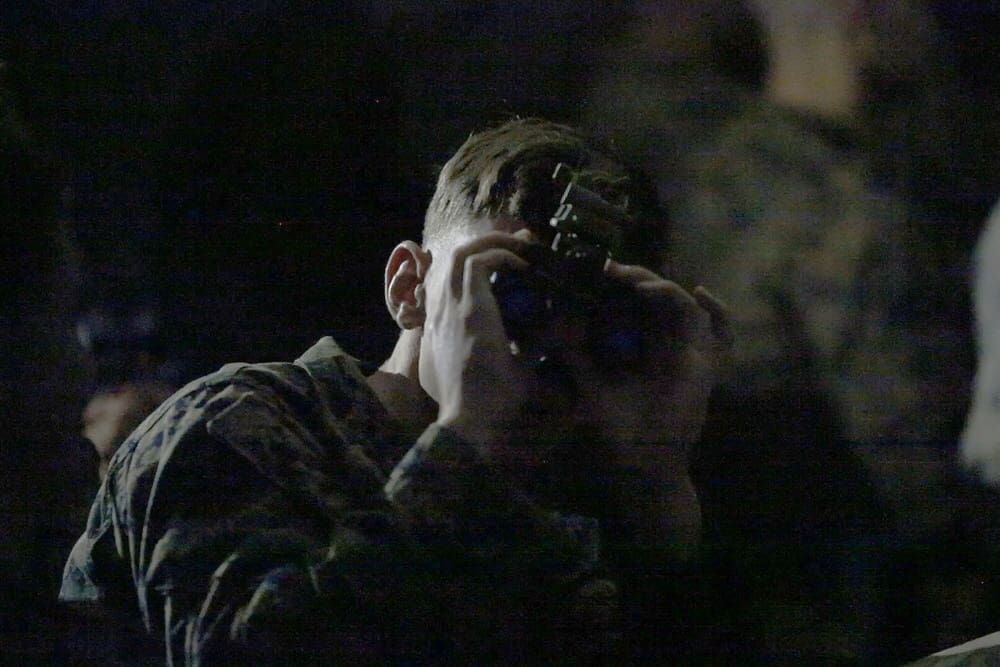
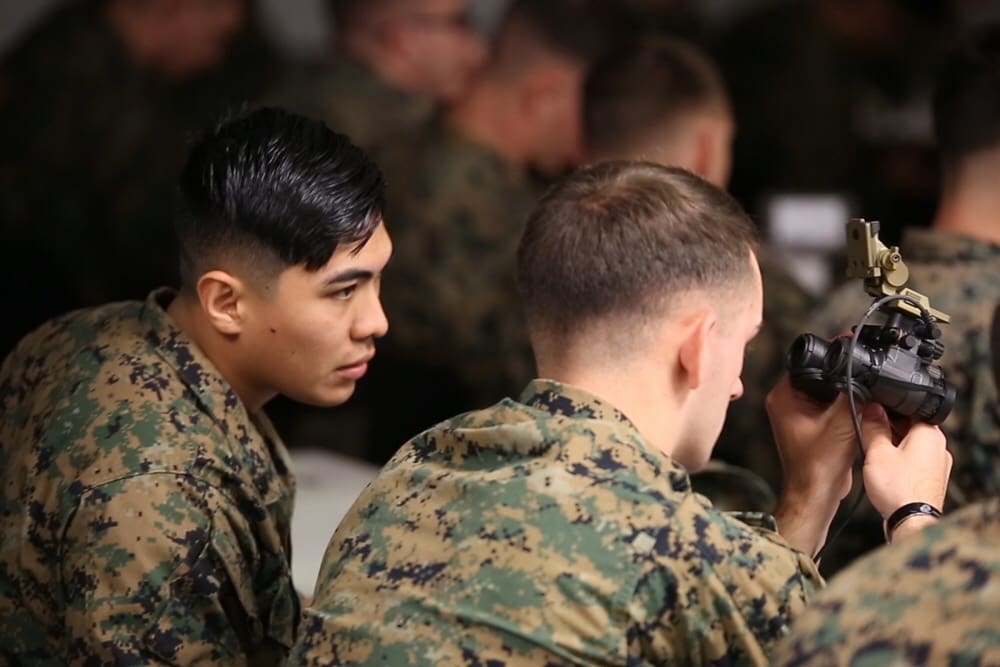
A Marine peers through the lens of the Squad Binocular Night Vision Goggles during new equipment training in December 2018 at Camp Lejeune, North Carolina. The move to the SNBVG is expected to enhance the infantry’s lethality and situational awareness in reduced visibility (U.S. Marine Corps photo by Joseph Neigh)

Army/Navy Portable Visual Search devices, or AN/PVS, have been employed by the military since at least the 1990’s and upgraded with next-generation systems as funding and technology became available.

The move to the SNBVG is expected to enhance the infantry’s lethality and situational awareness in reduced visibility. It combines two systems: a binocular night vision device and an enhanced clip-on thermal imager.

“It’s a little bit lighter than the current system, and gives Marines better depth perception when they are performing movements,” said Joe Blackstone, Optics team lead at MCSC.

Marines took delivery of the Squad Binocular Night Vision Goggles during new equipment training in December 2018 at Camp Lejeune, North Carolina. The move to the SNBVG is expected to enhance the infantry’s lethality and situational awareness in reduced visibility. (U.S. Marine Corps photo by Joseph Neigh)

Marines took delivery of the equipment and learned how to use them last month at Camp Lejeune, North Carolina. Known as NET, the new equipment training entails teaching Marines about the operations, characteristics, maintenance and use of the new devices.

“The lethality that it’ll bring is exponential [sic],” said Cpl. Zachary Zapata, a Marine who participated in the training. “With these new [BNVGs], having the ability to not only use thermal optics along with it, but just the entire depth perception and speed that we can operate in is going to significantly increase, as opposed to what we were able to do in the past.”

The initial buy and follow-on procurement is being funded with Marine Corps dollars as prioritized by the Department of Defense Close Combat Lethality Task Force, which concentrates on the squad-level infantry and is aimed at ensuring close combat overmatch against pacing threats. The SBNVG acquisition strategy is to procure the devices incrementally and concurrently as the Corps looks toward future technologies.

“Right now, we are participating with the Army on their next generation night vision systems, both the Enhanced Night Vision Device-Binocular and Integrated Visual Augmentation System Programs,” Hough said. “We are eager to see the maturation of these capabilities for adoption to improve the effectiveness of our Marines.”

The program office plans on releasing a final request for proposals to procure an estimated 16,000 additional systems on the basis of full and open competition. According to program officials, a draft request for proposals was posted to the Federal Business Opportunities website in mid-November, and closed on Dec. 19, 2018. The Government is currently adjudicating comments and anticipates release of a final RFP in the near future.

Additional fielding of the systems is planned for September 2019. While the devices may eventually make their way to the entire Ground Combat Element, for now the first priority is given to the Marine Rifle Squad, program officials said.

“This program office is committed to bolstering the combat lethality, survivability, resilience and readiness of the GCE,” said Hough.

Story by Barbara Hamby, Marine Corps Systems Command

The Baldwin Files – Leadership and Moral Courage

Monday, January 28th, 2019

“The true test of courage is not found on the field of battle…but rather in mundane offices where difficult, ethical decisions of command are made each day, which challenge the very fiber of our principles.”–GEN Matthew B. Ridgway.

This quote accompanies a unit guidon that hangs today on a wall in my office here on the homestead. It is the single most prized memento of my service. It speaks, of course, to moral rather than physical courage. The Army, and the other Services, describe moral courage in a number of ways. For the purposes of this article, I am going to define it like this “Moral courage demands one accept some level of professional risk to stand up for what is right.” In other words, it does not necessarily involve the acceptance of potential risk to life or mission success but rather direct risk to one’s individual career. It is also true that situations requiring an overt display of that kind of courage can be morally complex, ambiguous, and perplexing. Therefore, I am going to try to provide some context and explore what moral courage looks like in real life. My expectation is the information will be of some small benefit to new leaders out there in the ranks.
I will start by repeating somethings I said in an earlier article. “…leaders must be willing to take risks. Most soldiers, myself included, like to think that we can always be as physically courageous as required in battle. Perhaps not ready, but willing and able to risk our lives if necessary. From my experiences and observations in various hostile places, I would say that is generally true enough. However, demonstrating moral courage is arguably much harder. In part, that is because the need for action does not present itself as unambiguously as it does in combat. It tends to sneak up on a leader over time. The Army constantly tells soldiers to do “the hard right over the easy wrong.” That is noble and righteous advice. However, it would be a mistake to think the institution actually cares. It does not.”

Furthermore, “The Army is a soulless, unfeeling and ungracious machine; a whore who has never loved you – and never will. You will not be rewarded for your [moral] courage or you honesty for accepting responsibility [and risk]. No exemplary service award is waiting for you; no building or street named in your honor; and you are not going to receive public recognition as the unit’s soldier, NCO, or officer, of the year. [In fact, you will probably be punished.] It should come as no surprise to any professional soldier that truly selfless service is always a bitch. None of that changes the fact that the right thing is always the right thing. In the end, all I can tell you is that principled leadership [to include moral courage] in training and war is never easy or painless – but I strongly recommend it anyway.”

Why begin with that truly discouraging admonishment? Simple, I want to fully dissuade any young leader out there that the Army will reward a display of moral courage in any positive way whatsoever. There have never been any medals presented for moral courage and the Army does not intend to start now. Do not delude yourself by thinking otherwise. Since that is true, it begs the question; if nothing good is likely to come of it, then why do it? Perhaps, for much the same reason a soldier throws himself on a grenade to save his buddies. It is not something that anyone is eager to do. It is a last resort to be considered in a range of bad courses of action only because it is the least bad. Consequently, in the absence of another better choice, an individual may have to sacrifice himself in order to shield his comrades from harm. Maybe, it is because a soldier has simply learned to value his teammates more than his own life. No greater love. Of course, in peacetime a soldier is not likely to face that stark a choice requiring physical courage, self-sacrifice, and clear risk to life as the grenade scenario. On the other hand, a dilemma requiring moral courage can occur in war or peace and with unpleasantly greater frequency. Therefore, just in the normal course of service, a good number of soldiers are likely to face an ethical dilemma of potentially damaging and even catastrophic risk to their careers.

Extrapolating from the grenade example above, I am suggesting that moral choices become clearer – albeit perhaps no less difficult – if an individual prioritizes teammates over career in a similar fashion. If you have not realized it already, the Army – as an institution – is incapable of human morality. Only soldiers themselves can make a moral judgement and live – or fail to live up to – a set of values. Leaders have an obligation to set the example in all things, perhaps especially moral courage, precisely because the consequences are invariably thankless. I have said this many times before; leadership is all the more vital when a situation is dire and the outcome uncertain. If a leader does not have at least the courage of his own convictions in all circumstances, he honestly has no convictions and is truly incapable of setting a good example or effectively leading anyone anywhere.

“Moral courage is the most valuable and usually the most absent characteristic in men.”–GEN George S. Patton

Consider the most basic duty of leadership – decision making. A neophyte might mistakenly believe that bad leaders always make bad decisions and good leaders invariably make good decisions. Not even close. The fact is, every leader a soldier has ever met, or will ever meet, or has ever read of, or heard about, is an imperfect human with feet of clay. In the aggregate, a “bad” leader probably makes about as many good decisions as a “good” leader and vice versa. It turns out that the troops’ perception of why and how the leader made a given decision matters much more than the decision itself. If soldiers trust that their leader habitually makes decisions selflessly in the best interest of the unit and the mission they will be inclined to give that leader the benefit of the doubt. If, however, they have come to believe that the leader tends to make decisions based on his own self-interests or ego, the soldiers will have a consistently negative impression of his leadership – regardless of how sound any single decision might objectively appear.

Anonymous– “No man is a leader until his appointment is ratified in the minds and hearts of his men.”

Like it or not, a leader will only be judged to be the kind of good or bad role model – professional, moral, or otherwise – that the majority of soldiers in the unit are convinced he has been by his actions. Keep in mind, leadership is ALWAYS a collaborative exercise. Think of a marching band. Each musician may be highly skilled and more than capable of playing his or her instrument solo without a leader. Yet, the leader has a distinct and important role in the band as well. A band – like any team – must be organized, synchronized, and guided by a leader in order to make harmonious collective melodies while simultaneously moving forward as a coherent unit toward an objective. The leader sets the program, tempo, and literally, the direction for the band. Nevertheless, by himself, the bandleader cannot produce a single musical note.

To be clear, effective leadership is not a popularity contest. A leader’s highest duty is to evoke “willing obedience” from his soldiers in order to accomplish the unit’s mission – not ingratiate himself with his peers, subordinates, or those senior to him. Moreover, in my experience, one is ill advised to trust a leader who acts substantially different when his boss is around than he acts when the boss is not there. That kind of behavior likely indicates a moral courage deficit. The reality is that – even if one could only make “perfect” decisions – no leader ever makes tough calls that can possibly meet with everyone’s approval. Consequently, even the best leaders have at least some subordinates who are not fans. Conversely, even the worst leaders likely have a few subordinates who think highly of them. As a case in point, I know with certainty that at least a few of the people I have led, served with, or worked for, do not think much of me as a leader. They are entitled to their opinions. Ultimately, grading good and bad leadership is a very personal and subjective evaluation that each individual makes independently.

I had originally intended to talk more about Mission Command, but I will save most of that discussion for another time. However, I am including one portion to highlight some key concepts like “mutual trust,” “prudent risk,” and “disciplined initiative” propagated in Army doctrine. “Mission command requires an environment of mutual trust and shared understanding among commanders, staffs, and subordinates. It requires a command climate in which commanders encourage subordinates to accept prudent risk and exercise disciplined initiative to seize opportunities and counter threats within the commander’s intent.(emphasis added) Using mission orders, commanders focus their orders on the purpose of an operation rather than on the details of how to perform assigned tasks. Doing this minimizes detailed control and allows subordinates the greatest possible freedom of action. Finally, when delegating authority to subordinates, commanders set conditions for success by allocating adequate resources to subordinates based on assigned tasks.” FM 3.0, Operations.

Sadly, although the doctrine of Mission Command is sound enough in my opinion, in practice the Army has shown no inclination to live up to the standards and ideals espoused therein. For leaders who are so inclined, there are three windows available to micromanage a mission: before, during and after. Some particularly energetic and meticulous leaders like to take advantage of all three opportunities. All are wrong, but the last is probably the most insidious. A senior leader destroys any semblance of “mutual trust” by pretending to delegate authority to a subordinate and subsequently second-guessing and nit picking every decision in the aftermath. That is actually an old leadership dodge or cheat. When I was a lieutenant, we used to call it “bring on the dancing elephants.” The boss carefully positions himself to take credit for “professionally developing” a subordinate if all goes well; but can distance himself from responsibility if the outcome is perceived as unsatisfactory. Obviously, no moral courage is manifest in the senior leader’s actions in either eventuality.

Another leadership cheat involves demanding that subordinate leaders surrender their individual agency and always blindly comply with the minutia of rules, policies and SOPs. Every leader should always be empowered to adapt to the exigent circumstances his or her unit encounters. No centrally produced guidance can possibly account for every conceivable contingency. Moral courage requires leaders in direct contact with the issue at hand to accept responsibility and make the hard and morally ambiguous decisions – especially those that may run contrary to pre-established directives. In the end, soldier and junior leader “disciplined initiative” and “prudent risk” acceptance – as described in Mission Command – only happens consistently in units that make those behaviors an integral and indispensable part of a unit’s daily standard operating methodology and ethos. And that does not happen unless senior leaders are unfailing in setting the right example every single day. Soldiers do not adopt and emulate the values that are simply spoken or written, but rather those that are constantly and convincingly demonstrated by leaders.

“Moral excellence comes about as a result of habit. We become just by doing just acts, temperate by doing temperate acts, brave by doing brave acts.”–Aristotle 

To be fair, effective and timely delegation of authority is one of the trickiest of all leadership skills to learn and practice successfully. Sometimes, subordinate leaders do not want – and are not eager to accept – the additional responsibility. Sometimes they are not ready – or at least think they are not ready. The best leaders delegate decision making down until they – and their subordinates – are uncomfortable. However, for the process to work as it should, good senior leaders always need to be prepared to backstop a subordinate leader’s decisions. Senior leaders must be committed to providing appropriate top cover while simultaneously being careful not to smother the initiative of those junior leaders. In short, where mutual trust exists, all leaders willingly and routinely share and shoulder a portion of the risk and the consequences of any decision – good or bad.

From what I have written above, one might assume that I am pessimistic and discouraged about where we are and where we are going. That is not the case. Sure, I have seen many leaders who have failed to live up to the ideal of undaunted moral courage. All humans are imperfect, and even the best can fall short in moments of weakness. However, I have also witnessed countless examples of values based leadership over the years and, yes, moral courage. As GEN Ridgway concluded, small, morally courageous victories occur on a daily basis – most often without fanfare. I have also personally known a good number of leaders, including flag officers, who have made those kinds of moral choices and ultimately suffered the consequences of those decisions. By that, I mean that they were denied promotion and / or forced out of the Army. Like I said, selfless service is always a bitch and virtue must be its own – and only – reward.

“A man does what he must – in spite of personal consequences, in spite of obstacles and dangers and pressures – and that is the basis of all morality.”–John F. Kennedy

The strongest and the best people stay focused on the mission, not the obstacles in the way. Therefore, the last thing I want to talk about are BIRTs. A BIRT is a Bold, Innovative, Risk Taker. The Army has declared for decades that they want as many BIRTs in the ranks as possible. That claim is disingenuous at best. As with moral courage, the Army talks a good game, has solid supporting doctrine, but in practice falls well short of its own rhetoric. The BIRTs in service have always been there despite the Army’s best efforts to curtail BIRT initiative – not because of any affirmative Army policy. Therefore, it falls to individual leaders to do what the institution is failing to do well. Set the right rather than the easy professional example. Know that BIRTs are the best hope for the future. Do take up the responsibility to find, cultivate, nurture, teach, coach, and mentor the next generation of BIRTs. Be an unapologetic BIRT yourself. Indeed, for the good of the Service and the Nation, be all the BIRT you can be.

De Oppresso Liber!

LTC Terry Baldwin, US Army (Ret) served on active duty from 1975-2011 in various Infantry and Special Forces assignments. SSD is blessed to have him as both reader and contributor.

Thousands Apply to Join New Army eSports Team

Sunday, January 27th, 2019

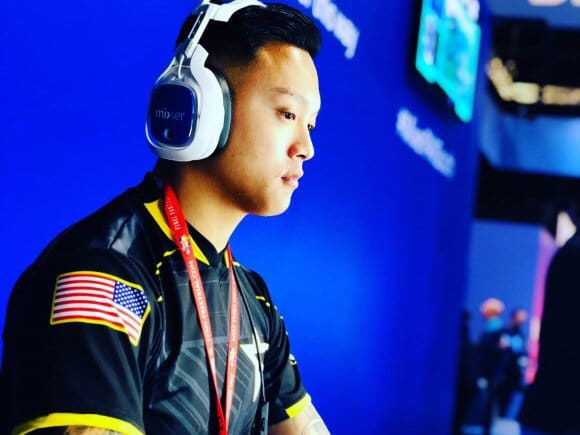
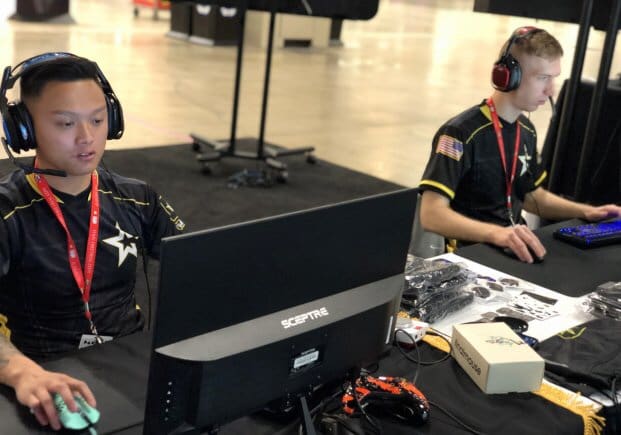
FORT MEADE, Md. — Over 6,500 Soldiers are already hoping to be part of a new Army esports team that will compete in video game tournaments nationwide in an effort to attract potential recruits.

“It’s essentially connecting America to its Army through the passion of the gaming community,” said Sgt. 1st Class Christopher Jones, NCO-in-charge of the budding team.

About 30 Soldiers are expected to be picked for the team and some of the first positions could be filled this summer. Only active-duty and Reserve Soldiers are currently allowed to apply.


Those chosen will be assigned to the Marketing and Engagement Brigade for three years at Fort Knox, Kentucky, where the Army Recruiting Command is headquartered.

While they will not become recruiters, team members will receive a crash course on Army enlistment programs to answer questions from those interested in learning about the service.

Once built up, the team will fall under an outreach company that will also include an Army rock band and a functional fitness team.

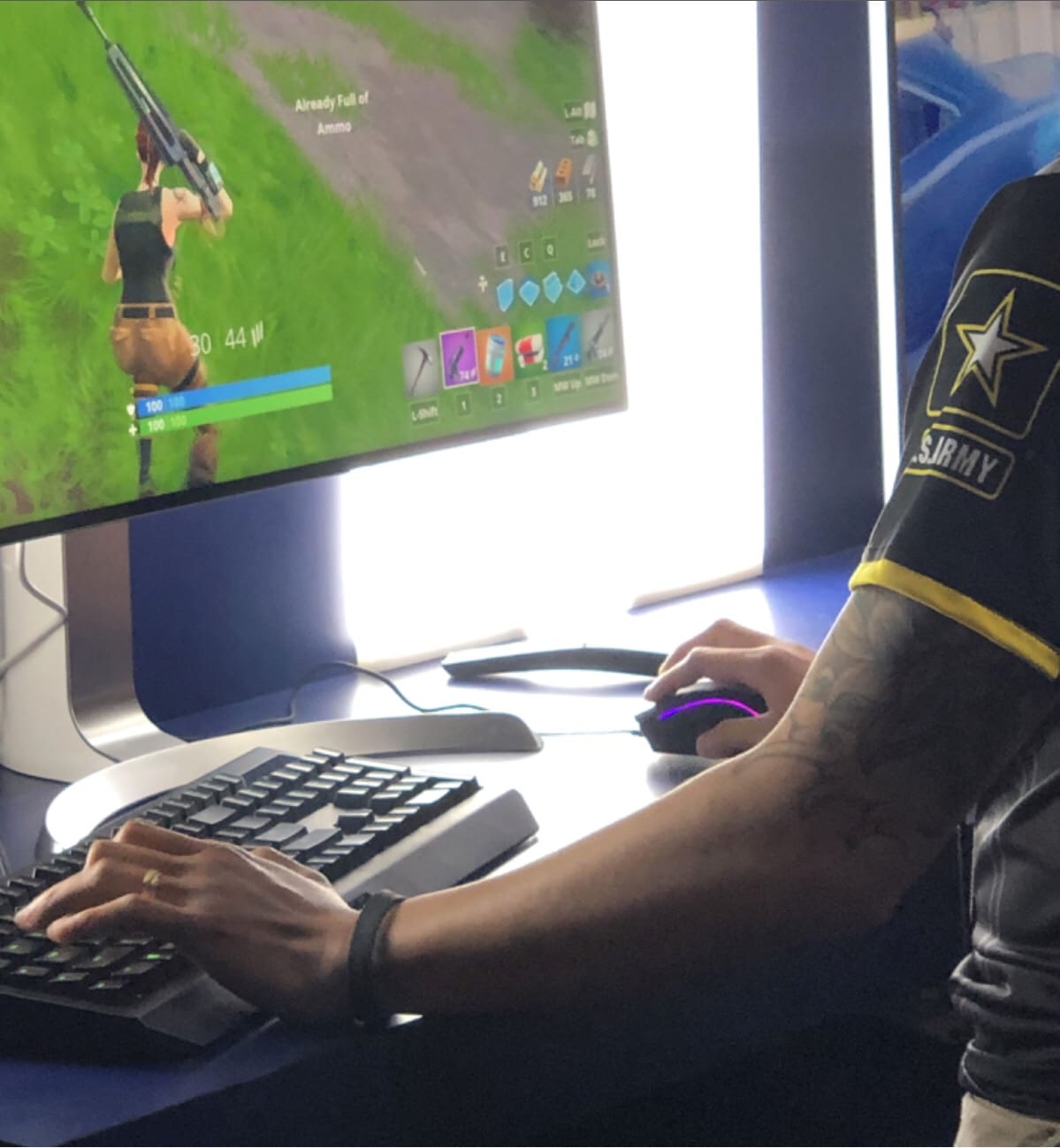
Not everyone on the team will compete. Those who will may train up to six hours per day on video games, Jones said, adding that gameplay sessions would be live streamed or recorded for spectators to watch.

Esports has ballooned in popularity in recent years with millions of followers.

In August, the Washington Post reported that esports could generate about $345 million in revenue this year in North America. In 2017, a major esports tournament in China also drew a peak of more than 106 million viewers — roughly the same number of those who watched last year’s Super Bowl.

“It’s something really new and it’s been gaining a lot of steam,” Jones said.

While on the team, Soldiers will still conduct physical training, weapons qualifications and other responsibilities that come with being a Soldier. They will also have to maintain certifications in their military occupational specialty.


“Outside of that, there will be esports training,” Jones said. “So whatever game they’re playing in, they’ll not only be playing it, but be coached in it to get better.”

The team, he said, shares a similar concept to that of other Army competitive teams that continually train, such as the Golden Knights parachute team, World Class Athlete Program and Army Marksmanship Unit.

“Esports is like traditional sports,” he said. “Nobody can just walk in and expect to play at a competitive level.”

The Army, he said, already has talented gamers out there who can compete in events.

Last weekend, a few Soldiers competed at PAX South in San Antonio as a way to introduce Army esports to the greater gamer community.

In one of the events, a Street Fighter V tournament, two Soldiers placed first and second.

“This is the perfect opportunity to showcase not only to the Army, but to the civilian populace and the esports industry that we also have what it takes,” Jones said of the events.

Recruiters from the San Antonio Recruiting Battalion also joined them and were able to generate some leads with potential recruits, he added.

There are plans to do the same at the PAX East exposition in Boston in late March.

As a gamer and a recruiter himself, Jones said the team can help bridge the civilian-military gap by breaking down misconceptions some young people may have about the Army.

Being able to play their favorite video games with others who share the same passion is also a bonus.

“For a lot of Soldiers, to include myself, it’s like a dream come true,” Jones said. “This is just one of those ways we can start the conversation.”

Story by Sean Kimmons, Army News Service

Photos by SSG Ryan Meaux

SCUBAPRO SUNDAY – WW2 Salvage Divers

Sunday, January 27th, 2019

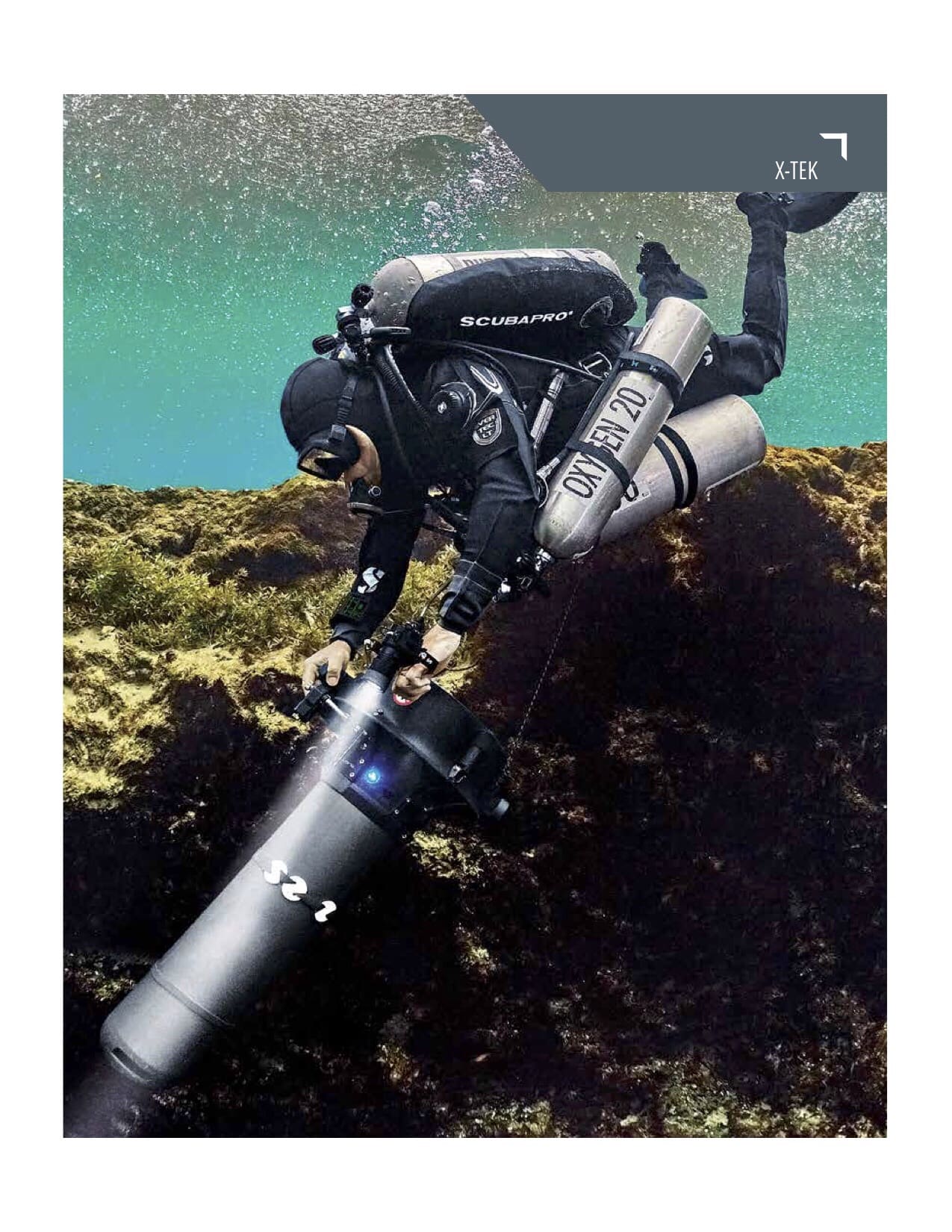
Not enough can be said for the men and women who fought in WW2. Right after the attack on Pearl Harbor, salvage divers started to rescue as many people as they could and raise as many ships as they could, so they could be put back into the fight.  

19 ships were sunk or damaged on December 7, by the Japanese; the efforts of the greatest generation raised all but three (the Arizona, the Utah, and the Oklahoma).

Here are a couple of good articles about the salvage diver efforts.

warfarehistorynetwork.com/daily/wwii/the-pearl-harbor-salvage-effort-keeping-navy-fighting

www.history.navy.mil/our-collections/photography/wars-and-events/world-war-ii/pearl-harbor-raid/post-attack-ship-salvage


Kit Badger – The Grey Man

Saturday, January 26th, 2019

Ivan felt inspired after reading the recent comments on Mil Spec Monkey’s pack.

Feel free to read the rest at kitbadger.com/the-grey-man-velcro-morale-patches

SCUBAPRO Sunday X-TEK BCD Line

Sunday, January 20th, 2019


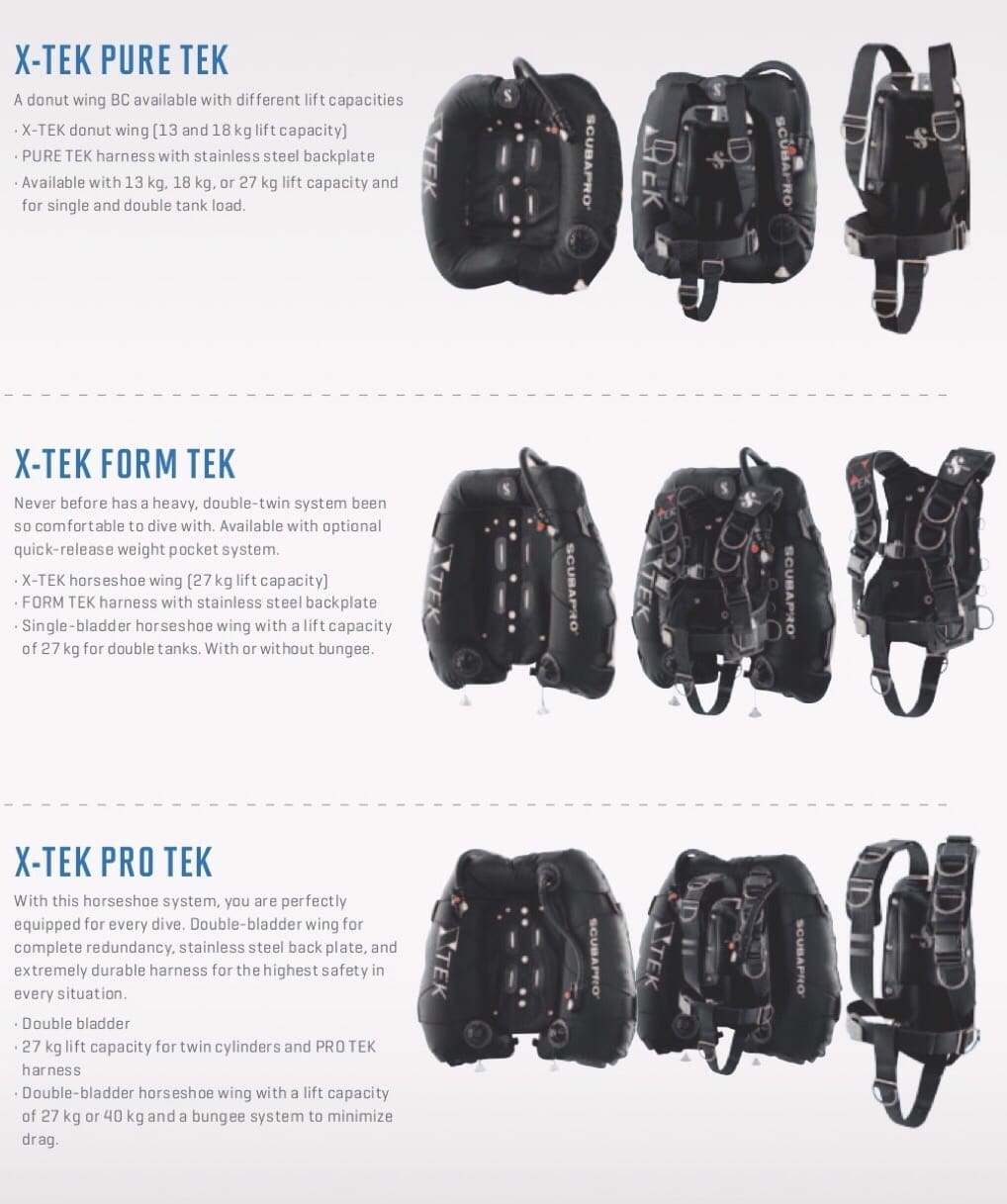
X-FORCE is more than a powerhouse of features, making it perfect for passionate and advance recreational divers. New, pre-formed wrap-around bladder provides higher buoyancy with increased volume in the lower back. New quick-release weight buckle retaining system allows one-hand operation and easy to find for optimal safety. 

• Additional back pockets offer trim counterweight storage.

• The backpack and soft neck protection are fitted with Air-Net padding for increased comfort and protection.

• Shoulder pads and straps covered in anti-slip material.

• It is constructed of high-resistance Cordura 500 exterior and Nylon 420 interior, guaranteeing durability.

• Cordura® Lock protects against the elements.

• Octopus holder on both sides keeps gear neat and accessible.

• Available with Balanced Power Inflator (BPI) or optional AIR2.

The SCUBAPRO X-Force BCD is a robust BCD with a pre-formed wrap-around bladder which provides a better fit and excellent comfort. The X-Force has some fantastic features such as a high buoyancy via a new gusset in the lower area of the air cell, a new backpack with air net padding and air net soft protection for the neck.

Secure Quick Release integrated weights use a pinch-clip to hold your weights in position. Trim weight pockets on the rear hold any trim weight either side of your cylinder for a better position in the water. Each side pocket has an octo holder and a D-Ring to hold your alternate air source with either a clip or tucking the hose.

Anti-Slip Shoulder Material holds the BCD in position even when wet so the BCD won’t move or twist. The outside of the BCD is made from high-resistance 500D Cordura for durability, and 420 Nylon interior further increases durability.

The Scubapro X-Black is a high specification, durable yet comfortable BCD that features a new Balanced Power Inflator (BPI) and elbow design, rigid backed integrated weight pockets, redesigned dump valves and a new bladder system. The X-Black features the exclusive AirFlex system, highlighted by the red bungees, that simplifies buoyancy control and guarantees high stability. One of our most feature-rich BCs, the X-Black is also one of the most comfortable even when fully inflated thanks to its ergonomic cut.

SCUBAPRO can also manufacture custom X-Teks.

XFtZnZOLNnw

www.scubapro.com


PS Magazine Reminds You To Keep The Anti-Reflective Device On Your M68 Close Combat Optic

Monday, January 14th, 2019

This is a public service message from the Army’s very own PS Magazine.

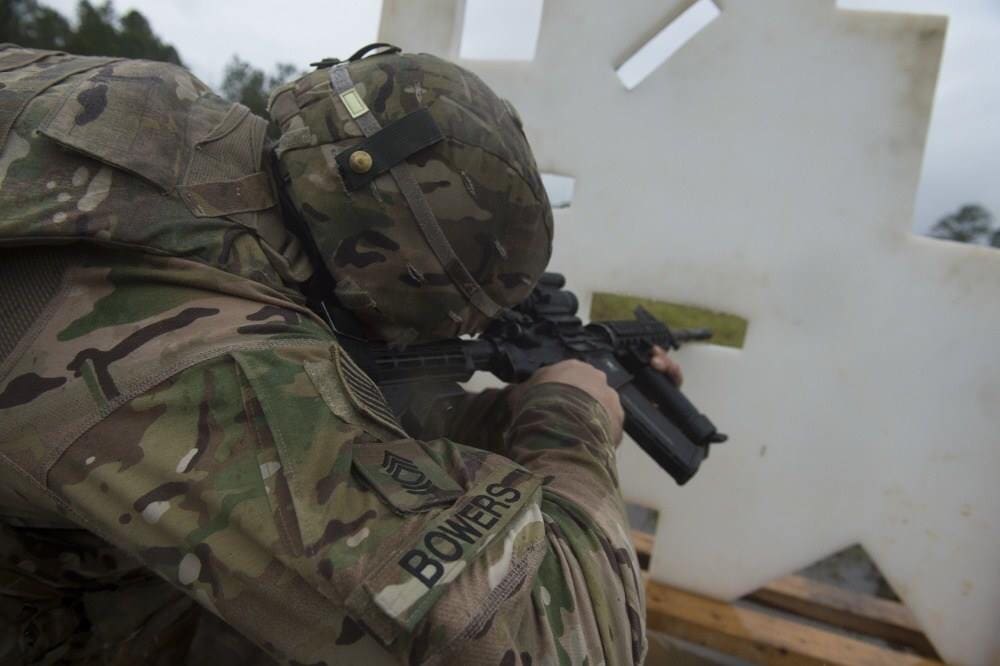
Soldiers often remove the M68 Close Combat Optic’s (CCO) reflective sight’s anti-reflective device (ARD) because they think they can sight better without it. Then, of course, the ARD goes missing.

Does this make the M68 NMC?

Yes. Step 10 of the PMCS in WP 0012 in TM 9-1240-413-13&P (May 13) says if the ARD is missing or damaged, the M68 is NMC.

Leave the ARD on for two very good reasons:

1. The ARD prevents a reflection from signaling your position to the enemy. That could mean the difference between life and death on the battlefield.

2. The ARD protects the M68’s lens from scratches. If the lens becomes too scratched, you can’t see through it and the sight does you no good.

Units should emphasize to Soldiers they shouldn’t remove the ARD in the field. Armorers can order replacement ARDs with NSN 6650-01-479-5386. They cost a little more than $40.