FirstSpear TV

Archive for the ‘Industry’ Category

Motorola Solutions to Acquire Silvus Technologies, a Global Leader in Mission-Critical Mobile Ad-hoc Networks

Wednesday, May 28th, 2025

Acquisition to address increasing safety, security and defense use cases for autonomous systems and secure high bandwidth communications

CHICAGO – May 27, 2025 – Motorola Solutions (NYSE: MSI) today announced it has entered into a definitive agreement to acquire Silvus Technologies, Inc. (“Silvus”) for $4.4 billion in up-front consideration.  

Based in Los Angeles, California, Silvus designs and develops software-defined high-speed mobile ad-hoc network (MANET) technology that enables highly secure data, video and voice communications without the need for fixed infrastructure. Silvus’ wide range of customers spans autonomous systems manufacturers, military, law enforcement and enterprises around the world.

Silvus’ technology is designed to support frontline operations in the most challenging and contested environments. Silvus’ devices mesh together to establish large, scalable and self-healing networks that adapt to continuous mobility. These robust mobile networks connect people, devices and other nodes over distance and at scale, and seamlessly support bandwidth-intensive technologies like video, sensors and drones.

“Safety at our front doors starts with safety on our front lines,” said Greg Brown, chairman and CEO, Motorola Solutions. “This acquisition underscores our unwavering conviction that technology is the bedrock for protecting communities, securing borders and defending against today’s ever evolving threats, whether in the air, on the ground or in the water. As a result, we’re now expanding our intelligent network footprint and powering next-generation security for those who stand on the front lines everywhere.”

Silvus brings more than 20 years of R&D invested in developing complementary technologies and sophisticated software algorithms for high-performance MANET networks that maximize throughput and connected nodes, mitigate jamming, and minimize detection and interception. The companies expect to combine their exceptional engineering teams and leverage Motorola Solutions’ go-to-market footprint to reach customers globally.  

Babak Daneshrad, PhD, CEO, Silvus Technologies, said, “We’re inspired by Motorola Solutions’ deep tradition of innovation. The idea that safety is the foundation on which better lives are built is not just a deeply held belief our companies share, but is the motivating force behind our R&D and work. I look forward to our future together, unifying the strengths of our advanced engineering teams in pursuit of serving those who protect us all.”

“Finally, I want to thank TJC for their guidance and support on our journey,” said Daneshrad. “It has been a privilege to partner with Babak and the Silvus team, and see their relentless dedication result in disruptive technological advances and safer, more resilient communications for their critical customer base,” said Erik Fagan, Partner and Head of Industrial Technology, TJC. “We look forward to Silvus’ continued success as part of the Motorola Solutions family.”

For more information on the acquisition, please view the investor presentation on the Motorola Solutions Investor Relations website at www.motorolasolutions.com/investors. A conference call and presentation will be hosted on May 28, 2025 at 7:30 a.m. CST. Interested individuals can access the webcast on the Motorola Solutions Investor Relations website, and an archive of the webcast will be available for a limited period of time thereafter.

Transaction Terms
Under the terms of the agreement, Motorola Solutions will acquire Silvus for $4.4 billion in up-front consideration, comprising approximately $4.38 billion in cash (subject to customary adjustments) and approximately $20 million in restricted stock to certain employee equity holders. Additionally, under the terms of the transaction, Silvus has the potential to receive an earnout of up to $600 million in the aggregate based on business performance over consecutive twelve-month periods ending in 2027 and 2028.  

The acquisition is expected to close in Q3 or Q4 of 2025, subject to the receipt of required regulatory approvals.

NP Aerospace Teams with Logistik Unicorp to Deliver the UK’s Next Generation Integrated Soldier System

Tuesday, May 27th, 2025

NP Aerospace, the global armour manufacturer and vehicle integrator, with operations in UK and Canada, has teamed with the leading international uniform provider, headquartered in Canada,

Logistik Unicorp – bringing together the strengths of both companies. By combining NP’s renowned personal protection expertise, including hard and soft armour technologies, with Logistik Unicorp’s military apparel expertise, the team is able to offer next generation, integrated soldier systems solutions to a variety of international customers and together, bid into numerous upcoming programmes.

Initially, the partnership will focus on defence, security, and police forces within the UK but beyond that, will be positioned to export the joint capabilities. The partnership is already proven, with

Logistik Unicorp, supported by NP Aerospace, having recently been awarded a major contract to supply the Canadian Army’s (CA) light forces Dismounted Infantry Capability Enhancement (DICE) programme with 3,000 kits of advanced protective and load carriage equipment. This contract includes the provision of ballistic armour layers, tactical vests, pack systems and associated pouches, as well as options for additional systems and services.

With some significant UK programmes upcoming, including the MoD’s VIRTUS Torso Sub-System Re-let, the partnership delivers a wide range of potential benefits to the customers. Combining two globally trusted and proven brands, this arrangement unites NP Aerospace’s longstanding reputation as the UK’ leading hard armour supplier with Logistik Unicorp’s military apparel and personal equipment expertise – delivering compliant, validated and trusted solutions. Logistik’s major contracts in Canada, Australia, and New Zealand further reinforce a track record of reliability and operational excellence. Leveraging NP’s established UK supply chain, the partnership is committed to bolstering the UK’s defence manufacturing sector by creating high-skilled jobs, investing in local R&D, and strengthening the national supply chain.

Karine Bibeau, Vice-President, Client Experience at Logistik Unicorp, emphasized the strategic alignment of the two companies’ expertise: “This partnership brings together two highly complementary capabilities—combat-proven armour technology and world-class military apparel and equipment systems—into a unified offering that meets the evolving needs of today’s defence forces. It reflects our shared commitment to delivering fully integrated, user-centric solutions that enhance operational effectiveness and protect those who serve.”

James Kempston, NP Aerospace CEO, commented: “we’re delighted to be able to announce this partnership today, that combines the proven strengths of both companies at a time when there are numerous emerging opportunities in this capability space. We are comfortable that what we’re offering, together, is unmatched in terms of proven and compliant capability, delivering advanced protection, usability, comfort and durability to those who need it most. At the same time, we’re able to offer best-value with our integrated approach of lean manufacturing, best-in-class procurement, and comprehensive lifecycle management underpinning a cost-effective solution for the customer.”

He added: “Our deep understanding of UK MoD processes, combined with Logistik Unicorp’s proven performance in multi-year, large-scale military contracts, will enable a smooth and secure transition for any customer, including the UK’s VIRTUS re-let programme, and others.”

Cooperation in Spain: Rheinmetall and Indra Announce a Strategic Agreement on Armoured Vehicles

Friday, May 23rd, 2025

Rheinmetall Landsysteme GmbH, a subsidiary of Rheinmetall AG, and Indra have signed a Memorandum of Understanding (MoU) for a strategic cooperation in the field of armoured vehicles projects of the Spanish Armed Forces.

This further enhances the already strong alliance of Indra with Rheinmetall in other fields like the recently announced agreement with Rhein¬metall Electronics on the Leopard 2E Combat System. 

Rheinmetall is one of the world’s leading suppliers of armored tracked and wheeled vehicles and is the original designer of – among other vehicles – the Keiler NG Armored Breaching Vehicle. Also in the Leopard 2A4 tank Rheinmetall has significant technological shares. Additionally, Rheinmetall has significant know-how and experience in areas such as armored vehicles design, manufacture and support, with REM S.A.U., Rheinmetall already has a strong and important presence in Spain.

Indra is a leading Spanish Company in Defence Systems and the designer of the thermal cameras and the manufacturer of the Leopard 2E combat system in Spain under license from Rheinmetall Electronics, and is the supplier of the Lince BMS currently in service in Leopard 2 in Spain. Indra is also the designer of the Maestre Mission System currently contracted in the Spanish Army VCR 8×8 and is the main design authority for the Spanish BMS. Indra has significant experience in Leopard 2 electronics systems and has solutions for simulation for Leopard 2E and other vehicles.

Indra is making significant investment in capabilities for integration and production or transformation of armored vehicles in Spain including specific facilities for this purpose.

Eduardo Veen Martinez, Managing Director of Rheinmetall Landsysteme: “With this MoU, Indra and Rheinmetall, two leading European companies in the field of defence technology, start a strong alliance to support the efforts of the Spanish Armed Forces to modernize their fleet of combat vehicles.”

Ángel Escribano, Chairman of Indra Group, stated: “The agreement with Rheinmetall represents a significant step forward in Indra’s strategy of forming alliances and partnerships to strengthen its military vehicle manufacturing and digitalization capabilities in Spain’ and he added, ‘This is an example of what Europeans can achieve when working together.”

VKTR Industries Welcomes Bill Vitiello to the Team

Thursday, May 22nd, 2025

(House Springs, MO) – VKTR Industries, renowned for their innovative VK-1 self-regulating piston driven AR series of rifles, is pleased to announce the addition of Bill Vitiello totheir sales team as the TALO Sales Manager.

Bill joins VKTR with over a decade of experience in the firearm & outdoor industry sales & marketing. A seasoned combat veteran, Bill’s career in the firearms industry began at Knight’s Armament Company and most recently leading the sales & marketing efforts for Langdon Tactical.  His substantial experience includes helping launch start-ups Flint River Armory & Naroh Arms, as well as OEM sales for Spanish shotshell manufacturer, Rio Ammunition.

VKTR is excited for Vitiello to hit the ground building dealer relationships and supporting our sales rep group,Jones and Co. “The TALO region is a strategic location for our brand.” said Eric Luley, National Sales Manager. “Our goal is to support existing dealers and build up ourcustomer base within Texas, Arkansas, Louisiana, and Oklahoma.”


Bill will also be spearheading the launch of White Label Armory, the OEM parts and kits side of VKTR Industries, across the United States.

VKTR Industries products are available from firearm retailers nationwide – visit www.vktrind.com .  TALO Dealers interested in carrying the VK-1 rifle, or White Label Armory upcoming can contact Bill at bvitiello@vktrind.com.

GA Integrates Software for USMC Common Intelligence Picture WTI Course

Tuesday, May 20th, 2025

SAN DIEGO – 19 May 2025 – General Atomics Aeronautical Systems, Inc. (GA-ASI) has successfully integrated the advanced Optix software—developed by General Atomics Integrated Intelligence, Inc. (GA-i3)—into the U.S. Marine Corps (USMC) Common Intelligence Picture (CIP) for a multi-service Weapons and Tactics Instructor (WTI) course.

This milestone marks a significant enhancement in the USMC’s Intelligence, Surveillance, and Reconnaissance (ISR) capabilities, delivering a unified operational view critical to the training of future aviation leaders. For the USMC, this integration directly supports the deployment and effectiveness of the GA-ASI-supplied MQ-9A Medium-Altitude, Long-Endurance (MALE) Unmanned Aircraft System within the Marine Air-Ground Task Force (MAGTF).

Achieved through close collaboration with Marine Aviation Weapons and Tactics Squadron One (MAWTS-1) and Marine Operational Test and Evaluation Squadron One (VMX-1), the integration brought together engineers from GA-ASI and GA-i3 alongside USMC unmanned aviation operations experts. Their combined efforts enabled the seamless deployment of the Optix software during the rigorous WTI 2-25 training cycle.

USMC MQ-9A operations during the exercise took place at Yuma, Arizona, and the Strategic Expeditionary Landing Field (SELF) at Twenty-Nine Palms, California—the Marine Corps’ only expeditionary runway in the U.S. The live-fire training environment provided an invaluable opportunity to evaluate the MQ-9A’s role in complex combat scenarios.

By introducing Optix into this high-demand setting, Marines gained access to real-time data fusion, a shared operational picture, and enhanced collaborative decision-making—tools critical for modern battlefield success.

“The integration of Optix software represents a key step toward the effective deployment of the MQ-9A MUX MALE platform within the MAGTF and joint operations,” said Doug Brouwer, Senior Director for USMC Programs at GA-ASI. “It enables near real-time situational awareness and improves the decision-making process across the battlespace.”


Andrew Majchrowicz, Project Manager for Department of Defense Programs at GA-i3, added: “Equipping Marines with advanced ISR tools like Optix enhances the common intelligence picture and operational readiness in live-fire environments. This is a critical milestone in our shared goal of enabling joint-force effectiveness and full operational integration of the MQ-9A.”

The successful deployment of Optix within the WTI course underscores General Atomics’ continued commitment to delivering cutting-edge solutions that empower the U.S. military with unmatched intelligence and operational capabilities for future multi-domain operations.

FN Issues Optics Mounting Service Bulletin for FN Reflex MRD Pistols

Tuesday, May 20th, 2025

(McLean, VA — May 20, 2025) FN America, LLC recently discovered a condition on the FN ReflexÒ MRD pistol that, in very limited circumstances when using the incorrect set of screws to mount specific optics, the pistol could experience binding, cycling issues, or interference with the firing pin safety block. The condition was first identified on a Reflex MRD with a Viridian RFX11 optic installed using the incorrect FN-provided screws labeled “604” which were too long. In this case, the screws labeled “603” should have been used.

When mounting any optic to the Reflex MRD, it is imperative to use the correct FN-supplied screw and only the correct FN-supplied screw. Do not use the screws provided by the optics manufacturer because those screws were not designed to interface specifically with the Reflex MRD and could cause damage to the slide.

The chart in the Reflex Owner’s Manual explains which size screw to use. It has been updated to include the Viridian RFX11 Optic. When installing the Viridian RFX11 optic, make sure to use only the FN-provided “603” screws to ensure proper function of the pistol (Top of Figure 1). Before installing all other optics, refer to the chart in the owner’s manual for the correct-sized screws. If your optic is not listed, please contact the FN Customer Service at 1-800-635-1321, or by email at customerservice@fnamerica.com.

Figure 1

Screw 603 on top. 604 on bottom.

To ensure that the correct FN-supplied screws are being used: while holding the optic separately from the pistol, place the screws through the screw holes in the optic and measure or count the threads protruding from the bottom; there should be no more than .045 inches, or 3 threads visible (Figure 2). The screws should also be installed to the correct torque (6 – 8 in/lbs), regardless of what may be recommended by the manufacturer of the optic. Take care not to overtighten beyond the correct torque settings as this may deform or compress the optic housing.

Figure 2

No more than 3 threads or .045 inches below the surface of the miniature red dot (MRD).

To view and read the FN Reflex Owner’s Manual or Optics Mounting Guide, please visit fnamerica.com/customer-support/owners-manuals.

For questions about this service bulletin or assistance in returning an FN Reflex pistol for a repair or evaluation, contact FN Customer Service at 1-800-635-1321, or by email at customerservice@fnamerica.com. Hours of operation are 8 a.m. to 5 p.m. Eastern time, Monday through Friday.

Regulus is Proud to Announce the Opening of a New Permanent Headquarters in the Philippines

Tuesday, May 20th, 2025

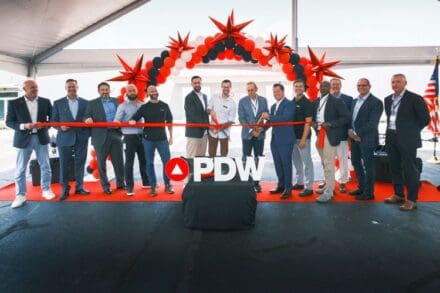
Regulus is Proud to Announce the Opening of a New Permanent Headquarters in the Philippines. Chief Operating Officer Richard Allred had the honor of cutting the ribbon to open the new office. Allred explained the significance of Regulus’s permanent physical presence. “Our mission has always been to get the products and services that matter the most to the people who need them the most: this office represents our commitment to renewing and expanding that charge in the Philippines.”  This new office will facilitate stronger US/Philippine defense integration and public/private cooperation that will directly benefit the Filipino people.  Allred added, “We are proud to take the next step in serving and cementing the relationship between America and one of the most robust and reliable democratic allies in a dynamic region.”

Regulus’s new headquarters will strengthen a crucial ally in a number of ways. It advances the Philippines’ mission to maintain peace and deter aggression and opens new opportunities for cooperation in defense industrial strategy.  It creates new opportunities for public/private cooperation in nation-strengthening sectors like healthcare and telecommunications.  Finally, this office will provide new jobs and opportunities for economic growth to an increasingly vibrant economy. Cumulatively, this new physical presence will deepen an already robust relationship between Regulus and the Philippines and enhance a valuable economic and defense industrial partnership that demonstrates the crucial role US logistics partners play in supporting America’s Asia Pacific Strategy.

regulusglobal.com

Jakob Kolbeck, Managing Director, on How Field Demands Drive Innovation at Lindnerhof

Sunday, May 18th, 2025

LENGGRIES, GERMANY (15.05.2025)

In a recent interview, Jakob Kolbeck, Managing Director of Lindnerhof, takes us behind the scenes of how the unique and often extreme demands of military, police, and special forces operators directly influence the company’s cutting-edge product development. With a deep understanding of operator needs, Kolbeck reveals how Lindnerhof’s commitment to performance, innovation, and adaptability is pushing the boundaries of tactical gear, ensuring that every solution not only meets but anticipates the challenges faced by elite military and law enforcement units worldwide.

Q: How has your background in special operations influenced your leadership style at Lindnerhof and the way the company operates? Can you share an example of a product inspired by that experience?

A: My career in special operations taught me to adapt quickly and respond decisively. The mindset of “plan – do – check – act” is deeply ingrained in how I operate—it became second nature during my time in the field. At Lindnerhof, that approach translates into a continuous cycle of improvement and adaptation, especially since we work so closely with Special Operations Community. We’re not just designing products—we’re actively solving problems that operators face in the field.

One concrete example is our tactical climbing harnesses. These products were directly shaped by my own operational background, combining my experience as a SOF operator and a military mountain guide. The knowledge I gained in real-world scenarios influenced both the design and functionality of our current models.

Q: How does Lindnerhof maintain its edge in design compared to others in the industry?

A: We operate with a simple but critical design philosophy: functionality first. That means we never compromise on tactical requirements to make a product more commercially appealing or comfortable at the expense of performance. For example, we wouldn’t add padding to a plate carrier that might make it more comfortable but hinders a proper shoulder weld with a rifle stock. Every feature we integrate must serve a purpose in real-world operations.

Innovation at Lindnerhof is tightly linked to practicality. We don’t chase innovation for its own sake—we innovate to solve real problems or improve functionality. In many cases, that pursuit of functionality leads to innovation as a natural outcome.

Q: How do military and law enforcement needs influence your product development?

A: Our development is fully driven by the requirements of military and law enforcement professionals. We never design products solely for the commercial retail market. Any item we offer to civilians is essentially a version of something we first developed based on the operational demands of professional users.

Q: How does field experience influence the development of Lindnerhof products?

A: Field experience shapes everything—especially when it comes to durability and usability. A product must be intuitive to handle and robust enough to withstand extreme conditions. We avoid unnecessary “fancy” features that serve no purpose in the field. Every person involved in our development process—from designers to seamstresses—understands that lives may depend on what we build.

Q: How do you balance durability, weight, and adaptability in product design?

A: We start by defining what a product must do—what the operational requirements are. Take our ultralight plate carrier as an example: we didn’t begin by chasing a weight goal. We designed it to meet performance needs, and it turned out to be one of the lightest plate carriers available. If we had prioritized weight alone, we might have compromised durability. Creating a lightweight product isn’t just about trimming grams—it’s about understanding where stress points are and how a product will actually be used.

Q: How critical is operator feedback in the product development cycle?

A: Absolutely essential. We don’t pretend to have all the answers. Feedback from elite users allows us to refine and improve our gear. Without their input, we’d risk falling short of what real-world scenarios demand.

Q: How does Lindnerhof stay ahead in material and ergonomic design?

A: We don’t just buy raw materials—we work with material manufacturers to improve them. That collaboration has led to the development of three custom laminates made exclusively for us. These materials are tailored to our operational needs and are very different from commercial off-the-shelf options.

When it comes to ergonomic design, the military and law enforcement context is unique. Ergonomics isn’t just about fitting the human body—it’s about optimizing the interaction between the operator and their equipment. For example, a shoulder strap may not seem ergonomic by itself, but when you factor in the way it works with the buttstock of a rifle, that’s where true ergonomics come into play.

Q: How does Lindnerhof adapt to evolving mission needs and changes in tactical doctrine?

A: We already have a wide range of products that cover most needs. But when TTPs (tactics, techniques, and procedures) shift or when military conflicts evolve—as we’ve seen in Ukraine—it creates new requirements. In these cases, we conduct thorough analyses, including interviews with operational experts, and translate those findings into new designs. One such innovation is currently in development, driven entirely by recent combat requirements. I can’t share details yet, but it’s something that didn’t exist before.

Q: Where is the industry headed in terms of modularity and weight optimization—and how are you preparing for it?

A: Weight reduction is a tricky subject because cutting those last grams often comes at a very high cost. It’s no different than in the cycling industry: shaving 100 grams off your racing bike means investing in ultra-high-end components. That same logic applies here. We always need to balance performance with affordability.

Modularity, however, has always been central to our philosophy. It allows operators to configure their gear to their exact needs. We’ll continue building on that principle because it’s what the field demands—and the entire industry is moving in the same direction.

Q: How does Lindnerhof collaborate with other brands in the Mehler Systems Group to drive innovation?

A: When you look at integrated systems like a plate carrier paired with a battle belt, there are obvious interfaces with ballistic protection and apparel. Within the Mehler Systems Group, we work closely with the other brands—particularly in ballistics—to not just improve protection levels, but also to increase the protected surface area of the body.

Q: The M.U.S.T. system is one example of that collaboration. Can you tell us more?

A: That system was developed in response to real incidents where operators were fatally wounded in areas not covered by traditional plates. We analyzed the root causes and proposed improvements. Mehler Protection developed ballistic plates to cover lateral areas of the upper body and thighs, while Lindnerhof contributed insights on usability and tested the prototypes. The result—M.U.S.T.—is a fully integrated system that harmonizes modular textile components with advanced ballistic protection. It’s a great example of what we can achieve when we work together across disciplines.

Q: How does cross-functional teamwork support Lindnerhof’s development goals?

We now have dedicated Group Directors overseeing key areas, including Innovation and Technology. That person has a full view of what’s happening across all companies in the group and helps coordinate efforts, align roadmaps, and make sure we’re not duplicating work but building on each other’s strengths.

Q: What tactical trends are shaping Lindnerhof’s current R&D efforts?

A: The war in Ukraine has reshaped a lot of priorities. Military organizations across Europe are shifting from expeditionary warfare to homeland defense, and that changes what’s needed on the ground. Products that made sense in Afghanistan aren’t necessarily the right fit now.

At the same time, law enforcement is facing increasing challenges—active shooter incidents, for example. That’s why we’re now developing modular protection systems tailored specifically to police forces. We’re not just reacting—we’re actively anticipating these needs.

Q: How is Lindnerhof preparing to meet the future needs of special operations forces?

A: We believe our position is already strong. Our close connection with operators on the ground and our modular approach to design mean we’re well prepared to meet future requirements without needing to pivot dramatically. We’re built for adaptability.

Q: Are there any upcoming innovations you’re particularly excited about?

A: Yes, we currently have three new carrying solutions in development. I believe each of them will significantly enhance performance for both military and police operators. I’m genuinely excited about their potential to make a difference in the field.

About Jakob Kolbeck:

Jakob Kolbeck is the Managing Director of Lindnerhof, a role he has held since April 2018. With a career spanning over two decades, Kolbeck has extensive experience in sales and management within the defence and security sector.

Before joining Lindnerhof, he served as Senior Manager Sales at RUAG Ammotec GmbH and Director Marketing & Sales at Unique Alpine AG. His career also includes significant roles in the military, including project leadership and operations planning.

Kolbeck holds a Master of Business Administration in International Management and a degree in State and Social Sciences, complementing his robust technical and commercial background.

Under his leadership, Lindnerhof is advancing its specialised tactical gear solutions, driving innovation and growth in the industry.