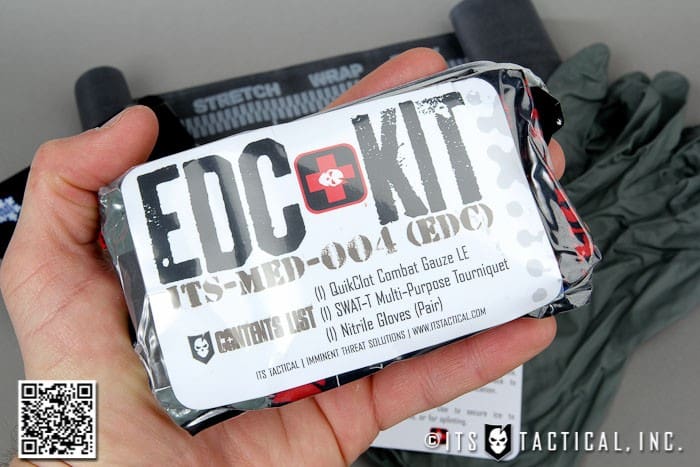
ITS Tactical has introduced an Every Day Carry Trauma Kit. It’s a great idea. Second only to training, I’d say that kit and ease of carry size is the biggest hurdle to getting folks to have medical supplies on hand when needed.
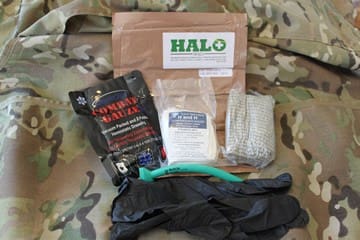
As you can see, it’s compact enough to always have close at hand. The EDC Trauma Kit is designed to stop the bleeding and is the size of an average wallet and weighs a mere 6 ounces.
The contents are latex-fee and all are Made in USA! except the gloves. Contents have a 3-Year Shelf Life.
-Combat Gauze LE (1)
-SWAT-T Tourniquet / Pressure Bandage (1)
-Pair of OD Nitrile Gloves (1)
-Pouch (1)
The Combat Gauze LE is a great product to use to start getting hemorrhaging under control. It is a soft, white, sterile, nonwoven 3†by 4 yds z-folded gauze impregnated with kaolin, an inert mineral that does not contain animal or human proteins or botanicals. It is recommended as the number one hemostatic agent by the COTCCC (Committee on Tactical Combat Casualty Care).
Additionally, I am a big fan of the SWAT-T which is an occlusive bandage that can be used as a tourniquet. Think of it as the product of the crossbreeding of an ace bandage and a bicycle innertube.
Naturally, we urge EVERYONE to seek out basic first-aid training and to train with the equipment you will be using. On top of that, gather the supplies you will need, based on your mission and have them available. Whether it’s from this kit, another brand, or something you put together yourself, do it.
You can get your ITS EDC Trauma Kit at www.itstactical.com. It is available with a Coyote or Black protective pouch.
Note: Due to Z-Medica policy ITS cannot ship QuikClot Combat Gauze outside the US to non APO/FPO addresses. Any International non APO/FPO orders are not allowed on ETA Kits.
I like dogs. I like veterans. I like organizations that legitimately support injured or troubled veterans. So I love Paws and Stripes and thoroughly enjoyed my time with Jim Stanek and his service dog Sarge (both of whom you may have seen previously with Jim’s wife and Paws and Stripes co-founder Lindsay on Oprah’s ‘Ultimate Favorite Things’ episode, which they were nominated to attend by a Paws and Stripes veteran’s wife.)
Paws and Stripes was founded to pair service dogs with physically or emotionally injured veterans at no cost to the veteran. As good a service as that is, what makes it even more interesting is the source of the dogs “enlisted†for the canine therapy working dog program: they come from animal shelters, and in many cases could have been euthanized if not selected for service.
Al veterans are given the opportunity to select their own service dog, though the founder of Stars and Stripes jokes that it’s often the canines who make the selection. Selected canines are evaluated by Paws and Stripes trainers before being brought into the program—the veterans themselves enter an equipment contract to complete the training.
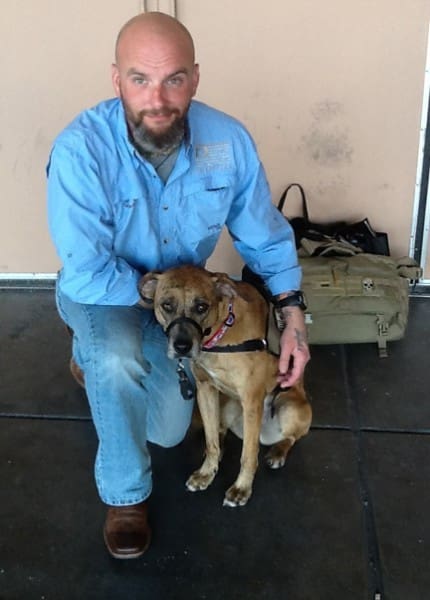
Jim Stanek and Sarge of Paws and Stripes
Veterans train with the dog and trainer throughout the program to strengthen their bond, to increase the understanding of the dog’s capabilities and to provide therapy. It also increases the veterans understanding about the canine’s instinct, natural pack tendency and so on. It takes approximately six months for Paws and Stripes to complete a training cycle.
As Paws and Stripes says, “Many organizations have a strict curriculum for their service dogs, requiring they learn the basic 86 commands associated with service dogs. Our enrollees, however, are not blind, deaf or paralyzed. They have unique disabilities that generate unique daily symptoms, so the dogs are trained custom to the veteran.â€
Often the simple presence and actions of a service dog mitigates or even prevents the onset of an anxiety, PTSD or similar episode the veteran might otherwise suffer. They have been trained to sense the onset of psychiatric disorders and will ground the individual or even bring them back from an episode by licking the veteran’s face, pawing or barking. As might be expected, they are very solicitous of their veteran’s needs and welfare, and will even assist or seek help for an incapacitated handler.
Right now the organization is looking for help from people with the right backgrounds. Support can include directed funds, general funds, expertise, gear for an auction, whatever. Right now they are in desperate need of a bookkeeper and a grantwriter. They Staneks and their friends are overtaxed as far as time goes now, though they are driven to succeed and don’t appear to take much time off.
“How can I rest now with these guys coming back with this hanging over my head?†Jim said during our interview. “This program can make a difference, and those guys deserve the help. I can’t slack off.â€
Watching the interaction between he and Sarge (a polite young lady of labrador, pit, pug, Catahoula and who knows what other mix), it was clear how well mannered, intuitive and helpful she was
They’re working on an auction now and have been talking to several big name companies to help out (including Larue, LWRC, Hornaday, Troy, Doublestar and several others). During SHOT the guys at Predator Tactical gave up a four thousand dollar custom 1911 pistol for auction and started the bidding out at $3,000 to raise money for Paws and Stripes.
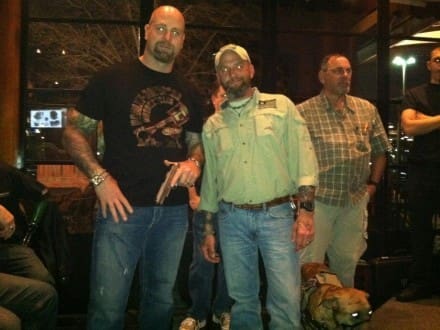
Jim Stanek and the winner of the Predator Tactical pistol provided to auction for Paws and Stripes. Bidding started at $3k.
This is borderline unbelievable, with staggering implications for our wounded. A company called RHTRLLC has developed a Bio-Electric Wound Dressing that basically cuts the healing time for surface injuries in half.
Yes, in half.
They call it the 7 Day Wound Bandage, and it’s really interesting stuff. There were pictures and case studies there showing the positive results of bioelectric bandaging on everything from burns to injuries suffered by a man that went through the windshield of his car to a case of facial cancer. All of them benefited from the use of the bandage, which is essentially a lightweight piece of cloth covered in tiny, wafer thin disks of different metal activated upon application to provide a very mild electric current that speeds healing. (more…)
Tactical Night Vision Company is the exclusive distributor for BattleView, a system that is going to save a LOT of lives in the field.
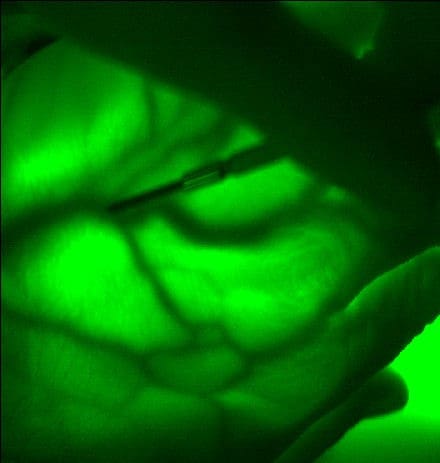
For the first time, a medic can now stick an IV into a vein with the use of a NVD, but without the fear of missing a vein. This patented vascular illumination device uses IR energy to penetrate tissue and make the vein “glow” as seen in the attached picture.
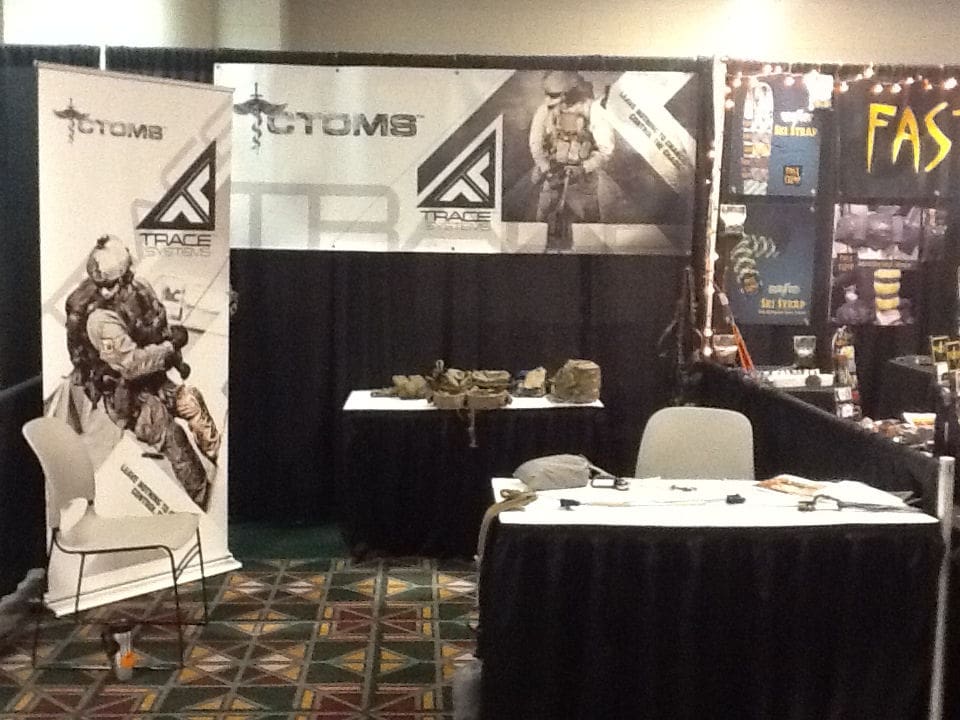
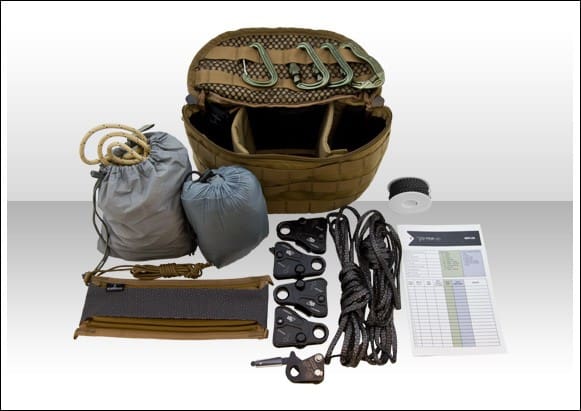
CTOMS is debuting their new TRACE Systems (Tactical Rope Access and Confined-space Extraction Systems) at the Outdoor Retailer Winter Market. These are a series of kits based on a 6mm rope system that offer a comprehensive capability. The kits have color designations for identification. The GREY Kit is the personal rope assault/escape kit, the BLUE Kit is an ascent supplement to the GREY Kit that allows an individual to ascend the rope.
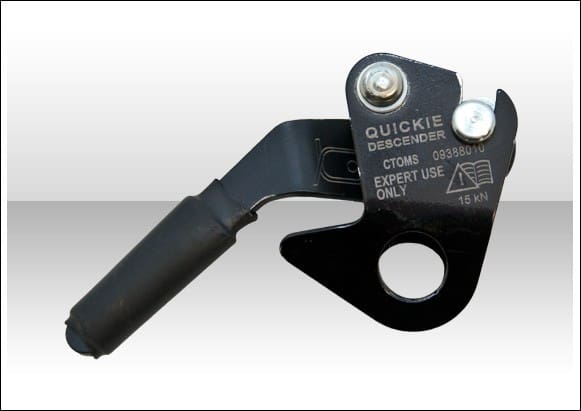
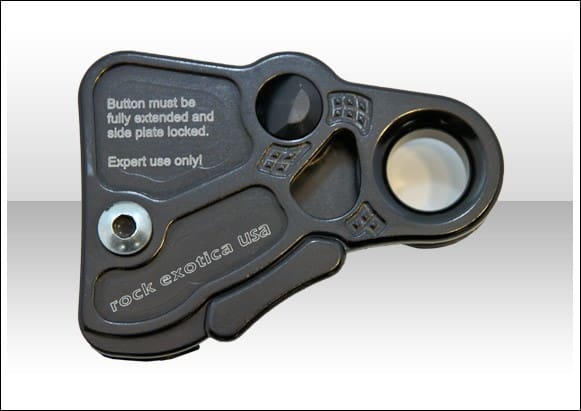
Pictured above is the RED Kit, which is the tactical team kit. It includes a 25m rope (available stock in 16m, 25m and 60m and custom lengths), PocketHoistâ„¢ Litter (yes the small sack beside the rope is a hoistable litter), EdgeProâ„¢, 4 x Quickie Ascendersâ„¢, a Quickie Descenderâ„¢, 2 x 8mm coated Dyneema slings, 1.5mm Pilot Line, Rope Log, 2 x Phantom Screw Gate Caribiners, 1 x Phantom Wire Gate and a Screw Gate Revolver.
The kit is a micro system that turns about 40 lbs of ‘traditional’ rope equipment into about 8.5 lbs with significantly less bulk. All the while maintaining similar capabilities. With the system you can still raise and lower casualties, rappel and ascend a rope, set a fixed line, short rope over complex terrain, glacier travel, and even lead climb. However, the TTPs are very different though.
Visit CTOMS at the Outdoor Retailer Winter Market in Salt Lake City, Utah in booth #38084.
Our friends at Dark Angel Medical have launched a new website and with it the Direct Action Response Kit or DARK.
The DARK comes complete with the basics, in a Custom Pouch from EGL with captive lid system and bungee lacing for TQ, chest decompression needles, markers, light sticks, and other items. When vacuum packed the items are no bigger than 2 x 30 rd magazines.
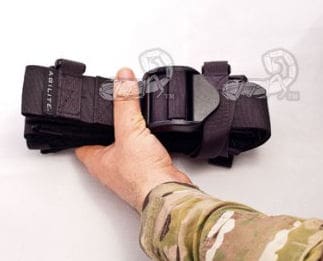
The IPC came about when soldiers from one of the IDF’s elite units were connecting four rifle slings together and carrying injured soldiers like a backpack. Agilite turned the concept into a product, added built-in padding and several other features and now it’s a more efficient alternative to the traditional fireman’s and piggyback carry techniques that keeps both hands free. As you can see in the video, it is lightweight and simple to apply. It also allows you to carry the wounded piggyback style, hand free.
Agilite has some other big news. They have just shifted their production to the US to get the best quality manufacturing around as well as be Berry Compliant. They now design in Israel and manufacture in the US which they feel is the absolute best of both worlds.