Wilcox Ind

Archive for the ‘Mobility’ Category

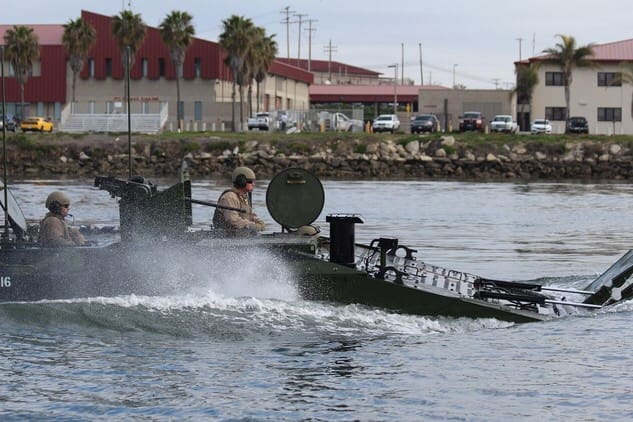
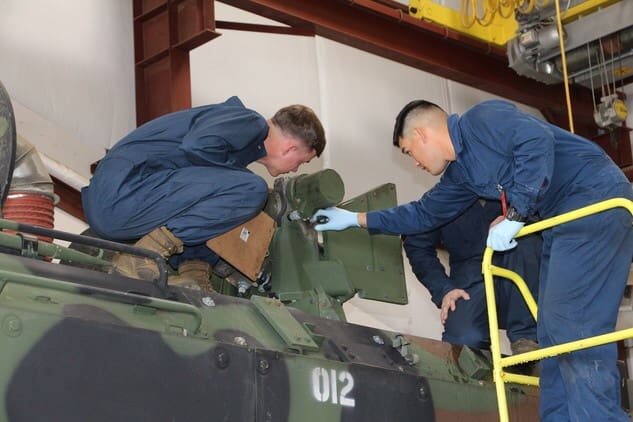
NETT Marines Bridging the Gap Between the Past and Future of Amphibious Combat

Monday, April 8th, 2019

CAMP PENDLETON, Calif. —

At its core, any Marine Corps New Equipment Training Team is responsible for-as the name suggests-arming Marines with the knowledge and skills they need to operate and maintain new equipment to ensure Marines’ future success on the battlefield. When new equipment is fielded, the NETT provide the initial training to experienced legacy system operators and maintainers to help get them acquainted with the new system in the shortest time possible.  

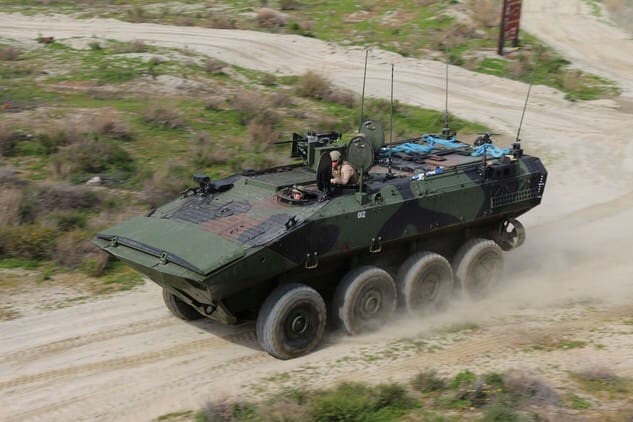
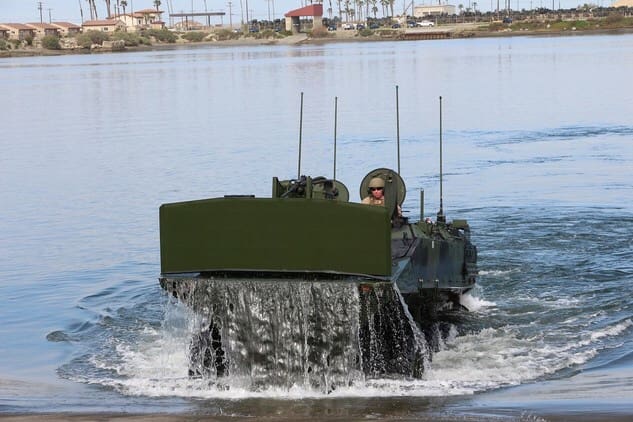
When the new system is the Amphibious Combat Vehicle-game-changing not only in the amphibious capabilities it provides to Marines, but also in that it’s replacing a nearly 50-year-old legacy system-the NETT are in a unique position to bridge the gap between the past and future of amphibious combat in the Corps. Currently, most new equipment training teams are comprised of civilian subject matter experts from Industry, the ACV NETT is comprised primarily of amphibious assault Marines who are able to apply their experience and expertise in operating and maintaining the legacy vehicle to operating and maintaining the new one.


“It’s pretty much 100 percent preparation for the next evolution,” said Staff Sgt. Kevin Wheeler, lead operational instructor on the NETT, of his team’s role. “All of us here on the NETT have years of experience operating the legacy [Assault Amphibious Vehicle]. I think that our collective experience and influence is important, especially in informing the future of our community. That’s our number one job.”

Though the NETT falls under the Virginia-based Advanced Amphibious Assault program office at Program Executive Officer Land Systems, the office responsible for acquiring and fielding the system, the team itself is housed at the Amphibious Vehicle Test Branch at Camp Pendleton, Calif., maximizing the team’s ability to spend time on and become proficient with operating and maintaining the vehicle.

To aid Marines’ transition from the legacy to the new platform, the NETT faces the challenge of infusing old practices into new Standard Operating Procedures and Tactics, Techniques and Procedures for the ACV.

“During the operational assessment, we realized that some of the tactics we’re used to with the AAV don’t work with the ACV,” said Wheeler. “We’re taking into account our old doctrine with the AAV, and seeing how some of those tactics, TTPs and SOPs can translate to the ACV [to make the transition easier for Marines].”

On the vehicular maintenance side, NETT Marines also help design the maintenance course. Currently, the team is busy helping the program office prepare for a four-month logistics demonstration-a comprehensive event evaluating the maintainability and sustainability of the vehicle-scheduled for this fall.

“One of the ways we’re verifying the Technical Manual for the ACV is by having the maintenance team complete over 1,400 maintenance tasks using the TM as a guide,” said Staff Sgt. Justin Hanush, maintenance lead instructor for the ACV. “This will help us when preparing the maintenance course. Ultimately, we want to ensure that Marines are successful when the vehicle hits the fleet.”

While the NETT’s main role is training Marines on maintaining and operating the ACV, the team also licenses drivers and, as operators of the vehicle, are integral participants in the rigorous operational, logistical and evaluative vehicle tests initiated by PM AAA. Having experienced amphibious assault Marines on the NETT has been extremely beneficial to the program office, particularly during operational assessments and testing.

“The Marines have assisted us greatly with understanding how the amphibious community operates, especially on water,” said James Aurilio, Manpower, Personnel and Training lead for PM AAA. “Operating a land vehicle in water is a unique experience, and they brought that experience with them. There’s a lot about doing that that, those of us who don’t do it would never understand or wouldn’t think to ask [during testing]. They’ve been stellar and have helped us out a lot.”

The NETT will start training Marines from Delta Company, 3rd Assault Amphibian Battalion, 1st Marine Division, in January 2020. Delta Company will be the first amphibious assault crews to be trained on the new vehicle. Upon completion of training, the NETT will help guide the Delta Company Marines as they participate in tests assessing the effectiveness of the first set of low-rate initial production ACVs. PM AAA anticipates receiving the first set of low-rate production vehicles this summer.


By Ashley Calingo, PEO Land Systems Public Affairs| Marine Corps Systems Command

Land 400 Phase 2: Australian Government inspects first Australian Boxer vehicle at Rheinmetall in Kassel, Germany

Wednesday, April 3rd, 2019

The Australian Ambassador to Germany, H. E. Lynette Wood, senior Australian military representatives and senior Rheinmetall representatives have attended an official inspection ceremony in Kassel, Germany. The first Boxer Multi-Purpose Vehicle (MPV), being delivered to the Australian Government under the LAND 400 Phase 2 program, was inspected prior to being shipped to Australia in the coming weeks.

Rheinmetall will deliver 211 Boxer vehicles to the Australian Army under its contract with the Australian Government. The first vehicles will be operated by the Australian Army by the end of this year.

Gary Stewart, Managing Director of Rheinmetall Defence Australia, said: “These first Boxer vehicles will enable the Australian Army to develop training programs for soldiers who will operate the vehicles out of bases in Townsville, Adelaide and Brisbane.”

The Boxer vehicles will enable Army to locate, monitor and engage with enemy forces and ensure Australian soldiers are protected in combat. The vehicles will fill seven different roles on the battlefield: reconnaissance, command and control, joint fires, surveillance, multi-purpose, battlefield repair and recovery. The reconnaissance variant – accounting for 133 of the 211 vehicles – is equipped with Rheinmetall’s cutting-edge Lance turret system and armed with a 30mm automatic cannon.

Once in Australia, these first Boxer vehicles will receive a number of Australia specific modifications prior to final delivery to the Army. Modifications include installation of Australian Army specific communications and computing equipment, a remote weapon station, and Australian Army paint.

Armin Papperger, Corporate CEO Rheinmetall AG, said: “Work on these first vehicles in Germany will help Rheinmetall transition the know-how necessary to establish a sovereign military vehicle industry in Australia and enable the local manufacture of combat vehicles. This, in turn, will underpin the enduring partnership with the Government to design, manufacture, deliver, support and modernise this world-leading capability.”

The Boxer CRV was selected after rigorous trials conducted by the ADF. Under Australia’s LAND 400 Phase 2 selection process, the Boxer CRV was chosen in 2016 as one of two candidates for Risk Mitigation Activity trials where the 8×8 wheeled armoured vehicle performed convincingly in the categories of survivability, mobility, firepower, and command & control.

www.rheinmetall.com

industrial MOTO – project GUS

Tuesday, April 2nd, 2019

One of Virginia-based industrial MOTO’s latest projects is called project GUS for Grom Utility Sidecar. They’ve taken a 2018 Honda MSX 125 Grom and modified the lighting, seat and exhaust. But the primary focus was the addition of a versatile utility sidecar.

In addition to cargo, it will also accept a passenger.

GUS includes:
• Suspension
• Dual LED headlights
• High ground clearance
• D-rings
• Quick Fist Clamps
• Detachable storage box
• Detachable matching passenger seat and grab bar
• Detachable accessories mount

Contact industrial MOTO for details.

2019 ADS Fort Bragg Warfighter Expo – Prototype Transport Cases from Speedbox

Friday, March 15th, 2019

We’ve mentioned Speedbox several times on SSD with their wheeled mobility containers, designed specifically to fit on USAF 463L pallets.

Customers have asked them if they could introduce additional case options. At the Ft Bragg Warfighter Expo, they were gauging interest in a Carbine Case and Equipment Box.

Speedbox is owned by a Special Forces Veteran who developed the system based on need. Their products are available for unit and agency orders from ADS.

New Vehicle-mounted Electronic Tech Enables Marines to Combat Threats

Thursday, March 14th, 2019

MARINE CORPS BASE QUANTICO, Va. —

Marine Corps Systems Command plans to implement a new form of technology that allows the Marine Air-Ground Task Force to identify enemy activity.

The technology employs a vehicle-borne tool that enables Marines to discern what happens inside the electromagnetic spectrum. It connects several independent electronic capabilities into a single unit and allows Marines to manage threats and reactions from a central location.

“Marines are going to be able to make decisions on what they are seeing,” said Lt. Col. Thomas Dono, a team lead in MCSC’s Command Elements Systems.

Marines currently use systems to counter IEDs that block signals used by adversaries to remotely detonate explosive devices. The new technology is a man-packable and vehicle-mounted system, which will be able to be deployed on any Marine vehicle.

“This emergent technology combines a number of current capabilities into one system, thereby reducing the need for additional training and logistic support to manage multiple systems,” said Col. Dave Burton, program manager for Intelligence Systems at MCSC.

Once fielded, the system will enhance situational awareness on the battlefield.

“We will be able to do all of the functions of similar systems as well as sense and then display what is going on in the electronic spectrum,” said Dono. “Then we can communicate that to Marines for their decision-making process.”

MCSC is taking an evolutionary approach that allows the command to field the equipment faster and then gradually improve the capability as time progresses, Dono said. As the technology evolves, the Marine Corps can make incremental improvements as needed.

The Corps will work with Marines to test a variety of displays that track the electromagnetic spectrum, looking into each display’s user interface. The command can then determine if improvements must be made to ensure usability.

“It’s similar to what Apple does with the iPhone,” explained Dono. “They have many different displays and they want to make it natural and intuitive, so it’s not something that’s clunky, confusing and has to be learned.”

MCSC plans to field the vehicle-mounted system around the first quarter of 2020. When implemented, the equipment will continue to grow in capability to better prepare Marines to take on the digital battlefield.

“This system is important because it is going to allow Marines to operate inside the electromagnetic spectrum, make decisions and act upon that information,” said Dono. “That’s something they’ve never had to consider or think about in the past.”

By Matt Gonzales, MCSC Office of Public Affairs and Communication | Marine Corps Systems Command

Rheinmetall Submits Land 400 Phase 3 Bid in Australia

Sunday, March 10th, 2019

Lynx Infantry Fighting Vehicle and sovereign military vehicle industrial capability offered

LYNX 120mm Mortar

Rheinmetall is pleased to announce the company has lodged a bid in response to the Australian Army’s Land 400 Phase 3 – Mounted Close Combat Capability Request For Tender (RFT).

Under the tender, the Australian Army is offered the Lynx Infantry Fighting Vehicle (IFV) with the Lance turret, Lynx Manouevre Support Vehicle (MSV), an established and growing network of suppliers across Australia, continued use of the Military Vehicle Centre of Excellence in Queensland, and a comprehensive support and training system.

The Lynx IFV and the Lynx MSV have been designed and tested to meet the demanding requirements of the Australian Army, NATO and NATO allies. Lynx establishes a vehicle system with unmatched levels of survivability, mobility, lethality, knowledge, and growth that will excel in close combat operations.

The modular architecture of the Lynx also delivers significant cost benefits by drawing on Rheinmetall’s expertise and extensive development of contemporary combat vehicles. This results in a system that requires only two Lynx base vehicle configurations to achieve the nine roles sought under the Australian Army’s RFT. The modular system architecture also covers the four additional roles sought in the Australia Army’s Request for Information, including a mortar variant, a logistics variant, and a protected amphibious Lynx.

LYNX IFV

Lynx provides protection against the full spectrum of threats including blast, IED, direct and indirect fire, cluster munitions, and anti-tank guided missiles. With enhanced lethality and the mobility of a main battle tank, Lynx will enable Army to cope with the complex nature of warfighting in diverse environments and against a range of adaptive threats.

Rheinmetall’s Global Head of Vehicle Systems, Ben Hudson said, “the significant protected volume within the Lynx vehicle is unmatched in this class, and ensures the three crew and a minimum of six dismounts can conduct effective close combat operations while providing unrivalled growth and flexibility for the future.”

“The Australian Army deserves an Infantry Fighting Vehicle that will ensure their soldiers can fight, survive and win on the modern battlefield,” Mr Hudson said.

“If selected for Land 400 Phase 3, the Lynx will provide the Australian Army with a future-proof vehicle solution that can rapidly transition into service and be easily supported through life.”

The Rheinmetall Lance turret is contracted to be delivered to the Australian Army under Land 400 Phase 2, and will be manufactured in Brisbane for the local and export markets. The digital Lance turret provides the crew with sensor systems, advanced automatic tracking and targeting capabilities, and weapon integrated battle management all in a connected and digitally enabled platform. This common electronic architecture provides enhanced combat effectiveness for the crew, generating a range of scalable and precise effects to deal with threats on the current and future battlefield.

LYNX Protected Amphibious Vehicle

Rheinmetall is creating an enduring Australian capability with the construction of the Military Vehicle Centre of Excellence (MILVEHCOE) near Brisbane. By the time Land 400 Phase 3 is contracted, the MILVEHCOE and its supporting national military vehicle industry network of Australian suppliers will be qualified for all of the common systems and components required for the Rheinmetall Lynx and Lance solution.

Rheinmetall Defence Australia’s Managing Director, Gary Stewart said, “the Australian Army will benefit from the Lynx IFV that will be designed, built and supported from the MILVEHCOE, with an expanded Australia-wide military vehicle industrial network.”

“This national approach will directly reduce the total cost of ownership for Defence, create long term highly skilled regional jobs, and deliver enduring economic benefit through a strong sovereign military vehicle industry,” Mr Stewart said.

Components and designs already incorporated into the Lynx platform are supplied from companies located around Australia like Supashock in Adelaide, Cablex in Melbourne, Bisalloy Steels in Wollongong, and Milspec Manufacturing in Albury.

LYNX Air Transport on a C17

Ongoing investment by Rheinmetall in research and product development directly contributes to Australian Lynx and Lance designs and foundation technologies. Coupled with targeted global opportunities, this creates new export orders for Australian industry.

You Need A Halftrack In Your Life

Wednesday, February 27th, 2019

Are you planning for the Armageddon, the impending Second Civil War of Blue vs. Red, and/or World War III: The Final Battle against the Soviet Machine? YES!

Do you need something that is not susceptible to EMP interference? YES!

Does it need to be Armored, tracked, and capable of mounting weapons? YES!

Does it need to be available now? YES YES YES! You cannot plan too early.

THESE M3 HALF TRACKS HAVE EVERYTHING YOU ARE LOOKING FOR. GET THOSE TAX RETURN CHECKS READY!

controlleddynamicsgroup.com

Mack Defense Enters Production Vehicle Testing Phase of Heavy Dump Truck Contract

Friday, February 22nd, 2019

ALLENTOWN, PA (Feb. 18, 2019) – Mack Defense recently started production of five Mack® Granite®-based M917A3 Heavy Dump Trucks (HDT) as part of the Production Vehicle Testing (PVT) phase of its $296 million contract with the U.S. Army for armored and armor-capable HDTs. Once completed, the trucks will enter 40 weeks of rigorous durability testing at the U.S. Army’s Aberdeen Test Center this summer.

“Our production team and suppliers are excited to begin building these next generation HDTs for the U.S. Army,” said David Hartzell, president of Mack Defense. “We’re confident the M917A3 will provide the Army the legendary durability and toughness Mack customers have come to depend on.”

Seeking the next generation of M917 vehicles to offer increased protection levels, higher payload and improved mobility, the U.S. Army solicited bids for new HDTs in June 2017. The contract, awarded to Mack Defense in May 2018, allows for Mack Defense to produce armor-capable or armored HDTs with deliveries through May 2025. The trucks will increase operational effectiveness and readiness, and will support mobility, counter mobility, survivability and sustainment operations for the Joint Forces in areas of the world with austere infrastructures and little or no host nation support.

“We have had regular meetings with our U.S. Army partners in preparation for the PVT phase of the contract, and we look forward to providing a tough, dependable truck that will meet their requirements,” said Jack Terefinko, HDT program manager for Mack Defense.

Based on the civilian Mack Granite model, Mack Defense engineers optimized the M917A3 HDT to meet the current needs of the U.S. Army, while allowing for evolving requirements and future growth. With heavier-duty rear axles, all-wheel drive and increased suspension ride height, the M917A3 is capable of meeting the demanding payload and mobility requirements set by the U.S. Army HDT program.

www.mackdefense.com