Salomon Forces Genesis MID GTX

Archive for the ‘Optics’ Category

Next-Generation Headset Preps Soldiers for Future Battlefield

Tuesday, November 24th, 2020

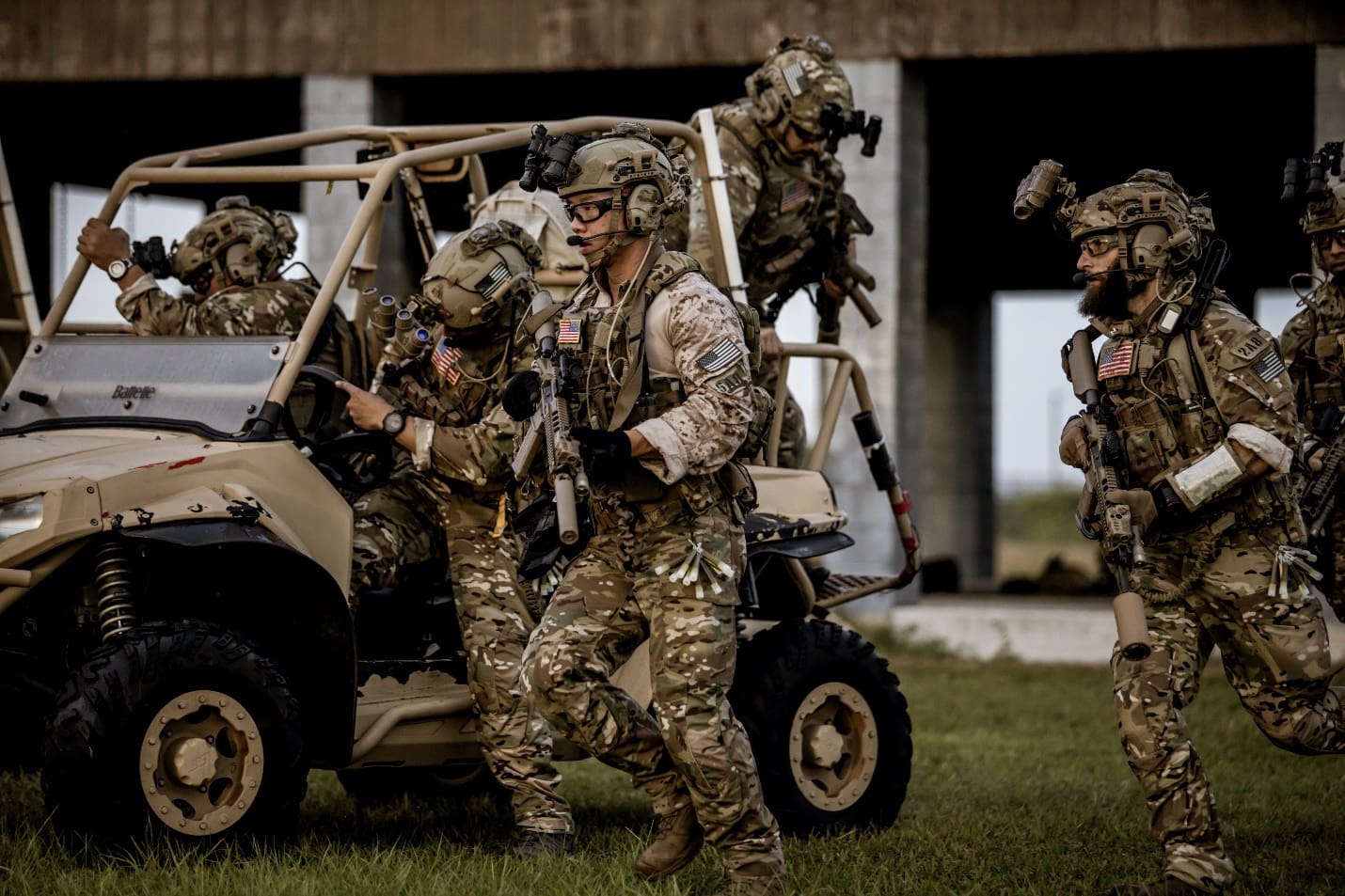
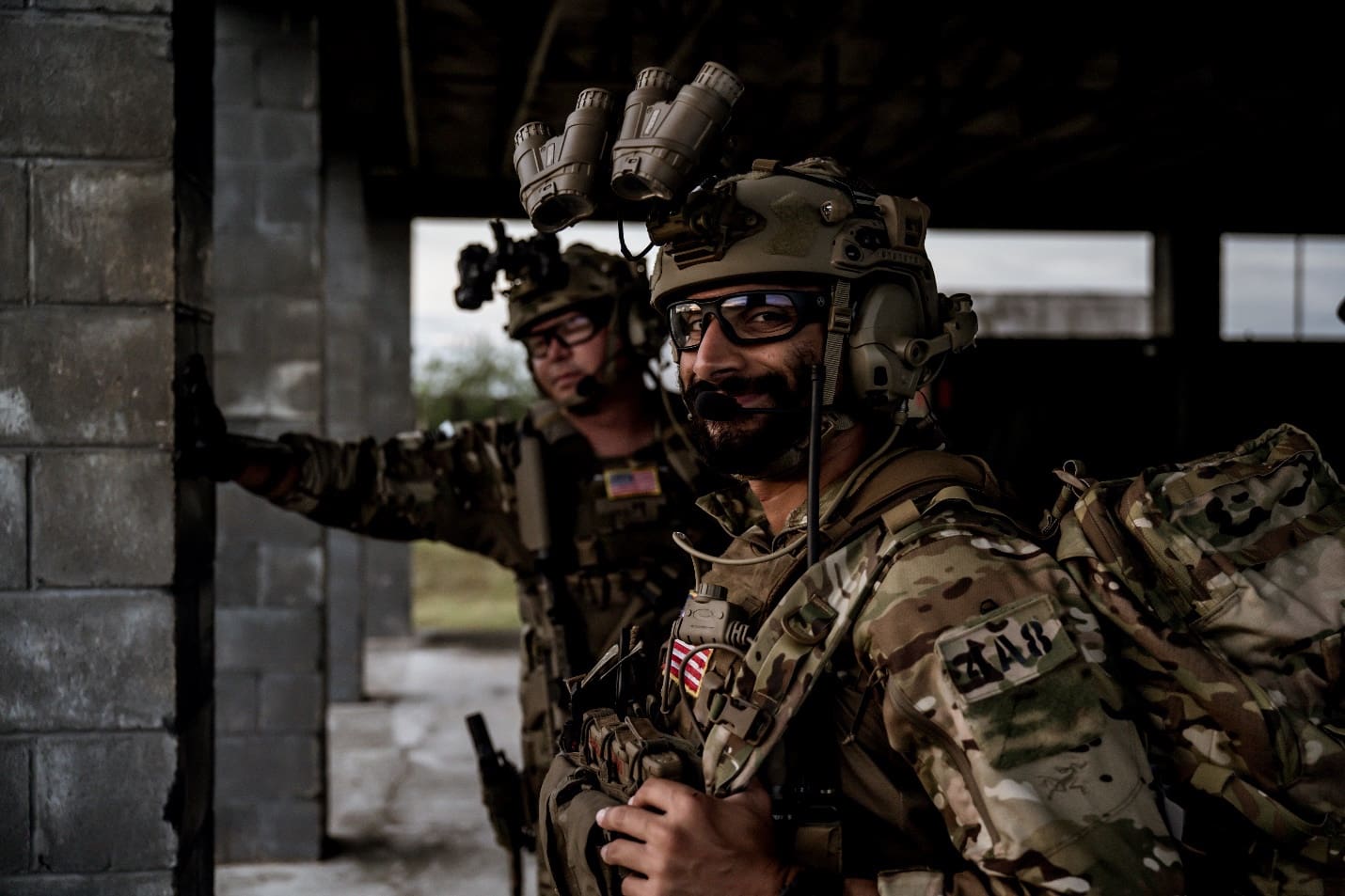
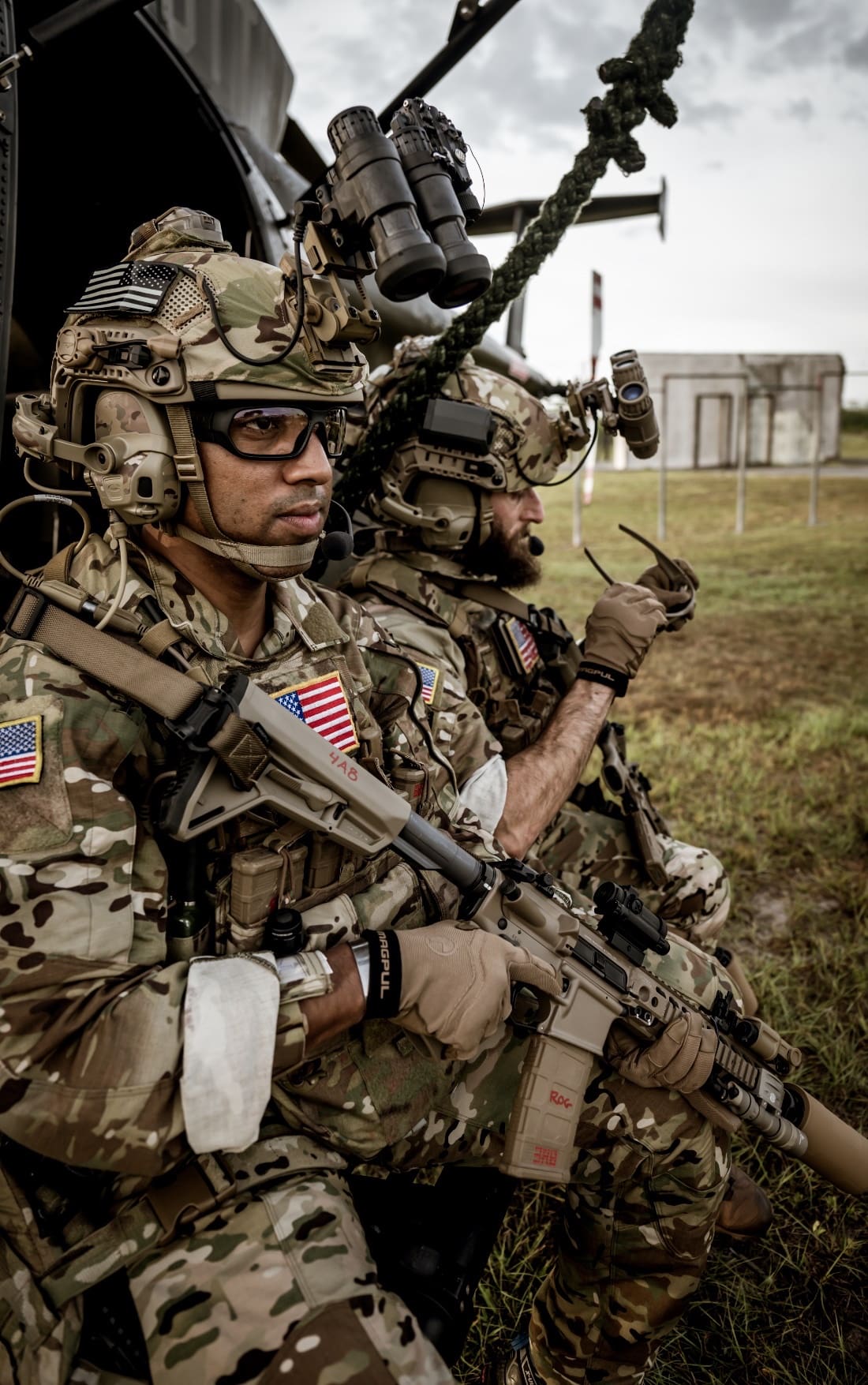
FORT PICKETT, Va. – The third Capability Set of the Integrated Visual Augmentation System (IVAS) was tested at Fort Pickett by 82nd Airborne Soldiers and 25th Marines during October 2020.

The project uses Soldier Centered Design (SCD) to evaluate the IVAS military fighting goggle through operational evaluations. Soldier involvement and engagement at every stage of prototype development has allowed the fast-paced rapid prototype effort to ensure that the final product will positively increase the situational awareness, lethality, mobility, and performance of the close combat force.

“When I look through the IVAS I see how we’re going to fight on the battlefield of the future,” said Staff Sgt. Kester, Weapons Squad Leader.

The Army is developing IVAS as a single platform that allows the Warfighter to Fight, Rehearse, and Train. It integrates next generation 24/7 situational awareness tools and high-resolution simulations to deliver a single platform that improves Soldier sensing, decision making, target acquisition, and target engagement. The visibility that it gives to higher command and control is unparalleled.

“With IVAS you now have the ability to paint a picture for higher ups, almost instantaneously,” said Sgt. Black, Combat Medic. “So now you have a Colonel who’s watching the battlefield like never before. That’s phenomenal, and that has the potential to increase our lethality in a way that we’ve never seen.”

IVAS also provides increased situational awareness for the leadership on the ground.

“In the field, a big part of my job is command and control,” said 1st Lt. Christopher, Platoon Leader. “I am basically moving my squads like pieces on a chessboard and maneuvering them into position and making sure that they’re in the right place at the right time. For me not only can I see where they are with IVAS, but I can actually go into the system and put a point here and say ‘Hey, you all need to go here’ or ‘Hey there are enemies over here watch out!’ I can also send messages non-verbally, so it is very, very critical for me for the command and control aspect.”

The first IVAS militarized form factor prototype was put through tactical exercise lanes, advance marksmanship, land navigation and squad reconnaissance, movement to contact with hasty attack, and enter and clear a trench to validate the military utility that the technology brings to the squad both day and night. The Soldiers and Marines spent a week learning the new equipment before using it in the various operational tests.

“It was extremely easy to pick up,” said Christopher. “It’s very simple in its controls, the menus and such are very easy to navigate, and they’re categorized in a way that if I want to do this function, easy over there, bring up the map, one button press away.”

Christopher also noted that the Microsoft data collectors had been receptive to their feedback and had already made progress and developments on the input given throughout the touchpoint event. Cpl. Sweckard, Team Leader, 25th Marines also expressed similar sentiments.

“Anytime we conduct any type of training with the IVAS, we immediately make contact with the [data collectors] from Microsoft and provide them with feedback, things that we’ve identified that could be an issue, things that we liked, and how we fixed the issue if we were faced with one,” he said. “That way they can put together the common things that are happening with the device and identify a resolution.”

Because of the similarities in operational responsibilities and as members of the collective close combat force, Marines were present to test the current IVAS capability set specifically during live fire execution.

“What it does for us mainly is combines a lot of things that we currently utilize, such as global positioning devices, or GPS’s, communication devices, as well as land navigation tools and mission planning tools,” said Sweckard. “Those are things that are commonly individual technologies that are now combined into this one system of IVAS.”

The project was initiated in response to an erosion in close combat capability relative to pacing threats identified in the 2018 National Defense Strategy. These capabilities will provide the increased lethality, mobility, and situational awareness necessary to achieve overmatch against our current and future adversaries in any domain.

“I think if it’s in the right hands it can be an effective tool, like an aid bag. An aid bag without a medic is nothing, but an infantry guy with IVAS is something much more,” said Black.

Though the Army is specifically developing this high priority modernization effort, the Marine Corps may also leverage the technology for their close combat operations.

“It will definitely be a force multiplier on the battlefield,” said Sweckard. “As a team leader I have three Marines that are under my charge and my basic mission is to employ those Marines in combat, make those three Marines look like 30. If I can do that, that’s going to make the Marine Corps more lethal. With the IVAS I can better achieve that mission, without a doubt.”

The integrated system is expected to be fielded to Soldiers next year.

“When Lieutenant Colonel Winn told us we want to field it next year I thought that was crazy. Then I looked and thought through it and I could see it, I can see the possibilities,” said Kester. “Some of my combat experiences made me pause for thought to look at it like Russia and China, they’ve been pushing technology like this for the last decade. And what have we been doing? Not that.”

Kester added that though he did not know about IVAS before coming to the third Soldier Touchpoint, as soon as he did, he was onboard with Team IVAS.

“I would say the only thing that’s going to hurt this program is people not being imaginative enough or trying to push the limits of what they think is possible, or what Soldiers want. I am really excited to see where this will go,” said Kester.

ZULU6 Image Stabilized Binoculars from SIG SAUER Electro Optics

Friday, November 20th, 2020

During a recent visit to SIG SAUER Electro Optics I got to check out their new ZULU6 line of stabilized binoculars. Easy to use, I like what I saw.

Offered in 10x and 16x magnification, these gyroscopically stabilized binoculars will fit in standard bino chest rigs. Image stabilization is achieved at the flip of a switch and they are offered at a good price. They are waterproof to IPX4 standard and incorporate a tripod mount.

www.sigsauer.com/search/zulu6

Rapid Growth Leads to Large Expansion for Riton Optics

Thursday, November 19th, 2020

Tucson, AZ (18 November 2020)- Former U.S. Air Force service member and Capitol Police Officer, Brady Speth started Riton Optics in 2013 with the initial consumer sales starting in 2016. What originated with scopes literally being sold out of a backpack, transformed into a well-developed, highly sought after product line that provides consumers with better value and service.

In those humble beginnings in 2013, Speth and his wife operated the company from their Arizona residence, designing and testing products with the support of Speth’s military and law enforcement relationships. In 2016, as enthusiasts became more familiar with this newcomer to the optics market, Riton made its first move into a commercial space on Tucson’s east side. In just one year, an adjacent space was acquired to double the space, in order to keep up with customer demand. Two years later in 2018, the company had again outgrown the building and expanded to a new facility to double their operations space.

After continued unprecedented growth in an additional two year time period, Riton once again outgrew their space and on October 23rd of this year, Riton celebrated the grand opening of their new building. With over 10,000 square feet of space and property for continual expansion, this beautiful new structure features an engaging front lobby area with custom displays, a full studio for media and significant floorspace for operations, quality control and warehousing.

Regarding the new space, Riton’s Chief Operating Officer, Carrie Speth commented, “There’s an indescribable sense of pride and gratitude when reflecting on where we started in the garage of our house to now multiple expansions in a few short years. The expansion allows us to continue our goal of providing consumers with the best value and service in the optics industry.”    

Throughout this incredible journey of growth, Riton remains committed to the vision of providing the best value and service in the optics industry.

AcroBat Tool from suppressortools.com

Wednesday, November 18th, 2020

Meet The AcroBat Tool…

The Aimpoint Acro red dot sight has an aluminum battery cover that can be scratched when using a steel screwdriver tip, so suppressortools developed the Acro Battery Tool.

It’s made from very robust injection mold quality ABS polymer, which won’t damage the battery cap’s finish AND a spare battery snaps into the handle. The hole at the end is for a parachute cord lanyard (not included).

One Renata CR1255 battery new in factory packaging IS INCLUDED.

suppressortools.com

Sneak Peek – SI Optic

Tuesday, November 17th, 2020

Strike Industries is teasing a Made in USA Red Dot Optic.

Nocorium – Camouflage For Your Night Vision Devices

Tuesday, November 17th, 2020

A few months ago the founder of new company Nocorium sought out to cover his NV devices I with a non-permanent material to break up their all-dark-exterior. He says he tested a bunch of different materials before settling on a vinyl material. At that point, it went from, “how do I cover these devices effectively to change their visual signature?”, to “hey, this can benefit a lot of night vision device users who are in need of such a product.”

He then proceeded to figure out how to get vinyl coverings that were suitable for the task, precisely cut for the devices they were meant right cover. He did one even better; these coverings are made from 100% USA sourced materials, manufactured in the USA, and support the USA supply chain and industry.

The first run of Nocorium NVG wraps comes in four MultiCam color variants. The upcoming production run will expand the line with Ranger Green, Coyote, and M81 Woodland.

For more information, visit Nocorium.com. Also, you can give @notorious_nocorium a follow.

Cooper Wins Top Tactical at Bushnell Southeast Regional Finale with Elite Tactical XRS II

Wednesday, November 11th, 2020

Elite Tactical XRS II Riflescope Helps Cooper Claim Tactical Division for PRS Season

OVERLAND PARK, Kan. – November 5, 2020 – Bushnell®, an industry leader in performance optics, served as title sponsor of the Precision Rifle Series (PRS) Southeast Regional Finale hosted by Alabama Precision. At the conclusion of the two-day match, Team Bushnell’s Mark Cooper and his Elite Tactical XRS II 4.5-30×50 riflescope once again stood victorious, winning the Tactical Division for the match and claiming the coveted Tactical Division championship for the entire season.

“It’s been a long but wonderful season and I know that I wouldn’t be here without the support of my family, friends and sponsors,” said Mark Cooper of Team Bushnell. “No one could have predicted the weather for the finale to be as bad as it was, but despite the cold and the rain it feels good to have accomplished a season long goal. Through it all, my Elite Tactical XRS II never failed me. The trust I have in this riflescope is unmatched and I don’t plan to shoot another match without it.”

The Bushnell Southeast Regional Finale took place under less than ideal conditions with a diverse course of fire challenging competitors and their gear. Throughout the match, competitors took on a multitude of barricades, moving targets and distances ranging out to 1,200 yards with the rain ending just as the last shots were fired.

“Alabama Precision was honored to host this year’s PRS Regional Finale sponsored by Bushnell,” said Jim Saunders, Match Director. “As the largest region, the southeast has some of the best competitors in the country. They were put through a true test with a challenging course of fire and equally challenging weather. Bushnell has supported the PRS for many years and has even bigger plans for the future with Elite Tactical. Thanks to Bushnell and the shooting community for a great Regional Finale.”

Be sure to follow Bushnell social media pages on Instagram at www.instagram.com/bushnell_official and Facebook at www.facebook.com/bushnell for event updates.

For more information on Bushnell Elite Tactical, visit www.bushnell.com.

Army Conducts Major Milestone Tests in Development of Integrated Visual Augmentation System

Monday, November 9th, 2020

FORT BENNING, Ga. – The Army-led team of developers creating the Integrated Visual Augmentation System is wrapping up the third major milestone testing and demonstration event this week at Fort Pickett, Va., where Soldiers and Marines have been putting the system, known as IVAS, through a number of field exercises since Oct. 18.

IVAS is designed to enhance the lethality and survivability of the Army’s Close Combat Force through a combination of technologies and augmented reality capabilities delivered in the form of a Heads-Up Display device, much like the famed HoloLens developed by Microsoft, which is, in fact, partnering with the Army to develop and produce the system.

IVAS is one of the Army Future Command’s 31 original signature modernization efforts, headed by the Soldier Lethality Cross Functional Team (SL CFT) at Fort Benning, Ga., under the leadership of Brig. Gen. David Hodne, who also serves as the Chief of Infantry. It’s a single platform that allows the Soldier to fight, rehearse, and train, because it leverages networked information sharing and mixed and augmented reality technologies. IVAS is one of the SL CFT’s efforts to help resolve an erosion in combat superiority between


U.S. and near peer competitors around the world as identified in the 2018 National Defense Strategy.

Whereas U.S. forces once “owned the night” in respect to combat overmatch in conditions of limited visibility, Hodne said, two decades of consistent and concentrated conflict across the Middle East has resulted in a parity among the world’s most capable combatants.

“Overmatch has always been defined in terms of two things; our lethality and our protection must exceed the lethality and protection of our adversaries,” Hodne said Oct. 30, as he addressed a group of Army senior leaders and Congressional representatives who attended the IVAS demonstration at Pickett. “In order to restore overmatch, we must restore lethality, and lethality means we can see, designate and move quickly through hours of limited visibility.

“In an environment where we share the night, the folks who can move faster, decide faster and think faster are the ones who have the advantage on today and tomorrow’s battlefield,” he said, citing the IVAS next generation situational awareness tools, high resolution operational and training simulations capabilities the Soldiers are testing at Pickett.

The event is the third in a series of four comprehensive large-scale tests, formally known as Soldier Touch Points, or STPs, scheduled at pivotal junctures in the 28-month program to bring together stakeholders from across the Army’s modernization enterprise with industry partners to assess technologies added or upgraded since the previous STP and test the latest system prototype in the field. This time around, participants from the 82nd Airborne Division and a contingent of Marines conducted company-size training events using the first militarized prototype of the IVAS. Events included land navigation, live fire, mission planning, rapid target acquisition, trench clearing, after action review using augmented reality, and more.

By the end of this event, Team IVAS, which includes the CFT, PEO Soldier, Microsoft, Combat Capabilities Development Command, and a number of labs and directorates within the modernization enterprise, will have collected more than 40,000 hours of Soldier data, said Brig. Gen. Tony Potts, the director of PEO Soldier.

The team employs a Soldier Centered Design methodology that involves Soldiers at every step of the process, from design to development, thereby reducing the traditional 10-year acquisitions timeline to roughly 28 months and eliminating the historical probability of fielding a system Soldiers reject. Soldier Centered Design means IVAS is designed and built by the Soldiers who give the constructive, candid feedback developers use to turn over new prototypes and upgrade systems constantly.

“If we want to develop systems at the speed of relevance, and systems that our Soldier want to use, this is the way we have to do it,” Potts said. “We have learned so much through Soldier Centered Design. Our real desire is to let Soldiers design it, and then our engineers build what they design. It’s about listening to our Soldiers.”

The STP was Staff Sgt Kaleb Kester’s first experience with IVAS and with the concept of Soldier Centered Design. After 12 years in the Army, the combat veteran said he sees “incredible potential” for the system and had no trouble learning to use it. “If you can use a smart phone, you can use IVAS,” he said, but there was one thing he didn’t understand.

“Why haven’t we always been doing it this way? I hate getting issued things I don’t even want or don’t need or can’t really use,” Kester said. “This is the way it should always be.”

The program, which remains on track to deliver the first IVAS in the fourth quarter of FY21, is funded through Other Transaction Authorities (OTA) and Middle Tier Acquisition Rapid Prototyping authorities to accelerate the development process by more than four years as compared to the DoD 5000 process.

Last month, Undersecretary of Defense for Acquisition and Sustainment Ellen Lord hailed IVAS as an example of success, having launched the program under an interim policy she implemented to circumvent problems inherent to traditional military acquisitions methodologies aimed at layered governance and risk aversion. In September, Deputy Secretary Norquist signed a directive that completes a comprehensive redesign of the DoD 5000 series acquisitions policies.

“So using this (interim) policy, we have 74 programs today using the middle tier acquisition pathway, including (IVAS),” Lord said Oct. 7 during a Pentagon briefing. “As a result, IVAS intends to rapidly field the capability in fiscal year 21 after conducting dozens of hardware prototypes and thousands of software builds through continuous iterations with Soldiers … the MTA pathway incentivizes powerful behaviors across the acquisition enterprise to quickly restore the Army’s advantage in individual situational awareness, navigation, communications, and target acquisition.”

Army Chief of Staff Gen. James McConville said virtually the same last week after participating in the IVAS STP 3 demonstration, where he donned the IVAS to see firsthand how the system pairs to the Family of Weapons Sight – Individual to give the warfighter the ability to acquire a target from behind the relative security of a corner or an obstacle using the aided target acquisition capability.

Twenty years ago, McConville said, such capabilities would have been considered futuristic, “something you see in a movie,” and the acquisition timeline would have impeded progress.

“Historically, our acquisition cycle has taken a long time, ten to fifteen years,” he said. “(IVAS) was just an idea two or three years ago, and we were able to bring it to fruition quickly to what we saw today working together with industry, with our operators, and also our Soldiers with touch points along the way using the authorities that Congress has given us to rapidly, bring this capability to our Soldiers in the field. It’s safe to say that the future is here – now – and this is no longer in the realm of science fiction.”

Lt. Nicholas Christopher was one of the Soldiers from the 501st Parachute Infantry Regiment who put the system to the test in hinterlands of Fort Pickett’s operationally relevant environments. Christopher described the IVAS suite of capabilities just as the Chief of Staff.

“There are a lot of features on it that are futuristic, I guess you could say, including things like advanced battle tracking,” he said. “I can see where my entire platoon is projected on a map, and for me as a platoon leader, that’s amazing, because there’s a lot of guesswork that goes out the window. There’s a lot of verbal communication over radios that I don’t have to do anymore. It’s very solid I can see how this is going to make a great impact on the way we fight.”

By Bridgett Siter