TYR Tactical

Archive for the ‘Press Release’ Category

SureFire At DSEI Show In London, UK

Thursday, September 14th, 2017

Fountain Valley, CA—SureFire, LLC, manufacturer of the world’s finest—and most innovative—illumination tools and tactical products, is co-exhibiting at the Defence and Security Equipment International (DSEI) show September 12-15, 2017 in London, UK. DSEI is the world’s leading event that brings together the global defense and security sector to innovate and share knowledge. DSEI expects over 34,000 attendees, including Defense Ministers, International Military and Armed Forces, key industry players, and private sector companies. SureFire will be displaying their best-in-class illumination tools, hearing protection, and several new additions to their extensive product line. If attending DSEI, be sure to visit the Edgar Brothers booth #S4-170, where SureFire is co-exhibiting.

DSEI – NAMMO Introduces Programmable Ammunition

Thursday, September 14th, 2017

Keeping soldiers safe from drones – how Nammo can help


Though originally designed for counter-defilade, the accuracy of Nammo’s programmable ammunition allows it to act as an effective anti-drone system as well.

Winter 2017 – coalition forces, aid groups and reporters in Iraq are harassed by commercial drones used by ISIS to spread fear. Lacking effective countermeasures against what was potentially flying IEDs, they are forced to flee from the simple and cheap commercial drones, causing widespread disruption. However, in part thanks to a new technology from Nammo, that threat may become a thing of the past.

Known as ‘programmable ammunition’, this new technology makes it possible for any larger gun to fire shells that can be programmed to explode with pinpoint accuracy, either before, above or inside a target. Adaptable to several weapon platforms, including 40 mm grenade launchers, 30 mm guns, 120 mm tank ammunition and M-72 rockets, this makes the technology ideal for dealing with a number of different threats, including drones. With the first versions already combat proven and in production, the technology offers three distinct benefits – low collateral damage, flexibility and ease of installation – together delivering a significant and reliable advantage to its users.


The 40 mm version of Nammo’s programmable ammunition has already been proven in combat.

Low collateral damage

One of the challenges faced by modern warfighters is the danger of collateral damage when operating near civilian infrastructure. This makes it difficult to fire regular ammunition at small aerial targets such as drones, because if they miss, the bullet or shell will just continue and eventually hit something else, potentially causing significant unintended damage. This threat is virtually eliminated with Nammo’s programmable ammunition, as it will explode where intended, independent of whether it has hit its target or not. In the case of smaller ammunition types, such as 40 mm grenades, these are designed to maximize their effect within a specific range from the point of detonation, with more limited effects beyond that. This means that as long as they are set to detonate sufficiently high above the ground, the fragments created by the detonation will fall harmlessly to the ground.

Additionally, given the accuracy of the ammunition, it has a good chance of either detonating or disabling any explosives or weapons that the drone may be carrying when they hit, further reducing the danger to infrastructure or personnel below.


Flexibility

Another constant challenge for warfighters is the question of space and weight, which limits the amount of weapons and supplies that personnel and vehicles can carry. The benefit of Nammo’s programmable ammunition is that rather than being a dedicated anti-drone system, that has to be carried in addition to other weapons, it is instead an upgrade to an existing weapon system, allowing it to be effective against a wide range of threats.

In fact, the technology was originally not developed with drones in mind. It’s primary purpose is as a ‘counter defilade’ system, able to defeat enemy forces hiding in trenches or behind cover by exploding just above, or beside them. Alternatively, in the case of larger calibers, it can be set to penetrate a certain distance inside a target, such as a dirt wall, before detonating. The ability to take down drones is therefore mainly a demonstration of the flexibility of the technology, rather than a key design requirement.

Ease of installation

A final challenge is the question of cost and complexity. Use of Nammo’s programmable ammunition does not require any physical changes to the gun itself, nor its ammunition handling system. That means that instead of expensive modifications and upgrades, the system can be easily added to any existing platform.

The system architecture is quite basic – in addition to the ammunition, it consists of a programming unit, and an antenna that is mounted on either the weapon or the vehicle. The distance to the target is entered into the programming unit either manually, or based on input from an automated range finder. Then, in contrast to competing systems, instead of programming the ammunition before it is fired, or inside the barrel, it receives its instructions just as the shell leaves the gun. This eliminates the need for upgrades to the barrel.

Small piece of the puzzle

Anti-drone operations are extremely complex, and place high demands on rules of engagement, sensors, and targeting procedures. Nammo’s ammunition does not alone resolve this issue, but it offers ground forces something they so far have been lacking, which is a cost effective weapon that could be used even in urban areas.

At this year’s DSEi exhibition in London (booth S6-162), Nammo will be displaying both our programmable ammunition in its various forms, and the remains of the drone that was shot down in the attached video.

In Nammo we believe that those doing an important job deserve the right equipment. That is why we exist, and why we work every day to help ensure that our products evolve along with the requirements faced by the end users on the ground.

www.nammo.com

Survitec Agrees Performance-Based Logistics Contract with Lockheed Martin (Rotary Mission Systems)

Thursday, September 14th, 2017

Survival and safety solutions provider Survitec has agreed a performance-based logistics (PBL) contract with Lockheed Martin (Rotary Mission Systems), a deal believed to be the first of its kind.

Six USAF pilots were the first F-35 pilots to be fitted under the new deal and are the first of 650 pilot kits to be delivered over a three-year period of performance.

The new logistics model is designed to reduce equipment lead-times, minimise downtime and overcome cumbersome commercial processes, but also transform how the equipment is issued to each pilot.

The “Perfect Fit” program is the first PBL solution for military pilot flight equipment and will also drive lower costs, improve availability and most importantly increase safety, continuing Survitec’s strong heritage as an innovations-led solutions provider.

Survitec’s Defence and Aerospace business unit has been providing pilot flight equipment to the US F-35 Lightning II Program since 2003, following competitive tender activity. The contract award was a major milestone as it saw Survitec become the first UK-based company to be selected ahead of US competitors.

June of this year saw contract activity spike, with an award of over 3,000 garments destined for Warfighters entering the training program.
Survitec has personnel co-located with other key F-35 stakeholders at three US locations to date, with a fourth location planned for 2018. Further Pilot Fit Facilities outside the US at international partner locations are still under careful consideration.

David Griffiths, VP – Defence Sales at Survitec, said: “We are pleased to be classed as a pioneer in our field as our PBL solution acts as a platform to drive lower costs, improve availability and increase safety. We are proud to offer this new solution after a number of years working on the project, to further streamline our processes.

“The new logistics model will transform the way equipment is issued to each pilot. We have significantly reduced costs and lead times, as well as providing greater safety and we hope to continue to innovate and drive new products and services that will leverage our capabilities.”

www.survitecgroup.com

AeroVironment’s New Long-Range Tracking Antenna Significantly Extends Puma AE UAS Capabilities and Enhances Warfighter Safety

Wednesday, September 13th, 2017

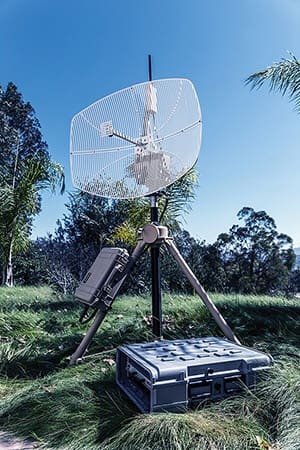
LONDON, at DSEI, Sept. 12, 2017 – AeroVironment, Inc. (NASDAQ: AVAV), a global leader in unmanned aircraft systems (UAS) for both military and commercial applications, today announced the release of a new, long-range tracking antenna (LRTA) for its Puma™ AE unmanned aircraft system. The critical upgrade extends the range of Puma systems equipped with AeroVironment’s secure Digital Data Link (DDL™) technology to approximately 60 kilometers (37.28 miles), significantly boosting Puma AE’s intelligence, surveillance and reconnaissance (ISR) capabilities and enhancing warfighter safety.

“The LRTA enables Puma AE operators to gather critical ISR data while positioned much farther from dangerous hostile fire,” said Kirk Flittie, AeroVironment vice president and general manager of its Unmanned Aircraft Systems business segment. “Importantly, this technology provides our customers with a UAS solution that can triple the range of existing Puma systems that use our standard omni-directional antenna.”

The antenna also features an automated tracking function (two-axis positioner) that ensures a secure and reliable link with the Puma air vehicle while it operates at extended range. When integrated with AeroVironment’s Mantis i45 electro-optical/infrared (EO/IR) gimbal sensor suite, this improved antenna gives Puma capabilities similar to larger and more costly Group 2 or higher UAS.

With M3/M4 DDL radio frequency capability, the new LRTA is compatible with a wide range of flight and ground assets that use those wavebands, including AeroVironment’s Pocket Digital Data Link (pDDL AE™) transceivers and Pocket RVT (pRVT™) video transceivers, which give users direct access to real-time video downlink images and geodata from any DDL-equipped platform.

Among other important features of the new LRTA, its rugged frame was designed for operation in the harshest conditions. It comes fully equipped with all the components needed for its operation. Plus, operation with the LRTA requires no modifications to Puma Systems compatible with M3/M4 DDL radios.

The new LRTA’s automated tracking function offers close range automatic antenna switching for omni-directional use. Additionally, the antenna is equipped with a self-contained uninterruptible power supply (UPS) for power conditioning.

Puma AE (All Environment) is a fully waterproof, small UAS designed for land and maritime operations. Capable of landing in water or on land, the Puma AE empowers the operator with unmatched operational flexibility in the small UAS class. Puma’s enhanced precision navigation system with secondary GPS provides optimal positional accuracy and reliability. Moreover, AeroVironment’s common ground control system (GCS) allows the operator to control the aircraft manually or program it for GPS-based autonomous navigation.

The LRTA for Puma AE systems is now available for ordering, with delivery scheduled for Spring of 2018.

www.avinc.com

DSEI 17 – Cox Powertrain Offers First Look at World’s Highest Power Density Professional Diesel Outboard for DSEI Visitors

Wednesday, September 13th, 2017

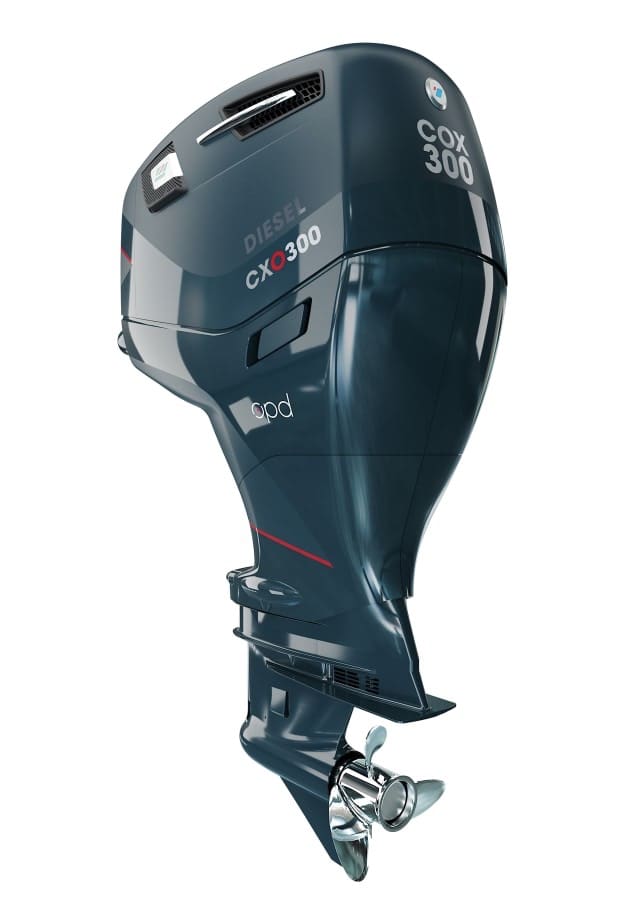
Tuesday 12th September 2017 – British diesel engine innovator, Cox Powertrain, will show a full-size model of its game changing high powered, low weight 300hp diesel outboard engine, the CXO300, at DSEI this week.

It is the first time a full size replica of the CXO300 has been shown at the leading defence industry event allowing visitors to see how much the ground-breaking engine design and layout has evolved since the previous show in 2015.

Backed by the UK Ministry of Defence (MoD), the original concept of the CXO300 is based on a supercharged, two-stroke diesel engine. It has been developed for commercial, government and military applications, where performance, durability and fuel efficiency are paramount. NATO’s single fuel policy, which aims to completely eliminate the use of gasoline from military use, means that a viable high powered diesel outboard engine such as the CXO300 will be of specific interest to Navies, Coast Guards and other governmental organisations around the world for use on their fast response vessels.

Light in weight, the CXO300 offers the flexibility and convenience of a high powered gasoline outboard engine with the diesel economy and reliability of an inboard. The engine topology provides power-to-weight ratio comparable with high-performance gasoline engines, whilst delivering diesel fuel consumption and a package volume around half that of a state-of-the-art diesel engine. Crucially for military applications, it also offers much longer service intervals for heavy use, vital when lives are on the line.

Summer 2017 saw the completion of a strong line-up of US and European distributors for the Shoreham-by-Sea, UK based company who is keen to achieve this standard globally ahead of engine launch.

Now in its pre-production gamma phase after an intense development programme, the CXO300 is set for a 2018 launch following a series of trials and an extensive demonstration programme.

Those wishing to keep up to date with the CXO300’s progress can sign up online to receive Cox Powertrain’s regular news updates at www.coxmarine.com.

SIG SAUER Introduces 6.5 Creedmoor Match Grade Ammunition

Tuesday, September 12th, 2017

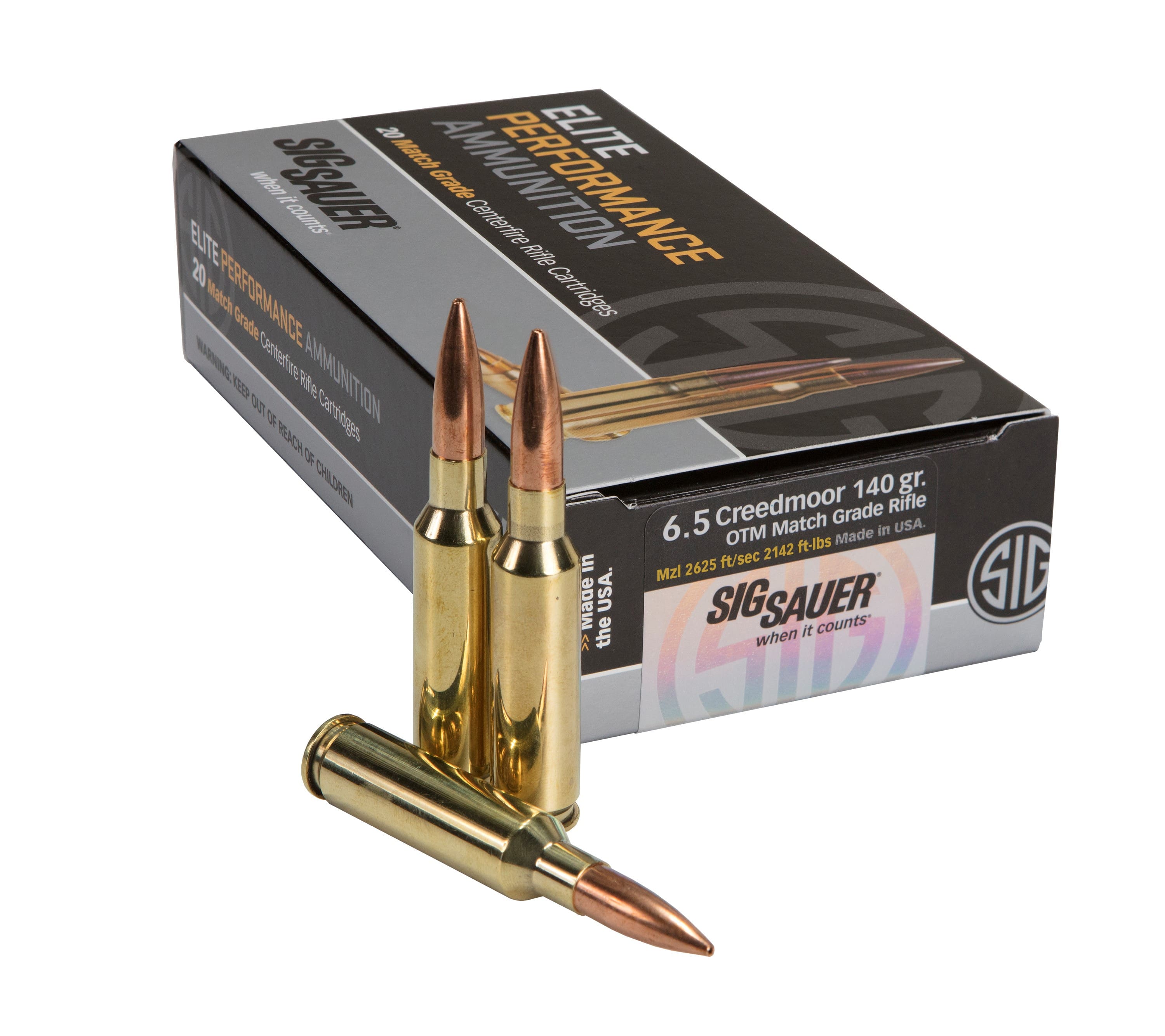
Newington, NH (September 11, 2017) – SIG SAUER, Inc. extends its Match Grade Elite Performance Ammunition line for rifles with the addition of a 6.5 Creedmoor Open Tip Match (OTM) round. Featuring a 140gr Sierra MatchKing® bullet, this new 6.5 Creedmoor load has a muzzle velocity of 2,625 fps with muzzle energy of 2,142 ft-lbs.

IMG_3909

Designed for superior accuracy, the SIG 6.5 Creedmoor Match Grade load performs exceptionally well in wind, thanks to its high ballistic coefficient, delivering a flat trajectory with minimal recoil.

“The 6.5 Creedmoor is one of today’s most popular cartridges with competition shooters and hunters alike,” said Dan Powers, President of the SIG SAUER Ammunition Division. “It is an impressive, flat-shooting round that delivers precision in challenging, windy conditions.”

Engineered to excel in today’s precision rifles, SIG SAUER Match Grade Elite Performance Ammunition uses a temperature-stable propellant that delivers consistent muzzle velocity in all weather conditions. Premium-quality primers ensure minimum velocity variations, and the shell case metallurgy is optimized in the SIG Match Grade OTM cartridge to yield consistent bullet retention round to round. All SIG SAUER rifle ammunition is precision loaded on state-of-the-art equipment that is 100% electromechanically monitored to ensure geometric conformity and charge weight consistency.

All SIG SAUER Elite Performance Ammunition is manufactured by SIG SAUER at its new ammunition manufacturing facility in Jacksonville, Arkansas to the same exacting standards as the company’s premium pistols and rifles. For more information, visit www.sigsauer.com/ammunition.

Aimpoint Launches CompM5 Today At DSEI In London

Tuesday, September 12th, 2017

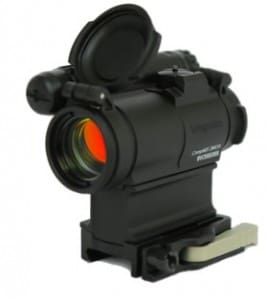
IMG_3867London, England – September 12, 2017 – Aimpoint, the originator and worldwide leader in reflex sighting technology, has announced the addition of the new Aimpoint® CompM5™ sight to their professional product line. Powered by a single AAA battery, and weighing just 147 grams (5.19 ounces), the CompM5 takes its place as the most compact optic in the Aimpoint® Comp™Series family of sights.

Originally created to meet the needs of a specific official end user, the CompM5 is now being offered for sale worldwide as contract commitments and production levels permit. The compact size of the CompM5 was made possible by the sight being powered by a single AAA battery. These small and lightweight batteries are inexpensive and easy to find almost anywhere in the world. Readily available alkaline versions of the AAA simplify logistics, and eliminate the potential shipping hazards inherent in lithium batteries. Like the other Comp Series sights, the CompM5 boasts an extremely long battery life – with over 5 years of constant-on use at intensity level seven.


The CompM5 is fully submersible up to 45 meters (150 feet), and is compatible with all generations of Night Vision Devices, as well as Aimpoint’s professional magnifier line. A military grade optical lens system gives the CompM5 exceptional light transmission and dot clarity, making the sight operationally parallax free, and providing a crisp, clear dot even under magnification.

“The Aimpoint Comp Series has been established as the worldwide standard for military grade reflex sights for over 20 years. The new CompM5 sight provides professional end users the same levels of performance provided by our full-sized sights in a much more compact optic,” said Lennart Ljungfelt, President of Aimpoint AB. “This new product saves size and weight for the operator, with no sacrifice in overall performance.”


www.aimpoint.com

Cobham Launches New Integrated Communications Products

Tuesday, September 12th, 2017

Launched at DSEI, Cobham’s new Integrated Communications Environment (ICE) products optimise the performance of multiple radios operating simultaneously on a single platform

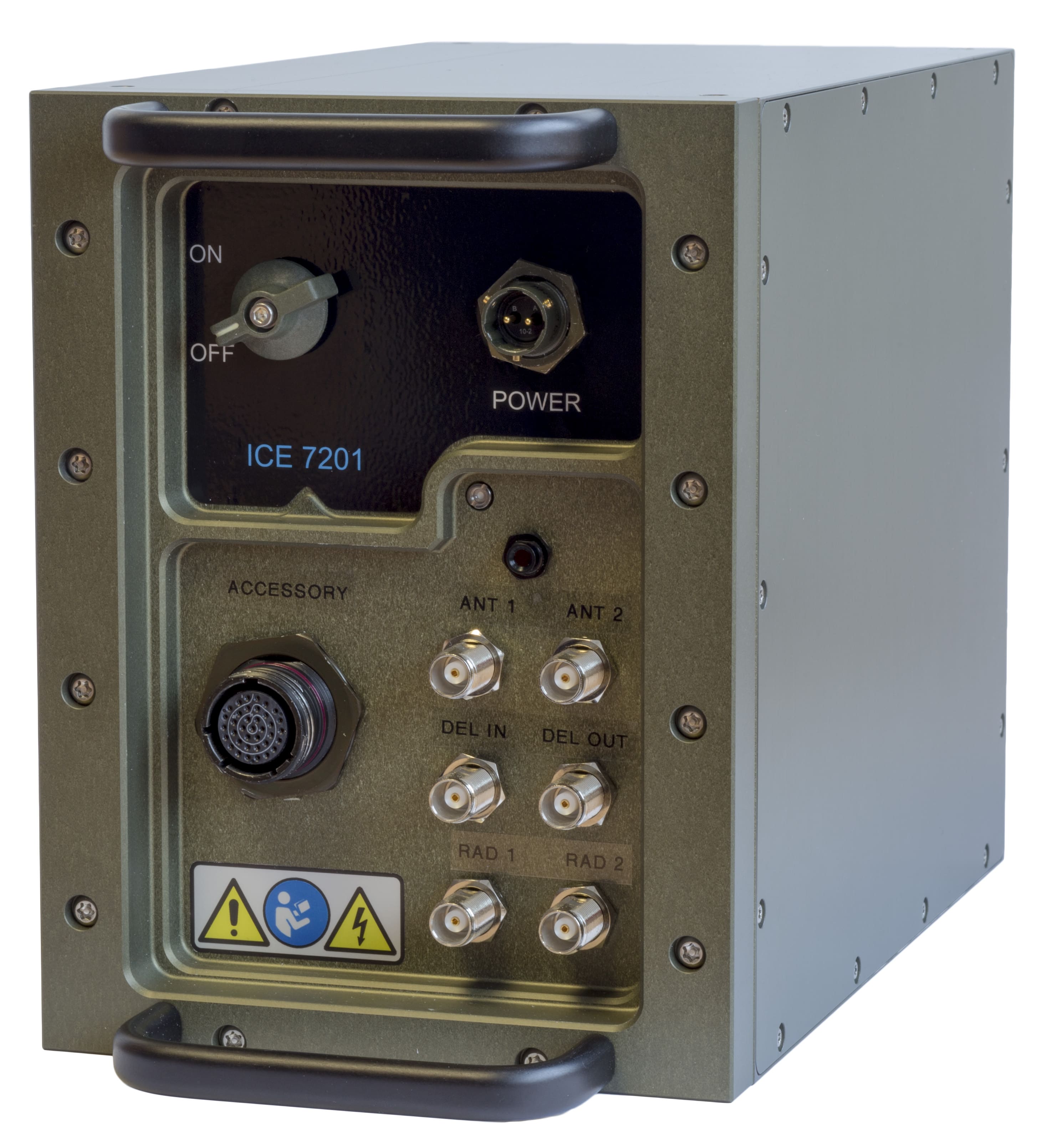
DSEI, UK: Cobham today announced that they have launched a new Integrated Communications Environment (ICE) product range which provides major improvements to existing communications systems on platforms. The new ICE products include a multi-radio interference cancellation system and new high-performance multi-port V/UHF antenna.

IMG_3911

The integration of multiple radios and other communications systems on a single platform or in a congested environment causes Radio Frequency (RF) interference which can dramatically reduce the effective radio range. This increasingly operational problem is being exacerbated by the increase of on-board communications systems which can mean they are competing for data and spectrum allocation.

David Bulley, VP and General Manager of Cobham Antenna Systems said “Cobham has been at the forefront of RF interference cancellation technologies for over 20 years with proven field performance. As communications systems on platforms have become increasingly complex our expectations of them has also heightened; Cobham’s new ICE products allow users to streamline their communications systems without affecting performance or range which makes a critical difference during operations.”

IMG_3910

The ICE 7201 interference cancellation system not only restores radio performance and operational range, it also facilitates enhanced frequency planning for operations, enabling closer separation between channels resulting in a significantly greater number of useable radio channels for a given spectrum allocation. Simultaneously, the GD2049 high performance multi-port V/UHF antenna enables the overall antenna count on land platforms to be reduced through the introduction of two VHF ports with high port-to-port isolation.

The combination of Cobham’s two new market-leading technologies allows for optimised co-site integration of radios whilst also reducing the number of antennas required on a platform. The result is a significantly improved communication effectiveness and a reduction in the cost and ‘real estate’ of the antennas required.

The new ICE 7201 system and GD2049 antenna will be exhibited on the Cobham stand, S6-150, at DSEI London, 12-15 September 2017.

www.cobham.com

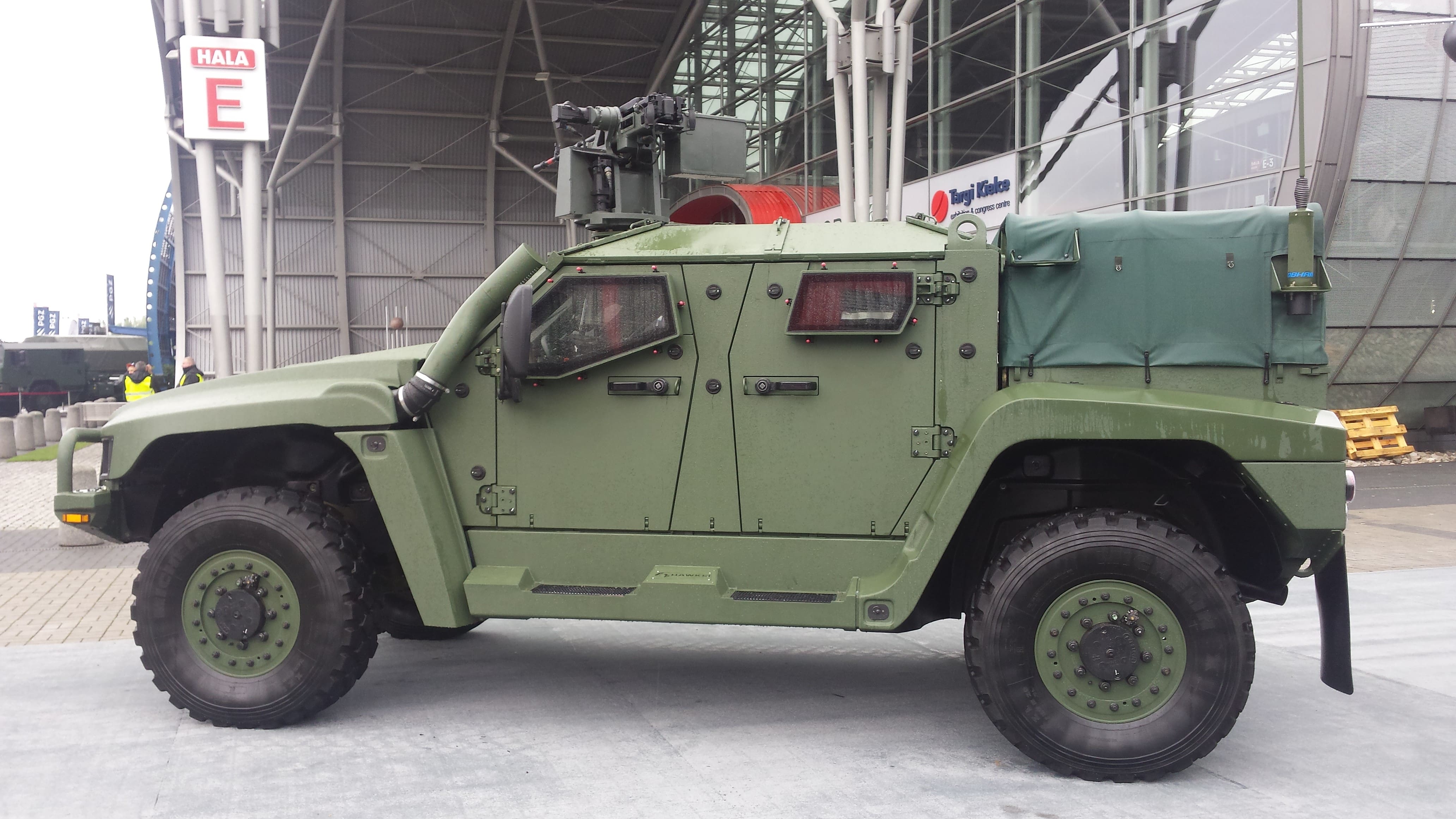
Cobham’s new GD2049 multi-port antenna installed on a Thales Hawkei vehicle at MSPO Poland. © Image supplied courtesy of Thales