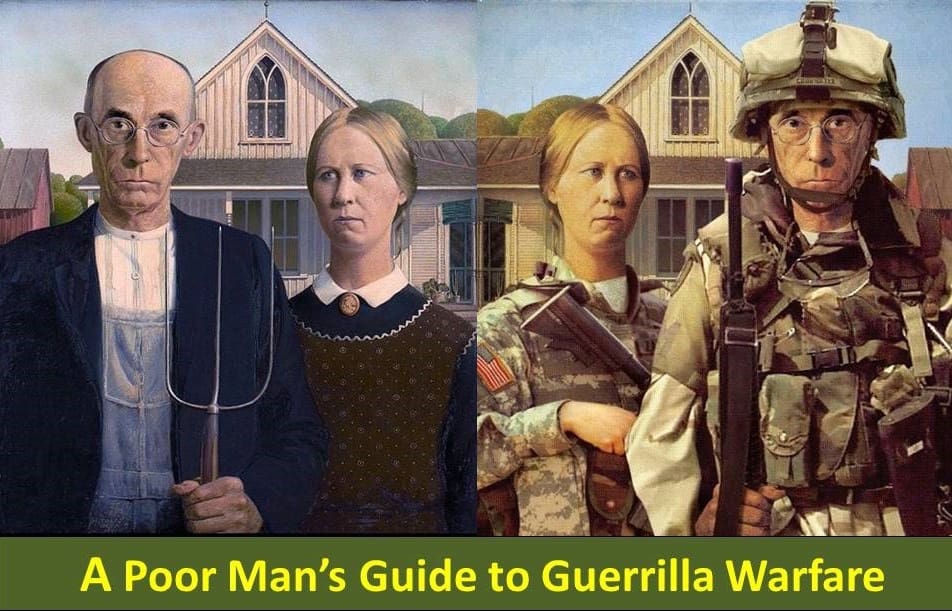
I was born and raised poor. Financially, my family was somewhere between The Waltons during the Depression and the Beverly Hillbillies – before they struck oil. Not that I noticed at the time. When I was young, all the people around me were generally in the same economic and social circumstances so there was no obvious disparity. It was not until my last two years of High School that I even became aware of it. I do not recall anyone giving me grief for my relative poverty; however, I became more conscious of my fiscal disadvantages relative to my more affluent peers. I started working after school and on weekends at 15. My immediate goal was to accumulate enough money to buy a car as soon as I was licensed to drive. I thought that one purchase would make all the difference. It did not. A cheap car – that my parents had to cosign for – did not change my social status. I still had little spending money and could not afford the latest fashions or other teenage status symbols. I was still a poor kid. It was a simple but very important life lesson.
I am not saying that growing up poor made me any more insightful, virtuous, or smarter, than someone born into a family of greater means. However, I did experience a lot in those first 18 lean years that gave me a useful perspective that ultimately proved to be professionally valuable. Later, I had the opportunity to apply and validate what I had learned. First, as a “school trained” guerrilla and eventually as someone who instructed newer Special Forces (SF) candidates on how to be successful guerrillas. Consequently, I have a practitioner’s understanding of what it takes for a guerrilla to “win” and – because they are two sides of the same coin – I also know what it takes for a counterguerrilla to prevail. I started collating and sharing my “poor man’s” insights on the subject with SF students about to be inserted into the Robin Sage exercise. While in “Pineland,” they have to work by, with, through, and alongside, a distrustful population while enhancing and effectively employing the ragtag guerrilla forces found there. It is harder than it might seem.
People in general, and Americans in particular, are prone to make one of two equally wrong assumptions when engaging people from foreign cultures, i.e. they are exactly like us…or nothing like us. Because we come from a rich society – even if we are not personally wealthy – it is often hard for American soldiers to discern and subsequently leverage the commonalities and the differences between themselves and their inevitably less fortunate foreign partners and adversaries. Moreover, the term “guerrilla warfare” itself has become old fashioned and out of style. We now prefer insurgencies and counterinsurgencies, or maybe irregular or asymmetric warfare instead. Asymmetric is perhaps the most overused and least helpful term. ALL warfare involves the combatants constantly seeking at least a temporary asymmetric advantage over their opponents. That is why I still prefer the classic term of guerrilla warfare, a.k.a. “small wars” or “poor man’s war,” because I believe it captures the normally smaller scale, limited resources, and intimate human dynamics of this kind of warfare better than the more modern terms.
I also avoid the phrase “hearts and minds.” It is vague and provides no useful guidance. Instead, I emphasize three terms: influence, manipulate and exploit. As in: How can I influence (or gain influence over) the people who have the power to help me do what I need to do? How can I manipulate the current situation into something more advantageous to my goals and objectives? And, what factors, conditions, attitudes or perceptions can I exploit to accomplish my mission? By definition, in military and financial terms, the guerrilla is always weaker and poorer than the counterguerrilla; however, influence is much, much more important than relative finances and force numbers. A better measure of relative strength is to ascertain what power (influence) the guerrilla wields with the population. Likewise, what power (influence) does the counterguerrilla have with the population? It is not the man that must be defeated, but rather his influence. Both sides have to remember that.
For a poor person, limited assets are a given and nothing in life is free. Therefore, poor people are understandably frugal – even miserly – with their resources. To get the most out of what little is available, it is important to know how and why things work in the target society rather than just observing what is going on. In the rural area where I grew up, everyone was a poor farmer. That is, most had other day jobs but almost all families tilled a vegetable garden and – if space allowed – kept chickens, a milk cow, and hogs to supplement their diet. It was a necessity, not a “lifestyle” choice. All those that could, also raised at least some tobacco and had a shed or even an entire barn devoted to drying the tobacco leaves. Once a year, tobacco brokers would come around and buy up those small batches of dried leaves. It was a vital cash crop that families counted on to plus up their incomes every fall. It was a significant and integral part of the local economy. The practice ended only because tobacco companies found it cheaper to get their product from larger-scale farm operations contractually affiliated with their brand. Consequently, the poor farmers stopped growing tobacco and life got a little harder for them.
Fast forward to Afghanistan, and a similar economic arrangement is in effect between the poor poppy farmers and the opium smugglers and profiteers. No matter how it is done, stopping the latter would have a devastating impact on the livelihood of the former. That, in turn, would naturally help guerrillas recruit more fighters and garner support from the disaffected population. In general, poor people do what they have to do to survive – often operating on the edge of the local laws. My father was a mechanic by trade. However, when I was young, he had a side hustle as a bootlegger and moonshiner. Bootlegging involves illicitly transporting booze from a place where it is legal and selling it for profit someplace it is illegal. Moonshiners simply make their alcoholic merchandise instead. In short, my father was a criminal. However, he was operating in a place where he had been born and raised. He had grown up with both his customers and local law enforcement. They were all his life-long friends and – in some cases – even relatives. Because of that familiarity, the law knew he had a wife and six kids and had little interest in taking him to jail where he would miss work and lose money. Accordingly, they rarely kept him in custody more than overnight and local judges let him off many times with warnings rather than fines. It was the socially accepted sliding scale of poor man’s justice for that time and place.
That vignette illustrates why any efforts to convert the population or the guerrilla to the American viewpoint are invariably a waste of time and energy; instead, strive to comprehend the locals’ point of view. A successful guerrilla or counterguerrilla understands that, minus the occasional foreign fighter, everyone killed on both sides (no matter how “righteous” the kill) is the son, brother, nephew or cousin of a local family, clan and tribe. They are NOT considered “bad guys” by the locals. Therefore, the population is not likely to help you, thank you or embrace your cause if it involves killing or jailing family. That does not mean you do not kill as many as you need too, but it does mean that you must fully understand the consequences. Recognize that you are also an outsider and will probably never be a “hero” to the locals no matter how long or hard you work with them.
Still, do not overthink the problem! Certainly, warfare – of any flavor – is a thinking person’s game. It always involves intuitively appreciating and leveraging fundamental human nature, but warfare is not rocket science. No one needs to have graduated from the Army War College to get it right. Indeed, guerrilla warfare specifically is routinely prosecuted almost exclusively by amateurs on all sides – not professional soldiers. Effort spent on fully understanding the local cultural dynamics is never wasted even down at the small unit level. Studying local history is useful for establishing a framework of understanding. However, appreciating something I call “cultural mythology” is far more important than history. Local mythology provides a much more accurate insight into how the population sees itself. History is not written or read by the masses. Mythology is the peoples’ narrative. Local mythology is constantly embellished and dutifully passed from generation to generation. Ask any Texan (or any American) about the Alamo. He or she will know the myth by heart but will likely be unaware of the real (unembellished) historical facts. Other peoples are no different.
In a poor society, a man’s pride or family honor is his most important possession. If that honor is threatened or perceived to be threatened, he will fight. As a case in point, De-Baathification was the single worst mistake we made in Iraq. It did not just take away a former low-level Baathist’s job. Rather it emasculated the Sunni men in front of their tribes, clans, and families. We stripped “poor men” from their position in society and denied them even a chance to earn a new place of respect in Iraq. It should come as no surprise that they eventually fought back in a poor man’s fashion. That is exactly what I would do in similar circumstances. The truth is that deliberate US policies created the Sunni guerrillas. It did not have to be that way.
I have not seen the latest version of FM3-24, Counterinsurgency. I thought that the first version was significantly flawed and I admit I have little confidence that the new version will be much better. I have heard – but cannot confirm – that it now includes “Shape” and “Transition” to bookend the “Clear, Hold, Build” mantra of the first version. As a cinematic warrior once said, “I do not think that word[s] means what you think it means.” First, I have always counseled that it is unwise to embrace the simplistic axiom that demands counterguerrillas expend enormous energy trying to physically “separate the guerrilla from the population.” Thereby – presumably – marginalizing his power and enhancing the counterguerrilla’s power until the guerrilla becomes irrelevant. Hence, the term “clear” for example, should not be (but usually in practice is) misinterpreted as essentially a tactical task, as in clearing a building. It implies that after forces have “swept” through a village or sector that the problem has been moved to the outside of our newly establish perimeter. So now, we “hold” what we have and our security can safely “face out” because that is where new threats will come from. It also implies that an uncertain, noncontiguous, and non-linear, environment can be rearranged into something very linear – and more comfortable – with a relatively simple maneuver of forces. Nonsense!
Then there is the culminating “build” phase that supposedly secures the peace – equally nonsensical. The predictable result of too many leaders visualizing guerrilla warfare through the lens of rich American builders rather than poor local farmers. In other words, too much money and not enough “common sense” – not that common sense is very common. In a guerrilla war, “clear” is more akin to a poor farmer clearing land for cultivation; in other words, a longer duration, hands-on, and “operational” rather than tactical process. Long story short, I would argue that successful guerrilla warfare requires combatants to think more like poor farmers rather than rich builders. Functioning societies are not akin to machines or building, they are instead analogous to living entities. They have to be healed not rebuilt. I would suggest that “build” could and should be replaced by “raise” or “grow” – as in raising a crop or a child. Anyone can readily build a government infrastructure. Every country on earth has one. However, one has to grow or raise (develop) a representative government or even a workable concept of governance. Just as we cannot kill our way to success, one cannot simply build our way out either. However, over time, we can help potentially grow/raise something that will be reasonably self-actualized and enduring.
Nevertheless, building is the American default because it is easier and faster than raising or growing. Besides, building gives the illusion of quick progress. In fact, during GWOT we established entire organizations tailored to do construction projects called Provincial Reconstruction Teams (PRTs). PRTs were supposed to be optimized to “win hearts and minds” – but managed only to make Americans feel good temporarily. The PRTs chose which projects to finance and then measured their “success” by pointing to the number of projects completed and the fact that they had spent all their money. American PRTs in Afghanistan and Iraq were worthless and even counterproductive to our objectives; in fact, the expenditure of allocated monies was so badly managed as to be criminal. Indeed, if PRTs were such a great idea, why not built Iraqi or Afghan led versions instead? Simple, the HNs governments (even Iraq that might conceivably have had the money) had no intention to continue supporting those kinds of projects after we left. So what was the logic of us doing it?
Still, as rich Americans, we almost instinctively move to “solve” issues by spending money. Throwing resources at a problem may create a short-term effect but will likely have no long-term impact. Again, we would be better served if we learned to think more like poor people. Watch a person raised in a poor culture build a warming fire. He will always use only the minimum fuel to survive. A man from a rich culture invariably builds a fire big enough to achieve comfort. He has little concern for conserving resources for an uncertain future. Even the poorest American has been raised in a culture when resources are abundant, available, and readily renewable. A man from a poor culture knows down to his bones that resources are a zero-sum game and always finite. To extend the poor farmer analogy, a farmer knows he cannot control the weather or other factors that may threaten his crop. But with the minimum of resources, he will still plant every year because doing so represents a better alternative for his future than doing nothing. Indeed, he hopes to increase the yield incrementally every year of his crop or his herd. He does not need peace, perfect security, or some guarantee of success in order to try.
Additionally, I advise anyone who will listen that any meeting with locals should have a concrete purpose…even if it is just to establish a working relationship. Do NOT fall into the “feel good” trap and have long, pointless discussions about how we can “help” the locals. I taught my people that it was best to deal with these engagements as business propositions. We only offer our “goods and services” pragmatically for something of equal or greater value from the other side. That cuts through the culture and language barriers no matter who we are dealing with. All cultures understand trade. It is no coincidence that trade is usually the first nonviolent and mutually beneficial interaction between two foreign cultures. I do not have to be an expert in the local history, culture, or language – or him in mine – to effectively haggle and find a workable balance between my wants and needs and his. I do not have to like the person nor do I need him to like me. It is just business and both sides can perceive themselves as winners. It works much better than the “I am here to help and give you free stuff out of the goodness of my heart” song and dance. Nobody in the world buys that BS.
Now, I am going to share one of the keys to successful guerrilla warfare campaigns. To win that kind of fight, leaders do not necessarily have to be smarter, braver, more perceptive, or better resourced than their opponent; but they do need to have a little more imagination. Guerrilla wars are not won simply by maneuvering military forces to “close with and destroy the enemy.” Rather, a guerrilla or counterguerrilla leader must concentrate on influencing, manipulating and exploiting, everything that can be brought to bear to beat the other side’s ideology and power. It means routinely thinking outside of the doctrinal box because there is no cookie-cutter “book answer” to whatever situation a guerrilla combatant will face on the ground. Finally, no matter which side we are supporting, guerrilla warfare still means killing and destroying as required. Yet, we make the effort to gain and maintain influence and conserve our resources by only killing those that need to be killed – like zealots who cannot be co-opted for example. This does not somehow make guerrilla war into “touchy-feely” warfare, as some seem to erroneously think. It is the toughest of business and it requires multi-functional and imaginative guerrilla warfighters who can bring their A-game day after day.
De Oppresso Liber!
LTC Terry Baldwin, US Army (Ret) served on active duty from 1975-2011 in various Infantry and Special Forces assignments. SSD is blessed to have him as both reader and contributor.