TYR Tactical

Archive for the ‘Navy’ Category

NSWC Crane Launches Rapid Capabilities Cell to Accelerate Solutions for the Fleet

Tuesday, July 21st, 2026

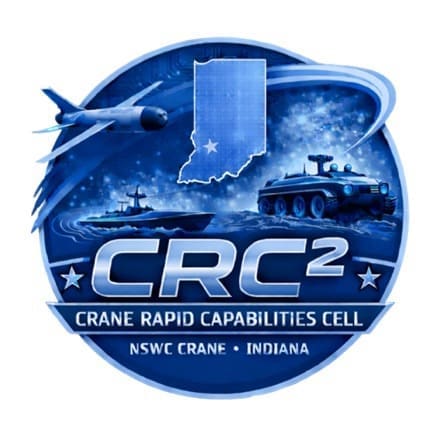
CRANE, Ind. – Naval Surface Warfare Center, Crane Division (NSWC Crane) launched the Crane Rapid Capabilities Cell (CRC2) to accelerate the delivery of critical technology to the warfighter. This new initiative will serve as a direct pipeline for identifying and delivering solutions to meet the most urgent and emerging needs of the U.S. Navy.

CRC2 is intended to be aligned with the Navy Rapid Capabilities Office as well as the PAE Rapid Capability Cells, which were established over the last year to maintain U.S. maritime supremacy by ensuring swift assessment and transition of urgent solutions. CRC2 bridges operational needs with NSWC Crane’s robust technical capabilities and collaborates across Warfare Centers to bring a broad range of solutions to the warfighter.

“This initiative is about one thing: delivering a decisive advantage to our sailors at the speed of relevance,” said Dr. Angela Lewis, SES, Technical Director at NSWC Crane. “The Crane Rapid Capabilities Cell is our commitment to the Fleet. We are streamlining access to our world-class experts, capabilities, and facilities to ensure that when a critical need arises, we will answer the call with innovative and effective solutions.”

CRC2 monitors Fleet demand, coordinates response options such as rapid acquisitions, supports problem curation efforts such as with Warfighter Driven Challenges, and facilitates proposal development, partnerships, and outreach.  

Adam Parsley, the Rapid Prototyping, Experimentation, & Demonstration (RPED) Lead at NSWC Crane, said the core concept of CRC2 is to act as a “technical force multiplier,” leveraging NSWC Crane’s extensive network of industry, government, and academic partners to develop solutions for the Fleet.

“We are looking forward to working with the Navy RCO and various Rapid Capability Cells as they go through their process of rapid development and deployment, ensuring we focus NSWC Crane’s technical capabilities where appropriate and where we can help bring solutions to Navy problems,” said Parsley. “We want to leave no stone unturned as we strive to bring solutions forward as quickly as possible. CRC2 is about innovating to find immediate, creative solutions for the Fleet.”

CRC2 creates opportunities for NSWC Crane to evolve with the rapidly changing threat environment.

“Modern naval challenges are complex and multi-domain—our solutions must meet those demands,” said Stacey Mervyn, the Rapid Mission Integration and Interoperability Department Director at NSWC Crane. “The Crane Rapid Capabilities Cell provides the perfect framework for my team to integrate our specialized technologies with the broader expertise across NSWC Crane. It’s about creating a unified, rapid response that ensures our warfighters have a comprehensive advantage, no matter what the mission.”

CRC2 operates across NSWC Crane’s mission areas—Strategic Missions, Electromagnetic Warfare, and Expeditionary Warfare. Parsley said their team’s strength lies in its ability to integrate diverse technologies to solve complex, multi-faceted problems.

“We work in the seams, so to speak, to bring several technology offerings at NSWC Crane to bear on a given problem, with technologies such as sensors, electro-optics, and software,” said Parsley. “We have a focus on integration and interoperability from the technology standpoint. Using rapid acquisition tools, whether it’s FAR or non-FAR authorities, OTAs, Prize Challenges, the use of our different partnership authorities, whatever we can do to broaden the solution set for the Fleet.”

By NSWC Crane Corporate Communications NSWC Crane

Smart Shooter Secures First US Navy Contract for SMASH 2000LE Fire Control Systems

Monday, June 1st, 2026

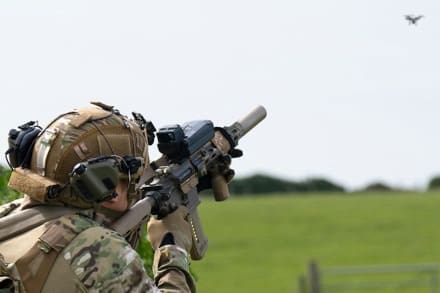
The $1.8 million award marks Smart Shooter’s entry into another major U.S. military market segment, following recent contracts with the U.S. Army, U.S. Marine Corps, and U.S. Air Force, amid growing operational demand for counter-drone capabilities

[June 1, 2026] – Smart Shooter, a designer, developer, and manufacturer of innovative fire control systems, announced today its first significant contract with the U.S. Navy. Under the contract, valued at approximately $1.8 million, the company’s U.S. subsidiary, Smart Shooter Inc., will supply the U.S. Department of War with soldier-portable SMASH 2000LE (also known as SMASH 3000SA) fire control systems. Delivery of the systems to the U.S. Navy is expected in the second half of 2026.

The agreement represents Smart Shooter’s entry into an additional major U.S. military market segment and marks another strategic step in the company’s expansion with the U.S. Department of War. The contract follows a series of agreements signed over the past year with other U.S. military branches, including the U.S. Army, the U.S. Marine Corps, and the U.S. Air Force. These successive awards reflect increasing operational demand among U.S. military branches for Smart Shooter’s solutions in response to the expanding drone threat.

The contract was awarded by the Naval Surface Warfare Center (NSWC), the U.S. Navy’s central organization for research, development, testing, evaluation, and engineering of systems related to surface warfare. The procurement will be carried out through Atlantic Diving Supply Inc. (ADS), a leading authorized provider of tactical equipment, logistics, and procurement solutions for the U.S. Department of War and federal agencies.

Michal Mor, CEO of Smart Shooter, said: “Securing our first significant contract with the U.S. Navy marks an important milestone in Smart Shooter’s continued expansion across U.S. defense organizations. This award reflects our entry into another key military market segment and further demonstrates the confidence placed in our unique SMASH technology. Together with our recent agreements with the U.S. Army, U.S. Marine Corps, and U.S. Air Force, this latest award underscores the growing operational need for precise, reliable, and field-ready solutions to address the drone threat.”

Smart Shooter’s SMASH family of fire control systems is deployed by defense and security forces in the United States, Israel, the UK, Germany, NATO member countries, and additional allied nations, providing enhanced precision, situational awareness, and effective engagement against evolving battlefield threats.

For additional information, visit www.smart-shooter.com.

NSWC Crane Sailor Brings Fleet to the Lab to Elevate Electromagnetic Warfare Capabilities

Monday, May 18th, 2026

A Naval Surface Warfare Center, Crane Division (NSWC Crane) Sailor and Avionics Technician has spent his decade-long career honing his knowledge and expertise in electromagnetic warfare to support the Fleet. Avionics Technician Petty Officer Second Class (AT2) Jeffrey Weaver joined the U.S. Navy after receiving his bachelor’s degree. He specialized in maintenance, troubleshooting, and repair of transmitter and radar packages to support F/A-18 platforms and ALQ-99 Tactical Jamming Systems.

In 2023, AT2 Weaver transferred to NSWC Crane, where he continues to support the Navy’s mission and capabilities by bringing operator-level feedback to engineering building and maintaining tools. This includes scheduled and unscheduled repair of ALQ-99 transmitters, which protect aircraft such as the F/A-18 by disrupting enemy radar.

Working at a federal research and development laboratory forges strong bonds and enables collaboration between the military and civilian workforce.

“The highlight of my time at Crane would be the conversion of the Low Band Transmitter to Low Band Consolidated Transmitters for domestic and Foreign Military Sales programs,” said AT2 Weaver. “The knowledge shared and gained from my time here [is important to me]. I was able to share my expertise on Low Band Transmitters, and my experiences from working in the Fleet with the engineers and civilian technicians. I gained a lot of new insights and knowledge working on transmitters at a deeper level than many of my fellow service members will ever experience.”

AT2 Weaver said his time at NSWC Crane will be valuable as he continues his career.

“I believe the role of a technician in this field is becoming more crucial as technology continues to improve and develop,” he said. “Being able to maintain and repair assets in the Fleet with the knowledge gained here will only improve mission readiness. Developing the skills that allow the Navy to maintain air superiority to protect our aircraft and troops is vital in our nation’s current climate.”

Knowing the impact of his efforts is motivating for AT2 Weaver.

“I find the work important because the work we do here helps Fleet Readiness Centers like Whidbey, the ships in the fleet, and ultimately the pilots flying dangerous missions overseas. Knowing what I work on can help the Navy to fly more missions safely is very important to me.”

Story by Sarah Oh

Gatorz Eyewear X Navy SEAL Foundation SENTIX

Sunday, May 3rd, 2026

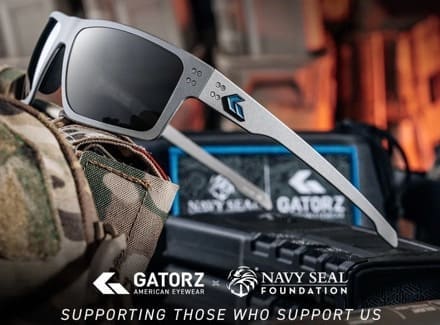
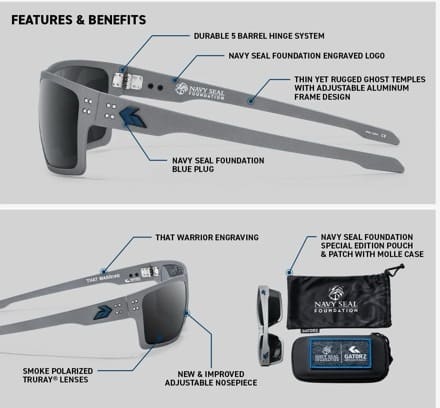
The GATORZ x Navy SEAL Foundation Sentix brings together American crafted durability and a mission that extends beyond the frame.

Built from aircraft grade aluminum and paired with TruRay Smoke Polarized lenses, each pair delivers the clarity and strength required in high performance environments. Custom Navy SEAL Foundation and THAT WARRIOR engravings reflect a mindset defined by resilience, discipline, and commitment.

A portion of proceeds from every purchase supports the Navy SEAL Foundation and its work providing critical care for warriors, veterans, and their families.

Get yours at www.gatorz.com/products/navy-seal-foundation-x-sentix.

First Contact: Meet the Dive Medical Recovery Team of Artemis II

Friday, April 10th, 2026

SAN DIEGO — The first face the Artemis II crew will see upon their return to Earth will be the face of a U.S. Navy Sailor.

Lt. Cmdr. Jesse Wang, Senior Chief Hospital Corpsman Laddy Aldridge, Chief Hospital Corpsman Vlad Link, and Hospital Corpsman 1st Class Steve Kapala make up the dive medical team who will be the first to open the Orion capsule upon its return to Earth, make initial medical assessments of the Artemis II crew, and assist them out of the capsule safely and efficiently.

They will provide initial one-on-one assistance to Christina Koch, Jeremy Hansen, Reid Wiseman, and Victor Glover respectively. Training for this mission has been a years-long process between the four team members as the first-contact medical providers inside the capsule.

Often working in expeditionary warfare communities, Navy dive medical personnel are certified divers and undergo specialized training, making them experts in decompression illnesses and other undersea medical considerations. Their mission is to care for and ensure dive-qualified service members are safe to conduct diving operations.

Following Orion’s reentry into Earth’s atmosphere and splashdown in the Pacific Ocean, the medical team will enter the capsule to conduct initial exams for the crew, provide triage care as necessary, and assist the astronauts in egress onto the inflatable raft set up outside by Navy divers. The first-contact medical providers will then prepare the crew to be airlifted by Helicopter Sea Combat Squadron (HSC) 23 back to amphibious transport dock USS John P. Murtha (LPD 26) for follow on evaluations.

Wang, assigned to Explosive Ordnance Disposal Group 1, serves as the lead for the four-man team. From Laguna Beach, Calif., he is a board-certified emergency medicine doctor by trade, having completed residency training at Lincoln Hospital in Bronx, New York. He joined the Navy in 2021 and was designated as an undersea medical officer in 2024.

“As a proud member of the undersea medical community, I am particularly humbled to play a part in this mission,” Wang said. “It is the honor of a lifetime to stand here today, ready to provide the absolute best care to the Artemis II crew.”

Aldridge, from Cushing, Okla., will be the first member to make contact with the crew upon their return to Earth. Assigned to Explosive Ordnance Disposal Expeditionary Support Unit 1, he will open the capsule, enter the space, and begin medical assessments.

“Coming from three generations of military service in my family, I’m honored to serve as the senior dive independent duty corpsman for this mission,” Aldridge said. “This effort is the culmination of both our training to bring world class care to the Artemis II crew and countless dedicated years of Navy Diving and Navy medicine.”

Dive independent duty corpsmen like Aldridge, Link, and Kapala are specifically trained in dive medicine.

Link, assigned to Explosive Ordnance Disposal Mobile Unit (EODMU) 1, is the third member of the team and hails from Chelsea, Mass. He has 18 years of experience in dive medicine, but he shares that this mission is already a highlight of his career.

“I have been exposed to the Navy since I was a young teenager, and I’m proud to represent both my family and hometown,” Link said. “Contributing our efforts to NASA and the Artemis II mission is something we take great pride in as part of that legacy.”

The fourth member, Kapala, assigned to EODMU-11, hails from Alpena, Mich., and has been practicing dive medicine since 2018. He notes the significance of the historical mission as a unified effort, both for himself and everyone involved.

“I grew up reading sci-fi novels and watching space movies, never thinking that I would play a part in a recovery mission like this,” Kapala said. “It is surreal to play a part in safely recovering the astronauts from the capsule to get them home safe to their families, an effort that really makes you realize this team is bigger than just the four of us.”

With immense levels of experience and specialized training under their belts, this team of expeditionary medical providers is prepared to give the Artemis II crew a warm welcome back to Earth following their 10-day lunar mission.

“Our fellow divers, the Sailors on the ship, the helicopter squadron, our partners at NASA, and everyone supporting this mission are ready to bring the Artemis II crew home,” Wang said. “This team is undoubtedly making history.”

U.S. Navy Divers assigned to EODGRU-1 are underway on USS John P. Murtha in the U.S. 3rd Fleet area of operations supporting NASA’s Artemis II mission, retrieving the crew and spacecraft following their return to Earth and splashdown in the Pacific Ocean. NASA’s Artemis II mission sent four astronauts on a flight around the moon in the Orion space capsule, marking the first time humans journeyed to deep space in over 50 years.

Story by Lt Erin Wiley 

Explosive Ordnance Disposal Group One

52nd Collaborative EW Symposium Welcomes UK for First Trilateral Event

Sunday, March 22nd, 2026

NAVAL AIR WARFARE CENTER WEAPONS DIVISION, POINT MUGU, Calif.

Welcome to the Invisible War

Invisible wars demand visible action. In this arena, coalition electronic warfare, interoperability and spectrum superiority will decide victories in future near-peer conflicts.

Whoever owns the electromagnetic spectrum owns the battlefield.

That’s why nearly 500 electronic warfare leaders from the United States, Australia and — for the first time — the United Kingdom gathered at Naval Base Ventura County, Point Mugu, March 11-13 for the 52nd annual Collaborative Electronic Warfare Symposium.

The Naval Air Warfare Center Weapons Division and the Association of Old Crows jointly host the annual symposium under a co-sponsorship agreement. The event focuses on collaboration and innovation in EW, uniting government and industry partners worldwide.

Policies and Platforms Risk EW Static

One of the biggest challenges in coalition EW is getting different nations and services to operate seamlessly in the EMS. Without standardized doctrines, aligned classification standards and compatible technological platforms, coalition operations risk becoming disjointed.

Bottom line: Coalition forces shouldn’t encounter more static from their own policies than from their adversaries.

Coalition EW Steps Up for Near-Peer Showdown

This year’s theme, “Coalition EW in Near-Peer Conflict,” explored interoperability across coalition EW operations, from ground and airstrike to naval combat, in a classified setting. Symposium co-chairs David Wood and Thomas Bluhm, NAWCWD’s lead event planners, guided discussions on enhancing coalition readiness for near-peer conflicts.

This year’s symposium brought together everyone from four one-star military officers and civilian specialists to young professionals in the Engineer and Scientist Development Program.

“Effective coalition EW requires alignment at every level, from senior leadership down to junior warfighters and support personnel,” Bluhm said.

One Team’s Mission to Unite Three Nations

Two years of policy hurdles. Classification roadblocks. Endless coordination challenges.

Dave Mohler, NAWCWD’s Airborne Electronic Attack International Programs lead, and his team overcame them all with one clear mission: bring the United Kingdom into the EW conversation alongside the United States and Australia.

“Our International Programs team is made up of highly specialized and dedicated professionals,” Mohler explained. “It wouldn’t have been possible without my international policy analysts, security specialists, and foreign contact officers”

Mohler coordinated with senior Navy and Department of Defense officials to expand the previously bilateral U.S.-Australia symposium, held since 2015, to include the UK.

Bringing the UK into the fold was critical, as AUKUS enables deeper coalition collaboration.

Established in 2021, AUKUS initially focused on nuclear-powered submarines. Its second pillar prioritized collaborative defense capabilities, including EW — creating the opportunity Mohler needed.

“This was not a simple or easy task,” Bluhm said. “Mr. Mohler and his team worked through many denials and hurdles to secure approvals for this first-ever tri-national Collaborative EW Symposium.”

Mohler emphasized why this expanded partnership matters.

“More than ever, we must acknowledge that the wars of tomorrow will not be deterred, nor fought, alone,” Mohler stressed. “This is the first step toward understanding how we operate together and identifying areas where we can cooperatively develop solutions for the warfighter.”

Thanks to Mohler’s efforts, the three nations now have a clear framework for deeper cooperation, making AUKUS a blueprint for dominating the EMS.

Why Point Mugu Still Leads the EW Fight

For the first trilateral event focused on dominating the invisible fight, you go where history has proven itself — a quiet naval base along California’s coast: Point Mugu.

In April 1951, Cmdr. Clifton Evans Jr. established the Countermeasure-Interference Division, creating the Navy’s first dedicated EW capability — a visionary move that was decades ahead of its time. More than 70 years later, pioneering foresight keeps Point Mugu at the forefront of EW, laying the groundwork critical to coalition EW in the age of near-peer threats.

“In the 74 years since, spectrum warfare technologies have grown exponentially,” Bluhm said. “Denying adversaries the use of their radars, communications and navigation signals while ensuring our coalition allies maintain resilient and effective spectrum operations is best done with our trusted allies.”

With Point Mugu’s legacy established, the focus shifts to next-generation technologies allies are leveraging to close EW capability gaps.

How AUKUS Allies Are Closing the EW Gap

The symposium showcased next-generation EW technologies from government and industry partners across the three AUKUS nations. Highlights included advanced directed energy weapons, such as high-power microwave systems, and compact, low-cost SWaP jammers delivering high performance. Attendees also explored radar alternatives and innovative command-and-control systems for EMS operations.

On day two, gray skies and periodic rain greeted attendees at the Station Theater for the symposium’s strategic panel.

Moderated by Bluhm, the panel featured U.K. Royal Air Force Air Commodore Blythe Crawford, commandant of the Air and Space Warfare Centre; Australian Air Commodore Peter Robinson, commander of Air Combat Group; and NAWCWD’s director of research and development, Harlan Kooima.

“The U.K. delegation is delighted to be attending the Collaborative EW symposium at Point Mugu alongside our U.S., Australian and industry partners,” Crawford remarked. With a smile, he noted that the weather reminded him of his hometown in Lincolnshire, England.

He went on to highlight the strategic importance of the trilateral partnership.

“If we are to fight together, then we need to leverage each other’s technologies, methodologies and processes for spectrum management,” Crawford explained. “We all have discrete expertise in EW. Collaborative approaches are essential if we are to prevail as partners in any future fight.”

Each nation brings powerful EW platforms to the table: the U.S. Navy EA-18G Growler, with its precision jamming; the Royal Australian Air Force E-7 Wedgetail, an airborne early warning system with vast range; and the U.K. Royal Air Force Eurofighter Typhoon, armed with the advanced Praetorian Defensive Aids Sub-System.

Even the best tools fail if they’re not speaking the same language. Disparate systems and upgrade cycles complicate joint tactics, letting adversaries exploit gaps with advanced jamming and spectrum denial.

The U.S.-Australia Next-Generation Jammer, deployed in 2024 with significant Australian investment, provides a proven model for coalition EW synergy and interoperability, demonstrating how allies can eliminate vulnerabilities in the spectrum fight.

AUKUS Shifts from Blueprint to Battlefield

Tight coordination is critical in the congested and contested EMS. Without it, coalition forces risk accidental interference — a self-inflicted jam session.

Robinson sees the symposium as AUKUS in action, turning high-level strategy into concrete, battlefield-ready capabilities.

“AUKUS calls for the three countries to work together to share an understanding of the tools, techniques and technology to enable our forces to operate in contested and degraded EW environments,” Robinson explained.

He noted they’ve moved beyond philosophical debates toward aligning policy, doctrine and joint operational planning—a critical step as threats rapidly evolve.

And the coalition isn’t wasting any time. One example is already moving from concept to reality.

“In 2025, under AUKUS, we’ll conduct a tri-nation EW experiment focused on hypersonic threats and adversarial AI-driven spectrum denial,” Kooima said. “We’ll test new countermeasures and share the playbook.”

Together, the three nations will practice defending against advanced missiles and AI-powered signal jamming designed to disrupt communication and radar systems.

But Kooima believes the coalition needs something even more targeted to tackle the Indo-Pacific’s unique EW threats.

“I’d push for AUKUS-specific wargames — tabletop and live-fly — that pit us against AI-driven EW threats in Indo-Pacific conditions,” Kooima recommended. “These venues build muscle memory and trust we’ll need in a real fight.”

What a $25 Balloon Taught Us About War

Sometimes, war isn’t won by how much you spend. It’s won by how much it costs your adversary.

Crawford highlighted a powerful lesson from Ukraine: A simple $25 balloon drifting into Russian airspace baited missiles worth enough to buy a garage full of high-end Ferraris — proving how low-cost ingenuity can deflate multimillion-dollar air defense systems.

“While we initially perceived Russia as having an advantage, Ukraine showed us the spectrum is wide open for innovation,” Crawford noted.

He also emphasized another issue revealed by the Ukraine conflict: Modern warfare rapidly exhausts weapon supplies, and the coalition’s industrial base isn’t yet equipped to swiftly replenish expensive weapons. Disposable, inexpensive systems can bridge this critical gap.

The Spectrum Isn’t a Side Mission — It’s The Mission

As the symposium concluded, one theme emerged: Victory in EW demands advanced jammers with pulse-by-pulse agility, near-instant waveform adaptation and coalition teams operating in concert like an elite orchestra.

“This symposium proved one thing: All three nations face the same challenges with respect to future threats and our exploitation of the EMS,” Crawford said.

Robinson went even deeper, pointing to history. Shared values may build alliances, but winning in the EMS demands clear strategy, tight coordination and constant adaptation.

“Australia is blessed to hold the deep relationships we have with the United States and the United Kingdom. Each of our nations has a history of fighting for the values we share. We will fight together again,” Robinson said. “A key part of our success or failure in future conflicts will come down to our ability to win the battle in the EMS.”

For Mohler, this symposium capped years of effort uniting the three nations under AUKUS. And it’s only the beginning.

“Going forward, this event will continue to serve as a platform for the AUKUS partners to gather and drive successful outcomes for the coalition in the years to come,” Mohler concluded.

Kooima envisions a future where AUKUS partners share real-time intelligence, standardize tactical training and rapidly innovate next-generation technologies like quantum computing, artificial intelligence and advanced EW.

“It’s about trust, tech and tempo,” Kooima said. “Get those right, and we’ll outmatch any near-peer coalition.”

Yes, AUKUS is an agreement. But it’s also the strategic frequency coalition forces must tune into to dominate the spectrum fight.

Via NAVAIR

NAVIFOR Announces Winners of First Information Warfare Battle ‘E’ Awards

Thursday, February 12th, 2026

SUFFOLK, Va. – The Naval Information Forces (NAVIFOR) command announced the winners of the first 2025 Information Warfare (IW) Battle Efficiency (Battle “E”) awards, recognizing commands that have demonstrated sustained, superior performance and strengthened warfighting readiness in the IW domain.

The Battle “E” award program was recently expanded by the Chief of Naval Operations to include the Information Warfare community, acknowledging the critical warfighting capabilities IW provides to the fleet. The winning commands represent the top ten percent of all IW commands, selected based on their performance throughout 2025.

“The competition was exceptionally demanding, with those nominated demonstrating sustained superior performance, strengthening overall warfighting readiness, and fostering a culture of excellence,” said Vice Adm. Mike Vernazza, commander of Naval Information Forces. “This award is a clear reflection of Naval information warfare’s role as a primary warfighting capability, with our influence spanning from the seabed to space.To the entire IW enterprise: your dedication is pivotal to mission success. Your unwavering pursuit of excellence directly strengthens our warfighting readiness and I couldn’t be more proud of our winners for their remarkable performance.”

The winners of the 2025 Information Warfare Battle “E” are:

· O6 East: Fleet Weather Center Norfolk

· O6 West: Navy Information Operations Command Texas

· O5 East: Naval Information Warfare Training Group Norfolk

· O5 West: Naval Information Warfare Training Group Gulfport

The Battle “E” is not only a command achievement but also an individual honor. Sailors permanently attached to the winning units during the competitive cycle are now authorized to wear the Navy Battle “E” ribbon, a symbol of the hard work and dedication.

“The commands recognized today have set the standard for excellence in the Information Warfare community,” said Capt. Sharon Pinder, NAVIFOR’s Assistant Chief of Staff for Training. “Their success is a direct result of rigorous training, innovative thinking, and a relentless commitment to building a battle-ready force. These teams have demonstrated that superior readiness and a culture of continuous learning are the cornerstones of our warfighting advantage.”

NAVIFOR’s mission is to generate, directly and through our leadership of the IW Enterprise, agile and technically superior manned, trained, equipped, and certified combat-ready IW forces to ensure our Navy will decisively DETER, COMPETE, and WIN.

Note: A graphic celebrating the winners of the inaugural 2025 Information Warfare (IW) Battle Efficiency (Battle “E”) awards. The Battle “E” award recognizes commands for sustained, superior performance and strengthening warfighting readiness throughout the competitive cycle. The winners represent the top ten percent of all IW commands. (U.S. Navy graphic by Jason Rodman)

Gentex PURSUIT Helmet System Selected as US Navy Next Generation Fixed Wing Helmet

Thursday, January 22nd, 2026

CARBONDALE, PA, January 21, 2026 – Gentex Corporationannounced today that its PURSUIT Helmet System has been selected by the US Naval Aircrew Systems program office (PMA-202) as the Next Generation Fixed Wing Helmet(NGFWH).

The Navy NGFWH awarded contract is a 5-year Indefinite Delivery, Indefinite Quantity (ID/IQ) contract to deliver over 5,000 NGFWH systems and associated spares to support the fielding of the next generation helmet across all Navy fixed wing aircraft, including E-2D, F/A-18, E/A-18G, T-45, T-6, and the in-development Undergraduate Jet Training System (UJTS),and is anticipated to total approximately $22M during the period of performance, representing one of the most significant modernization efforts for US Navy aircrew flight equipment in recent years. Awarded under PMA-202’s Helmet Mask Regulator (HMR) program and covering both Low-Rate Initial Production (LRIP) and Full-Rate Production (FRP), the selection underscores Gentex’s proven commitment to delivering next generation protective technologies that evolvewith the modern warfighter’s needs. It also further solidifies Gentex’s position as the global leader in advanced personal protection and situational awareness solutions for defense forces, aircrew, emergency responders, and industrial personnel.

“This contract award from the US Navy is a significant milestone for Gentex and demonstrates our unwaveringcommitment to advancing the world’s most innovative protection solutions for warfighters,” said Robert McCay, Vice President of Aircrew Systems at Gentex Corporation. “The PURSUIT system delivers meaningful advancements in aircrew safety, comfort, and mission performance, ensuring NavalAviators and Naval Flight Officers are equipped withtechnology that keeps pace with the rapidly evolving demands of modern aviation. We are honored to continue our trusted partnership with the US Navy and look forward to providing the US military and international allies with the PURSUIT Helmet System for decades to come.”



The Navy’s decision reflects the PURSUIT Helmet System’ssuperior performance, enhanced safety features, and modern, future-proof architecture, purpose-built to support emerging mission requirements. PURSUIT directly addresses long-standing aircrew concerns identified across the services, including neck strain from poorly balanced helmets due tosuboptimal HMD/NVG integration and heightened ejection seat injury risk. The helmet’s modular, lightweight design with an optimized center of gravity and Gentex’s collaboration with various HMD OEMs allow the delivery of advanced technology solutions that provide aircrew with an immediate, tactically relevant helmet solution that ensures 600 KEAS protection.Building on 70+ years of military partnerships, Gentex delivers a mature helmet solution that enhances warfighter capability across multiple platforms.

The PURSUIT Helmet System was developed through extensive collaboration with US Navy and US Air Force stakeholders, HMD OEMs, and international partners. Its architecture directly supports the performance attributes emphasized in the USAF’s NGFWH initiative, including improved weight distribution, enhanced HMD integration, and reduced aircrew physiological burden.


This award also signals broader readiness for adoption across US and allied military aviation communities that often look to Navy procurement decisions as a benchmark for modernization, reinforcing Gentex’s leadership role in shaping the future of aircrew protection.

About the PURSUIT Next Generation Fixed Wing Helmet System

A modern helmet for the modern fighter, PURSUIT is designed to support advances in aircraft helmet-mounted display systems.Its lightweight carbon shell reduces neck and spine strain, lowering the risk of short and long-term injuries from extended missions and high-G maneuvers. The helmet’s optimized balance and center of gravity provide aircrew with a secure,stable fit during dynamic maneuvering in all HMD/NVG configurations.

The PURSUIT helmet is also engineered for the future. Fully compliant with USN and USAF performance standards, it incorporates a Modular Open System Approach (MOSA),enabling seamless integration of current and future HMDs, advanced communications systems, and optical and respiratory protection. The result is a highly adaptable, mission-ready platform built to meet evolving warfighter needs for decades to come.

About Gentex Corporation

With a history of innovation that spans 130 years, Gentex Corporation is the leading supplier of high-performance flight equipment for military, law enforcement, aircrew and aircraft maintainers worldwide. The company’s comprehensive line of durable and innovative helmet systems for fixed wing, rotary wing, and cross-platform applications allows for the easy integration of advanced capability upgrades without sacrificing protection. An equally comprehensive line of hearing protection and communication solutions provide these users with superior hearing protection and precise, intelligible communications in the most extreme noise environments.

Click here for more information on the Gentex PURSUIT Next Generation Fixed Wing Helmet System.

NAVAIR Public Release SPR-2025-0058. Distribution Statement A – “Approved for public release; distribution is unlimited”