GORE-TEX Professional

Archive for the ‘Profession of Arms’ Category

The Baldwin Articles – Fort Benning Trip Report

Sunday, February 11th, 2018

I had the opportunity to spend a few days this last week at Fort Benning, Georgia. It is now the U.S. Army’s Maneuver Center but has been known as “The Home of the Infantry” even longer. I went ostensibly because of my Nephew’s graduation from Infantry One Station Unit Training (OSUT). However, I traveled early specifically because I had additional objectives in mind. It was a perfect excuse for me to at least briefly observe training first hand and engage some of the training cadre. My time was short so my impressions below are admittedly not scientific or comprehensive. Still, I spent a great part of my professional career quickly assessing the capabilities and status of individuals and units. Therefore, I have reasonably strong confidence in the accuracy of these snapshot assessments. While there, I met with OSUT Drill Sergeants, Officer Candidate School (OCS) Tactical Officers (TACs) and even members of the 1st SFAB.
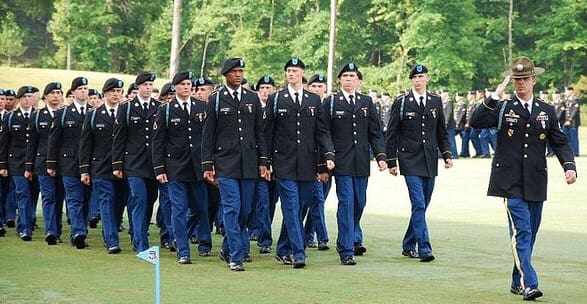
I will start by enthusiastically and shamelessly plugging the National Infantry Museum (NIM) that is located just outside one of the Post’s gates just off Victory Drive. I actually visited the NIM twice. The first time by myself and the second time with my Nephew and his family. It is an impressive and ultra-modern historical facility and is open and free to the public. There is everything one would expect from a museum focused on the Infantry. Like small arms and support weapons displays – including never fielded experimental items – broken down by era. Likewise, uniforms and field gear. Touch screens accompany many displays and provide background and context on the history of the individual exhibits. For those that appreciate the art of scale modeling, as I do, there are a number of examples displayed throughout the museum including several impressive professionally built dioramas of battle scenes. If I had more time, I would have gone through a couple more times. The NIM alone is worth the side trip if you happen to be in the area.

On my second visit to the NIM, I had one of my better Forrest Gump moments. That is I was in the right place at the right time. By sheer coincidence, it happened that the 1st SFAB had their official activation ceremony on the parade field behind the museum mid-day on Thursday. I cannot tell you who was in the reviewing stand on the far side of the field or who spoke at the ceremony. I observed the event from the second level observation windows of the NIM. I had a great view – but no sound! Two things stuck out immediately about the unit formation. First, as to be expected, it is much smaller than a standard modern maneuver Brigade. Second, it is a combined arms and multifunctional organization. There were infantry, artillery, engineer, combat support and combat service support company guidons on display.

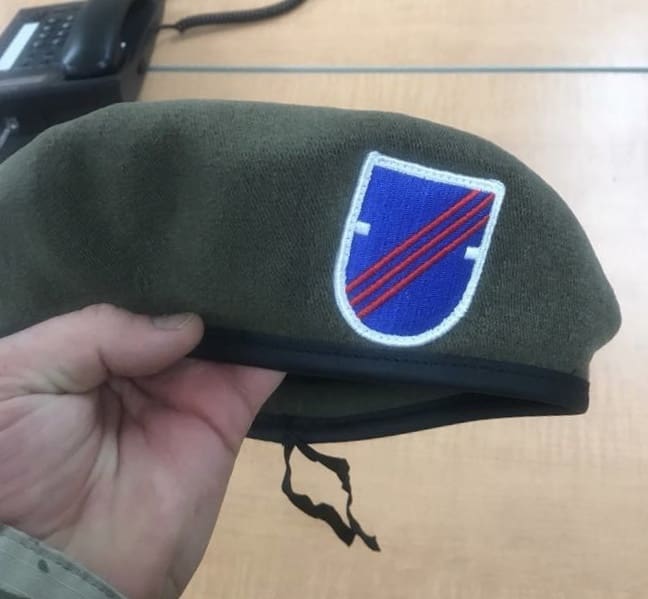
SSD has already reported on their revised beret color. In person, it is dark brown as the pic he posted most recently showed. No mistaking it for the SF green or Ranger tan berets. Likewise, the revised patch is more distinct than the earlier version. I talked in passing to a handful of the younger SFAB NCOs after the ceremony. They were all combat vets – as were most of the NCOs and Officers I saw from the unit. Not to say there were not some without combat patches, but they were few in number compared to those with combat experience. To a man, they were eager to get on with their upcoming deployment. In short, they seemed sharp, disciplined, motivated and ready to take on their mission. As I have said on this site before, I have concerns about meeting their long-term personnel sustainment needs or if the Army can find enough talent to stand up six SFABs total. However, I do believe the mission is valid and, based on everything I have seen and read, I am convinced this first unit is well prepared to tackle this critical assignment.

I had hoped to spend some quality time with the Black Hats at Airborne School but had only limited success. I observed training for the students in ground week for a couple of hours. Specifically the aircraft exit drills on the 34’ Towers. Not much has changed in this phase of the school since WWII or when I went through decades ago. No surprise, the mechanics of jumping out of a fixed wing aircraft in flight or the physics of how a parachute canopy functions have not really needed to evolve much over the years. Consequently, although the students were wearing ACHs rather than steel pots or camouflaged ACUs rather than OD green fatigues, the drills looked exactly the same. The tempo of the drills and the student to instructor ratio was such that I did not get to talk with the Black Hats there. They were simply too busy for me to feel comfortable interrupting their rhythm. I had intended to go out to Fryar Drop Zone on Wednesday. The Cadre Drop Zone Safeties usually have down time between aircraft sorties and I knew that was my best opportunity. However, it drizzled rain all that day and I unfortunately did not have the option of rescheduling.

I did get to spend two early mornings with the TACs at OCS during their 0545 PT sessions. It was my first formal exposure to some of the newer PT techniques that the Army is transitioning towards. For old timers, the most obvious difference is that PT is a lot quieter than it used to be. Not any “in cadence…exercise” involved in the new system. There were still traditional pushups as well as a number of variations, pullups, dips, fireman’s carries and tire rolls. In short, it was not as exotic or unfamiliar as I might have expected. In fact, it just looked a lot more like the small team / individualized PT I had seen and practiced for years in SF units. Of course that means it was quite different from the centralized and regimented system I had experienced in line infantry units way back when. I do not know if this system will ultimately result in better overall physical conditioning. I do suspect that it will generate fewer long-term joint issues than the old system routinely produced. In any case, by the end of those hour plus drills I observed, it seemed obvious that the OCS Candidates were getting a good workout.

I, of course, spoke to my Nephew quite a bit about his experiences in OSUT. I also talked to a number of his compadres. They were all sharp, disciplined, respectful, and showed appropriate pride in their uniforms – as one would expect of newly minted infantrymen. It would be fair to say that they seemed a hell of a lot more professional than my peers and I were at the same point in 1975. However, since the new guys did not have any real frame of reference, it was the Drill Sergeants that I was most interested in surveying. During the week, I spoke one on one with four different Drills, one from E Co, and three from C Co, 54th Infantry (OSUT). As one would expect, they were an impressive bunch of leaders and trainers. All had CIBs, some with multiple tours, all were airborne and one had his Ranger Tab. They certainly compared favorably with the Vietnam veteran Drill Sergeants that trained me.

I will summarize what we discussed beyond exchanging war stories. They were generally comfortable with the product that they were putting out to the force. They emphasized to me that they had already incorporated portions of the 2016, TC 3-22.9: Rifle and Carbine, during the Basic Rifle Marksmanship (BRM) portion of OSUT. In fact, Drill Sergeants were required to rotate through a formal marksmanship program on post specifically to learn how to train what was in the TC. They saw that as a significant positive and thought as a result that BRM was much improved from just a couple of years ago. Still, we all agreed that the new guys did not really know their ass from a hole in the ground yet – but they had proven to be trainable. However, we also agreed that they were no more clueless than we had all been at their age and level of training.

A generation in the Army is about six years. You can tell because every six years or so some young promotable Sergeant, Staff Sergeant or First Lieutenant will write a letter to the Army Times bemoaning the supposed FACT that today’s entry level soldiers are no longer as well trained, disciplined, patriotic or professional as they were when he or she came in. Of course, the “grizzled veteran” is oblivious to the fact that someone said exactly the same thing about him when he was a cherry soldier. After observing this cycle a few times, it becomes predictable and humorous. Often the alarm is raised because someone saw a ragbag or two at some airport. And, of course, that in turns means all new soldiers are ragbags. If you think an occasional disheveled soldier is a new phenomenon you must not have passed through an airport in the 70s, 80s, 90s or 2000s.

But, the alarmist will say, the standards have obviously been lowered! Standards change all the time. True, not all changes produce the intended results. In that case, standards will be readjusted yet again. Rigidly adhering to the old techniques because that “is how it has always been done” is even more counterproductive and ultimately dysfunctional than experimenting with change. The new PT routine I mentioned above is one example that may or may not be perfectly successful but will likely at least reduce rates of injury over time. But, but…the minimum standards are too low. This argument is entirely subjective so it is a little harder to refute. Most professional soldiers believe in demanding and achieving the highest practical standards – individually and collectively. I do. But do not fall into this trap. You will notice that the guy who can run fast always thinks the minimum run times should be shortened. If he is less confident about his upper body strength, he will argue just as energetically against raising the pushup standards.

Likewise, the guy who readily shoots expert thinks “marksman” is too low a standard. Alternatively, the guy who is already bilingual or learns languages easily always thinks 2/2 should be the minimum entry-level score for SF soldiers. I for one would not have gotten into SF if that had been the minimum standard. Each and every one of us have probably been in a situation where we were eternally grateful that the minimum passing standard was no higher than it was. My observations at Fort Benning led me to conclude that the minimum standards are being strictly enforced and that those new infantrymen, soldiers seeking those silver wings and candidates reaching for a commission are, in fact, doing far better than the minimums.

Let us talk about symbols. Are hats or beret colors important to you?  Probably not. Ask any Green Beret and he will tell you that it is not the hat that makes the man and therefore the beret is not that important. He will be sincere when he says that, but just try to take that piece of felt away from him and suddenly it is important. Symbols in the military are significant and powerful. They are magic. But they only have as much magic power as we infuse them with – sometimes even including baptism with the blood of heroes. I thought of that magic as I pinned my Nephew’s infantry blue cord on his ASUs on Thursday morning. Symbols like that cord, or jump wings and jump boots, or tabs, or combat patches can simultaneously mean nothing…and everything.

I personally appreciate the passion that symbols evoke – often manifested in the comments on this site. I was in when GEN(R) Rogers took away the Airborne maroon beret and GEN(R) “Sly” Meyers gave it back a few years later. Paratroopers had complained about the beret until it was no longer authorized – then they wanted it back. Now it would be all but impossible to take it away from them again. GEN(R) Shinseki wanted to harness that symbolic power when he made the decision about issuing the black beret. I respect him and think he was well intentioned. Unfortunately, it has not worked. The Army has never managed to infuse the black beret with any magic. If it went away tomorrow, it is not likely that there would be much of a fight to keep it. However, those kids at OSUT did not know all of that history or drama and seemed genuinely proud to be wearing their berets. As a side note, I admit that I had not noticed before that the generic blue Army flash is a good match in color to that infantry blue cord.

Everyone I observed and talked to at Fort Benning gave me confidence in the future. These young people and their instructors are ably carrying on the traditions of selfless service the American people expect. The Army is sound and the Republic is not in any jeopardy with them – ever vigilant – on the parapets. They are at least as capable and motivated as those that served in my formative years and on par with every generation of soldiers I have served with since. Bottom line, they ARE as well trained, disciplined, patriotic and professional as we “old timers” like to think we were. My Nephew starts Jump School on Monday.

LTC Terry Baldwin, US Army (Ret) served on active duty from 1975-2011 in various Infantry and Special Forces assignments. SSD is blessed to have him as both reader and contributor.
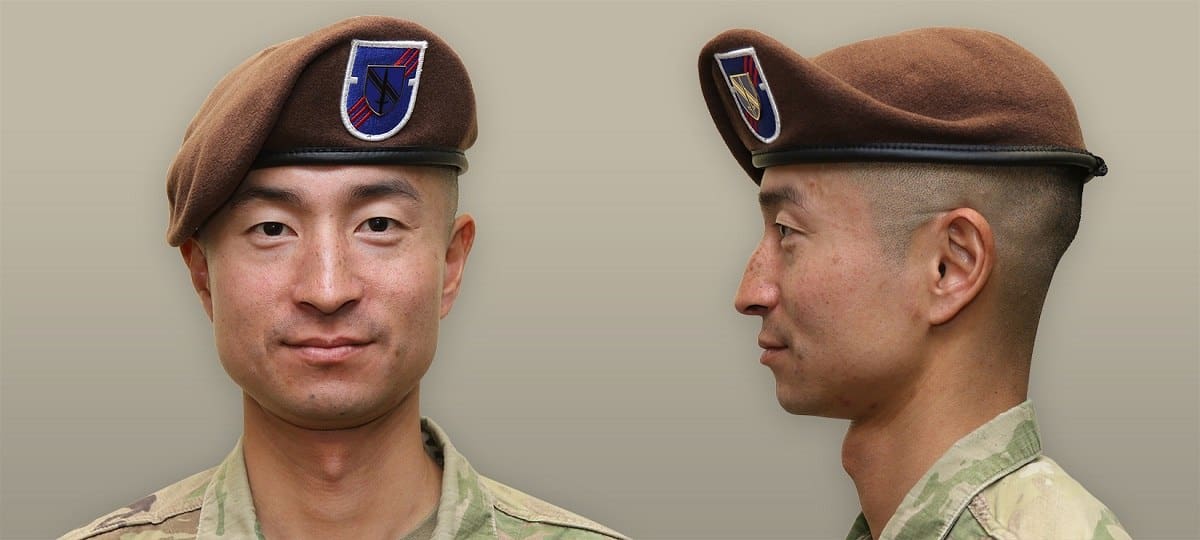
US Army Releases Beret and Insignia for 1st SFAB

Thursday, February 8th, 2018

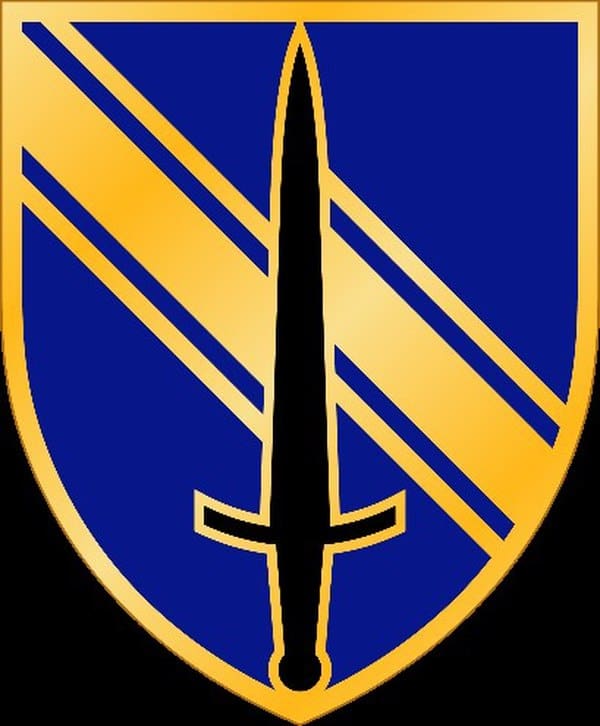
Late last year, images appeared online showing a beret, unit Shoulder Sleeve Insignia and Combat Advisor Tab for the US Army’s 1st Security Force Assistance Brigade. The 1st SFAB is the first of six planned advisor units which will assist friendly armed forces.

4AF92494-4B77-48C4-8111-8018A4CE999C

The original beret color (above) was intended to be Olive but came across more green than intended, which caused some consternation among the Army’s Special Forces due to their unique Rifle Green Beret, awarded by President John F Kennedy over 60 years ago. Additionally, the unit patch used in arrowhead design like the SF SSI and the Combat Advisor tab seemed a little too close to the coveted Special Forces tab.

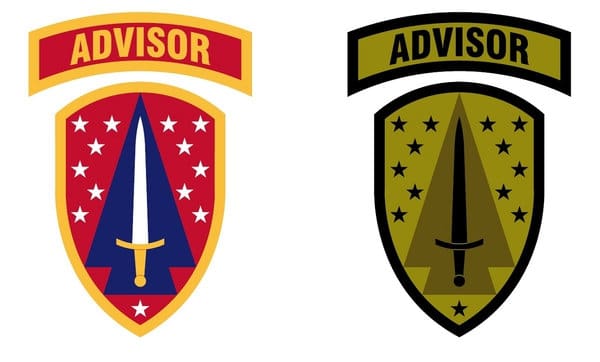
Consequently, the Army’s chief of staff, GEN Milley, clarified the beret color as a Brown shade and sent them back to the drawing board for some refinement. Earlier, today the Army released the new beret color, Distinctive Unit Insignia (commonly known as a unit crest), SSI and tab.

Beret with Flash and DUI

D2E58E58-D7D1-4FBC-A54A-37E28FD43E02

SSI and Advisor Tab

58966342-5C67-4F43-A625-A69FAD7C9F52

It is now more similar to the Vietnam-era Military Assistance Command Vietnam SSI than the original SFAB patch and tab, seen below.

F7890A98-FD60-4FE3-87B5-0EDF56FCCFAA

DUI

4BED510E-7EA8-4046-BBE8-AFD84C170826

US Army Establishes Master Gunner Identification Badge

Wednesday, January 31st, 2018

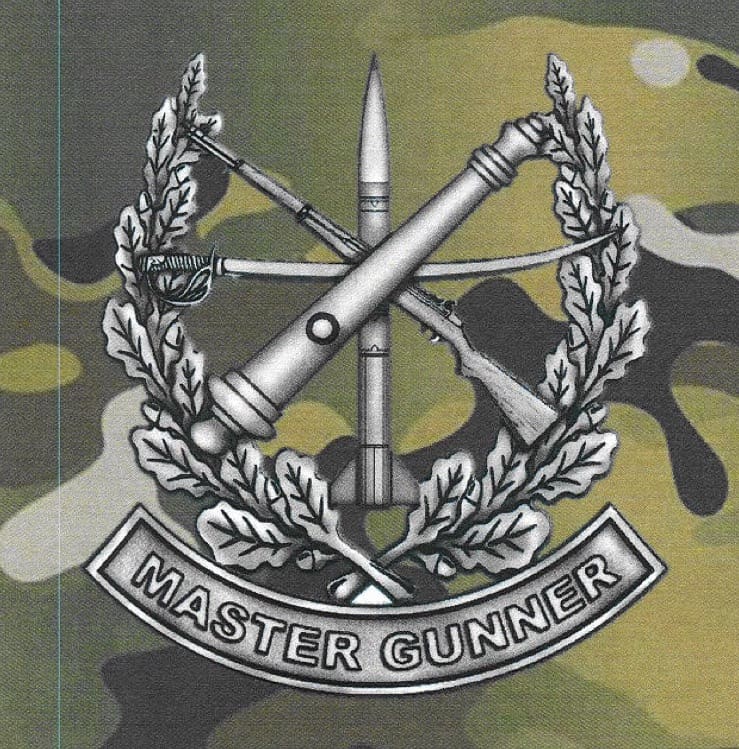
Earlier this month, the Honorable Raymond T Oroho, acting Assistant Secretary of the Army for Manpower and Reserve Affairs, signed a memorandum establishing the Master Gunner Identification Badge. It is intended to be worn on the ASU as well as ACU.

IMG_6356

Although there are Master Gunners at all Divisions, the badge is limited to graduates of these seven courses:
-Field Artillery Master Gunner Course
-Master Gunnery-M1/M1A1 Tank Course
-Infantry Fighting Vehicle Master Gunner Course
-Avenger Master Gunner Course
-M1A2 SEP Master Gunner Course
-Stryker Master Gunner Course
-Patriot Master Gunner Course

Enlisted soldiers must have been awarded Additional Skill Identifier A7, A8, J3, K7, K8, R8 or T4. Warrant officers require ASI H8. The Master Gunner Badge must be awarded by the authority who hosts the qualification course.

Retirees and Veterans may also apply for retroactive award. Click here for full details.

Word on the street is that Army will be establishing even more badges this year.

The Baldwin Articles – Leadership and Training

Saturday, January 6th, 2018

“As iron sharpens iron, so one man sharpens another.” – Proverbs 27:17

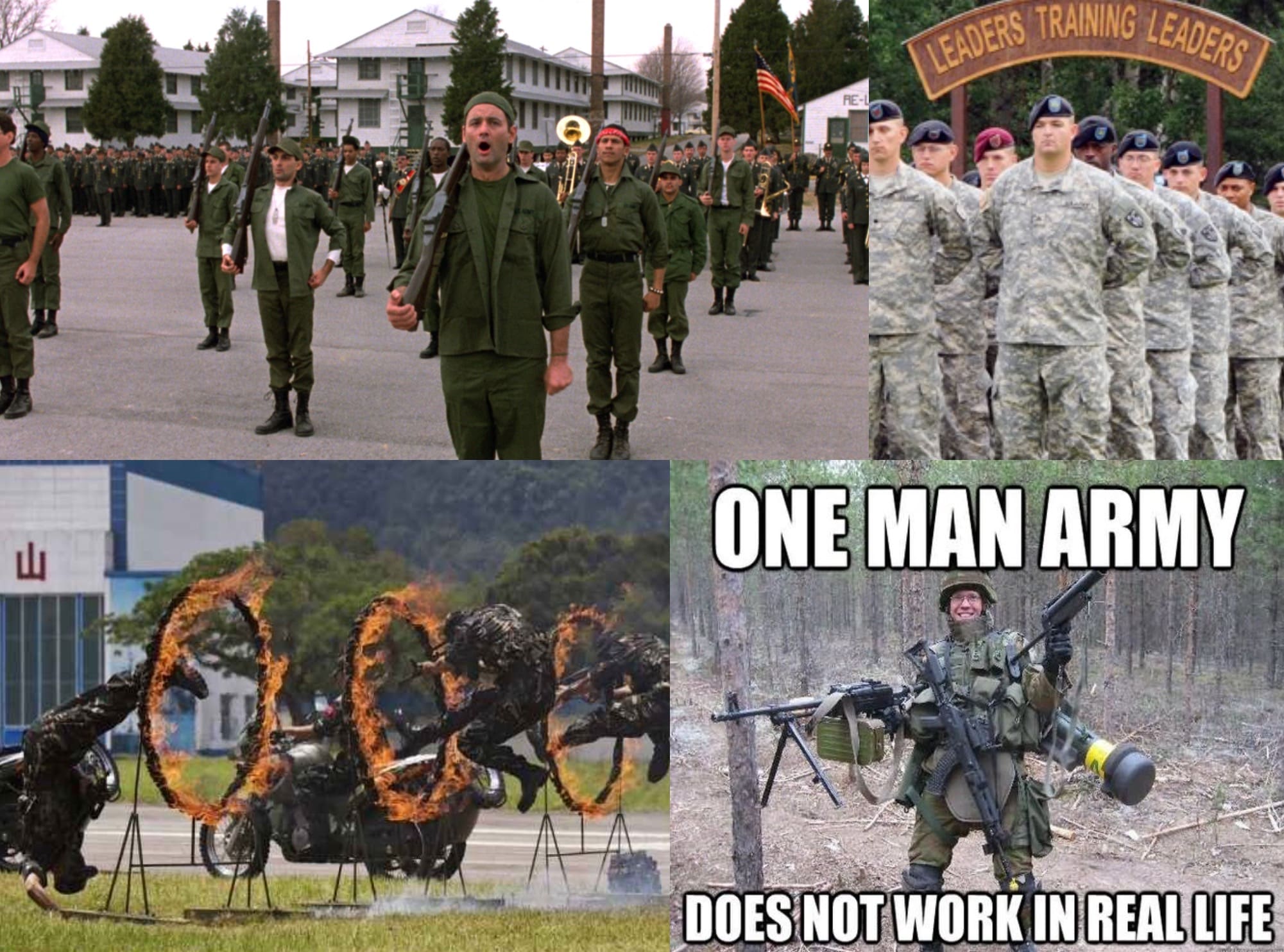
Although the above quotation is not specifically related to military training, it is very appropriate to the subject. Here is another exchange on the topic that many of you will recognize. “What kind of training have you men been doing?” “Army Training, Sir!” If you have seen the classic movie, you also know exactly why we do not let privates train on their own recognizance. As I said last time, planning, managing and conducting good training is a complex art – and in many ways is just as hard to master as war itself. In other words, it is a truly serious business requiring continuous attention and effort. Here are just a few points to ponder and discuss.

IMG_5927

Let us start with the bad news. There have been and always will be training distractions and obstacles. Those routinely include conflicting priorities, constrained resources, and especially limited time. The trick is not to let the distractions sidetrack you – stay focused on the mission. True, it is something easier said than done. Still, good units and effective trainers work around or through those diversions all the time. Unfortunately, it is also true that a good number of leaders simply do not know how to properly organize and drive their training efforts. I especially worry about those squad leaders, platoon sergeants and platoon leaders who do not necessarily know what right looks like when it comes to planning and conducting truly productive training at the tactical level.

Just as you have to fight for intelligence on the battlefield, a unit has to fight to train. Know what you are trying to accomplish before you start. Plan to train but do not get fixated on your plan – be flexible. The training objective is what is important not the process. Many units spend a great deal of time trying to make the training look good and in the process lose sight of their actual training goals. Likewise, others become preoccupied with making the training uber “cool” rather than effective. My advice is to make sure your people are well grounded in the fundamentals before moving to master the high-speed flaming hoops drill (above).

Always train to a pre-established and reasonable standard and not to a time schedule. Training is never finished so do not become obsessed with the outcome of any one event. Do not be afraid of failure. Training exposes our shortcomings – if we are doing it right. Take advantage of the opportunity to figure out why you failed to achieve the intended training objectives. Was it a planning mistake, a resource shortfall or an issue of poor time management? Did the trainers know beforehand how to do the task required properly themselves? Take corrective action and do better next time.

Aggressively prioritize. Some training is always better than no training. A good trainer can get something out of even the most unproductive training evolution. At least the experience can serve as a reminder to build a better plan for future training events as mentioned above. Know who needs or will befit the most from the training. When time or other resources are limited, it is usually much better to train a few to a higher standard then everyone to a sub-par level. Look for non-traditional training opportunities and partners. Old school and new techniques can often coexist and reinforce one another. Do not presume that they are mutually exclusive or that one is automatically better than the other.

We have all probably seen the following counterproductive dynamic on qualification ranges more than once. In units with poor training habits, the intent invariably devolves into just cycling everyone through as fast as possible. The alleged point of the drill, i.e. improving unit marksmanship, turns out to be a pretense and not the true objective. Unfortunately, the longer-term and deeper negative effect can be debilitating to that entire unit. The leadership has revealed to their soldiers that they consider training an onerous chore that is to be competed as quickly as possible. Positive results are optional or even irrelevant. Sadly, that dysfunctional lesson will imprint some soldiers for the rest of their careers. They in turn will invariably infect others. It is an all too familiar cycle – but it can be broken.

Fighting back against bad training habits is hard but not complicated. It starts with leadership. Recognize that all unit training always involves team building AND leader training. Make sure to give your subordinate leaders something important to do in the training plan; and keep them visibly in charge of their soldiers as much as possible. This is especially important for those new sergeants who are leading for the first time and are trying to establish their credibility. In turn, soldiers benefit directly from seeing their leaders treated like valued members of the unit’s leadership team. In short, properly conducted unit training should professionally develop better leaders and concurrently result in stronger teams.

This also helps mitigate the problem of a unit hampered from accomplishing quality training because the leadership is overly distracted with the many other balls they are juggling. First, recognize and take advantage of the fact that every leader is part of a team and does not have to carry the burden alone. Delegate dammit! Moreover, a leader has to learn (and teach subordinates) not just to juggle but also how to judge those balls. Some balls are more important than others; and not all of them are made of glass. In reality, some balls can be set aside for another time or safely dropped. In doing so, we have the opportunity to demonstrate that unit leadership indeed considers quality training a high priority – though action rather than empty platitudes.

As I have mentioned before, there is a great book on training in WWII that I would recommend called “The Making of a Paratrooper” by Kurt Gabel. The author was a trooper going through Airborne training as a unit with the 517th PIR. He describes how the NCOs and junior officers would go off by themselves, learn a skill and – sometimes the very next day – turn around and teach it to the other troops. Not the ideal situation of course, but they made it work. They optimized, as best they could, their available organic assets to maximize limited external resources and extremely constrained time. They successfully met the challenge as an increasingly cohesive team and always took their training seriously. They knew that there was no other option. It also sets a great example to emulate even today.

Remember that even the most realistic training, conducted by the highest-speed units, has logical constraints that require soldiers to suspend disbelief when necessary. One simple example would be blanks or simunitions. If used properly, blanks are not going to kill or maim. Nevertheless, soldiers are expected to react to blank fire drills as if they were life-threatening live rounds. Likewise, when introducing simulated casualties the expectation is that soldiers will act in as close an approximation as possible to how they would respond to a real injury.

Teach your soldiers to value training though your example. It is true that not all training is fun and adventure. For instance, there is a lot of necessary repetition required to master the fundamentals of any individual or collective task. That can become boring. Bad weather can also make even good training more than a little unpleasant. Still, successfully building skills, competence and confidence – even in the worst of circumstances – is always a net positive for the collective esprit of a unit and the morale of individual soldiers.

Most of the veterans on this board could point to countless hours wasted on the tarmac or field site somewhere waiting for transportation. Did anyone in your unit consider trying to use that otherwise dead time to get at least some critical training accomplished? More often than not the answer is no. If someone made the effort, it was probably less than effective because it was not pre-planned but pulled hastily out of their fourth point of contact. Still, to be fair, I would give them at least partial credit for trying. Assuming they do better next time.

Time, money and ammunition are always finite resources. Never waste those precious assets – especially time! Always seek to get maximum effect from the resources you have. Do not waste time lamenting the resources you do not have. As with everything else we have been talking about, I would submit that the wise use of resources always comes down to the quality of leadership at the small unit level. Funny thing is that good leaders, despite the perpetual distractions and constraints, always seem to have enough to build good strong units. Even during periods when resources are much more constrained than has been the case in the last 16-17 years. Poor leaders, on the other hand, always seem to need more time, money or ammo – and still cannot get quality training results.

My final advice on training is that leaders must be willing to take risks. Most soldiers, myself included, like to think that we can always be as physically courageous as required in battle. Perhaps not ready, but willing and able to risk our lives if necessary. From my experiences and observations in various hostile places, I would say that is generally true enough. However, displaying moral courage is arguably much harder. In part, that is because the need for action does not present itself as unambiguously as it does in combat. It sneaks up on a leader over time. It often starts with the insidious – often self-generated – pressure to pencil whip a few training records so the unit looks good or to CYA. After all, training is not life or death and is certainly not important enough to risk damaging a career…or is it?

Now we are clearly talking about dedication to duty more than we are training. You have to ask yourself a question. How much do I really value training and how hard am I actually willing to fight for what might only be a modest and temporary improvement? That is an individual decision we all have to make for ourselves. The Army does constantly tell soldiers to do “the hard right over the easy wrong.” That is noble and righteous advice. However, it would be a mistake to think the institution actually cares. It does not. The Army is a soulless, unfeeling and ungracious machine; a whore who has never loved you – and never will.

If you are a whistleblower, no matter how justified the complaint, you will not be rewarded for your courage or you honesty. No exemplary service award is waiting for you; no building or street named in your honor; and you are not going to receive public recognition as the unit’s soldier, NCO or officer of the year. Worse case, you might even be punished. It should come as no surprise to any professional soldier that truly selfless service is always a bitch. None of that changes the fact that the right thing is always the right thing. In the end, all I can tell you is that principled leadership in training and war is never easy or painless – but I strongly recommend it anyway. De Oppresso Liber and good luck with your training!

LTC Terry Baldwin, US Army (Ret) served on active duty from 1975-2011 in various Infantry and Special Forces assignments. SSD is blessed to have him as both reader and contributor.
The Baldwin Articles – Leadership and History

Monday, January 1st, 2018

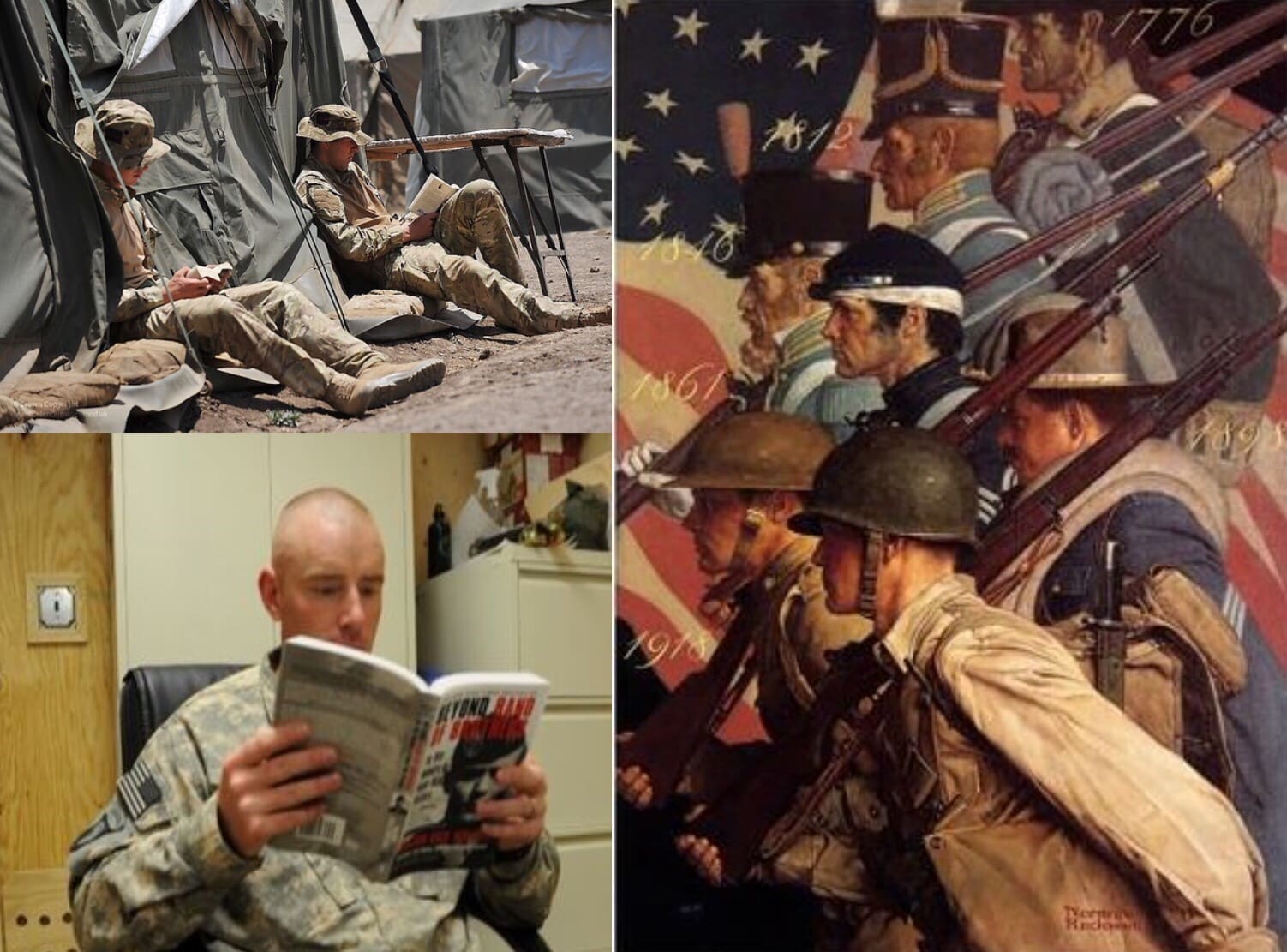
Lately there has been quite a bit of talk about the connection between history, professional military education and quality training on this site. Perhaps we can all initially agree on a couple of facts to frame some additional discussion. First, war is a bloody art form much more than it is a science and requires continuous study and practice to truly master even at the tactical level. Second, planning, managing and conducting good training is also an art – and in many ways is just as hard to master. For the sake of brevity, I am going to address training separately in part two of this article so that we can concentrate on history as a component of professional education up front.

So how can studying history help make you a better soldier and build stronger units? To be sure there is an important caveat; any “lessons” gleaned from history cannot and will not give definitive answers to today’s military questions. The past is not some accurate predictive tool that can somehow be used to prophesize future outcomes. Nevertheless, the study of history certainly often provides valuable context that can and does serve to inform decision makers in the present. Therefore, it is safe to say that seeking to understand events and characters in history does indeed teach and enlighten.

Obviously countless others have had a similar opinion about the enormous utility of historical study. I do not think it is an exaggeration to say that a great many notable historical figures have been self-acknowledged students of history. That has certainly been true of military leaders. Roman generals like Caesar studied the writings of the ancient Greek warriors intently. Not just to learn how they fought, but also how they successfully trained, motivated and sustained those earlier formidable armies. Later others studied Caesar’s campaigns to capture his insight into war. Each generation in turn contributing and perpetuating an unbroken military historiographic circle of life.

We now live in a golden age of information. I have more educationally sound books about all aspects of warfare throughout history sitting on the shelves in my home than were ever available to any general in WWII. Moreover, my collection is extremely modest compared to the exponentially greater volume of material accessible through any modern digitally empowered library. It would be a shame – really a crime – if those of us with that kind of fingertip access to vast reservoirs of information did not take full advantage of all of that educational abundance.

Based on my own personal experiences, I have always been able to learn a great deal about my profession from men and women who died long ago. Military philosophers and theorists like Clausewitz still speak to me. Over time I internalized his concepts, Sun Tzu’s teachings and Machiavelli’s advice and was no doubt the better soldier, trainer and leader for having done so. For me, reading “Lee’s Lieutenant’s” and “This Kind of War” or “The Uncertain Trumpet” was never some academic exercise that was not destined to serve any practical purpose. I learned to appreciate history from the example set by the leaders I met early in my career. In turn, I have tried to pass on that historical sensibility to those I have had the privilege to serve with, lead, and mentor over the years.

In fact, studying books like those above was vital to my vocational education and eventually critical to whatever success or failure I might achieve while practicing my profession. Most importantly, I was able to make better and timelier decisions in ambiguous and challenging circumstances than I would have if I had not had that reasonably broad and sufficiently deep historical exposure beforehand. I simply would not have full confidence in any senior military leader who had no informed sense of history.

To be clear, I am not talking about a formal educational or degree producing program. No one needs to run off and get a PhD in Military History in order to be a good soldier or capable leader. Indeed, we can start at the small unit level with resources we already have readily available. How many leaders out there have made the effort to teach their subordinates their unit’s unique history – let alone the Army’s service history? I can tell you that the answer is not enough. What campaign streamers do you display on your colors? What battles do the elements of your unit crest represent? Why is your unit called the Manchus or Cotton Balers or Devils in Baggy Pants. Of course you might ask, is that “minutiae” really truly important to know? How will that information help “kill the enemy” or keep my people alive?

The answer is simple and ancient in origin. Expending the energy to inculcate a unit’s history helps build stronger teams. The Roman Legions understood this dynamic. Even today, the USMC – better than any of the other services – still understands and leverages this important bonding practice. So why doesn’t the Army do the same? Some units certainly do, but far too many do not even try. Some units consider it a waste of time and a distractor from other priorities. I would argue that the leaders of those units have the wrong priorities. They are shortchanging the professional development of their soldiers and failing in arguable their most important duty. That is to build motivated, cohesive, and ultimately winning teams.

And no, this does not mean a unit has to “stand down” or curtail other training to get it done. Some still serving NCOs or former NCOs out there probably think I am trying to put another rock in your already-too-full professional rucksack. The fact is that particular rock has always been your responsibility. You are the keepers of a unit’s history, and by extension the Army’s history, and have always had the responsibility to pass on that knowledge to your soldiers. The majority of NCOs do not need a reminder. They know they have the mission and do a superb job. But far too many do not – probably because they were never taught what right looks like when they were growing up. You cannot set the example or effectively teach what you don’t know or don’t value.

Obviously, we need to work diligently on correctly that problem at the unit level. However, we should not stop there. What are some of the positive aspects of studying history for broader professional development? Below I have selected three relevant quotes from my favorite fiction book, “Starship Troopers” by Robert Heinlein. For those not familiar with the work, be advised that the book has absolutely nothing to do with the movie series of the same name except the title. I have literally read the book a hundred times or more and always carried a paperback copy with me on deployments. I also loaned it out many times. But it was not the plot or the characters that keeps drawing me back. Rather it was the core ideas; the embedded concept of civil responsibility and duty as well as selfless service and even insight into conflict and war itself.

As many of you know, Heinlein was a brilliant, unique and even odd historical figure. He wrote science fiction primarily and never saw combat himself. Yet in Starship Troopers, Heinlein was able to capture the quintessential rationale of voluntary military service and martial virtue. He clearly intended to present more of a philosophy of duty than a practical military theory or strategic concept of war. Still, his book is a recognized military classic and has been on the recommended reading list for the Army and the USMC for many years. That is not to say that all of Heinlein’s ideas were original. He was well read and had an inquisitive mind so I suspect he had read at least potions of Clausewitz and Sun Tzu and quite possibly Machiavelli as well.

I appreciate this first quote because it perhaps explains why Sun Tzu still resonates after more than two thousand years. Why Clausewitz and Jomini are still read intently to be both interpreted and misinterpreted by countless professional soldiers. And perhaps it also explains why no more contemporary authors have ever been able to convincingly threaten their intellectual authority or supplant them.

“Basic truths cannot change and once a man of insight expresses one of them it is never necessary, no matter how much the world changes, to reformulate them. This is immutable; true everywhere, throughout all time, for all men and all nations.”

The second quote might appear to be no more than a restatement of Clausewitz’s basic theory. And I am reasonably sure that was Heinlein’s original source. But it does expand on the idea that in war it is the application of coercive violence and not killing itself that is actually the military “means” to the political “end” or “objective” that Clausewitz referred to repeatedly.

“War is not violence and killing, pure and simple; war is controlled violence, for a purpose. The purpose of war is to support your government’s decisions by force. The purpose is never to kill the enemy just to be killing him . . . but to make him do what you want him to do. Not killing . . . but controlled and purposeful violence.”

Lastly, I have used what I call “the cooking analogy” below many times to try to explain the notion of military education and realistic training providing immense value added on and off the battlefield.

“…unskillful work can easily subtract value; an untalented cook can turn wholesome dough and fresh green apples, valuable already, into an inedible mess, value zero. Conversely, a great chef can fashion of those same materials a confection of greater value than a commonplace apple tart, with no more effort than an ordinary cook uses to prepare an ordinary sweet.”

Unfortunately, higher-level professional training and education is largely undervalued in the institutional military. That is a counterproductive but systemic organizational attitude. To use Heinlein’s analogy, the services consequently only manage to consistently produce good “fry cooks” that can perhaps reliably fashion an edible meal but have a limited repertoire. In other words they are generally “tactically sound” in the most limited sense but not necessarily adaptive, multifunctional or innovative in any way.

We simply do not produce many world-class chefs; i.e. master craftsmen or artists with more advanced skills that can take the raw material and other means provided to them and produce results approaching a tactical, operational or even strategic work of art. We need military artisans who can be hard fighters AND consummate trainers AND equally deep thinkers. Leaders that have the intellectual tools necessary to profoundly reflect on the art and artifices of war and the disciplined aptitude to translate the resulting thoughts into practical applications. The enduring challenge for us remains how to identify, cultivate and encourage the intellectual development of more martial master chefs at every level.

That brings us to the final point for now. It would certainly be possible to put a committee together and “distill” the more advanced works of Sun Tzu, Clausewitz, et al into 3×5 cards of command approved military axioms that every soldier could carry in his or her breast pocket. Laminated of course and dutifully memorized and regurgitated on command. But that will not make us any smarter. To seek legitimate understanding of Sun Tzu and the others it is important to consider the social, cultural and historical context in which they lived and wrote. In other words, it takes intellectual effort. There is no shortcut.

If simply taken literally, out of context, or only partially and imperfectly understood, Sun Tzu’s or Clausewitz’s or Machiavelli’s ideas can be truly dangerous rather than helpful to a soldier or politician trying to make a decision with life and death implications. Therefore, the services – especially the Army – would clearly be best served by providing more opportunities for high quality, practical and continuous professional education at all levels. This could start by making the effort to instill a deeper appreciation of history in Army leaders of all grades. That is probably the single most useful thing we can do to improve the U.S. Military’s tactical, operational and strategic rate of success in the future.

LTC Terry Baldwin, US Army (Ret) served on active duty from 1975-2011 in various Infantry and Special Forces assignments. SSD is blessed to have him as both reader and contributor.

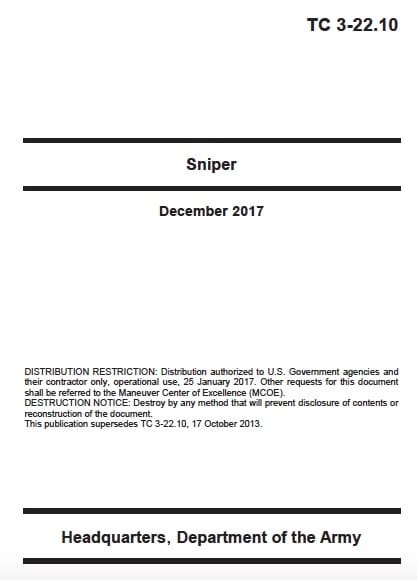
US Army Sniper Training Circular 3-22.10 Officially Released on Army Publishing Directorate

Wednesday, December 20th, 2017

The US Army’s Maneuver Center of Excellence has released Training Circular 3-22.10, Sniper and it is available for download to DoD personnel on the APD website.  


Christopher M. Rance, writer for the sniper training circular highlights what snipers can expect with the new manual.

-The sniper training circular has been completely revised and updated in various topics to include; sniper planning, employment, field craft, marksmanship, ballistic programs, and complex engagements.

-The Individual Sniper Weapon System Training Strategy is provided to include the official qualification for all sniper weapon systems. The new sniper qualification complies with the U.S. Army’s Integrated Weapons Training Strategy. DD Form 7785, Sniper qualification scorecard can be accessed on APD.

-Subject matter experts from across all branches of services to include NATO partnered nations contributed to this training circular. This was a collaborative effort and stands as a great example of interoperability between services and nations.

-The intent of this training circular was to create uniformity within the sniper community, and to align sniper training and employment with current U.S. Army doctrine.

TC 3-22.10, Sniper is restricted to U.S. Government Agency Personnel. Personnel must have a Common Access Card to access the training circular. Get your copy at armypubs.army.mil.


Paladin Press is Closing Down

Friday, November 10th, 2017

PP Logo

Paladin Press has announced they’re shutting down operations as of 29 November 2017.

For many of us who date to the days before the internet, Paladin Press was the source of all sorts of arcana on gunsmithing, weapon use, military history, and living lives of action adventure, or perhaps merely pretending to do so.  Revenge pranks, surveillance gadgets, lockpicking, Sykes-Fairbain knife fighting, new identities, and 10/22 Exotic Weapon Systems were all part of the lore.

The era of clipping an order form from a magazine ad and sending off your check or money order has passed but Paladin Press survived.  It outlasted “Soldier of Fortune” magazine, who was a major advertising and marketing channel for their publications.

While business was probably not as brisk as it once was, we’d speculate that the passing of owner/founder Peder Lund  in June 2017 probably had a lot to do with this business decision.

Currently, most of the books are 65 percent off, so if you want to score some great deals by the end of the month, order soon.

Paladin Press


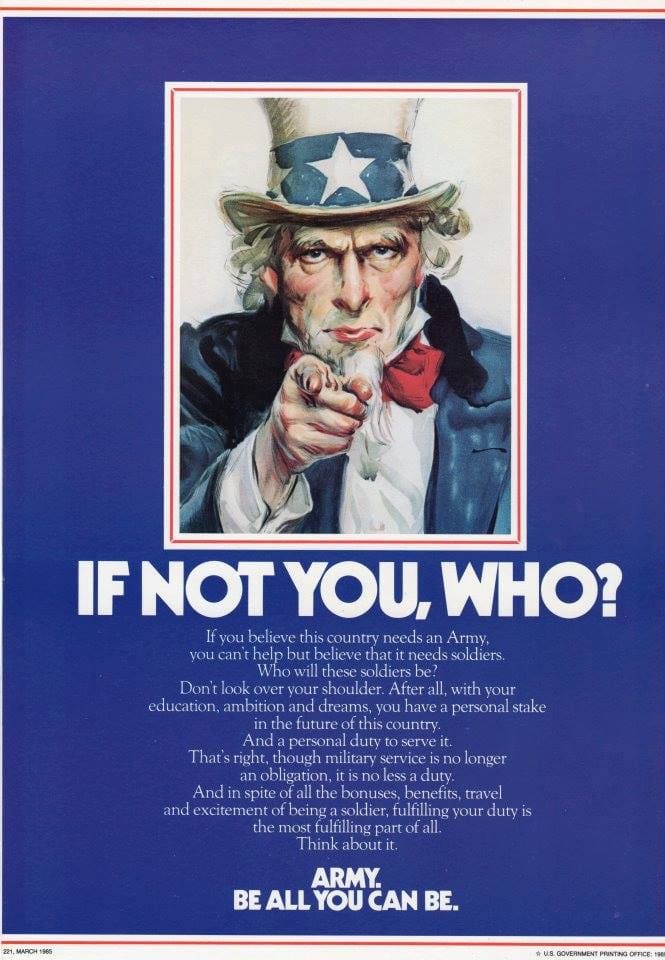
If Not You, Who?

Tuesday, October 24th, 2017

Recent events have resulted in debate regarding the nature of service in our all volunteer force. A friend shared this Army recruiting poster from 1985 with me. Incidentally, that’s the same year that I joined the Army Reserve while a junior in high school.

3A6F8EB8-836D-4CED-9F98-7C0CABEB1CFF

If you serve(d), do you feel it was your duty? If you have not served, how do you view our volunteer force?

On a larger scale, do you think the country and its military have lost touch with one another?