GORE-TEX Professional

Archive for the ‘UAS’ Category

U.S. Marine Corps Awards Production Contract to KONGSBERG for C-UAS Capability

Wednesday, October 6th, 2021

Significant Milestone for Ground Based Air Defense

JOHNSTOWN, Penn. – Oct. 5, 2021 – The U.S. Marine Corps (USMC) has awarded a production contract to Kongsberg Protech Systems USA to deliver remote weapon systems (RWS) as part of the Marine Air Defense Integrated System (MADIS) program. The indefinite delivery / indefinite quantity (IDIQ) contract has a ceiling of $94 million and includes a series of Low-Rate Initial Production (LRIP) systems and full-rate production units. This production contract award follows a Sept. 2020 contract award from the USMC to KONGSBERG for test articles and activities, which included Design Verification Testing (DVT).

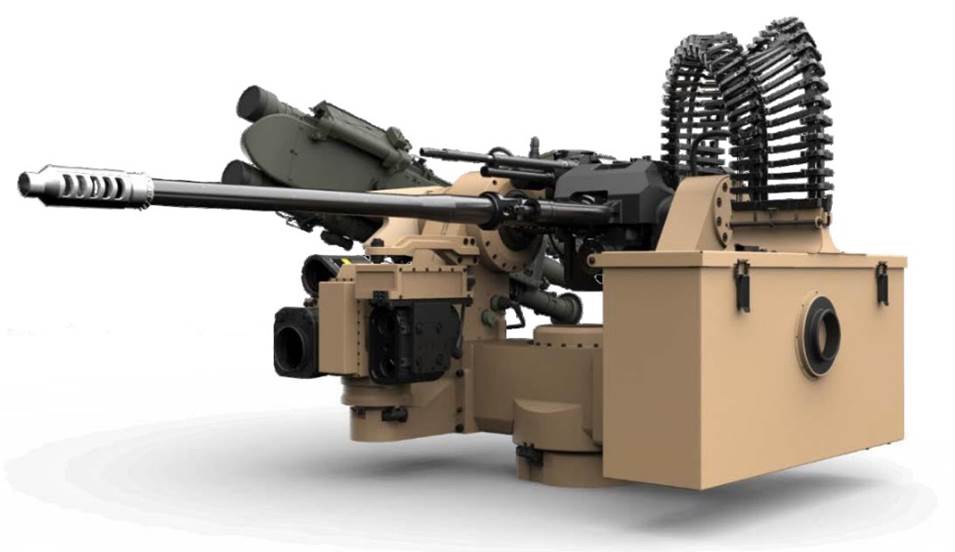
The KONGSBERG RS6 RWS for MADIS leverages technology and competence drawn from multiple counter-unmanned aircraft systems (C-UAS) and air defense programs. The system leverages commonality with the family of PROTECTOR RWS delivered and fielded with the U.S. Army and Marine Corps and will be integrated on the Joint Light Tactical Vehicle (JLTV) together with external sensors and effectors.

The first 30mm remote weapon system to be qualified on the JLTV platform, the KONGSBERG RS6 RWS for MADIS RWS includes the XM914E1 30mmx113mm DC driven cannon with a co-axial M240 (7.62mm) machine gun, an integration kit for the Stinger Air-To-Air Launcher (ATAL) and provisions for future C-UAS defeat systems.

“The MADIS program with KONGSBERGs RS6 30mm remote weapon system signifies a powerful lethality capability for the Marine Corps, initiating a new era in U.S. Marine Corps ground-based air defense operations,” said Pål E Bratlie, Executive Vice President, Kongsberg Defence & Aerospace.

KONGSBERG is the world’s leading manufacturer of RWS, having delivered over 20,000 units to more than 20 countries worldwide. KONGSBERG is also the sole provider of RWS and remote turrets to the U.S. Army and U.S. Marine Corps. All RWS and remote turrets delivered to U.S. customers are manufactured in the Kongsberg Johnstown, Penn. facility and leverage our extensive American supply base. The company takes great pride in its continued support to, and for the United States, U.S. employees, and U.S. supply base.
SHOP Show Raeford – Berry Aviation

Wednesday, October 6th, 2021

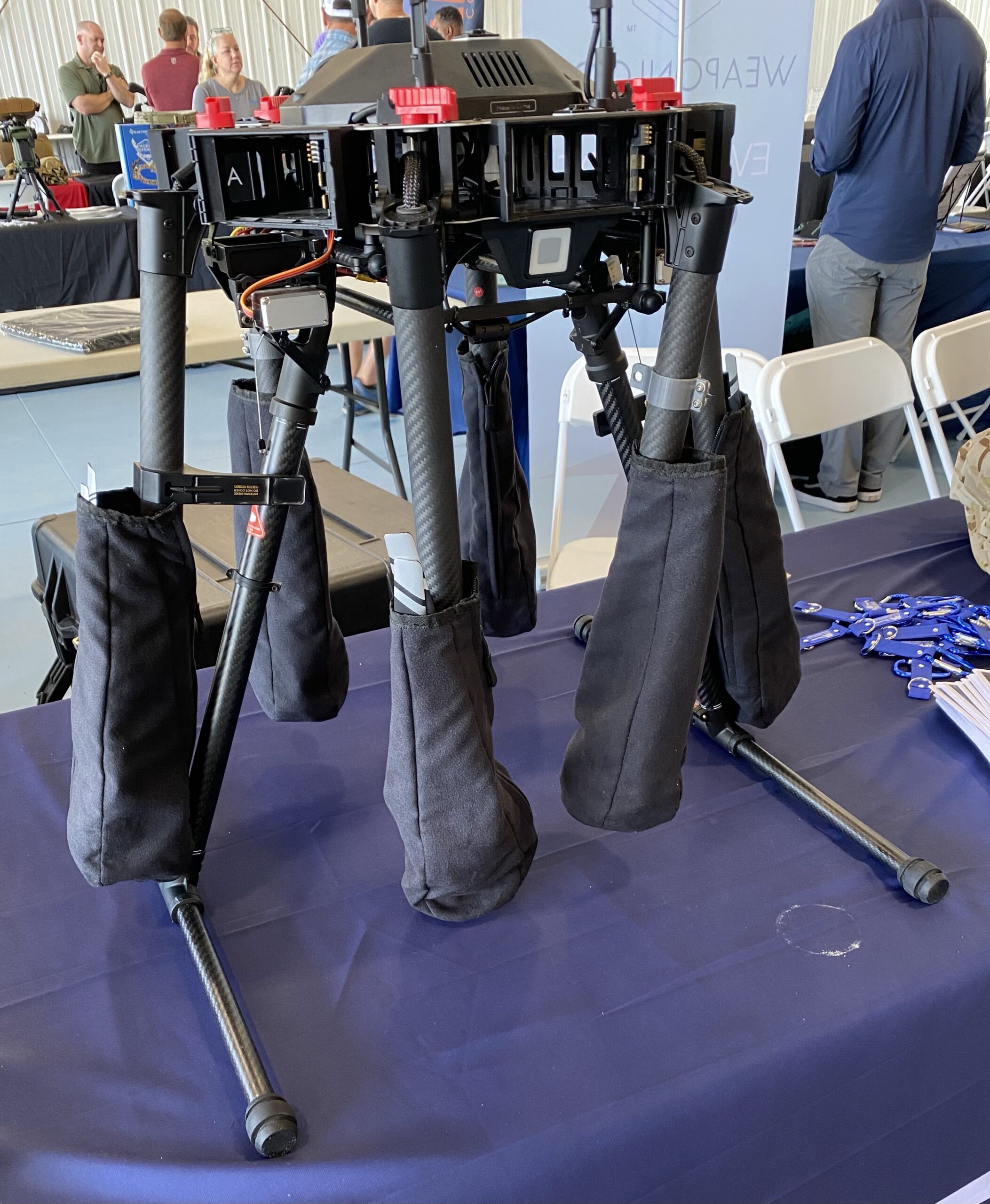
Berry Aviation hosted the SHOP Show San Marcos earlier this year so it was great to see them in Raeford.

Last year they added an Unmanned Aerial System Division which provides training, operations and support for both fixed wing and vertical lift platforms in Group 1, 2, & 3 UAS, as well as counter-UAS.

They also can perform payload integration and design modifications. For example, they’ve modified the DJI drone seen above to accept the SOCOM modular payload.

Army EOD Soldiers First to Field Test Unmanned Aerial System

Tuesday, September 28th, 2021

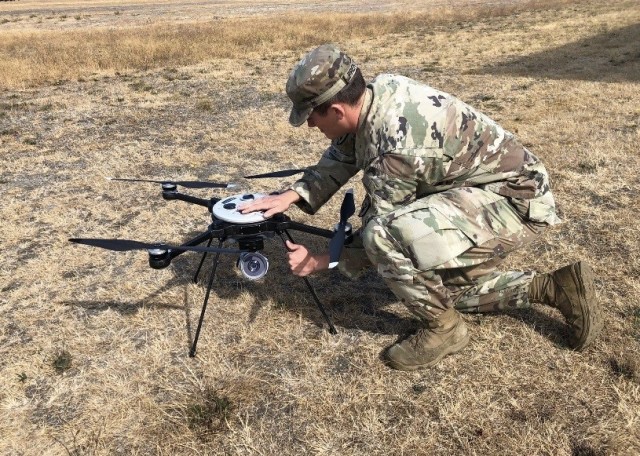
JOINT BASE LEWIS-MCCHORD, Wash. — Explosive Ordnance Disposal technicians from the 707th Ordnance Company (EOD) were among the first U.S. Army EOD Soldiers to conduct field testing with the Skyraider Unmanned Aerial System.

EOD Soldiers from the company put the UAS through its paces from a village in Training Area 4 on Joint Base Lewis-McChord, Washington, Aug. 23 – Sept. 2.

According to Capt. William R. Hartman, the commander of the 707th EOD Company, the UAS provided greater visibility of the heavily forested training area.

“They can mostly be used for reconnaissance of terrain and to identify possible explosive hazards,” said Hartman, a native of Reading, Pennsylvania, who has deployed to the U.S. Central Command area of operations.

Hartman said the UAS was also used to deploy lightweight robots called Throwbots that helped his EOD Soldiers to identify hazards in less accessible areas and structures.

The 707th EOD Company is part of the 3rd EOD Battalion, 71st EOD Group and 20th Chemical, Biological, Radiological, Nuclear, Explosives (CBRNE) Command. Based 19 installations in 16 states, 20th CBRNE Command is home to 75 percent of the Army’s EOD and CBRN units, as well as the CBRNE Analytical and Remediation Activity, 1st Area Medical Laboratory, Nuclear Disablement Teams and Weapons of Mass Destruction Coordination Teams.

Soldiers and civilians from the Aberdeen Proving Ground, Maryland-headquartered command work with joint, interagency and allied partners to defeat CBRNE threats around the world. Since 2003, 20th CBRNE Command EOD Soldiers have partnered with U.S. Navy EOD technicians to disable hundreds of thousands of improvised explosive devices in Iraq and Afghanistan.

Hartman said the highlight of the fielding was connecting Light Detection and Ranging or LDIR technology to the UAS system and using it to map terrain.

The EOD company commander said the UAS could be a great use in a combat zone.

“We could definitely benefit from its capabilities in that environment,” said Hartman.

By Walter Ham

AUSA 2021: Logos Technologies Unveils MicroKestrel Wide-Area Sensor for Tethered UAS

Friday, September 24th, 2021

World’s smallest wide-area motion imagery (WAMI) system, MicroKestrel delivers persistent surveillance to a whole new group of military and homeland security sensor operations

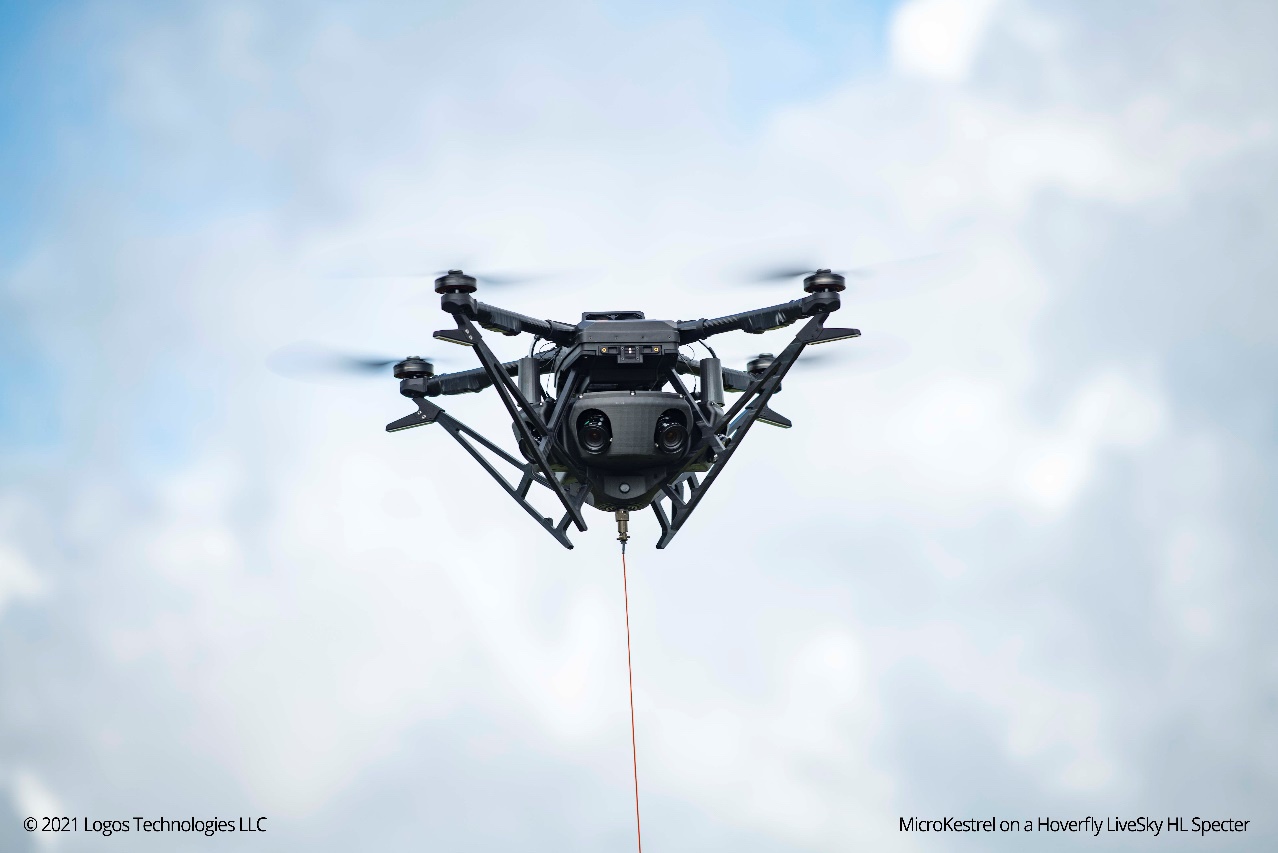
FAIRFAX, Va.— September 23, 2021 — Logos Technologies LLC, a leader in wide-area motion imagery (WAMI), announced today that it will be unveiling its new MicroKestrel sensor for small, tethered, multirotor-type unmanned aerial systems (UASs) at the upcoming Association of the United States Army (AUSA) Meeting & Exposition, in Washington, D.C.
When mounted on a tethered UAS and hovering at 200 feet, a single MicroKestrel can image three square kilometers, tracking every vehicle and detecting every moving dismount within its 180-degree field of regard. The WAMI system can also cue high-definition video cameras for close-in inspection should an operator require a positive identification of a target.

“The amazing thing, though, is MicroKestrel’s weight. At just under 5 pounds, the new WAMI system is so light that some tethered UAS can actually accommodate two units, each pointed in a different direction,” said Doug Rombough, VP of Business Development for Logos Technologies. “In such a doubled-up configuration, you get twice the coverage area and a 360-degree field of view.”

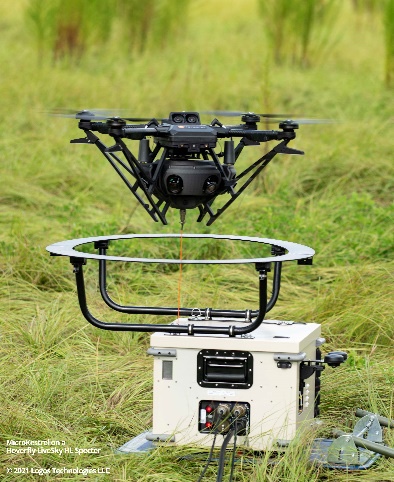
The idea of getting WAMI on a small, tethered unmanned aerial vehicles once seemed impossible. Now, these sensors will be able to go on tethered UAVs or free-flying UAVs that have been connected to a third-party tethering station. This greatly expands the types of operators who will be able to use WAMI.

“People who would never have access to runway or catapult-launched UAVs, let alone big Predators, can pop open a container, set up a tethered UAV, and launch a WAMI sensor into the air,” said Rombough. “Think about what that means for base protection, event security, or other mission sets.”

Logos Technologies will be showcasing MicroKestrel and other sensor systems at the company’s booth (No. 1143) at AUSA, on October 11-13.

DSEi – Overwatch Defense PHOLOS

Thursday, September 23rd, 2021

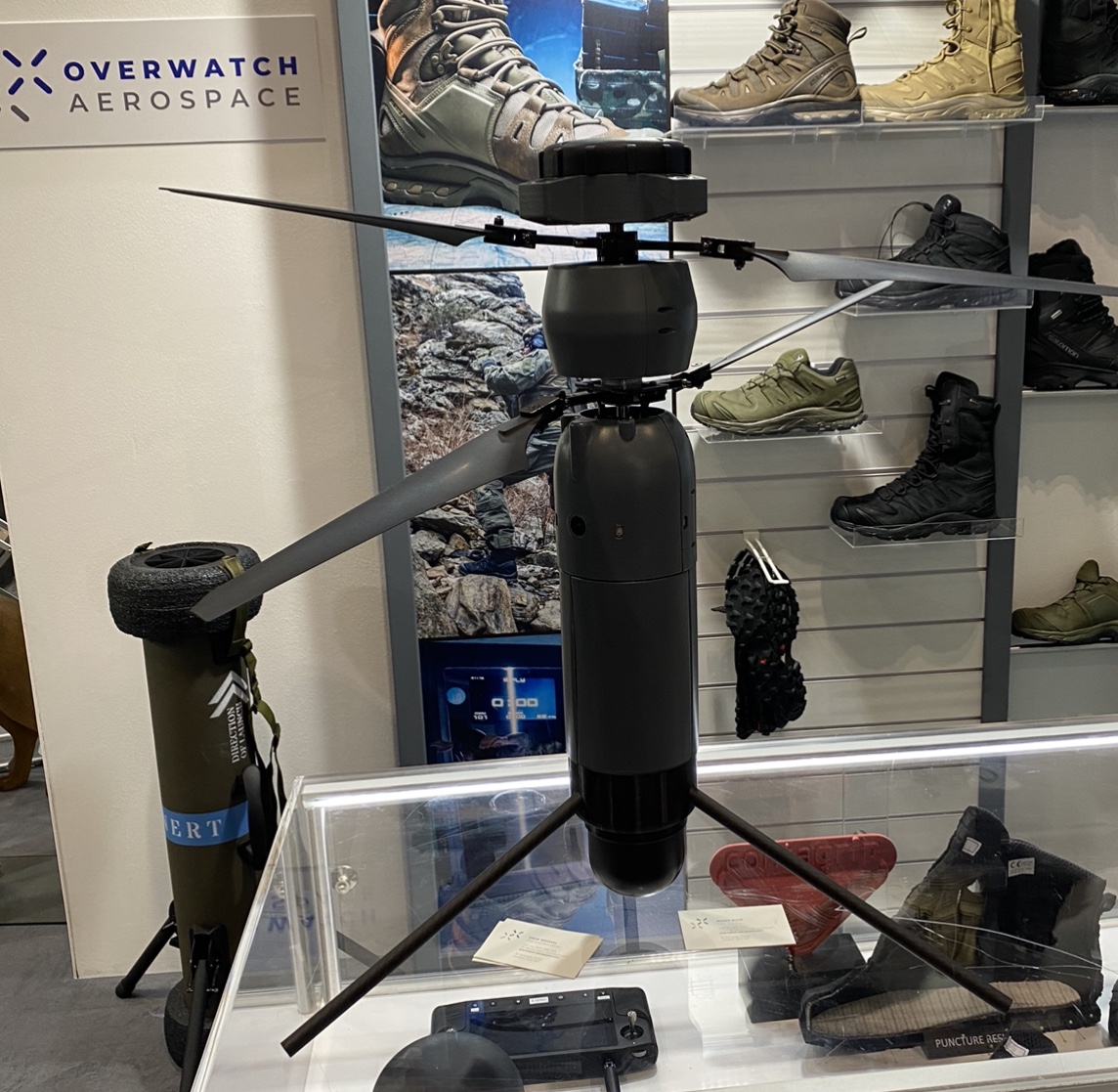
Located in the Edgar Brothers stand, Overwatch Defense showed me their PHOLOS VTOL UAS.

It features an onbord EO/IR camera, there are multiple TLR 9 payloads available.

With a loiter time of 45 minutes, it can be launched from a position of cover to observe or attack.

DSEi 21 – British Army Systems

Wednesday, September 22nd, 2021

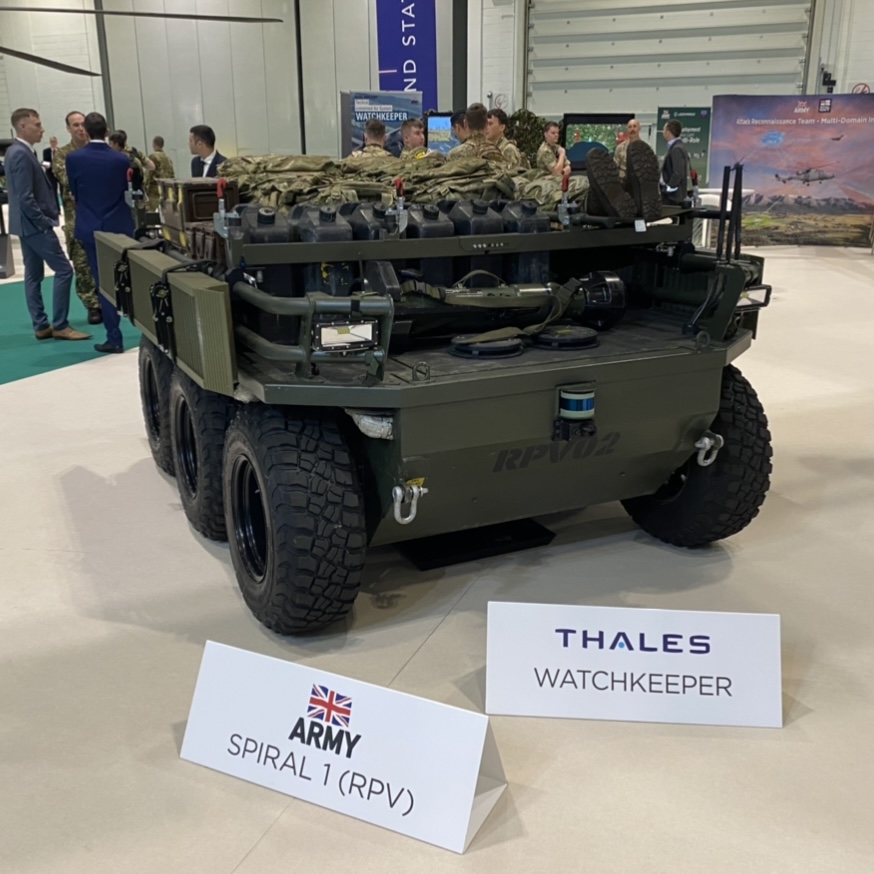
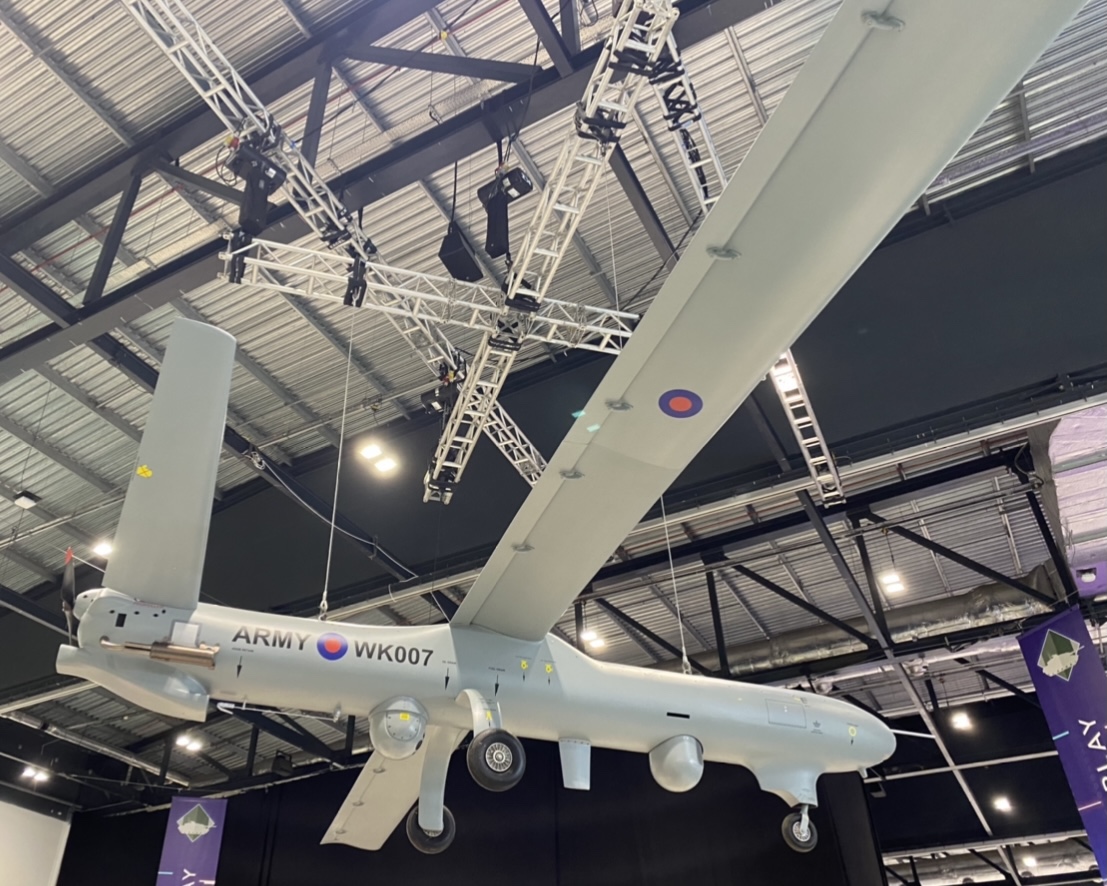
As I said in last week’s opener for the show, the UK military does a great job of supporting DSEi. Here are two of the systems they had on display, the Spiral 1 RPV and Watchkeeper UAV.

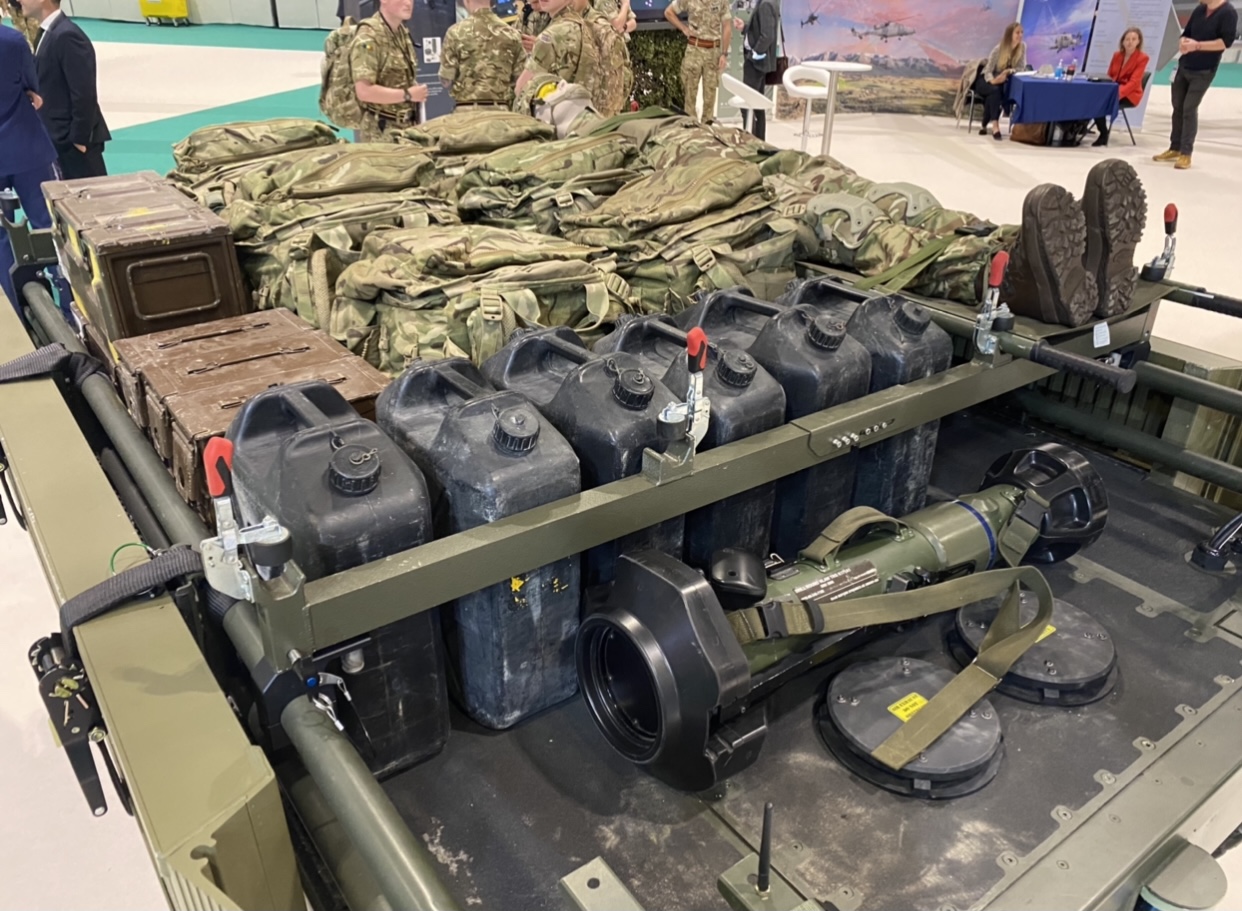
This Remote Patrol Vehicle is built by Marlborough Communications Limited and consists of their Mission Adaptable Platform System (MAPS) Unmanned Ground Vehicle (UGV). Spiral 1 is an experiment to determine future robotics requirements in these areas: resupplying platoon soldiers, reducing load burden on soldiers, casualty evacuation and power export for charging and supply of platoon level electronics.

Based on Elbit’s Hermes 450, the Watchkeeper UAV is fitted with an EO/IR sensor, has a cruising speed of 77 knots (143 km/h), can operate at an altitude of 16,000 feet, and can operate up to 150 km from the Ground Control Station, but multiple stations can be linked to extend the range.

DSEi 20 – DefendTex Drone-155

Tuesday, September 21st, 2021

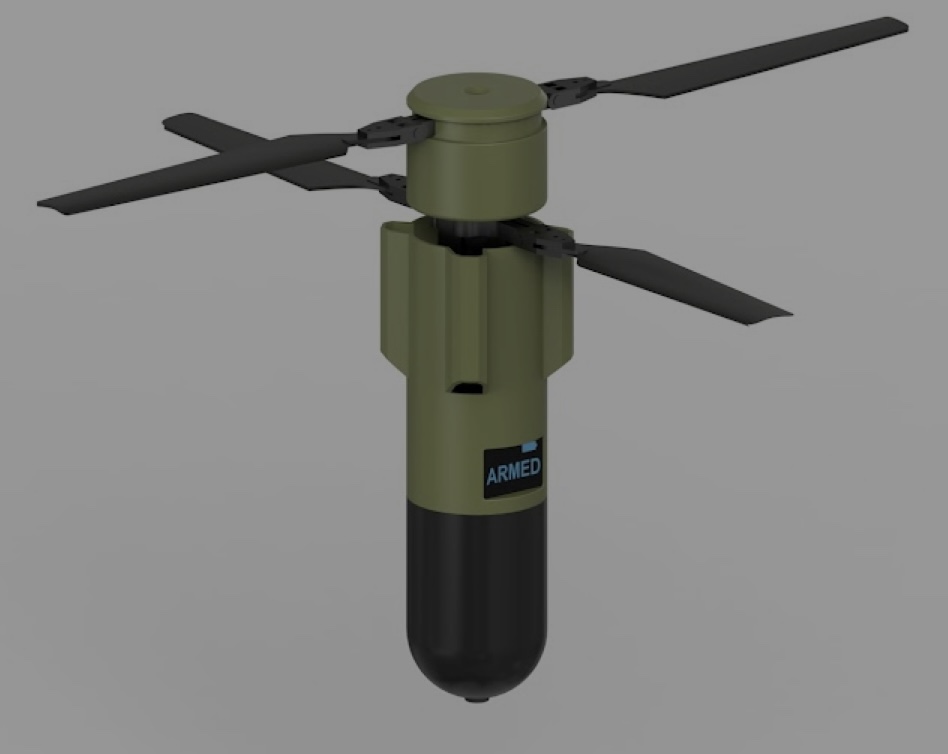
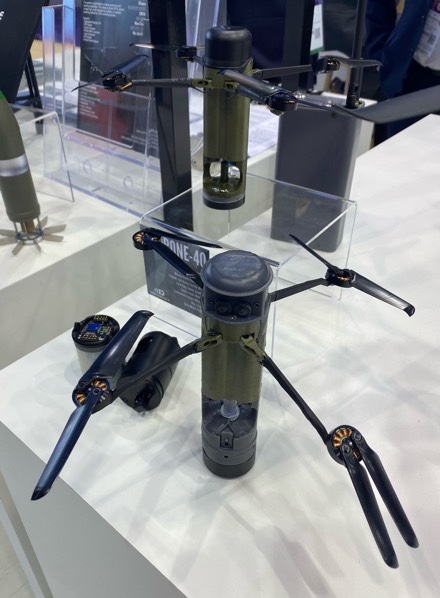
Australia’s DefendTex has introduced the Drone-155, a drone launched from a custom 155mm tube which, once aloft, deploys four propellers to loiter over targets.

Featuring a GPS autopilot, it offers up to 120 minutes of flight time with a top speed of 40 m/s. The max payload is 20 kg. It can be fitted with ISR, EW, Kinetic, RPG40 multiple launcher, laser designator or smoke/flash payloads. It can also be used to deploy the? DRONE40 described below.

The Drone-40 is normally launched from 40mm Grenade Launchers and can stay aloft for up to 60 minutes, featuring a top speed of 20 m/s. Current payloads include ISR, HE Frag, Fuel-Air, Anti-Armor, Flashbang, Smoke, and C-UAS.

TEKEVER Launches TEKEVER ATLAS for UAV Real-Time and Historical Processing Data

Friday, September 17th, 2021

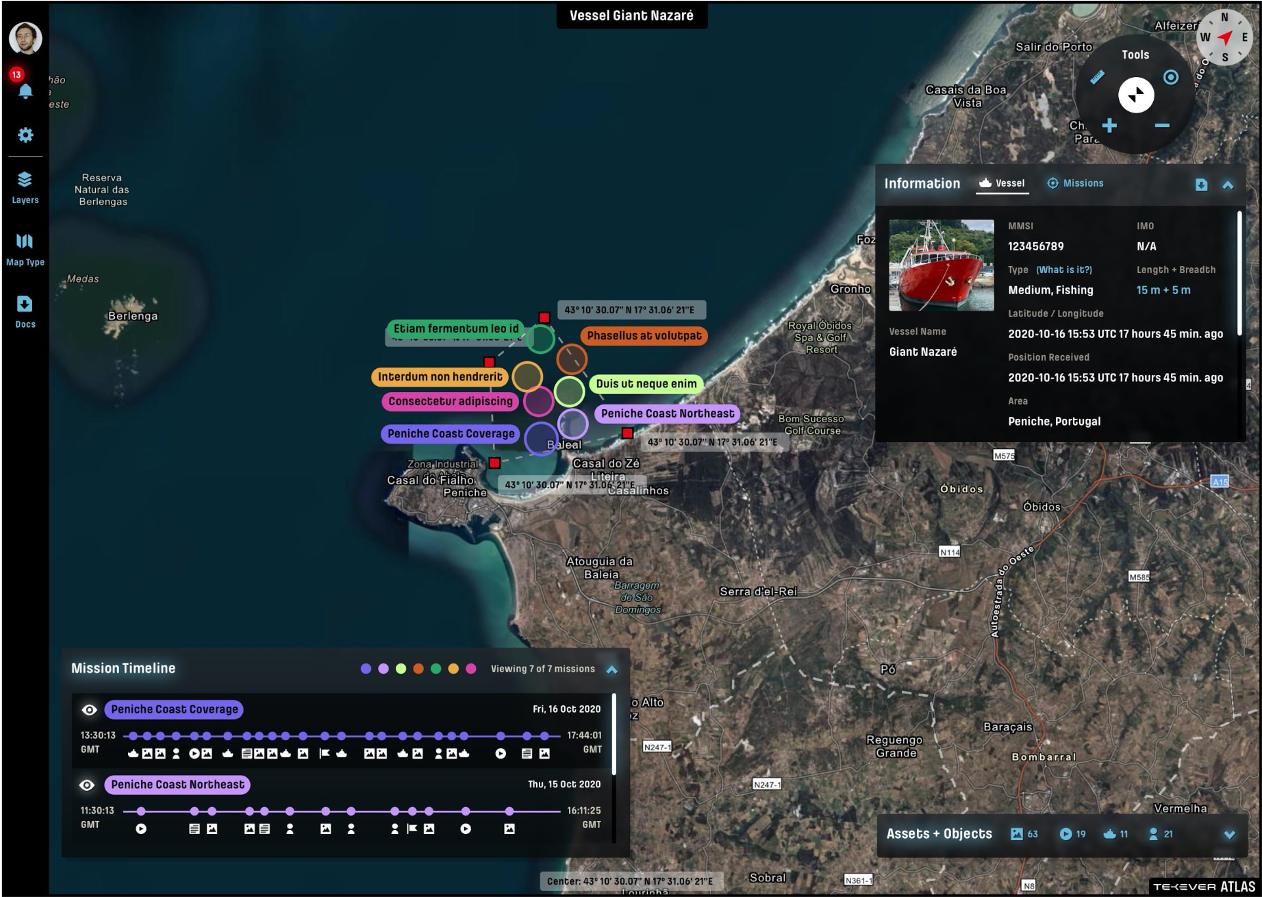
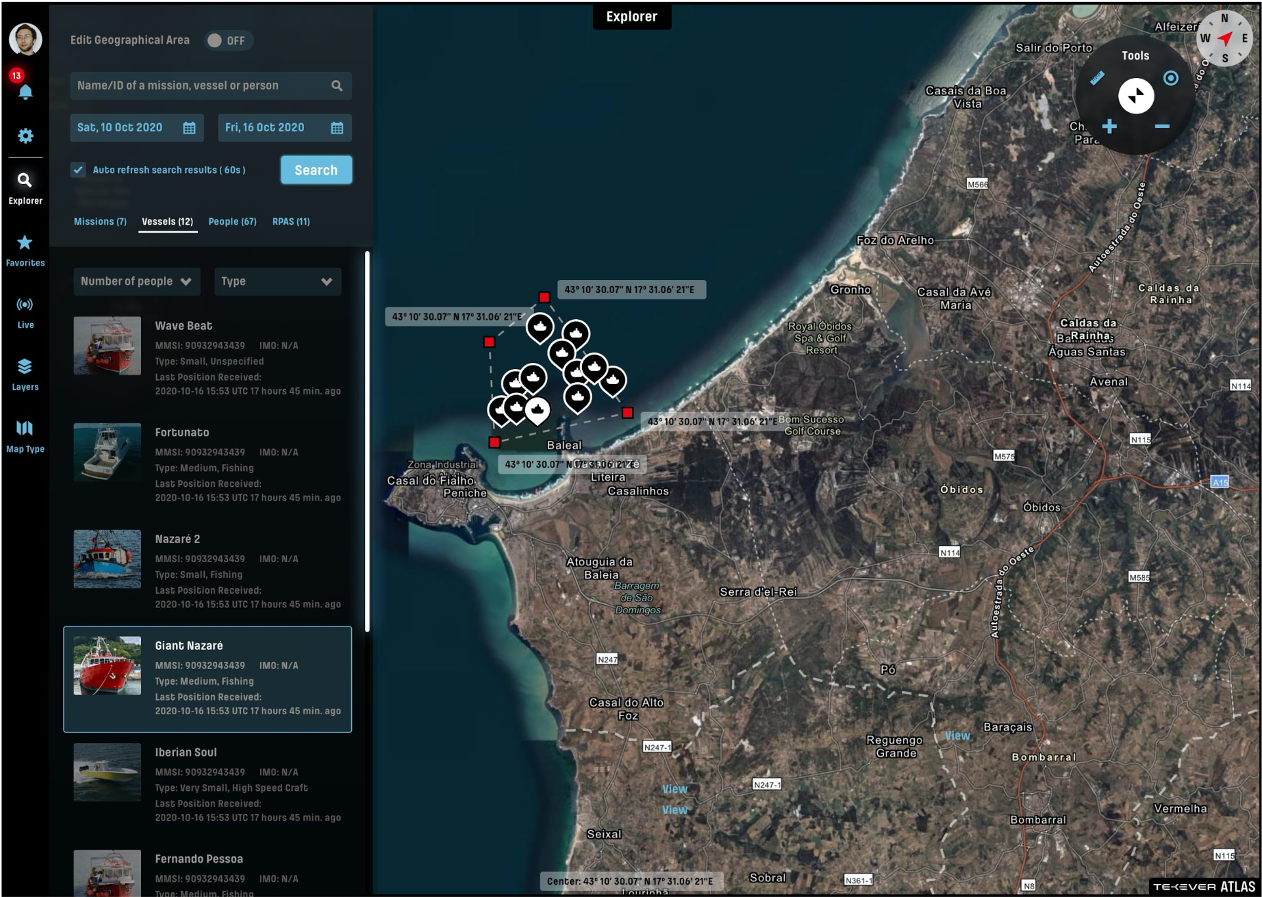
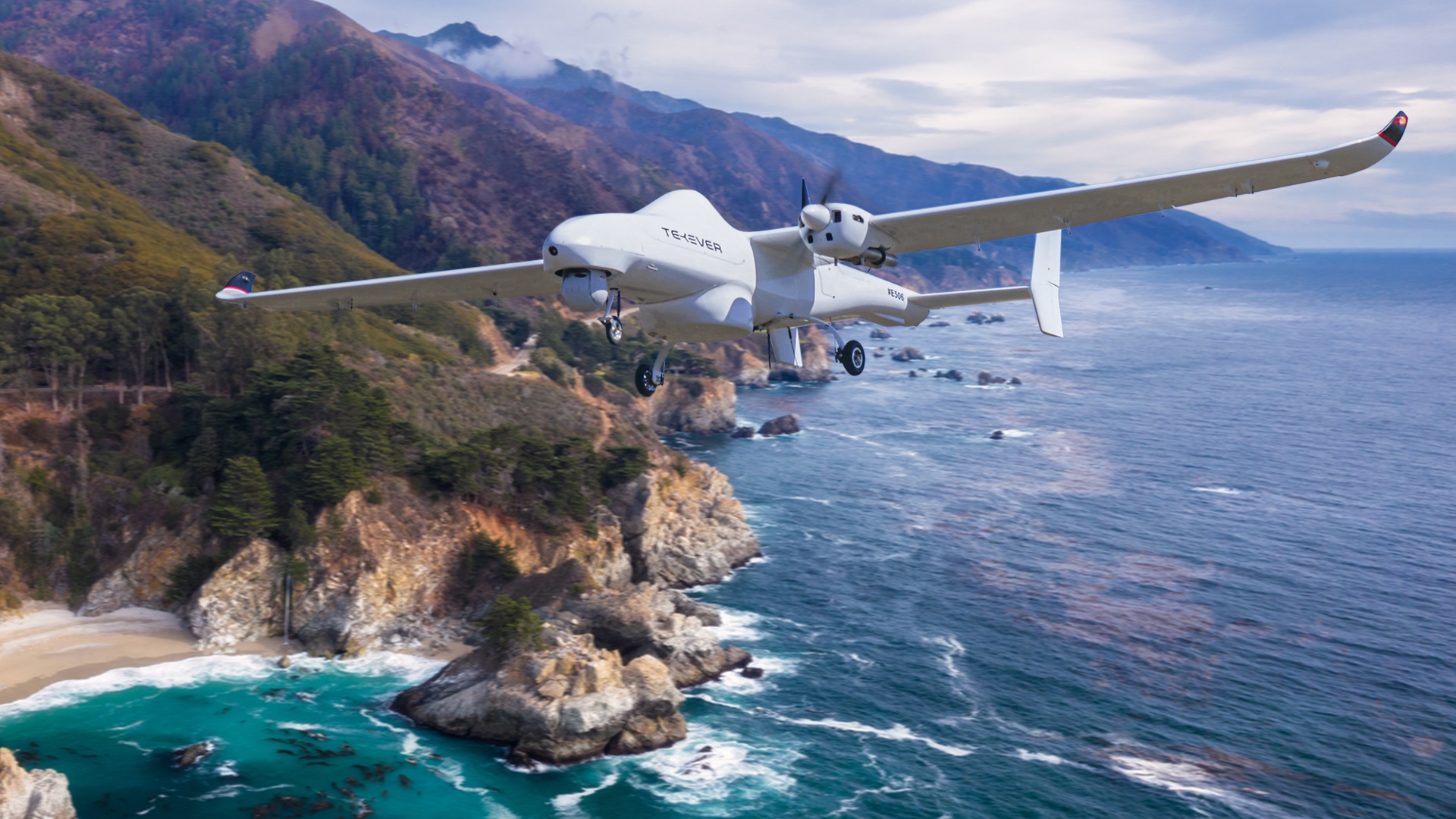
DSEI, September 15th, 2021 – TEKEVER is demonstrating during DSEI (London, 14-17, 2021) its new TEKEVER ATLAS, a tool to enhance Unmanned Aerial Systems missions. It provides advanced Artificial Intelligence (AI) analytics onboard for real-time and historical processing of data. Designed for key decision-makers, TEKEVER ATLAS delivers intelligence onboard, as well as ground-based tools, and assures that the right person gets the right information at the right time.

“TEKEVER ATLAS is a tool that extends the capabilities of TEKEVER’s unmanned technology. It allows you to collect all the information and to explore it after it’s been collected. ATLAS is a good name for the systems because it holds all the information that we are gathering about the world. It connects to multiple UAS systems at same time to collect data of the sensors that are on board (optical video, infrared video, radar, multispectral sensors, static aperture radars, for example). That information comes over a private network and gets collect in our AI/ML-powered datacenter, where all the information is stored and tagged”, explains Paulo Ferro, TEKEVER Director of Business Development

Decision-makers will be able to plan missions more effectively by easily including parameters such as areas of interest, objectives, and targets. This will enable the end-user user to review the specific details of any mission, and to easily retrieve historical data necessary as evidence for prosecution.