Colt

Archive for the ‘UAS’ Category

Army-funded Research May Enable Drones to Run on Any Type of Fuel

Thursday, October 1st, 2020

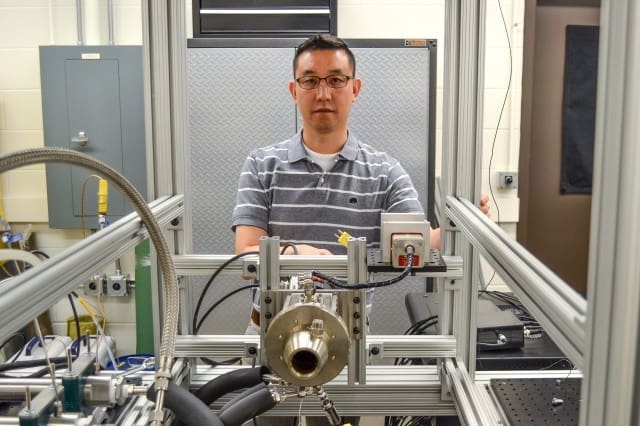
ABERDEEN PROVING GROUND, Md. — The U.S. Army recently awarded the University of Illinois-Urbana Champaign an $8 million, four-year cooperative agreement to develop key technologies that may allow the Army’s unmanned air and ground vehicles to run on any type of fuel.

Researchers at the U.S. Army’s Combat Capabilities Development Command Army Research Laboratory expect new technologies to increase unmanned vehicle performance and reliability and increase drone efficiencies.

“The Army’s fleet of unmanned aircraft systems often experiences performance and reliability issues due to fuel property variations and their effects on the ignition,” said Dr. Mike Kweon, program manager for the lab’s Versatile Tactical Power and Propulsion Essential Research Program.

The university will research comprehensive multi-fuel chemistry and ignition assistant technologies, which add energy to engines for reliable ignition.

Engines require a mixture of air and fuel, and an ignition source–either spark or compression ignition–to operate. For compression-ignition engines, thermal energy generated by compression is insufficient when low ignition quality fuels are used especially at high altitudes and cold conditions.

To address this, University of Illinois-Urbana Champaign researchers will investigate the ignition chemistry of fuels using machine learning algorithms, develop materials for novel ignition assistant technologies for flexible fuel UAVs, and investigate advanced propulsion technologies for high speed air launch effects in collaboration with Army scientists and researchers.

“We are thrilled to be taking part in development of new technologies that will be integrated into new UAV propulsion systems in the future for the Army. Equally important is training the next generation of engineers who can serve our nation in this field of science,” said Prof. Tonghun Lee, University of Illinois-Urbana Champaign. “This partnership is very exciting. The laboratory set out on a mission to operationalize science for transformational overmatch.”

Part of effort will expand the team to include experts in academia, small businesses and industry to push concepts and ideas into future capabilities for the Army, Lee said.

“The University of Illinois-Urbana Champaign has expertise and capability to perform research in multi-fuel chemistry and ignition assistance in a partnership with the Army to advance these technologies and to provide future capabilities for the warfighter,” he said.

This university-led research project is one of 11 funded this summer by the Army’s corporate laboratory as a part of Center for UAS Propulsion efforts to develop technologies for multi-fuel capable hybrid-electric engines. Each university partner is helping the Army address the energy demand required to power future unmanned vehicles. The Army awarded additional funding for similar research at the University of Minnesota; University of Michigan; University of Wisconsin-Madison; University of Illinois at Chicago; Iowa State University; University of Delaware; University of North Texas; Texas A&M University; University of Missouri and University of Tennessee-Knoxville.

The research, slated to begin this fall, is part of a larger research portfolio of multi-fuel capabilities technologies led by the laboratory that supports the Army Modernization Priority for Future Vertical Lift. Most recently, the laboratory announced the development of a new, advanced scientific model that will allow vehicle maintenance specialists to turn to bio-derived fuels in austere locations, as well as efforts to convert a home-based generator into a power source for autonomous ground and air vehicles.

By US Army CCDC Army Research Laboratory Public Affairs
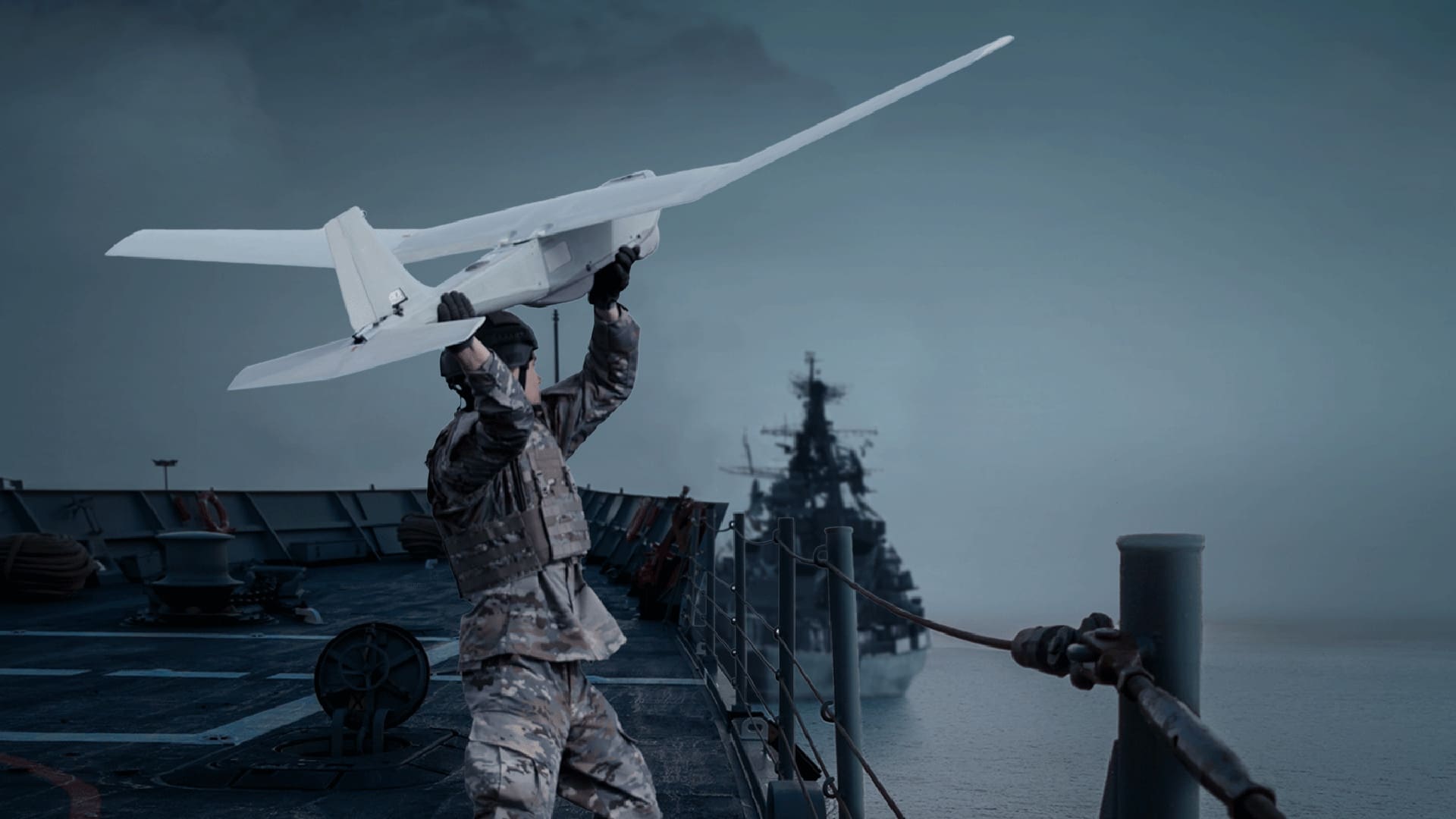
AeroVironment Teams with Robotic Skies for Unmanned Aircraft Systems Maintenance Support

Wednesday, September 30th, 2020


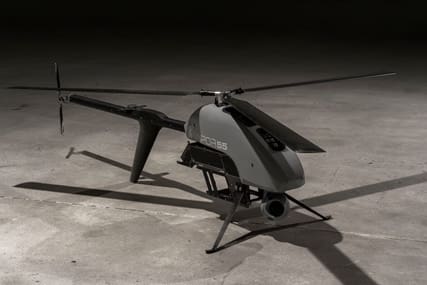
AeroVironment’s all-electric VAPOR® 55 helicopter unmanned aircraft system (Photo: AeroVironment)

SIMI VALLEY, Calif. and CHICAGO, Sept. 29, 2020 – AeroVironment, Inc. (NASDAQ: AVAV), a global leader in unmanned aircraft systems (UAS), today announced a teaming agreement with Robotic Skies, a global maintenance, repair, and overhaul network for UAS, to provide field maintenance, inspection and repair support for AeroVironment customers.

Robotic Skies, through teaming agreements with companies such as AeroVironment, provides UAS fleet operators with local, aviation-grade maintenance services. The company offers a unique combination of expertise in unmanned aircraft systems and traditional aviation maintenance methodology to deliver high-quality, scalable services through its repair network.

“Our customers rely on AeroVironment’s market-leading unmanned aircraft systems to perform critical missions, making timely field maintenance and local support essential,” said Rick Pedigo, AeroVironment vice president of sales and business development. “By teaming with Robotic Skies, our valued customers can expect an even higher level of responsiveness and customer service through a broad service center network, which comprises 200 independently owned and operated, certified repair stations. This relationship will enable our customers to keep their UAS in operation, maximizing their productivity.”

Robotic Skies Founder and CEO, Brad Hayden, said: “We are excited to work with AeroVironment as they grow their fleet. For example, the VAPOR helicopter unmanned aircraft system is capable of operating beyond visual line of sight, and for customers flying under a FAA Part 107 line of sight waiver there are specific requirements to maintain the aircraft in accordance with manufacturer’s instructions and recommendations. With Robotic Skies, AeroVironment customers can get the benefit of high-quality, OEM-certified maintenance and the peace of mind knowing they can meet any maintenance-related waiver requirements.”

AeroVironment’s all-electric VAPOR helicopter UAS delivers 60 minutes of cruise endurance and up to 10 pounds (4.5 kilograms) of flexible payload capacity. VAPOR’s modular payload bay provides access to a variety of integrated sensors and third-party payloads including gimbaled EO/IR, survey grade PPK mapping, LiDAR and hyperspectral sensors, and an available Drop/Delivery Mechanism. VAPOR is multi-mission capable for defense, commercial and industrial applications, enabling customers to choose the right configuration based on mission requirements, and the flexibility to create custom configurations that incorporate end-user provided equipment.

AeroVironment customers who are interested in learning more about Robotic Skies’ maintenance services may contact AeroVironment at customerservice@avinc.com or Robotic Skies at hello@roboticskies.com.

DoD Funds Development of DroneShield’s C2 System

Sunday, September 13th, 2020

DroneShield Ltd (ASX:DRO) (“DroneShield” or the “Company”) is pleased to announce it has received funding from the United States Department of Defense (“DoD”) for targeted development of its DroneShieldCompleteTM Command-and-Control (“C2”) system.

The section of the DoD, which has awarded the contract, is a new customer for DroneShied. The funding was awarded through a sole source contract.

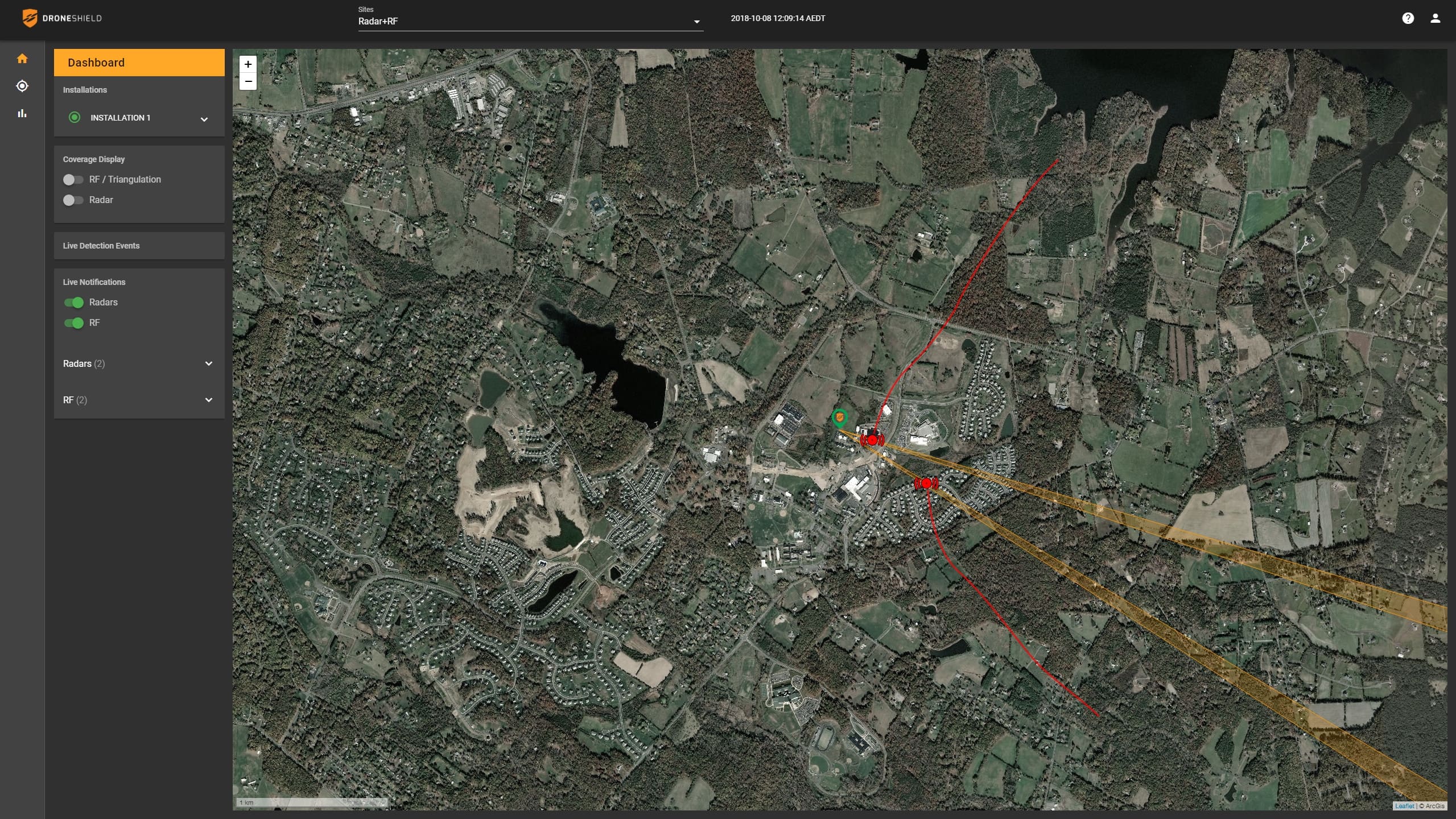
DroneShieldCompleteTM is an intuitive and feature rich C2, providing real time alerting, tracking and reporting information for native DroneShield as well as third party sensors. The DoD is working with DroneShield, providing funding for an agreed list of feature enhancements, for a project expected to span over several months. Importantly, following that period, the DoD is expected to make multiple purchases of DroneShield’s C-UAS equipment, which would run on the enhanced DroneShieldCompleteTM C2.

Oleg Vornik, DroneShield’s CEO, has commented, “We are proud to be working with the United States Department of Defense, one of most demanding defence customers globally, on this project to ensure our DroneShieldCompleteTM C2 stays at the cutting edge of customer requirements. Further, this project underscores our leadership not only as a product/sensor manufacturer, but also as an integrator of fixed site and mobile C-UAS systems. This contract is a material milestone in cementing our close working relationship with the largest defence customer globally. In addition to expected purchases associated with this paid development contract, further orders for other DroneShield solutions are expected as part of developing a trusted supplier relationship with this customer.”

Whilst the Company is unable to precisely quantify the follow up orders, it expects the orders to be material and will in due course provide an update on the dollar amounts to the market, when available.

General Dynamics Mission Systems and Dedrone Enter Strategic Partnership to Provide Counter-Drone Technology to Defense and Civil Customers

Friday, September 4th, 2020

FAIRFAX, Va. – General Dynamics Mission Systems and Dedrone, the market leader in airspace security, announced today their strategic counter-drone partnership, providing General Dynamics’ global network with access to Dedrone’s complete drone detection and defeat technology. As part of this strategic agreement, General Dynamics Mission Systems becomes a value-added reseller for Dedrone’s counter-unmanned aerial system (C-UAS) capabilities and has made a significant equity investment in Dedrone. General Dynamics will exclusively supply Dedrone’s counter-drone technology to their global defense, civil government, intelligence, and critical infrastructure customers.

“The intrusion of private and restricted airspace by unmanned aerial systems is one of the fastest-growing threats facing our customers, and Dedrone’s counter UAS technology platform is the market-leading solution to defeat those threats,” said Chris Brady, president of General Dynamics Mission Systems and a newly appointed member of Dedrone’s advisory board. “We’re excited to partner with Dedrone to provide counter-drone capabilities to our global customer base.”

In the counter-drone technology market, Dedrone’s exclusive focus on C-UAS detection and defeat have enabled them to become the industry leader with the rare distinction of having production systems fielded and in operational use worldwide. The Dedrone C-UAS technology portfolio combines machine-learning software with best-in-class hardware sensors, electronic attack methods such as smart jamming, and defeat weapons to provide early warning, classification of, and mitigation against drone threats. Dedrone’s capabilities are used by hundreds of customers globally, including the U.S. military, allied and coalition forces, correctional facilities, airports, utilities, and corporations, as well as other public and private organizations.

“Dedrone is thrilled to be partnering with General Dynamics Mission Systems, a leader in building smarter mission-critical products and systems,” shares Aaditya Devarakonda, CEO of Dedrone. “With General Dynamics, Dedrone’s technology will reach a broad, global customer base, opening opportunities to provide mission-critical airspace security systems to customers both in the U.S. federal and defense sectors, as well as their global critical enterprise security customers.”

dedrone.com

Schiebel Camcopter S-100 and Nordic Unmanned Carry Out World’s First Full-Scale Offshore UAV Flight for Equinor

Monday, August 31st, 2020

Vienna, 28 August 2020 – Schiebel, together with partner Nordic Unmanned, successfully demonstrated to Norwegian energy company Equinor the cargo delivery capability of its Unmanned Aerial Vehicle (UAV) CAMCOPTER® S-100 to offshore platform Troll A. This is a world’s first in terms of full-scale offshore UAV delivery from shore to an active oil and gas installation.

The exercise simulated the scenario of an urgent requirement for specific essential spare parts at the gas production platform Troll A. The CAMCOPTER® S-100 successfully carried out the long-range delivery flight from Mongstad, where the spare parts were 3D-printed, to the offshore platform Troll A located in the North Sea. The unmanned delivery distance was 100 km (55 nm). After the UAV supplied the spare parts, it carried out a close inspection around the platform before it headed back to Mongstad.

The flight trials also included a successful Search and Rescue (SAR) mission, where a “man over board” dummy was quickly located by the UAV, transmitting the positioning data and live images using the L3 Harris Wescam real-time Electro-Optical/Infra-Red (EO/IR) camera and an Automatic Identification System (AIS).

Hans Georg Schiebel, Chairman of the Schiebel Group, said: “This was the perfect trial to show off the exceptional maritime capabilities of the S-100 for the oil and gas industry. We have extensive experience in long-range unmanned flights, especially in the maritime domain and under adverse weather conditions. The S-100 was able to show off its outstanding capabilities and we have proven once again that the S-100 UAV is the superior choice.”

www.schiebel.net

Army Tests Versatile Unmanned Aircraft at Yuma Proving Ground

Sunday, August 23rd, 2020

YUMA PROVING GROUND, Ariz.– The United States military has used unmanned aerial systems (UAS) for decades, and increasingly counts on them to perform dangerous missions that save Soldiers’ lives.

Among these flying wonders is the Aerosonde, a catapult-launched and net recovered aircraft used primarily for surveillance and reconnaissance.

Capable of 15 hours of flight time, the Aerosonde is highly portable and boasts outstanding optics at high altitudes. The system has undergone extensive testing at U.S. Army Yuma Proving Ground (YPG) for most of its existence.

“We test here whenever we have changes to the system,” said Kyle Petesch, Aerosonde site lead. “The YPG personnel are very attentive to what we ask for and easy to work with.”

“Aerosonde has been testing here for more than 12 years,” added Matthew O’Donald, test officer. “It’s a well-proven machine, and there have been numerous upgrades over the years.”

The sheer volume of commercial air traffic in the United States means that conducting developmental testing of even the smallest UAS in a safe, sustained manner within the national airspace is highly problematical. However, such constraints do not exist at YPG—the proving ground controls nearly 2,000 square miles of restricted airspace in addition to boasting clear, stable air and an extremely dry climate where inclement weather is a rarity.

“We have perfect flying weather, well over 300 clear days per year,” said O’Donald. “We have such a wide flight area of restricted airspace that’s perfect for customers to get what they need.”

“We like the nice, clear weather without a lot of clouds or rain delays, and definitely like the range space we can get here,” added Petesch. “The flat desert is good for emplacing ground stations and measuring farther distances without trees or line-of-sight issues.”

Aerosonde is typically deployed in a system with multiple aircraft and ground control stations, all of which can be accommodated in a realistic manner at YPG. The vast range and air space here means the testers can easily evaluate things like fuel consumption and the ability to smoothly hand-off control of the craft between controllers located in multiple ground control stations.

“We test not only to integrate products our customers want, but also to improve our own system’s reliability,” said James Ruthven, senior engineering support manger. “In the end, that helps our country’s mission overseas by having a quiet, reliable aircraft that provides good optics and other sensors.”

The Aerosonde is a relatively quiet aircraft, as is necessary for its surveillance mission.

“Our end user—a platoon out in the field—doesn’t want their targets to know they’re being watched,” said Ruthven. “Our engine and aircraft has to be quiet, so coming here affords us the opportunity to put people out in the desert and do acoustic measurements. We can tailor how we operate in the real world based on the findings we have here.”

The proving ground’s extensive experience with testing UAS and associated sensors is another attraction, as is the ability to control a large swath of the radio frequency (RF) spectrum. YPG has more than 500 permanent radio frequencies, and several thousand temporary ones in a given month.

“This is the easiest place for us to operate, and we get the most complete and comprehensive coverage in support of what we’re doing,” said Ruthven. “The heat and density altitudes that we find in this local environment are very similar to a lot of the places we’re operating in overseas.”

The Aerosonde will continue coming to YPG for testing well into the future, Ruthven added.

“We’re looking at our technology roadmap and trying to grow what our system can do for the customer to meet their needs for the next decade to come,” he said. “Utilizing the test ranges, frequencies, and facilities here is crucial to us getting to that point. The work we were able to do at YPG got us to this point.”

By Mark Schauer

Air Force Life Cycle Management Center Awards Skyborg Contract

Saturday, August 22nd, 2020

WRIGHT-PATTERSON AFB, Ohio (AFNS) —

The Air Force Life Cycle Management Center has awarded multiple indefinite-delivery / indefinite-quantity (IDIQ) contracts to The Boeing Co., General Atomics Aeronautical Systems Inc., Kratos Unmanned Aerial Systems, Inc. and Northrop Grumman Systems Corp.

These initial awards will establish a vendor pool that will continue to compete for up to $400 million in subsequent delivery orders in support of the Skyborg Vanguard Program.

The aim of the Skyborg Vanguard program is to integrate autonomous attritable unmanned air vehicle technology with open missions systems to enable manned-unmanned teaming. This will provide a game-changing capability to the warfighter. The attritable UAV line of effort awarded by this contract will provide the foundation on which the Air Force can build an airborne autonomous “best of breed” system that adapts, orients and decides at machine speed for a wide variety of increasingly complex mission sets.

“Because autonomous systems can support missions that are too strenuous or dangerous for manned crews, Skyborg can increase capability significantly and be a force multiplier for the Air Force,” said Brig. Gen. Dale White, Fighters and Advanced Aircraft program executive officer, who, along with Brig. Gen. Heather Pringle, Air Force Research Laboratory commander, serves as the leadership for the Skyborg program. “We have the opportunity to transform our warfighting capabilities and change the way we fight and the way we employ air power.”

Skyborg is one of three Vanguard programs identified late last year as part of the Air Force Science and Technology 2030 initiative. These high priority Air Force capability development efforts come with an enterprise commitment to deliver game-changing capabilities to transform Air Force operations for the future force.

“Autonomy technologies in Skyborg’s portfolio will range from simple play-book algorithms to advanced team decision making and will include on-ramp opportunities for artificial intelligence technologies,” Pringle said. “This effort will provide a foundational government reference architecture for a family of layered, autonomous and open-architecture UAS.”

The Vanguards are also introducing a novel early partnership between AFLCMC and AFRL due to the need to quickly identify cutting-edge technology and transition directly into the hands of the warfighter.

“The greatest technological edge is for naught if the warfighter can’t use it on the battlefield. That makes the partnership between AFRL and AFLCMC so vital to this program. We can’t allow bureaucratic speed bumps to interfere with our mandate to deliver,” White said.

By Daryl Mayer, Air Force Life Cycle Management Center Public Affairs

AeroVironment Expands Capabilities of its Puma UAS Product Line with New Smart 2500 Battery and Bungee Launch System

Tuesday, August 11th, 2020

• New Puma Smart 2500 Battery extends Puma LE’s flight time by nearly 20 percent with up to 6.5 hours of endurance, delivering longer time on station, greater range, and maximizing its multi-mission capabilities


• Now compatible with Puma 2 AE, Puma 3 AE and Puma LE, the Puma Bungee Launch System (BLS) expands aircraft launch options and operational capabilities

AeroVironment Puma LE small unmanned aircraft system (Photo: AeroVironment)

SIMI VALLEY, Calif., Aug. 11, 2020 – AeroVironment, Inc. (NASDAQ: AVAV), a global leader in unmanned aircraft systems (UAS), today announced the launch of two new Puma product line enhancement options that reinforce the company’s commitment to continuous improvement and expanding the operational capabilities of its family of tactical UAS. The newly announced product enhancement options are a result of AeroVironment’s collaboration with front-line users to develop innovative solutions that enable customers to proceed with certainty in ever-changing operational environments.


Puma Smart 2500 Battery – Puma LE

Available for Puma™ LE, the optional Puma Smart 2500 Battery allows operators to achieve an extended flight time of up to 6.5 hours. The increased endurance provides operators with greater time on station, maximizing Puma LE’s multi-mission capabilities across land and maritime environments. This high-energy-density, lithium-ion battery pack features an improved capacity of 24.5Ah (amp-hours) while retaining the size and form factor needed to be seamlessly integrated into Puma LE’s existing battery bay.

Puma Bungee Launch System (BLS)

AeroVironment’s Puma Bungee Launch System (BLS), a military-grade bungee launcher that is standard equipment with every Puma LE system, is now available as an enhancement option for Puma 2 AE and Puma 3 AE. The BLS allows for the assisted launch of Puma AE UAS in environmental conditions where hand launch is not practical or is limited. Designed with mission-flexibility in mind, the BLS can be securely installed in a variety of soil types or mounted to low, immovable objects. The lightweight and portable all-environment system can be set up and operational in less than 10 minutes.

“AeroVironment is committed to anticipating and delivering innovative solutions that are critical to tactical UAS operators downrange,” explains Rick Pedigo, vice president of sales and business development for AeroVironment. “These two new enhancement options will expand our customers’ operational capabilities, while maximizing operator safety and improving operational efficiency, allowing them to focus on the mission at hand.”  

The Puma Bungee Launch System is currently available for order/delivery, and the Puma Smart 2500 Battery will be available for order/delivery before the end of the third quarter, calendar year 2020. For more information, visit www.avinc.com