In this video by PEO Soldier’s Ron Lee, Sergeant Major of the Army Dan Dailey discusses the proposed Pinks and Greens service dress uniform.


In this video by PEO Soldier’s Ron Lee, Sergeant Major of the Army Dan Dailey discusses the proposed Pinks and Greens service dress uniform.
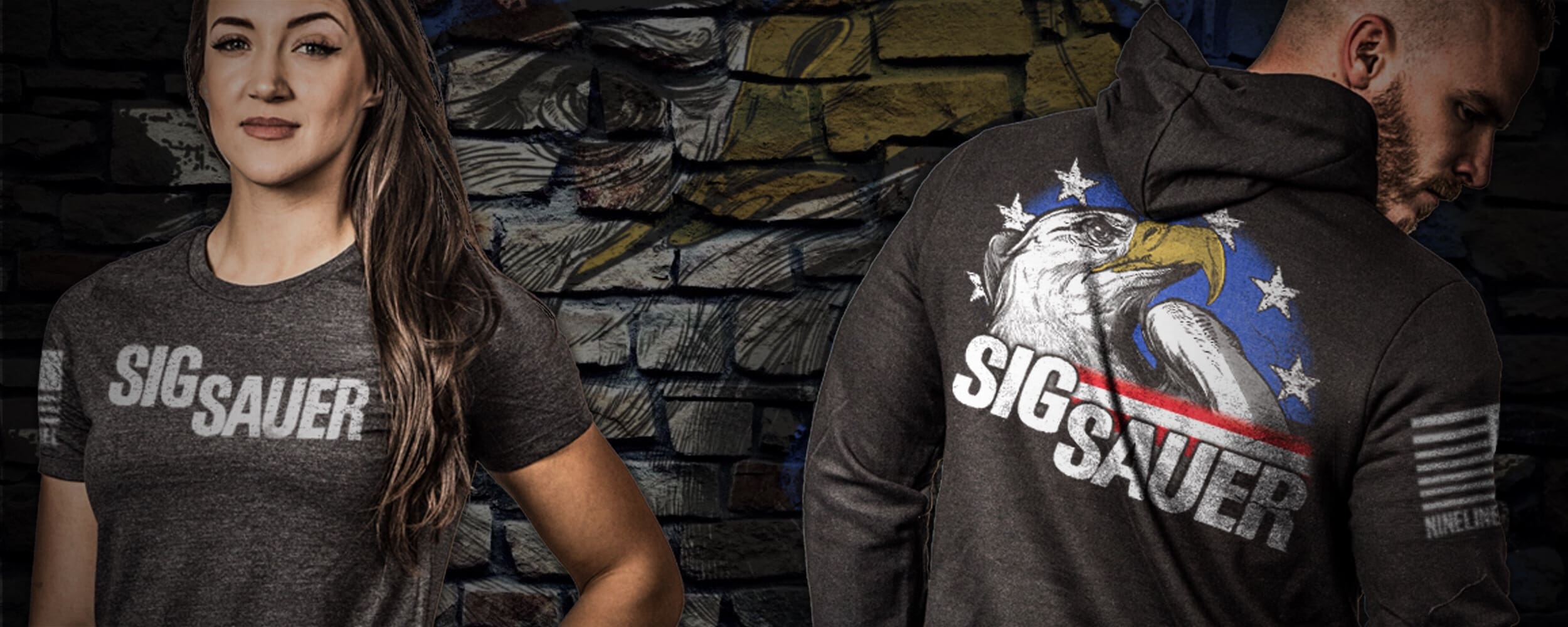
Veteran owned Nine Line Apparel is proud to announce a partnership with legendary firearms manufacturer SIG SAUER. It only seemed a natural fit for the pro-military, pro-2nd Amendment apparel company to form bonds with SIG, one of the most recognizable firearms brands in the country, and the recently contracted standard issue pistol of the US Army.
“We are thrilled to be partnering with such a reputable firearms manufacturer. Their dedication to quality and pure American ingenuity mirror our own commitment to superior craftsmanship and patriotism,” said Nine Line CEO CPT Tyler Merritt, US Army (retired).
“We are excited about the partnership with Nine Line Apparel and the Nine Line Foundation, especially kicking it off at the Army-Navy Game. The two brands really magnify each other and our shared relentless passion for innovation and performance is great combination,” said SIG SAUER VP Marketing Allen McCormick.
The partnership was announced on TV’s “Fox & Friends” on Thursday, December 7, when Merritt unveiled the companies’ first collaborative design on air.
SIG also joined Nine Line at the Tailgate for Troops event at the annual Army-Navy game on Saturday, December 9, in Philadelphia, giving away shirts in exchange for donations to the Nine Line Foundation, a 100% nonprofit organization dedicated to helping severely wounded veterans.
The first Nine Line-SIG collaborative design, “SIG SAUER Eagle” is now available for purchase at www.ninelineapparel.com.
Horsham, Pa. (December 2017) – Mission First Tactical, LLC (MFT™), a leader in USA-made rifle/carbine accessories, is proud to release its latest product, the ENGAGE™ AR15/M16 PISTOL GRIP (EPG27). Current handgun pistol grips were carefully considered and reviewed to create a modern, full-sized AR pistol grip that offers positive support and control for one handed operations. The finger swell and grove back straps provide a positive grip surface with wet or gloved hands.
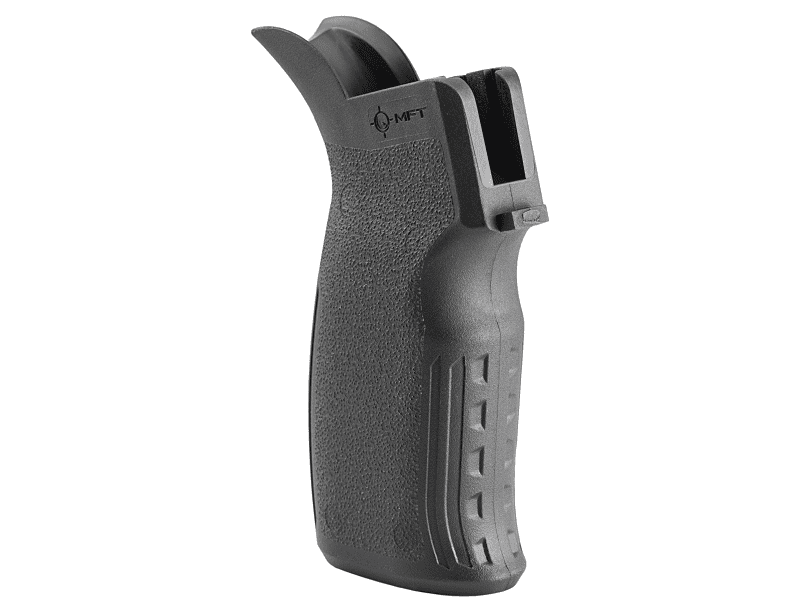
The new pistol grip increases operator comfort and performance while allowing the operator to gain more control during reloading and firing. The tab covers the receiver gaps that can cause discomfort during sustained usage and can be easily removed if desired. Designed for M16/M4/AR15/HK4s, the ENGAGE Pistol Grip is a full-size pistol grip that is optimal for one handed operation. It is available in black, grey, scorched dark earth and foliage green.
EPG27 Specifications:
Weight: 2.4 oz.
Height: 5.007”
Width: 1.22”
Length: 3.026”
MSRP: $19.99 – $24.99
For more information on Mission First Tactical, visit www.missionfirsttactical.com.
AUSTIN, TX — A Girl & A Gun is excited to announce that it has partnered with Tony Pignato for 2018. Tony will drive our strategic marketing plan to give each of our sponsors and affiliate partners the best possible return on marketing investment for the 2018 AG & AG National Conference and the AG & AG Brownells Ladies’ Multigun Fall Festival. The strategy includes optimizing the social media reach of AG & AG, establishing strategic media partnerships with influencers, creating engaging and exciting content for our event and our partners, and increasing awareness of our organization, events, and sponsors through proven marketing techniques.
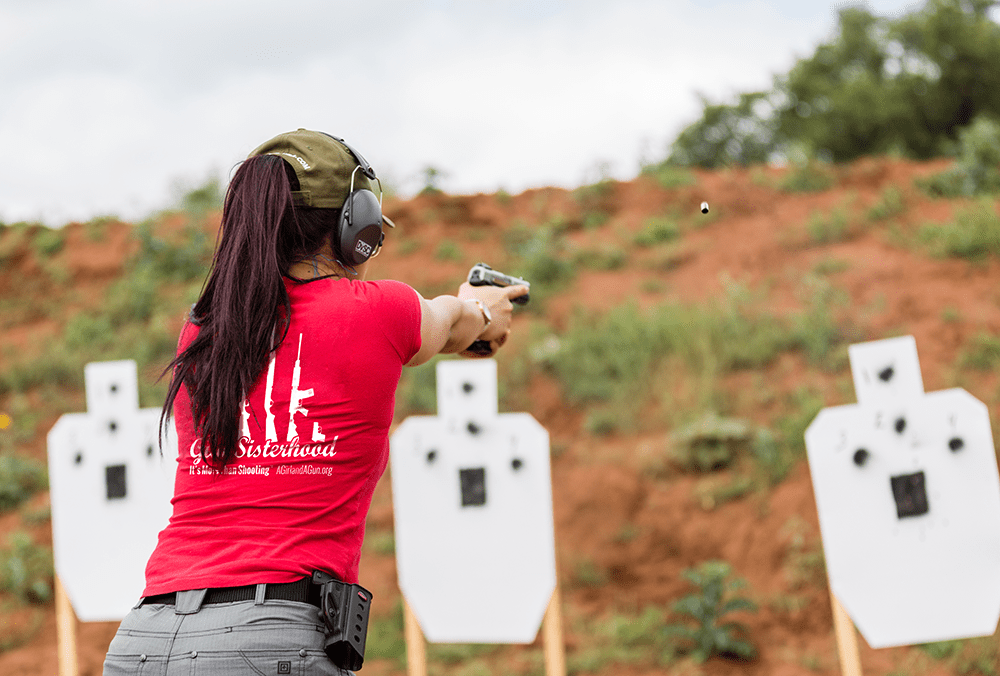 “Over 400 members and guests travel to be a part of the AG & AG Annual Training Conference and over 150 women and staff who participate in the Brownells Fall Festival,” says Julianna Crowder, Founder of AG & AG. “The female voice in the firearms industry is powerful, confident and growing and AG & AG is proud to be a part of that voice.” AG & AG has an organic reach of over 700k per month through our media partners and social media outlets. AG & AG has launched dedicated event social media pages to share specific content and information about each event, as well as sponsor media and event coverage. This foundation of content will be shared across numerous media outlets in the industry providing each sponsor and strategic partner incredible reach and exposure.
Tony Pignato has a reputation of proven success of expanding market reach for hundreds of manufacturers, retailers, and companies — from the local mom-and-pop shops to some of the biggest names in the industry. As a host on Shooting USA and well-known event promotion consultant in the industry, he has established a reputation of growing event participation and exposure for sponsors, events, and companies by creating engaging content and professional on-camera representation and promotion.
“AG & AG’s 5,500 active members are walking, talking brand ambassadors throughout the United States, says Tony Pignato. “When you add in collaboration with major media players in my network and a strategically designed marketing campaign, A Girl & A Gun events are set to be some of the most influential and effective market platforms for any sponsor or business.”
 About A Girl & A Gun
A Girl & A Gun (AG & AG) is a membership organization whose events have been successful stepping stones for thousands of women into the shooting community and fostered their love of shooting with caring and qualified instructors to coach them. AG & AG breaks barriers for women and girls in the area of self-defense and in pistol, rifle, and shotgun shooting sports by welcoming beginners to learn the basics of safe and accurate shooting and providing experienced shooters with advanced-level opportunities. The club has more than 5,000 members in 48 states, with chapters that host recurring Girl’s Night Outs at more than 150 ranges.
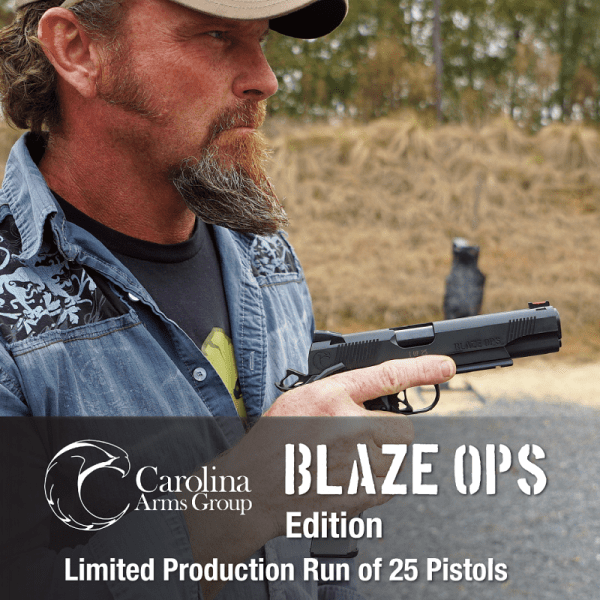
I had recently heard that there was a new 1911 in the works by the folks at Carolina Arms Group. They are known for building high quality custom 1911s and they teamed up with Pat McNamara on the project. Most SSD readers are already familiar with Pat McNamara from TMACS Inc and Combat Strength Training. I had the opportunity to speak with both Pat McNamara and Mark McCoy from Carolina Arms Group about their collaboration on what they call the “Blaze Ops” Edition pistol:
SSD: Mark, tell me a little about yourself.
Mark: I’m the CEO and Founder of Carolina Arms Group. Prior to starting CAG I served in the Navy from 1989 to 2009.
SSD: What did you do in the Navy?
Mark: I was in the Aviation sector in repair and quality.
SSD: When did you start Carolina Arms Group?
Mark: I had been in the firearms industry from the time I left the Navy in 2009. I wanted to come out with my own high quality custom 1911 so in 2012 I launched Carolina Arms Group. The first two models I introduced were the Trenton and TC45.
SSD: Your Company is located in NC. Why NC?
Mark: We searched the Carolinas for where we would settle down and call home. We selected Mooresville, North Carolina due to its diverse background in high speed machining and close proximity to Montgomery Community College in Troy, North Carolina. My goal was to blend both senior gunsmiths and the next generation of gunsmiths for the long term growth of custom 1911 building in the industry.
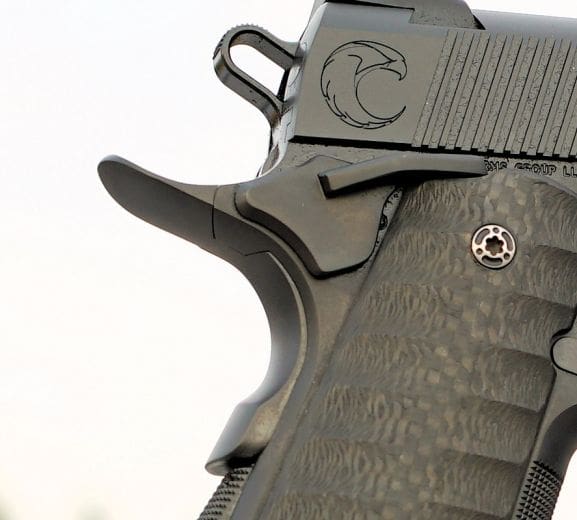
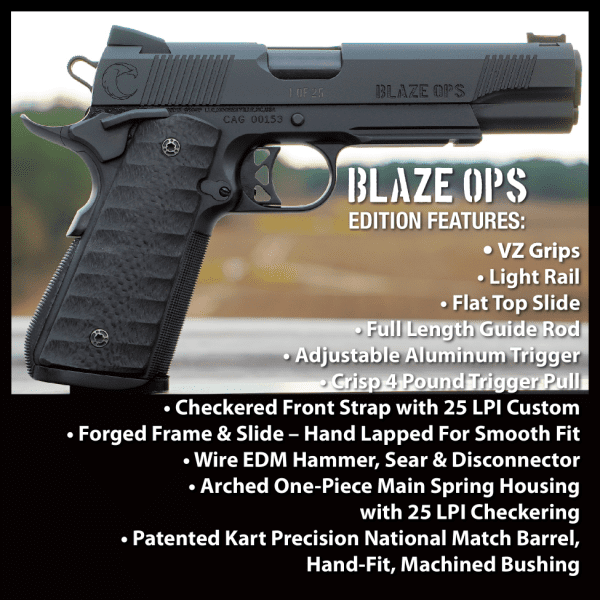 SSD: One of the first things I noticed on your 1911s was the company logo on the slide. What exactly is it?
Mark: Our logo has a deep meaning to us at Carolina Arms Group. We named our logo the Carolina Arms Group Eagle “C”. The top of the logo is the American Bald Eagle which to us represents the strength, protection and freedoms that our Great Nation offers. The lower portion of the Eagle ”C” has the wing folded forward which represents the men and women that have died, that have served and continue to serve Our Great Nation that may still continue to offer us strength, protection and freedom. The name Carolina Arms Group pays homage to the Carolinas, our support of the second amendment, and that we are a highly skilled group of gunsmiths and machinists.
SSD: I gotta ask… why the 1911?
Mark: The 1911 model handgun is the American handgun of choice for many of our citizens and the most respected instructors. In my opinion, there is no better handgun that represents America. The 1911 has stood the test of time and has been designated by many authorities as the finest service pistol of all time. I was infatuated at a young age with the mechanics and design of the 1911. I carried a 1911 while I served in the U.S. Navy and currently carry one as my sidearm of choice today.
SSD: What sets your 1911s apart from the others on the market?
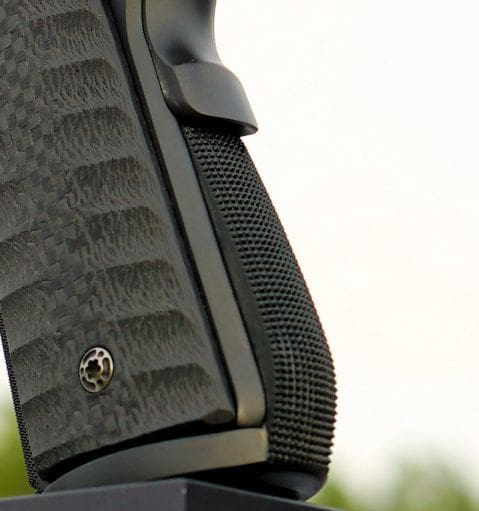
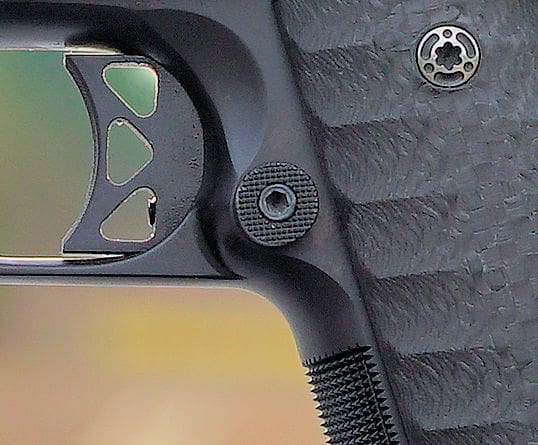
Mark: Every Carolina Arms Group 1911 is uniquely blended and handcrafted with the end-user in mind. We believe in quality over quantity. We take our time on each and every 1911 as if we are giving life to it. Our 1911’s are built one at a time with every part laser engraved to the serial number and crafted one at a time. It’s all about craftsmanship and reliability.
SSD: So why did you team up with Pat Mac for this new project of yours?
Mark: Because Pat is one of the best of the best in his field and he deserves the best firearms.
SSD: Mac, I’ve seen you running 1911s in the past. What attracted you to the Carolina Arms Group version?
Mac: I’ve got a friend (Jon) who works for CAG. He tagged me on social media to let me know what CAG was working on. I chatted with Mark shortly thereafter and expressed my interest in purchasing a 1911 in 9mm.
SSD: Which model did you get from CAG?
Mac: Their Trenton 9.
SSD: What was the thought process that went into the specific features of the Blaze Ops 1911?
Mac: It is essentially a replica of the 1911 I used while serving in USASOC.
SSD: Mark, what were your thoughts on the features Mac wanted for the Blaze Ops edition?
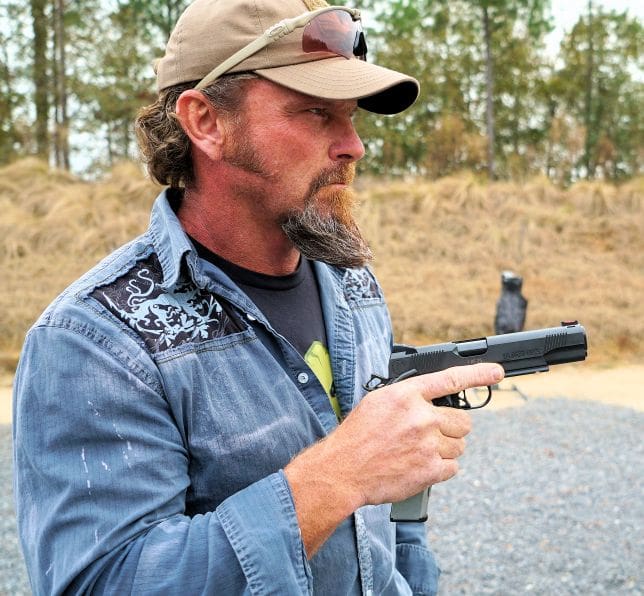
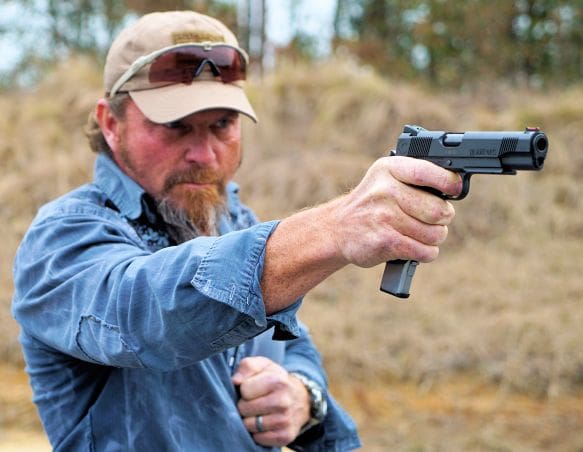
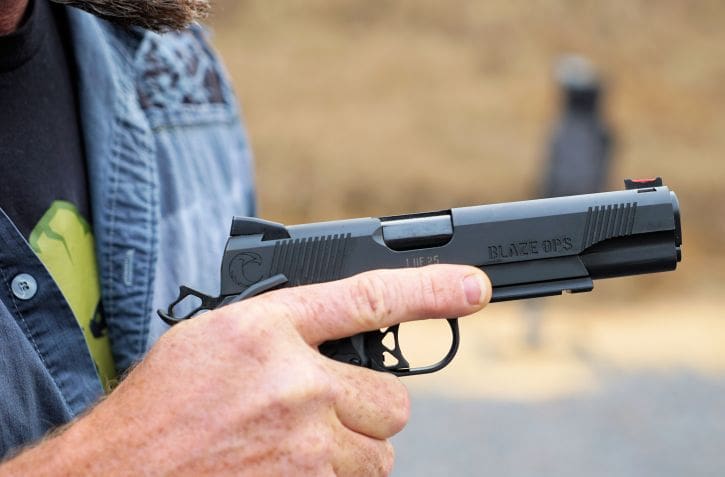
Mark: I think Pat nailed it with what he felt a 1911 should be equipped with. From the uniquely blended one piece arched main spring housing, extended mag release, cocking serrations, flat top slide, fiber optic front and rear sights and proprietary coating. The Blaze Ops edition is a well-balanced tactical handgun.
SSD: Mac, after you took delivery of the Blaze Ops pistol, what were your initial thoughts on it?
Mac: I became instantly enamored.
SSD: I saw that you ran the pistol in a recent class you taught at the Panteao facility in SC, then used the same pistol for your upcoming Sentinel video from Panteao. Now that you’ve been putting the pistol through the paces, what do you think of it now?
Mac: I shoot for a living and do not shoot much for pleasure. This gun has reignited my love for shooting.
SSD: That says a lot. I have to ask… people always comment on social media about the high prices for premium 1911s like the Blaze Ops version. What do you say to those folks?
Mac: Quality is never cheap but it is often bargained. Good isn’t cheap and cheap isn’t good. These guns are custom built with American steel and every part is made and numbered for that specific gun.
SSD: When will the Blaze Ops Edition be available for purchase?
Mark: We are taking orders now for it. There are only 25 being built and Mac has the first one, so there are 24 left. Of those, a handful are already pre-sold. We expect to start shipping them in February.
SSD: Gentlemen, thank you for taking the time out to talk about your project.
carolinaarmsgroup.com
tmacsinc.com
panteao.com
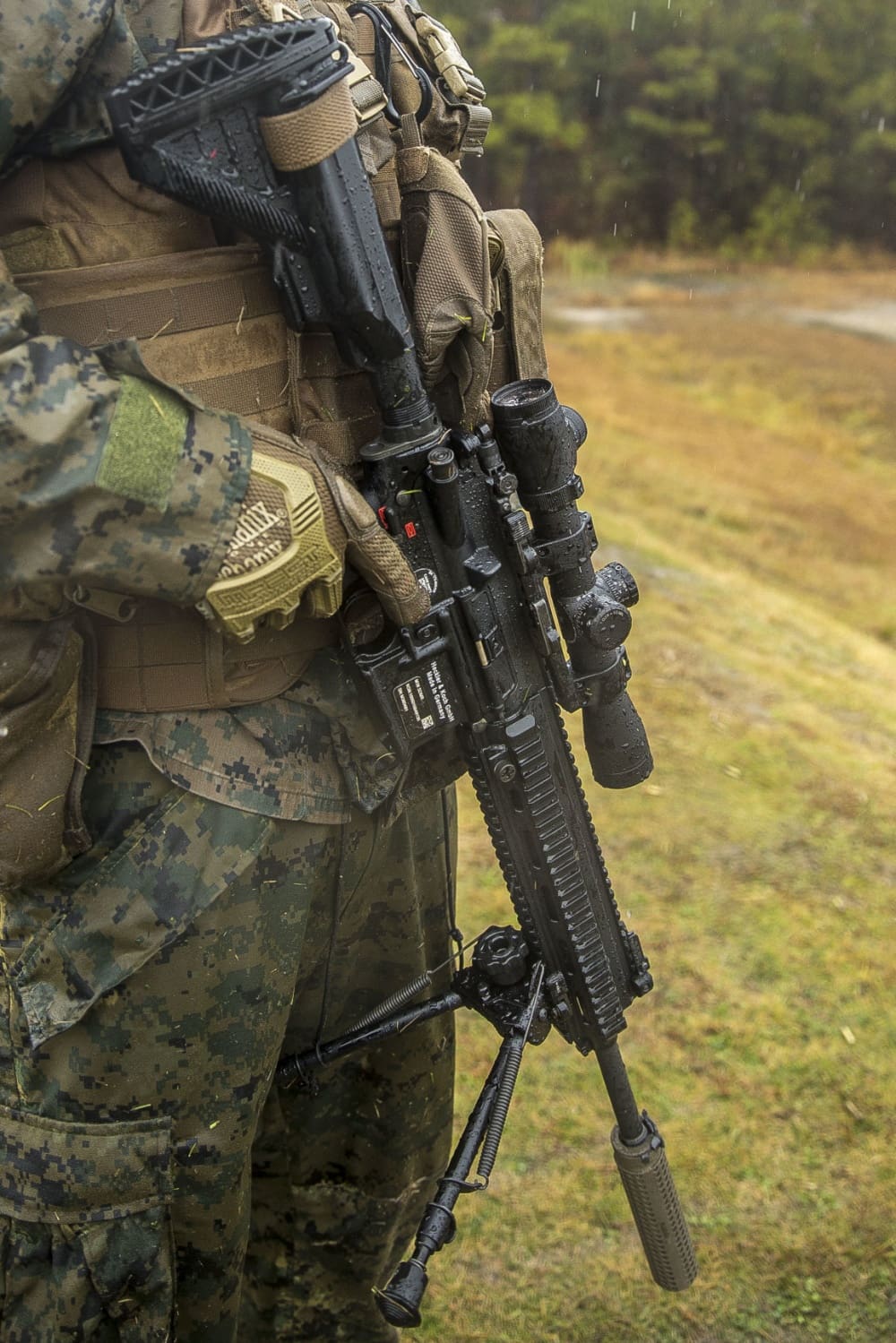
Back in May we told you that the US Marine Corps planned to field M27 Infantry Automatic Rifles Equipped with 3-9x scopes as Squad Designated Marksman Rifles. Apparently, work began not long after and units are now equipped with the rifle, designated as the M38. The Marines adopted the 5.56mm M27 in 2011 to replace the M249 Squad Automatic Weapon in the infantry squad. The M27 is manufactured by Heckler & Koch and is based on the HK416.
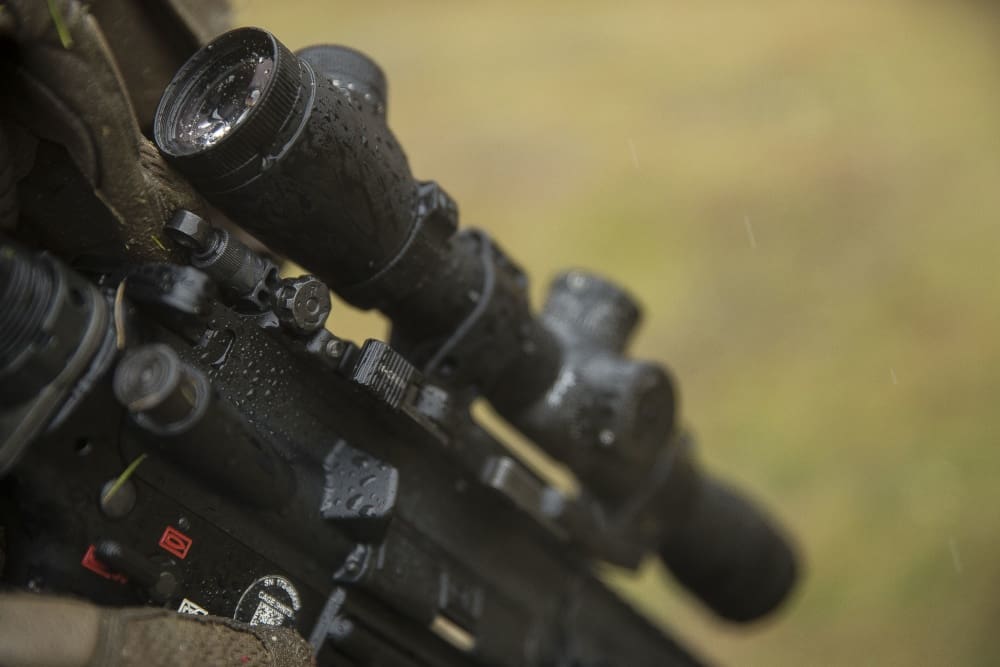
The optic actually used has been identified as the Leupold TS-30A2 Mark 4 MR/T 2.5-8x36mm with a tuned Mk262 77gr turret. Interestingly, the Marines are supposed to transition to the M855A1 round this year.
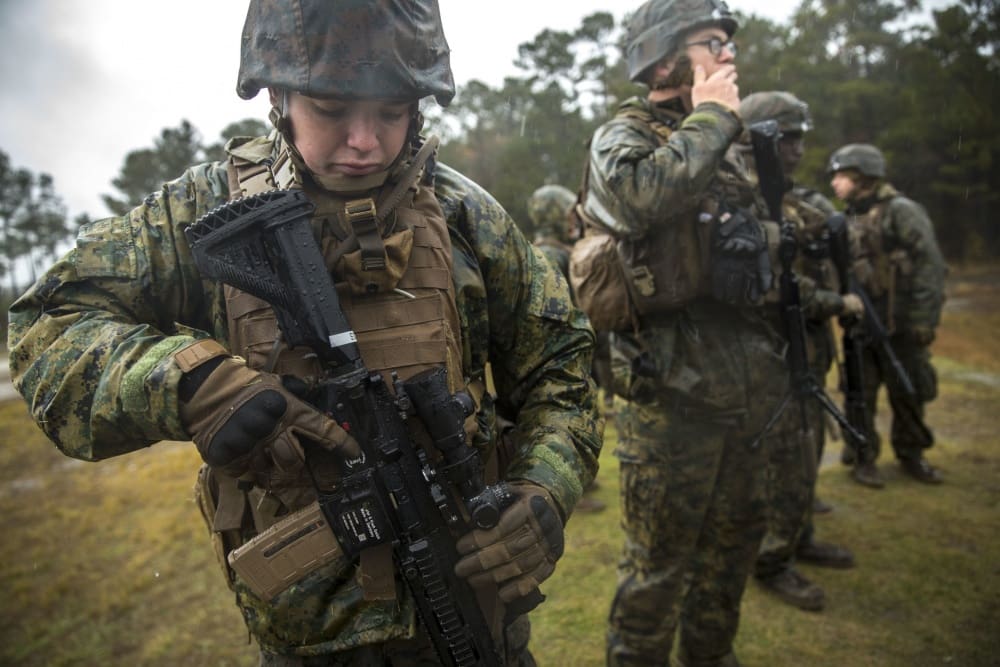
In these photos, Marines with 3rd Battalion 8th Marine Regiment fire the M38 Squad Designated Marksmanship Rifle during a live-fire weapons exercise at range F-18 on Camp Lejeune, NC, Dec. 8, 2017. Photos by LCpl Michaela R. Gregory.
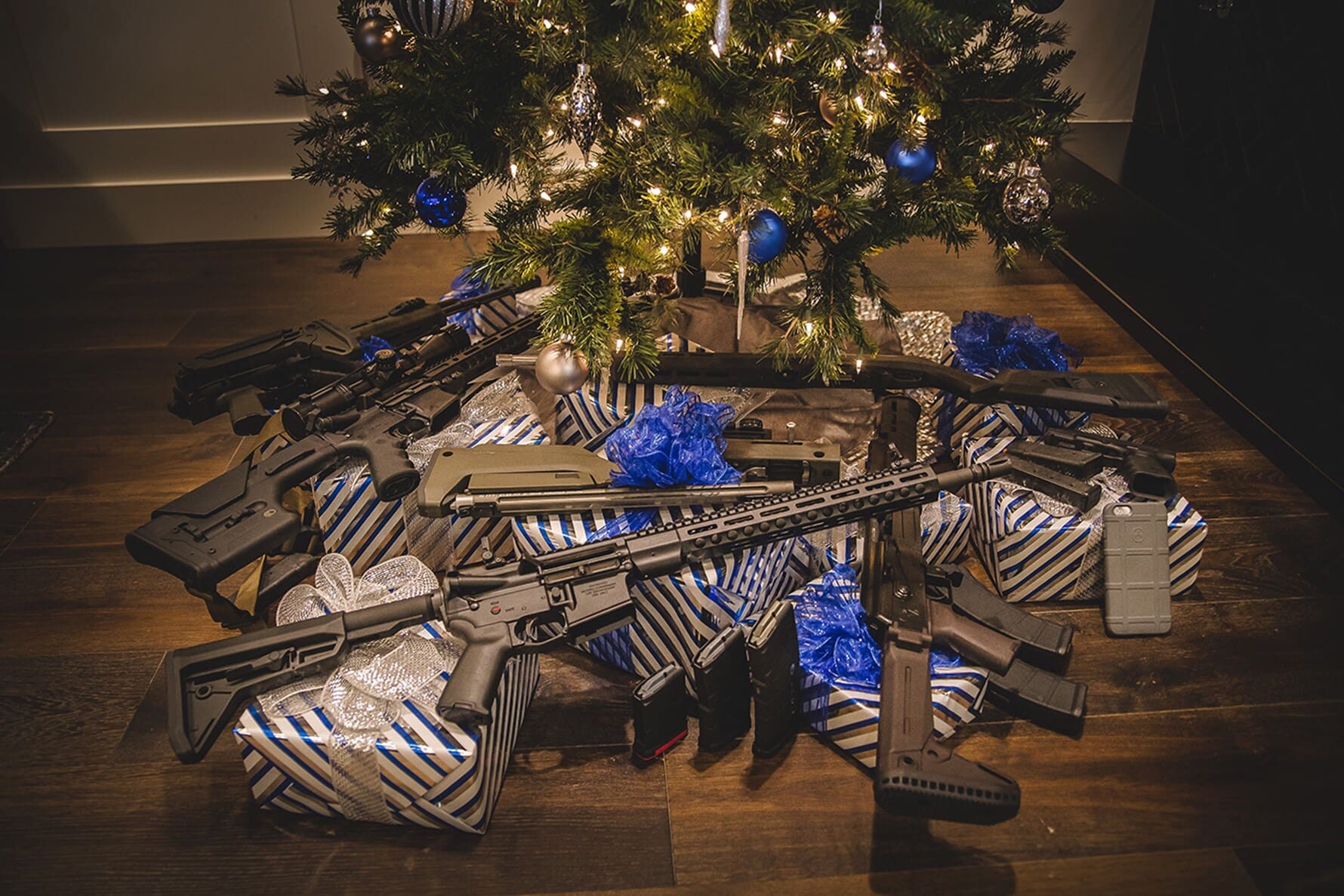
Last week we hosted a great giveaway by our friends at Magpul. They gave away 15 sets of the following:
3 PMAG® GEN M3™ PMAGs
3 PMAG® 21 GL9™ PMAGs
1 PMAG® D-60™ AR/M4 PMAG
1 MS4® DUAL QD SLING GEN2
3 MAGPUL T-SHIRTs
1 MAGPUL™ TEJAS “EL ORIGINAL” GUN BELT
1 pair of MAGPUL CORE™ TECHNICAL GLOVEs
1 of each size MAGPUL DAKA POUCHES and DAKA WALLETs
One of those lucky 15 was randomly selected to win the bonus grand prize of one of each garment from the Spring ‘18 apparel line of clothing.
That lucky guy is Keenan Bowman.
Congratulations to Keenan and thank you to everyone who participated. A special thanks to Magpul for making this happen!
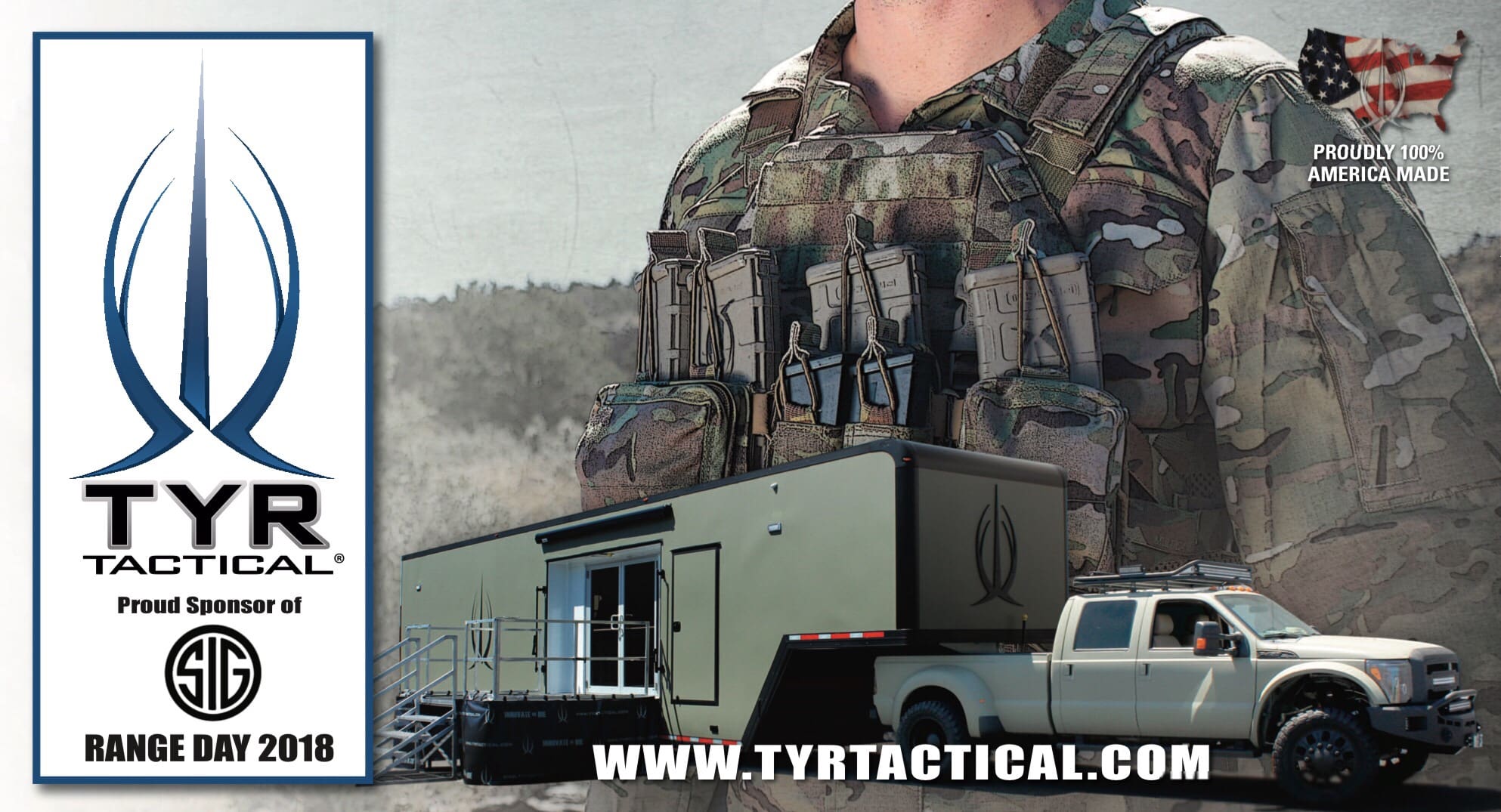
Mobile Showroom & Innovate or Die® Tour Stop
Each year SIG SAUER welcomes over 1,500 invited guests to the Clark County Shooting Complex in Las Vegas, Nevada. This is an exclusive opportunity to test the latest SIG SAUER products and to get a closer look at how SIG SAUER is becoming the complete weapons systems provider, combining firearms with optics, silencers, ammunition, airguns, and accessories.
For the second year in a row, we are proud to announce that TYR Tactical® is an Official Sponsor of SIG Range Day 2018. Attendees will have the opportunity checkout the Innovate or Die® Tour and Mobile Showroom on January 21st – 22nd. This event is closed to the public.
What is the TYR Tactical® Innovate or Die® Tour & Mobile Showroom?
We understand that to create Mission-Adaptable Gear, one has to spend a tremendous amount of time and resources on R&D – making sure that the feel, comfort and ergonomics of our products are right for our customers. To better serve this mission we have created the TYR Tactical® Mobile Showroom. This completely custom 44’ trailer was designed to travel across the country so we can better show our complete breadth of products. For the first time customers will have a hands-on experiences with TYR Tactical® Pouches, Body Armor, Belts, Revere K9™ Products and Huron™ Clothing & Packs. They will also get a chance to view products before their release and provide feedback on existing products.