FirstSpear

Archive for the ‘Advertiser’ Category

DEFTEX Announces New Distribution Partnership with Qore Performance, Inc. for Germany

Sunday, December 11th, 2022

USA and Germany: Defence Textile is a young German company specializing in the Military and Law Enforcement sectors. Their focus is providing innovative and high-quality equipment for professional end-users. DEFTEX is happy to announce that they are now an official distributor of the Qore Performance IceAge Ecosystem of thermoregulation/hydration performance-enhancing tools for Germany. “We can offer now our German customers outstanding products such as IcePlate Curve thermoregulation/hydration systems and IceVents Ultralight Ventilated Padding. Another advantage for our customers is the fast in-stock availability and low shipping costs. We look forward to future cooperation with Qore Performance,” said Florian Fenkes of DEFTEX.

www.deftex.info

www.QorePerformance.com

SCUBAPRO Sunday – The Palawan Massacre

Sunday, December 11th, 2022

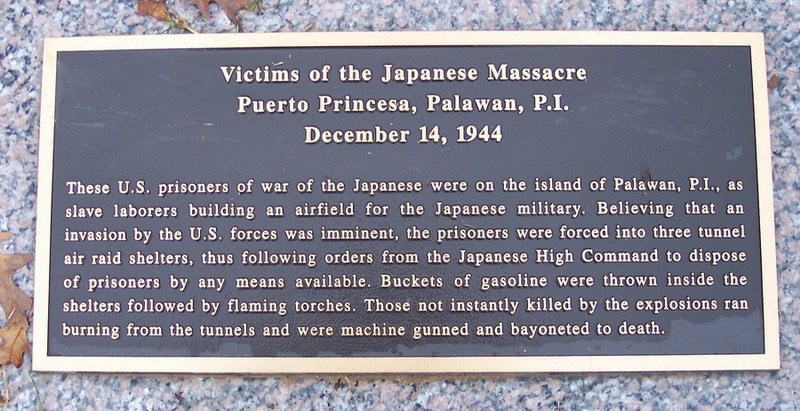
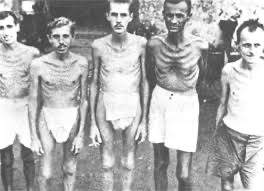
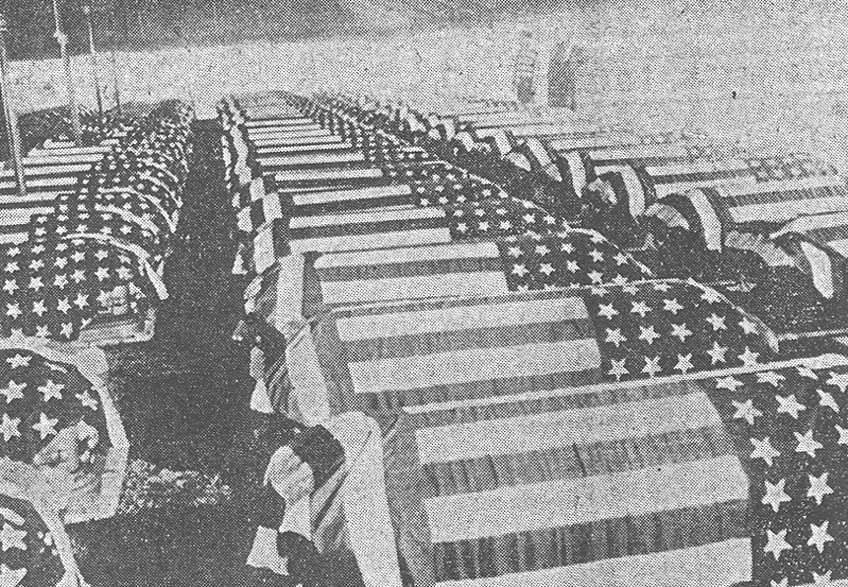
The Palawan massacre occurred on 14 December 1944, during World War II, near the city of Puerto Princesa in the Philippine province of Palawan. The Japanese Imperial Army massacred 139 of 150 American POWs. The Palawan compound was named Camp 10-A by the japanese, and the prisoners were quartered in several unused Filipino constabulary buildings. Food was almost nonexistent; the prisoners received a daily meal of wormy Cambodian rice and a canteen cup of soup made from camote vines boiled in water (camotes are a Philippine variant of sweet potatoes). Prisoners who could not work had their rations cut by 30%.

The Japanese unit in charge of the prisoners and the airfield at Palawan was the 131st Airfield Battalion, it was command of Captain Nagayoshi Kojima, whom the Americans called the Weasel. Lieutenant Sho Yoshiwara commanded the garrison company, and Lieutenant Ryoji Ozawa was in charge of supply. Ozawa’s unit had arrived from Formosa in 1942 and had previously been in Manchuria. There was also a Military police and intelligence unit, called the kempeitai at Palawan, they were feared by anyone who fell into their hands because of their brutal tactics.
In September 1944, 159 of the American POWs at Palawan were returned to Manila. The Japanese estimated that the remaining 150 men could complete the arduous labor on the airfield, hauling and crushing coral gravel by hand and pouring concrete seven days a week. The men also repaired trucks and performed a variety of maintenance tasks in addition to logging and other heavy labor

An attack by a single American Consolidated B-24 Liberator bomber on 19 October 1944, sank two enemy ships and damaged several planes at Palawan. More Liberators returned on 28 October and destroyed 60 enemy aircraft on the ground. While American morale in the camp soared, the treatment of the prisoners by the Japanese grew worse, and their rations were cut. After initially refusing the prisoners’ request, the Japanese reluctantly allowed the Americans to paint American Prisoner of War Camp on the roof of their barracks. This gave the prisoners some measure of protection from American air attacks. The Japanese then stowed their supplies under the POW barracks.

On 14 December, Japanese aircraft reported the presence of an American convoy, which was headed for Mindoro, but which the Japanese thought was destined for Palawan. All prisoner work details were recalled to the camp at noon. Two American Lockheed P-38 Lightning fighter aircraft were sighted, and the POWs were ordered into the air-raid shelters. After a short time, the prisoners re-emerged from their shelters, but Japanese 1st Lt. Yoshikazu Sato, whom the prisoners called the Buzzard, ordered them to stay in the area. A second alarm at 2 p.m. sent the prisoners back into the shelters, where they remained, closely guarded.

Suddenly, in a deliberate and planned move, 50 to 60 Japanese soldiers under Sato’s leadership doused the wooden shelters with buckets of gasoline and set them afire with flaming torches, followed by hand grenades. The screams of the trapped and doomed prisoners mingled with the cheers of the Japanese soldiers and the laughter of their officer, Sato. As men engulfed in flames broke out of their fiery deathtraps, the Japanese guards machine-gunned, bayoneted and clubbed them to death. Most of the Americans never made it out of the trenches and the compound before they were barbarously murdered. Still, several closed with their tormentors in hand-to-hand combat and succeeded in killing a few of the Japanese attackers.
Marine survivor Corporal Rufus Smith described escaping from his shelter as coming up a ladder into Hell. The four American officers in the camp, Lt. Cmdr. Henry Carlisle Knight (U.S. Navy Dental Corps), Captain Fred Brunie, Lieutenant Carl Mango (U.S. Army Medical Corps) and Warrant Officer Glen C. Turner, had their dugout, which the Japanese also doused with gasoline and torched. Mango, his clothes on fire, ran toward the Japanese and pleaded with them to use some sense but was machine-gunned to death.

About 30 to 40 Americans escaped from the massacre area, either through the double-woven, barbed-wire fence or under it, where some secret escape routes had been concealed for use in an emergency. They fell and/ or jumped down the cliff above the beach area, seeking hiding places among the rocks and foliage. Marine Sergeant Douglas Bogue recalled: Maybe 30 or 40 were successful in getting through the fence down to the water’s edge. Of these, several attempted to swim across Puerto Princesa’s bay immediately but were shot in the water. I took refuge in a small crack among the rocks, where I remained, all the time hearing the butchery going on above. They even resorted to using dynamite in forcing some of the men from their shelters. I knew [that] as soon as it was over up above, they would be down probing among the rocks, spotting us and shooting us. The stench of burning flesh was strong. Shortly after this, they were moving in groups among the rocks dragging the Americans out and murdering them as they found them. By the grace of God, I was overlooked.

Eugene Nielsen of the 59th Coast Artillery observed, from his hiding place on the beach, a group of Americans trapped at the base of the cliff. He saw them run-up to the Japs and ask to be shot in the head. The Japs would laugh and shoot or bayonet them in the stomach. When the men cried out for another bullet to end their misery, the Japanese continued to make merry of it all and left them there to suffer. Twelve men were killed in this fashion. Nielson hid for three hours. As the Japanese were kicking American corpses into a hole, Nielson’s partially hidden body was uncovered by an enemy soldier, who yelled to his companions that he had found another dead American. Just then, the Japanese soldiers heard the dinner call and abandoned their murderous pursuit in favor of hot food. Later, as enemy soldiers began to close in on his hiding place, Nielson dived into the bay and swam underwater for some distance. When he surfaced, approximately 20 Japanese were shooting at him. He was hit in the leg, and bullets grazed his head and ribs. Even though he was pushed out to sea by the current, Nielson finally managed to reach the southern shore of the bay.

He was one of 11 prisoners of war who escaped the December 1944 massacre on Palawan Island in the Phillippines, where around 140 soldiers died when the Japanese put them into trenches, dumped gasoline on them and set them on fire. He was later a key witness in the War Crime Trials of 1945.
This biography tells the story of Glenn (“Mac”) McDole, one of eleven young men who escaped and the last man out of Palawan Prison Camp 10A. Beginning on 8 December 1941, at the U.S. Navy Yard barracks at Cavite, the story of this young Iowa Marine continues through the fighting on Corregidor, the capture and imprisonment by the Japanese Imperial Army in May 1942, Mac’s entry into the Palawan prison camp in the Philippines on 12 August 1942, the terrible conditions he and his comrades endured in the camps, and the terrible day when 139 young soldiers were slaughtered. The work details the escapes of the few survivors as they dug into refuse piles, hid in coral caves, and slogged through swamp and jungle to get to supportive Filipinos. It also contains an account and verdicts of the war crimes trials of the Japanese guards, follow-ups on the various places and people referred to in the text, with descriptions of their present situations, and a roster of the names and hometowns of the victims of the Palawan massacre.

www.humanitiestexas.org/news/articles/interview-rufus-w-smith-world-war-ii-pow

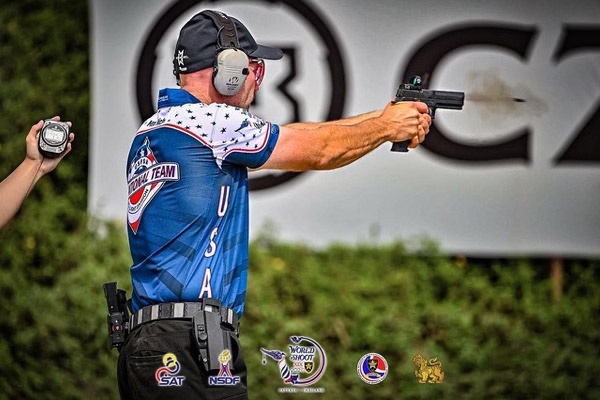
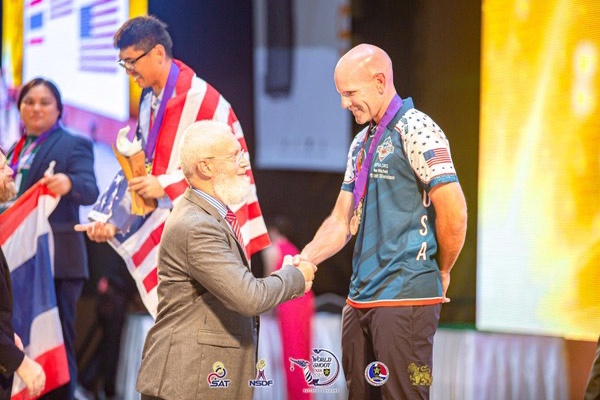
Team SIG’s Captain Max Michel Wins Another World Championship at IPSC World Shoot

Friday, December 9th, 2022

NEWINGTON, N.H., (December 9, 2022) – SIG SAUER, Inc. congratulates Team SIG Captain Max Michel for earning a team gold medal and a personal bronze medal as a member of Team USA at the International Practical Shooting Confederation (IPSC) Handgun World Shoot in Thailand.

“Competing in the World Shoot is a great achievement for Max, and we are especially proud that he was able bring home two medals as a proud member of Team USA,” said Tom Taylor Chief Marketing Officer and Executive Vice President, Commercial Sales. “Congratulations to everyone on the 2022 Team USA World Shoot Team; it takes a tremendous amount of hard work, dedication, commitment and personal sacrifice to be able to compete and win at this level and SIG SAUER is proud to support the national and international shooting sports.”

At the IPSC World Shoot Team SIG Captain Max Michel competed in the Production Optics Light Division using his P320-XFIVE with ROMEO3MAX Red Dot Sight and SIG 147 grain Match Elite 9mm Competition Ammunition. This is Max Michel’s eighth IPSC World Shoot appearance, he has eight gold medals on behalf of Team USA, an individual Gold Medal from World Shoot XVII, and two individual bronze medals.

“This IPSC Handgun World Shoot was an incredible experience and being able to compete for Team USA was a true honor,” added Michel. “This is my 8th World Shoot, and it was both challenging and rewarding. The competition was fierce and the course of fire really put every shooter’s skill set to the test. I am proud to come home with a Gold Medal for Team USA and a Bronze Medal in my division and look forward to competing again in 2025.”

For more information on the SIG SAUER equipment used by Team SIG Captain Max Michel including the P320MAX Handgun, ROMEO3MAX Red Dot Sight, and SIG 147 grain Match Elite 9mm Competition Ammunition visit sigsauer.com.

The IPSC Handgun World Shoot was held in Pattaya, Thailand, November 23 – 24.

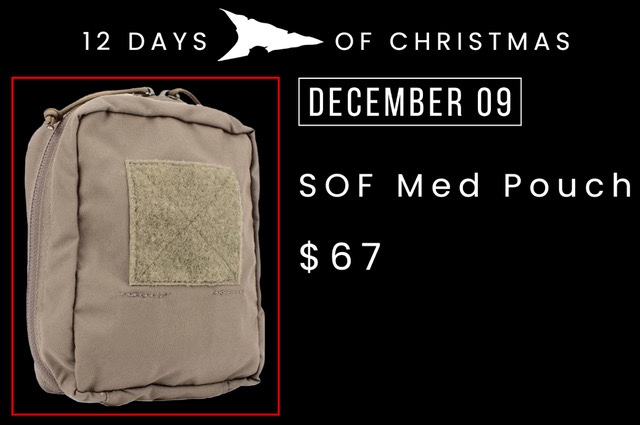
FirstSpear Friday Focus: 12 Days of Christmas – SOF Med Pouch

Friday, December 9th, 2022

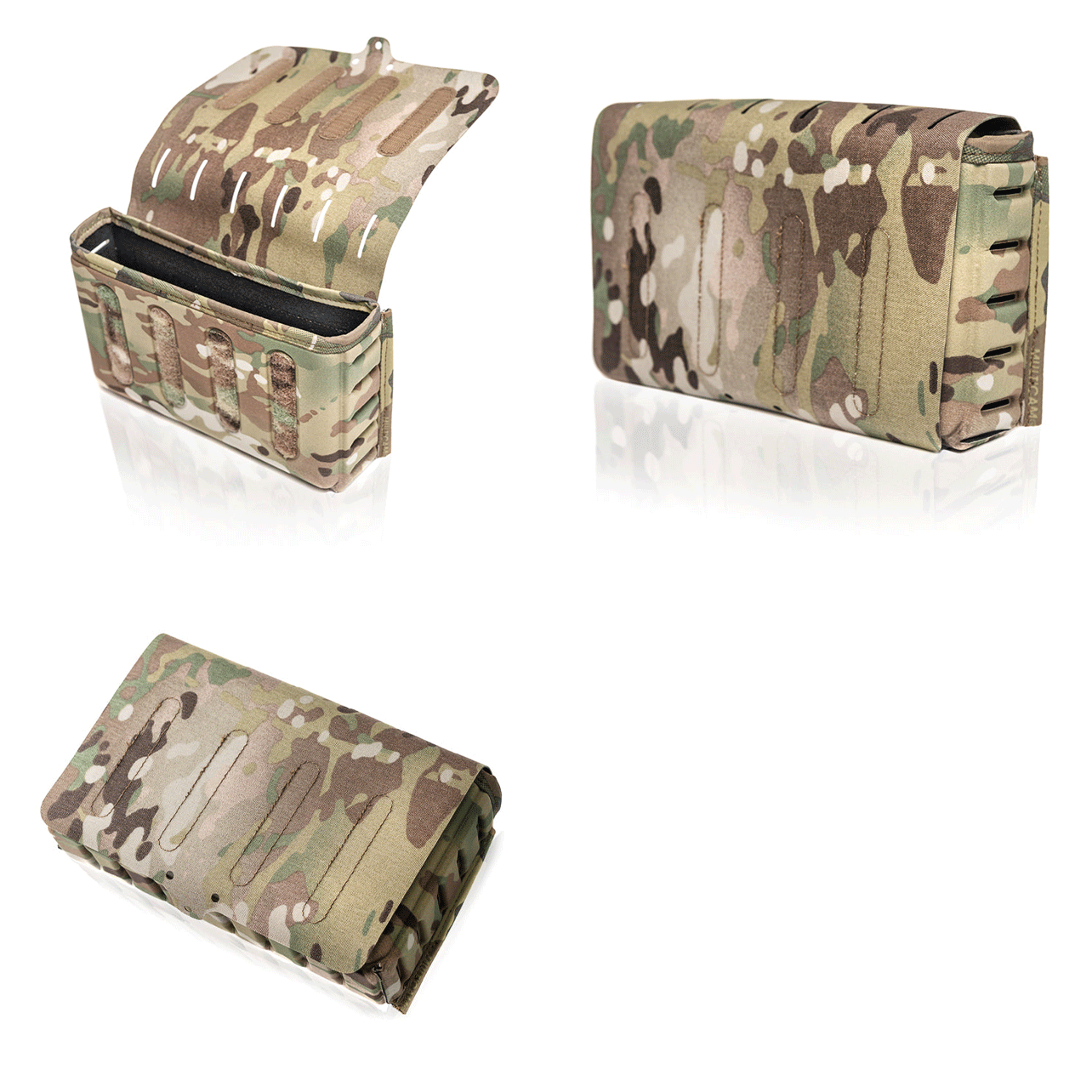
The Special Operations Forces (SOF) Medical Pouch securely holds and organizes individual first aid items. A half-moon zipper provides rapid access and closure. This pouch attaches to your platform using either FirstSpear 6/12 or 6/9. A loop faced fabric square on the exterior allows you to mount FirstSpear Cell Tags.

This is a Non-Stocking Non-Standard pouch. These items have been designed by FirstSpear at the request of professional users to meet a unique mission set. Limited quantities and colors available.

Click HERE to enter. Visit FirstSpear to find America’s Best tactical gear this holiday season.

Major Order from the Bundeswehr: Rheinmetall Wins €576 million Framework Contract to Supply 30mm Ammunition for Puma Infantry Fighting Vehicle

Friday, December 9th, 2022

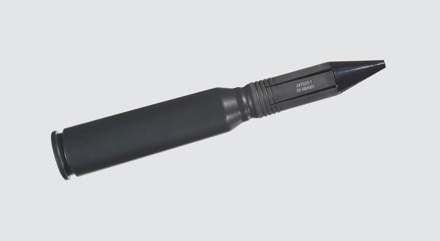
The German Bundeswehr has signed a framework agreement with Rheinmetall to supply over 600,000 rounds of medium-calibre ammunition for the Puma infantry fighting vehicle. In total, ammunition is to be procured for around EUR 576 million. The budget committee of the German Parliament approved the bill for this comprehensive procurement on 30 November 2022. A first call-off of around 25,000 rounds of DM21 30mm x 173 cal. ammunition is expected to come before the end of 2022. This automatic cannon ammunition order for the Puma will ensure an adequate operational supply for the NATO Very High Readiness Joint Task Force, the VJTF. Moreover, the cartridges are required for German Army mechanized infantry training and exercises.

The Puma infantry fighting vehicle is equipped with a Rheinmetall MK30-2/ABM automatic cannon (ABM stands for airburst munition). Combining a high rate of fire with state-of-the-art ammunition technology, the MK30-2/ABM is an uncompromising, extremely reliably weapon system. With a maximum operating radius of more than 2,000 metres, the MK30-2/ABM is highly effective against targets on land, at sea and in the air.

Rheinmetall is a key supplier of service ammunition to the Bundeswehr. The company produces two main types of 30mm x 173 cal. service ammunition for the Puma: the KE-TF DM21 and KE DM33. Both were developed and qualified in accordance with the latest standards, and are unmatched worldwide when it comes to reliability, effectiveness, penetrating performance, and precision. Extremely reliable programming of the KE-TF, which stands for Kinetic Energy Time Fuse, lets the Puma engage large infantry-type area targets.

Today at 11 EST – SOC-F x SSD “Year Of The Tiger”Sweatshirt

Thursday, December 8th, 2022

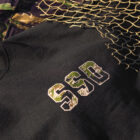
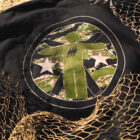
Before the year gets away from us, SSD in conjunction with our friends at Tactical Distributors, present a Year Of The Tiger sweatshirt with ALL proceeds going to the Special Operations Care Fund.

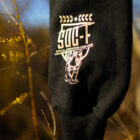
Printed on a high quality Champion crew neck sweatshirt in Black, it features the SSD logo in Tigerstripe on the back with some added TD flourishes. At the cuff you’ll find the SOC-F logo and a Tiger.

Stood up in 2013, SOC-F is a 501(c)3 non-profit to provide medical, financial, and other support to SOF members and their families in ways that are often not met through other sources.

Order yours at 1100 EST today at www.tacticaldistributors.com/products/ssd-x-td-soc-f-donation-crew

OG Ammo Can

Thursday, December 8th, 2022

The padded OG Ammo Can from OTTE Gear is designed traveling with loaded AR mags or other sensitive equipment.

ottegear.com/collections/equipment-1/products/ammo-can

Regulus Global Appoints New Chief Executive Officer Chris Burgess

Wednesday, December 7th, 2022

Burgess to Continue Exponential Growth in Expeditionary, National Security and Humanitarian Arenas
VIRGINIA BEACH, Va., (Dec. 6, 2022) – Regulus Global announced today the appointment of Chris Burgess as Chief Executive Officer. Burgess will guide the organization in its mission to provide capability-enabling services for global and local defense agencies, and medical and expeditionary missions, including humanitarian and non-profit organizations. Burgess succeeds Will Somerindyke, who will retain the role of Chairman at Regulus Global.

“Please join me in congratulating Chris Burgess. It has been a tremendous honor to serve as the CEO of Regulus Global since founding the company, and I am incredibly proud of everything our team has accomplished,” said Chairman Will Somerindyke. “Chris is the right person to build on this momentum and lead the business to meet our customers’ complex mission requirements.”

Burgess brings more than 18 years of business experience in the aviation and defense industries. Most recently, Burgess has been managing Skycore Aviation – overseeing new business in 15 countries, growing the business’ management team, standardizing processes, and generating revenue over $30 million. During his tenure, Burgess also oversaw the divestiture of Skycore from Xe Services and into a stand-alone, autonomous entity.

Additionally, Mr. Burgess served seven years in the U.S. Navy.  As a SEAL Officer, he coordinated special operation missions in the Caribbean, Africa and Europe.  He has extensive experience at the operational and command-level with Special Operations Command planning and coordination.  As a Naval Surface Warfare Officer, he was stationed in Southeast Asia and trained throughout the region.  He earned his master’s degree in business administration from Dartmouth University. 

“Since Regulus’ inception, Will has provided the vision, drive and leadership that has made the company the success it is today, said Burgess.  “I am incredibly excited to assume this new role and lead the Regulus team into the future. We have an exceptionally talented team and we are focused on continuing to innovate our products and services in new and diverse ways, to support the global community.”

In the last decade, Regulus Global has grown exponentially offering mission solutions in more than 80 countries globally.  Some highlights include:

• Support for natural disasters, COVID-19 pandemic response, and supplemental health unit needs for communities farther from urban medical resources.

• Building innovative custom mobile hospitals and Level II UN hospitals.

• National security mission needs both internationally and in the United States.

• Trusted leadership and scalability: With military veterans, field medical expertise, internal compliance export control, global in-country staff, numerous certifications, licenses and contract vehicle awards, Regulus provides nimble, flexible solutions with mission experience.