FirstSpear

Archive for the ‘Armor’ Category

Point Blank Files Chapter 11

Thursday, April 15th, 2010

Armor manufacturer Point Blank, a Delaware Corporation based in Florida, announced yesterday that it has filed a voluntary petition for Chapter 11 reorganization. The Company also announced that it has reached an agreement for up to $20 million of Debtor-in-Possession (“DIP”) financing, pending bankruptcy court approval. The DIP is a loan to help with the restructuring. At the end of Wednesday trading, the company’s stock had fallen to .05 per share.


The company blames the need to file for bankruptcy on “continued expenses associated with legacy issues from former management, and the lack of financing available to the Company given the state of the credit markets.” Those “legacy issues” are that the former CEO David Brooks is under indictment for fraud and the company itself has been under investigation by the Securities and Exchange Commission as well as the subject of a shareholder lawsuit. All told, this costs Point Blank about $600,000 a month on legal fees.

But let’s face it, they grew rapidly to accommodate OTV and IOTV contracts and then they didn’t sustain the same level of work. It happens. Other companies are dealing with issues in their own ways as well. Maybe they can find a small business shill to get them some work under the proposed IOTV Class Waiver.

Proposed IOTV Class Waiver

Thursday, April 15th, 2010

First off, what is a class waiver? What you need to know is that it is a determination made between DoD and the Small Business Administration to make a change to what types of businesses may provide goods or services to the government. In this case they are considering a Waiver of the Nonmanufacturer Rule, allowing small businesses who do not manufacture the IOTV to bid on providing them. Normally, a business has to manufacture 51% or more of an item to be the prime contractor on a project and they can then sub the remainder out to other businesses. This normal way of doing business is perfectly acceptable and assists a small business to take on a project larger than what they have the infrastructure to support.

However, I am a bit concerned about the precedence such a waiver might make. What I mean by this is that a decision to allow non-manufacturers to bid on providing goods as a small business could facilitate a win by a company consisting of just one person, with virtually no overhead, teamed with a large company who does all of the work. The preponderance of businesses in America are small businesses and this would essentially undermine the small business set aside. If it looks like it works here, what is to stop them from applying it more liberally? Small businesses are the backbone of the tactical industry and are the fountainhead from which much of the innovation springs. They must be compensated for their hard work and dedication to the military through the awarding of contracts.

If the concern of the federal government is that no small businesses are manufacturing the IOTV this could be remedied by awarding more companies contracts. As it is, the most recent round of awards took a long time and caused upheaval in the armor industry while companies kept workers on staff in anticipation of an award that never came. Award more contracts to both large and small businesses, and large companies won’t need to lobby to alter a system that works. Note to Contracting Officers; there is more than one company in the armor business. Spread the wealth.

Here is the notice on FedBizOps. I encourage businesses who would be affected by such a decision to contact the POC and provide feedback.

LVBAV Solicitation Updated

Friday, April 9th, 2010

Today SOCOM updated the solicitation for the LVBAV carrier adding the patterns for the armor called for. Last week they posted several Q&A which clarified that they are seeking a commercial product and that they are not asking for any soft armor. The updates can be found here.

SPEAR BALCS Low Visibility Body Armor Vest (LVBAV)

Tuesday, March 23rd, 2010

SOCOM has just released a solicitation for the Low Visibility Body Armor Vest (LVBAV) sub-component of Body Armor Load Carrying (BALCS) system. This is a pretty quick turn around considering the pre-solicitation was just issued on 15 January.

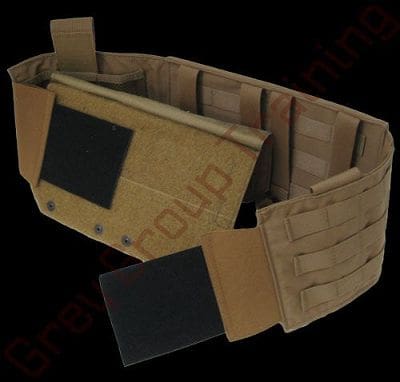
The solicitation calls for LVBAVs in Ranger Green, Khaki, and MultiCam as well as AOR1 and AOR2. They are not only seeking carriers but it seems they are also asking for quotes on RBAV cut soft armor. Offerers must provide separate carriers for MBAV and RBAV cut armor OR a singular design compatible with both. This is a 100% small business set aside so it becomes more and more interesting with the ceiling is relatively low at $22.8 Mil.

The full solicitation is available here.

New Lightweight Multi-Hit Plate from Velocity Systems

Tuesday, March 16th, 2010

Velocity Systems has just released the latest addition to their Phalanx line or armor plates. It is a new lightweight, multi-hit plate that is going to be a game changer. Take a look at the specs and you’ll see why.

7.62 x 39 Armor Piercing Incendiary (API-BZ) Multi-hit
7.62 x 39 Ball, Mild Steel Core Multi-hit
7.62 x 51 NATO Ball Multi-hit
5.56 x 45 NATO M855 Multi-hit
5.56 x 45 NATO M193 Multi-hit
5.45 x 39 Ball Multi-hit

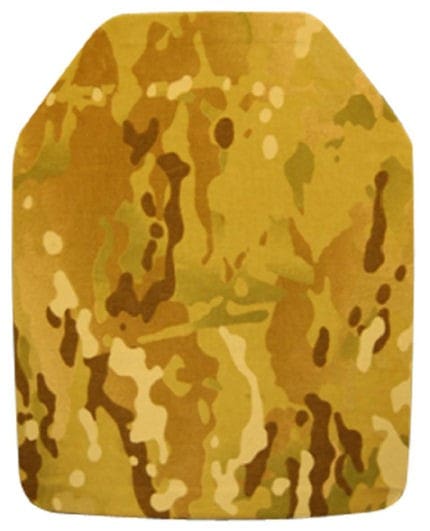
Now, granted, these are in conjunction plates meaning they require soft armor backers (IIIA), but you get all of this in a plate that weighs 4 pounds for a medium. Ok, stop reading for just a sec and let that sink in. Now I am going to repeat myself….4 pounds. Additionally, the ceramic plates are a mere half inch thick and formed in the SAPI shape so you can use them without having to purchase an entirely new carrier.

New Lightweight Plates from Velocity Systems

Yes, that is MultiCam. It’s part of Velocity’s philosophy of “safety measure by design” so you won’t mistake the plate for anything else. To order visit www.velsyst.com.

Internal Frame Load Bearing Armor Study

Wednesday, March 10th, 2010

Current “lighten the load” efforts focus on shaving ounces from the tactical load. The thinking follows that if you can decrease the actual load carried, you can decrease the rate at which you get tired. Inversely, this should result in increased performance. However, based on the current state of the art and desired protection levels, this approach may take some time to produce a significant difference. On the other hand, a recent load carrying study undertaken by North Carolina State University seems to validate an entirely different approach. The basic claim is that use of Archangel Armor’s Internal Frame Load Bearing Armor (IFLBA) removes the load from the neck, back and shoulders of the wearer, and redirects it to stronger load carriage muscles groups. The major effect indicated is a reduce rate of fatigue.

Redistributing the weight from the back neck and shoulders, prevents translating the weight through the neck back and spine in order to be carried by the strong load carrying muscles of the hips and legs. Many of the effects of fatigue can be felt between the neck and the hips. This system literally bypasses this sensitive area, and there fore the negative effects they suffer.

Defense & Security Technology Accelerator NC State University

The end state of redirecting the weight is to reduce the rate of fatigue. An objective measure of this was conducted at Fort Bragg, NC last November. The pilot study was sponsored by the Partnership for Defense Innovation, and conducted by NC State University, Ergonomics Center. Additionally, the data was peer reviewed by Dr Richard Kuhns who conducted an independent Medical and physiology review.

“The Archangel IFLBA re-directs the load bearing to a stronger, more secure area of the body, which will reduce injuries to the spine and its supporting structures. It allows greater range of motion in the head/neck/shoulder are regardless of loads carried. The nominal changes in total measured weight are negligible especially in light of the idea that the Archangel IFLBA creates less fatigue which equates to greater levels of job performance and decrease injury occurrence. The Archangel IFLBA also provides ergonomic support for the spine. The added benefit of this will be evident with prolonged periods of standing, sitting, walking, running, laying prone, and laying supine.” Independent Evaluation, Jan 2010, Dr Richard Kuhns

IFLBA Weight Measurement

During a measurement conducted at the NC State University, Ergonomics Center at Chapel Hill, NC, this graphic was produced to provide an objective measure of how the weight is removed from the back, neck, and shoulders. On the left is a Improved Outer tactical Vest (with soft armor and full plates), the right is that an IOTV – IFLBA retrofit. In addition to the armor load, the Soldier also carried a rifle and pack with 30 pounds. As you can see from the graphic, the use of the IFLBA retrofit resulted in over 80% of the load being removed from the shoulders.

400 meter Litter Carry

The study at Bragg used several objective events to measure a baseline load configuration against the IFLBA system. The Modular Body Armor Vest is fielded to SOCOM units.

Independent variables:
• 2 types of equipment (Fielded MBAV – Existing, IFLBA – New)
• 2 loads (armor + 25 lbs, armor + 40 lb pack)

Three tasks: (Average over 6 hours)
• Litter Carry (simulated casualty) – 400 m
• Fireman’s Carry – 100 m
• Soldier drag – 100m

Litter Carry
400M Litter Carry
This task was conducted more than 20% faster with the IFLBA than the MBAV.

Soldier Drag and Fireman Carry
Fireman’s Carry, 100M lane
This task was conducted more than 30% faster with the IFLBA than the MBAV.
Soldier drag, 100M Lane
This task was conducted more than 40% faster with the IFLBA than the MBAV.

Borg Scale of DiscomfortAdditionally, NC State researchers collected subjective data from study participants rating levels of discomfort experienced. Data is based on the Borg Rating Scale of Discomfort which is often used in the medical field to allow a patient to communicate pain levels to a physician. On the scales shown below, the MBAV is on the left as the baseline and the IFLBA on the right. The results shown are as the mean of multiple iterations over a 6 hour period. Also please note that the IFLBA team demonstrated a lower level of discomfort after 6 hours than the MBAV team showed on the first iteration.

Whole and Upper Body Discomfort

Upper Extremity Discomfort
This data set covers the muscle groups used to operate small arms

Back Discomfort
This shows Back Discomfort was lower for those wearing the IFLBA

Lower Extremity Discomfort
This shows how the fatigue in the legs and lower extremities was decreased as well. The decreased fatigue in the lower extremities is explained by Dr Kuhns.

“When unencumbered, the body is used for upright posturing, and the lower extremities are used for locomotion. When under load, the body must compensate for balance, starting and stopping, and more muscles are recruited for these tasks. This increases the amount of work placed on them constantly. The increased demand on these muscles makes them tire faster, and prevent recuperation, i.e. “fatigue”. “When carrying loads that increase spinal load bearing you can either remain upright and compress the spine itself or bend the upper body to take the pressure off the spine and use the lumbosacral muscles and waist as a fulcrum, especially when running, jogging, carrying something with the hands, as this only further compresses the spine and creates more discomfort. The decision to adjust body posture to minimize spinal impact is a self-preservation reaction that people will instinctively due as pain or pressure builds in bony structures. The resulting fatigue is due to the fact that the lower extremities are now tasked with using mostly the leg muscles to balance and carry the weight that is not evenly balanced over the core of the spine in a non-spinal bearing fashion. If the weight is balanced over the core structure on a non-spinal load bearing and spinal supporting method, then the person does not need to bend in any unusual manners to compensate for an unnatural fulcrum created out of discomfort or fear of injury.” Independent Evaluation, Jan 2010, Dr Richard Kuhns

In summary, the information presented in the study illustrates three main points:

1. The IFLBA redistributes the weight from the back neck and shoulders to the stronger load bearing hips and legs, as measured by the NC State University Study.

2. This decreased the rate of fatigue and increases performance as measured by the NC State Study.

3. An Independent Medical and physiology review by Dr Richard Kuhns provides scientific explanations for the enhancements exhibited during the study and how this system can reduce the number and severity of the spinal compression injuries suffered by the wearers of tactical equipment.

The final report for the study as well as the review by Dr Kuhns are available to Government acquisition officials in addition to select parties contact Archangel Armor.

District 9: Armor

Monday, March 8th, 2010

Wonder about the armor worn by the Multi-National United (MNU) in the movie “District 9”? Designer Greg Broadmore posted an article on his blog giving some background on some of the designs used in the movie. In addition to the armor, the article also mentions the modified Toyota HiLux pickups used in the movie.

MNU Armor

MNU PatchBy the way, if you are looking for the patch worn by the MNU Reaction Force Bn troops, they are for sale at www.wetaworkshop.com.

Visit The King of Fatboss.

SPEAR BALCS Low Visibility Body Armor Vest (LBAV) Pre-solicitation

Thursday, January 28th, 2010

Natick dropped a pre-solicitation for a new Low Viz Body Armor carrier on the street on the 15th of January while all of us were concentrating on SHOT Show. The actual solicitation which is supposed to hit the street by the end of the month is worth, “The minimum contract value will be $57,000 with a maximum value of $22,800,000.00.” SOCOM is seeking a Commercial Off The Shelf carrier and vendors will have 30 days to submit to include, “Complete proposals shall contain offerors technical, manufacturability, past performance, price and warranties to include Production Demonstration Systems (PDSs) packages. Initial Submissions will require 3 complete PDSs for each size and version of the SPEAR BALCS LVBAV.” This is for carriers only and not armor.

PACA Low Viz Carrier

This requirement has been fulfilled for many years by the PACA carrier. However, it was only compatible with BALCS cut armor and plates used in the CIRAS and RBAV. This procurement demands a carrier that is compatible with both the RBAV and MBAV armor.

Finally, this is a set aside for small business. With so many companies being gobbled up by big business I wonder who is left to support this solicitation. Read about it here.