SIG SAUER - Never Settle

Archive for the ‘Army’ Category

Viasat, AeroVironment Team to Develop Enhanced Type 1 Encrypted Communications Capabilities for US Army Unmanned Aircraft Systems

Thursday, October 15th, 2020

CARLSBAD, Calif. and SIMI VALLEY, Calif., Oct. 15, 2020 — Viasat Inc. (NASDAQ: VSAT), a global communications company, and AeroVironment, Inc. (NASDAQ: AVAV), a global leader in unmanned aircraft systems (UAS), today announced they will collaborate on a contract awarded under the U.S. Army Reconfigurable Communications for Small Unmanned Systems (RCSUS) initiative. The project will provide U.S. military customers flying small UAS platforms the ability to deploy a robust, on-demand, highly-secure communications network that will address the growing electronic warfare capabilities of peer and near-peer adversaries.

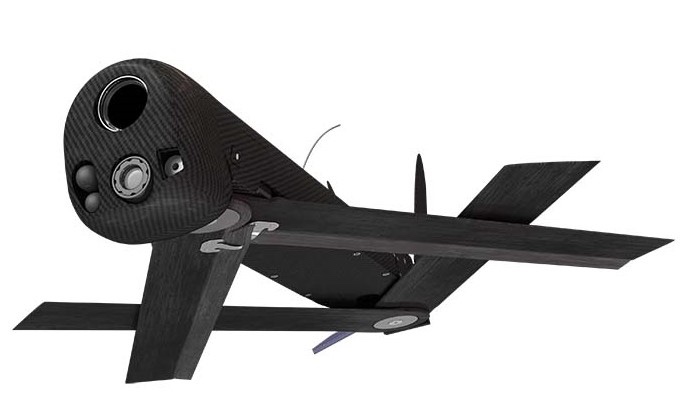
Viasat is the prime contractor on the award and will work with AeroVironment to develop and demonstrate advanced, encrypted communications suitable for AeroVironment’s portable, hand-launched Puma AE™ tactical UAS. The two companies will seek to strengthen the communications and transmission security of AeroVironment’s Digital Data Link™ (DDL) radios currently used by the U.S. Army by converting them into a Type 1 crypto communication system for video and data transmission.

In addition, Viasat and AeroVironment will develop critical interoperability standards for enabling UAS to generate a secure, digitally encrypted communications network—for protecting classified data and improving waveform performance in jamming environments—via the embedded DDL waveform. They will also create a standardized communications architecture that will allow UAS to access spectrum quickly and easily, especially when operating in contested environments.

“Viasat’s robust military-grade cryptography and electronic countermeasure tactical waveform design will enable quick expansion of secure communications to a variety of small unmanned systems operating at the tactical edge,” said Ken Peterman, president, Government Systems, Viasat. “By collaborating with AeroVironment, an established leader in the tactical UAS sector, we can help the U.S. Army set new waveform standards that maximize connectivity and minimize the risk of signal intercept.”

Currently, tens of thousands of AeroVironment tactical unmanned aircraft are deployed around the world and are capable of serving as secure, digital network communication nodes for on-demand, mesh network applications in various operating environments.

“As U.S. forces plan for the potential of operating against peer and near-peer military adversaries possessing advanced electronic warfare capabilities, the need for even more secure communication capabilities is rapidly increasing,” said Scott Newbern, AeroVironment chief technology officer. “We will work with Viasat to provide customers requiring enhanced, secure communication capabilities with a portable, practical solution for maintaining secret-level communications via tactical unmanned aircraft systems operating at the battlefield’s edge.”

SMASH 2000 Being Evaluated by the US Army Under Foreign Comparative Testing

Thursday, October 15th, 2020

SMASH 2000 underwent intensive live fire testing by U.S. Army at the Aberdeen Proving Grounds (APG) to evaluate its Fire Control capabilities compared to standard rifle sights

[October 15, 2020]: Between the 14th and 24th of Sept, 2020, Product Manager Individual Weapons, under PM Soldier Lethality, supervised the live fire testing and evaluation of the SMASH 2000 fire control enabled rifle Sight.  The testing at APG was funded by OSD (Office of the Secretary of Defense) under a Foreign Comparative Test program designed to determine if international mature technologies can fill U.S. military operation gaps.  

Thousands of rounds were fired by soldiers at APG outdoor range for the purpose of recording data that compared the target hitting capability of the SMASH 2000 against standard U.S. Army issued optics. Targets ranged from 25 meters to 400 meters in a variety of fixed, pop-up, and moving target scenarios.

“Testing the SMASH 2000 is another example of how OSD continues to evaluate foreign technologies that could fulfil specific DoD operational needs,” said William Everett, U.S. Army Combat Capabilities Development Command, who is responsible for sponsoring many such comparative tests. “We also sponsored a VIP day to give U.S. uniformed officers and Foreign dignitaries the opportunity to fire the SMASH 2000. That opportunity was well received and the event went well,” he added.

Bob Phung, Project Officer, Product Manager Individual Weapons:  “Our job in the PM office is to look for and evaluate promising technologies to support our warfighters.  The SMASH 2000 is one of those promising systems that could significantly improve the soldier’s lethality, especially under duress. We will have to collect the data and determine next steps.”

SMASH is a combat-proven family of Fire Control Systems which are designed, developed, and manufactured by SMART SHOOTER to ensure each round finds its target, in both day and night conditions, as well as keeping friendly forces safe. SMART SHOOTER’s proprietary target acquisition and tracking algorithms are integrated with sophisticated image-processing software into a rugged hardware solution, providing an easy to use and cost-effective solution that creates the required overmatch. SMART SHOOTER’s fire control solutions are designed to give soldiers and law enforcement officers a decisive tactical edge in almost every operational scenario, maximizing force lethality and operational effectiveness throughout every engagement.

Michal Mor, Smart Shooter CEO, added: “It’s very exciting to know that the U.S. Army is interested in our SMASH products to meet their individual weapons needs. SMART SHOOTER’s solutions are already in operational use by the U.S. Army in various missions, and we look forward to continued cooperation”.

www.smart-shooter.com

Army Readies Charging Port for Autonomous Drone Swarms

Thursday, October 15th, 2020

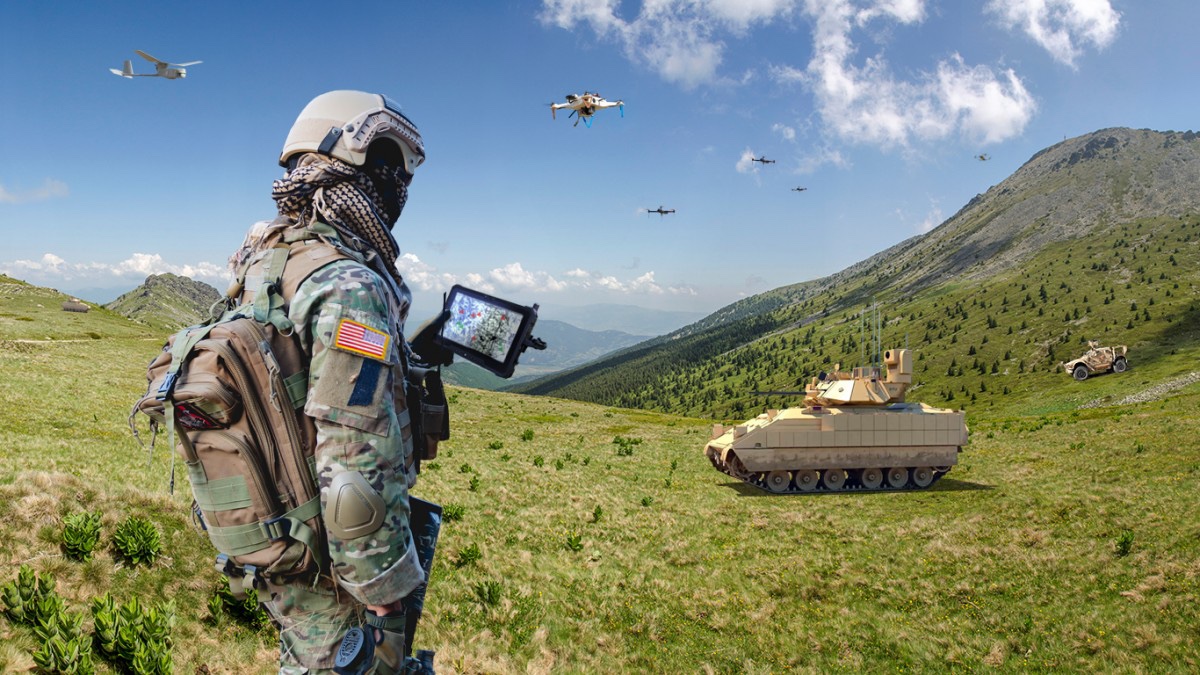
ABERDEEN PROVING GROUND, Md. — A swarm of hundreds of unmanned air vehicles will soon descend on unmanned ground vehicles to autonomously recharge, thanks to U.S. Army-funded research now underway at the University of Illinois Chicago.

The U.S. Army Combat Capabilities Development Command’s Army Research Laboratory awarded the University of Illinois Chicago a four-year, $8 million cooperative agreement in August to develop foundational science in two critical propulsion and power technology areas for powering future families of unmanned aircraft systems, or UASs.

This collaborative program will help small battery-powered drones autonomously return from military missions to unmanned ground vehicles for recharging. The university is developing algorithms to enable route planning for multiple teams of small unmanned air and ground vehicles.

Dr. Mike Kweon, program manager for the laboratory’s Versatile Tactical Power and Propulsion Essential Research Program, said the research on route planning is critical to the Army, which needs intelligent, small UASs that can find optimal routes during a military mission to autonomously return to unmanned ground vehicles, known as UGVs, for recharging. This will optimize the operational range extension and time on mission.

“Imagine in the future, the Army deploying a swarm of hundreds or thousands of unmanned aerial systems,” Kweon said. “Each of these systems has only roughly 26 minutes with the current battery technologies to conduct a flight mission and return to their home before they lose battery power, which means all of them could conceivably return at the same time to have their batteries replaced.”

This future concept is based on the reality of today’s technology, Kweon said.

“Soldiers would need to carry a few thousand batteries on missions to facilitate this, which is logistically overwhelming and overall, not conducive to a leading expeditionary military operation,” he said. “With this research project, we’re operationalizing scientific endeavors to increase Soldier readiness on the battlefields of tomorrow.”

The use of fast, recharging batteries and wireless power transfer technologies will allow multiple small UASs to hover around unmanned ground vehicles for wireless charging, and this will not require Soldier involvement.

“I believe this is the only way to realize practical UAS swarming, and small UAS and UGV teaming. Without solving how to handle the energy demand, all other advanced technologies using artificial intelligence and machine learning will be useless for the Army,” Kweon said. “On the battlefield, we do not have luxury to replace batteries for 100s of UAVs and recharging them for hours.”

For larger drones, Army-funded research will explore the fundamental science needed to develop miniaturized fuel sensors for future multi-fuel hybrid electric propulsion systems.

Fuel property sensors that university partners are developing will help Soldiers who operate fuel-based equipment measure fuel property in real time for the Army’s air and ground vehicles, Kweon said.

This knowledge will allow Army personnel to prevent catastrophic failures of the systems and to increase its performance and reliability.

“This research is critical not only for air vehicles but also ground vehicles, especially for the Army missions,” Kweon said. “The fuel sensor is telling the operator what type of fuel is being delivered from the fuel tank to the engine. This input signal can be used to intelligently tell the engine to adjust engine control parameters according to the fuel type to avoid any failures. This data can also be used to find root-cause failures if any engine component prematurely failed.”

The university’s current research in fuel sensor development examines the effects of fuel structure and chemistry on ignition in future multi-fuel drone engines so that real-time control can be implemented. This project further explores the underpinning science using advanced techniques including spectroscopic diagnostics and data science analysis to both enable and accelerate real-time control.

“It also enriches the understanding of the ignition of any unconventional fuel that may need to be burned in the drone engines,” said Prof. Patrick Lynch, a principal investigator at the University of Illinois Chicago on this project.

Army researchers said there is a lot of enthusiasm about partnering through the Open Campus model.

“This not only advances the state of the art, but also operationalizes science for transformational overmatch–the mission of the CCDC Army Research Laboratory,” said Dr. Mark Tschopp, ARL Central regional lead. “What is great is that we are expanding the team to include experts in academia, small businesses, and industry to push concepts and ideas into future capabilities for the Army. In a partnership with the Army, the University of Illinois Chicago brings subject matter expertise, unique facilities and a diverse student body in a collaborative partnership with Army scientists to advance these technologies and to provide future capabilities for the warfighter.”

This university-led research project is one of 11 funded this summer by the Army’s corporate research laboratory as a part of Center for UAS Propulsion efforts to develop technologies for multi-fuel capable hybrid-electric engines and fast efficient energy distribution. Each university partner is helping the Army address the energy demand required to power future unmanned vehicles. Universities also awarded for similar research are the University of Minnesota; University of Michigan; University of Wisconsin-Madison; University of Illinois-Urbana Champaign; Iowa State University; University of Delaware; University of North Texas; Texas A&M University; University of Missouri and University of Tennessee-Knoxville.

The research, slated to begin this fall, is part of a larger research portfolio of multi-fuel capable hybrid-electric technologies led by the laboratory that supports the Army Modernization Priority for Future Vertical Lift. Most recently, the laboratory recently announced the development of a new, advanced scientific model that will allow vehicle maintenance specialists to turn to bio-derived fuels in austere locations, and efforts to convert a home-based generator into a power source for autonomous ground and air vehicles.

By U.S. Army CCDC Army Research Laboratory Public Affairs
What’s Old Is New

Wednesday, October 14th, 2020

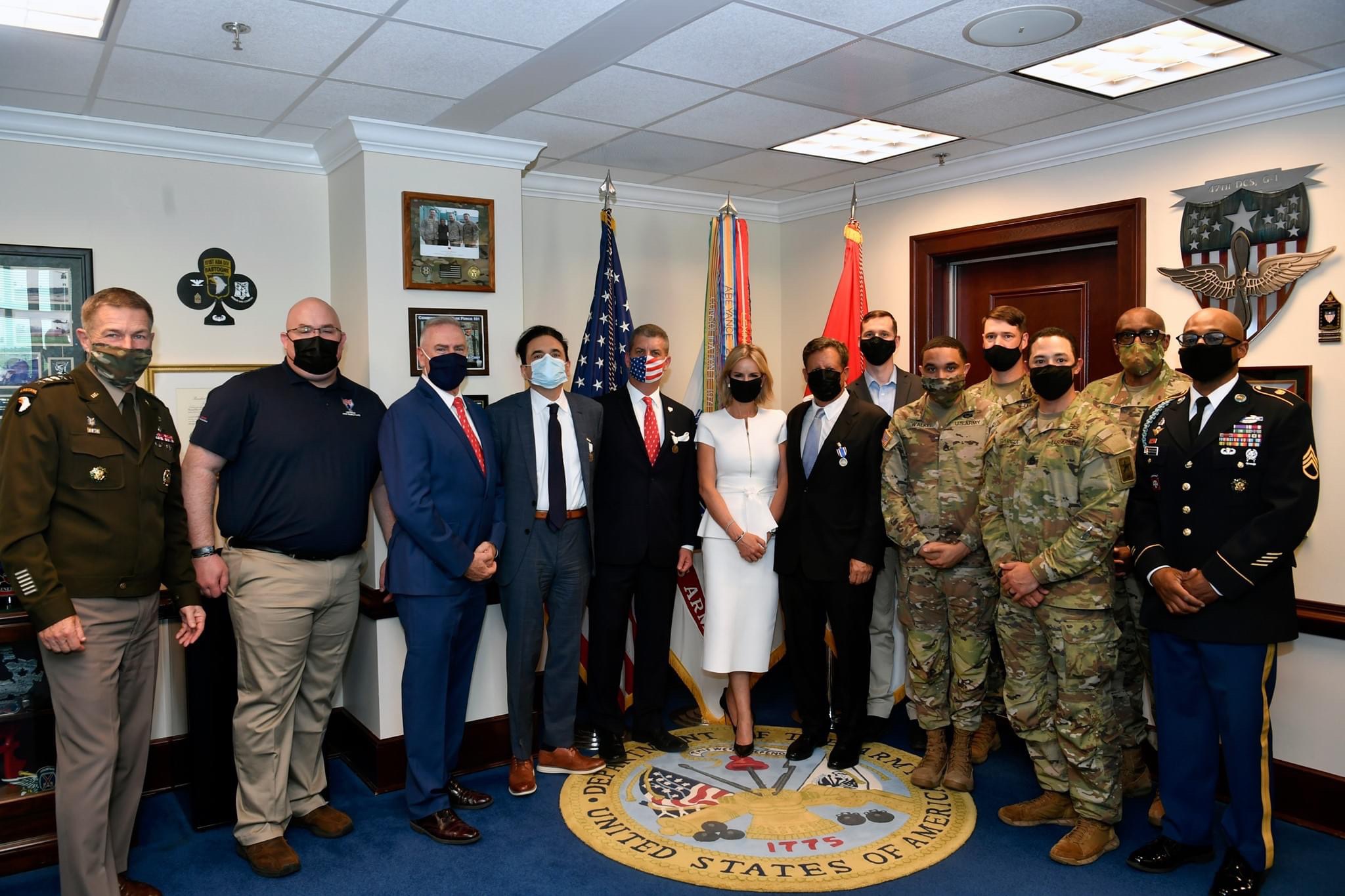
When paratrooper boots were brand new, they were made from smooth, brown leather. Once again, authorized for wear with the Army Green Uniform.

You can get yours at Ranger Joe’s.

Army, Air Force Form Partnership, Lay Foundation for CJADC2 Interoperability

Wednesday, October 14th, 2020

WASHINGTON — Unity among military branches and a combined, all-domain effort could be the difference in winning large-scale, multi-domain battles the Army expects to fight in the future.

To help achieve that goal, the Army and Air Force signed a two-year collaboration agreement in the development of Combined Joint All-Domain Command and Control, or CJADC2, which will impact units in both branches, leaders announced Tuesday.

During the daylong meeting at the Pentagon, Army Chief of Staff Gen. James C. McConville and Air Force Chief of Staff Gen. Charles Q. Brown Jr. discussed how to best combine each service’s assets to achieve greater synchronization. It also marked the first Army-Air Force talks since Brown took on his new role in August.

Both service chiefs agreed to establish CJADC2 at the most “basic levels” by defining mutual standards for data sharing and service interfacing in an agreement that will run until the end of fiscal year 2022.

Army Futures Command and the Air Force’s office of strategy, integration and requirements, A-5, will lead the effort, designed by the Defense Department to deliver CJADC2 capabilities to the warfighter quicker and to promote “shared’ understanding of concepts and capabilities.

In the CJADC2 concept, each of the military’s six branches would connect sensors, shooters, and command nodes in a “mesh network” that will allow commanders more options and the ability to act faster. Each branch, including the newly-formed Space Force, must learn to interface with each other and successfully access data, reconnaissance and intelligence collected from across joint networks.

“The core challenges of the future fight are speed and scale,” said Lt. Gen. Charles Flynn, Army deputy chief of staff, G-3/5/7. “The future fight will be much faster, and the joint force will have more sensors and more shooters. [It will] be more widely distributed than ever before.”

The initiative will combine the Army’s Project Convergence with the Air Force and Space Force’s Advanced Battlefield Management System, or ABMS, and will impact the joint forces’ training as well as exercises and demonstrations.

Project Convergence is the Army’s plan to merge its joint force capabilities and keep pace with technological change. On Sept. 18, the Army completed its five-week Project Convergence 20 exercise at Yuma Proving Ground, Arizona, where it tested artificial intelligence capabilities along with its abilities to transmit information from sensors in the air, space and on the ground.

Meanwhile, the Air Force developed ABMS to enable the joint force to quickly collect, analyze and transmit data at machine speeds. Both projects are designed to help make informed battlefield decisions faster.

“ABMS is the Internet-of-Things for the military — it’s ‘IoT.mil.’ Imagine the level of situational awareness typically relegated to traditional brick-and-mortar centers being provided to those who need it most on the edge,” said Preston Dunlap, the Air and Space Force’s chief architect. “Imagine allowing operators to choose what data feeds are important to them and for others to be able to subscribe to get the information they need. The power of this architecture is unlocked by services, allies and partners working together to connect networks and share information at machine speed. That’s all-domain superiority. And today’s event took us one step closer to realizing that future.”

By Joe Lacdan, Army News Service

US Army Tests Aluminum Foam for Protection Against Blasts

Monday, October 12th, 2020

ABERDEEN PROVING GROUND, Md. – Forward Operating Bases are typically surrounded by barbed wire, concrete barriers, gates, watchtowers and other infrastructures. A new material – aluminum foam – may be a possible solution for additional force protection, due to its ability to absorb energy from blasts.

The aluminum foam is added to panels clad with steel that are part of existing structures or bolted together to create larger structures. The panels are also used in jersey style barriers to protect against truck bombs.

Aluminum foam was recently tested in a lab and at an explosives testing range at Picatinny Arsenal, New Jersey, with funding from the Office of the Under Secretary of Defense- Global Capability Programs Foreign Comparative Testing program. The FCT program provides funding to acquire, test and evaluate mature products from foreign industry that may fill a capability gap or satisfy an urgent need. The aluminum foam is manufactured in South Korea and Canada.

“In products where you need a good amount of strength and stiffness that aluminum provides but not all the weight, using the foam opens up a lot of engineering design space without increasing cost,” said Calvin Lim, engineer at Picatinny Arsenal.

Aluminum foam is inexpensive to produce, and it can be made into various sizes and shapes, including panels. While it is currently manufactured and shipped from South Korea and Canada, several companies in the United States are interested in expanding production to make aluminum foam. Creating an affordable supply chain in the U.S. will eliminate difficulties with shipping the product outside the country and create additional jobs in the U.S.

Testing to verify and confirm the manufacturers’ claims was conducted at Picatinny Arsenal. Explosives were initiated next to the aluminum foam panels, which were held in place with I-beams.

“These tests showed how the aluminum foam prevents energy from being transmitted to the other side. To fully replicate previous test data, a higher amount of explosives is needed,’’ Lim said.

Testing was initially conducted in South Korea; during testing, the panels absorbed the energy from the blast, collapsing its cellular structure and preventing any damage from transmitting to the other side. The tests at Picatinny Arsenal, as well as upcoming tests, will determine if aluminum foam will be beneficial for the Army overall, as well as other services.

The FCT program provided funding to purchase additional aluminum foam for Insensitive Munitions testing with XM1128 artillery. This was proposed as a low cost, easy to implement packaging solution to reduce the sensitivity and collateral damage in sympathetic reaction and fragment impact scenarios. This testing has been slated but delayed due to the coronavirus pandemic.

In addition to military uses, aluminum foam is used in a variety of applications including sound mitigation, highway barriers, and storm debris mitigation because of its unique properties.

Because of its versatility, aluminum foam has sparked interest and possible use for military ground vehicles, aircraft and watercraft due to its low weight, stiffness and buoyancy. Lighter vessels and vehicles will not only move faster and use less fuel, they will require fewer refueling trips and enable Soldiers to maneuver more easily.

The Army is working with several companies on additional energy and resource savings, including an energy conscious solution that melts raw scrap aluminum to create aluminum foam. This will reduce steps in the recycling supply chain, which will lead to cost savings.

Future efforts could include using aluminum foam to rapidly manufacture, ship and erect buildings quickly in key locations. Recent research shows many allied countries and adversarial countries have already been using aluminum foam to protect civilian and defense employees.

By Argie Sarantinos, CCDC Public Affairs

Sensor with 100,000 Times Higher Sensitivity Could Bolster Thermal Imaging

Friday, October 9th, 2020

Better detecting microwave radiation could improve thermal imaging, electronic warfare, radar

RESEARCH TRIANGLE PARK, N.C. — Army-funded research developed a new microwave radiation sensor with 100,000 times higher sensitivity than currently available commercial sensors. Researchers said better detection of microwave radiation will enable improved thermal imaging, electronic warfare, radio communications and radar.

Researchers published their study in the peer-reviewed journal Nature. The team includes scientists from Harvard University, The Institute of Photonic Sciences, Massachusetts Institute of Technology, Pohang University of Science and Technology, and Raytheon BBN Technologies. The Army, in part, funded the work to fabricate this bolometer by exploiting the giant thermal response of graphene to microwave radiation.

“The microwave bolometer developed under this project is so sensitive that it is capable of detecting a single microwave photon, which is the smallest amount of energy in nature,” said Dr. Joe Qiu, program manager for solid-state electronics and electromagnetics, Army Research Office, an element of the U.S. Army Combat Capabilities Development Command’s Army Research Laboratory. “This technology will potentially enable new capabilities for applications such as quantum sensing and radar, and ensure the U.S. Army maintains spectral dominance in the foreseeable future.”

The graphene bolometer sensor detects electromagnetic radiation by measuring the temperature rise as the photons are absorbed into the sensor. Graphene is a two dimensional, one-atom layer thick material. The researchers achieved a high bolometer sensitivity by incorporating graphene in the microwave antenna.

A key innovation in this advancement is to measure the temperature rise by superconducting Josephson junction while maintaining a high microwave radiation coupling into the graphene through an antenna, researchers said. The coupling efficiency is essential in a high sensitivity detection because “every precious photon counts.”

A Josephson junction is a quantum mechanical device which is made of two superconducting electrodes separated by a barrier (thin insulating tunnel barrier, normal metal, semiconductor, ferromagnet, etc.)

In addition to being thin, the electrons in graphene are also in a very special band structure in which the valence and conduction bands meet at only one point, known as Dirac point.

“The density of states vanishes there so that when the electrons receive the photon energy, the temperature rise is high while the heat leakage is small,” said Dr. Kin Chung Fong, Raytheon BBN Technologies.

With increased sensitivity of bolometer detectors, this research has found a new pathway to improve the performance of systems detecting electromagnetic signal such as radar, night vision, LIDAR (Light Detection and Ranging), and communication. It could also enable new applications such as quantum information science, thermal imaging as well as the search of dark matter.

The part of the research conducted at MIT included work from the Institute for Soldier Nanotechnologies. The U.S. Army established the institute in 2002 as an interdisciplinary research center to dramatically improve protection, survivability and mission capabilities of the Soldier and of Soldier-supporting platforms and systems.

By US Army CCDC Army Research Laboratory Public Affairs
Natick Soldier Center’s New Fabric Enhances Cybersecurity, Subzero Weather Durability

Thursday, October 8th, 2020

NATICK, Mass. – The Combat Capabilities Development Command Soldier Center, or CCDC SC, is working with industry to develop a new shelter fabric that will increase durability in subzero conditions and provide electromagnetic, or EM, shielding. The EM shielding will prevent the detection of EM emissions that are generated within a Command Post shelter and provide cybersecurity to Command Post wireless networks.

CCDC SC’s Expeditionary Maneuver Support Directorate is working with industry partners to develop the new laminate systems with higher performance and durability. Kristian Donahue, a chemical engineer in EMSD at CCDC SC, explained that General Purpose, or GP, shelter fabrics are currently made with a coating that becomes brittle at subzero temperatures. This impacts the durability of the fabric, the environmental protection of the shelter, and the light discipline aspect of signature management. Light discipline refers to luminous signs that can lead to the detection of the presence of troops and military facilities.




Donahue stated that the team was already able to successfully develop a new GP tent material that eliminates the low-temperature durability issues, a significant milestone which will help benefit the EM shielding work as well.

“Our goal is to also add additional functionality to this GP tent fabric by integrating an electromagnetic shielding material into the GP fabric,” said Donahue. “This EM shielding fabric will prevent the EM emissions generated within a Command Post shelter from being detected by adversaries, as well as provide cybersecurity to wireless networks operating within the CP.”

Donahue explained that EM shielding is important for both security and Soldier safety.

“Electromagnetic emissions can be detected by adversaries therefore giving away your position,” said Donahue. “Those emissions can also be intercepted and exploited by cyber warfare units.”

The new shelter fabric is also lower weight, thus reducing the logistical footprint. Moreover, there is no longer the risk of increased volume associated with the current fabric, which may become stiff at subzero temperatures and the stiffness can affect volume. In certain cases the increased volume may interfere with moving and packing.

The new fabric technology will also enhance Soldier protection and lethality.

“With increasing peer and near-peer adversaries, the ability to maintain Command and Control and Communications becomes highly imperative,” said Donahue. “The ability to maintain C3 while not being detected is important in the ability to increase unit survivability and unit lethality. The ability to deny detection during a multi-domain battle will ensure dominance on the battlefield.”

By Jane Benson, CCDC SC Public Affairs