Colt

Archive for the ‘Army’ Category

L3Harris Technologies and American Rheinmetall Vehicles Team to Pursue US Army’s New Fighting Vehicle

Wednesday, April 14th, 2021

L3Harris Technologies and German integrated technology group Rheinmetall’s subsidiary American Rheinmetall Vehicles have signed a teaming agreement to jointly develop the U.S. Army’s new Optionally Manned Fighting Vehicle (OMFV), which will replace the Bradley Infantry Fighting Vehicle.
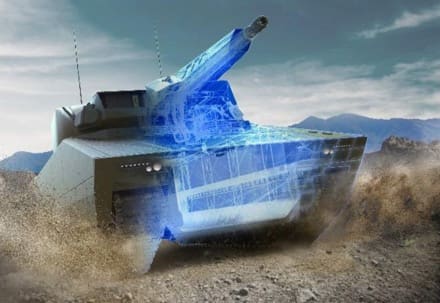
The agreement combines L3Harris’ open system design and equipment manufacturing leadership with the maturity and modularity of American Rheinmetall Vehicles’ Lynx next-generation fighting vehicle for an OMFV offering that is low-risk and easily upgradable.

American Rheinmetall Vehicles, the prime contractor, selected L3Harris to provide vehicle mission systems, cybersecurity and its modular open systems approach (MOSA) for the Lynx. L3Harris’ MOSA can enable cross-platform and cross-domain commonality of parts and subsystems to allow for easy and affordable upgrades.

“We have a long history providing similar support to multiple platforms using our MOSA approach for mission systems and electronic warfare,” said James Gear, Vice President, L3Harris Domestic Business Development. “We look forward to working with American Rheinmetall Vehicles to further expand into the ground defense vehicle market.”

“We are excited to have L3Harris join our growing team to support the U.S. Army’s OMFV program,” said Mathew Warnick, Managing Director for American Rheinmetall Vehicles. “Their experience in open architecture, communications, and cybersecurity bring tremendous capability to the American Rheinmetall Vehicles team as we prepare our digitally engineered OMFV to provide our Soldiers overmatch now and for the future.”

The design approach is grounded in the reuse of technologies and lessons from the family of L3Harris programs and engagements around the Army’s modular open aviation and ground endeavors.

Leader–Follower Vehicles to Offer Army Increased Operational Capability

Wednesday, April 14th, 2021

DETROIT ARSENAL, Mich — Modernization is the buzz word floating around the Army currently and with good reason. To keep ahead of our near-peer adversaries, we must develop better technologies faster to dominate the battle space.

“We’ve done a good job at keeping up with developing current technologies,” said Maj. Gen. Darren Werner, Commanding General U.S. Army Tank-automotive and Armaments Command. “However, we need to get it to the Soldiers in the field for it to matter.”

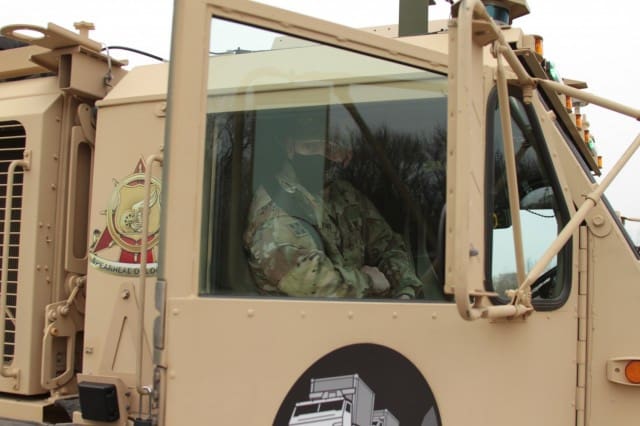
Werner, along with other officers and civilian leaders attended a Leader–Follower demonstration on Apr. 5 at the Detroit Arsenal. The event was led by the Ground Vehicle Systems Center on the arsenal to highlight the effectiveness of semi-autonomous robotic Tactical Wheeled Vehicles.

Bernard Theisen, Division Chief Combat Support Robotics and Safety for GVSC, briefed the capabilities of the Leader-Follower vehicles and stated that they had some similar on-road capabilities to some current high end luxury vehicles and other off-road capabilities unique to the military.

“The vehicles have the capability to be driven independently, remotely, or in this instance, made to follow a lead vehicle,” said Theisen.

The Leader–Follower vehicles offers field commanders better options when operating in a combat zone by providing manned and unmanned capabilities.

According to Alfred Grein, Acting Director GVSC, by installing robotic kits to vehicles, a lead “manned” vehicle can lead a convoy of one or more follower “unmanned” vehicles accurately and safely.

Outside of Leader–Follower option, the Program Executive Officer Combat Support and Combat Service Support is looking at fielding the technology as GVSC continues developing further ways to leverage and improve the capabilities at a later time.

“Now that the hardware is in place, we can look at ways to enhance the remote and semi-autonomous capabilities in the future,” said Grein. “All we have to do is update the software.”

There are currently 60 Leader–Follower systems issued to the 41st Transportation Company at Fort Polk, Louisiana with their next software upgrade currently undergoing safety testing at Aberdeen Proving Grounds, Maryland. GVSC Agile Development, Security, and Operations approach through the Software Foundry allows for Soldier to provide constant feedback to the developers and to deliver better products to the user faster while supporting both PEO Ground Combat Systems and PEO CS &CSS operational needs.

By Scott Wakefield

US Army Releases Information Paper on Multi-Domain Transformation

Friday, April 9th, 2021

WASHINGTON — Today the U.S. Army released “Army Multi-Domain Transformation: Ready to Win in Competition and Conflict,” a paper on how and why the Army plans to transform itself to become a multi-domain capable force that is able to dominate adversaries in sustained large-scale combat operations by 2035.

“The Army is boldly transforming to provide the Joint Force with the speed, range and convergence of cutting-edge technologies that will be needed to provide future decision dominance and overmatch for great power competition,” said Gen. James McConville, Chief of Staff of the Army.

The U.S. Army currently faces an inflection point that requires innovation, creativity and entrepreneurship in the application of combat power as our nation’s adversaries continue to gain on the Joint Force’s qualitative and quantitative advantages.

By 2035, the Army will enable the Joint Force to maneuver and prevail with a calibrated force posture of multi-domain capabilities that provide overmatch through speed and range at the point of need.

To deter future aggression, the Joint Force must have an irrefutable, demonstrated ability to fight and win. The Army’s MDO concept will provide Joint Force commanders and national policymakers additional credible options in case of a globally integrated, rapidly developing crisis, while simultaneously assuring our allies and partners.

To read the unclassified version of the Army Multi-Domain Transformation, click here.

By U.S. Army Public Affairs

A Look at US Army CEMA in INDO-PACOM

Thursday, April 8th, 2021

For those of you unfamiliar with Cyber-Electromagnetic Activities, these Tropic Lightning Soldiers from the 25th Infantry Division recently conducted training in the dense Hawaiian training area. There’s a lot of biomass out there and it presents challenges to signal capture, geo-location, and countermeasures. These Soldiers talk about how they contribute to the fight.


Army Research Lab & University of Central Florida Optimize 3D Printing Process

Monday, April 5th, 2021

ABERDEEN PROVING GROUND, Md. — Army researchers collaborated with academic partners from the University of Central Florida to improve additive manufacturing. This partnership may help deliver extreme lightweight components to future Soldiers.

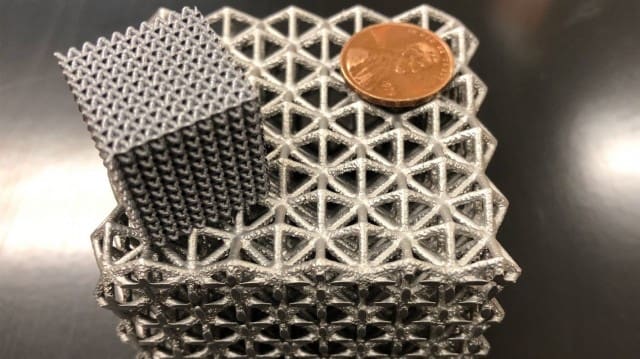
By optimizing the printing process for the additive manufacturing of a high-strength magnesium alloy and fabricating 24 micro-lattice structures, researchers characterized the compressive strength and failure modes, which will enable much lighter Army components.

“We used a magnesium alloy known as WE43, which has only been successfully 3D printed by a handful of researchers,” said Dr. Brandon McWilliams, the lead researcher for 3D printing metals at the U.S. Army Combat Capabilities Development Command, known as DEVCOM, Army Research Laboratory. “In this work, we optimized the process to achieve higher density than previously reported and used that to produce and characterize lattice structures made up of WE43.”

Magnesium Elektron WE43 is a high strength casting alloy. It can be used in temperatures of up to 300°C (572°F), according to AZoM, an online publication for the materials science community. “This alloy has good mechanical properties coupled with excellent corrosion resistance.”

Advanced additive manufacturing has the potential to deliver critical parts at the point of need, reducing the need for lengthy logistic chains. Also, the U.S. Army’s modernization strategy calls for lightening the load to help support future Soldiers.

The research team published their findings in the peer-reviewed journal Materialia.

McWilliams said he believes joining advanced lightweight alloys with novel multi-scale structures through additive manufacturing will be a key aspect of modernizing Army weapon systems. There are many lightweight structural applications in the automotive, aerospace and biomedical industries.

“Current systems are too heavy, which increases burden to the Soldier, reduces fuel efficiency and degrades mission effectiveness,” he said. “It is my goal as an Army researcher to conduct research, which has the maximum chance of success of transition from basic and applied research stage to practical application in order to enable transformational overmatch.”

Partnering with academia and industry has been a priority with the laboratory since it introduced its Open Campus initiative.

“This was an exciting and rewarding collaboration that produced the technological accomplishment founded on fundamental understanding of materials and additive manufacturing,” said Prof. Yongho Sohn, lead researcher at University of Central Florida. “Technological vision with clear scientific objectives defined by Dr. McWilliams and his team was the key to our contribution.”

Army researchers will now evaluate the high strain rate and ballistic properties of these 3D-printed materials and look for demonstration applications, such as ultra-lightweight unmanned aircraft system and robotic vehicle components, he said.

By U.S. Army DEVCOM Army Research Laboratory Public Affairs

US Army Authorizes Optional Wear of Insignia and Accoutrements on the Class B Army Green Service Uniform and Tropical Dress Variations

Saturday, April 3rd, 2021

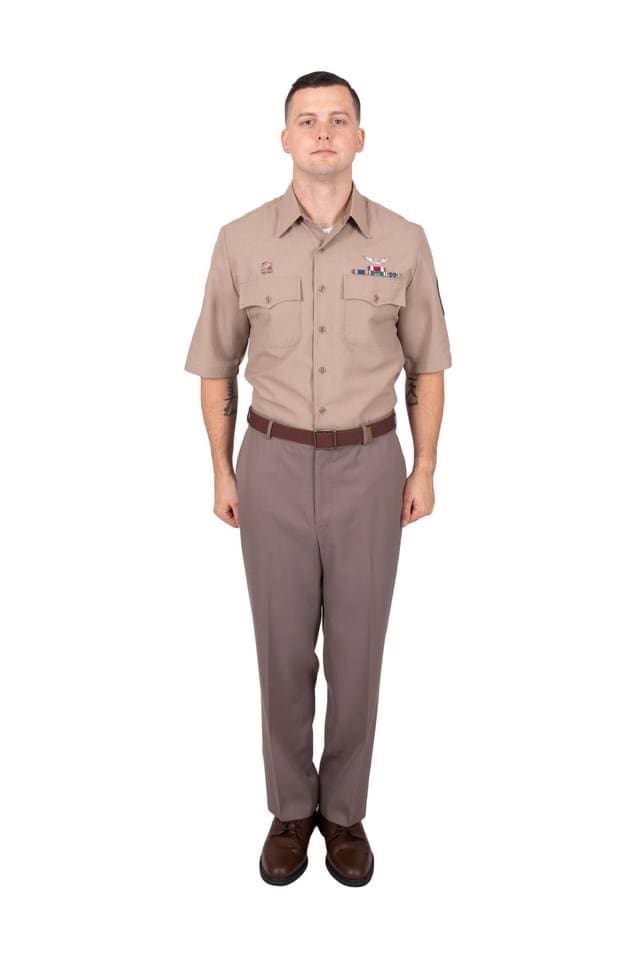
This week, the Army released ALARACT 029/2021, allowing the optional wear of insignia and accoutrements on the Class B Army Green Service Uniform.

The Tropical Dress Variation is primarily intended for Soldiers in hot climates and serves as the alternative for the Class A uniform. Local commanders will determine when their Soldiers wear this uniform variant.

Refer to ALARACT 029/2021for specific guidance and utilize DA PAM 670-1 (26 JAN 2021) for specifics on authorized items and composition of the uniform.

Read the slides here.

“Soldiers Love Tails!” Army Adds Tails to Mess Dress Uniform

Thursday, April 1st, 2021

On 1 April, the US Army announced it would be adding tails to the Mess Dress uniform, abandoning well over a century of tradition.

“My Squad loves tails,” exclaimed the Sergeant Major of the Army Michael A Grinston when discussing the move to add tails to the mess dress uniform, adding, “we’ve looked like bell hops for far too long.“

Army Chief of Staff General James C. McConville responded to media queries with, “it’s the only uniform we haven’t screwed up yet. It was time.”

According to sources close to the effort, there will be no wear out date for legacy tailless mess dress jackets but that those who don’t purchase new versions or at least opt for a button-in upgrade will be forced to empty the grog bowl at future dinning-ins.

During the announcement, SMA Grinston offered a look at other initiatives under consideration, “We’ve got a couple of other ideas we’re batting around as well. For instance, urinals…we’re getting rid of them. Everyone will have to sit down when they pee, but we’re going to get rid of skirts as well, so it kind of balances out. Aside from it’s just the right thing to do, the potential cost savings are enormous considering the size of the Army. Think about all of those broken urinals we won’t have to fix.”

Army Awards New Sniper Weapon System Contract to Barrett Firearms

Tuesday, March 30th, 2021

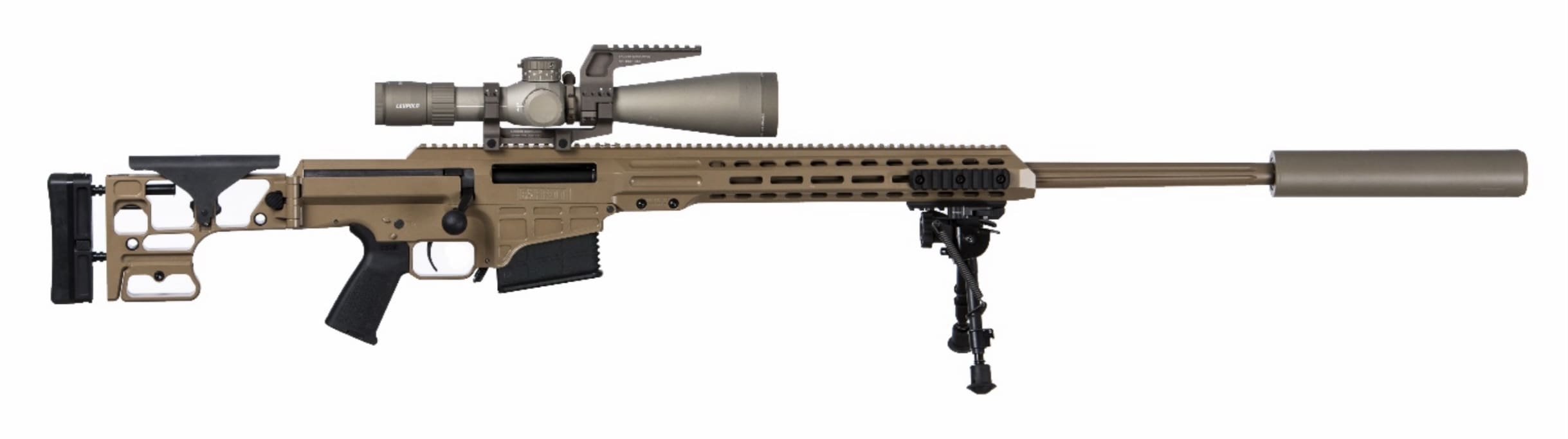
On 30 March 2021, the Army awarded a $49.9 million, five year contract to Barrett Firearms Manufacturing Inc. (Murfreesboro, TN) to acquire the MK22 Multi-role Adaptive Design (MRAD) rifle as the Army’s new sniper weapon system.

The Army will buy approximately 2,800 MK22 rifles from Barrett, the current maker of the Army’s M107 .50 Caliber Long Range Sniper Rifle.

The MK22 is part of the Army’s Precision Sniper Rifle (PSR) Program which also includes the Leupold & Stevens (Beaverton, OR) Mark 5 HD scope and a sniper accessory kit.

The MK22 is a modular system that will be fielded with three separate calibers, the .338 Norma Magnum, .300 Norma Magnum and 7.62×51 NATO. Army snipers will be able to conduct a barrel change and select calibers based on their mission operating environment.

The PSR program will allow the Army an extreme range weapon systems that is lighter than current sniper rifles and includes features that will mask the sniper signature for improved survivability.

SOCOM previously awarded a contract to Barrett to purchase the MRAD as part of their Advanced Sniper Rifle (ASR) program.