TYR Tactical

Archive for the ‘Army’ Category

U.S. Soldier Conquers French Desert Commando Course

Saturday, January 6th, 2024

For nearly 50 years, French soldiers stationed in Djibouti have made their way to Arta Mountains for the French Desert Commando course, a grueling five-day course designed to test soldiers’ physical, emotional and mental limits. This year 40 U.S. service members signed up for the challenge, among them was U.S. Army Sgt. Liliana Munday.

Growing up, Munday, a Soldier with the 218th Maneuver Enhancement Brigade, South Carolina National Guard, gravitated toward physical activities that kept her outdoors as often as possible. She was immediately interested in the French Desert Commando Course but hearing about the physical demands of the course brought on feelings of doubt.

“I didn’t think I was ready for it,” she said. “But Staff Sgt. (Samuel) Perez kept pushing me to try out because he saw that I wanted to do it and he had faith in me that I could do it.”

The FDCC has two phases, the pre-assessment and commando phase. The first phase ensured service members met the basic physical requirements and evolved into a preparation program over several weeks. During this period service members consistently trained to earn a spot in the commando phase. The second phase took them out to the field where they faced numerous courses including a night obstacle course, a ropes course and a swimming course incorporated with various combative and desert survival skills.

With the paperwork submitted the next step was to prepare. Her training regimen began in September and included rucks and runs around the installation before dawn, weight lifting, and dynamic, high-intensity exercises nearly every day. At the peak of her training, she fit in three workouts each day while balancing her regular work schedule.

After three months of training Munday remembers the nerves she felt on the drive out to Arta Mountains where her hard work was put to the test immediately.

“I almost had an aneurysm, I was so scared,” she said. “On the way out there I kept thinking, ‘Am I ready? Am I gonna do this? These guys are gonna smoke me, I’m just gonna be out here stranded and be sent home on day one’.”

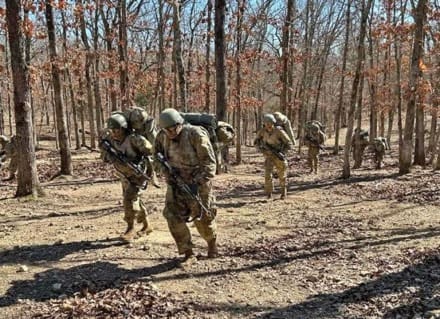
Day one consisted of a five kilometer ruck-run with a full kit, followed by a PT test and rope climbs.

“I was nervous because rope climbs are very hard for me and in training, I could only do one,” she recalled.

Her training partner, U.S. Army Staff Sgt. Samuel Perez, was there to support and encourage her, watching as she steadily made her way to the top.

“I could see she was nervous because we saw the other competitors struggling with this climb,” Perez said. “I was there telling her she could do it; I knew she could. She got up there and when she came back down she had a big smile beaming from her face she was so excited and she ran over and gave me a big hug.”

With the first big hurdle behind her, Munday moved forward in the course with a newfound confidence.

“For some reason, after completing that first day I was good. I started to feel like I could do this thing and I proved to my squad that I was here to work and I deserved to be here,” she said.

Each day and night Munday and her squad faced a new obstacle, the most difficult for her she says was the mountain obstacle course.

Positioned 200 meters above the ground, participants were required to jump across five platforms spaced several meters apart, jump and grab on to a steel pole and slide down to the ground.

“When you’re doing that mountain obstacle course you don’t realize how far each platform is from one another and there are points when you’re not clipped in,” she explained. “I thought, if I missed even a little bit, I’m going down.”

On day three, after pushing herself through numerous challenges and rucking non-stop from one training location to another, she thought she had reached her breaking point and seriously considered quitting.

“Your joints just start to scream. It’s painful,” she confessed. “I kept thinking I cannot take this pain anymore. I’m almost done but I cannot do it anymore.”

Through the dirt, mud, sweat and pain, it was Munday’s spirit and drive within her that helped her push through. That spirit and drive, she said, comes from two of the strongest people she knows.

“My mom and my grandma—they’re such strong women and they never let me quit when I was younger. They have strong personalities and it’s within me,” she said. “It was very nice to tell them that I did this. They were like, ‘No way, that’s awesome!’ and when I told them I was the only female they said, ‘You’re kicking ass!’.”

At the end of it all, the feeling of accomplishment came when she received the French Desert Commando pin at graduation. Black and gold in color, the pin prominently features a scorpion resting on the outline of the country of Djibouti. Along the rim are the words “Aguerrissement Zone Desertique” which translates to “Desert Zone Hardening”.

“I’m now able to look back and say, I did that. We did that,” she said with a smile. “Completing something and not giving up even though you may want to … it sticks with you forever. I use this as fuel to my fire when I feel like I can’t do something. I think to myself, ‘You can, because you have already’.”

Beyond the support she received from her family and teammates, Munday’s success is a testament to the old adage ‘preparation is the key to success.’ It’s a message she’s taken to heart and shared with her fellow soldiers since completing the course.

“Someone I work with said he wanted to do the FDCC but he didn’t think he was ready,” she said. “I said, ‘Sir, you’re never going to be ready.’ I didn’t think I was ready. But I got ready. So if you truly think or know that you want to do something no matter the current status that you’re in, if you want to pursue it you’re just gonna have to train and do what it takes to get to that point. There is no other way.”

By MSG Jerilyn Quintanilla

Soldiers Conduct First Touch Point for Long Range Assault Aircraft

Friday, January 5th, 2024

REDSTONE ARSENAL, Ala. — Program Executive Office, Aviation conducted a Future Long Range Assault Aircraft Soldier touch point the last week of November at the Bell Flight Research Center in Arlington, Texas.

Led by the FLRAA Project Office, the touch point was the first of up to twelve events the Army plans to conduct to optimize both human and system performance while ensuring mission ready capabilities are delivered to the warfighter. Soldier touch points involve gathering data and feedback early in the design and development process to shape future prototypes and fielded capabilities. The events are part of an iterative process to identify, refine and verify system hardware and software designs and functional capability requirements.

“Soldier touch points are key to FLRAA’s program strategy. In the past, this has included Army pilots flying both demonstrator aircraft,” said Col. Jeffrey Poquette, FLRAA project manager. “Today, the focus is on crewmembers and combat Soldiers who are representative of the FLRAA’s passengers. These interactive events provide our team with crucial feedback to build transformational capabilities for FLRAA.”

An infantry squad and two Black Hawk crews from the 1st Cavalry Division supported the event. During the STP they practiced embarking and disembarking from a FLRAA fuselage mockup in a variety of simulations and scenarios. The squad began their practice sessions without any equipment and added tactical and squad level equipment as the STP progressed.

“The STP was incredibly valuable and is paramount to the successful development of the FLRAA,” said Chief Warrant Officer 2 Tylor Enright, an aviator with 1st Cav. “It’s great that they are willing to hear about what Soldiers and crewmembers actually need for future missions in these aircraft to be successful.”

As the infantry squad members completed their exercises, the aircraft crew members practiced entering and exiting the mockup cockpit and stowing equipment, as required, in a series of tests that added more equipment and tasks for each iteration.

Representatives supporting the STP included the Future Vertical Lift Cross Functional Team, the U.S. Army Combat Capabilities Development Command, the U.S. Army Test and Evaluation Command, the Redstone Test Center and Special Operations Command.

“These Soldier touch points are a criticality important way to ensure we get the requirements right and inform design decisions early,” Maj. Jeremiah Webb, FVL CFT Future Long Range Assault Aircraft lead.

The data gathered from the STP will directly inform FLRAA preliminary design as well as the development and delivery of virtual prototypes of the aircraft.

A tiltrotor aircraft, FLRAA will have the hybrid capabilities of planes and helicopters. When fielded, it will expand the depth of the battlefield by extending the reach of air assault missions and enable ground forces to converge through decentralized operations at extended distances. FLRAA’s inherent reach and standoff capabilities will ensure mission success through tactical maneuver at operational and strategic distances while the aircraft’s speed and range will nearly double the Army’s patient evacuation capability during the “Golden Hour.”

The FLRAA is intended to eventually replace part of the U.S. Army’s UH-60 Black Hawk fleet, which has been in service for more than four decades.

-US Army

Rainey: C2, Defensive Measures Key to Next-Generation Warfighting

Wednesday, January 3rd, 2024

ARLINGTON, Va. — On Dec. 13, Army Futures Command Commanding General Gen. James E. Rainey spoke to Army stakeholders, supporters and media about Army transformation activities as part of an Association of the United States Army featured speaker coffee series in Arlington.

Reflecting on how modernization efforts have evolved in the five years since AFC’s founding, Rainey shared that the command’s scope has grown to encompass “overall responsibility for the entire transformation portfolio.”

“I remain convinced that it was a bold move and it was the right move for the Army to stand up Army Futures Command,” Rainey said.

He emphasized that the command works hand-in-hand with Army Training and Doctrine Command, Army Materiel Command, Army Forces Command and the Office of the United States Assistant Secretary of the Army for Acquisition, Logistics and Technology to create, evaluate and develop new concepts, systems and equipment for the Army and Joint Force, with essential support from Congress.

In looking ahead to priorities for 2024 and beyond, Rainey highlighted the need to continue investing strategically in command and control and defensive measures, given their weighty importance in shaping tomorrow’s warfighting landscape.

“We’ve got to keep getting better, get lighter,” Rainey said of current network capabilities.

AFC is also looking at ways to make data more available and user-friendly as part of next-generation C2 efforts, and Rainey acknowledged that the future force will require commanders, Soldiers and Department of the Army civilians alike to be data literate or data fluent.

“We have the potential to reinvent and really develop a data-centric command and control system,” he said, stressing the need for a more “complex, adaptive, systems-to-systems approach to warfare.”

“I believe that if we move to a truly data-centric approach to fighting, it’ll revolutionize most of warfare, primarily deterrent value. Somebody being willing to attack into the face of a lethal, data-driven capability, it would be pretty foolish.”

According to Rainey, future deterrence and defense measures will include advanced air and missile defense technologies and integrated offensive and defensive fires, along with measures that improve adaptability and endurance of formations.

“We’ve got to preserve our people and our ability to do maneuver warfare,” he said.

Rainey underscored the criticality of maintaining and strengthening Soldier lethality, in part by leveraging human machine integrated formations, or HMIF, to optimize battlefield outcomes.

“Our best weapon system we have is still the Soldier; best formation we have is still the rifle squad.”

Protecting Soldiers in combat and further enabling them to do what only humans can do will require smart investments in transformational machine capabilities, particularly those that capitalize on mobility and can increase lethality and survivability, Rainey explained.

“Autonomous and robotic systems are going to disrupt the land domain, starting now,” Rainey said, detailing how technology available today can help mitigate risks to Soldiers by placing robots in traditionally higher risk positions.

“We have the ability and I think the moral responsibility to not trade blood for first contact with the enemy,” he asserted.

Rainey shared that the Army has already started to prototype an HMIF light infantry platoon at Fort Moore, Georgia, as well as a heavy infantry version at the National Training Center, California. The formations will incorporate robots and configurable payloads designed to augment human capabilities in modern but realistic ways.

“If you take robots and try and replace humans or combat vehicles, you’re on a vision quest, and it’s going to take a long time. If you take humans and robots and put them together in a coherent formation, you start solving all the problems in both directions,” Rainey said.

With continuous transformation as a chief Army priority, AFC has increased its experimentation and analytic efforts by approximately 20 percent in 2023, Rainey reported. Upcoming experiments include the joint, multinational Project Convergence Capstone 4, which will take place at Camp Pendleton and Fort Irwin, California, in early spring 2024.

The command is also developing the Army’s next warfighting concept that will inform future planning actions and address institutional challenges. The draft concept has drawn insights from future study initiatives and current conflicts like those taking place in Ukraine and Gaza. This includes honing the Army’s ability to “look at things that are happening in the world and move into a rapid acquisition of capability,” Rainey said.

In addition, AFC is conducting a tactical fires study and recently reached full operational capability of its Contested Logistics Cross-Functional Team, which is focused on predictive logistics, alternative power, demand reduction and autonomous and robotic resupply.

The command continues to support enduring priorities as well, such as the Army’ signature modernization efforts, which fall under the categories of long-range precision fires, next generation combat vehicles, future vertical lift, network, air and missile defense, and Soldier lethality.

During the coffee series conversation, Rainey spoke to audience members, including industry representatives, about the importance of supporting support rapid acquisition – “the need to transform, be agile, be adaptive inside the next two years” — as part of the Army’s overall transformation effort, noting that technologies such as loitering munitions and company-level unmanned aircraft systems could provide pivotal effects. He explained that the Army is working to incorporate such capabilities within a doctrine, organization, training, materiel, leadership and education, personnel, facilities and policy framework, to ensure appropriate training, sustainment and leader development. At the same time, the Army is also eyeing frameworks for 2025-2030 and leap-ahead capabilities for 2030-2040.

“That’s the real opportunity, where things are fundamentally going to change,” Rainey said of the latter.

By Maureena Thompson, Army Futures Command

Army Stands Up Special Trial Counsel with Independent Authority for 13 UCMJ Offenses

Tuesday, January 2nd, 2024

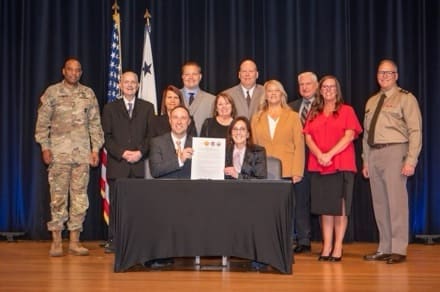
WASHINGTON — The Congressionally mandated Office of Special Trial Counsel officially stands up today with independent prosecution and referral authority for 13 UCMJ offenses known as “covered offenses.”

“Today marks a historic day for the Army as the Office of Special Trial Counsel begins exercising its independent decision-making and prosecution authority for sexual assault, domestic violence and other serious offenses,” said Secretary of the Army Christine Wormuth. “The Office of Special Trial Counsel will execute its mission to seek justice in the best interests of the Army community and build trust in the military justice system by employing a worldwide team of highly skilled and specially trained attorneys and legal professionals.”

Col. Rob Rodrigues, acting lead special trial counsel, will bring 22 years of courtroom experience, serving as a prosecutor, defense counsel and supervisor of military justice practitioners.

“The creation of our office has been years in the making and was born out of the recognition that the Army needs to improve the way it processes and prosecutes serious crimes,” he said. “We have taken the lessons learned of the past 20 years and built an organization at the direction of Congress designed to improve decision-making and the handling of cases at every phase of the military justice process.”

The Office of Special Trial Counsel is headquartered on Fort Belvoir, Virginia, and operates 28 field offices across the Army.

Beginning today, the office will become responsible for making independent decisions about serious offenses such as sexual assault, domestic violence and murder. This includes the authority to send a case to a court martial. This authority was traditionally held by commanders.

“This change will ensure that each case is evaluated by an independent and objective legal expert,” he said. “If we determine a case should go to trial, the attorneys who work in our office, known as Special Trial Counsel, will be responsible for prosecuting the case.”

Maj. Amanda P. Beckham is a Special Trial Counsel attorney at the Fort Jackson field office.

“This independence means that the attorneys, much like in a civilian district attorney office, are deciding which cases go forward to trial based upon the case’s evidence,” she said.

Rodrigues said the most important feature of this initiative is the exercise of independent decision-making regarding the disposition and prosecution of cases by the OSTC.

“Our office has been empowered to independently evaluate and prosecute cases based on the facts and evidence, free from outside influence,” he said. “Our goal is to seek justice in every case. We will evaluate cases based on the evidence and apply an expert legal review to determine which cases should go forward to trial. We will ensure this process is fair for all involved in the military justice process.”

The Secretary of the Army said it will be a collaborative approach among the commanders and the special trial counsel.

“While the Office of Special Trial Counsel assumes some of the authority previously held by commanders with regards to the disposition of allegations, commanders still retain the overall responsibility for the well-being of Soldiers and mitigating the impact of these incidents within their units,” she said.

Rodrigues said the OSTC has two main goals. The first is to seek justice in every case.

“We will evaluate each case on the merits and apply a rigorous review to determine which cases should go forward to trial,” he said. “We will make disposition decisions in light of the evidence, the interests of the Army, which includes the alleged victim, all while respecting the due process rights of Soldiers accused of misconduct.”

His team’s second goal is to restore and promote trust for the military justice system.

“We will accomplish this by employing a team of highly trained and qualified expert prosecutors, paralegals and support personnel who are the best at what they do in the Army,” he said. “We will treat victims with respect and care. Throughout every phase of the case, we will communicate with victims and ensure they are informed and have the opportunity to provide input into our decisions. We will hold ourselves to the highest ethical standards and ensure the rights of accused Solders are always respected.”

Beckham said the Special Trial Counsel will provide victims with honest, clear communications.

“A victim may be more willing to come forward if he or she knows that the Special Trial Counsel may exercise authority over potential misconduct,” she said. “One of our goals is to have a personal meeting with each victim to inform them of case progress or case disposition.”

“I want victims to know that our office is fully committed to seeking justice and earning back trust in the system,” Rodrigues said. “If you report a crime, it will be thoroughly investigated, and our office will make the best decision we can based on the evidence. You will have the opportunity to provide input about your case directly to our prosecutors. You will be treated fairly and with compassion throughout the entire process, regardless of the final outcome of your case.”

Rodrigues said his office is the largest, best trained, most experienced group of prosecutors the Army has assembled into one organization in the 22 years he has served.

“Each Special Trial Counsel prosecutor has been hand-selected and certified to serve in our office,” he said. “Supporting them are our NCO paralegals and Special Victim liaisons, who will provide compassionate support to victim throughout each case. I’m in awe of the talent we have in this organization that truly represents the best of Army legal professionals.”

By Shannon Collins

How Army Tailors Brought Back The “Ike” Jacket

Wednesday, December 27th, 2023

Stitching with distinction: the Army’s talented tailors

FORT MEYER, Va. — From a basic trouser hem to re-designing a famous jacket fit for a President, the tailoring team at the Logistics Readiness Center, Joint Base Myer-Henderson Hall in Fort Meyer, Virginia keeps the fabric of the Army strong, accurate and reliable for its customers.

LRC JBM-HH is one of 78 LRCs that report to the U.S. Army Sustainment Command. LRCs are essential in providing support services across the entire U.S. Army. While these support services vary in type – everything from ammunition management to food service – the tailoring team is one of the unique teams that supports our Army. LRCs have a daily, visible impact on every Soldier at their duty station and provide essential services that many take for granted. For example, many don’t likely think twice about a ceremonial uniform for a Soldier, but if they looked or fit less than perfect, it would attract attention.

The LRC JBM-HH team provides tailoring services for members of the 3rd U.S. Infantry Regiment (The Old Guard), 289th Military Police Company, Joint Task Force-National Capital Region/USA Military District of Washington staff members, and a few other senior leaders and organizations. These organizations are authorized to wear the ceremonial blue uniform and include people with titles such as Commanding General, Chief of Staff White House social aides and the Army Aide to the President and Vice President. They’ve also worked on garments for presidents and other key U.S. dignitaries. With a tailoring team of only five personnel, this wide and diverse mission keeps them consistently occupied.

Comprised of three seamstresses, a tailor, a joint lead tailor and shoe cobbler, they adeptly tailor 80-100 items weekly. Common tasks take between 30 minutes to three hours to complete, while custom pieces can take much longer.

Thanks to the proficient tailoring team, the process seamlessly unfolds for those utilizing their services. As an invaluable part of ASC, they provide a unique way for leadership to look sharp and ready for a variety of occasions.

The team manages individual orders for ceremonial uniform fittings, but they also handle other aspects of daily wear, such as shirts, trousers, overcoats, raincoats, and more.

“A saber must be measured based on the height of the individual,” explains James Risek, LRC JBM-HH director. “This ensures that we are meeting the standards of the U.S. Army and the Old Guard.”

If standards are not met and maintained, there can be inconsistencies among uniforms, taking away from the polished look that the Army is known for. There may also be differences in the uniforms based on exposure to the elements, such as excessive time in the sun.

Ceremonial uniforms for the Old Guard, for example, are composed of a heavier set of cloth material that will hold up over a longer period of time. This is particularly important for the guards of the Tomb of the Unknown Soldier, Honor Guards, and funerals.

“The precision and dedication of our talented tailors to serving the Old Guard at the Tomb of the Unknown Soldier indeed symbolize their profound commitment to honor and professionalism,” says Col. Larry Dean, commander of the 406th Army Field Support Brigade.

“The heavier uniforms maintain their appearance longer, and it reduces the dry cleaning and pressing requirements,” Risek explains. “The Old Guard Soldiers have internal press machines in each of the barracks for in between funerals or other missions. This provides them the ability to press their individual uniforms as needed.”

He adds that for any alterations, they must measure, fit and size before making any necessary follow-up adjustments and transferring to the workroom. The final product is then ready for pickup and wear.

Through thousands of stitches, some noteworthy items have been worked on over the last few years.

Alex Nguyen, lead tailor at JBM-HH, was invited to then chairman of the Joint Chiefs of Staff Gen. Mark Milley’s retirement ceremony this fall. Nguyen provided specialized tailoring for Milley for eight years and was specifically requested by Milley to re-outfit him as the chairman of the Joint Chiefs of Staff.

The team tailored a jacket for President Donald Trump and other key senior military leaders in 2017 for use while addressing troops overseas.

They supported the Cadet Uniform Factory at LRC West Point during a backlog, adding a new facet of uniform preparation to their repertoire.

Risek says that while most tailors and seamstresses focus on alterations, his team is different.

“The tailor shop is trained to understand the unique needs of every customer and weigh it against tailoring, embellishments and any other unique military requirements.”

The team showcased their skills and knowledge with the “Ike jacket,” designed on commission from Milley. It was the prototype of a replica of the famous jacket worn by President Dwight D. Eisenhower while in the field. This process involved using an archived jacket, relying on historical data, and applying modern standards, reviewed and approved by Milley. It was executed by the team with Milley’s input. Milley, the first fitting model for the project, made it available for Army service members to purchase and wear.

While not all items are as intricate as this project, it underscores the team’s wide range of skills and talents benefiting the Army. Whether jackets, pants, overcoats, raincoats or special commissions, most projects require at least a hem, embellishments, or final touches throughout their life cycle.

Tailors are an invaluable asset to both ASC and the Army, ensuring that military members are properly outfitted with uniforms that fit correctly and meet the standards set by the Army. While having the correct uniform is essential for a Soldier’s comfort, safety, and morale, it can also help create a sense of unity within the Army team.

By Kelly Haertjens, ASC Public Affairs

Army Enables Flexible Communications Across a Strategic Paradise

Tuesday, December 26th, 2023

SCHOFIELD BARRACKS, Hawaii — The blue Pacific is now saturated with Army green as allies and partners join forces to prepare for large-scale combat operations.

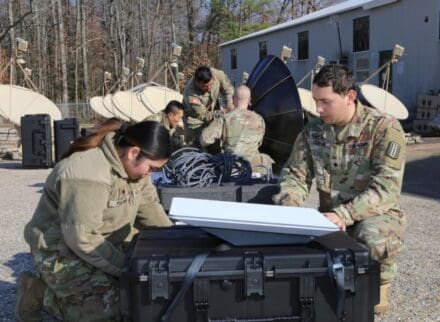
As the Army adapts and evolves its network to reduce complexity and tailor capabilities at echelon, it relies on persistent experimentation, fielding and Soldier feedback to refine network operational concepts.

The 25th Infantry Division has been a critical experimentation partner in this effort, most recently during the Joint Pacific Multinational Readiness Center 24-01 exercise at Schofield Barracks employing the Integrated Tactical Network, or ITN, for its networked communications.

“Here in the Pacific, we’re faced with unique environmental considerations, from triple canopy jungles to the mountains and volcanoes,” said Maj. Justin James, division deputy communications officer (G6) for the 25th ID. “The ITN is going to help us communicate over terrain in which we couldn’t before.”

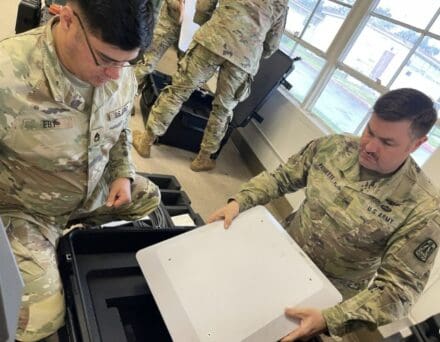
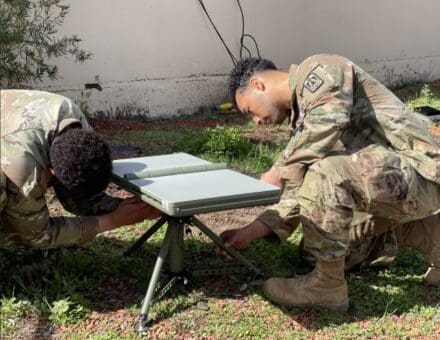
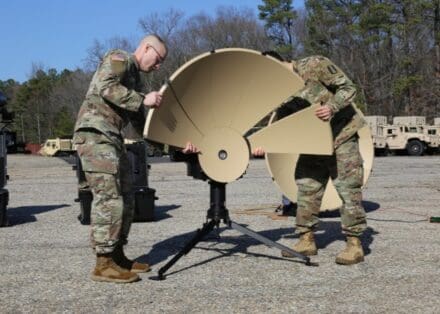
The ITN is comprised of a flexible network kit that incorporates commercial capabilities such as tactical data radios, commercial cell technologies, and tactical cross domain solutions that integrate into the Army’s network foundation. The flexibility of the ITN allows higher echelons to take on complex network planning and management, while retaining necessary network capabilities for commanders at lower echelons who are focusing on the fight.

One priority for the 25th ID during the execution of JPMRC 24-1 was to exercise and fight on the Sensitive but Unclassified – Encrypted, or SBU-E, network to the greatest extent possible. The use of the SBU-E enclave supported communications across echelons and the joint and coalition communities.

“In a future fight, the U.S. will have to fight with its partners and allies and to make that interoperability real, our network has to be as flat, fast and accurate as possible,” said Col. Rob Shaw, 3rd Infantry Brigade Combat Team, 25th Infantry Division commander. “Because it’s at an [acceptable] level of encryption I can pull in our partner nations.”

Over the past six years, nine brigade combat teams and six security force assistance brigades have successfully conducted operations using SBU-E at brigade and below to provide increased operational flexibility, interoperability, and security, while retaining secret voice and data communications where required.

During the experimentations, the 3-25 established communications up to division and down to the tactical command post using SBU-E to follow each tactical operations center movement. This provided Army network developers with data to inform network design.

Persistent Experimentation: Extending the Network

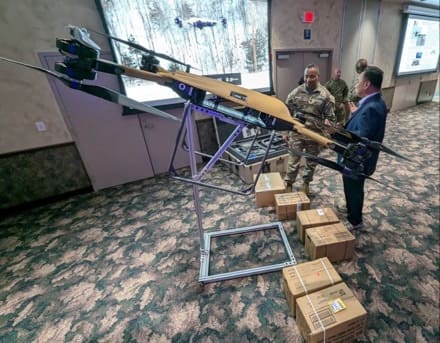
To complement the existing ground-based ITN capabilities, the Army inserted new aerial tier experiments by incorporating the ITN’s tactical radios into fixed wing drones, which significantly extended the network across intra- and inter-island terrains and onto a UH-60 Blackhawk for air to ground communications.

The Aerial Tier Network Extension featured a K-1000 drone, which completed a 26-hour flight carrying full motion video with the radio creating a single mesh network to significantly extend the mesh network.

The Aerial Integrated System, also known as ITN in the air, provided shared position location information between the pilot down to dismounted troops equipped with end user devices.

“As soon as the helicopter comes into the line of sight, the system creates a communications bubble between the pilot, who is tracking the mission on a tablet, and the ground forces, who are communicating with the pilot and each other using their end user devices,” said Maj. John Azbill, 3-25 S6. “Air to ground communications are especially critical during our night time air assault operations.”

The unit also successfully experimented with a joint-enabled radio for shore-to-ship joint call for fires, which enabled the forward observer to initiate the fires chain up to a U.S. Navy destroyer offshore to launch a notional fires mission.

“We’re in the Pacific, so joint fires missions are probably what we’re going to most rely upon to fight,” Shaw said.

The 25th ID will continue to participate in operational exercises in 2024, where it will refine its ITN capabilities and provide the Army with additional feedback on how to implement a strategic communications link across the Indo-Pacific.

Story and photos Kathryn Bailey, U.S. Army Public Affairs

Some photos by Sam Brooks

NSA Focuses on Talent as Pace of Technology Quickens

Sunday, December 24th, 2023

WASHINGTON — The National Security Agency’s ability to recruit and retain top talent is key to meeting the demands of the future, agency Director Army Gen. Paul M. Nakasone, said today.

Nakasone said the rapid evolution of technology continues to reshape the national security landscape and how his agency responds to new threats, but people remain central to the NSA’s mission.

“A lot of times we think about the incredible technological capabilities and the high-speed computers that are there, but, at the end of the day, what makes us the agency that we are is our talent,” he said during a discussion in Washington hosted by the Intelligence and National Security Alliance, a trade organization focused on public-private national security partnerships.


Earlier this year, the National Security Agency launched its largest hiring surge in three decades with a goal of hiring more than 3,000 new employees by the end of 2023.

Spotlight: Engineering in the DOD

Nakasone said the NSA is “moving very quickly” to meet that goal, but said numbers are only part of the overall objective.

He said the agency has also focused on improvements to its recruiting and retention practices to ensure it attracts a “future-ready workforce.”

“How do we think about a population that is over 50% today millennials and [Generation Z]?” he said. “Ten years ago, 70% of our workforce was baby boomers. Five years ago, Gen Z and millennials overtook baby boomers. Five years from now, 70% will be Gen Z and millennials.”

“This is the workforce that is coming into our agency, so this is an agency that is looking much differently in how we retain our workforce,” he said.

That approach includes a focus on adapting to work-life balance demands and easing career mobility between the government and private sector.

That workforce will be on the frontlines of significant change as the agency adapts to technologies — such as artificial intelligence and quantum computing — that Nakasone said will have a significant impact on the national security landscape.

Spotlight: Artificial Intelligence

The NSA has been forward-leaning in its approach to game these game changers.

Earlier this year, Nakasone, who also commands U.S. Cyber Command and serves as the chief of the Central Security Service, announced the creation a new entity to oversee the development and integration of artificial intelligence capabilities within U.S. national security systems.

The AI Security Center will become the focal point for developing best practices, evaluation methodology and risk frameworks with the aim of promoting the secure adoption of new AI capabilities across the national security enterprise and the defense industrial base.

The new entity will consolidate the agency’s various artificial intelligence, security-related activities.

Nakasone said on Friday that the AI Security Center has begun bringing together a series of partners to tackle the issues linking AI to national security.

Recently, he said, the group released a report on AI security infrastructure in partnership with the Cybersecurity and Infrastructure Security Agency, the United Kingdom’s Government Communications Headquarters and other organizations.

Spotlight: Value of Service

“Artificial intelligence is probably the most transformative things that we’re going to experience in our lifetime,” he said. “We have to ensure that the information, the infrastructure, [and] the ability for AI to operate within this nation [is] secure.”

“That’s where the National Security Agency comes in,” he said.

By Joseph Clark, DOD News

Ivy Soldiers Test Knowledge, Strength and Determination During E3B qualification

Saturday, December 23rd, 2023

FORT CARSON, Colo. — For an entire month, Ivy Soldiers prepare, practice and perfect more than 40 tasks in order to successfully execute a five-day evaluation. Upon sufficing the tasks, Soldiers are able to earn one of three Army-sponsored badges: the Expert Infantryman Badge, the Expert Soldier Badge and the Expert Field Medical Badge.

1st Stryker Brigade Combat Team, 4th Infantry Division, recently hosted the three badge evaluations, known as E3B, at Fort Carson from December 4-8, 2023.

“This is a great opportunity for Soldiers to hone and sharpen all of their skills,” said Sgt. 1st Class Julian Pacheco, E3B lane noncommissioned officer in charge assigned to 1st SBCT, 4th Inf. Div. “Whether you get it or not, there is a positive outcome out of this. Soldiers get an opportunity to come out here and train.”

Each testing lane evaluated is a skill level 10, or entry level, task. Pacheco says the badge helps a Soldier’s career progression regardless of their occupational specialty, however, it is no easy feat.

“There is a very high rate of attrition because it’s very methodical and procedural,” said Pacheco. “It asks a lot of the Soldiers throughout the week in order to get their GOs.”

To put the attrition into perspective, 1,100 hundred Soldiers submitted a packet for E3B. By day 3 of the testing, 252 remained in the running for one of the three badges.

Pfc. Angelina Shabelina, a cavalry scout assigned to 2nd battalion, 23rd Infantry Regiment, 1st SBCT, 4th Inf. Div., felt added pressure to her participation as she aspired to gain her ESB.

“I am nervous about earning my ESB because I am the only female from the battalion who is testing for the ESB,” Shabelina said. “It’s a lot of pressure and work.”

Shabelina says there is a lot of preparation behind E3B testing, which consists of events ranging from land navigation to weapon familiarity. The first event started with the expert physical fitness assessment and then moved onto land navigation.

However, the testing doesn’t end there. Throughout the week, Soldiers must pass 10 different stations that tested their knowledge of tactical combat casualty care, weapons functions checks and basic knowledge of different weapon systems, patrolling and tasks associated specifically to the badge they were testing for.

For example, the EFMB conducts three testing lanes with a varying number of evaluated skills. These lanes test the practical ability and keen eyes of candidates while performing evacuation and warrior skills tasks.

“EFMB is a test of a candidate’s attention to detail,” said Sgt. 1st Class Jonathan Bland, flight paramedic, 2nd Battalion, 4th General Support Aviation Battalion, 4th Combat Aviation Brigade, 4th Inf. Div. “All of the grade sheets and standards are published and that is really where the rubber meets the road.”

Soldiers are graded on each task to a strict standard. Participants are eliminated if they receive two no-go’s on a task. Soldiers who complete all the tasks perfectly are recognized as earning their “True Blue” for EIB, “Perfect Edge” for ESB and “No Blood” for those who earned their EFMBs with perfect scores.

Despite a plethora of rigor during the first few days of competition, the remaining Soldiers enter the final event, a 12-mile road march completed within three-hours. After crossing the finish line, Soldiers must disassemble and reassemble their weapon within five minutes.

“If you feel like you are losing yourself when you’re training up, you get everything right, you are in line to test out, and your mind goes completely blank, try to remember the Soldiers who are motivating you,” Shabelina said. “For me it’s my first sergeant and my team leader.”

In the end, 172 out of 924 Soldiers earned one of the E3B awards. Ivy Division alumni were able to pin the respective badges onto the recipients during the award ceremony at the conclusion of the final event.

Story by SPC Jason Klaer

Photos by PVT Cecilia Ochoa and SPC Mark Bowman